


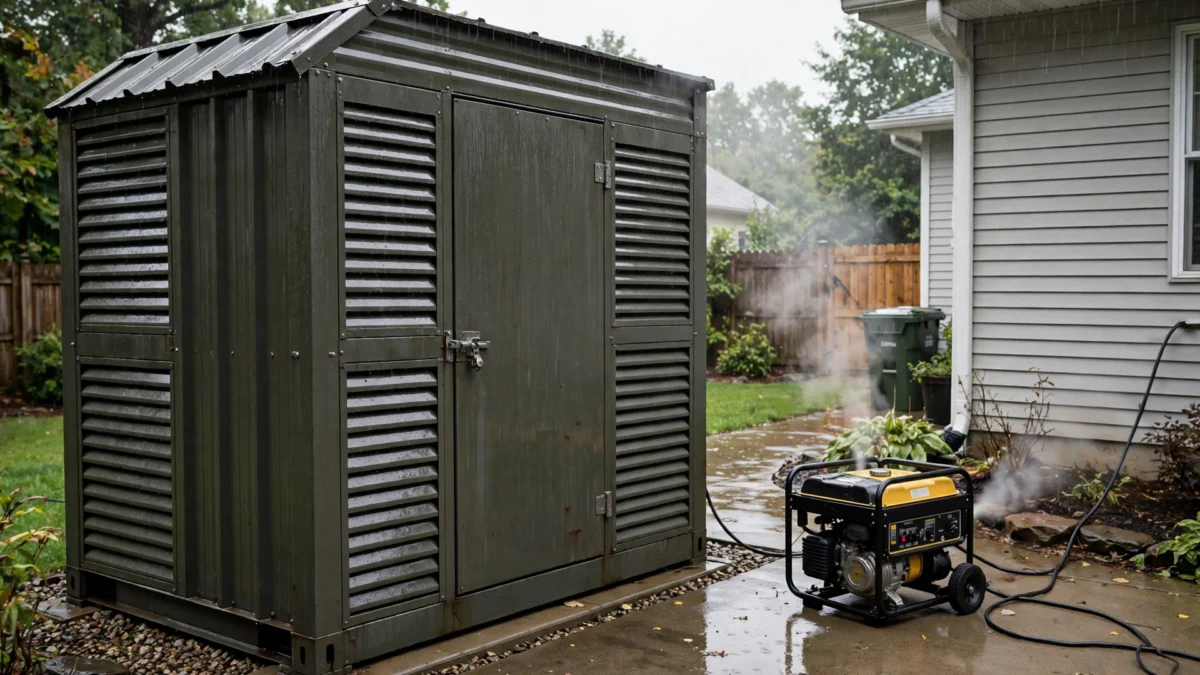
There’s a big difference between a generator cover and a generator shed, and it matters more than the price tag suggests. A cover keeps rain off a parked generator. A shed — a real rigid enclosure — is supposed to do two harder jobs: cut the noise your neighbors hear, and in some designs, let the generator run safely inside while it’s raining.
That second job is where people get into trouble. An engine in a box gets hot and makes carbon monoxide, and a shed that traps either one is dangerous. So this roundup has a split personality on purpose: true enclosures engineered for running, weatherproof running covers, and storage-only sheds you should never run a generator inside. I’ll tell you which is which for every pick.
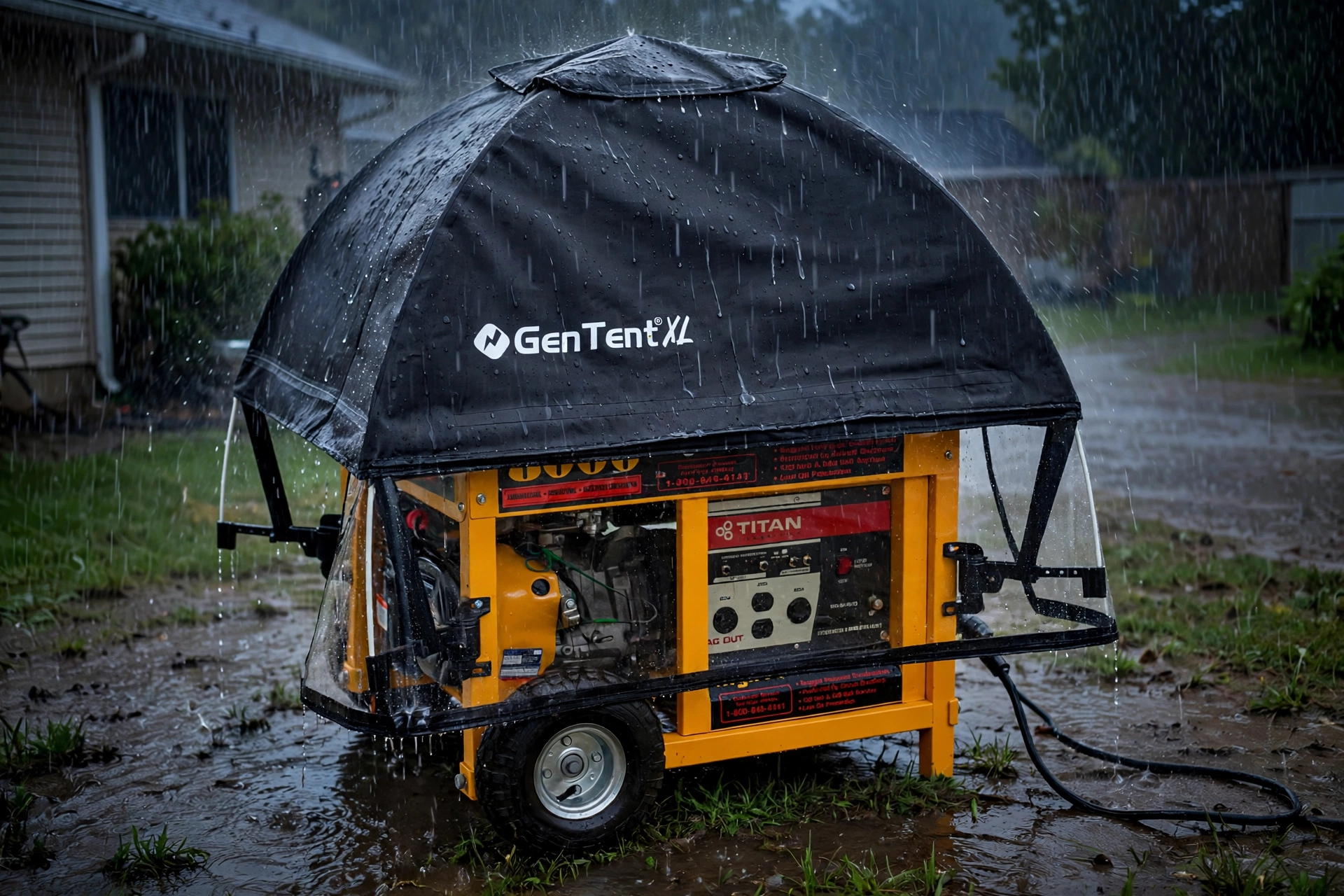
My top pick for most homeowners is the ZombieBox — it’s the only rigid option here that meaningfully cuts noise while the generator runs. If your problem is rain rather than noise, the GenTent XL is the engineered answer. And if you just need somewhere to park the thing, the Suncast shed does the job for a fraction of the price.
Key takeaways
- Noise-reducing enclosures (ZombieBox) and weatherproof running covers (GenTent) are the only options designed for operation — everything else is storage-only.
- A rigid steel enclosure can cut perceived generator noise by up to half; fabric covers don’t reduce noise.
- Any enclosure you run a generator in needs engineered ventilation plus an exhaust path — the ZombieBox exhaust extension kit exists for exactly this.
- Resin storage sheds are great for parking a generator, but never start one inside.
Quick picks
- Best noise-reducing enclosure: ZombieBox Generator Running Cover & Acoustic Barrier
- Best for wet weather (inverter): GenTent XL Inverter Generator Tent
- Best for wet weather (open frame): GenTent XL Open Frame Generator Tent
- Best value weather cover: Champion 100376 Storm Shield
- Best storage shed: Suncast BMS5700 Vertical Shed
- Best permanent shed: GENSHED Dual-Function Generator Shed
Best noise-reducing enclosure
ZombieBox Generator Running Cover & Acoustic Barrier
- Capacity: Portable generators up to 12,000W
- Noise Reduction: Up to 50% (manufacturer claim)
- Construction: 22-gauge galvanized steel
- Design: Two-way: upright barrier or over-generator tent
As an Amazon Associate, we earn from qualifying purchases.
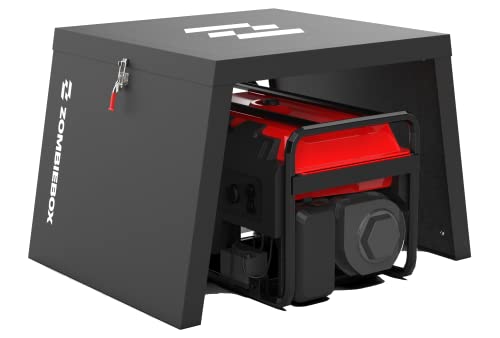
The ZombieBox is the closest thing to a “put the generator in the box and forget the noise” product that actually works. It’s built from 22-gauge galvanized steel and functions two ways: stand it upright as an acoustic barrier wall between the generator and your neighbors, or place it over the generator as a protective tent. The company claims up to 50% noise reduction, and owner reports back that up — it’s the difference between “that guy’s generator” and background hum.
What sets it apart from a DIY plywood box: it’s engineered not to cook the generator. The design maintains airflow and ventilation while blocking sound paths, and it fits portable generators up to 12,000 watts. The all-steel construction also means real weather protection — rain, snow, and UV don’t degrade it the way they do fabric covers.
Two things to be honest about. First, it’s heavy and costs several times what a fabric cover does — this is a buy-it-once purchase. Second, if you go the full-enclosure route, pair it with ZombieBox’s exhaust extension kit (pick #5 below). Venting the exhaust out of the enclosure is what keeps CO from building up inside, and it’s the piece DIY enclosure builders always skip.
Pros
- Real, measurable noise reduction — not marketing
- Rigid steel survives weather that kills fabric covers
- Engineered ventilation — won’t overheat the generator
- Doubles as a freestanding sound barrier
Cons
- Expensive compared to fabric covers
- Heavy — not something you’ll move often
- Full enclosure use needs the exhaust extension kit
Best for wet weather (inverter)
GenTent XL Inverter Generator Tent (Extreme)
- Material: NFPA 701 vinyl canopy, UL V-0 components
- Fitment: Fully enclosed inverters, 104–140″ perimeter
- Wind/Snow Rating: 110 mph / 20″ snow load
- Rain Rating: 18″ per hour
As an Amazon Associate, we earn from qualifying purchases.
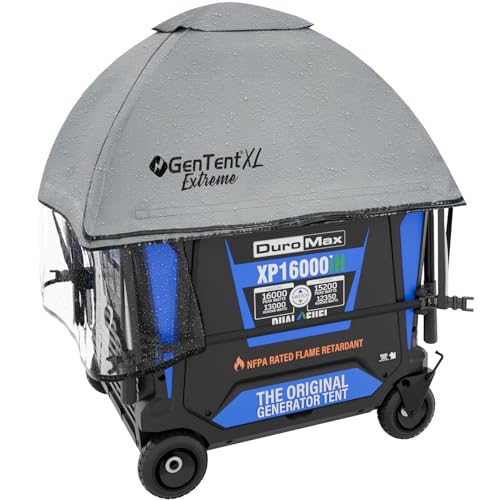
The GenTent is the only product in this category I’d call engineered rather than improvised. It’s a running cover — a canopy that goes over your generator while it operates — made from NFPA 701 dual-coated vinyl with UL V-0 flame-retardant components. Translation: it’s built from materials rated not to burn, which is exactly what you want inches from a hot engine.
The XL Inverter version fits fully enclosed inverter generators with perimeters from 104 to 140 inches — think the big Westinghouse, Honda EU7000is, and Cummins Onan inverter models. It attaches with a Kevlar strap system, no tools or drilling, and it’s rated for 110 mph winds, 20 inches of snow load, and 18 inches of rain per hour. The large refuel door means you can top off the tank without removing the cover.
The critical design point: it preserves the generator’s natural airflow and cooling. Cheap rain covers drape over the unit and trap heat; the GenTent’s frame holds the canopy off the case so exhaust and cooling air move normally. For storm-season running in wet weather, this is the one.
Pros
- Only cover here with documented fire ratings
- Engineered airflow — won’t overheat the generator
- Storm-rated for wind, snow, and heavy rain
- Refuel without removing the cover
Cons
- Doesn’t reduce noise at all
- Premium price for a fabric cover
- Measure your generator’s perimeter before ordering
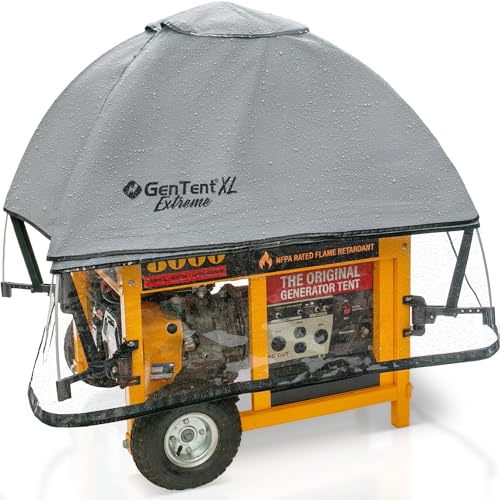
Best for wet weather (open frame)
GenTent XL Open Frame Generator Tent (Extreme)
- Material: NFPA 701 vinyl canopy, UL V-0 components
- Fitment: Open-frame generators, 105–128″ frame perimeter
- Wind/Snow Rating: 110 mph / 20″ snow load
- Rain Rating: 18″ per hour
As an Amazon Associate, we earn from qualifying purchases.
Same engineering as the inverter version, different mounting. Open-frame generators have exposed tube frames instead of enclosed cases, so this version uses a universal clamp system that grips the frame posts — no straps around a case that doesn’t exist. It fits larger open-frame units with frame perimeters from 105 to 128 inches, which covers most residential and commercial portables over 13kW.
Everything else carries over: NFPA 701 vinyl, UL V-0 flame-retardant components, 110 mph wind rating, 20-inch snow load, big refuel door. If you run a big open-frame unit (DuroMax XP13000EH, Westinghouse WGen series, that class) and your outage plan involves rain — and it will, eventually — this is the cover that lets you keep it running safely.
One practical note from owners: the clamp system takes about 20 minutes of fiddling the first time to get the positioning right. After that it’s a two-minute install. Budget the patience on day one and you’ll be glad you did.
Pros
- Engineered for open-frame units specifically
- Same fire ratings and storm ratings as the inverter version
- No drilling or permanent modification
- Stays put in heavy wind once clamped
Cons
- First-time clamp setup takes patience
- Doesn’t reduce noise
- Won’t fit enclosed inverter generators (get the other version)
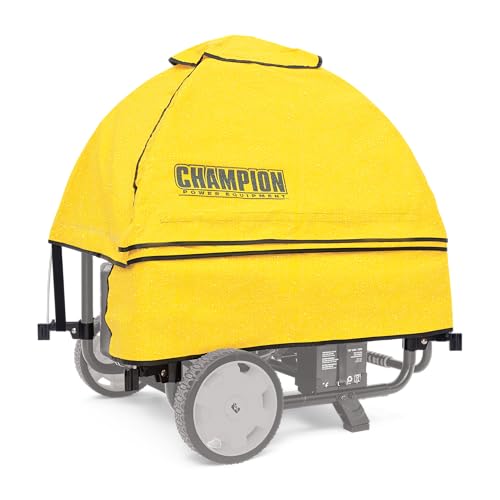
Best value weather cover
Champion 100376 Storm Shield Severe Weather Cover
- Weight: 4.4 lbs
- Fitment: Open-frame generators, 4,000–12,500 starting watts
- Wind/Rain Rating: 70 mph / 12″ per hour
- Snow Rating: 18″ per day
As an Amazon Associate, we earn from qualifying purchases.
Made by GenTent for Champion, the Storm Shield is essentially the GenTent concept at a lower price point: a running cover for open-frame generators from 4,000 to 12,500 starting watts. It installs in three steps with a self-attaching design, has a large refueling door and an electrical panel apron, and the natural-airflow design lets the generator run with the cover on.
The ratings are a step down from the full GenTent XL — 70 mph winds, 12 inches of rain per hour, 18 inches of snow per day — but still far beyond what any storm will throw at most homes. At 4.4 pounds it’s light enough to live in a storage bag until you need it.
The fitment caveat: it fits most Champion open-frame generators but explicitly excludes the 100111 (the giant 15kW unit). It also works on other brands’ open-frame units in the size range, but the apron is cut for Champion panel layouts — check your outlet positions against the cover’s openings.
Pros
- GenTent engineering at a lower price
- Three-step tool-free installation
- Run and refuel with the cover on
- Light and packable
Cons
- Lower storm ratings than the GenTent XL
- Excludes the Champion 100111
- Panel apron is cut for Champion layouts
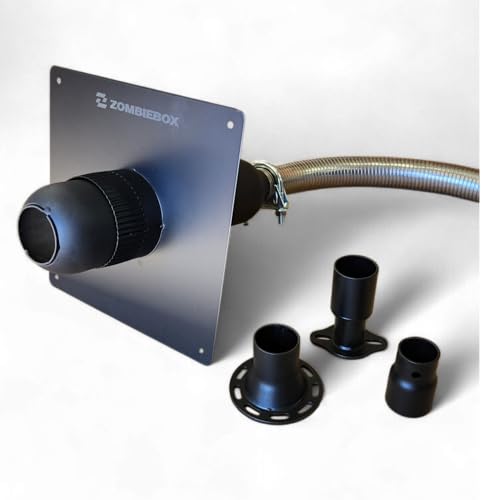
Essential accessory for enclosures
ZombieBox Exhaust Extension Silencer Kit
- Fitment: Most portable & standby generators (3 adapter styles)
- Construction: Aluminized steel, galvanized sheet metal
- Includes: 3 muffler adapters, clamps, flex hose, silencer, wall plate
- Installation: Bolts to stock muffler; 5″ wall hole for through-wall mount
As an Amazon Associate, we earn from qualifying purchases.
This isn’t a shed — it’s the thing that makes a shed safe. The exhaust extension kit bolts onto your generator’s muffler outlet (three adapter styles included for slip-on, bolt-on, and collector-style mufflers) and routes exhaust through a flexible hose and silencer to the outside of your enclosure, shed, or outbuilding.
Why it matters: a generator inside any enclosure produces carbon monoxide that has nowhere to go. The exhaust kit gets the CO out. It also changes the tone of the exhaust noise — owners report a deeper, less irritating sound — though ZombieBox is honest that it won’t magically make the generator quieter unless it’s actually enclosed.
If you’re building or buying any enclosure you plan to run a generator inside, budget for this kit from the start. It’s the difference between a shed and a safe shed. And pair it with a standalone CO alarm — our CO detector guide covers which ones are worth buying.
Pros
- Vents CO out of enclosures — the critical safety piece
- Three adapters fit most muffler styles
- Rust-proof industrial materials
- Softens exhaust tone
Cons
- Won’t reduce noise on its own
- Some mufflers need self-drilling screws to mount
- No free returns — measure and confirm fitment first
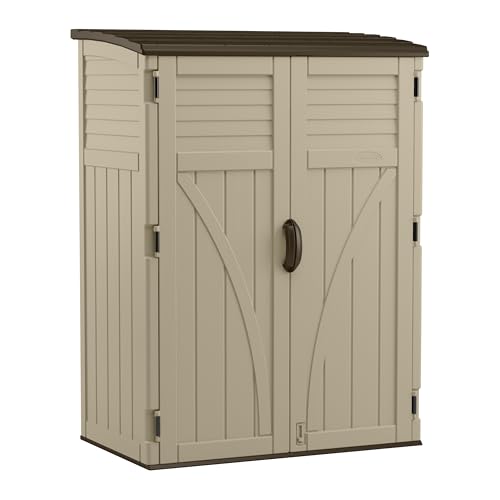
Best storage shed
Suncast BMS5700 Vertical Storage Shed (54 cu. ft.)
- Capacity: 54 cubic feet
- Dimensions: 53″ W x 32.5″ D x 71.5″ H
- Construction: Multi-wall resin, rust/rot-proof
- Security: Padlock-ready double doors
As an Amazon Associate, we earn from qualifying purchases.
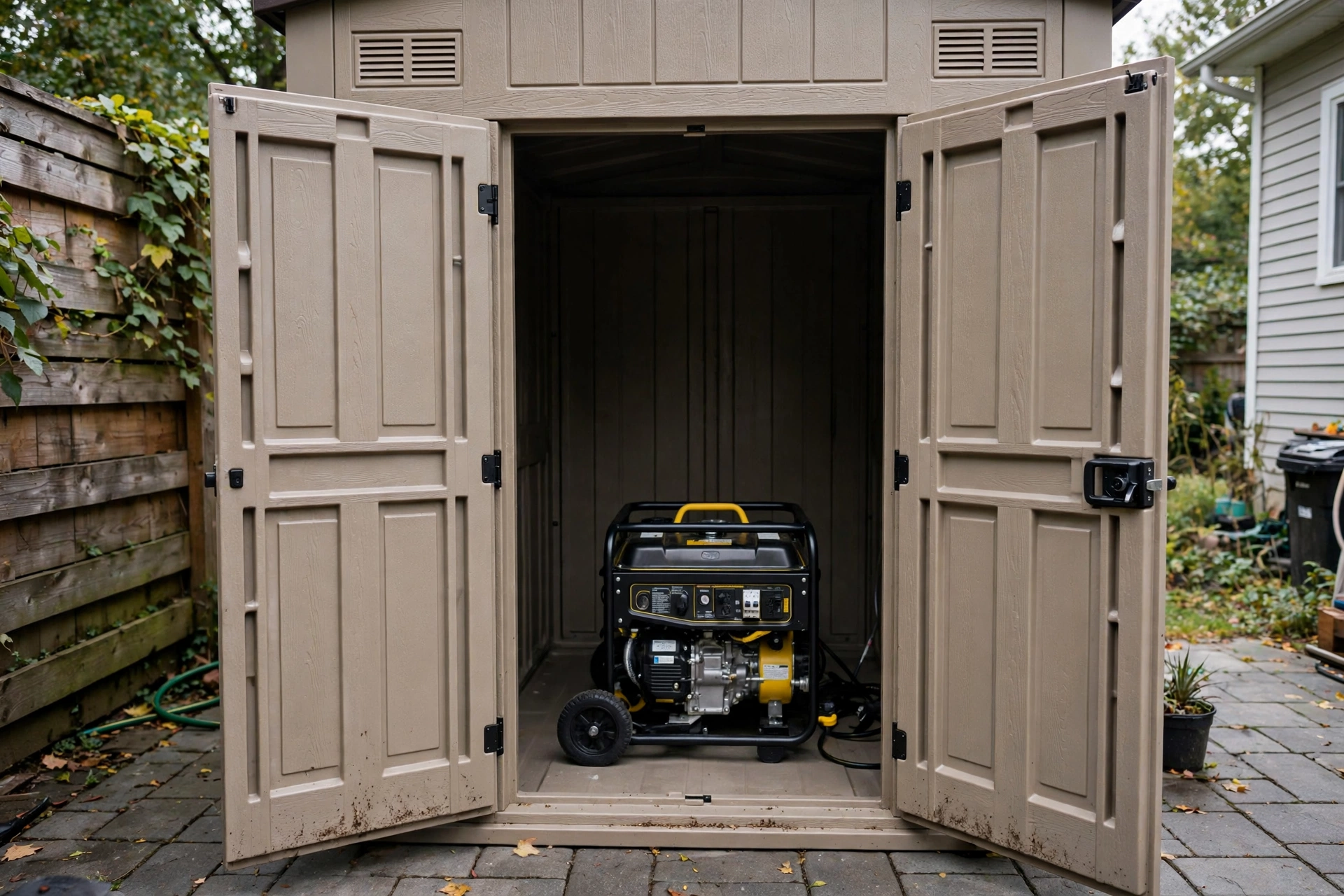
Sometimes the job isn’t noise or rain — it’s just getting the generator out of the garage. The Suncast BMS5700 is a 54-cubic-foot resin vertical shed: 53 inches wide, 32.5 deep, 71.5 tall. That’s enough for a mid-size portable generator plus fuel cans and cords, with room to spare.
The multi-wall resin construction won’t rust, rot, or need painting, and the double doors are padlock-ready. It goes together with minimal tools in an afternoon. For generator storage specifically, the vertical format is the right call — generators are tall and narrow, and a vertical shed wastes less footprint than a horizontal one.
The non-negotiable rule, stated plainly: this is storage only. Do not start a generator inside it, do not run one inside it with the doors open, do not “just warm it up” in there. A resin box with a gasoline engine running inside is a carbon monoxide chamber. Park it, close the doors, done. When the power goes out, wheel the generator 20+ feet from the house and read our guide on running a generator in the rain if the weather’s bad.
Pros
- Right size and shape for a portable generator
- Zero-maintenance resin — no rust, rot, or painting
- Lockable for security
- Affordable and easy to assemble
Cons
- Storage only — never run a generator inside
- Too small for the largest open-frame units
- No ventilation by design (it’s not meant to have any)
GENSHED Dual-Function Generator Shed
The GENSHED is the only product here designed from the ground up as a permanent outdoor home for a generator — a rigid shed you install once, sized for running, with the ventilation and cable routing thought out in advance. It’s the “build the doghouse once” option for people who are done dragging the generator out of the garage every storm.
The dual-function part is the pitch: it works as secure storage and as a running enclosure. Because it’s sold direct by the manufacturer rather than through Amazon, pricing and lead times vary — this is a considered purchase, not an impulse buy.
GENSHED isn’t on Amazon, so I can’t link a verified listing. If you’re going this route, buy direct from the manufacturer and confirm the ventilation specs against your generator’s manual before committing. And the same rule applies here as everywhere: exhaust management and a CO alarm are non-negotiable.
Pros
- Purpose-built as a permanent generator home
- Designed for running, not just storage
- Secure and weatherproof year-round
Cons
- Not on Amazon — direct purchase only
- Most expensive option here
- Verify ventilation specs for your specific generator
Availability note: GENSHED is sold direct by the manufacturer. I couldn’t verify an Amazon listing, so no link here — buy direct and confirm specs first.
Sheds and enclosures compared
| Product | Type | Run inside? | Noise reduction | Best for |
|---|---|---|---|---|
| ZombieBox | Rigid steel enclosure | Yes (with ventilation) | Up to 50% | Noise + weather |
| GenTent XL Inverter | Running cover | Yes | None | Wet weather, inverters |
| GenTent XL Open Frame | Running cover | Yes | None | Wet weather, open frame |
| Champion Storm Shield | Running cover | Yes | None | Value wet-weather cover |
| ZombieBox exhaust kit | Exhaust extension | Accessory | Slight tone change | Enclosure safety |
| Suncast BMS5700 | Resin shed | No — storage only | N/A | Parking the generator |
| GENSHED | Permanent shed | Yes (as designed) | Some | Permanent installation |
How to choose a generator shed or enclosure
Decide what problem you’re solving
Noise complaints? You need mass and sound blocking — the ZombieBox. Rain during outages? A running cover like the GenTent. Nowhere to put the thing? A storage shed. Most people who buy a shed actually have a noise or rain problem and would be better served by the right engineered product. Be honest about which problem is yours before spending.
“Run inside” is a safety claim — verify it
Any enclosure marketed for running should have three things: engineered ventilation (not just “some vents”), a defined exhaust path, and materials rated for heat. The GenTent publishes fire ratings. The ZombieBox is steel with designed airflow. A wooden box from a YouTube tutorial has none of this. If the manufacturer can’t explain how CO exits the enclosure, don’t run a generator in it.
Size it with room to spare
Measure your generator’s length, width, and height, then add clearance: at least 6 inches on all sides for airflow, more on the exhaust side. An enclosure that’s a tight fit runs hotter and louder than a roomy one. For running covers, match your generator’s perimeter to the cover’s fitment range.
Check your local rules
Some HOAs and municipalities regulate generator enclosures, noise, and setbacks from property lines. A permanent shed may need a permit. Our guide to generator noise laws covers where the legal lines usually sit.
Budget for the safety accessories
An enclosure without an exhaust plan and a CO alarm is half a solution. The exhaust extension kit and a quality CO detector add to the total cost — factor them in from the start rather than discovering the need after installation.
Frequently asked questions
Can I run my generator inside a shed?
Do generator sheds actually reduce noise?
What’s the difference between a generator cover and a generator shed?
How far should a generator enclosure be from the house?
Will a shed void my generator’s warranty?
Our verdict
Noise is your problem: get the ZombieBox, and add the exhaust extension kit if you’ll run fully enclosed. Rain is your problem: get the GenTent XL in the version that matches your generator type. You just need storage: the Suncast shed, and never start the generator inside it. Whatever you buy, the CO alarm in your house is the cheapest life-safety device in this entire roundup — don’t skip it.
How we researched this: We compared manufacturer engineering specs (fire ratings, wind/snow ratings, ventilation design), owner reviews, and current Amazon availability, verified in October 2026. We treated “safe to run inside” as a claim requiring evidence, not marketing copy. Where a stable Amazon listing couldn’t be confirmed, we said so. We did not receive free products from any manufacturer.

Related Guides
Westinghouse iGen4500DF Review: The Dual-Fuel Inverter to Beat in 2027
Westinghouse iGen4500DF review: 4,500W dual-fuel inverter, 52 dBA, remote start, RV-ready. We test the specs, noise, and value against Honda in 2027.

Champion vs Generac Generators: Which Brand Is Better in 2027?
Champion vs Generac: Champion wins portable value, Generac wins standby. We compare lineups, reliability, safety tech, and support to pick the right brand.
Inverter vs Conventional Generators: Which Should You Buy in 2027?
Inverter vs conventional generators: inverters win on noise, fuel use and clean power; conventional wins on watts per dollar. Here's how to choose in 2027.