


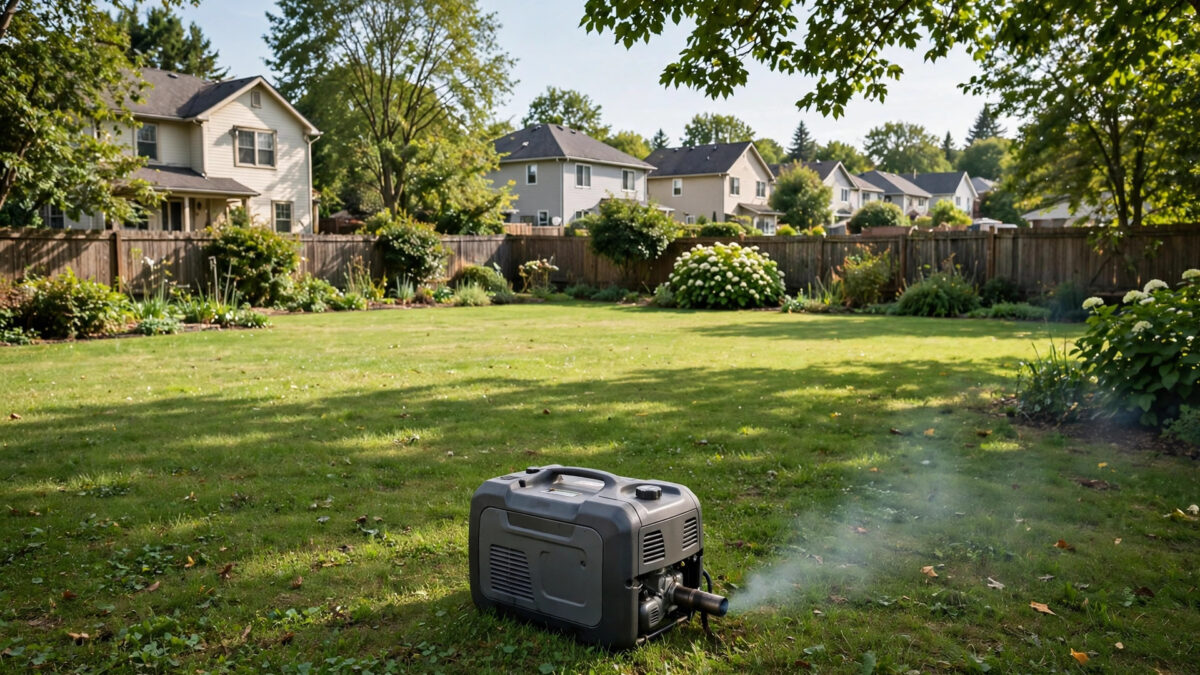
Yes, generators are legal in residential areas in most of the United States — but generator noise laws set real limits on how loud they can be, when they can run, and where they can sit. There is no single national noise law for home generators; instead, cities, counties, and HOAs each set their own rules, usually measured in decibels at the property line with stricter limits at night. Understanding your local ordinance before you buy is the difference between a smooth-running backup plan and a fine or a neighbor dispute.
Key Takeaways
- Generators are generally legal in residential areas, but local generator noise laws limit loudness (often around 55–65 dB at the property line during the day) and restrict nighttime use.
- There is no federal residential generator noise limit — your city or county ordinance and your HOA rules are what count.
- Inverter generators (typically 50–60 dB) are far easier to keep compliant than conventional open-frame models (typically 68–78 dB).
- Many areas exempt generators during declared emergencies or outages, but routine testing and non-emergency use usually must follow normal quiet hours.
- When in doubt, measure at your property line with a phone decibel app, keep the generator as far from neighbors as practical, and check the ordinance before buying.
Are Generators Legal in Residential Areas?
In the vast majority of American neighborhoods, yes — owning and running a generator at home is legal. What the law regulates is not the generator itself but its effects: noise, exhaust, fuel storage, and placement. Some municipalities restrict generator use to outage or emergency situations, some limit run times for non-emergency use like construction or recreation, and homeowners associations frequently add their own layer of rules on top. A small number of dense urban areas or specific zoning districts may prohibit or heavily restrict them, so the answer for your address comes from your local ordinance, not from any national rule.
The most common legal framework is the municipal noise ordinance. These ordinances typically define maximum allowable sound levels by zoning type (residential, commercial, industrial), by time of day (daytime vs. nighttime/quiet hours), and by measurement point — almost always at the property line or at the nearest neighboring residence. Violations are usually handled as civil infractions with fines, and enforcement is almost always complaint-driven: nobody measures your generator until a neighbor calls.
How Generator Noise Laws Work
Generator noise laws almost always speak in decibels (dB or dBA — the A-weighted scale that matches human hearing). Because decibels are logarithmic, small numbers matter: a 70 dB generator is roughly twice as loud to human ears as a 60 dB one, and 10 dB of reduction feels like halving the noise. Ordinances typically set daytime residential limits in the neighborhood of 55–65 dBA at the property line, with nighttime limits 5–10 dB lower, and many define quiet hours roughly between 10 p.m. and 7 a.m. These are representative ranges, not universal — your city’s numbers are what bind you.
What ordinances usually cover
A typical residential noise ordinance addresses four things: the maximum decibel level, the hours it applies (day vs. night), where it is measured (property line or neighbor’s home), and the exceptions. Common exceptions include emergency situations, permitted construction during daytime hours, and sometimes brief equipment testing. Some ordinances also set separate rules for “plainly audible” sound at certain distances, which can catch even a quiet generator at 2 a.m.
Representative examples of how cities handle it
To give you a feel for the landscape: many large cities cap residential daytime noise around 55–65 dBA at the property line and drop to 45–55 dBA overnight; some suburbs are stricter, with nighttime caps near 50 dBA. A few jurisdictions specifically name generators or “motor-driven equipment” in their ordinances, while most cover them under general mechanical-equipment or nuisance provisions. Treat these as illustrations only — the actual numbers, measurement methods, and exceptions in your city are what matter, and they are usually published on your city or county website under “noise ordinance” or “municipal code.”
How to find your local ordinance
Search “[your city] noise ordinance” or “[your county] municipal code noise.” Look for sections on residential sound limits, quiet hours, and exceptions for emergency equipment. If the code language is unclear — and it often is — a short call to the city’s code enforcement or non-emergency line will usually get you a plain-English answer. Save or screenshot what you find; if a neighbor ever complains, knowing the actual numbers puts you in control.
Generator Noise Levels by Type: What the Numbers Mean
The single biggest factor in staying within generator noise laws is the generator you buy. Manufacturers publish noise ratings in decibels, usually measured at a set distance (commonly around 23 feet, or 7 meters) at a fraction of load. Those published numbers are your planning baseline — real-world noise varies with load, surface, and enclosure, but the gaps between generator types are large and consistent.
| Generator type | Typical noise range | What it sounds like |
|---|---|---|
| Inverter generator (2,000W class) | 50–60 dB | Normal conversation; usually compliant at the property line |
| Inverter generator (larger, 4,000–7,000W) | 58–66 dB | Busy office; usually fine daytime, check nighttime limits |
| Conventional open-frame portable | 68–78 dB | Vacuum cleaner to busy street; often over residential daytime limits at close property lines |
| Permanent standby (with enclosure) | 60–70 dB | Varies widely; enclosures help, but check the spec sheet |
Notice the practical takeaway: a quiet inverter generator at 52 dB gives you enormous legal headroom, while a conventional open-frame unit at 74 dB may already exceed a 65 dB daytime property-line limit before it even reaches your neighbor’s fence. If you live on a small lot with close neighbors, noise output should be one of your top purchase criteria — not an afterthought.
How to Stay Within the Rules: 6 Practical Steps
Compliance is mostly common sense plus a little planning. These steps keep you on the right side of generator noise laws and on good terms with your neighbors.
Step 1: Buy quiet in the first place
An inverter generator in the low-50s dB range is the simplest compliance strategy ever invented. We researched current lineups and found that the quietest portable options cluster around 50–60 dB — a different world from the 70+ dB of conventional units. Our roundup of the best inverter generators highlights the quietest picks if noise is your deciding factor.
Step 2: Maximize distance from property lines and neighbors
Sound drops roughly 6 dB every time you double the distance. Moving a generator from 10 feet to 20 feet from the property line cuts its apparent loudness noticeably. Place it as far from neighboring bedrooms and living spaces as your extension cords or inlet cable safely allow — while keeping the required 20+ feet from your own home’s doors, windows, and vents for carbon monoxide safety.
Step 3: Use barriers and soft surfaces
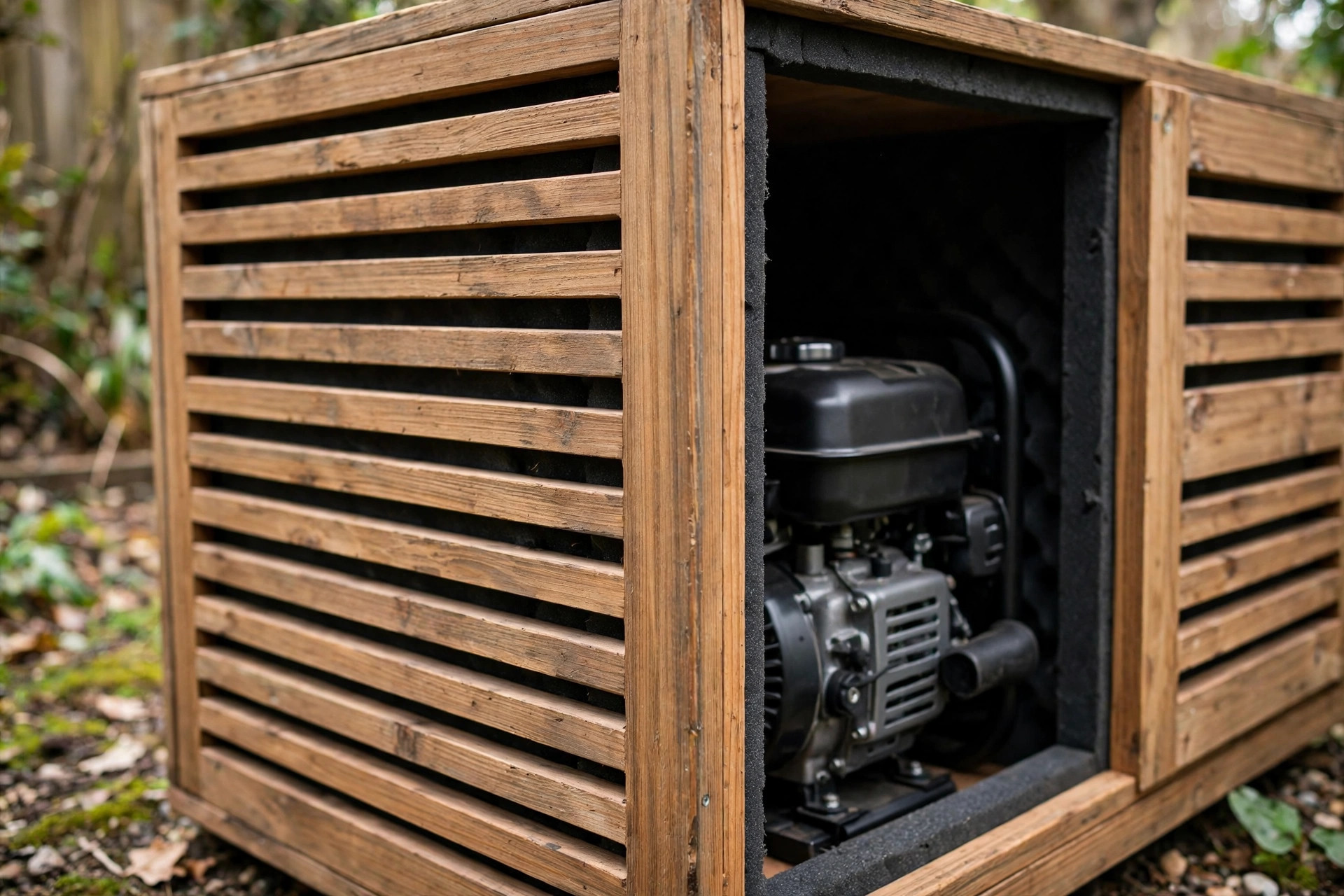
A solid fence, a wall, or purpose-built sound-dampening barriers between the generator and the neighbor absorb and deflect noise. Soft ground (grass, mulch) absorbs more sound than concrete or a deck. Never fully enclose a running generator in a way that blocks airflow or traps exhaust — overheating and carbon monoxide are far worse problems than noise.
Step 4: Respect quiet hours — especially for testing
Outages are one thing; your monthly 15-minute test run at 6 a.m. on a Sunday is another. Run maintenance tests mid-day, keep them short, and let close neighbors know the schedule. Most noise complaints about generators involve non-emergency running, not storm outages.
Step 5: Measure at your property line
A free smartphone decibel-meter app is not lab-accurate, but it is good enough for a reality check. Run the generator under typical load, walk to your property line nearest the neighbor, and compare the reading to your ordinance limit. If you are close to the line, add distance or barriers before anyone complains.
Step 6: Talk to your neighbors before an outage
A generator that saves the street’s frozen food during an ice storm earns goodwill; a generator that roars through every quiet evening earns a code-enforcement visit. A brief heads-up — “we have a backup generator for outages, it’s an inverter model, very quiet” — costs nothing and pays off enormously.
HOA Rules: The Second Layer of Law
If you live under a homeowners association, the HOA’s covenants are effectively a second set of generator noise laws — and they can be stricter than the city’s. HOAs commonly regulate generator placement (screened from view), run times, noise levels, fuel storage, and even whether permanent standby units are allowed at all. Some require architectural review before you install a standby unit.
HOA rules are a contract you agreed to when you bought the home, and HOAs can levy fines or place liens for violations. Check your CC&Rs before purchasing a generator, not after. If the rules are ambiguous about generators, get written clarification from the board — verbal “sure, that’s fine” from one board member is worth nothing at a violation hearing.
Do Generator Noise Laws Apply During Power Outages and Emergencies?
Often, partially. Many noise ordinances include exceptions for emergency situations, and some specifically exempt generators operating during utility outages or declared emergencies. But “exempt during emergencies” does not always mean “unlimited”: some jurisdictions still cap nighttime noise even during outages, and the exemption usually ends when the emergency does. Non-emergency running — construction, tailgating, RV use at home, routine exercise runs — generally gets no exemption at all.
The practical read: during a genuine outage, run what you need to stay safe, keep it as quiet and considerate as you reasonably can, and shut down non-essential loads overnight if your situation allows. Once power is restored, the normal rules snap back immediately — do not let the generator idle for hours “just because.”
Are generators legal in residential neighborhoods?
How loud can my generator legally be?
What is the quietest type of generator for a neighborhood?
Can my HOA ban my generator?
Do noise ordinances apply to generators during a power outage?
How can I make my generator quieter for my neighbors?
Conclusion
Generator noise laws are not there to stop you from keeping the lights on — they are there to keep one household’s backup power from becoming the whole street’s problem. The formula for staying legal is straightforward: know your local decibel limits and quiet hours, buy a quiet inverter generator if your lot is small, maximize distance and barriers, and keep non-emergency running to mid-day. Do that, and your generator will be an asset your neighbors appreciate during the next outage instead of a complaint waiting to happen. If you are still choosing a unit, start with our guide to the quietest inverter generators of 2027.

Related Guides
How Much Does It Cost to Run a Generator Per Hour? Fuel Cost Calculator
Running a generator costs $0.35-$7+ per hour by size and fuel type. Use our simple calculator formula and fuel cost tables to estimate your exact cost.

Bonded vs Floating Neutral on Generators: What’s the Difference?
Bonded vs floating neutral generator explained: what each means, the one-bond rule, which setup your transfer switch needs, and how to check your own unit.
Generator THD Explained: What It Means for Electronics & Appliances
Generator THD explained: what total harmonic distortion means, the under-3% vs over-6% tiers, which appliances need clean power, and how to check the spec.