


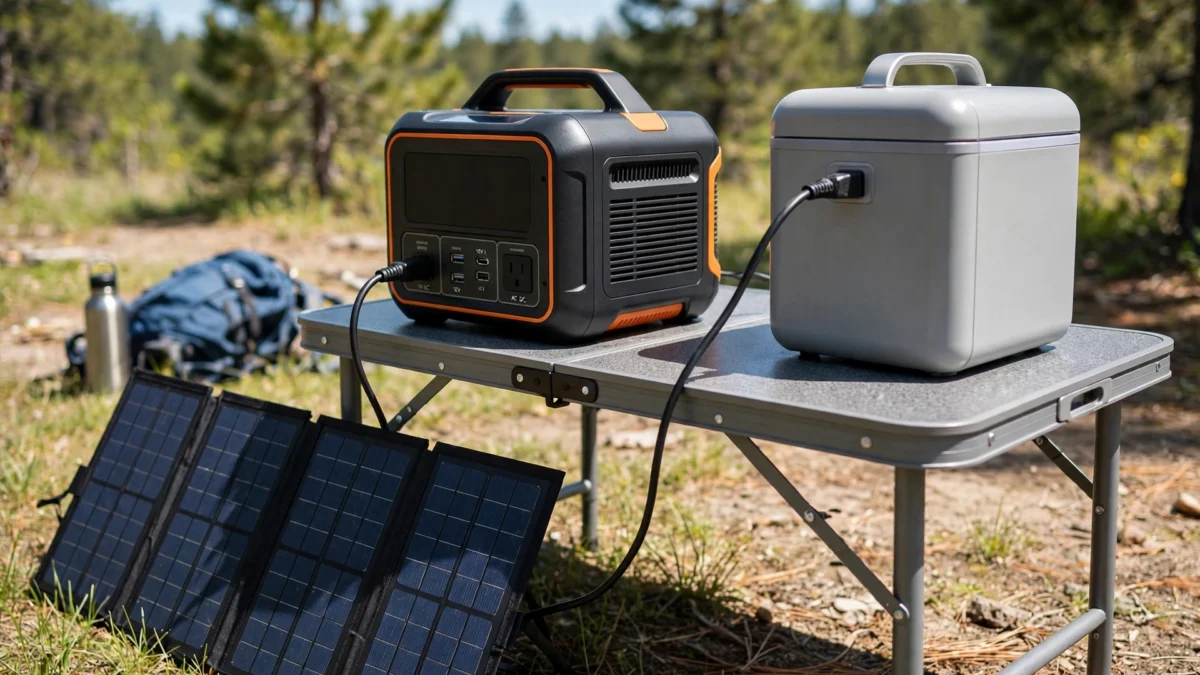
Pass-through charging means you can use a solar generator’s outlets while it’s charging — running your fridge from it at the same time your solar panels (or a wall outlet) refill its battery. Most modern power stations from EcoFlow, Bluetti, and Jackery support it, and it’s one of the first things I check on any unit I’m considering.
But “pass-through” works differently depending on what you’re charging from, and the marketing rarely explains the mechanics. Here’s what’s actually happening inside the box, why it matters for real-world use, and the limitations worth knowing before you buy.
Key takeaways
- Pass-through charging = simultaneous charging and discharging, so there’s no downtime while the battery refills.
- On AC (wall) input, most units switch to bypass mode: grid power flows straight to your devices while the battery tops up separately.
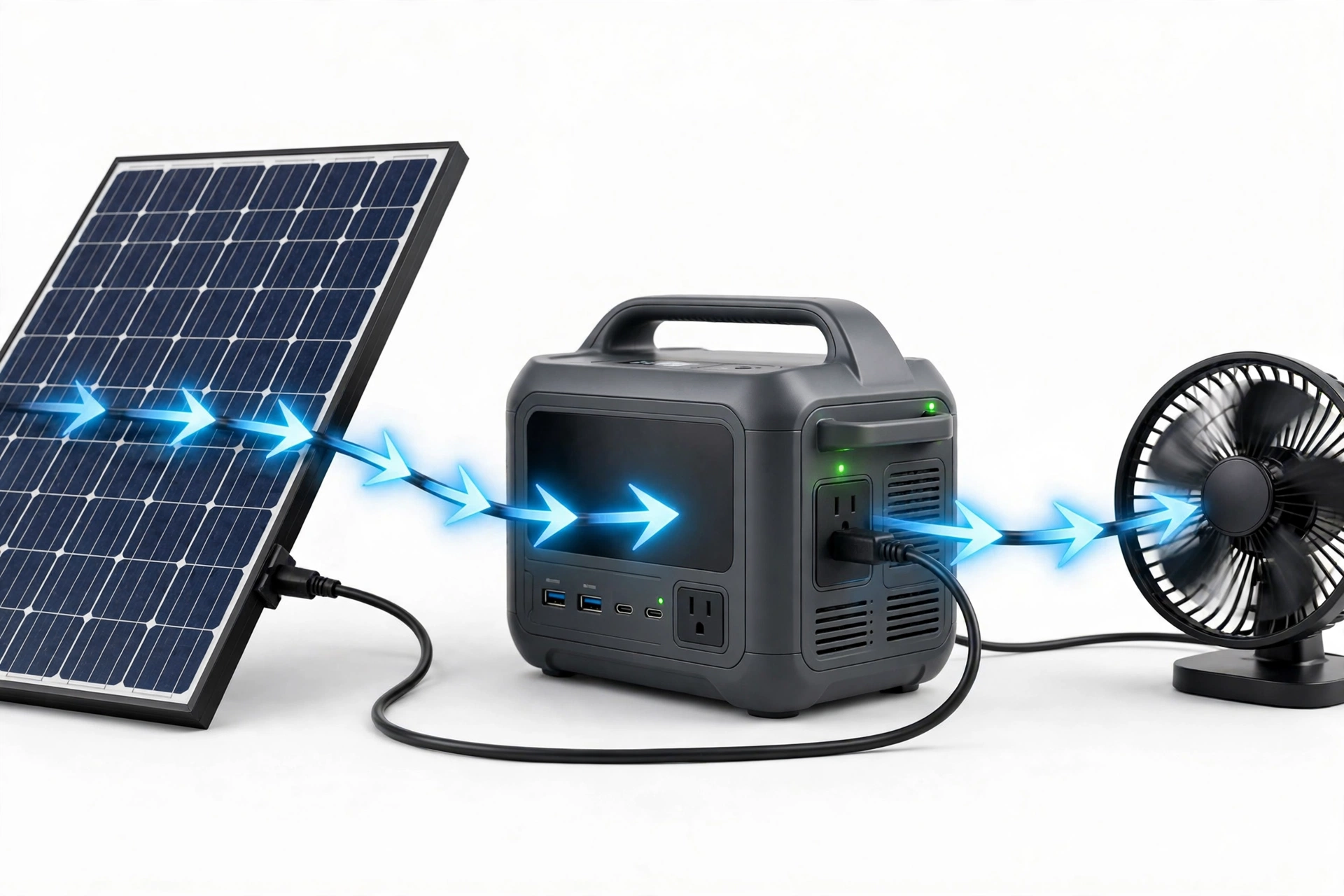
- On solar input, panels feed the battery while the inverter draws from it — loads get priority, surplus charges the battery.
- Not every station supports it — check before buying if you plan to run loads 24/7.
- Bypass mode can limit max output (e.g., ~1,800W on some EcoFlow models in EPS mode) versus battery-only output.
What Pass-Through Charging Actually Means
At its simplest: the power station doesn’t make you choose between charging and using. Without pass-through, you’d have to unplug your fridge to recharge the battery — fine for a phone bank, useless for backup power.
The confusion comes from the fact that “pass-through” describes two different electrical behaviors, depending on the input:
AC input: true bypass mode
When you plug a station like the EcoFlow DELTA Pro into a wall outlet and connect devices to its AC outlets, it typically enters bypass mode. The incoming grid power flows straight through to your devices — the battery isn’t in the middle at all. Meanwhile, a separate charging circuit tops up the battery in the background.
This is clever engineering. Most power stations use the same internal components for charging and inverting, so they can’t literally charge and invert at full power through the same path simultaneously. Bypass mode sidesteps the problem: the grid handles your loads, the charger handles the battery, and if the grid drops, the unit switches to battery (that’s the EPS/UPS function — more on that in our solar generator sizing guide’s companion article on UPS mode).
One catch I learned from owner reports: in bypass/EPS mode, some units cap AC output below their battery-only rating. The DELTA Pro, for example, limits pass-through output to around 1,800W versus 3,600W from battery. Check your manual — running a 2,500W load through a bypass-limited station will trip it even though the battery could handle it alone.
Solar/DC input: shared DC bus
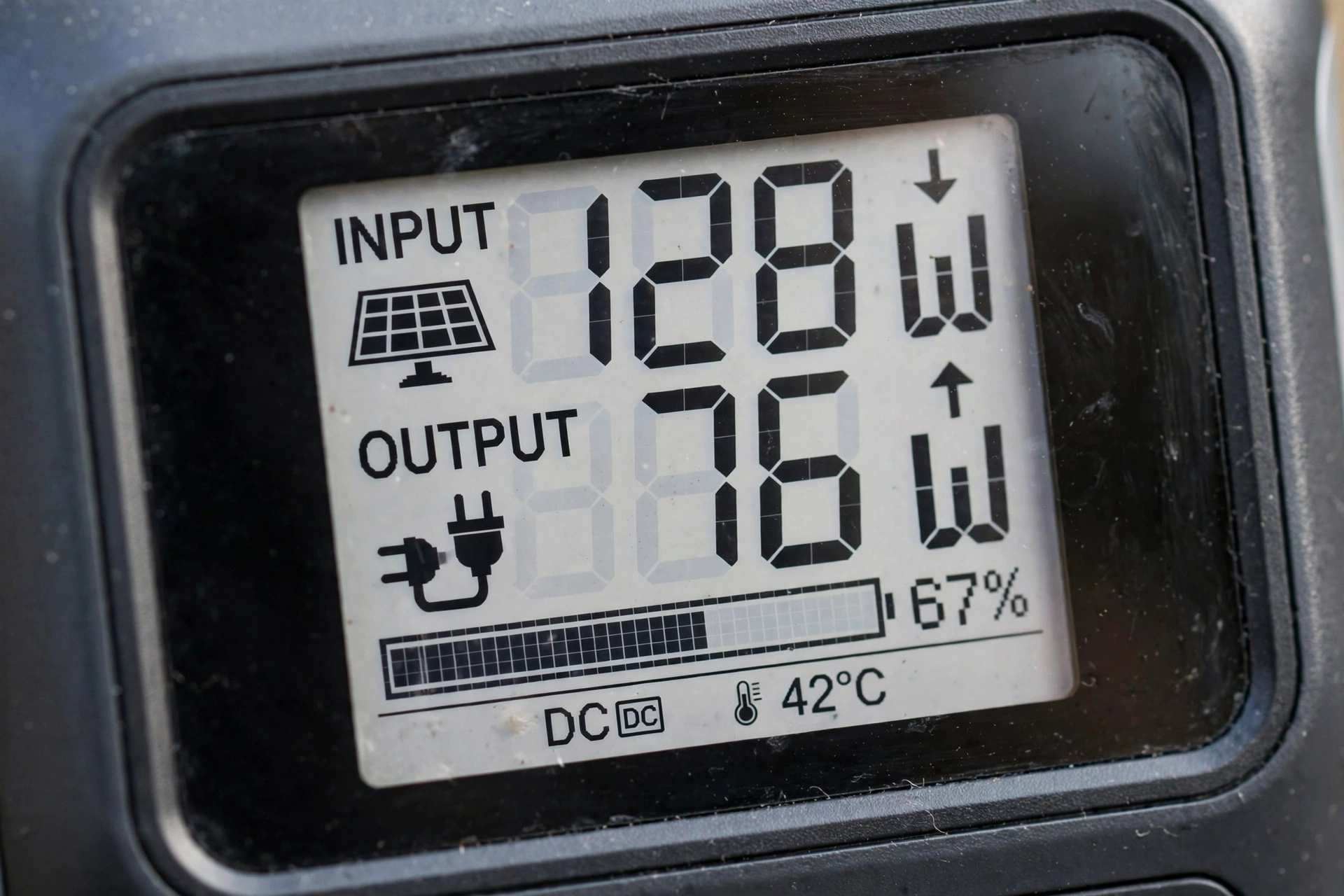
Solar works differently. The panels feed DC into the battery’s charge controller while the inverter simultaneously draws DC out of the battery to run your AC loads. On most units the solar input, battery, and inverter share a common DC bus — loads effectively get first claim on incoming solar, and whatever’s left over charges the battery.
EcoFlow’s implementation has a quirk worth knowing: with no AC input connected, the unit lets the battery dip to about 98%, then enables solar charging back up to 100%, then repeats. It cycles the solar input on and off in that narrow band rather than smoothly throttling it. Functionally it still works — your loads stay powered and the battery stays near full — but it’s a charge-discharge micro-cycle, not a pure pass-through.
Why It Matters: Three Real Scenarios
1. The campsite fridge
This is the classic. You plug a 12V camping fridge into the station, lay out 200–400W of panels, and the fridge runs indefinitely while the battery floats near full. Without pass-through, you’d be unplugging the fridge for hours each day to recharge — and warm food is the fastest way to ruin a trip.
2. Home backup without the gap
Used as a mini-UPS for a router, a CPAP, or a sump pump, the station sits on wall power in bypass mode. Your devices run on grid power; the battery waits at full charge. When the grid fails, the switch to battery happens in milliseconds. No pass-through, no seamless backup — you’d have to manually move plugs during an outage.
3. The off-grid cabin
In a cabin or van setup, pass-through is what makes the system feel like “real” power. Panels charge by day, loads run whenever — nobody thinks about whether the battery is currently charging. The station just behaves like an outlet that happens to have a battery behind it.
Which Brands Support It?
The honest answer: most current models from the major brands do, but the details differ and a few product lines don’t.
| Brand / line | Pass-through support | Notes |
|---|---|---|
| EcoFlow (River 2, Delta 2/3, Delta Pro) | Yes | AC input triggers bypass mode; solar charges while inverting |
| Bluetti (AC series, Elite series) | Yes | Similar bypass behavior on AC input |
| Jackery (Explorer / HomePower) | Yes (most models) | Check specific model — older Explorers had limits |
| Anker SOLIX | Yes | Supports simultaneous charge/discharge |
| EGO Power+ Nexus | No | Charge or discharge — a known limitation |
The EGO example matters because it shows why you check. I nearly recommended one to a friend for CPAP backup before learning it can’t do both at once — which disqualifies it for that job entirely. Always confirm in the manual, not the marketing page.
The Limitations Nobody Puts on the Box
Heat is the hidden cost
Charging and inverting simultaneously means the power electronics work continuously instead of resting between cycles. In a hot garage or direct sun, that sustained heat shortens component life and can trigger thermal throttling — the unit quietly reduces charge speed to protect itself. Give the station airflow on all sides, especially in pass-through duty.
Micro-cycling wears the battery (slightly)
That 98–100% solar cycling I mentioned means the battery does dozens of tiny partial cycles per day instead of sitting still. On LiFePO4 chemistry (3,000+ full cycles to 80% capacity), this is genuinely negligible — a year of micro-cycling costs you a fraction of a percent of lifespan. On older NMC batteries it’s still small, but worth knowing.
Bypass output limits
Worth repeating because it bites people: in AC bypass mode, output may be capped below the battery-only rating. Size your continuous loads against the bypass number if the unit will live on wall power.
It doesn’t make a station a true UPS
Pass-through is the plumbing that makes UPS-style use possible, but switchover speed is a separate spec. A station can pass through beautifully and still take 30ms to switch to battery — fine for a fridge, risky for a desktop PC. We cover that distinction in our guide to solar generator UPS mode — browse all 51 of our calculators there too.
Frequently Asked Questions
Can I use my solar generator while it’s charging?
Does pass-through charging damage the battery?
Do all portable power stations have pass-through charging?
Why does my EcoFlow limit output when plugged into the wall?
Can solar panels keep up with my loads during pass-through?
Bottom Line
Pass-through charging is the feature that turns a big battery into something that behaves like real power — plug loads in, feed it sun or wall power, and stop thinking about it. Just remember the two things the brochure skips: check the bypass output limit if it’ll live on wall power, and confirm the feature exists at all on the specific model you’re buying. Get those right and it’s the most quietly useful spec on the sheet.

Related Guides
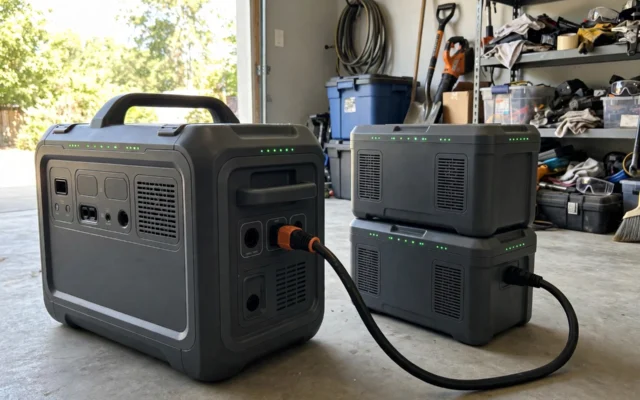
Solar Generator Expansion Batteries: How They Work & Are They Worth It?
Expansion batteries can double or triple your solar generator's capacity. How they connect, what they cost per kWh, and when they're worth it — vs. just buying bigger.

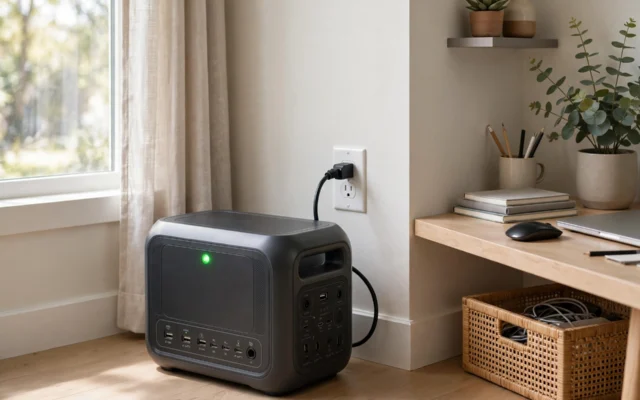
Can You Leave a Solar Generator Plugged In All the Time?
Can you leave a solar generator plugged in 24/7? Yes — the BMS prevents overcharging. But sitting at 100% shortens battery life. Here's the 80% rule and the right settings.
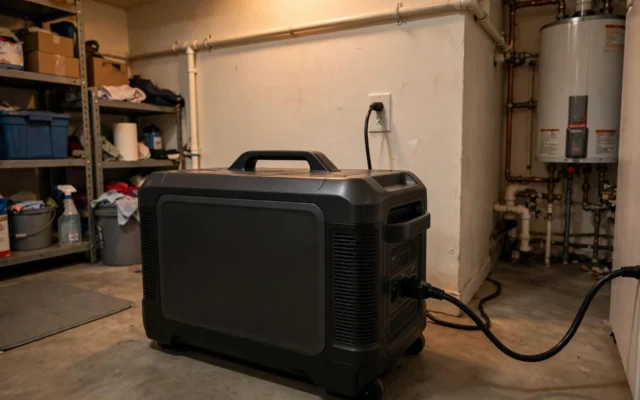
Can a Solar Generator Work as a UPS for Home Backup?
A solar generator can work like a UPS for most home backup — but it's technically EPS, not a true UPS. Switchover times, what stays on, and what doesn't.