


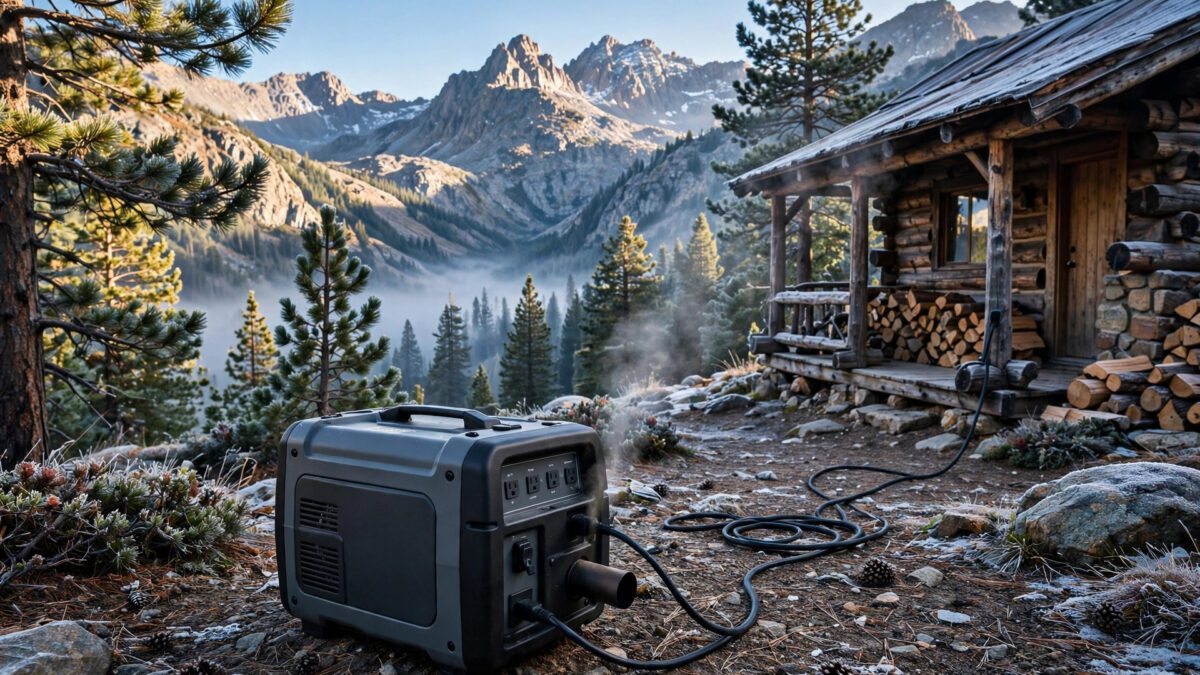
Here’s something the generator industry doesn’t advertise loudly: your generator loses power as you climb. At 5,000 feet — Denver, Albuquerque, most of the Mountain West — a gasoline engine makes roughly 15% less power than at sea level. At 10,000 feet, you’re down 25–30%. The air is thinner, so the engine breathes less oxygen, so it makes less power. Physics doesn’t negotiate.
I learned this the expensive way years ago watching a friend’s “7,000-watt” generator trip its breaker running a 5,500-watt load at 9,000 feet in Colorado. The generator was fine. The altitude derating was doing exactly what the manual’s fine print said it would. If you live or camp above 3,000 feet, you need to buy for the altitude you’re at — not the altitude the spec sheet was written at.
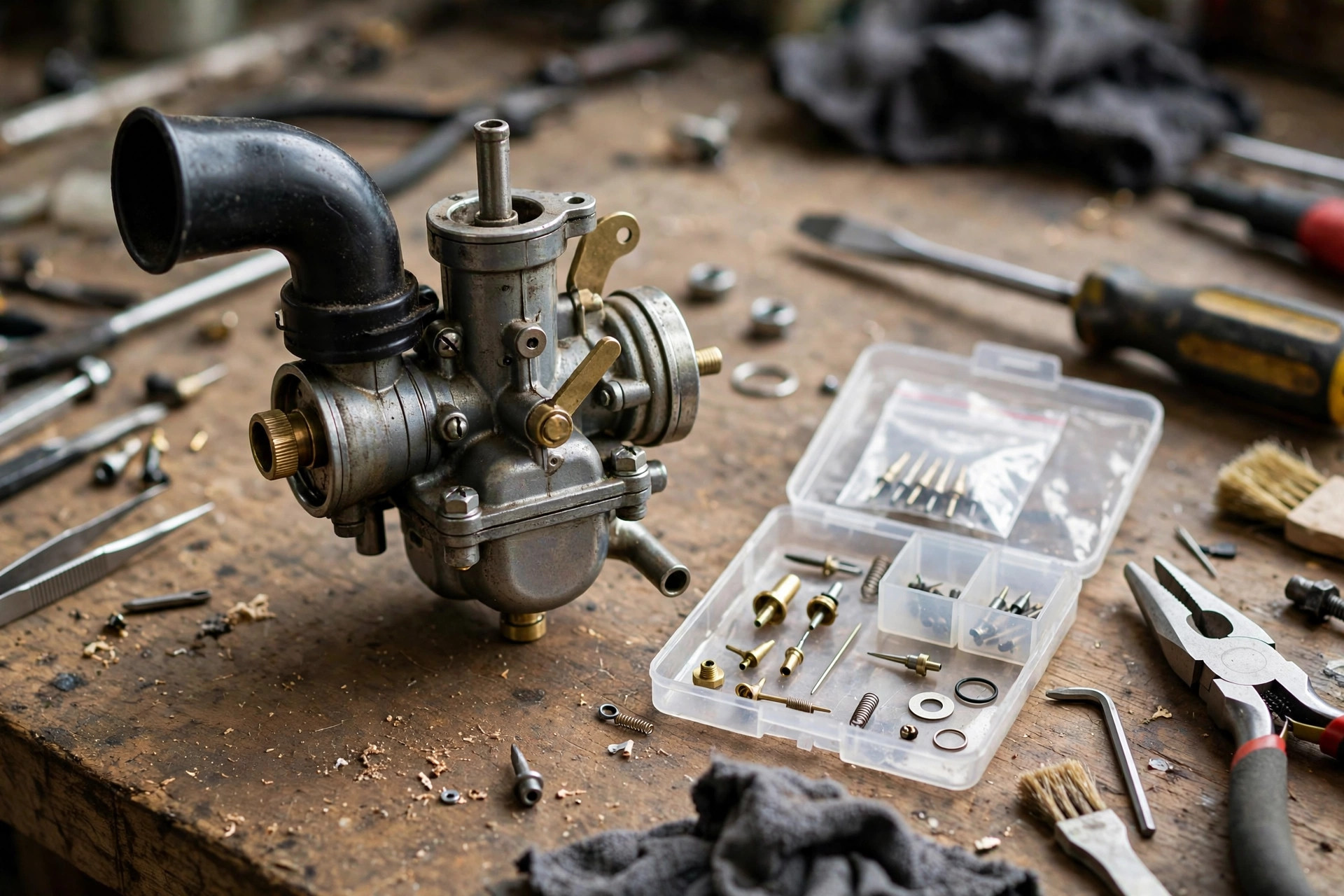
There are two ways to fight derating: buy fuel injection (which compensates automatically), or buy bigger than you need and accept the loss. Here’s the best of both approaches for 2027.
Key takeaways
- Expect ~3% power loss per 1,000 feet of elevation. At 5,000 ft that’s ~15%; at 10,000 ft, ~25–30%.
- Fuel-injected generators (Honda EU7000iS, EU3200i) adjust automatically — they’re the best high-altitude picks with no jet changes.
- Carbureted generators need a high-altitude jet kit above ~5,000 ft, or they’ll run rich, waste fuel, and foul plugs.
- The simplest strategy: size up one class. If you need 5,000 watts at 8,000 feet, buy a 7,000-watt generator.
Quick picks: Best overall — Honda EU7000iS. Best small fuel-injected — Honda EU3200i. Best budget with jet kit — Honda EU2200i. Best quiet value — Generac iQ3500. Best big conventional — DuroMax XP13000HXT.
Best overall
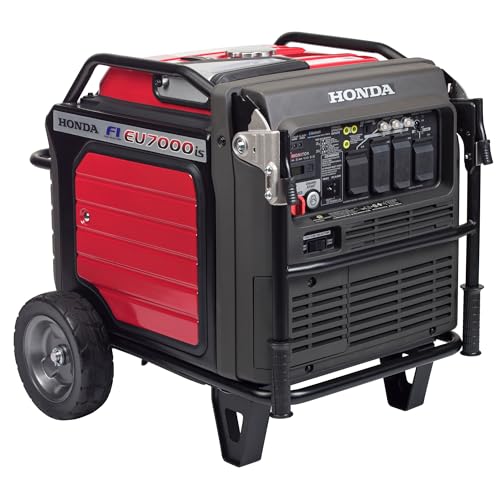
Honda EU7000iS Inverter Generator
- Running Watts: 5,500 (derate ~3%/1,000 ft)
- Runtime: Up to 16 hours (light load)
- Noise Level: 52–58 dB
- Weight: ~270 lbs
As an Amazon Associate, we earn from qualifying purchases.
The EU7000iS is the best high-altitude generator you can buy, and it’s not close. The electronic fuel injection continuously adjusts the fuel-air mixture for the actual air density — no jet kit, no manual changes, no running rich. You get the same easy starts at 10,000 feet as at sea level, which anyone who’s pull-started a carbureted generator in thin cold air will appreciate viscerally.
You still lose raw power to thin air — EFI can’t create oxygen — but you lose only the unavoidable ~3% per 1,000 feet, not the extra penalty of a mis-jetted carburetor. At 5,000 feet, the EU7000iS’s 5,500 running watts becomes roughly 4,700. Plan for that and you’re fine. Our full EU7000iS review has the complete breakdown.
Pros
- Fuel injection — no jet changes, ever
- Starts easily in thin, cold air
- Quiet and fuel-efficient
- 240V output
Cons
- ~$5,000
- Still derates — buy with headroom
Best small fuel-injected
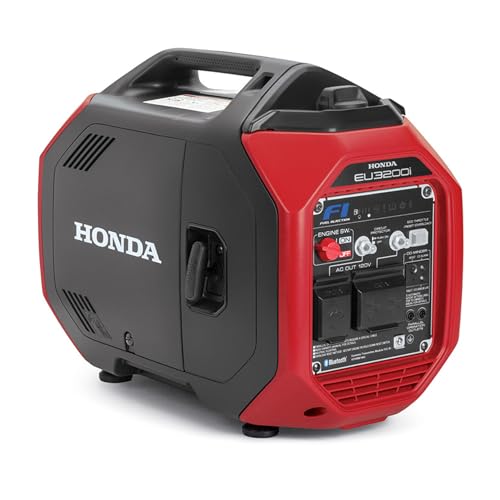
Honda EU3200i Inverter Generator
- Running Watts: 2,600 (derate ~3%/1,000 ft)
- Runtime: Up to 8.6 hours at quarter load
- Noise Level: 54–58 dB
- Weight: ~60 lbs
As an Amazon Associate, we earn from qualifying purchases.
Same fuel-injection advantage in a smaller package: 3,200 peak / 2,600 running watts at sea level, auto-compensating for altitude. At 8,000 feet that’s roughly 2,000 running watts — still enough for a camper’s essentials, a small cabin’s lights and fridge, or a job site’s battery chargers. At ~60 pounds it’s the one you can actually carry up the mountain.
Pros
- Auto altitude compensation via EFI
- Light and portable
- Quiet
Cons
- Small — derating hits harder in absolute watts
- 120V only
Best budget with jet kit
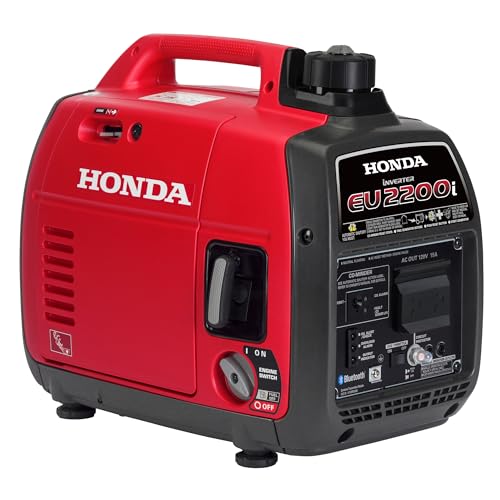
Honda EU2200i Inverter Generator
- Running Watts: 1,800 (derate ~3%/1,000 ft; jet kit needed above ~5,000 ft)
- Runtime: Up to 8.1 hours on 0.95 gal
- Noise Level: 48–57 dB
- Weight: ~47 lbs
As an Amazon Associate, we earn from qualifying purchases.
The EU2200i is carbureted, so it needs Honda’s high-altitude jet kit above ~5,000 feet — a $15 part and 20 minutes with a screwdriver. Once jetted, it’s the best budget high-altitude option: 2,200 peak / 1,800 running watts (about 1,500 at 8,000 feet after derating), 48–57 dB, under 50 pounds. Every camper in the Rockies seems to own one, and there’s a reason.
The honest math: at 10,000 feet you’re getting maybe 1,300 usable watts. That’s a fridge and some lights, not a microwave and A/C. Know the number before you buy.
Pros
- Honda reliability at a reasonable price
- High-altitude jet kit is cheap and easy
- Super light and quiet
Cons
- Manual jet change required
- Small output shrinks further with altitude
Best quiet value
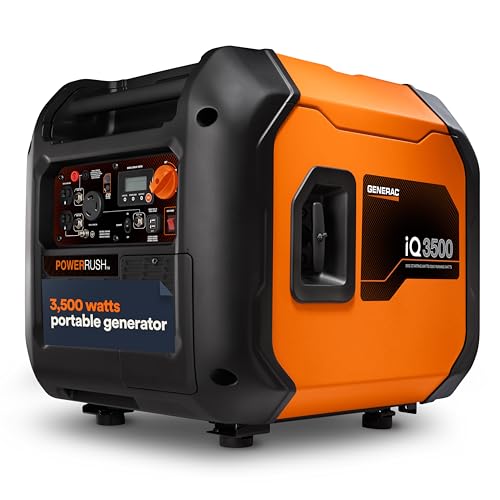
Generac iQ3500 Inverter Generator
- Running Watts: 3,000 (derate ~3%/1,000 ft; altitude kit available)
- Runtime: Up to ~7 hours at 50% load
- Noise Level: ~50 dB (light load)
- Weight: 109 lbs
As an Amazon Associate, we earn from qualifying purchases.
The iQ3500 is carbureted, so the same jet-kit logic applies above ~5,000 feet — Generac offers high-altitude kits for its engines. Once set up, you get 3,000 running watts (about 2,550 at 5,000 feet) of quiet inverter power for roughly $1,300–$1,600. For mountain cabins and campers on a budget, that’s a compelling package: quiet enough for campgrounds, strong enough for real loads after derating.
Pros
- Great value for quiet inverter power
- Electric start
- Altitude kits available
Cons
- Manual jet change needed above ~5,000 ft
- No fuel injection
Best big conventional
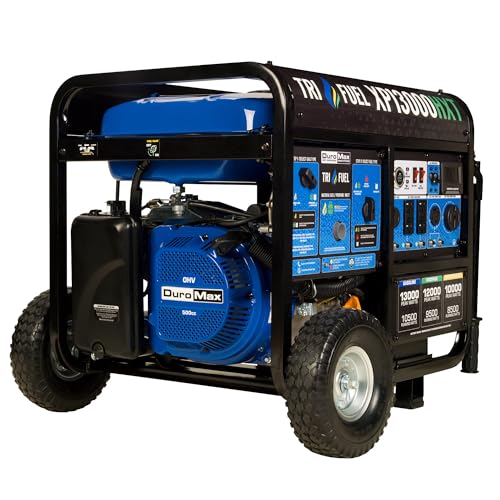
DuroMax XP13000HXT Tri-Fuel Generator
- Running Watts: 10,500 (derate ~3%/1,000 ft)
- Runtime: 8.5 hours at 50% load (gasoline)
- Noise Level: 74 dB
- Weight: 240 lbs
As an Amazon Associate, we earn from qualifying purchases.
Sometimes the answer to derating is just brute force. The XP13000HXT’s 10,500 running watts becomes roughly 8,900 at 5,000 feet and 7,900 at 8,000 feet — still more than most houses need. It’s carbureted, so expect rich running at altitude (fouled plugs, extra fuel consumption) unless you jet it, but with this much headroom you can afford the loss. The tri-fuel option is a bonus: propane’s lower energy density stacks with altitude derating, so on propane at 8,000 feet, plan on ~7,000 usable watts.
Pros
- Huge headroom absorbs derating
- Tri-fuel flexibility
- 5-year warranty
Cons
- Runs rich at altitude without rejetting
- Loud and heavy
| Generator | Running W (sea level) | ~Running W at 8,000 ft | Altitude handling | Best for |
|---|---|---|---|---|
| Honda EU7000iS | 5,500 | ~4,200 | EFI auto | Best overall |
| Honda EU3200i | 2,600 | ~2,000 | EFI auto | Small/portable |
| Honda EU2200i | 1,800 | ~1,400 | Jet kit | Budget |
| Generac iQ3500 | 3,000 | ~2,300 | Jet kit | Quiet value |
| DuroMax XP13000HXT | 10,500 | ~7,900 | Brute force | Big loads |
How to buy for altitude
Do the derating math first
The rule of thumb is 3–3.5% power loss per 1,000 feet for naturally aspirated gasoline engines. Multiply: at 5,000 feet, 5,000 × 0.03 × 5 = 750 watts lost, or 15%. At Denver’s 5,280 feet, a 5,500-watt generator gives you about 4,650. At 10,000 feet, plan on losing a quarter to nearly a third. Write down your elevation, do this math on your actual load list, and buy accordingly. Our sizing guide walks through load calculations.
Fuel injection is the cheat code
EFI engines measure air density and adjust fueling automatically. You still lose the physics-based power (less oxygen = less power, no way around it), but you don’t lose extra to a mis-jetted carburetor, and starting stays easy. If you live above 5,000 feet and use a generator regularly, EFI pays for itself in reliability alone.
Jet kits: cheap, easy, and often skipped
For carbureted generators, manufacturers sell high-altitude jet kits — usually a smaller main jet that leans out the mixture for thin air. They’re $10–$25 and take 20–30 minutes to install with basic tools. The mistake people make is skipping it: a sea-level-jetted generator at 8,000 feet runs rich, wastes fuel, fouls the spark plug, and can actually make less than the derated power. If you move the generator back to low elevation, swap the jet back — a high-altitude jet at sea level runs dangerously lean.
Propane derating stacks
Propane already produces ~10% less power than gasoline in a dual-fuel generator (lower energy density). At altitude, that stacks with the elevation loss: 10% fuel penalty × 15% altitude penalty ≈ 23% total loss at 5,000 feet. Tri-fuel and dual-fuel generators are still great at altitude — just do the stacked math when sizing.
Cold + altitude is the hard mode
High country means cold mornings, and cold thickens oil and weakens batteries. Use 5W-30 synthetic, keep electric-start batteries on a tender, and give the generator a minute of warm-up before loading it. EFI models have a big advantage here — no choke to guess at.
How much power does a generator lose at altitude?
Do I need a high-altitude kit for my generator?
Are fuel-injected generators better at high altitude?
Can I use a dual-fuel generator on propane at high altitude?
What is the best generator for camping at 10,000 feet?
Our verdict
Above 5,000 feet, buy fuel injection or buy bigger — ideally both. The Honda EU7000iS is the no-compromise answer; the EU3200i and a jetted EU2200i cover smaller needs. Whatever you choose, do the derating math at your actual elevation before you buy, not after the breaker trips.
Three elevations, three answers
Let me run the numbers for three real places, using a 5,500-watt (running) generator as the example:
Salt Lake City, 4,300 ft: derating ≈ 13%. Your 5,500W generator delivers about 4,800W. Most owners never notice — there’s enough headroom in typical sizing that 13% disappears into the margin. A carbureted generator will run slightly rich here; many people skip the jet kit at this elevation and get away with it, though fuel economy suffers a bit.
Denver, 5,280 ft: derating ≈ 16%. That 5,500W is now ~4,600W. This is the elevation where jet kits start mattering — a sea-level-jetted carburetor at a mile high runs rich enough to foul plugs over a season. If you’re buying new in Denver, this is the break-even point where fuel injection starts paying for itself.
Leadville, 10,152 ft: derating ≈ 30%. Your 5,500W generator makes ~3,850W — and a carbureted one without the jet kit makes less, while being hard to start in the cold thin air. At this elevation, buy EFI or buy one full size class larger than the sea-level math says. Nobody at 10,000 feet regrets owning too much generator.
Installing a high-altitude jet kit
If you go the carbureted route, the jet swap is a 20-minute job: drain or run out the fuel, remove the air filter housing, unbolt the carburetor bowl, swap the main jet for the smaller high-altitude jet with a flathead screwdriver, reassemble. Kits cost $10–$25 from the manufacturer — get the OEM kit, not a generic, because jet sizing is specific to the carburetor. The critical rule: swap it back if you descend. A high-altitude (lean) jet at sea level runs the engine lean, which means hot — lean running can seize a small engine. Label the original jet, bag it, and tape it inside the air filter cover so it’s there when you need it.
Propane at altitude: a special case
Propane deserves its own warning at elevation. Propane’s vaporization — the process that turns liquid propane in the tank into burnable gas — slows dramatically in the cold, and high country is cold. Below about -20°F, a standard 20-pound propane cylinder can’t vaporize fast enough to feed a generator at full load; the engine starves and surges. The fixes: keep tanks full (more liquid surface area = more vaporization), use larger tanks (a 100-pound cylinder vaporizes far better than a 20-pounder), and in extreme cold consider a tank warming blanket. This is one reason mountain cabins on propane often pair a big tri-fuel generator with a 250+ gallon tank — at that size, vaporization is a non-issue down to temperatures no generator should be running in anyway.
Placement in the mountains
Mountain placement has its own rules. Wind is the big one — a generator tucked against the cabin on the lee side can have exhaust blown back under eaves or into vents. Place it where the prevailing wind carries exhaust away from the building, and never in a snow alcove that can drift over the exhaust outlet overnight. Snow is the second rule: a generator that ran fine at 6 p.m. can be buried by morning in a storm, and a blocked exhaust is a carbon monoxide emergency. Elevate the unit on a platform above typical drift depth, and check it before every start in winter. The CO shutdown sensors on modern units are a genuine lifesaver here — but they’re the backup, not the plan.
What about diesel at altitude?
A quick note for the diesel-curious: turbocharged diesel generators barely derate at altitude, because the turbo forces dense-enough air into the cylinders regardless of ambient pressure. That’s why high-altitude construction and mining run diesel. But naturally aspirated small diesels derate just like gasoline engines, and portable diesel generators in the sizes homeowners buy are rare and expensive in the US market. For 99% of high-altitude buyers, the practical choice remains a gasoline EFI unit or a sized-up carbureted one. Diesel only enters the conversation for commercial or full-time off-grid use, where the fuel efficiency and longevity justify the premium.
One more high-country tip: carry a spare spark plug and the tools to change it. Rich-running carbureted generators foul plugs faster at altitude, and a fouled plug at a remote campsite turns a great trip into a cold one. A spare plug weighs nothing and costs a few dollars — it’s the cheapest insurance in this whole article.
How we researched this: Manufacturer altitude specifications and jet-kit documentation, derating math per standard small-engine engineering references, and owner reports from high-elevation regions. We did not test at altitude; derated wattages are calculated estimates.

Related Guides
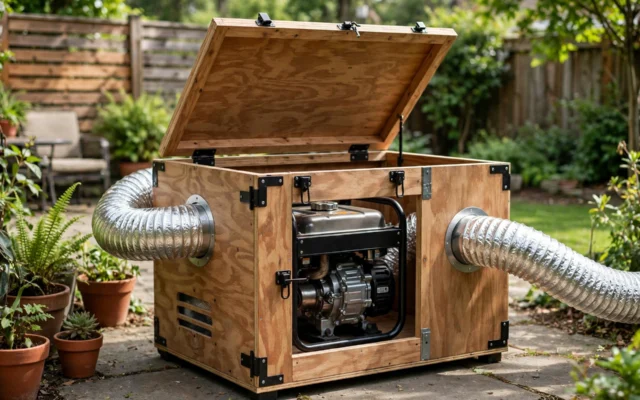
DIY Generator Quiet Box: How to Build a Noise-Reduction Enclosure
A DIY generator quiet box can cut noise 10–20 dB — but ventilation and CO safety are the whole project. Materials, baffle design, fan sizing, and the mistakes to avoid.

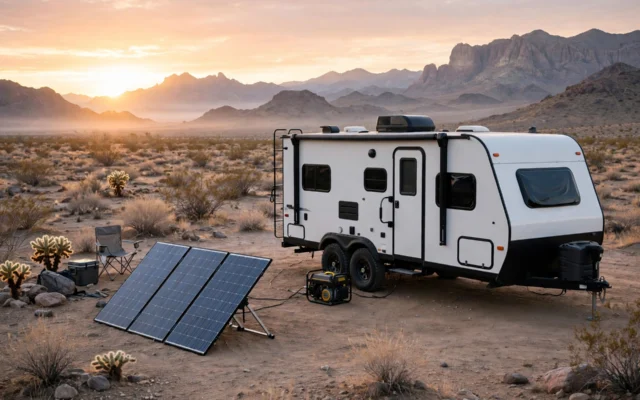
Boondocking Power Setup: Generator + Solar for Off-Grid Camping
The ideal boondocking power setup pairs solar with a generator and battery bank. Real daily load math, sizing tiers, and the generator run strategy that sips fuel.
RV Generator Quiet Hours & Campground Etiquette Guide
RV generator quiet hours are usually 10pm–8am, with limited daytime generator windows in national parks. The rules, the unwritten etiquette, and how to stay neighborly.