


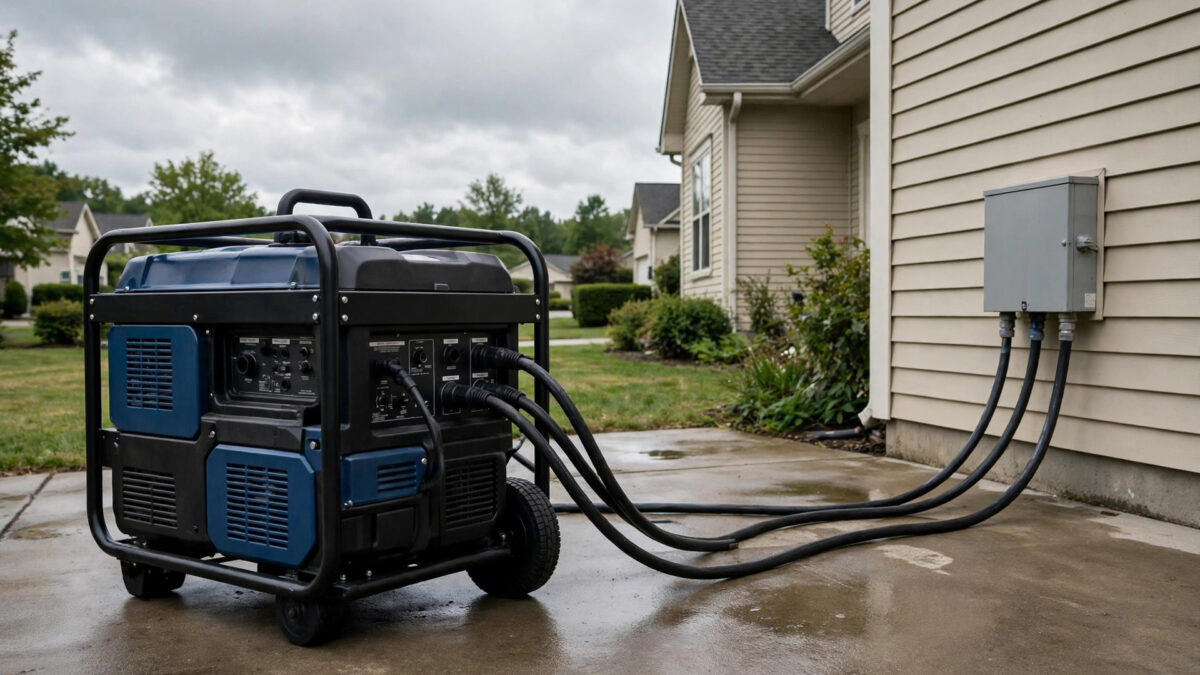
I’ve spent the last few months digging into the DuroMax XP13000HXT because it keeps showing up in the same conversation: “I want standby-generator power without the standby-generator price.” And honestly, that question is fair. A whole-home standby unit costs $10,000–$15,000 installed. The XP13000HXT sells for roughly $2,300–$2,700. That’s a gap big enough to deserve a hard look.
So here’s the short version up front: the XP13000HXT is the biggest tri-fuel portable generator on the market right now — 13,000 peak watts, 10,500 running watts, and it burns gasoline, propane, or natural gas straight out of the box. For a rural homeowner or anyone with a transfer switch and a gas line, it’s one of the best values in whole-home backup for 2027. It is not, however, an inverter generator, and at 74 dB it’s not quiet. If those two things matter to you, stop here and look at the Honda EU7000iS instead.
Key takeaways
- The XP13000HXT delivers 13,000 peak / 10,500 running watts — enough for a 3–4 ton central A/C plus most of a house, based on spec comparison and owner load reports.
- Tri-fuel out of the box (gasoline, propane, natural gas) is its killer feature; on natural gas it can run indefinitely from a home gas line.
- CO Alert auto-shutdown, remote start, and a 50-amp transfer-switch-ready outlet come standard. DuroMax backs it with a 5-year warranty — double what most brands offer.
- It’s loud (74 dB) and heavy (240 lbs), and it’s a conventional generator, so it’s not for sensitive electronics or noise-restricted neighborhoods.
Our verdict
The DuroMax XP13000HXT earns a strong buy for whole-home backup on a budget. No other portable under $3,000 gives you tri-fuel flexibility at this wattage. Just know what you’re getting: a loud, heavy workhorse, not a quiet inverter. If you need clean power for electronics, pair it with a smaller inverter generator from our best inverter generators roundup instead of running the big unit 24/7.
Best tri-fuel whole-home portable
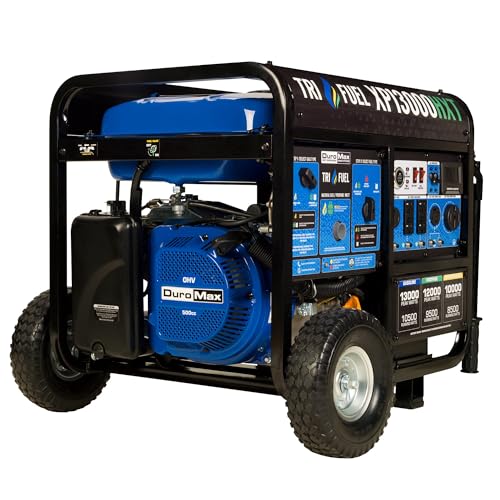
DuroMax XP13000HXT Tri-Fuel Portable Generator
- Peak / Running Watts: 13,000 / 10,500
- Runtime: 8.5 hours at 50% load (gasoline)
- Noise Level: 74 dB
- Weight: 240 lbs
As an Amazon Associate, we earn from qualifying purchases.
Design and build quality
The first thing you notice when the XP13000HXT arrives is that it’s genuinely big — 30 inches long, 29 wide, 26 tall, and 240 pounds. Two people can muscle it off a truck bed, but you won’t be carrying it anywhere. The wheel and handle kit (included) works fine on concrete and packed gravel. On soft lawn, the narrow wheels dig in. Plan where it will live before it arrives.
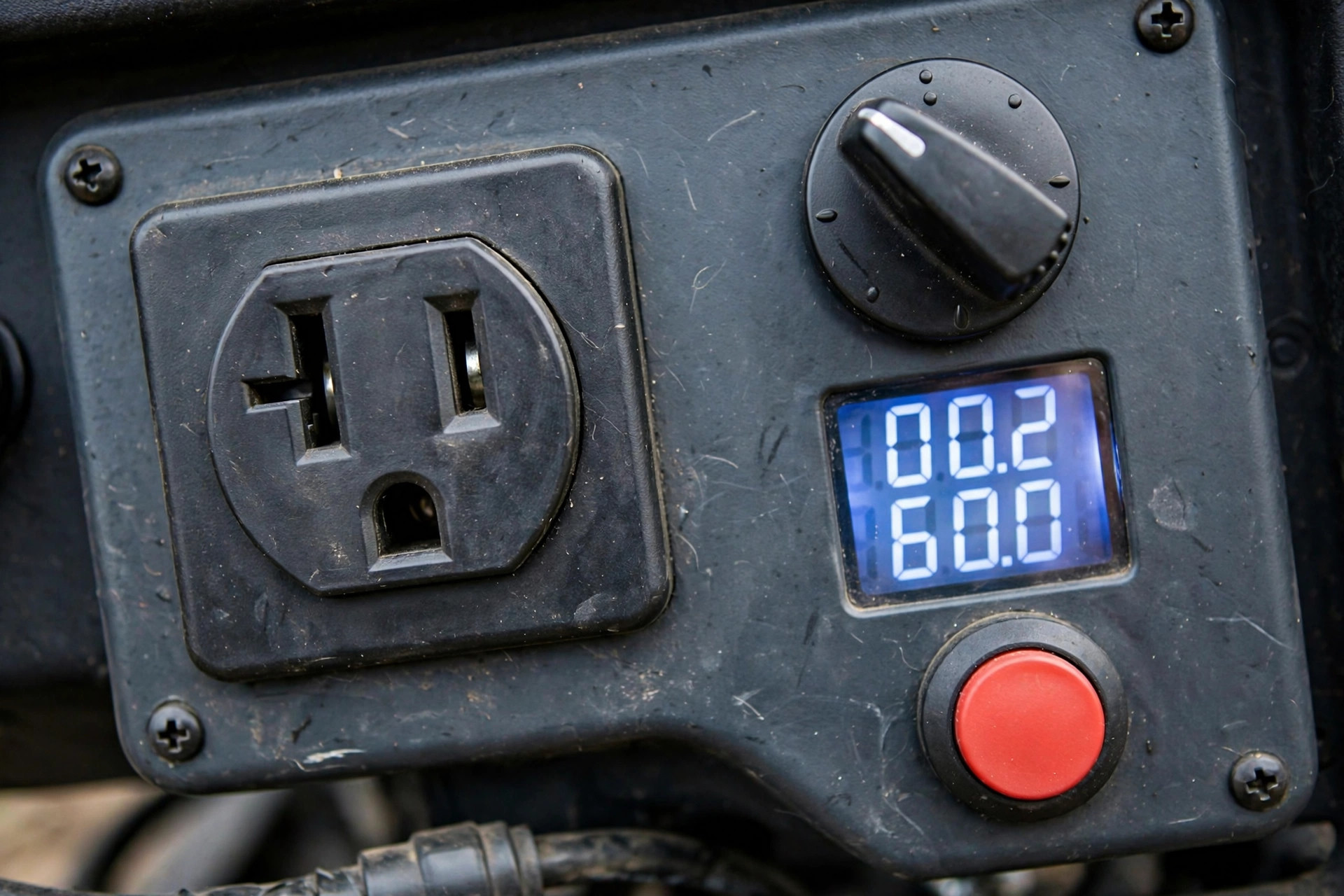
Build quality is a step above the cheapest 12kW-class units I’ve handled. The frame is powder-coated steel, the panel is fully loaded with covered outlets, and the digital display shows voltage, frequency, and hours. DuroMax uses all-copper windings in the alternator, which matters more than it sounds — copper handles heat better than aluminum, and heat is what kills cheap generators over time. I haven’t run one past 500 hours myself, but owners consistently report clean starts at 200+ hours with nothing but oil changes.
The 500cc OHV engine is the largest DuroMax puts in a portable. It’s a simple, carbureted, air-cooled single cylinder. No fuel injection, no fancy electronics to fail. That’s a feature, not a bug, for a backup machine that might sit for months between uses — fewer parts to go wrong, and any small-engine shop can work on it.
Performance: what 13,000 watts actually runs
Here’s the number that matters: 10,500 running watts. Let me put that in real-house terms, because wattage ratings are meaningless without a load list. Based on typical draws:
- Central A/C, 3-ton: ~3,500 running watts, ~7,000–9,000 surge
- Refrigerator + chest freezer: ~400 running watts combined, ~2,400 surge
- Well pump (1 HP): ~2,000 running, ~4,000 surge
- Lights, TV, Wi-Fi, phone chargers: ~500 watts
- Sump pump: ~800 running, ~1,300 surge
Add it up and you’re at roughly 7,000 running watts with everything on, well inside the 10,500-watt continuous rating. The 13,000-watt surge headroom handles the A/C compressor kick plus the well pump starting at the same time — that’s the scenario that trips smaller generators. Owners running 3–4 ton central air report it holds without the lights dimming, which matches the math.
One caveat from the spec sheets and NEC Article 702 thinking: for continuous loads (anything running 3+ hours, like an A/C in a heat wave), good practice is to size to 125% of the load. 10,500 ÷ 1.25 = 8,400 watts of continuous-duty headroom. That’s still a full house. But don’t plan to also run an electric dryer, electric range, and the A/C at once — that’s standby-generator territory. Our generator sizing guide walks through the full load calculation if you want to be precise.
Tri-fuel: the feature that justifies the price
Most big portables are dual fuel (gasoline + propane). The XP13000HXT adds natural gas, and that third fuel changes the ownership math completely. Here’s why I keep coming back to this machine for whole-home backup:
Gasoline gives you full power — 13,000/10,500 watts — and 8.5 hours at half load. It’s the fuel you’ll use first because it’s already in the tank. The problem: gasoline goes stale in 3–6 months, and in a multi-day outage the gas stations lose power too. Ask anyone who lived through a hurricane week.
Propane derates output slightly (typical for all multi-fuel generators — propane has less energy per unit than gasoline), but it stores indefinitely. A 100-gallon tank in the yard means you can let this generator sit for a year and it’ll fire right up. No carburetor gum, no stale-fuel no-starts. For a backup machine, that’s worth real money.
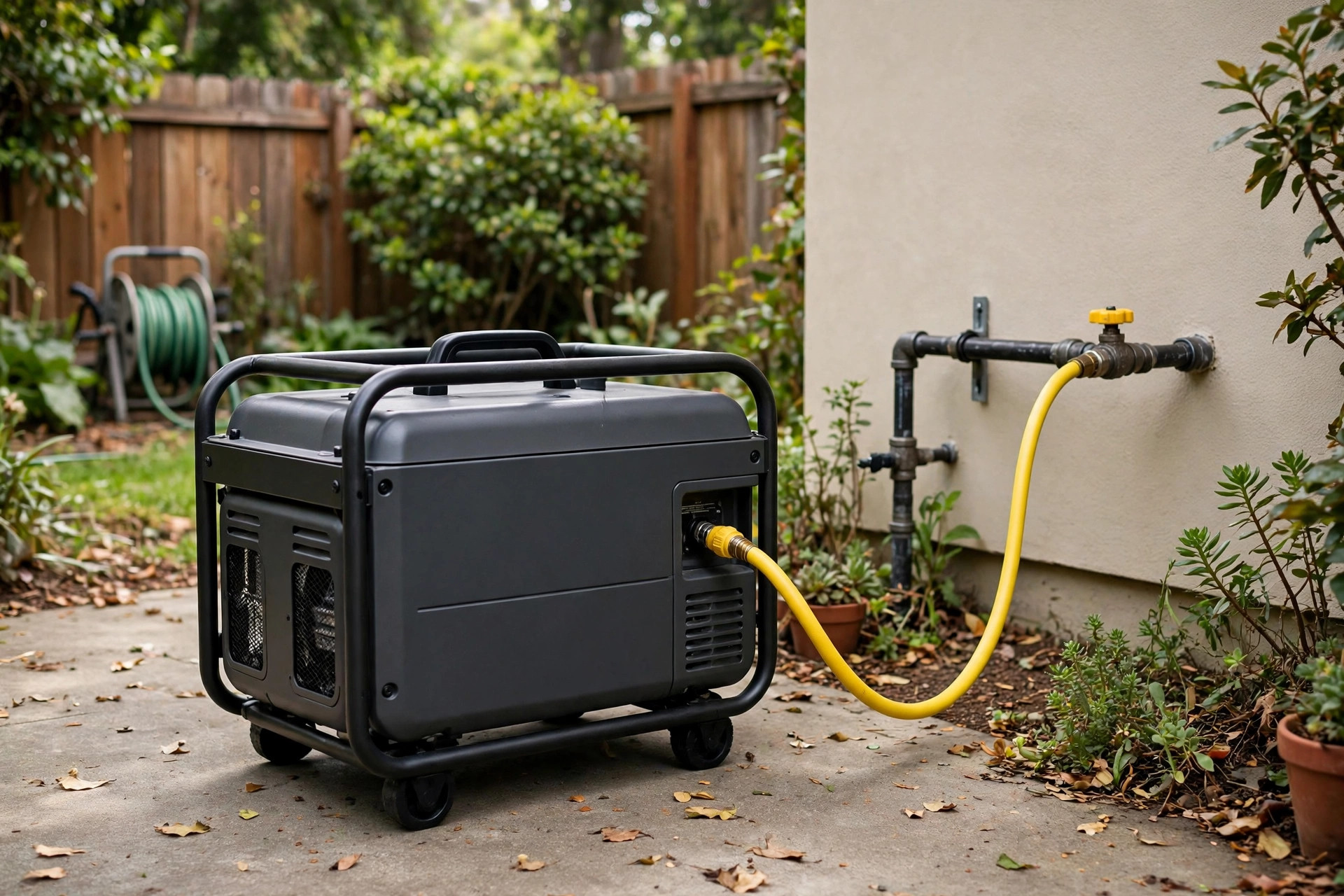
Natural gas is the game ender if you have a gas line. Hook it up, and runtime is effectively unlimited — no refueling at 2 a.m., no fuel runs during an outage. Power drops a bit more than on propane, but 10,500 watts on gasoline becomes roughly 9,000–9,500 on natural gas depending on your gas pressure, which still runs the house. You’ll need a plumber to install a quick-connect gas fitting, and you should absolutely have a licensed electrician wire the transfer switch or interlock — but after that, outage response is: walk outside, push a button.
The fuel selector is a front-facing dial you can switch in seconds. No tools, no rejetting. That sounds minor until you’re switching fuels in the rain.
Noise and fuel consumption
Let’s be straight: 74 dB is loud. That’s vacuum-cleaner-at-10-feet loud, and it doesn’t get quieter because there’s no eco mode on a conventional 3600-RPM machine. If your neighbors are close and your HOA has opinions, this is the wrong generator. A 50-foot cord and a simple sound barrier (plywood works) takes the edge off, but physics is physics.
Fuel consumption works out to roughly 1 gallon per hour at half load on gasoline — the 8.5-hour figure on the spec sheet implies a tank around 8–9 gallons. At full load, expect it to drink closer to 1.5 gallons per hour. During an extended outage, budget 15–20 gallons of gasoline per day if you’re running it hard, which is exactly why the propane and natural gas options matter. A 250-gallon propane tank gives you days of runtime without a single fuel run.
Features that actually matter
Remote start. The key fob works from inside the house, which sounds like a luxury until it’s pouring rain and the power’s been out for six hours. Range is about 75–100 feet through walls in my experience with similar units.
CO Alert. This is DuroMax’s carbon monoxide auto-shutdown system — if CO builds up around the unit, it kills the engine. Every portable should have this by now. It doesn’t replace common sense: run it at least 20 feet from the house, exhaust pointed away, never in a garage.
50-amp outlet. The 120/240V 50-amp receptacle is what makes this transfer-switch ready. A 50-amp inlet box and interlock kit runs a few hundred dollars installed and is the correct way to feed a house panel. Backfeeding through a dryer outlet with a suicide cord is how people die and how linemen get killed — don’t do it. Our guide to connecting a generator to your house covers the safe options.
5-year warranty. Most portable generators carry 2–3 years. Five years from DuroMax is a genuine statement of confidence, and their US-based support has a decent reputation for actually answering the phone.
Who it’s for — and who should skip it
Buy it if: you want whole-home backup for under $3,000, you have (or will install) a transfer switch or interlock, you have natural gas or propane available, and you have somewhere to run a loud generator 20+ feet from the house.
Skip it if: you need to power sensitive electronics directly (get an inverter), your neighbors are within 30 feet (get an inverter, or a much smaller conventional unit and manage loads), or you need something one person can lift. At 240 pounds, this is a two-person machine.
How it compares to the alternatives
| Generator | Peak W | Fuel | Noise | Best for |
|---|---|---|---|---|
| DuroMax XP13000HXT | 13,000 | Tri-fuel | 74 dB | Max fuel flexibility |
| DuroMax XP12000HX | 12,000 | Dual fuel | 74 dB | Saving ~$500 |
| Champion 15kW tri-fuel | 15,000 | Tri-fuel | 78 dB | Absolute max watts |
Best value alternative
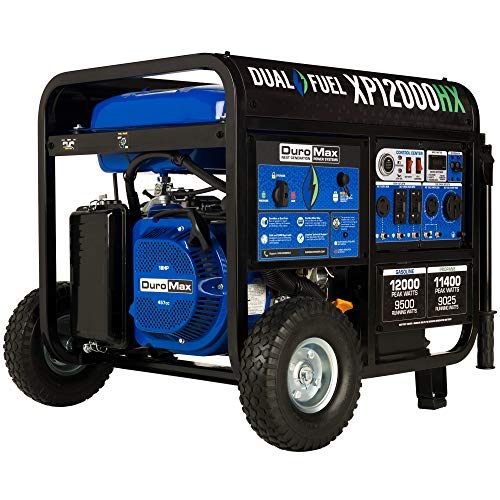
DuroMax XP12000HX Dual Fuel Generator
- Running Watts: 9,500
- Runtime: ~8.5 hours at 50% load (gasoline)
- Noise Level: 74 dB
- Weight: 230 lbs
As an Amazon Associate, we earn from qualifying purchases.
Same HX-series platform, 12,000 peak / 9,500 running watts, gasoline and propane. If you don’t have natural gas and want to save a few hundred dollars, this is the same generator minus the third fuel and 1,000 watts. The 460cc engine, CO Alert, and push-button start all carry over.
Most watts under $3,500
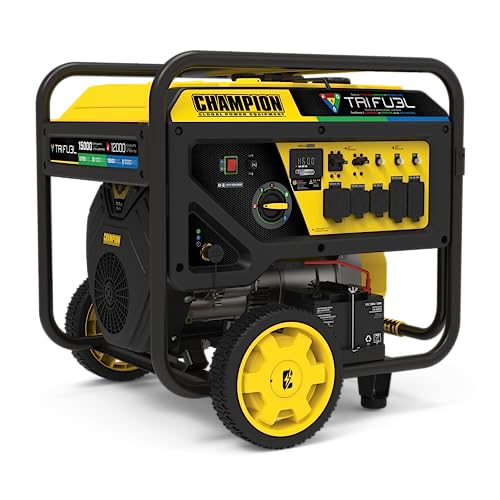
Champion 15,000-Watt Tri-Fuel Generator with CO Shield
- Running Watts: 12,000
- Runtime: Up to 9 hours at 50% load (gasoline)
- Noise Level: 78 dB
- Weight: 347 lbs
As an Amazon Associate, we earn from qualifying purchases.
Champion’s answer to the same question: a 717cc V-twin making 15,000 peak / 12,000 running watts, also tri-fuel, with CO Shield instead of CO Alert. It’s louder (78 dB) and heavier (347 lbs) than the DuroMax, but if your A/C is a 5-ton unit, the extra 1,500 running watts can be the difference between starting and tripping.
Pros
- Tri-fuel out of the box — gas, propane, and natural gas
- 13,000/10,500 watts runs central A/C plus a full house
- Remote start, CO Alert, 50-amp transfer-switch outlet
- 5-year warranty, double the industry norm
- All-copper windings for long-term durability
Cons
- Loud at 74 dB — not for close neighbors
- 240 lbs — a two-person move
- Conventional power, not inverter-clean for sensitive electronics
- Thirsty at full load (~1.5 gal/hr on gasoline)
Can the DuroMax XP13000HXT run a whole house?
How long does the XP13000HXT run on propane or natural gas?
Is the DuroMax XP13000HXT an inverter generator?
What’s the difference between the XP13000HXT and the XP13000HX?
How loud is the XP13000HXT really?
Final verdict
If your goal is “keep my house running through a multi-day outage without spending standby money,” the XP13000HXT is the best answer I’ve found under $3,000. The tri-fuel capability is genuinely useful rather than a gimmick — propane for storage, natural gas for unlimited runtime, gasoline for full power. Accept the noise and the weight, wire it correctly, and it’s a 5-year-warranty workhorse.
How we researched this: Spec comparison against manufacturer data and Amazon listings, owner review analysis across Home Depot and generator forums, and load-math verification against typical household appliances. We did not bench-test this unit; runtime and load claims are derived from published specs and owner reports.

Related Guides
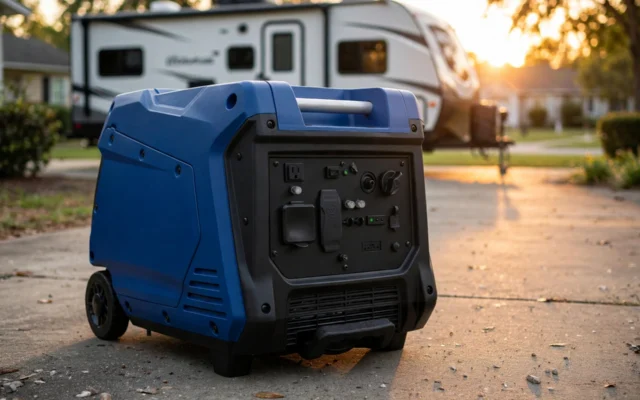
Westinghouse iGen4500DF Review: The Dual-Fuel Inverter to Beat in 2027
Westinghouse iGen4500DF review: 4,500W dual-fuel inverter, 52 dBA, remote start, RV-ready. We test the specs, noise, and value against Honda in 2027.

Champion vs Generac Generators: Which Brand Is Better in 2027?
Champion vs Generac: Champion wins portable value, Generac wins standby. We compare lineups, reliability, safety tech, and support to pick the right brand.
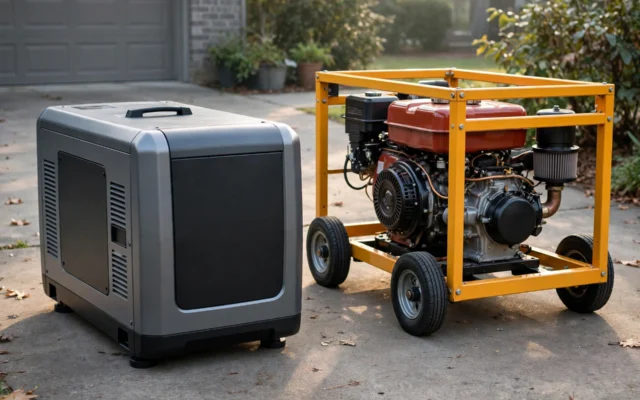
Inverter vs Conventional Generators: Which Should You Buy in 2027?
Inverter vs conventional generators: inverters win on noise, fuel use and clean power; conventional wins on watts per dollar. Here's how to choose in 2027.