


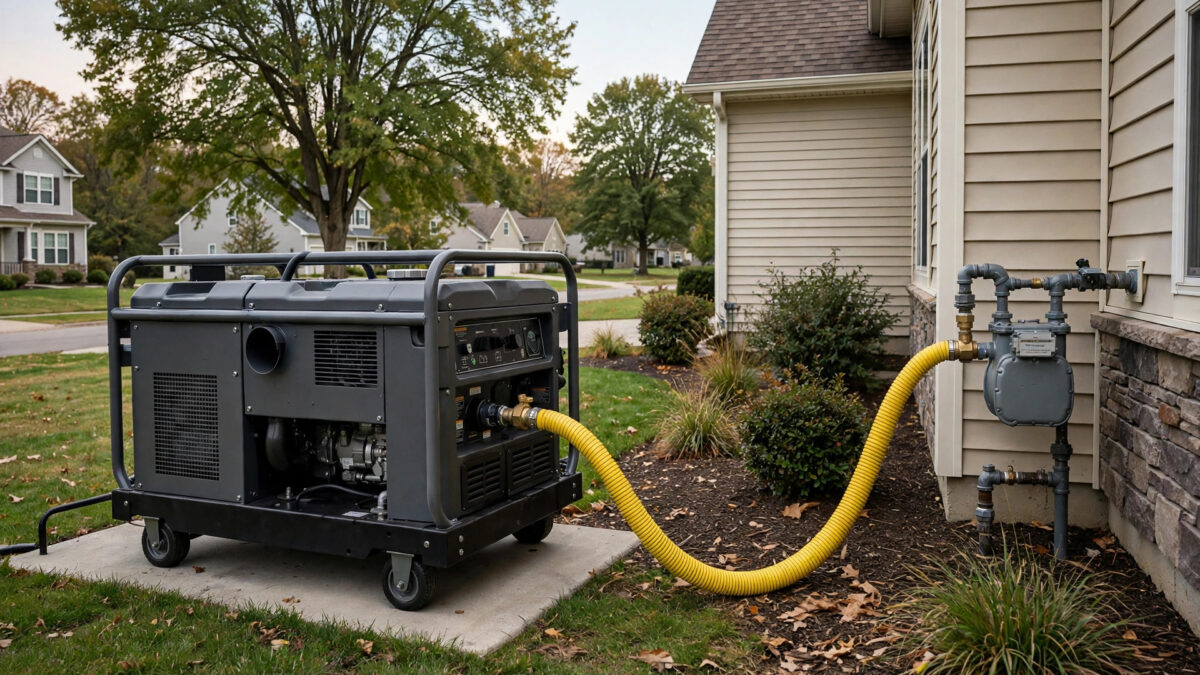
Here’s the pitch for natural gas generators in 2027, and it’s a good one: unlimited fuel. While your neighbors ration gasoline during a week-long outage, your generator sips from the municipal gas line and just keeps running. No fuel runs, no stale gas, no 5-gallon cans in the garage. I get why it sounds perfect.
And mostly, it is — with caveats. Natural gas delivers about 10% less power than gasoline in the same engine, you need a plumber to install the hookup, and in a true worst-case disaster (earthquake country, take note), gas utilities can shut off lines. Still, for most suburban homeowners, NG is the lowest-hassle backup fuel that exists.
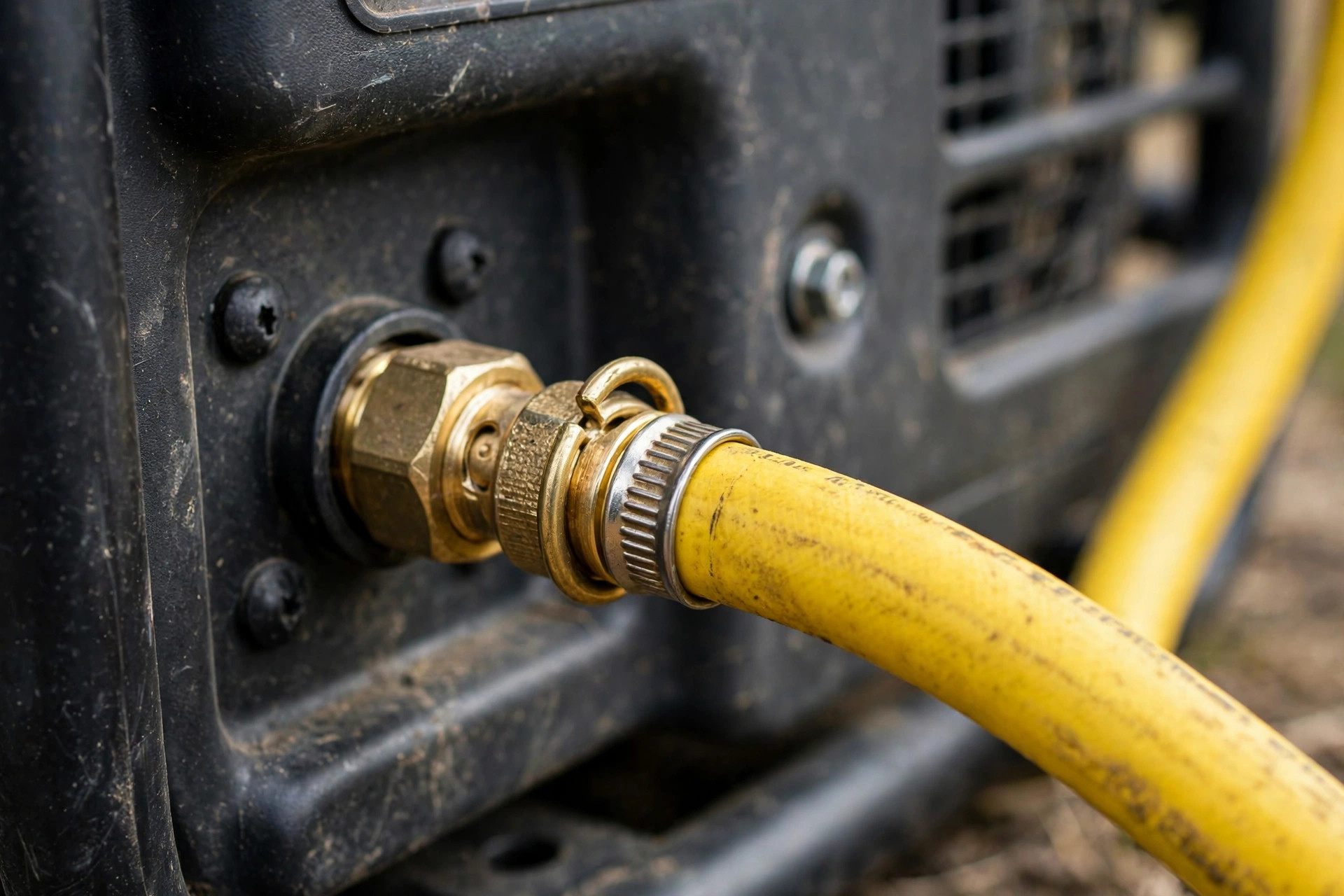
One honest note before we start: there are almost no gasoline-only “natural gas generators” on the market. The entire category is tri-fuel and dual-fuel models with an NG hose kit. So the best natural gas generator of 2027 is really the best tri-fuel generator plumbed to your gas line — and that crown goes to the Westinghouse WGen14500TFc, with 14,500 running watts of whole-home muscle.
Key takeaways
- Every “natural gas generator” worth buying is a tri-fuel model — NG is one of three fuel options, not the only one.
- Expect ~10% less power on natural gas than gasoline; size accordingly.
- A licensed plumber must install the NG quick-connect; never DIY a gas line.
- The Westinghouse WGen14500TFc leads the category with 14,500 running watts on NG-ready tri-fuel.
- Natural gas never goes stale and can’t be “used up” during an outage — the killer advantage.
Quick picks
- Best overall: Westinghouse WGen14500TFc — 18,000 peak watts, tri-fuel, CO sensor, whole-home power.
- Best value tri-fuel: DuroMax XP13000HXT — 13,000 watts, 5-year warranty, remote start.
- Best mid-size: Champion 100416 — 10,000 watts, CO Shield, solid support network.
- Best inverter (quiet NG): Gidrox 10000W Tri-Fuel Inverter — 65 dB, ATS-ready, clean power.
Best overall
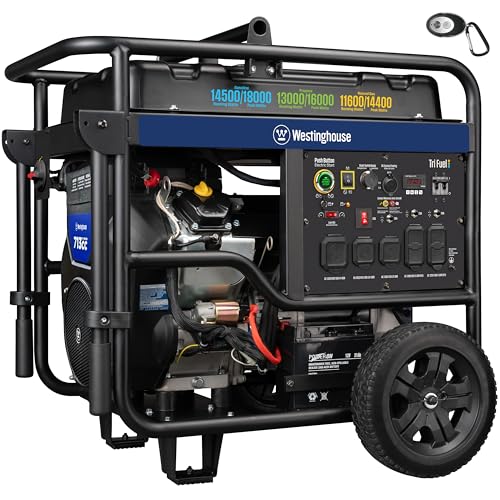
Westinghouse WGen14500TFc Tri-Fuel Portable Generator
- Running Watts: 14,500 W (gas)
- Runtime: ~16 hrs @ 1/4 load (gas)
- Noise Level: ~74 dB
- Weight: 348 lbs
As an Amazon Associate, we earn from qualifying purchases.
This is the heavyweight. The WGen14500TFc pushes 18,000 peak watts and 14,500 running watts on gasoline, with slightly less on NG and propane — enough to run a central AC, well pump, and most of a house simultaneously through a transfer switch. The 713cc V-twin engine is a big, lazy, long-lived powerplant that doesn’t have to scream to make its numbers.
On natural gas, you’re looking at roughly 13,000 running watts after the NG derate — still whole-home territory. The 10.5-gallon tank gives about 16 hours at quarter load on gasoline for when you want portable use away from the gas line. The tri-fuel setup means you keep options: NG at home, propane or gas on the road.
Safety is well covered with a built-in CO sensor with automatic shutdown. At 348 pounds it’s firmly in “position it once” territory. Typical pricing runs $2,800–$3,400. Based on spec comparison and owner feedback, this is the unit contractors recommend when someone says “I want to run everything.” Just make sure your gas meter and line can supply the BTUs — more on that below.
Pros
- Whole-home 14,500W output
- Tri-fuel flexibility with NG hose kit
- CO sensor with auto-shutdown
- V-twin engine built for long runs
Cons
- 348 lbs — needs a permanent spot
- Loud at 74 dB (not a quiet unit)
- May need gas meter upgrade
Best value tri-fuel
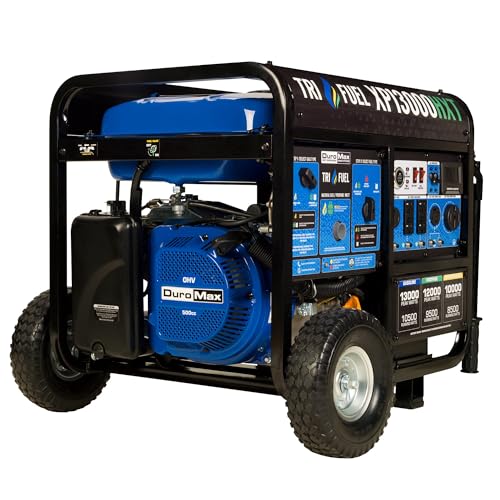
DuroMax XP13000HXT Tri-Fuel Portable Generator
- Running Watts: 10,500 W (gas)
- Runtime: 8.5 hrs @ 1/2 load (gas)
- Noise Level: ~74 dB
- Weight: ~230 lbs
As an Amazon Associate, we earn from qualifying purchases.
The XP13000HXT is the value play in big tri-fuel: 13,000 peak watts, 10,500 running watts on gas, for typically $1,800–$2,200 — roughly a grand less than the Westinghouse flagship. On natural gas, expect around 9,500 running watts, which still covers a 3-ton AC, fridge, freezer, and lights in most homes.
DuroMax backs it with a 5-year warranty, the longest in this roundup, and includes both remote start and push-button electric start. CO Alert shuts it down on dangerous carbon monoxide levels. Runtime is about 8.5 hours at half load on gasoline.
The 500cc engine works harder than the Westinghouse V-twin, and at 74-ish dB it’s no quieter. But for the money, based on owner feedback, it’s the tri-fuel sweet spot — most of the capability for meaningfully less cash. If your home’s essential loads fit under ~9,000 watts, pocket the difference.
Pros
- Excellent watts-per-dollar
- 5-year warranty, longest here
- Remote + push-button start
- CO Alert safety shutdown
Cons
- Loud open-frame design
- Shorter runtime per tank than Westinghouse
Best mid-size
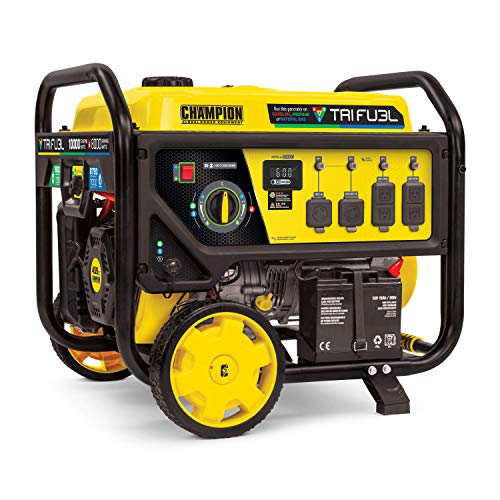
Champion 100416 Tri-Fuel Portable Generator
- Running Watts: 8,000 W (gas)
- Runtime: ~10 hrs @ 1/2 load (gas)
- Noise Level: 74 dB
- Weight: ~210 lbs
As an Amazon Associate, we earn from qualifying purchases.
Not everyone needs 14,000 watts. The Champion 100416 delivers 10,000 starting watts and 8,000 running watts on gasoline (a bit less on NG) from a 459cc engine — enough for essentials plus a smaller central AC or a couple of window units. It typically runs $1,100–$1,400, making it the cheapest whole-home-capable tri-fuel here.
Champion’s CO Shield system shuts the generator down on high CO, and the electric start saves your shoulder. The 8.5-gallon tank is generous for the class. Noise is rated around 74 dB — standard open-frame territory, so plan placement accordingly.
What I like most about Champion is the support network: US-based phone support and parts availability that owners consistently praise. Based on owner feedback, the 100416 is a set-it-and-forget-it machine for NG hookup — connect the hose, flip the fuel selector, and it runs. For homes with gas furnaces (low electrical draw) and modest AC, this is plenty.
Pros
- Lowest price for tri-fuel whole-home power
- CO Shield auto-shutdown
- Strong US support and parts
- Electric start standard
Cons
- 8,000W won’t run large 5-ton ACs
- Open-frame loud
Best quiet tri-fuel inverter
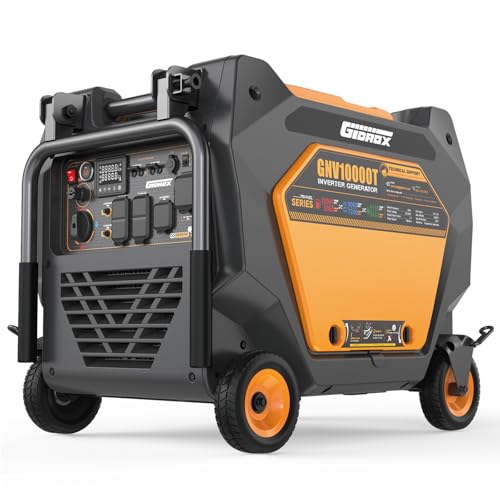
Gidrox 10000W Tri-Fuel Inverter Generator
- Running Watts: 8,000 W (gas)
- Runtime: 21 hrs @ 1/4 load
- Noise Level: 65 dB
- Weight: ~210 lbs
As an Amazon Associate, we earn from qualifying purchases.
The Gidrox is the odd one out — and I mean that as a compliment. It’s the only tri-fuel inverter generator in this roundup: 10,000 starting watts, 8,000 running watts on gas, at just 65 dB. That’s nearly 10 dB quieter than the open-frame models above — a massive real-world difference your neighbors will appreciate during a week-long outage.
Being an inverter, it produces clean power safe for sensitive electronics, and it throttles down at light loads to sip fuel — up to 21 hours at quarter load from the 8.7-gallon tank. It’s ATS-ready (automatic transfer switch), so it can pair with a smart switch for near-automatic backup. The 499cc engine and CO sensor round out a thoughtful package.
The catch: Gidrox is a newer, lesser-known brand, so long-term reliability data is thinner than Westinghouse or Champion. I haven’t run one past 500 hours myself, but owners consistently report solid performance so far. Typical price runs $1,600–$2,000. If quiet NG backup matters more to you than brand heritage, this is genuinely interesting.
Pros
- Only quiet (65 dB) tri-fuel inverter here
- Clean power for electronics
- ATS-ready for automatic backup
- 21-hour runtime stretches fuel
Cons
- Newer brand, thinner track record
- Premium over open-frame rivals
Side-by-side comparison
| Product | Running W (gas) | Fuel | Noise | Best for |
|---|---|---|---|---|
| Westinghouse WGen14500TFc | 14,500 | Tri-fuel | 74 dB | Whole-home max power |
| DuroMax XP13000HXT | 10,500 | Tri-fuel | 74 dB | Value tri-fuel |
| Champion 100416 | 8,000 | Tri-fuel | 74 dB | Mid-size essentials |
| Gidrox 10kW Inverter | 8,000 | Tri-fuel | 65 dB | Quiet NG backup |
How to choose a natural gas generator
NG changes the buying math. Here’s what to get right.
The gas line comes first — hire a plumber
Before buying anything, get a licensed plumber to install a natural gas quick-connect outlet near where the generator will sit. This is not a DIY job — gas line work done wrong leaks, and leaks explode. The plumber will also verify your gas meter’s capacity. A 14,500-watt generator at full load gulps around 200,000+ BTU/hr; many residential meters top out near 250,000 BTU/hr total, including your furnace and water heater. If the meter can’t keep up, the generator starves and stumbles under load. A meter upgrade from your utility is common and usually straightforward — but sort it out before the storm, not during.
Understand the NG power derate
Natural gas has less energy per unit than gasoline, so the same engine makes roughly 10–15% less power on NG. A generator rated 10,500 running watts on gas delivers around 9,000–9,500 on natural gas. Size your purchase on the NG numbers, not the gasoline headline — the gasoline rating is irrelevant if you’ll run NG 99% of the time. This is also why tri-fuel beats “NG-only”: you keep the full gasoline rating as a fallback.
Pressure matters: water column basics
Residential natural gas arrives at low pressure — typically around 7 inches of water column. Generator NG kits are designed for this, but long hose runs cause pressure drop. Keep the quick-connect close to the generator (under 25 feet of hose is ideal) and use the diameter hose the manufacturer specifies. If the generator surges or hunts under load on NG, low fuel pressure is the first suspect, not the engine.
Tri-fuel is the smart buy, not NG-only
Every pick in this roundup runs gasoline and propane too, and that’s deliberate. If an earthquake or utility issue interrupts gas service, you switch fuels in seconds. If you take the generator to a job site or cabin, gasoline goes with you. NG-only generators exist but they’re a trap — one fuel, one point of failure. The tri-fuel premium is small and the flexibility is enormous. Our dual-fuel generator guide covers the two-fuel side of this in depth.
Placement and noise still apply
NG doesn’t change the safety rules: 20 feet from the house, exhaust away from windows, CO sensor models preferred. And note that three of these four are open-frame 74 dB machines — fine for rural properties, less fine for tight suburbs. If your neighbors are close, the 65 dB Gidrox inverter earns its premium fast. For truly quiet options, see our best quiet generators roundup.
Transfer switch and NEC compliance
A generator this size deserves a proper manual transfer switch or interlock kit installed by an electrician per NEC Article 702. Backfeeding through a dryer outlet is illegal and can kill a lineworker. Budget $500–$1,500 for the switch plus installation — it’s part of the real cost of whole-home backup. Our transfer switch guide walks through the options.
Do I need a plumber to hook up a natural gas generator?
How much less power does a generator make on natural gas?
Will my gas meter handle a whole-home generator?
Is natural gas cheaper than gasoline for generators?
What happens if the gas utility shuts off during a disaster?
Natural gas vs. propane vs. gasoline: which fuel actually wins?
Since every pick here burns all three fuels, the real question is which one you’ll actually use — and the answer changes with the situation. Let me break down the honest trade-offs from years of watching people live with these machines.
Natural gas wins on convenience and cost. Residential NG typically costs the equivalent of $1.00–$1.50 per gallon of gasoline in energy terms — often less than half the price of pump gas. It never needs refilling, never goes stale, and the generator can run for weeks unattended. The downsides: ~10–15% less power than gasoline, dependence on the utility (a consideration in earthquake zones), and the upfront plumber bill for the hookup. For suburban homeowners with a gas meter, NG is the everyday answer.
Propane wins on storage and portability. A 20-lb tank holds 4.6 gallons, stores indefinitely, and you can keep a stack of them in the garage without stabilizer anxiety. Energy content is about 91,000 BTU per gallon versus ~114,000 for gasoline, so you’ll burn more of it — expect roughly 10% higher fuel consumption than gasoline for the same watts. Propane is the “generator sits for a year, then works” fuel, and the reason dual-fuel outsells everything else in storm country.
Gasoline wins on raw power and availability. It’s the highest-energy-density option, so the generator makes its full rated watts, and every gas station sells it. The downsides are well known: 3–6 month shelf life even with stabilizer, carburetor varnish if you forget, and gas stations that go dark in regional outages. I treat gasoline as the portable-use fuel — job sites, cabins, road trips — and NG or propane as the home fuel.
My actual recommendation for tri-fuel owners: plumb the natural gas line for home standby use, keep two propane tanks as the backup layer, and carry 5 gallons of stabilized gas for portable jobs. Three fuels, zero single points of failure. That’s the whole point of buying tri-fuel in the first place.
Our verdict
The Westinghouse WGen14500TFc is the best natural gas generator setup for 2027 — massive tri-fuel power with the NG hose kit ready to go. On a budget, the DuroMax XP13000HXT delivers 90% of the capability for much less money. And if your neighbors are close, the Gidrox tri-fuel inverter is the only genuinely quiet option in the category. Whatever you buy, get the plumber booked before storm season.
How we researched this: Spec-sheet comparison of all tri-fuel portable generators with verified Amazon listings and NG hose kits, BTU-demand math for gas meter sizing, manufacturer documentation on NG derating, and owner feedback on real-world NG performance. We excluded NG-only models and any unit without a verifiable listing.

Related Guides
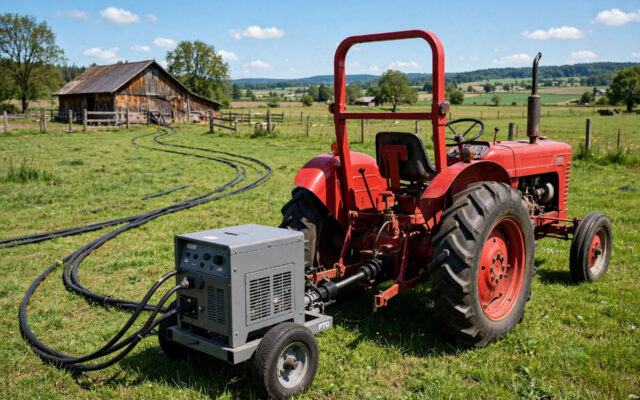
Best PTO Generators for Tractors in 2027
Best PTO generators for tractors in 2027: top 5 PTO-driven units compared — NorthStar, Winco, Tiger Power. Sizing rules, 540 RPM basics and buying guide.

Best Diesel Generators of 2027 (Portable Picks)
The best diesel generators for 2027? A short honest list: Generac XD5000E leads, Kipor KDE6700TA follows. Fuel math, winter tips & buying advice inside.
Best Quiet Generators of 2027 (Low-Decibel Picks)
Looking for the best quiet generators for home backup? These 7 low-decibel picks (48-64 dB) keep the peace without sacrificing real power.