


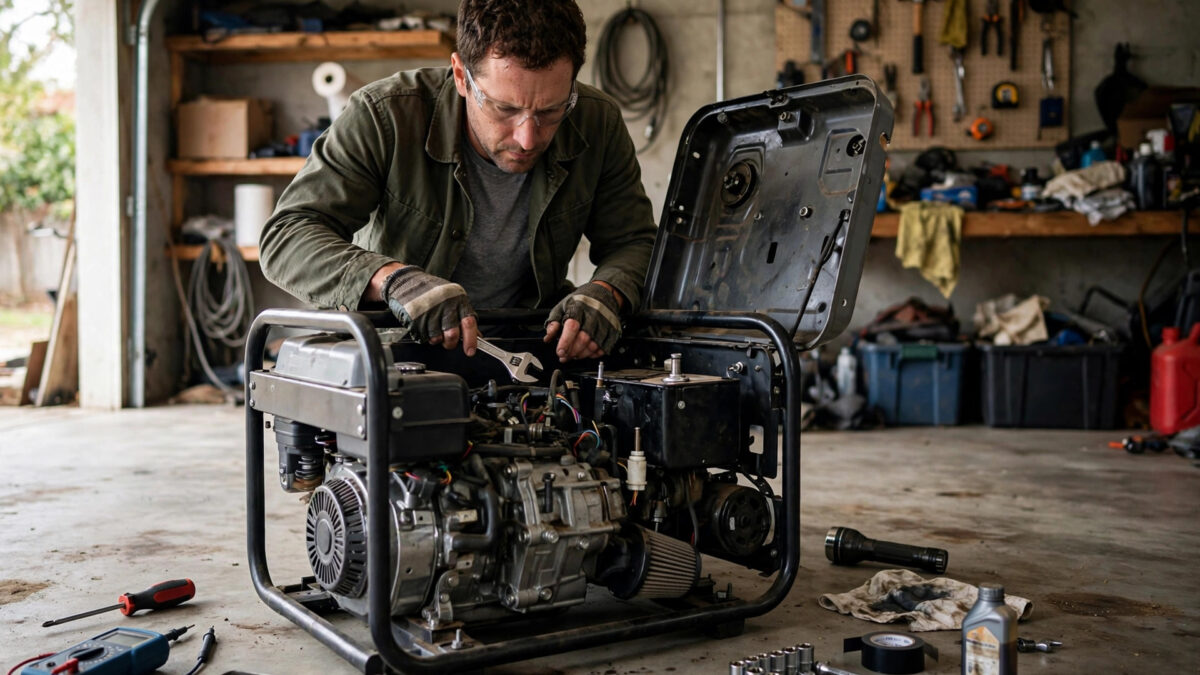
Your generator won’t start, the power’s out, and you’re getting frustrated. Take a breath — nine times out of ten, a no-start generator is a fuel problem, an oil problem, or a spark problem, and you can diagnose all three in about fifteen minutes with no special tools. I’ve revived dozens of “dead” generators for neighbors, and I can count on one hand the ones that actually needed a shop.
Work through this checklist in order. It’s arranged from most common cause to least common, so don’t skip ahead — the boring checks at the top are the ones that fix most machines.
Key takeaways
- Stale fuel / gummed carburetor is the #1 cause of no-start generators — fuel older than 30–60 days is suspect.
- Check in this order: fuel → oil level → spark → air → battery → switches. Most fixes are found in the first three.
- The low-oil shutdown sensor kills the ignition silently — a generator a half-quart low on oil will crank forever and never fire.
- A wet or fouled spark plug is a 5-minute, $5 fix. Always check the plug before assuming the worst.
- If it starts then dies after a few seconds, suspect the fuel cap vent, the low-oil sensor, or a clogged carb jet.
Step 1: Fuel — The Usual Suspect
I’d estimate 70% of the dead generators I’ve looked at were fuel problems. Gasoline starts going stale in 30 days; by 60–90 days it leaves varnish in the carburetor’s tiny jets, and by six months the carb is often completely gummed shut.
- Is there actually fuel in the tank? Sounds insulting. Check anyway — fuel gauges lie, and I’ve “diagnosed” two generators that were simply empty.
- Is the fuel valve ON? The little petcock between the tank and carb. After storage, people forget they turned it off.
- How old is the fuel? If you can’t remember filling it, it’s too old. Drain the tank and carb bowl, refill with fresh gas dosed with STA-BIL.
- Loosen the fuel cap and try starting. A clogged cap vent creates a vacuum in the tank that starves the carb — the engine starts, runs a minute, and dies. If it runs with the cap loose, clean or replace the cap.
- Drain the carb bowl. Most carbs have a little drain screw at the bottom of the float bowl. Drain a few ounces into a jar — if what comes out is yellow, cloudy, or smells like varnish instead of fresh gas, the carb needs cleaning. Our carburetor cleaning guide walks through the full job.
Step 2: Oil Level — The Silent Killer
Almost every modern generator has a low-oil shutdown sensor that cuts the ignition when oil drops below a threshold. It doesn’t warn you. It doesn’t sputter. The engine just cranks and cranks and never fires — exactly like a dozen other problems.
Pull the dipstick, wipe, reinsert, check. Top up to the full mark with the correct weight oil. I’ve seen generators that were literally half a quart low refuse to start, then fire on the first pull after topping up. If you’re due anyway, our oil change guide covers the whole procedure.
One more oil-related gotcha: if the generator is sitting on uneven ground, the oil pools to one side and the sensor reads low even with a full crankcase. Level the machine and try again.
Step 3: Spark — Plug, Wire, and Switch
No spark, no start. This is a five-minute check:
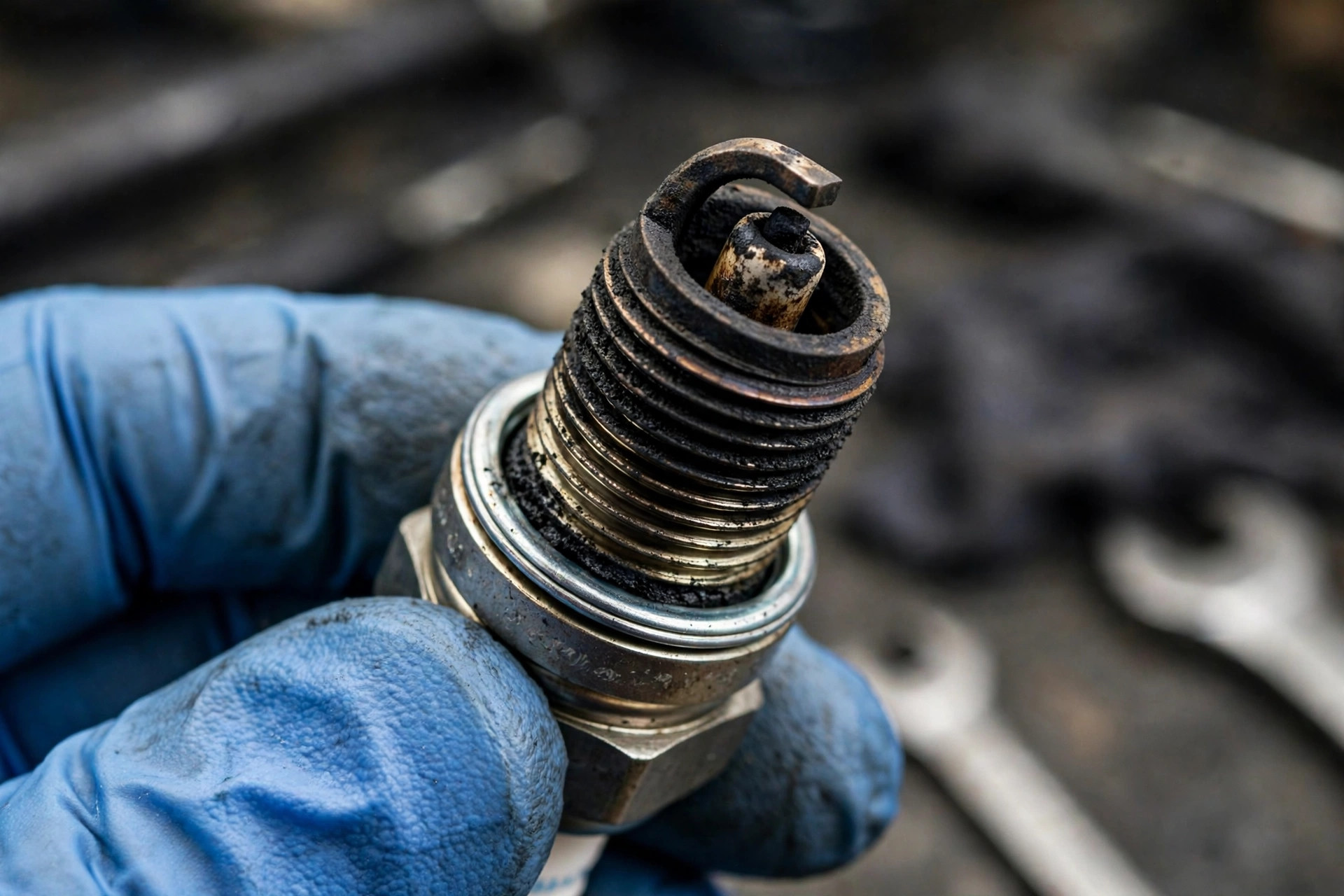
- Pull the spark plug. Is it wet with fuel (flooded — dry it and try again with no choke), black and crusty (fouled — clean or replace), or cracked (replace)? A new plug costs a few dollars and fixes a surprising number of “dead” generators.
- Check the plug wire and boot. Make sure the boot is firmly seated on the plug. Mice love to chew plug wires in storage — inspect the full length.
- Test for spark. With the plug out but connected to the wire, hold the plug’s metal body against the engine block (use insulated pliers) and crank. You should see a bright blue spark. Weak orange spark or nothing = ignition problem.
- Check the kill switch and key. The engine switch must be ON/RUN, and on electric-start models the key must be fully turned. I’ve watched people crank for ten minutes with the switch off. No judgment — I’ve done it myself.
Step 4: Air — Filter and Choke
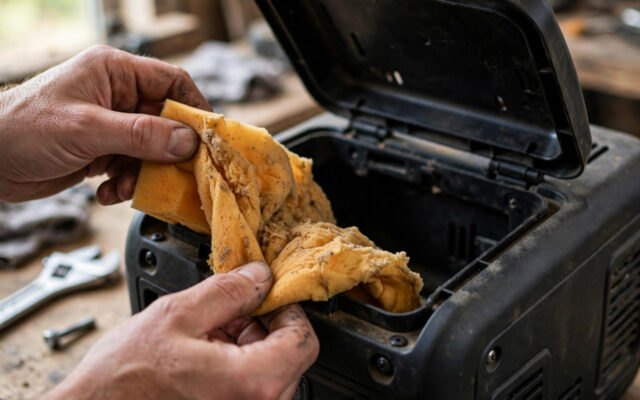
An engine needs air as much as fuel. Pull the air filter — if it’s packed with dust, mouse nesting, or oil-soaked, the engine can’t breathe. Tap out a paper filter or wash a foam one, and try starting with the filter temporarily removed (just for the test — don’t run it filterless).
Then check your choke technique: full choke on a cold engine, no choke on a warm one. Over-choking a warm engine floods it instantly. If you’ve cranked with full choke five times with no luck, you’ve probably flooded it — turn the choke OFF, hold the throttle wide open, and crank to clear it. Our choke guide explains the why behind all this.
Step 5: Battery (Electric-Start Models)
If the starter groans slowly or just clicks, the battery is the problem — not the engine. Check terminals for corrosion, test voltage (12.6V+ is healthy; under 12V is suspect), and jump it from a car battery if needed to confirm. Then put it on a maintainer so this doesn’t happen again. Dead batteries after storage are so common they’re practically a season.
Step 6: The Less Common Culprits
If you’ve cleared fuel, oil, spark, air, and battery and it still won’t start:
- Clogged spark arrestor. The little screen in the muffler outlet cakes with carbon over time. Pull it and clean it with a wire brush — a blocked exhaust chokes the engine exactly like a blocked intake.
- Tripped breaker or GFCI. This one’s for “starts but produces no power” — but check the breakers anyway. Some generators won’t crank with certain faults.
- Sheared flywheel key. If the generator took a hard knock (fell off a truck bed, tipped over hard), the flywheel key can shear, throwing ignition timing off. It’ll crank and occasionally backfire but never run. This one needs a shop unless you’re handy.
- Stale fuel in the lines. Even with a clean carb, varnish in the fuel line or a clogged in-line filter starves the engine. Trace the line from tank to carb and check flow.
The “Starts Then Dies” Special Case
This deserves its own mention because the cause list is different. Engine fires up, runs 5–30 seconds, dies:
- Fuel cap vent clogged (most common) — loosen the cap and see if it keeps running.
- Low-oil sensor tripping as oil sloshes — check level, level the machine.
- Idle jet clogged but main jet clear — it’ll run with the choke partially on but die when you open the choke fully. Classic partial carb clog.
- CO sensor shutdown (newer models) — if the red CO light blinks, the sensor is doing its job. Move the generator to open air; see our CO sensor guide.

FAQs
Why won’t my generator start after sitting for a year?
My generator cranks but won’t start — what’s the first thing to check?
Can low oil really prevent a generator from starting?
Why does my generator start and then die after a few seconds?
Should I use starting fluid to start my generator?
The Bottom Line
Fuel, oil, spark, air, battery — in that order. I’ve never met a generator that survived this checklist without revealing its problem, and most of the time the fix is fresh gas, oil to the full mark, or a $5 spark plug. The real lesson is prevention: stabilized fuel, monthly exercise runs, and a battery maintainer mean you’ll never need this checklist at midnight during an outage.

Related Guides
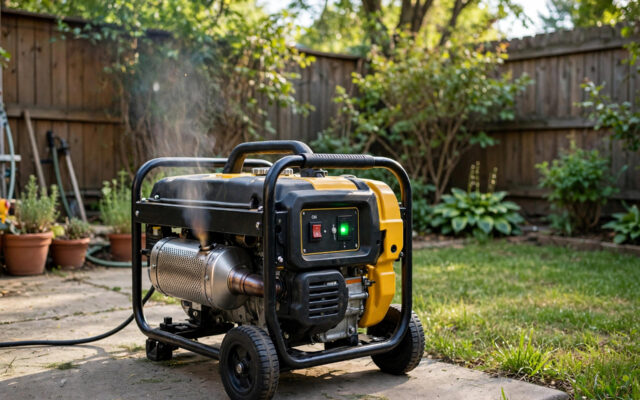
Why Does My Generator Backfire? Causes and Fixes (2027)
Why does your generator backfire? An exhaust bang means unburned fuel in the muffler; a pop through the carb means lean mixture or valve trouble. Here are the fixes.

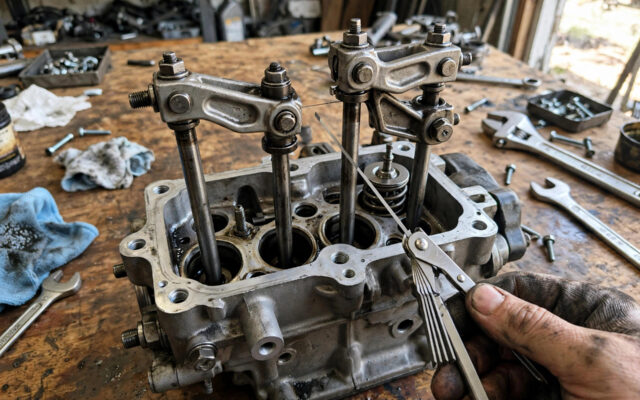
Generator Valve Adjustment: How to Set Valve Lash (2027 Guide)
Generator valve adjustment: 0.006" intake, 0.008" exhaust on Honda GX engines. Tools, TDC procedure, and symptoms of bad valve lash explained.
How to Clean and Replace a Generator Air Filter (2027 Guide)
How to clean a generator air filter: wash foam filters in soapy water and re-oil; tap out paper filters, never wash them. Full steps inside.