


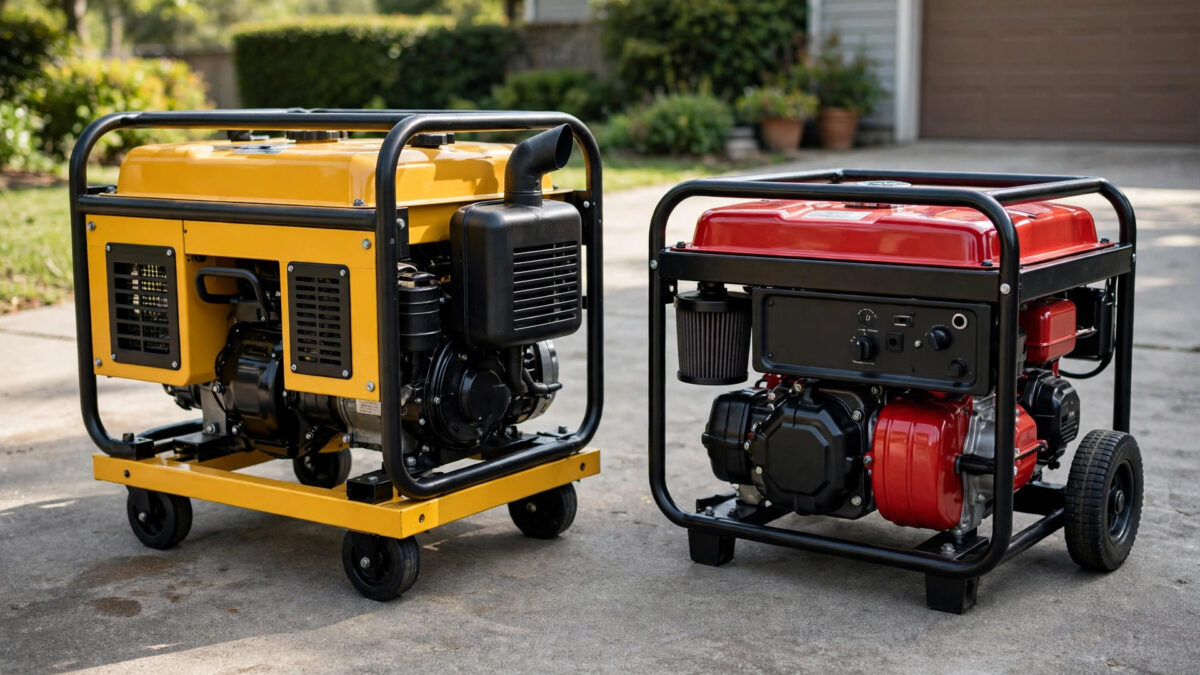
Diesel generators win on lifespan and fuel efficiency. Gasoline generators win on upfront cost and convenience. If you need a generator that runs hundreds of hours a year — a farm, a jobsite, a house with frequent long outages — diesel is the better machine. If you need backup for the occasional storm, gasoline will save you thousands and sit in the garage without complaint.
I have owned and maintained both. My gasoline portable has started every time I needed it in six years of storm duty. My neighbor’s diesel Kubota has logged over 8,000 hours running a dairy barn’s ventilation fans. Different jobs, different answers.

Key takeaways
- Diesel engines typically last 15,000–50,000 hours; gasoline portables last 1,000–3,000 hours.
- Diesel fuel carries roughly 139,000 BTU per gallon vs. about 114,000 for gasoline — more energy per gallon means longer runtimes.
- Gasoline generators cost far less upfront: a 7,500W portable runs $700–$1,200; a comparable diesel starts around $2,500.
- Diesel stores better (6–12 months without going bad); gasoline goes stale in 30–60 days without stabilizer.
- Gasoline wins for occasional home backup; diesel wins for heavy, frequent, or long-duration use.
The Short Version: Who Should Buy Which
Buy gasoline if your generator runs less than ~100 hours a year. That’s most homeowners. Storm outages, tailgating, camping, the occasional dead freezer. A good gasoline portable costs a fraction of a diesel, starts easily in winter, and fuel is available at every gas station in the country.
Buy diesel if you will actually use the machine. Contractors, farms, remote cabins, off-grid setups, anyone who runs a generator for days at a time. The upfront cost stings, but the engine will outlive three gasoline machines, and it burns less fuel per hour doing the same work.
There is a gray zone in the middle — rural homes with frequent multi-day outages. That’s where I’d honestly steer most people to a standby generator (natural gas or propane) rather than portable diesel, since standby units start themselves and run on a plumbed fuel supply. Our comparison of portable vs. standby generators covers that decision in detail.
Lifespan: The Biggest Real Difference
This is the number that decides most diesel purchases, and it’s not close.
| Type | Typical engine life | What it means in practice |
|---|---|---|
| Gasoline portable (air-cooled) | 1,000–3,000 hours | Storm backup for 10–25 years at ~100 hrs/year |
| Gasoline standby (air-cooled) | ~3,000 hours | 20–30 years of exercise cycles + occasional outages |
| Diesel portable / standby | 15,000–50,000 hours | Decades of real daily or weekly use |
Why the gap? Diesel engines are compression-ignition — no spark plugs, lower RPM, massively overbuilt internals designed for constant-load duty. A diesel turns fuel into work with less heat and less stress per power stroke. Small gasoline engines are built to a price point; they work hard at 3,600 RPM and wear out faster.
One honest caveat: those 15,000–50,000 hour diesel figures come from commercial and industrial units (liquid-cooled, 1,800 RPM). A small portable diesel still outlasts a gasoline portable by a wide margin, but don’t expect commercial numbers from a $3,000 portable.
Fuel: Cost, Storage, and Availability
Diesel packs more energy per gallon — roughly 139,000 BTU vs. 114,000 for gasoline and 91,500 for propane. In practice, a diesel generator burns noticeably less fuel per kilowatt-hour produced. A 5kW-class diesel portable sips around 0.4–0.6 gallons per hour at half load, where a gasoline machine of the same size drinks 0.6–0.9.
But the per-gallon price often erases that advantage. Diesel at the pump is usually priced above gasoline — sometimes by a dollar or more — and off-road (dyed) diesel savings only apply where you’re legally allowed to use it. Do the math with your local prices before assuming diesel is cheaper to run.
Where diesel genuinely shines is storage. Diesel fuel stays usable for 6–12 months (longer with a biocide/stabilizer), while gasoline starts degrading in 30–60 days thanks to ethanol. If your backup plan involves fuel cans sitting in the garage for a year, diesel is far more forgiving. That said, gasoline + STA-BIL fuel stabilizer (1 oz per 2.5 gallons, keeps fuel fresh up to 24 months) closes most of the gap — and I’ve covered the exact process in my guide to using fuel stabilizer in a generator.
Availability cuts both ways. Gasoline is everywhere — 145,000+ stations in the US. Diesel is widely available too, but fewer stations carry it, and after a hurricane, diesel pumps compete with truckers and emergency crews. During Hurricane Sandy, I watched neighbors with gasoline generators walk to the one working station while diesel owners hunted for a truck stop that still had power.
Noise, Weight, and Everyday Annoyances
Diesel generators are louder. Not slightly — meaningfully. The clatter of a diesel at 7 AM is a special kind of neighborhood diplomacy problem. Modern enclosed diesel units are better, but a bare-frame portable diesel will rattle your windows and your neighbor’s.
They’re also heavier. A 5,000W portable diesel can weigh 250–300+ lbs vs. 150–200 lbs for the gasoline equivalent. That matters when you’re wheeling it out of the garage in the rain.
And then there’s the exhaust. Diesel exhaust smells stronger and produces more soot. Follow the CDC’s rule: run any generator at least 20 feet from doors, windows, and vents, exhaust pointed away from the house, with battery CO detectors inside. This isn’t optional — CO kills.
Real Costs: Upfront vs. Lifetime
| Gasoline portable (7,500W) | Diesel portable (5,000W) | |
|---|---|---|
| Upfront cost | $700–$1,200 | $2,500–$3,500 |
| Engine life | 1,000–3,000 hrs | 10,000+ hrs |
| Fuel burn @ 50% load | ~0.7 gal/hr | ~0.4–0.5 gal/hr |
| Maintenance | Oil every 50–100 hrs, plug, filter | Oil/filter changes, fuel filter, glow plugs |
| Replacement cycle | 10–20 years (storm duty) | Essentially once |
Run the lifetime math for a home that sees 100 outage hours a year. The gasoline machine costs ~$900 and uses ~70 gallons of gas. The diesel costs ~$3,000 and uses ~45 gallons of diesel. At current fuel prices, the fuel savings won’t pay back the price difference for a decade or more — and by then you’ve spent more on diesel maintenance (fuel filters, glow plugs).
Flip it to 500 hours a year (farm, jobsite, off-grid) and diesel wins comfortably: lower fuel burn per hour, far longer engine life, and fewer replacements. This is why construction companies don’t run gasoline fleets.
My Bottom Line
For the overwhelming majority of homeowners reading this in 2027: buy gasoline. Spend the money you saved on a transfer switch or interlock kit, a battery CO detector, and a proper 20-foot cord setup. You’ll be safer, quieter, and several thousand dollars richer.
Choose diesel only when hours-per-year justifies it — regular multi-day outages, agricultural or commercial use, or an off-grid primary-power setup. Then the durability and fuel efficiency genuinely pay for themselves.
Is diesel or gasoline better for a home generator?
How long do diesel generators last compared to gasoline?
Is it cheaper to run a diesel or gasoline generator?
Does diesel fuel store longer than gasoline?
Can you run a diesel generator in cold weather?
Neither fuel type matters if the machine won’t start when you need it. Whatever you buy, exercise it monthly, change the oil on schedule, and keep fuel fresh. The generator that survives is the one that gets maintained — I’ve seen $400 gasoline units outlive neglected $3,000 diesels, and it wasn’t close.

Related Guides
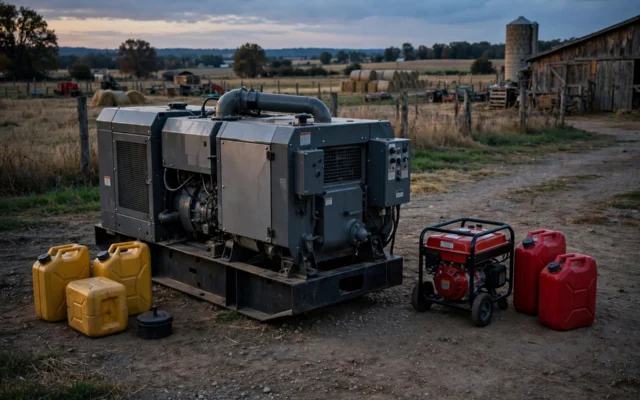
Diesel vs Gasoline Generators: Which Is Better in 2027?
Diesel vs gasoline generators: diesel wins on efficiency, lifespan and fuel storage; gas wins on price, weight and choice. Here's which fuel fits your use case.

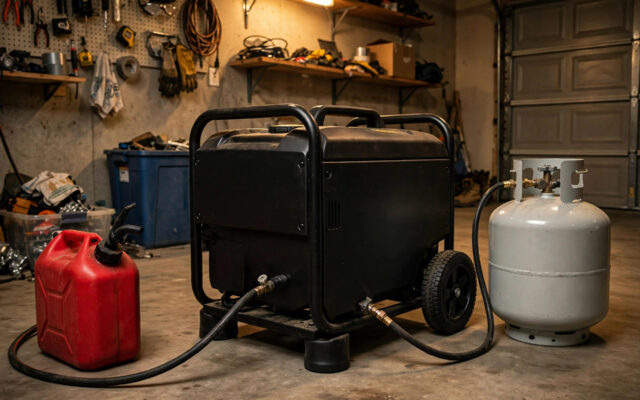
Gasoline vs Propane Generators: Which Fuel Is Better in 2027?
Gasoline vs propane generators in 2027: fuel cost, runtime, storage life, and cold-weather performance compared — plus why dual-fuel wins for most buyers.
Propane vs Gasoline: Generator Fuel Cost per kWh Compared
At October 2026 prices, propane costs ~$0.48/kWh vs ~$0.65/kWh for gasoline in a generator. See the full math and when gasoline still wins.