


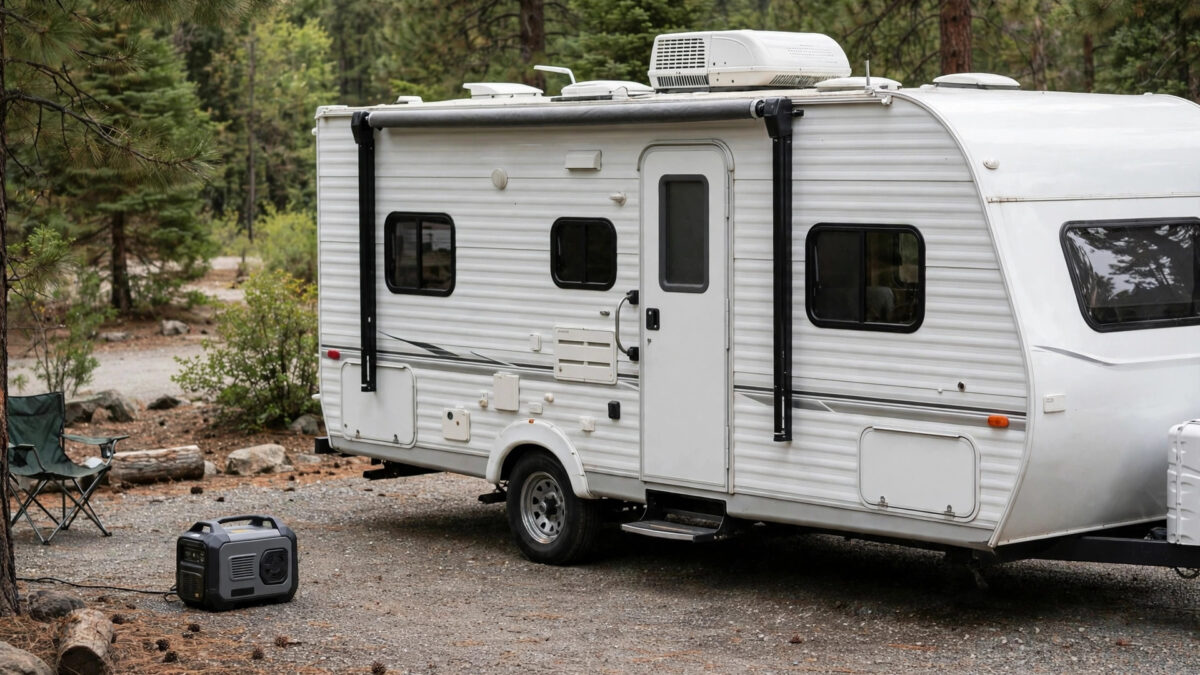
The short answer: a 13,500 BTU RV air conditioner needs a 3,000-watt generator minimum, and 3,500 watts is the comfortable pick — unless you install a soft start kit, in which case a single 2,200-watt generator can run it. The AC’s compressor draws about 1,400–1,500 watts running, but the startup surge is what decides your generator size.
This is the question I hear most from new RVers, usually right after they’ve bought a 2,000-watt generator and discovered their rooftop AC trips it on the first hot afternoon. I watched exactly that happen at a campground in July — the guy’s Honda EU2200i ran everything beautifully until the AC compressor kicked on, and then: overload light, silence, sweat. Here’s the full picture so that doesn’t happen to you.
Key takeaways
- A 13,500 BTU rooftop AC draws ~1,400–1,500W running (12–13A) and surges to ~2,800–3,000W at compressor startup.
- No soft start: you need a 3,000W generator minimum; 3,500W is the safe, no-drama choice.
- With a soft start kit: the startup surge drops by up to 75%, and a single 2,200W generator can run a 13,500–15,000 BTU AC.
- 15,000 BTU units need ~1,800W running — plan on 3,500W+ without a soft start.
- Turn the generator’s eco mode off during AC starts, and switch the fridge to propane before the compressor kicks on.
What a 13,500 BTU RV AC Actually Draws
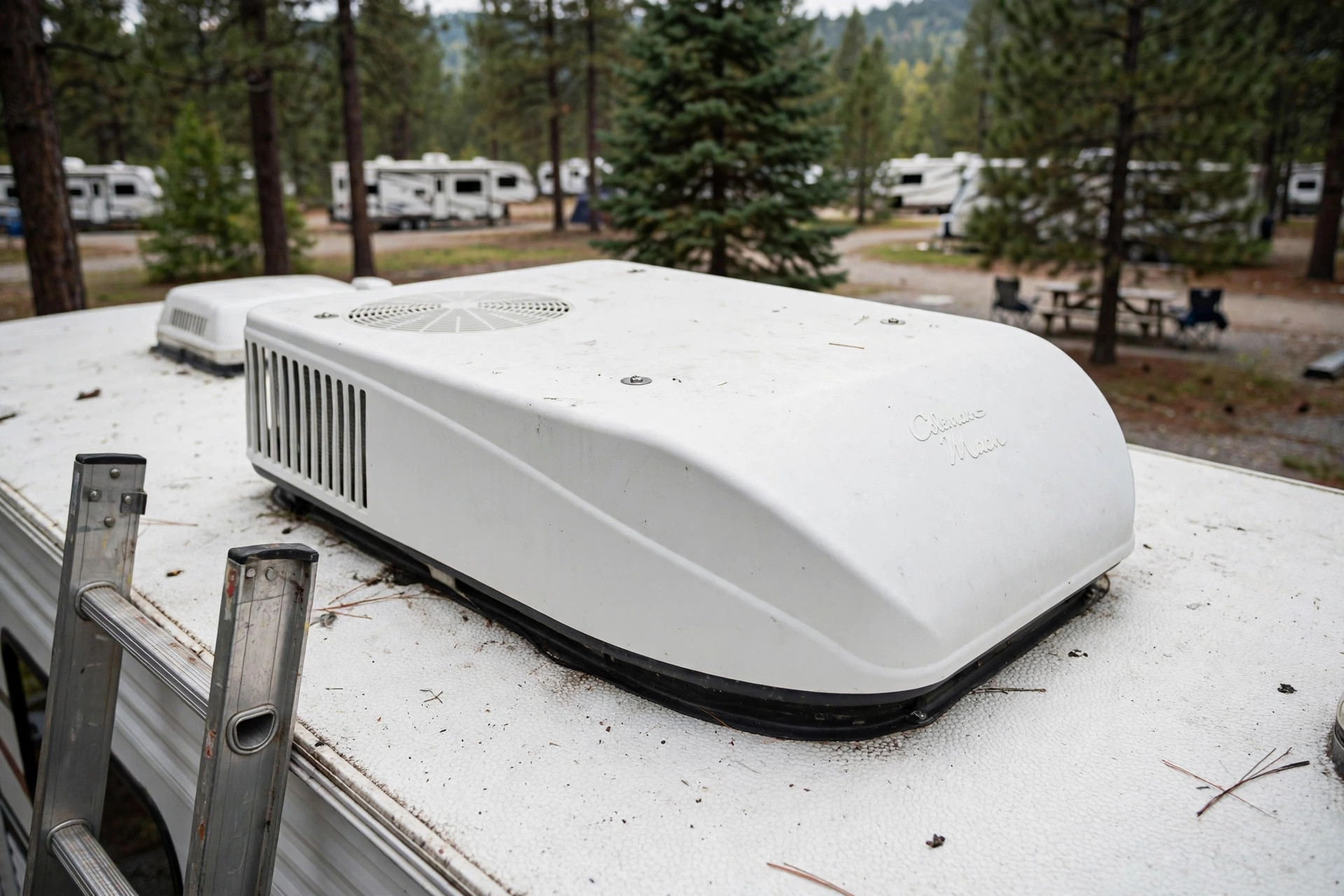
Rooftop RV air conditioners (Coleman-Mach, Dometic — the two big brands) are single-speed compressor machines, and their numbers are well documented by owners who’ve measured them:
| AC size | Running watts | Running amps | Starting surge |
|---|---|---|---|
| 13,500 BTU | 1,400–1,500W | 12–13A | 2,800–3,000W |
| 15,000 BTU | 1,700–1,800W | 14–15A | 3,300–3,500W |
That running number is deceptive in two ways. First, it’s measured at standard test conditions — on a 100°F desert afternoon, the same 13,500 BTU unit can pull 1,800 watts running (15A) because the compressor works harder against the heat. Second, the starting current is the real monster: one owner measured his Coleman-Mach 13.5k’s compressor pulling 41.1 amps at startup (the motor is rated 54 locked-rotor amps). At 120V, that’s nearly 5,000 watts for a split second. No 2,200W generator survives that without help.
The Soft Start Kit Changes Everything
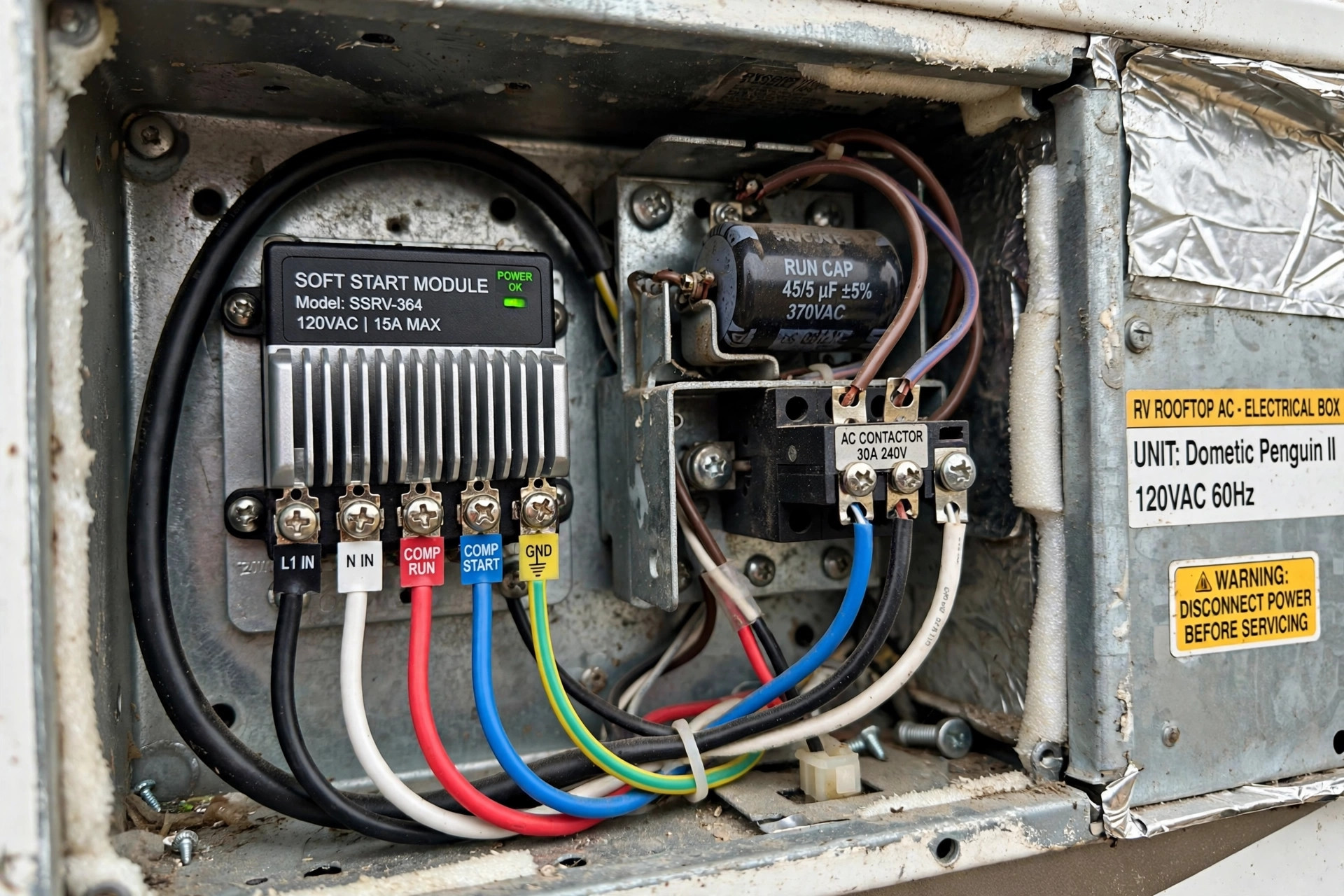
A soft start kit is a small microprocessor module you wire into the AC’s electrical box on the roof. Instead of slamming the compressor with full power instantly, it ramps the voltage up in stages over about a second. The result, measured by owners:
- Startup current drops 65–75% — from 41.1A down to 17.3A in one documented test.
- The compressor starts “slow and graceful” instead of with a bang.
- A single 2,200-watt generator (Honda EU2200i class) can start and run a 13,500 or even 15,000 BTU AC.
The best-known unit is the Micro-Air EasyStart 364, which supports ACs up to 18,000 BTU and is specifically designed for this job. Installation takes most people 30–60 minutes on the roof with basic tools — you’re wiring into the run capacitor circuit, and the instructions walk you through your specific AC brand. Our soft start kit roundup compares the EasyStart against the alternatives.
Sizing Without a Soft Start: The Honest Numbers
If you’d rather just buy a bigger generator than climb on the roof:
- 13,500 BTU, no soft start: 3,000W generator minimum (it’ll work, but hot-day restarts can be marginal), 3,500W recommended. That extra 500W is the difference between “usually works” and “never think about it.”
- 15,000 BTU, no soft start: 3,500W minimum, 4,000W comfortable.
- Two ACs: two 13.5k units need roughly 3,000W running combined, so a 5,500–6,500W generator — or two 2,200W generators paralleled with soft starts on both ACs.
Check our best RV generators for 2027 for quiet models in each size class — noise matters when your bedroom is six feet from the generator compartment.
Soft Start Kit vs. Bigger Generator: Which Should You Buy?
This is the real decision most RVers face, so let’s do the math. A Micro-Air EasyStart 364 typically costs in the $300 range and takes under an hour to install on the roof. A step up from a 2,200W to a 3,500W inverter generator costs several hundred dollars more than that — plus the bigger unit is heavier, louder, and thirstier every single time you run it.
The soft start wins on economics if you already own a 2,200W generator. It also wins on noise: a 2,200W inverter at half load is dramatically quieter than a 3,500W unit working hard, and at a campground, your neighbors will notice the difference. The bigger generator wins on simplicity — no roof work, no wiring — and if you need the extra watts for other loads anyway (two ACs, a microwave, an electric water heater), the bigger unit is the honest answer.
My take after watching both approaches for years: if your only problem is the AC’s starting surge, the soft start kit is the smarter money. If you’re constantly bumping against your generator’s limits across the board, size up.
Five Field Tips From Years of RV Generator Use
1. Turn eco mode off before the AC starts
Same rule as welding: the eco-throttle ramp-up delay can’t react fast enough to a compressor surge. Turn eco off, start the AC, then you can experiment with eco back on once it’s running steady — though I leave it off on hot days.
2. Put the fridge on propane first
An RV fridge on electric mode draws 300–400 watts. When the AC compressor surges, that fridge load is the straw that trips the overload. Switch the fridge to propane (it sips almost nothing) before starting the AC, and you free up the headroom that matters.
3. Watch your voltage, not just your watts
Low voltage kills compressors slowly. If your generator’s output sags below about 108V during compressor starts (a cheap plug-in voltmeter tells you), you’re underpowered even if the breaker hasn’t tripped. Sustained low-voltage operation overheats compressor windings.
4. Let the generator warm up first
Give the generator 2–3 minutes at no load before asking it to start the AC. A cold engine at full surge load is more likely to bog and trip.
5. Park in the shade, point the exhaust away
Shade on the RV means the AC cycles less; exhaust pointed away from your neighbor’s campsite (and your own windows) keeps everyone happy. And yes — you can run the generator while driving, which is how most people pre-cool the rig before arriving.
FAQs
Will a 2000 watt generator run a 13500 BTU RV air conditioner?
What size generator do I need for a 15000 BTU RV AC?
What is a soft start kit and is it worth it?
Can I run my RV AC on a 30-amp campground hookup instead?
Why does my generator run the AC fine but trip when the compressor restarts?
The Bottom Line
A 13,500 BTU RV AC is a 1,500-watt load wearing a 3,000-watt disguise — the disguise comes off for two seconds every time the compressor starts, and that’s the moment your generator has to survive. Either buy 3,500 watts and stop thinking about it, or install a soft start kit and let a quiet little 2,200W inverter do the job. Both paths work. Picking neither is how you end up sweating at a campground watching an overload light blink.

Related Guides
Why Does My Generator Backfire? Causes and Fixes (2027)
Why does your generator backfire? An exhaust bang means unburned fuel in the muffler; a pop through the carb means lean mixture or valve trouble. Here are the fixes.

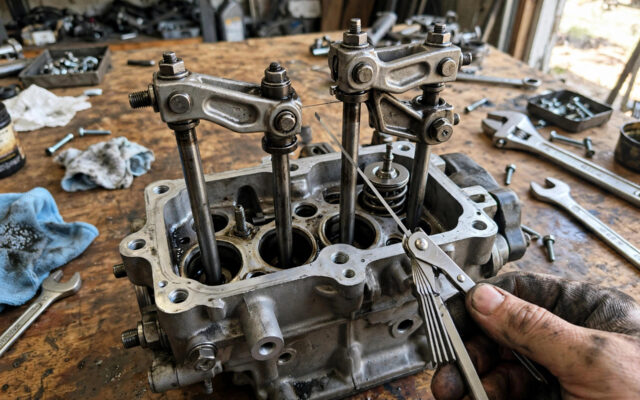
Generator Valve Adjustment: How to Set Valve Lash (2027 Guide)
Generator valve adjustment: 0.006" intake, 0.008" exhaust on Honda GX engines. Tools, TDC procedure, and symptoms of bad valve lash explained.

How to Clean and Replace a Generator Air Filter (2027 Guide)
How to clean a generator air filter: wash foam filters in soapy water and re-oil; tap out paper filters, never wash them. Full steps inside.