


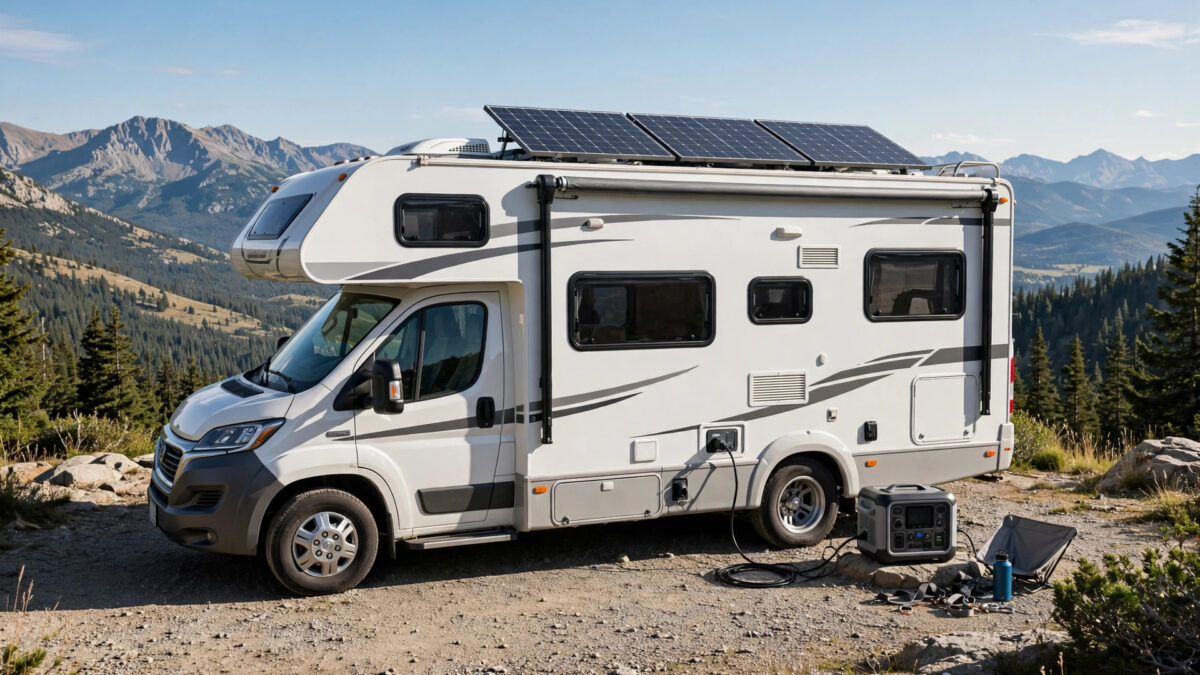
RV life in 2027 is better without the generator racket. A solar generator replaces noisy gas generators and crowded hookup hunting with silent, fume-free power that lives in your rig’s storage bay. The right one runs your RV’s outlets, charges from rooftop or portable panels while you drive or park, and keeps the adventure going off-grid for days.
RV power has specific demands: a TT-30 30-amp RV outlet for direct shore-power-style connection, enough capacity for overnight AC or heating, and quiet operation for campgrounds. We picked the five best solar generators for RV use in 2027 — from a grab-and-go portable to a whole-rig power plant.
Our Top RV Picks for 2027
- Best overall: BLUETTI AC200PL — 2304Wh, 2400W, TT-30 RV port
- Best value: Anker SOLIX F2600 — 2560Wh, 2400W, TT-30 RV port
- Best quiet: BLUETTI Elite 200 V2 — 2073.6Wh, 2600W, whisper-quiet
- Best portable: Jackery Explorer 1000 v2 — 1070Wh, 1500W, 23.8 lbs
- Best for big rigs: EcoFlow DELTA Pro 3 — 4096Wh, 4000W, 120V/240V
Best overall
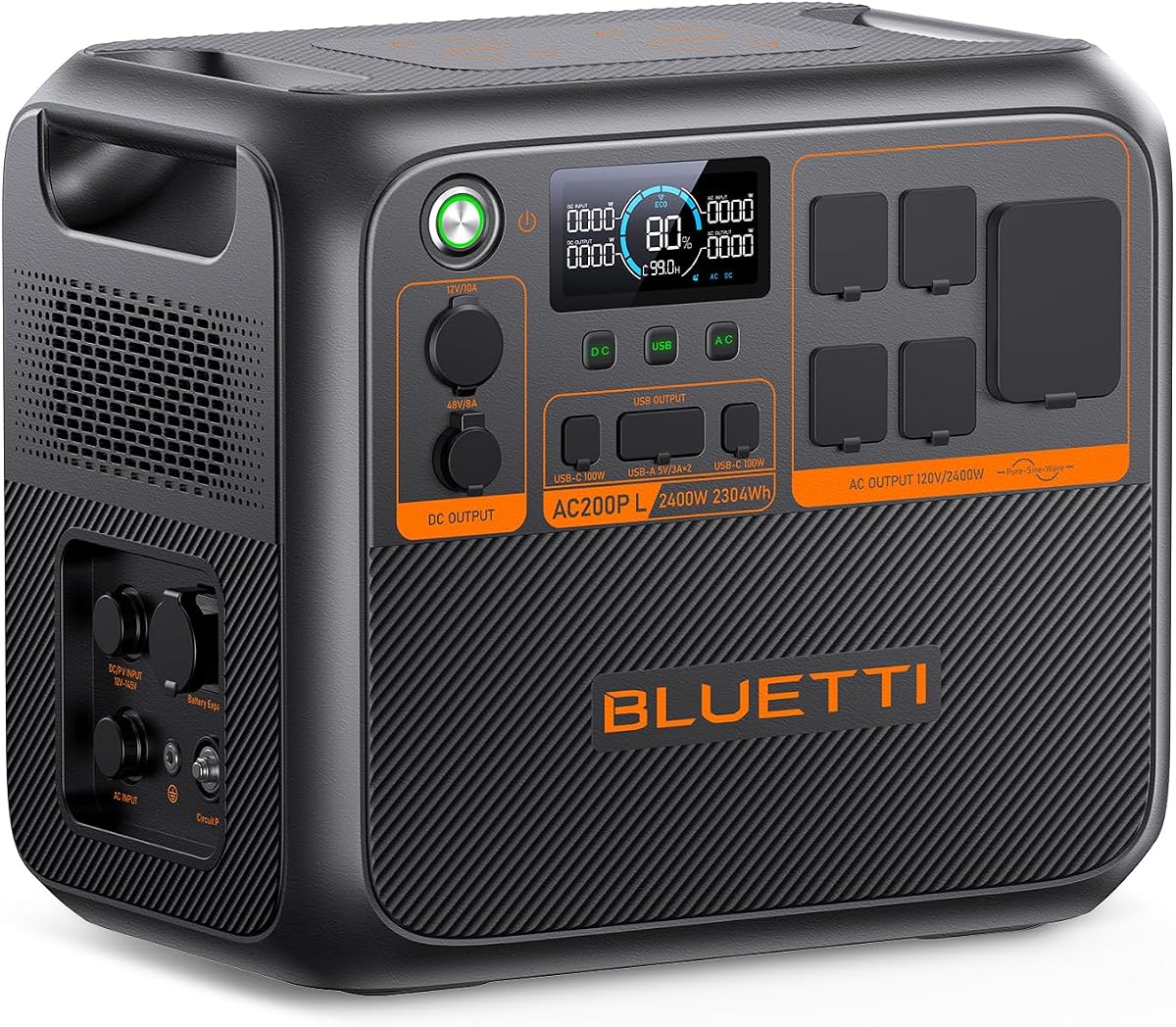
BLUETTI AC200PL
- 2304Wh capacity / 2400W output (3600W Power Lifting)
- LiFePO4 battery, 3000+ cycles, expandable to 8448Wh
- TT-30 30A RV outlet for direct RV connection
- 72 lbs
- Capacity: 2304Wh (expandable to 8448Wh)
- Output: 2400W (3600W Power Lifting)
- Battery: LiFePO4, 3000+ cycles
- Recharge: 0-80% in about 1 hour
- Weight: 72 lbs
As an Amazon Associate, we earn from qualifying purchases.
BLUETTI AC200PL Review — The Best RV Solar Generator
The BLUETTI AC200PL is built for RV life. The headline feature is the TT-30 30-amp RV outlet: plug your rig’s shore power cord straight in and the whole RV runs as if on hookups — outlets, lights, water pump, and entertainment. No adapters, no rewiring, no compromises. That single port is why it beats every rival for RVers.
The 2304Wh LiFePO4 battery covers a full evening of RV living — lights, TV, fridge, device charging, and the furnace fan — and the 2400W inverter with 3600W Power Lifting mode handles the microwave and most RV air conditioners with a soft starter. When 2304Wh is not enough, expansion batteries take you to 8448Wh, enough for serious boondocking.
At 72 lbs it lives in the storage bay, not the cab, and the 1200W solar input pairs beautifully with rooftop panels for driving-day recharges. For the money, no other RV-ready station delivers this combination of the right port, the right capacity, and an upgrade path.
Pros
- TT-30 RV outlet — plug in your shore power cord directly
- 2304Wh covers a full evening of RV living
- Expandable to 8448Wh for serious boondocking
- Excellent value in the 2kWh class
Cons
- 72 lbs — storage bay placement only
- May need a soft starter for larger RV air conditioners
- Basic app experience
Best value
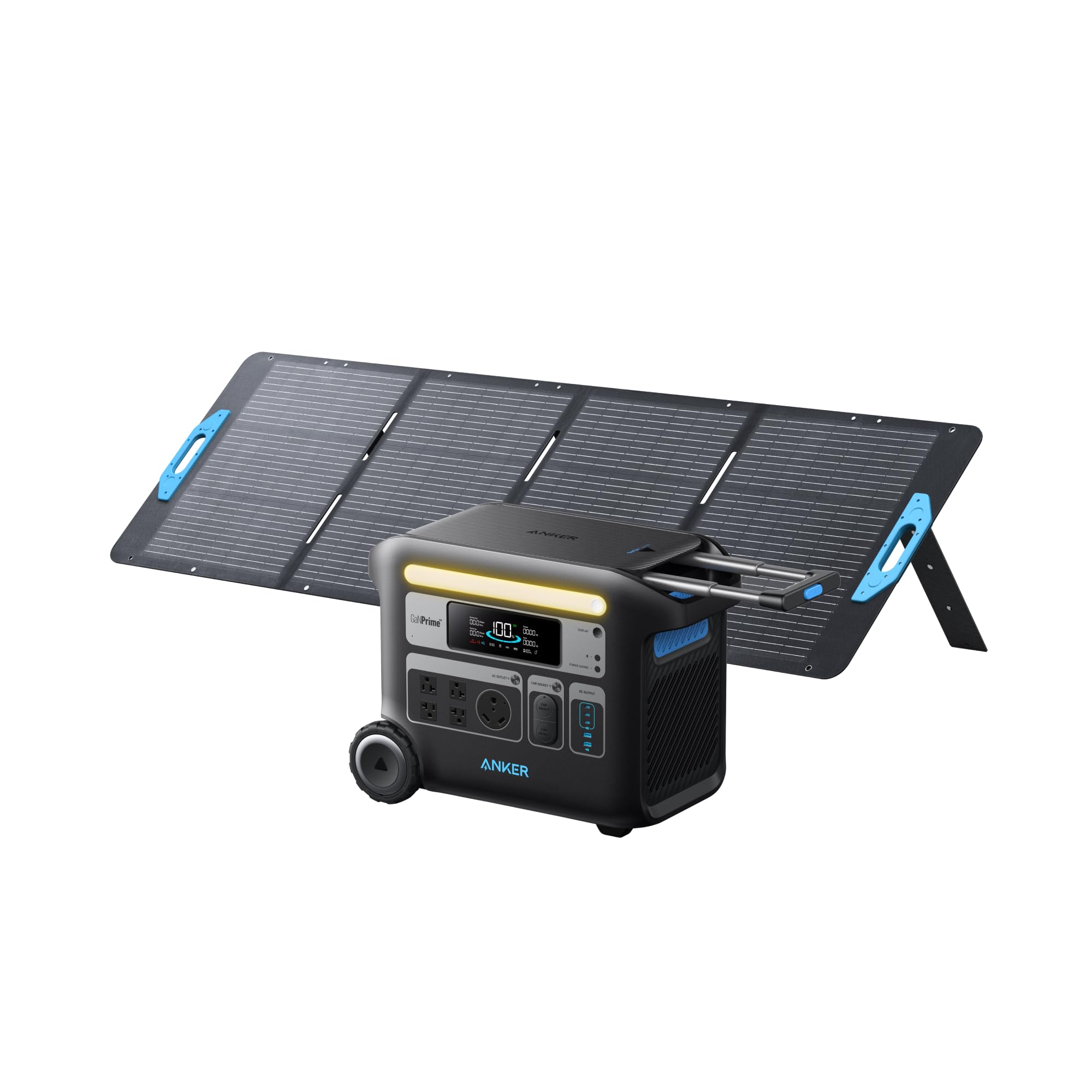
Anker SOLIX F2600
- 2560Wh capacity / 2400W output (3600W peak)
- LiFePO4 battery, 3000+ cycles
- TT-30 30A RV outlet
- 67.2 lbs
- Capacity: 2560Wh
- Output: 2400W (3600W peak)
- Battery: LiFePO4, 3000+ cycles
- Recharge: 0-80% in 1 hour
- Weight: 67.2 lbs
As an Amazon Associate, we earn from qualifying purchases.
Anker SOLIX F2600 Review — More Capacity, Less Money
The Anker SOLIX F2600 gives RVers 2560Wh — about 10% more storage than the BLUETTI above — with the same essential TT-30 RV outlet for direct shore-cord connection. The 2400W inverter covers the full RV lifestyle: microwave, coffee maker, entertainment, and climate control fans, all running silently.
Anker’s build quality and smart features stand out. The display and app give clear, honest readings of remaining runtime, and the 1-hour sprint to 80% charge means quick top-ups at any available outlet — a friend’s driveway, a campground bathroom block, a lunch stop. At 67.2 lbs it is a touch lighter than its closest rival, which matters when wrestling it into a storage bay.
The trade-off versus the BLUETTI is expandability: the F2600 is a fixed-capacity unit, so what you buy is what you get. But for RVers who want maximum ready-to-go capacity with the right RV port at a competitive price, the SOLIX F2600 is the value champion.
Pros
- 2560Wh — more storage than key rivals
- TT-30 RV outlet for direct connection
- Fast 1-hour recharge to 80%
- Anker build quality and clear runtime display
Cons
- Not expandable — fixed capacity
- 67.2 lbs needs careful bay placement
- No 240V output for the largest rigs
Best quiet
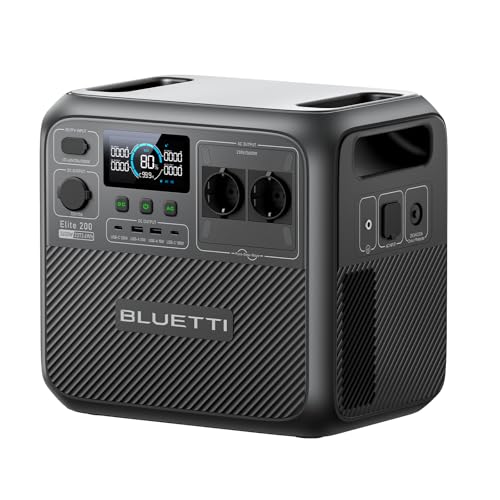
BLUETTI Elite 200 V2
- 2073.6Wh capacity / 2600W output (3900W Power Lifting)
- LiFePO4 battery, 6000+ cycles
- Whisper-quiet operation
- 53.4 lbs
- Capacity: 2073.6Wh
- Output: 2600W (3900W Power Lifting)
- Battery: LiFePO4, 6000+ cycles
- Recharge: 0-80% in about 50 minutes
- Weight: 53.4 lbs
As an Amazon Associate, we earn from qualifying purchases.
BLUETTI Elite 200 V2 Review — Silent Nights, Serious Power
Quiet hours are sacred in campgrounds, and the BLUETTI Elite 200 V2 respects them. BLUETTI tuned this 2kWh station for exceptionally quiet operation — under typical RV loads you will barely know it is running. For light sleepers and close-quarters campgrounds, that silence is worth real money.
The specs back it up: 2073.6Wh of storage, a 2600W inverter that outmuscles most 2kWh rivals, and a 6000+ cycle battery rating that promises 15+ years of RV seasons. The 3900W Power Lifting mode handles stubborn loads like older microwaves and AC compressors with soft starters.
It lacks a dedicated TT-30 outlet — you will use a standard adapter to your shore cord or run devices from its AC outlets — and at 53.4 lbs it is a one-person lift at most. But for RVers who prioritize silence alongside serious capacity, nothing beats it.
Pros
- Exceptionally quiet — ideal for campgrounds
- 2600W output, strongest in its weight class
- 6000+ cycle battery for 15+ years of RV seasons
- 50-minute fast recharge
Cons
- No dedicated TT-30 RV outlet (adapter needed)
- 53.4 lbs — plan placement carefully
- No 240V output
Best portable
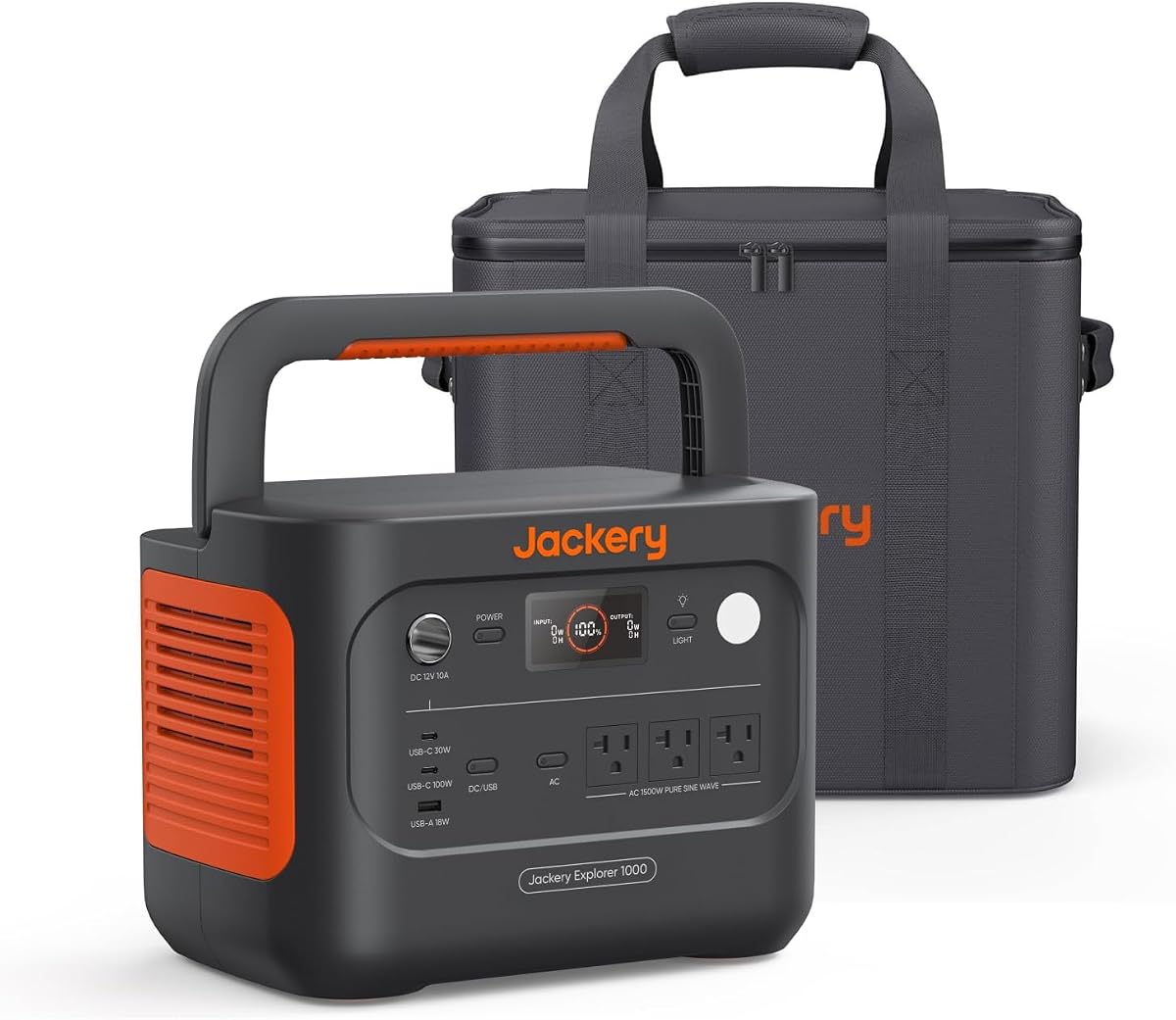
Jackery Explorer 1000 v2
- 1070Wh capacity / 1500W output (3000W surge)
- LiFePO4 battery, 4000+ cycles
- 1.7-hour standard recharge (1h emergency mode)
- 23.8 lbs
- Capacity: 1070Wh
- Output: 1500W (3000W surge)
- Battery: LiFePO4, 4000+ cycles
- Recharge: 1.7h standard, 1h emergency mode
- Weight: 23.8 lbs
As an Amazon Associate, we earn from qualifying purchases.
Jackery Explorer 1000 v2 Review — The Grab-and-Go RV Companion
Not every RVer wants a 70-lb battery in the storage bay. The Jackery Explorer 1000 v2 is the portable alternative: 23.8 lbs you can carry anywhere in the rig, 1070Wh for an evening of lights, devices, TV, and fan, and 1500W for the microwave or coffee maker in the morning.
It shines as a secondary power source alongside a bigger setup — or as the primary for smaller rigs, camper vans, and truck campers where space is tight and loads are modest. The fold-flat handle and compact body fit in cabinets and under dinettes, and the 4000+ cycle LiFePO4 battery handles years of travel.
It will not run an RV air conditioner or power the whole rig through a TT-30, so pair expectations accordingly. But for van lifers and weekend RVers who value portability over brute capacity, the Explorer 1000 v2 is the perfect travel companion.
Pros
- Truly portable at 23.8 lbs — carry anywhere in the rig
- 1500W runs microwaves and coffee makers
- Fits small rigs, vans, and truck campers
- 4000+ cycle LiFePO4 battery
Cons
- 1070Wh limits heavy multi-day use
- No TT-30 RV outlet
- Cannot run RV air conditioning
Best for big rigs
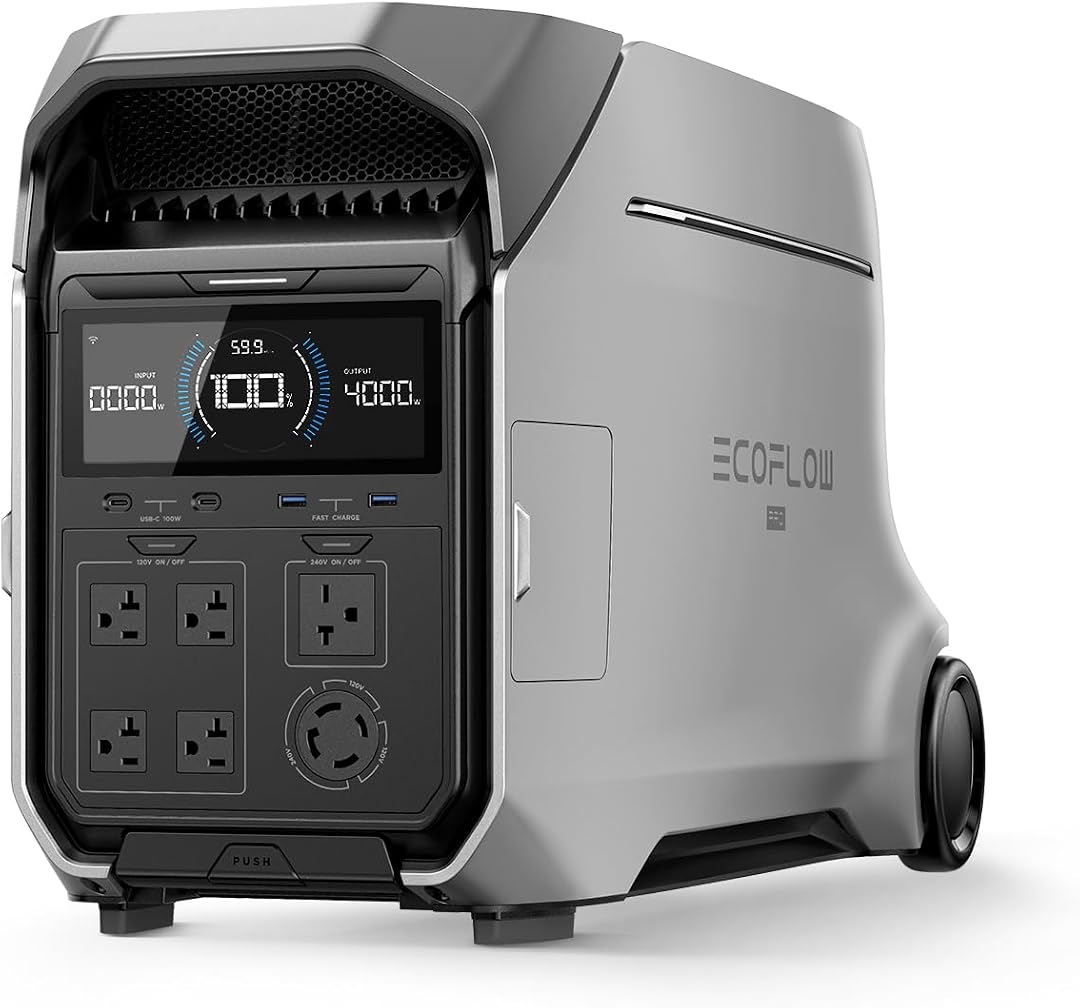
EcoFlow DELTA Pro 3
- 4096Wh capacity / 4000W output (6000W X-Boost)
- LiFePO4 battery, expandable to 48kWh
- 120V/240V output for 50-amp rigs
- 115 lbs
- Capacity: 4096Wh (expandable to 48kWh)
- Output: 4000W (6000W X-Boost, 120V/240V)
- Battery: LiFePO4
- Recharge: 0-80% in about 50 minutes
- Weight: 115 lbs
As an Amazon Associate, we earn from qualifying purchases.
EcoFlow DELTA Pro 3 Review — Whole-Rig Power for Big Rigs
Fifth wheels, Class As, and large travel trailers with 50-amp service need serious power — and the EcoFlow DELTA Pro 3 delivers it. The 120V/240V output runs everything a big rig has: dual air conditioners, residential fridges, washers, and full entertainment setups, all at once. The 4096Wh battery covers heavy evenings, and expansion to 48kWh is genuine off-grid independence.
For full-time RVers, this is the closest thing to a residential power system that fits in a storage bay. The 2600W solar input means a serious rooftop array refills it during travel days, and the 50-minute sprint to 80% from shore power makes campground stops incredibly productive.
At 115 lbs and flagship pricing, it is unapologetically the big-rig solution — overkill for vans and small trailers. But if your rig has 50-amp service and you refuse to compromise, the DELTA Pro 3 is in a class of one.
Pros
- 120V/240V output for 50-amp big rigs
- 4096Wh expandable to 48kWh — true off-grid independence
- Runs dual ACs and all major appliances simultaneously
- Massive 2600W solar input for rooftop arrays
Cons
- 115 lbs — dedicated bay space required
- Flagship pricing
- Overkill for small rigs and vans
Do an RV Power Audit Before You Buy
Five minutes with a notepad saves a costly wrong-size purchase. List every electrical device in your rig with its running watts (printed on the label) and estimate daily hours of use. Multiply watts by hours to get watt-hours per device, then add them up.
Example audit for a 30-amp travel trailer: LED lights (30W x 5h = 150Wh), 12V fridge on AC (150W x 8h = 1200Wh), water pump (60W x 0.5h = 30Wh), TV + devices (120W x 3h = 360Wh), furnace fan (80W x 4h = 320Wh), microwave (1000W x 0.25h = 250Wh). Total: about 2300Wh per day — a perfect match for the BLUETTI AC200PL or Anker SOLIX F2600, with solar panels refilling daily.
Add air conditioning and the math changes fast: a 13,500 BTU AC draws roughly 1500W running, or 1500Wh per hour. Four hours of afternoon cooling needs 6000Wh — now you are in DELTA Pro 3 territory with serious solar. Be realistic about AC: most boondockers use it sparingly or not at all, sizing instead for everything else.
Once you have your daily watt-hour number, choose a station with at least one full day of capacity, then add panels rated to replace that daily use in 4-6 hours of sun. That is the entire sizing method — no guesswork needed.
RV Solar Generator Buying Guide
The TT-30 outlet: why it matters
Most RVs connect to shore power through a TT-30 30-amp plug. Stations with a built-in TT-30 outlet (like the BLUETTI AC200PL and Anker SOLIX F2600) let you plug your existing shore cord straight in — the whole RV runs normally. Without one, you will use adapters and run individual devices, which works but is less seamless.
Can a solar generator run my RV air conditioner?
A typical 13,500 BTU RV AC draws 1200-1500W running with a 2500-3500W startup surge. You need at least 2000W of output with a strong surge rating, plus enough battery: roughly 1500Wh per hour of AC runtime. A soft starter (like MicroAir EasyStart) dramatically reduces the startup surge and makes AC possible on mid-size stations. For dual ACs or 50-amp rigs, only 240V-capable units like the DELTA Pro 3 qualify.
Sizing for boondocking
Estimate your daily watt-hours: lights, fridge, water pump, devices, fans, and any cooking or climate control. Most boondockers use 1500-4000Wh per day. Size the battery for at least one full day, then add solar panels to refill daily — 400-800W of panels sustains a 2kWh station in good sun.
Rooftop vs. portable panels
Rooftop panels charge while you drive and park, with zero setup — ideal for full-timers. Portable panels can be angled at the sun and parked in shade, yielding 20-30% more power. Many RVers run both: rooftop for baseline, portable for the boost.
Weight, placement, and ventilation
70+ lb stations belong low in a ventilated storage bay, secured against travel movement. Keep them out of extreme heat, allow airflow around the vents, and never block the cooling fans. Lighter stations can ride inside, but secure them — a 25-lb box becomes a projectile in a sudden stop.
Winter RV Solar: What Changes
Winter RVing changes the solar equation. Shorter days and lower sun angles cut panel harvest by 30-60% versus summer — plan on double the panel wattage or halve your consumption expectations. Snow on panels means zero output until cleared; a soft brush (never metal) keeps them producing.
Cold batteries: LiFePO4 stations should not charge below freezing — most quality units simply refuse until they warm up. Store the station inside the heated living space, not an unheated bay, on cold nights. Heating loads dominate winter consumption: a furnace fan draws 80-150W for hours, and electric space heaters (1500W) will drain any portable station fast — use propane or diesel heat and save battery for everything else.
Frequently Asked Questions
What is the best solar generator for RV use in 2027?
The BLUETTI AC200PL is our best overall RV pick thanks to its TT-30 30-amp RV outlet, 2304Wh capacity, and expansion to 8448Wh. The Anker SOLIX F2600 offers more ready capacity (2560Wh) at a competitive price, also with a TT-30 outlet.
Can a solar generator power an entire RV?
Yes, with the right station. A 2000Wh+ unit with a TT-30 outlet powers a 30-amp RV’s outlets, lights, fridge, and devices like shore power. Running air conditioning requires 2000W+ output, a soft starter, and substantial battery — or a 240V unit like the DELTA Pro 3 for 50-amp rigs.
How many solar panels do I need for RV boondocking?
For a 2kWh station, 400-800W of panels typically refills daily use in good sun. Match panel wattage to your station’s maximum solar input, and consider a mix of rooftop panels (zero setup) and portable panels (better sun angle).
What is a TT-30 outlet and why do RVers need it?
TT-30 is the standard 30-amp, 120V plug used for RV shore power connections. A power station with a built-in TT-30 outlet accepts your RV’s existing shore power cord directly, powering the whole rig as if plugged into a campground pedestal.
Are solar generators quiet enough for campgrounds?
Yes — this is their biggest advantage over gas generators. Battery stations are silent except for cooling fans under heavy load, so they never violate quiet hours and will not disturb neighboring campers.
Can I charge a solar generator while driving?
Yes. Rooftop solar panels charge continuously while driving, and most stations also accept 12V car charging (slower) or can charge from the RV’s alternator setup. Many RVers arrive at camp with a full battery from the drive alone.
Our verdict
The BLUETTI AC200PL is the best solar generator for RVs in 2027 — the TT-30 outlet, 2304Wh capacity, and expansion path check every RVer’s boxes at a fair price. The Anker SOLIX F2600 is the value alternative with more ready capacity. Light sleepers should choose the whisper-quiet BLUETTI Elite 200 V2, van lifers the portable Jackery Explorer 1000 v2, and big-rig owners the 240V-capable EcoFlow DELTA Pro 3. Whatever your rig, size for your AC ambitions and add panels — the sun is free fuel.

Related Guides
Best Solar Generator Bundles with Panels for 2027
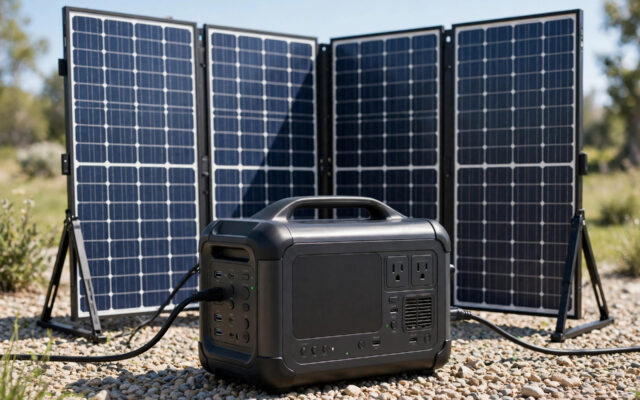
Save money with the best solar generator bundles of 2027 — power station plus solar panel kits ready to use out of the box.

Best Solar Generators for Camping in 2027
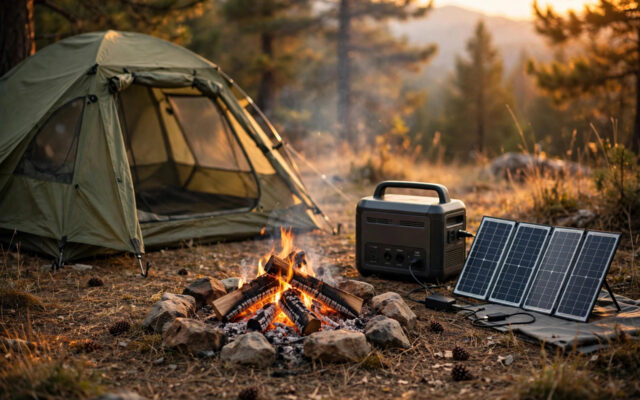
The best solar generators for camping in 2027: lightweight, quiet power stations that keep your gear charged off-grid.
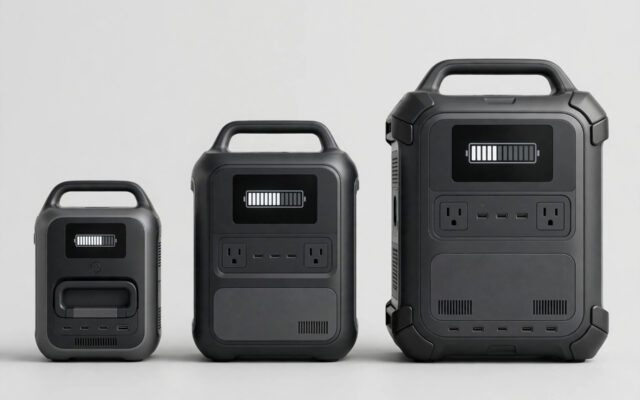
Best Portable Power Stations for 2027
Compare the best portable power stations of 2027 by capacity, output, charging speed, and battery life to find your perfect match.
1 Comment