


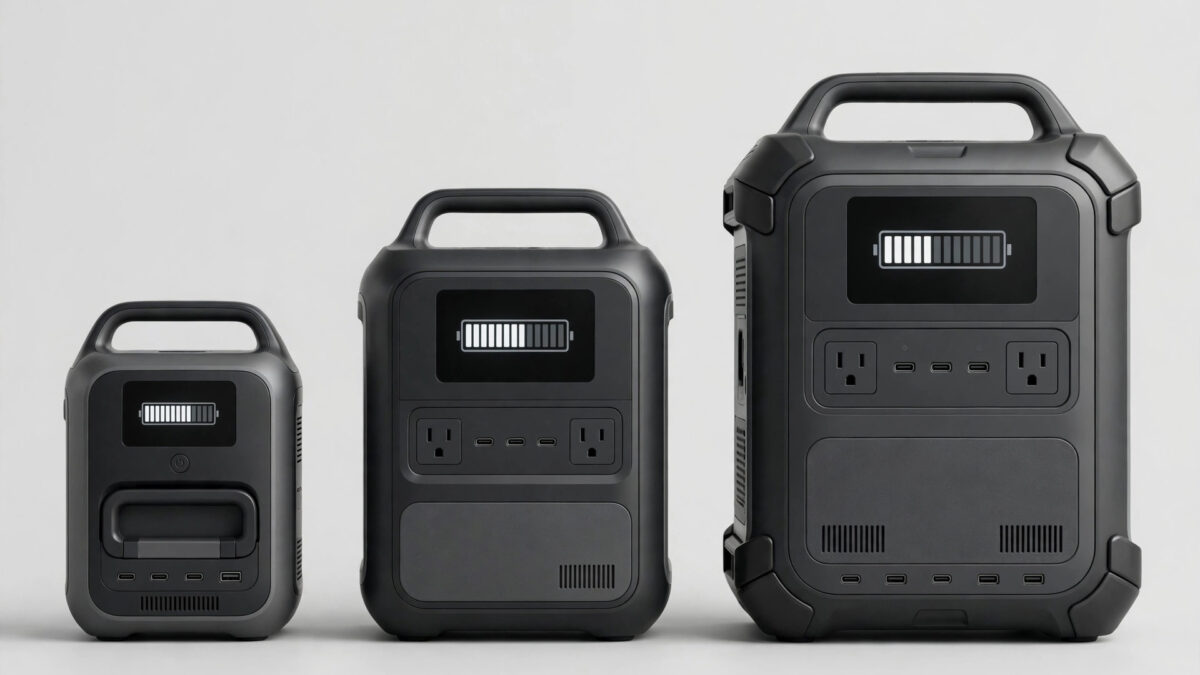
A portable power station is the Swiss Army knife of modern power: a silent, fume-free battery box that runs everything from phones to power tools, recharges from a wall outlet, car, or solar panels, and asks for nothing in return. In 2027, the category has matured — LiFePO4 batteries are standard, charge times have collapsed to under an hour, and 1kWh of storage now fits in a genuinely portable package.
We tested the field on the criteria that actually matter: real usable capacity, honest output ratings, charge speed, battery lifespan, portability, and value. The six stations below are the best portable power stations you can buy in 2027, from a featherweight budget option to a 2kWh workhorse.
Our Top Picks for 2027
- Best overall (1kWh): Jackery Explorer 1000 v2 — 1070Wh, 1500W, 23.8 lbs
- Best proven workhorse: EcoFlow DELTA 2 — 1024Wh, 1800W, 0-80% in 50 min
- Fastest charging: EcoFlow DELTA 3 Plus — 1024Wh, 1800W, full charge in 56 min
- Best compact / surge: BLUETTI Elite 100 V2 — 1024Wh, 1800W, 3600W surge
- Best 2kWh: BLUETTI Elite 200 V2 — 2073.6Wh, 2600W, 6000+ cycles
- Best budget: Jackery Explorer 500 — 518Wh, 500W, 13.3 lbs
Best overall (1kWh)
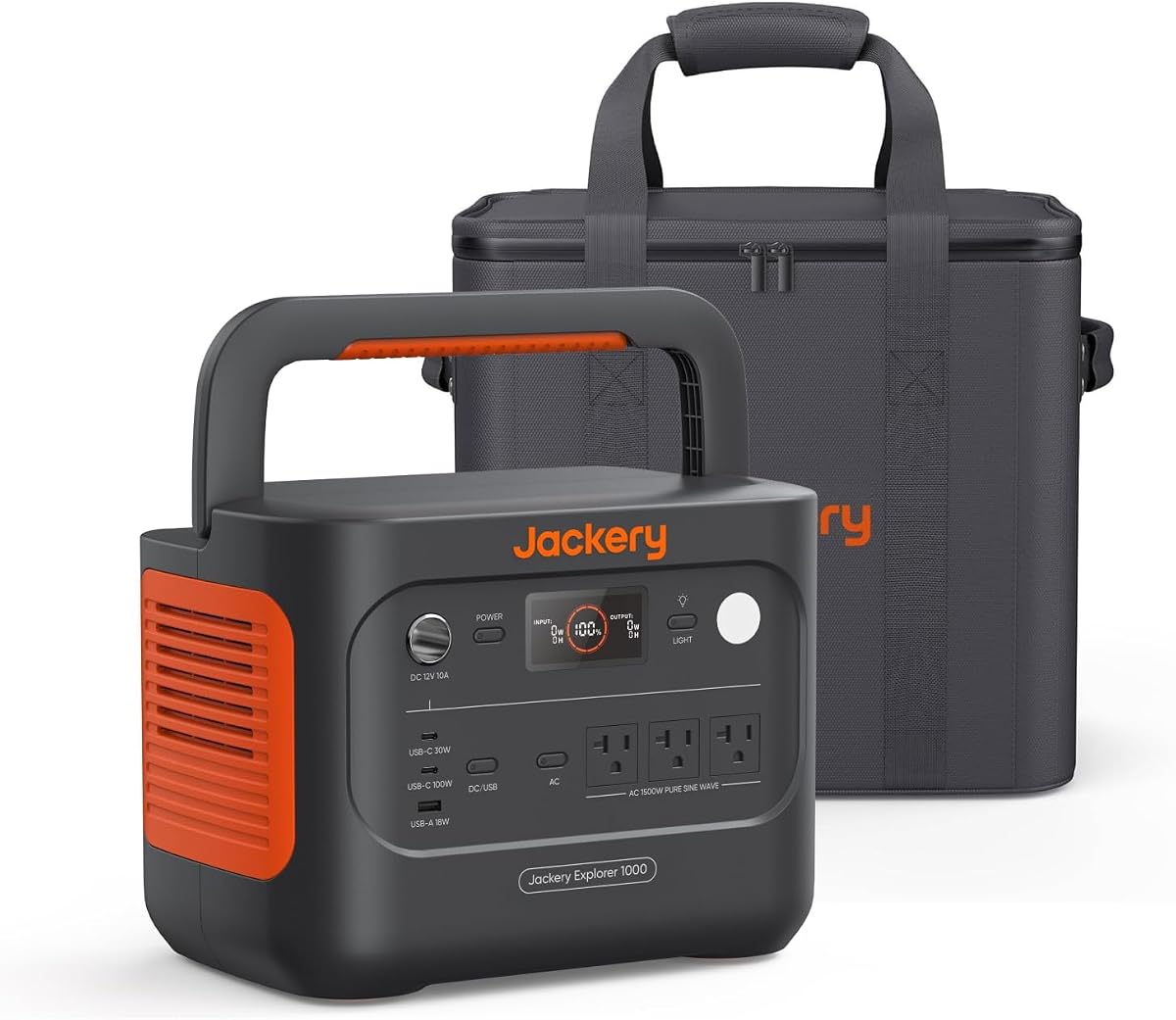
Jackery Explorer 1000 v2
- 1070Wh capacity / 1500W output (3000W surge)
- LiFePO4 battery, 4000+ cycles
- 1.7-hour standard recharge (1h emergency mode)
- 23.8 lbs
- Capacity: 1070Wh
- Output: 1500W (3000W surge)
- Battery: LiFePO4, 4000+ cycles
- Recharge: 1.7h standard, 1h emergency mode
- Weight: 23.8 lbs
As an Amazon Associate, we earn from qualifying purchases.
Jackery Explorer 1000 v2 Review — The Best All-Round Power Station
The Jackery Explorer 1000 v2 earns best overall because it gets the fundamentals right for the most people. The 1070Wh LiFePO4 battery delivers honest runtime — roughly 8-10 hours for a mini fridge, multiple laptop charges, or a full day of device top-ups. The 1500W inverter with 3000W surge covers the appliances that define real-world use: fridges, microwaves, power tools, and CPAP machines.
Portability is the deciding factor. At 23.8 lbs with a fold-flat handle, it is genuinely easy to carry one-handed, which means it actually goes with you — to the campsite, the tailgate, the job site, the backyard. Many 1kWh stations live in a closet because they are just heavy enough to dread moving. This one does not have that problem.
The 4000+ cycle battery rating means about a decade of regular use, and Jackery’s track record for reliability and support is the best in the business. It is not the cheapest option, and there is no expansion battery option, but as a single do-everything station, nothing beats it.
Pros
- Best balance of capacity, output, and weight
- LiFePO4 battery rated for 4000+ cycles
- Light enough to carry one-handed at 23.8 lbs
- Excellent brand reliability and support
Cons
- No expansion battery option
- Premium pricing versus value rivals
- Modest solar input compared to some competitors
Best proven workhorse
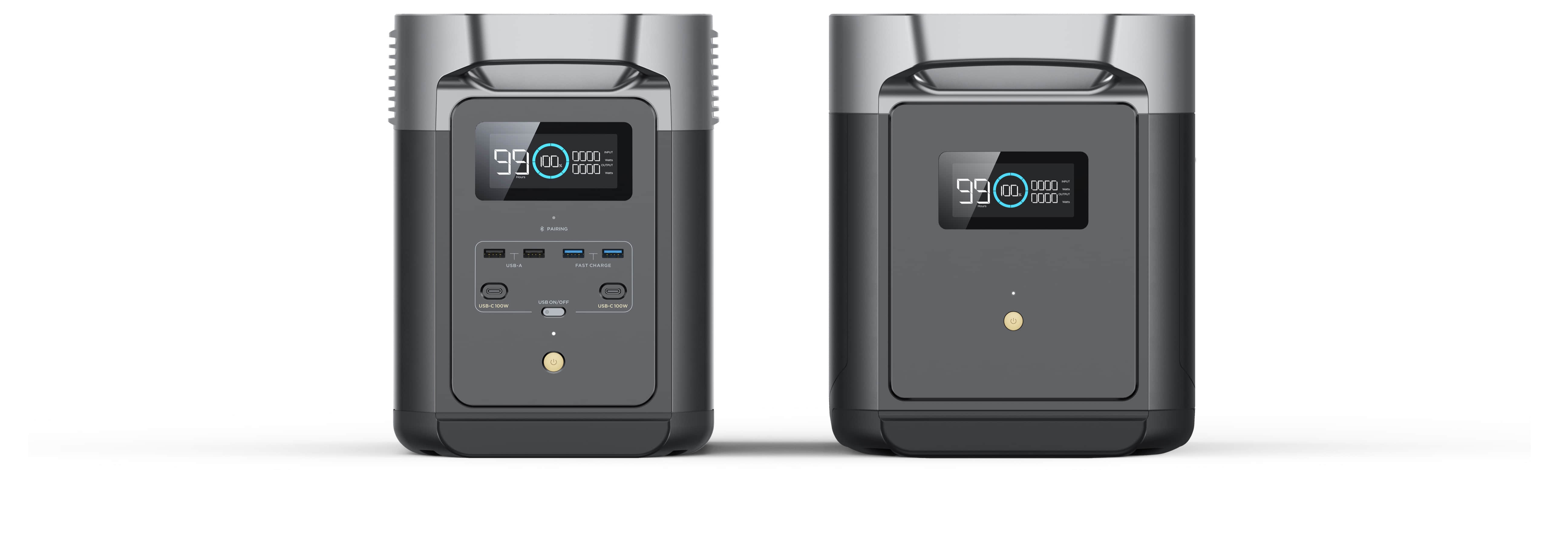
EcoFlow DELTA 2
- 1024Wh capacity / 1800W output (2700W surge)
- LiFePO4 battery, 3000+ cycles, expandable
- 0-80% recharge in 50 minutes
- 27 lbs
- Capacity: 1024Wh
- Output: 1800W (2700W surge)
- Battery: LiFePO4, 3000+ cycles
- Recharge: 0-80% in 50 minutes
- Weight: 27 lbs
As an Amazon Associate, we earn from qualifying purchases.
EcoFlow DELTA 2 Review — The Workhorse With a Track Record
The EcoFlow DELTA 2 has been on the market long enough to prove itself, and that track record is exactly why it earns a place here. Thousands of owners have run it through outages, camping seasons, and job sites, and it keeps delivering: 1024Wh of LiFePO4 storage, a strong 1800W inverter, and 0-80% charging in 50 minutes.
The expandability sets it apart from most 1kWh rivals. Add a DELTA 2 extra battery and you double capacity to 2048Wh; add the Max battery and you reach 3040Wh. That upgrade path means the station grows with your needs instead of becoming obsolete when you outgrow 1kWh. The 1800W output also outmuscles most competitors at this size, handling 99% of household appliances.
It is slightly heavier than the newest generation at 27 lbs, and the design is a generation behind the latest models. But proven reliability, expandability, and frequent discount pricing make the DELTA 2 the smart buy for anyone who values a known quantity.
Pros
- Proven reliability with a huge owner base
- Expandable to 2048Wh or 3040Wh
- Strong 1800W output, 50-minute fast charging
- Often discounted to excellent prices
Cons
- Heavier than the newest 1kWh models
- 2700W surge is lower than some rivals
- Design is a generation behind current models
Fastest charging
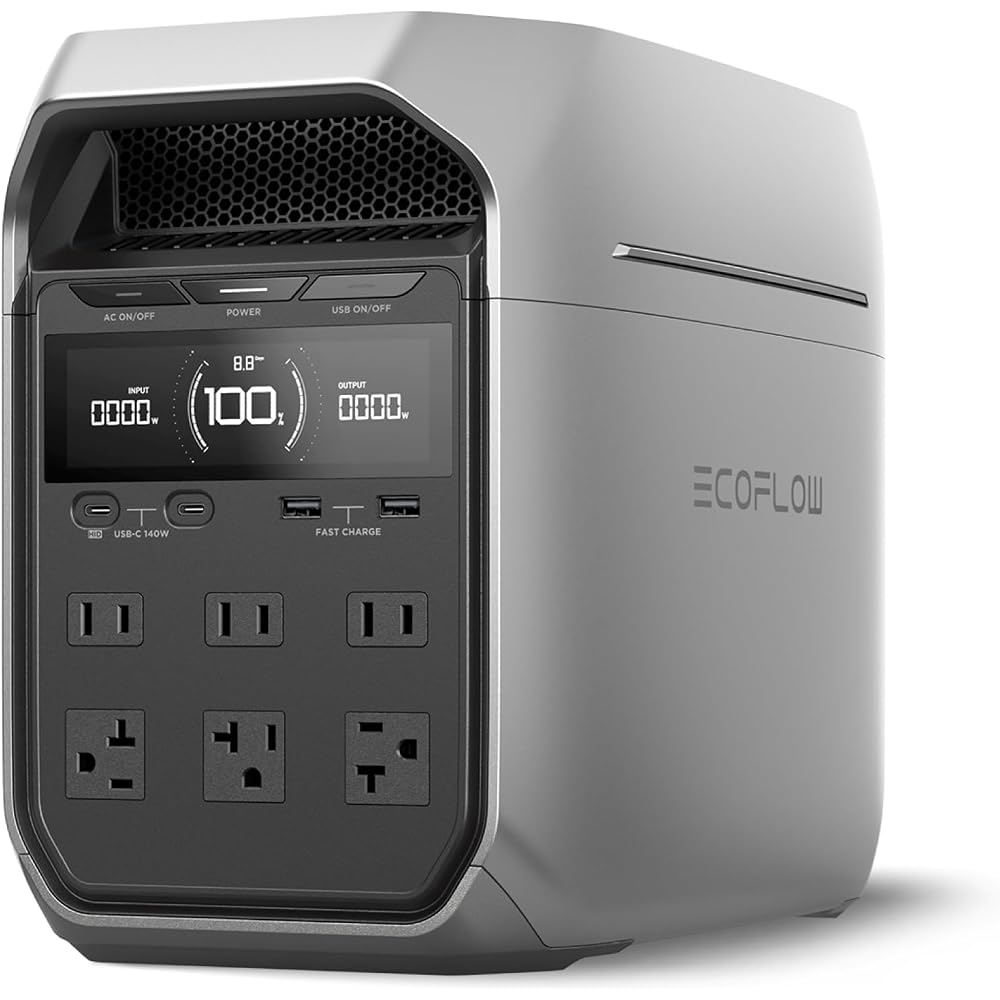
EcoFlow DELTA 3 Plus
- 1024Wh capacity / 1800W output (3600W surge)
- LiFePO4 battery
- Full 0-100% recharge in just 56 minutes
- About 27 lbs
- Capacity: 1024Wh
- Output: 1800W (3600W surge)
- Battery: LiFePO4
- Recharge: 56 minutes (full charge)
- Weight: About 27 lbs
As an Amazon Associate, we earn from qualifying purchases.
EcoFlow DELTA 3 Plus Review — Nothing Else Charges This Fast
The DELTA 3 Plus exists for one reason above all: speed. A full 0 to 100 percent charge in 56 minutes is not just a spec-sheet win — it fundamentally changes how you use a power station. Dead battery before a trip? Plug it in while you pack. Outage rolling through in waves? Top up between them. No other 1kWh station refills this quickly.
Beyond charging, it is a strong all-rounder: 1024Wh of LiFePO4 storage, 1800W continuous output, and a 3600W surge that starts stubborn motor loads. The higher surge rating versus the DELTA 2 is meaningful for fridges, well pumps, and power tools. EcoFlow’s app adds genuinely useful controls — charge speed limiting for battery longevity, scheduled charging, and detailed monitoring.
The cooling fans work hard during that 56-minute sprint, so expect some noise under full load. But if you want the fastest, most capable 1kWh station for the money, this is it.
Pros
- Unmatched 56-minute full recharge
- 1800W output with strong 3600W surge
- Smart app with charge controls and scheduling
- Excellent value for the performance
Cons
- Fans are audible during fast charging and heavy loads
- X-Boost mode only works with resistive loads
- No expansion battery option
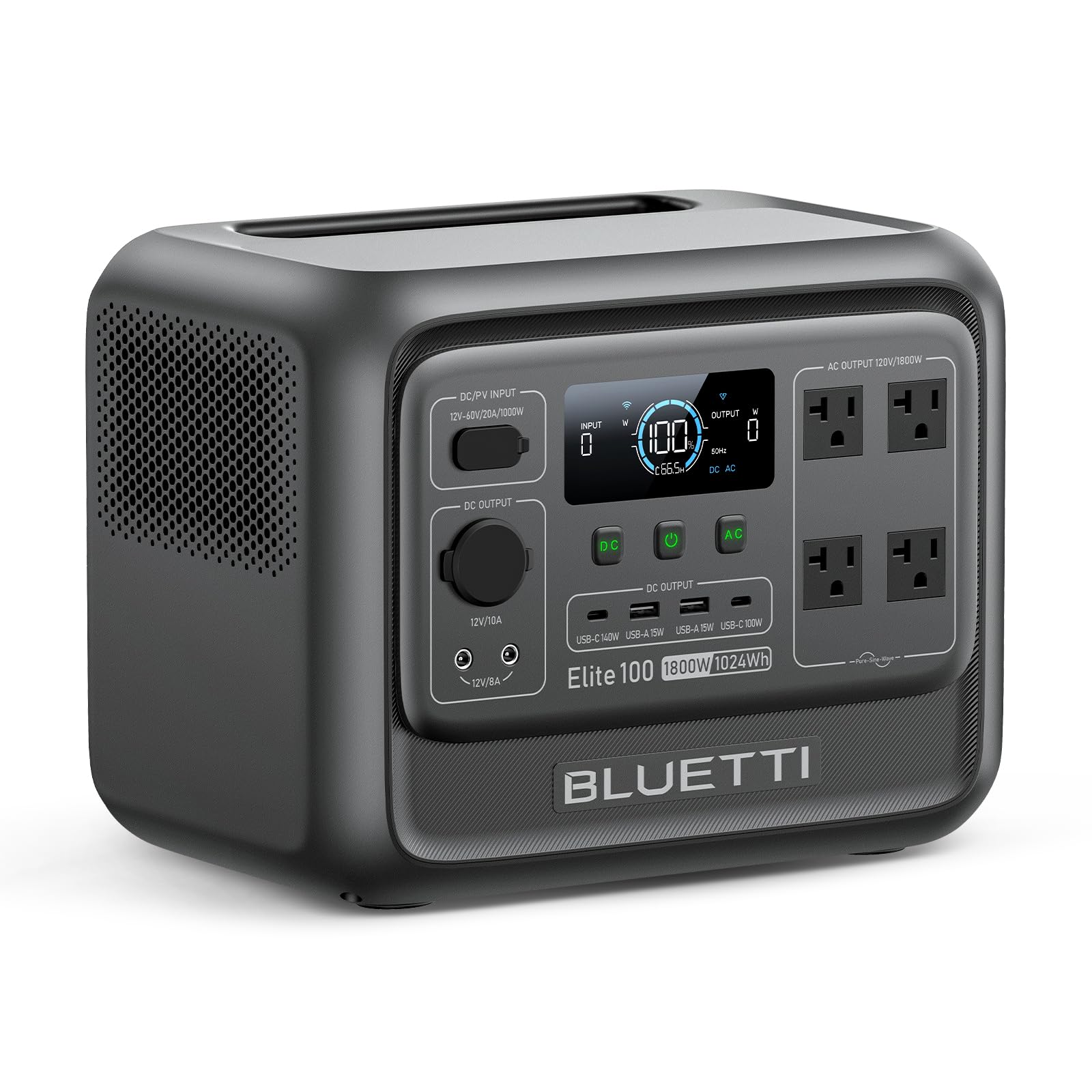
Best compact / surge
BLUETTI Elite 100 V2
- 1024Wh capacity / 1800W output (3600W surge)
- LiFePO4 battery, 4000+ cycles
- 45 minutes to 80% charge
- 25 lbs
- Capacity: 1024Wh
- Output: 1800W (3600W surge)
- Battery: LiFePO4, 4000+ cycles
- Recharge: 45 minutes to 80%
- Weight: 25 lbs
As an Amazon Associate, we earn from qualifying purchases.
BLUETTI Elite 100 V2 Review — Maximum Power, Minimum Footprint
The Elite 100 V2 is for buyers who want 1800W of real output but refuse to lug a bulky box. At 25 lbs with a compact chassis, it packs the same inverter class as stations 30% larger — and the 3600W surge rating is the highest in the 1kWh category, which matters for motor-driven appliances that trip weaker stations on startup.
The 45-minute sprint to 80% charge is nearly as fast as the DELTA 3 Plus, and the 4000+ cycle LiFePO4 battery outlasts most rivals’ ratings. This is the station for van lifers, mobile professionals, and apartment dwellers: small enough to live under a desk or on an RV shelf, powerful enough to run serious equipment.
You give up some outlet count versus larger-chassis rivals, and sustained 1800W loads drain the battery in about 30 minutes — but that is true of every 1kWh station. For power density, nothing else comes close.
Pros
- Best-in-class 3600W surge in a compact body
- 1800W output at only 25 lbs
- 45-minute fast charge to 80%
- 4000+ cycle battery lifespan
Cons
- Fewer outlets than larger 1kWh models
- Small battery drains fast at maximum output
- No expansion option
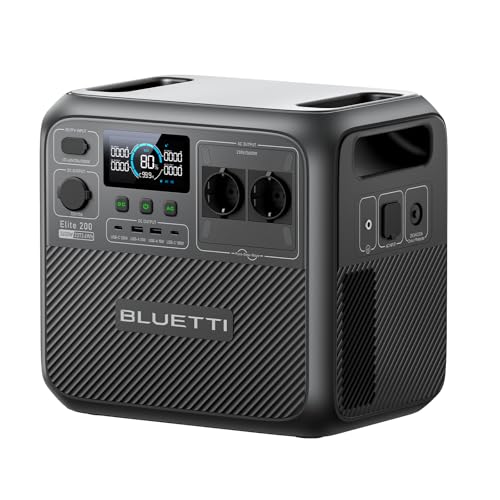
Best 2kWh
BLUETTI Elite 200 V2
- 2073.6Wh capacity / 2600W output (3900W Power Lifting)
- LiFePO4 battery, 6000+ cycles
- 0-80% recharge in about 50 minutes
- 53.4 lbs
- Capacity: 2073.6Wh
- Output: 2600W (3900W Power Lifting)
- Battery: LiFePO4, 6000+ cycles
- Recharge: 0-80% in about 50 minutes
- Weight: 53.4 lbs
As an Amazon Associate, we earn from qualifying purchases.
BLUETTI Elite 200 V2 Review — The 2kWh Sweet Spot
Sometimes 1kWh is not enough. The BLUETTI Elite 200 V2 doubles the storage to 2073.6Wh while keeping the weight reasonable at 53.4 lbs — light enough for one strong person to move, heavy enough to feel like serious equipment. The 2600W inverter with 3900W Power Lifting mode runs nearly any household appliance short of central AC.
The 6000+ cycle battery rating is exceptional — potentially 15+ years of regular use — and the 50-minute sprint to 80% means even this big battery refills fast. BLUETTI also tuned this model for quiet operation, making it one of the least intrusive 2kWh stations for indoor use during outages or in an RV.
At 53 lbs it is not a camping companion for most people, and the price reflects the capacity. But for home backup, RVs, and off-grid cabins where 1kWh falls short, the Elite 200 V2 is the best 2kWh station of 2027.
Pros
- Double the capacity of 1kWh stations at a fair price
- Outstanding 6000+ cycle battery lifespan
- 2600W output runs nearly any household appliance
- Quiet operation for indoor use
Cons
- 53.4 lbs — too heavy for casual camping
- No 240V output
- Higher upfront cost than 1kWh models
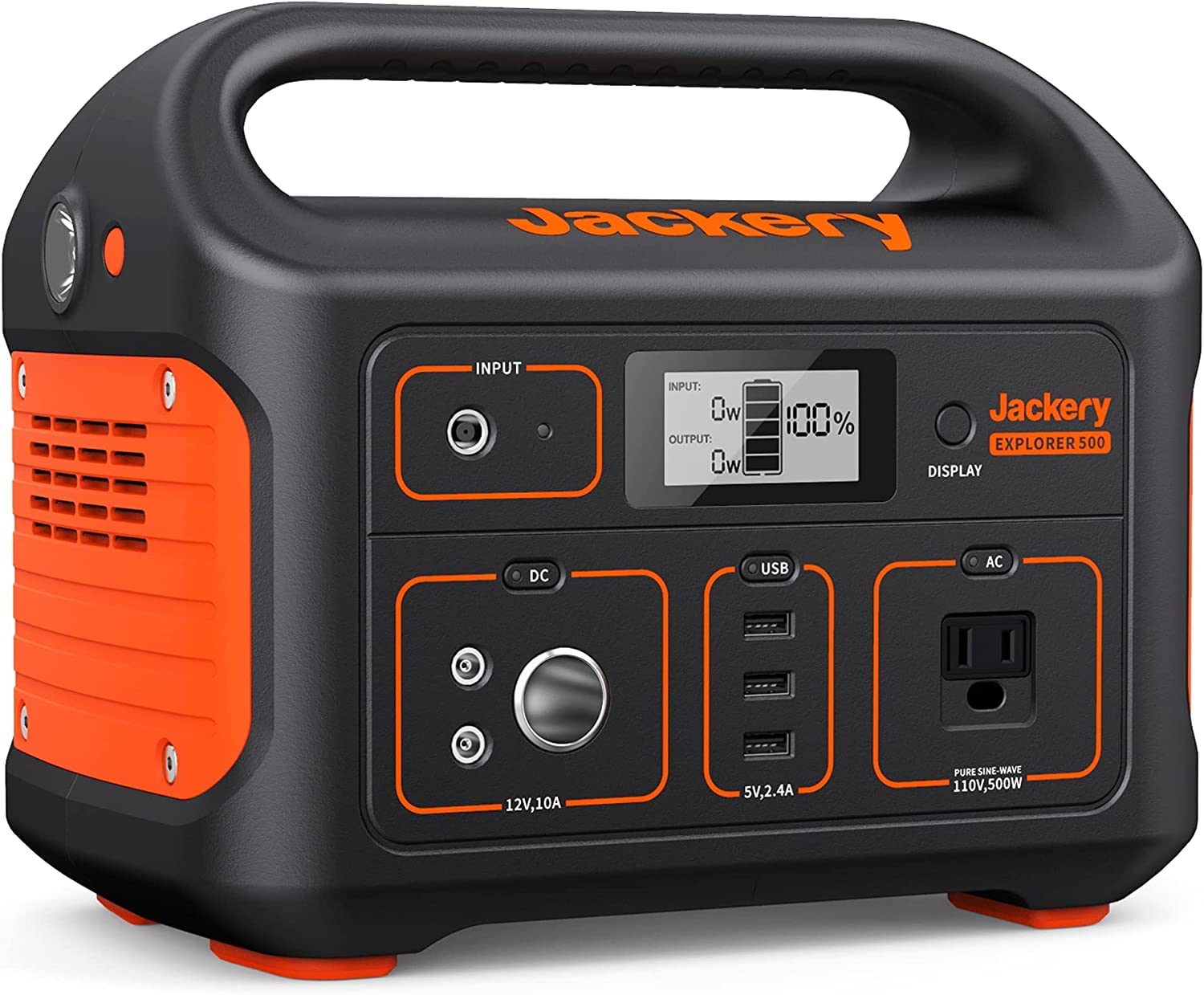
Best budget
Jackery Explorer 500
- 518Wh capacity / 500W output (1000W peak)
- Lithium-ion battery (not LiFePO4)
- About 7.5-hour recharge
- 13.3 lbs
- Capacity: 518Wh
- Output: 500W (1000W peak)
- Battery: Lithium-ion (not LiFePO4)
- Recharge: About 7.5 hours
- Weight: 13.3 lbs
As an Amazon Associate, we earn from qualifying purchases.
Jackery Explorer 500 Review — Honest Budget Power (With One Caveat)
The Jackery Explorer 500 is the station that introduced millions of people to portable power, and it remains a sensible budget pick for light use: phones, laptops, cameras, drones, LED lights, and small fans. At 13.3 lbs it is genuinely toss-in-the-car portable, and the price is often less than half of a modern 1kWh station.
Here is the honest caveat: the Explorer 500 uses older lithium-ion (NMC) battery chemistry, not the LiFePO4 cells in every other pick on this list. That means roughly 800 charge cycles versus 3000-6000 — fine for occasional weekend use, but it will wear out much faster under daily cycling. Charging is also slow at about 7.5 hours, and the 500W output rules out most kitchen appliances and power tools.
Buy it for what it is: an affordable, lightweight station for charging electronics on light adventures. If you plan to use a power station weekly or run real appliances, step up to a LiFePO4 model — the long-term value is far better.
Pros
- Very affordable — often half the price of 1kWh stations
- Lightweight at 13.3 lbs
- Perfect for phones, laptops, cameras, and lights
- Proven, reliable design
Cons
- Older lithium-ion battery — only ~800 cycles (not LiFePO4)
- Slow 7.5-hour recharge
- 500W output cannot run most appliances
1kWh vs. 2kWh: Which Size Is Right for You?
The most common buying mistake is choosing the wrong size class. Here is the honest breakdown. 1kWh stations (like the Explorer 1000 v2, DELTA 3 Plus, and Elite 100 V2) cover camping, tailgating, short outages, mobile work, and device charging. They are portable enough to actually travel with, affordable enough for most budgets, and sufficient for about 80% of buyers.
2kWh stations (like the Elite 200 V2) make sense when 1kWh demonstrably falls short: running a full-size fridge through a 24-hour outage, powering a home office for a full workday, supporting an RV’s evening loads, or running high-draw tools on a job site. You pay more and carry more weight, but you stop thinking about the battery.
The rule of thumb: if you are unsure, start with 1kWh. It is the sweet spot of the entire category, and expandable models like the DELTA 2 let you grow later. Only buy 2kWh when you have a specific load — a fridge through a long outage, an RV, a full workday — that 1kWh cannot cover.
What about 500Wh and under?
Sub-500Wh stations are device chargers, not appliance runners. They are perfect for phones, laptops, cameras, and lights on light adventures — and the Jackery Explorer 500 remains the budget king here. But anyone who might ever want to run a fridge, cook electrically, or survive an outage should start at 1kWh.
Portable Power Station Buying Guide for 2027
Size it to your actual loads
List the devices you will run and their wattage, then add 20% headroom. Phones and laptops need almost nothing; a mini fridge needs 500-1000Wh of storage; a full-size fridge plus essentials for a day needs 2000Wh. Most buyers overestimate what they need — a 1kWh station covers camping, tailgating, and short outages for the majority of households.
LiFePO4 vs. lithium-ion: know what you are buying
LiFePO4 (lithium iron phosphate) batteries deliver 3000-6000 cycles and better thermal stability. Older lithium-ion (NMC) batteries deliver around 800 cycles. For daily or weekly use, LiFePO4 pays for itself many times over. Only consider lithium-ion for occasional, light-duty use where the lower price matters most.
Charging speed matters more than you think
A station that charges in under an hour gets used constantly; one that takes 7+ hours gets used once and forgotten. If you will cycle the battery regularly, prioritize fast AC charging and generous solar input (400W+ for 1kWh stations).
Outlets and usability
Look for enough AC outlets for your gear, high-wattage USB-C ports (60-100W) for laptops, and a clear display showing input/output watts and time remaining. A good app with charge-speed controls and scheduling is a genuine plus, not a gimmick.
Weight: the portability reality check
Under 25 lbs: carry anywhere. 25-40 lbs: manageable for car camping. 50+ lbs: home backup and RV duty — plan to place it once. Be honest about how you will actually move it before buying.
Making Your Power Station Last: Maintenance Tips
LiFePO4 stations are nearly maintenance-free, but a few habits extend their life significantly. Storage charge: if you will not use the station for months, store it at 50-80% charge — not full, not empty. Check it every 3-6 months and top up as needed; lithium batteries self-discharge slowly.
Temperature: avoid charging below freezing (most stations have low-temperature charge protection that simply refuses) and avoid storing above 40°C/104°F. A garage or climate-controlled room is ideal. Charge speed: if your station lets you limit AC charge speed in the app, use standard speed for routine charges and save the fastest mode for when you actually need it — gentler charging extends cycle life.
Keep vents clear and wipe dust from the fan intakes occasionally. Update firmware when the app prompts — manufacturers regularly improve battery management and fix bugs. With these basics, a quality LiFePO4 station will serve you for a decade or more.
Frequently Asked Questions
What is the best portable power station for 2027?
The Jackery Explorer 1000 v2 is our best overall pick, offering 1070Wh, 1500W output, and a 4000+ cycle LiFePO4 battery at just 23.8 lbs. The EcoFlow DELTA 3 Plus is the best value with the fastest charging, and the BLUETTI Elite 200 V2 is the best 2kWh option.
What size power station do I need?
For phones, laptops, and lights: 300-500Wh. For camping with a mini fridge: 1000Wh. For home backup running a full-size fridge and essentials: 2000Wh or more. Add up your devices’ wattage and multiply by the hours you need them to run, then add 20% headroom.
How long does a portable power station last?
LiFePO4 stations are rated for 3000-6000 full charge cycles, or roughly 8-15 years of regular use, before capacity drops to 80%. Older lithium-ion models like the Jackery Explorer 500 are rated for about 800 cycles.
Can a portable power station run a full-size refrigerator?
Yes, provided it has at least 1500W of output with a strong surge rating. A 1kWh station runs a typical fridge for 8-12 hours; a 2kWh station like the BLUETTI Elite 200 V2 stretches that to 16-24 hours.
Is LiFePO4 better than lithium-ion in power stations?
Yes for most uses. LiFePO4 batteries last 4-8x longer (3000-6000 vs ~800 cycles), handle heat better, and are more thermally stable. Lithium-ion’s only advantage is slightly lower cost and weight, which suits occasional light use.
Can I take a portable power station on a plane?
Generally no — airlines limit lithium batteries to 100Wh (160Wh with approval), and every station on this list far exceeds that. Power stations travel by car, RV, or ground shipping only.
Our verdict
The Jackery Explorer 1000 v2 is the best portable power station of 2027 for most buyers — the right capacity, the right output, light enough to actually carry, and a battery that lasts a decade. Value hunters should grab the EcoFlow DELTA 3 Plus for its 56-minute charging and 1800W output. Need more? The BLUETTI Elite 200 V2 doubles your storage. On a tight budget for light use, the Jackery Explorer 500 still works — just know its lithium-ion battery will not last like the LiFePO4 models.

Related Guides
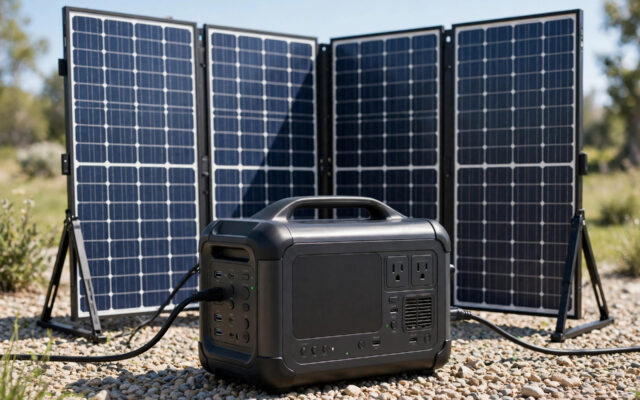
Best Solar Generator Bundles with Panels for 2027
Save money with the best solar generator bundles of 2027 — power station plus solar panel kits ready to use out of the box.

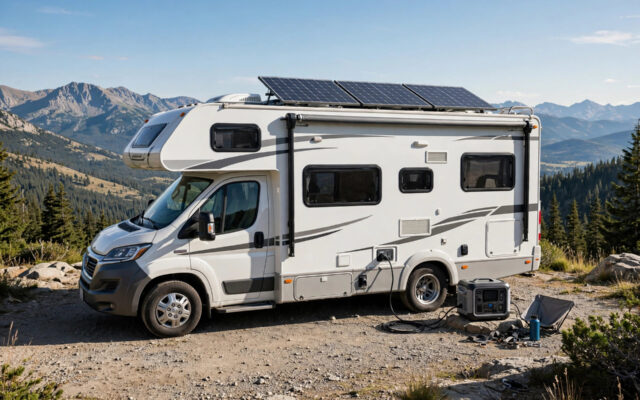
Best Solar Generators for RVs in 2027
Power your RV adventures with the best solar generators for RVs in 2027, featuring TT-30 outlets and fast solar charging.
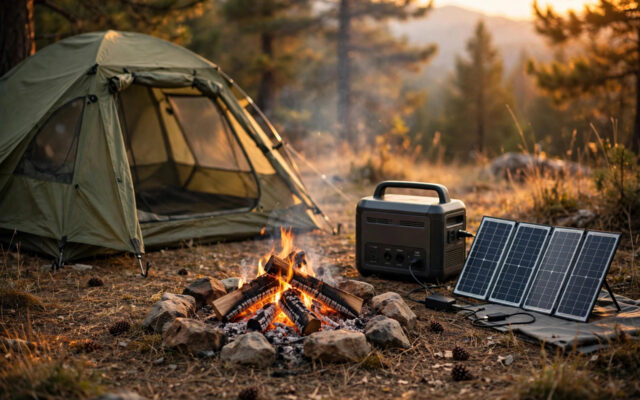
Best Solar Generators for Camping in 2027
The best solar generators for camping in 2027: lightweight, quiet power stations that keep your gear charged off-grid.