



Maybe you bought a solar generator for hurricane season, or for summer camping trips, and now it will sit unused for six months. Or maybe you are storing a backup unit at a cabin you visit twice a year. Either way, how you store a solar generator during those idle months determines whether it wakes up healthy or wakes up degraded.
Lithium batteries do not like neglect, but they are also very forgiving if you follow a few simple rules. This guide covers the ideal charge level, temperature, maintenance schedule, and the mistakes to avoid — plus a printable checklist at the end.
Charge It to 50 to 80 Percent Before Storing
The single most important storage rule: never put your solar generator away at 100 percent, and never at 0 percent. Lithium cells degrade fastest at full charge because high voltage stresses the chemistry, and storing near empty risks the battery self-discharging into a deep-discharge state that can permanently damage cells.
The ideal storage charge is 50 to 80 percent — 60 percent is a commonly cited sweet spot. Most modern stations let you set a charge limit in the companion app; set it to 80 percent, charge up, unplug, and power the unit fully off. If your station lacks a charge-limit setting, just watch the display and unplug around 70 percent.
Why not 100 percent “so it is ready”? Because a battery stored at full charge for six months can lose a meaningful slice of its lifespan to calendar aging alone. The few minutes of charging you save are not worth months of accelerated degradation. Charge to full the day before you need it, not the day you store it.
Store It Cool, Dry, and Indoors
Temperature is the second-biggest factor in storage aging. The ideal storage temperature for lithium batteries is around 15 to 25°C (59 to 77°F) — ordinary room temperature. A bedroom closet or home office shelf is perfect.
What to avoid:
- Hot garages and attics: sustained heat above 35°C (95°F) dramatically accelerates aging
- Car trunks: parked cars become ovens in summer
- Unheated sheds in freezing climates: storing below -20°C (-4°F) risks damage; freezing temperatures are fine for storage but never charge a frozen battery
- Damp basements: moisture corrodes ports and contacts over time
Keep the unit out of direct sunlight, leave some airflow around it (do not seal it in an airtight bag), and store it upright in its normal orientation.
Top Up Every 3 to 6 Months
Lithium batteries self-discharge slowly — typically 1 to 3 percent per month — and the station’s own electronics sip a little more even when off. Over six to twelve months, that adds up. Letting the battery drift down toward empty is the main way stored units get damaged.
Set a calendar reminder: every three to six months, power the unit on, check the charge level, and top it back up to the 50 to 80 percent range. While you are at it, run a brief discharge-charge cycle (down to 30 percent, back to 80) once or twice a year to keep the battery management system calibrated — the displayed percentage stays accurate this way.
This five-minute check is the difference between a battery that lasts a decade and one that quietly dies in storage. It is also a good moment to install any pending firmware updates.
Storing the Solar Panels
Panels need far less attention than the battery, but a little care goes a long way:
- Portable/folding panels: clean them, fold them dry, and store flat or upright in their carry case away from heavy objects that could crack cells. Keep them dry — prolonged dampness corrodes junction boxes and connectors.
- Cables and adapters: coil loosely, keep MC4 dust caps on, and store with the panels so everything is together when you need it.
- Roof-mounted panels: these are designed to live outside; just give them a visual check and a rinse once or twice a year.
One caution: do not leave portable panels unfolded in the sun “to keep the battery topped up” while the station sits in a hot location. The heat exposure does more harm than the trickle charge does good. If you want maintenance charging, keep the station itself cool and shaded.
What to Avoid: The Storage Mistakes That Kill Batteries
- Storing at 100 percent for months — the fastest way to age a lithium battery
- Storing at 0 percent — risks deep discharge and permanent cell damage
- Forgetting it for a year+ — self-discharge plus calibration drift
- Heat exposure — hot garages, car trunks, direct sun
- Charging a frozen battery — bring it to room temperature first; never charge below 0°C/32°F
- Leaving it “on” in standby — idle drain empties the battery over weeks; power fully off for storage
- Stacking heavy gear on top — cracked screens and damaged ports
Long-Term Storage Checklist
Run through this list whenever you put your solar generator away for more than a month:
- Charge to 50–80 percent (not 100 percent, not empty)
- Set an 80 percent charge limit in the app if available
- Install any pending firmware updates
- Power the unit fully off (not standby)
- Store indoors at room temperature, dry, out of direct sun
- Clean and dry panels; store folded/cased with cables and caps on
- Set a calendar reminder to check and top up in 3–6 months
- Once or twice a year: run a calibration cycle (30 percent → 80 percent)
Follow this routine and your station will be ready the moment you need it — whether that is next month or next year. For the day-to-day habits that extend battery life between uses, see our solar generator maintenance guide, and if you are still choosing a unit, browse the best solar generators of 2027.
What is the best battery level to store a solar generator?
Store your solar generator at 50 to 80 percent charge, with around 60 percent often cited as ideal. Never store at 100 percent (accelerates aging) or near 0 percent (risks deep-discharge damage). Charge to full only the day before you need it.
How long can a solar generator sit unused?
Indefinitely, if maintained — but “unused” still needs attention. Check and top up the charge every 3 to 6 months to counter self-discharge, and run a calibration cycle once or twice a year. A unit forgotten for over a year risks deep discharge and cell imbalance.
Can I store my solar generator in the garage?
Only if the garage stays cool and dry. Hot garages above 35°C (95°F) accelerate battery aging significantly, and damp garages corrode ports. A room-temperature indoor closet is much better. Avoid car trunks and direct sunlight for the same heat reasons.
Should I leave my solar generator plugged in all the time?
No — leaving it plugged in holds the battery at 100 percent, which stresses lithium cells. If your station has UPS mode for backup use, that is a designed exception. For plain storage, charge to 50-80 percent, unplug, power off, and check every few months.
Can cold weather damage a stored solar generator?
Cold storage itself is tolerable, but avoid extreme cold below -20°C (-4°F) and never charge a battery below freezing (0°C/32°F) — charging a frozen lithium battery causes permanent damage. Always let a cold unit warm to room temperature before charging.
Our verdict
Long-term storage is simple: 50 to 80 percent charge, cool dry room, powered fully off, and a five-minute check every three to six months. Avoid the big three killers — full-charge storage, heat, and total neglect — and your solar generator will come out of storage as healthy as it went in, ready for the next outage, trip, or project.

Related Guides
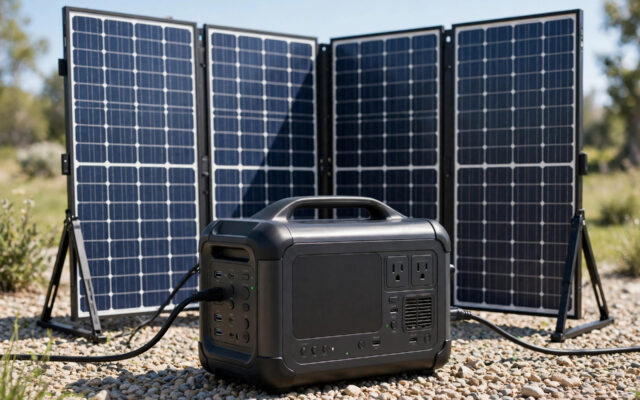
Best Solar Generator Bundles with Panels for 2027
Save money with the best solar generator bundles of 2027 — power station plus solar panel kits ready to use out of the box.

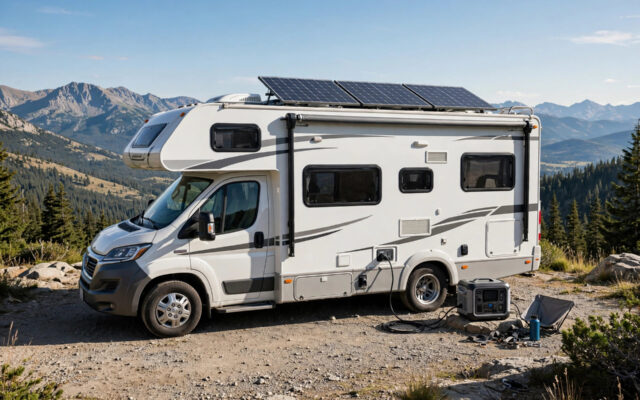
Best Solar Generators for RVs in 2027
Power your RV adventures with the best solar generators for RVs in 2027, featuring TT-30 outlets and fast solar charging.

Best Solar Generators for Camping in 2027
The best solar generators for camping in 2027: lightweight, quiet power stations that keep your gear charged off-grid.