


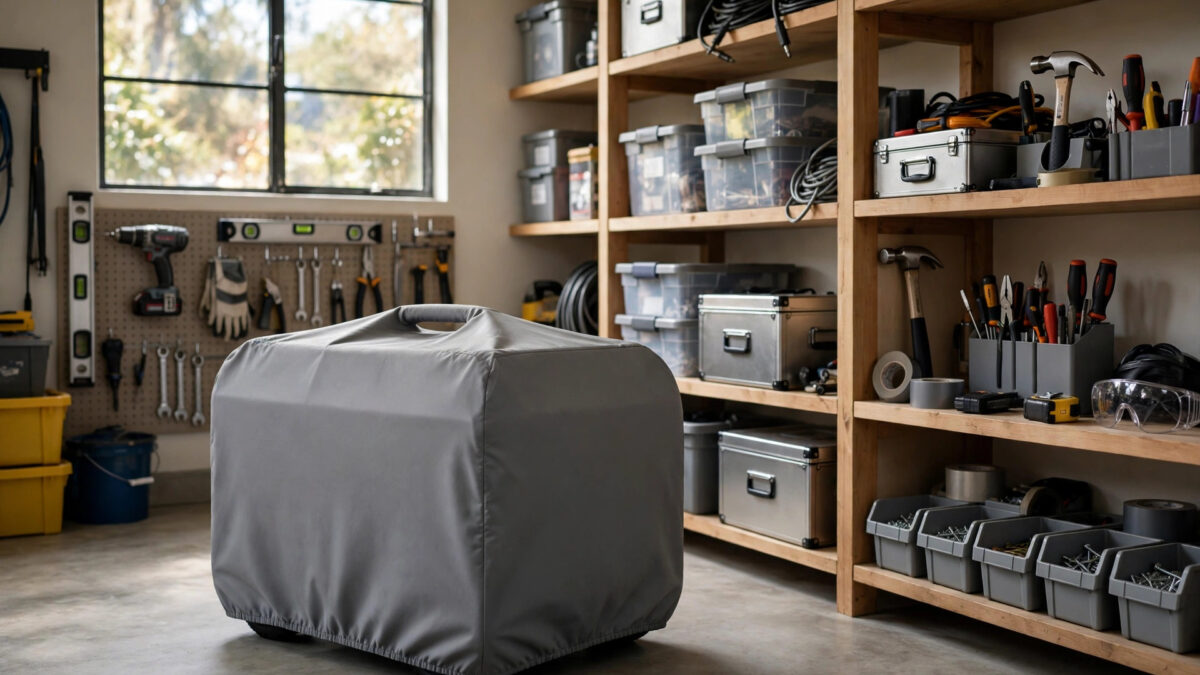
Here is how to store a generator long term: stabilize or drain the fuel system, change the oil, protect the cylinder with fogging oil, disconnect and maintain the battery, clean the unit, and keep it in a dry, covered location. “Long-term” means anything beyond about 30 days without use — past that point, untreated gasoline starts forming varnish that clogs carburetors, batteries self-discharge, and moisture starts its quiet work. This guide gives you the full procedure plus a printable checklist, so your generator starts on the first pull next season instead of becoming a repair-shop project.
Key Takeaways
- Fuel is the #1 storage enemy: either treat it with stabilizer and run the carburetor dry, or drain the system completely — never store a generator with untreated gas.
- Change the oil before storage so acidic combustion byproducts do not sit in the crankcase for months.
- Disconnect the battery (electric-start models) and keep it charged with a maintainer, or it will self-discharge into uselessness.
- Fogging oil in the cylinder prevents rust on the cylinder walls during humid storage.
- Store indoors in a dry, ventilated space with the fuel valve off — never store a fueled generator in living spaces.
Why Generators Fail in Storage (and How This Guide Prevents It)
Ask any small-engine repair shop what fills their spring schedule and the answer is unanimous: generators and mowers that sat all winter with untreated fuel. Modern gasoline — especially ethanol-blended fuel — begins degrading within about 30 days. It oxidizes into varnish and gum that coat carburetor jets, needles, and fuel passages with a shellac-like residue. The result is the classic spring symptom: the engine cranks but will not start, or starts and surges, and the fix is a carburetor cleaning or rebuild.
Fuel is the headline failure, but storage attacks on four fronts: fuel degradation, oil contamination (combustion acids sitting in the crankcase etch bearings), battery self-discharge (a dead battery left discharged sulfates and may never recover), and corrosion (moisture rusting the cylinder, tank, and electrical contacts). The procedure below addresses all four in about an hour of work — cheap insurance against a dead generator when the next outage hits.
How to Store a Generator Long Term: Stabilize the Fuel or Drain It?
You have two legitimate strategies. Both work; pick one and commit fully — the failures come from half-measures.
Option A: Stabilize and run (recommended for most owners)
Add fuel stabilizer to a fresh tank of gas at the product’s specified ratio, then run the generator for 10–15 minutes so treated fuel circulates through the entire fuel system — tank, lines, filter, and carburetor. Then shut off the fuel valve and let the engine run until it stalls, burning the fuel out of the carburetor bowl. This leaves treated fuel in the tank (good for up to 12–24 months depending on the stabilizer) and a dry carburetor (no varnish formation where it matters most). This is the best balance of protection and readiness: the generator is stored fueled and nearly ready to run.
Option B: Drain everything (best for very long or uncertain storage)
Drain the fuel tank completely into an approved container, then run the engine until it stalls to empty the carburetor, and drain the carburetor bowl via its drain screw if equipped. A fully dry fuel system cannot varnish, period. The trade-off is readiness — recommissioning requires fresh fuel — and a dry steel tank can develop surface rust in humid climates unless the tank interior is protected. For storage beyond a year, or when you simply will not touch the unit for a very long time, dry is the safest bet.
| Stabilize + run dry | Full drain | |
|---|---|---|
| Best for | Seasonal storage (3–12 months); owners who want quick readiness | Storage beyond a year; uncertain timelines |
| Carburetor protection | Excellent (bowl run dry) | Excellent (system dry) |
| Readiness | Add nothing — just start (check oil first) | Needs fresh fuel before use |
| Main risk | Stabilizer expires eventually; must re-treat yearly | Tank interior rust in humidity; forgotten dry seals |

Step 2: Change the Oil Before Storage
Used engine oil contains combustion acids, moisture, and fine wear particles. Letting that chemistry sit in the crankcase for six months lets acids etch bearing surfaces and moisture promote internal corrosion. An oil change before storage puts clean, protective oil in the engine for its rest — and it means one less task when you recommission.
Run the engine for a few minutes to warm the oil, shut it down, drain into a proper container, and refill with the exact type and quantity your manual specifies. While you are at it, check the air filter — clean or replace it if dirty — and glance at the spark plug: clean and re-gap it, or replace it if it is worn. These two-minute tasks during storage prep save troubleshooting later.
Step 3: Fog the Cylinder to Prevent Rust
With the engine cool and the spark plug removed, spray a short burst of fogging oil (sold at marine and auto parts stores) into the spark plug hole. Then pull the starter cord slowly a few times — or crank briefly with the ignition off on electric-start models — to distribute the oil across the cylinder walls, and reinstall the plug. This leaves a protective oil film that prevents rust on the cylinder walls and rings during humid months.
Fogging oil is standard practice in marine winterization and works identically for generators. On first startup after storage, expect a brief puff of smoke as the fogging oil burns off — that is normal and harmless. Skip this step and a generator stored in a humid garage can develop enough cylinder-wall rust to cause hard starting or compression loss by spring.
Step 4: Battery Care for Electric-Start Models
Batteries self-discharge whether you use them or not — a lead-acid battery can go flat in a few months of sitting, and a deeply discharged battery sulfates: lead sulfate crystals harden on the plates and permanently reduce capacity. A $30 battery maintainer prevents a $60 battery replacement.
Disconnect and store smart
Disconnect the negative terminal (prevents parasitic drain from the generator’s electronics), clean the terminals of any corrosion with a wire brush, and apply a thin coat of dielectric grease or petroleum jelly. If you remove the battery for indoor storage, keep it off concrete floors is a myth — modern cases are fine on concrete — but do keep it in a cool, dry spot away from freezing extremes.
Keep it on a maintainer
Connect a smart battery maintainer/trickle charger rated for your battery type. Unlike an old dumb trickle charger, a smart maintainer charges to full and then floats — it will not overcharge and boil the battery dry over months. Check the maintainer’s indicator monthly. For generators with small onboard batteries that cannot easily be removed, the maintainer clips on in place with the generator’s own disconnect switched off.
Step 5: Clean, Inspect, and Protect the Unit
Storage prep is also inspection time. Work through the unit end to end:
Clean it
Wipe down the exterior, blow dust and debris out of the cooling fins and air intake areas with compressed air or a soft brush, and clean around the control panel and outlets. Rodents nest in stored equipment — remove any nesting material and consider steel wool in the exhaust outlet and intake (with a prominent reminder tag to remove it before starting).
Inspect it
Check fuel lines for cracks or stiffness, look for oil or fuel weeping at seals and the drain plug, confirm all fasteners are tight, and inspect the power cord and outlets for damage. Finding a cracked fuel line now — when parts stores are open and there is no outage — beats finding it at midnight in a storm.
Protect openings
Cover the exhaust outlet and air intake against insects and rodents (with those reminder tags), and close the fuel cap vent if your model has one. A breathable generator cover keeps dust off without trapping moisture — avoid airtight plastic sheeting, which condenses moisture against the metal.
Step 6: Choose the Right Storage Location
Where the generator sleeps matters as much as how you prepped it:
| Location | Verdict | Why |
|---|---|---|
| Dry garage or shed | Best | Sheltered, ventilated, accessible — the ideal |
| Basement (fuel drained/valve off) | Acceptable with precautions | Dry and temperature-stable; ensure no fuel odor and good ventilation |
| Covered patio / carport | Acceptable | Use a breathable cover; secure against wind and theft |
| Outdoors uncovered | Avoid | Moisture, UV, and temperature swings destroy everything faster |
| Inside living spaces | Never with fuel in it | Fuel vapor and fire risk; code and common sense prohibit it |
Whatever the location: fuel valve OFF, unit cool before moving indoors, stored upright (never on its side — oil floods the cylinder and air filter), and out of reach of children. Keep it accessible, not buried behind seasonal clutter — a generator you cannot reach quickly in an outage might as well not exist.
Winterization: Cold-Climate Extras
If the generator will sit through freezing temperatures, add these steps:
Use winter-appropriate oil
Check your manual’s temperature-viscosity chart. Many manuals specify 5W-30 below freezing versus 10W-30 in warmth — the thinner cold viscosity is what lets the engine crank and build oil pressure on a 10°F morning. Storing with the right oil means the unit is ready for a winter outage without a pre-storm oil change.
Manage moisture and the battery
Cold thickens oil and weakens batteries simultaneously — the two hardest-starting factors combined. The battery maintainer from Step 4 is doubly important in winter; a battery at 50% charge can freeze and crack its case, while a fully charged battery resists freezing to extreme temperatures. If the generator lives in an unheated shed, the maintainer is non-negotiable.
Keep the intake and exhaust clear
Snow and ice block airflow and exhaust — the winter equivalents of the rodent nest. After snowstorms, clear around the stored unit, and before any winter start, confirm the exhaust path is open. Never start a generator with the exhaust buried in snow: CO backs up around the unit and gets drawn toward the house.
Recommissioning: Waking the Generator Up
When storage ends, reverse the process deliberately:
Step 1: Remove all storage protections
Pull the exhaust/intake covers and reminder tags, remove any rodent-blocking material, and take the cover off. Confirm the air path is completely clear.
Step 2: Reconnect and check the battery
Reconnect the terminals (positive first, then negative), confirm the maintainer shows full charge, and verify electric start cranks strongly. A sluggish crank after storage means charge or replace the battery now — not during the outage.
Step 3: Fuel up fresh
If you stored dry, add fresh fuel. If you stored stabilized, check the stabilizer’s age — if it has been over a year, drain and refill with fresh treated fuel. Open the fuel valve, check for leaks at every connection, and confirm the fuel cap vent is open.
Step 4: Check oil, then start outdoors
Verify oil level on the dipstick, move the unit to its outdoor operating position (20+ feet from the home), and start it. Let it warm up unloaded for several minutes — expect brief smoke from the fogging oil — then apply a moderate load and confirm stable voltage and frequency. Run it under load for 15–20 minutes as a shakedown before trusting it.
How to Store a Generator Long Term: The Complete Checklist
| Done | Task |
|---|---|
| [ ] | Fuel: stabilizer added + system run + carb bowl drained or full drain of tank, lines, and bowl |
| [ ] | Oil changed with manual-specified type; level verified |
| [ ] | Air filter cleaned or replaced; spark plug checked |
| [ ] | Cylinder fogged with fogging oil; plug reinstalled |
| [ ] | Battery disconnected, terminals cleaned, on smart maintainer |
| [ ] | Unit cleaned; cooling fins and intakes clear of debris |
| [ ] | Fuel lines and seals inspected; fasteners checked |
| [ ] | Exhaust and intake openings covered (with reminder tags) |
| [ ] | Fuel valve OFF; breathable cover on |
| [ ] | Stored upright in dry, ventilated location; storage date noted |
| [ ] | Winter: cold-rated oil confirmed; battery on maintainer; snow plan noted |
Print this checklist, tape it to the generator’s cover, and check boxes with a pen as you go. Next season’s recommissioning is just the list in reverse.
How do you store a generator long term?
Should I drain the gas or use stabilizer for generator storage?
How long can gas sit in a generator?
Do I need to change the oil before storing my generator?
How do I keep my generator battery charged in storage?
Can I store my generator in the garage?
What is fogging oil and does my generator need it?
Conclusion
Long-term generator storage is an hour of methodical work that prevents the single most common generator failure: a unit that will not start when it matters. Treat or drain the fuel, change the oil, fog the cylinder, maintain the battery, and store it dry and accessible — then reverse the checklist when the season turns. A generator stored this way does not just survive storage; it comes out of it ready. Pair this routine with our generator maintenance schedule so oil intervals, filters, and test runs stay on track year-round.

Related Guides
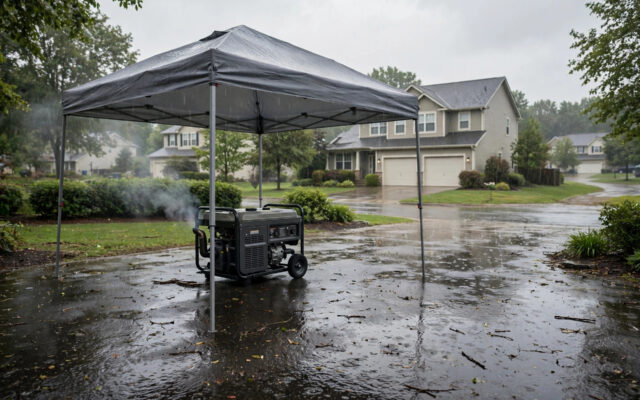
Can You Run a Generator in the Rain? What Is Safe & What Is Not
Can you run a generator in the rain? Only under a proper cover. Learn the safe setups, the deadly mistakes to avoid, and when to shut down in severe storms.

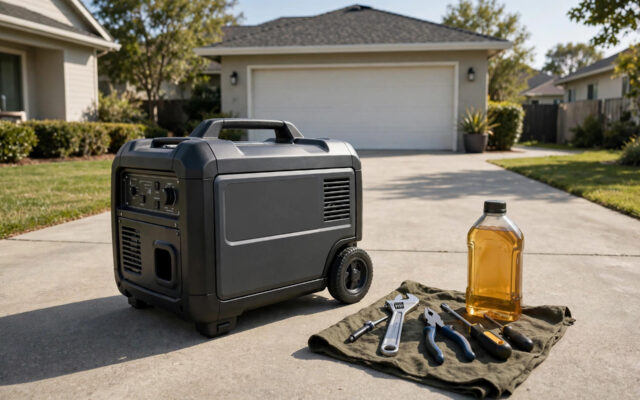
How to Break In a New Generator: Step-by-Step First-Use Guide
How to break in a new generator: pre-start setup, the varying-load running schedule, the critical first oil change, and 5 mistakes that shorten engine life.
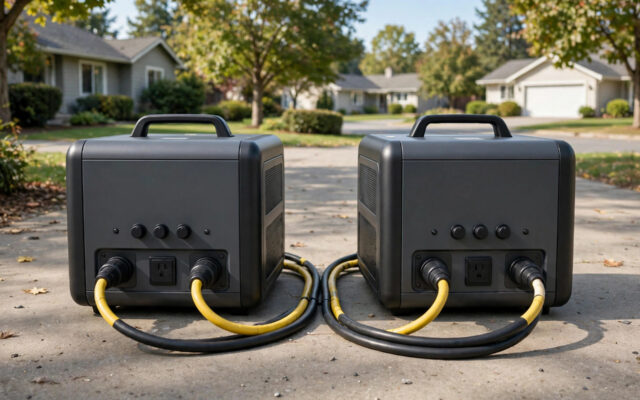
How to Parallel Two Inverter Generators: Safety & Setup Guide
How to parallel two inverter generators safely: compatibility rules, the right parallel kit, step-by-step setup, wattage math, and key safety warnings.
1 Comment