


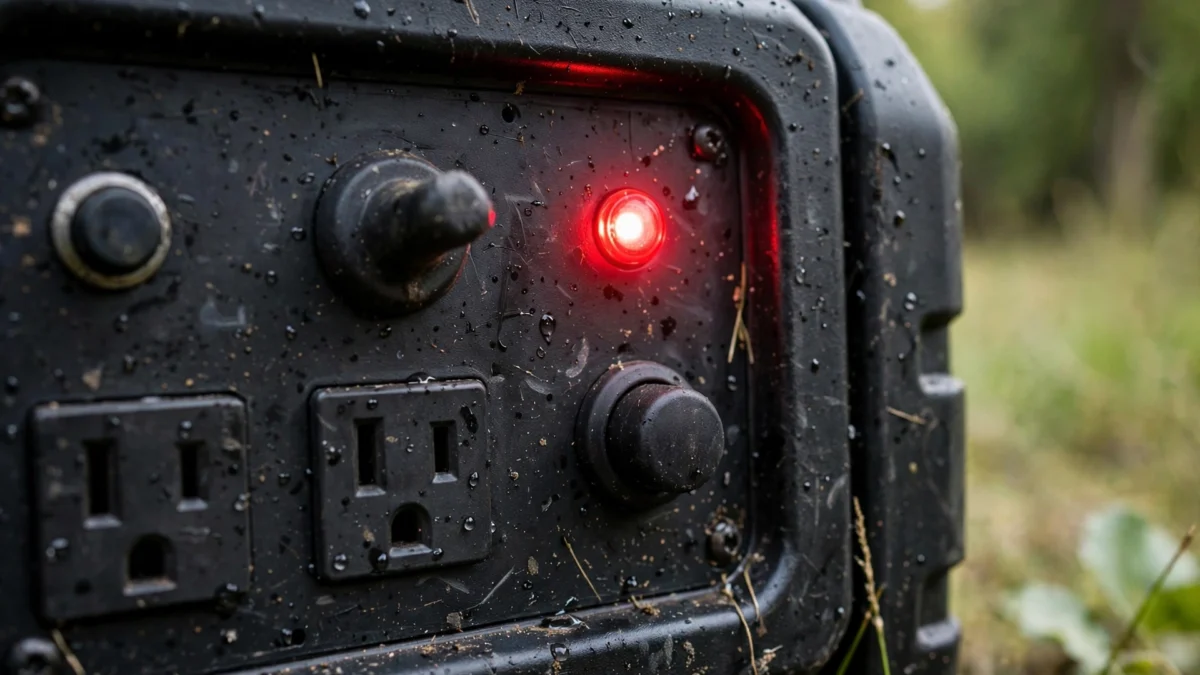
A generator CO sensor continuously samples the air around the engine with an electrochemical cell, and when carbon monoxide accumulates past a programmed threshold, it kills the ignition — shutting the engine down automatically. A warning light then stays lit for at least five minutes to tell you why it stopped.
These sensors — marketed as CO-Sense, CO Shield, CO-SECURE, and similar names — are now standard on most new portable generators thanks to the PGMA G300 safety standard. I’ve dug into how they actually work, what the thresholds mean, and — just as important — what they don’t protect you from.
Key takeaways
- CO sensors use an electrochemical cell (like home CO alarms) that reacts specifically to carbon monoxide gas.
- Under PGMA G300-2023, the engine must shut off at 600 ppm instantaneous or a 400 ppm 10-minute average CO concentration.
- The older G300-2018 threshold was 800 ppm; the 2023 revision lowered it. Units built from Jan 1, 2025 must meet the new standard.
- After shutoff, a notification light stays on for 5+ minutes so you know CO — not an empty tank — stopped the engine.
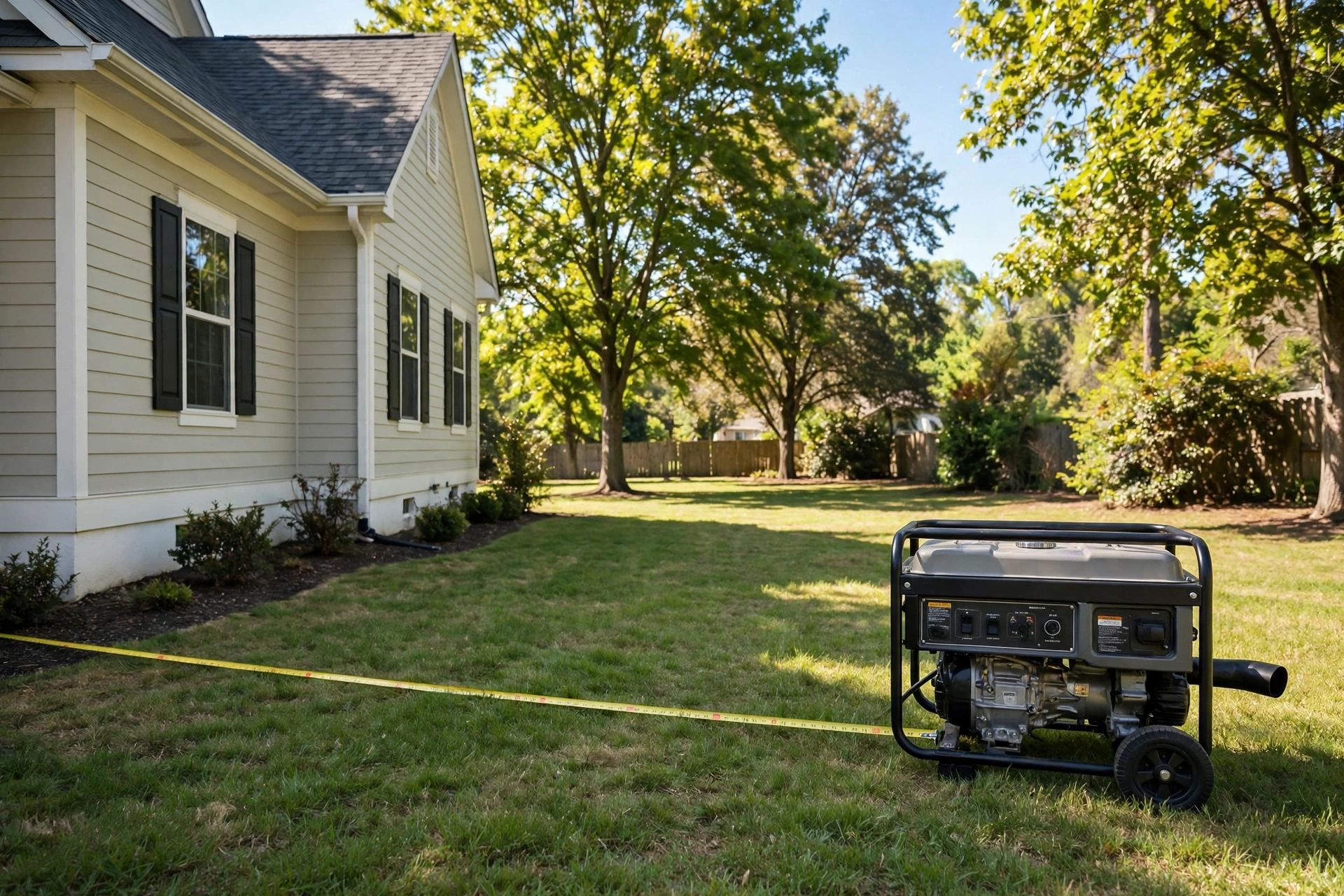
- The sensor doesn’t make indoor use safe. The 20-foot outdoor rule still applies, always.
The Sensor: An Electrochemical Nose
The sensing element is an electrochemical cell — the same core technology as the CO alarm on your hallway ceiling, ruggedized for life next to a vibrating engine. Inside a tiny sealed chamber, incoming air passes over electrodes bathed in an electrolyte. When carbon monoxide molecules hit the sensing electrode, they oxidize — a chemical reaction that generates a small electric current precisely proportional to the CO concentration.
More CO in the air, more current. No CO, essentially zero current. It’s elegantly specific: the chemistry responds to carbon monoxide far more strongly than to other exhaust gases, which is why the sensor doesn’t false-trigger on every puff of normal exhaust in open air.
A microcontroller reads that current continuously and runs it through two evaluations at once:
- Instantaneous check: did CO just spike past the hard ceiling (600 ppm under G300-2023)?
- Time-weighted check: has the average over the last 10 minutes crept past 400 ppm? This catches the slow, sneaky buildup — the kind that happens when a generator sits too close to a wall on a still night.
Either condition trips the shutdown. That dual logic matters because CO poisoning is about dose over time, not just peak numbers — a slow accumulation you can’t smell is exactly how these tragedies happen.
The Shutdown: How the Engine Gets Killed
When the microcontroller decides CO is too high, it doesn’t politely ask the engine to stop — it grounds the ignition, the same way your kill switch does. Spark stops, combustion stops, CO production stops. Immediately.
Then comes the part most owners discover by accident: the fault light. A red or yellow indicator illuminates and stays on for a minimum of five minutes after shutdown. This is deliberate design — it answers the inevitable “why did my generator just die?” with “carbon monoxide,” not “out of gas.” If you restart the engine and it dies again within minutes with the light on, that’s the sensor doing its job: the air around the generator is still unsafe. Move the generator, don’t fight the sensor.
The Standards: PGMA G300 and UL 2201
Two standards govern CO shutoff on portable generators sold in North America, and they’re worth knowing apart:
| PGMA G300-2023 | UL 2201 | |
|---|---|---|
| Scope | Portable generators ≤15kW | Portable generators (with CO emission-rate limits too) |
| Instantaneous shutoff | 600 ppm | 400 ppm |
| 10-min average shutoff | 400 ppm | 150 ppm |
| Also requires | — | Reduced CO emission rate (engine-out limits) |
| Effective | Units built on/after Jan 1, 2025 | Varies by certification |
The backstory: G300-2018 first mandated auto-shutoff at 800 ppm, and PGMA’s testing showed it prevented the vast majority of CO fatalities from generators misused indoors. G300-2023 tightened both thresholds to catch dangerous exposures earlier. UL 2201 goes further still, adding emission-rate requirements — the engine itself must produce less CO, not just shut off when ambient levels rise.
When shopping in 2027, look for G300-2023 compliance as the baseline and UL 2201 listing as the gold standard. The marketing names — Champion’s CO Shield, Westinghouse’s CO Sensor, Generac’s CO-SECURE, Honda’s CO-MINDER — all implement the same underlying idea under their brand’s label.
What the Sensor Can’t Do (The Honest Limits)
It doesn’t make indoor operation safe
This is the critical misunderstanding. A CO sensor is a last-resort mitigation for misuse — it reduces fatalities when someone does the wrong thing. It is not permission to do the wrong thing. Indoor CO levels can incapacitate you before the sensor trips, and sensors can fail. The CPSC rule stands regardless of technology: outdoors only, at least 20 feet from the house, exhaust pointed away from windows and doors.
It can false-trigger in bad placements
Park a generator in a corner where two walls meet, under a low deck, or in a breeze that curls exhaust back at the unit, and the sensor may shut it down in perfectly “outdoor” air. Owners sometimes read this as a faulty sensor. It’s usually correct behavior reporting bad placement — give it open air on all sides and the nuisance trips stop.
It needs a healthy sensor
Electrochemical cells age. Most manufacturers rate sensor life around 5–7 years, and the module runs a self-check at startup (that’s partly what the blinking light sequence means on some models). Keep the sensor area clean — mud daubers and dust in the sensing port are a real cause of “mystery” behavior. If your generator is approaching a decade old, assume the CO sensor owes you nothing and placement discipline matters more than ever.
It doesn’t detect anything else
Fire risk from hot exhaust, fuel vapor, noise damage — the CO sensor watches one gas. General generator safety (fuel handling, hot refueling, grounding) is all still on you.
If Your Generator Shuts Off With the CO Light On
Don’t just restart it. Work the checklist:
- Move it. At least 20 feet from the house, exhaust pointing away from all structures. Out from under overhangs, out of corners, away from windows.
- Check wind. A breeze pushing exhaust back against the house or into the sensor zone will trip it repeatedly. Reposition upwind.
- Wait. Let the area ventilate for 10–15 minutes before restarting.
- Restart and observe. If it runs clean in the new spot, placement was the problem. If it trips again in genuinely open air, the sensor may be contaminated or failing — contact the manufacturer rather than bypassing it.
For help planning safe placement distances, our generator guides cover sizing and setup — and our portable vs. standby comparison discusses how standby units handle placement professionally.
Frequently Asked Questions
How does a generator know when carbon monoxide is too high?
Why did my generator shut off with a red CO light?
Can I run my generator in the garage if it has a CO sensor?
What is the difference between PGMA G300 and UL 2201?
How long do generator CO sensors last?
Bottom Line
A generator CO sensor is a small electrochemical nose with one job: kill the engine before the air kills you. The G300-2023 thresholds (600 ppm spike / 400 ppm sustained) reflect real fatality data, and the 5-minute warning light makes sure you know what happened. Respect what it can’t do — it doesn’t bless indoor use, it can’t fix bad placement, and it ages like any sensor. Put the generator 20 feet out, point the exhaust away, add a $25 CO alarm in the house, and let the technology be the backup plan it was designed to be — not the primary one.

Related Guides
What Is AVR on a Generator? Automatic Voltage Regulation Explained
AVR (Automatic Voltage Regulation) keeps your generator's voltage steady at ±1% instead of swinging wildly. How it works, why it protects electronics, and AVR vs. inverter.

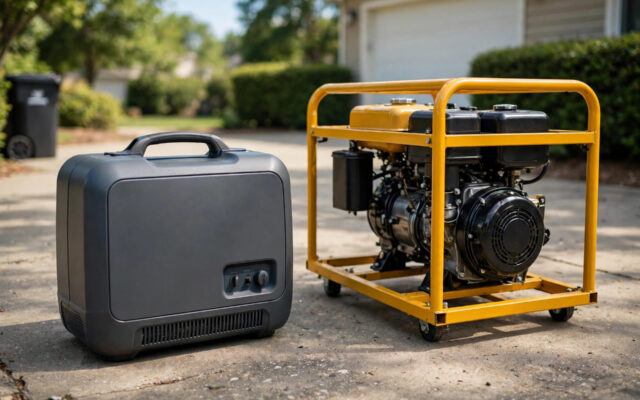
Open Frame vs Enclosed Inverter Generators: What’s the Difference?
Open frame vs enclosed inverter generators: both make clean power, but noise (50-60 vs 62-72 dBA), cost per watt, and max power differ hugely. How to choose.
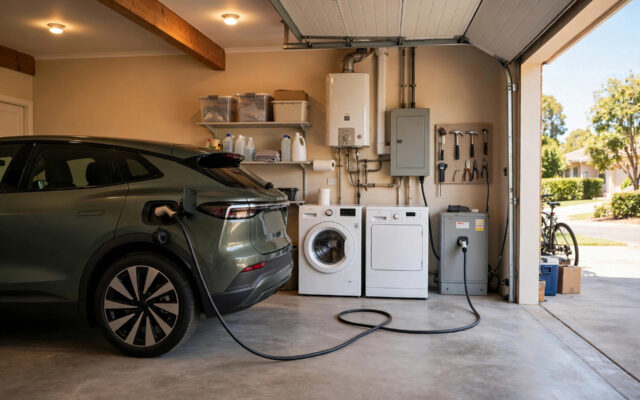
How to Power Your House With an EV: V2L vs V2H Explained
How to power your house with an EV: V2L runs appliances via extension cords; V2H feeds your panel. Compare power, cost, runtime, and safety needs here.