


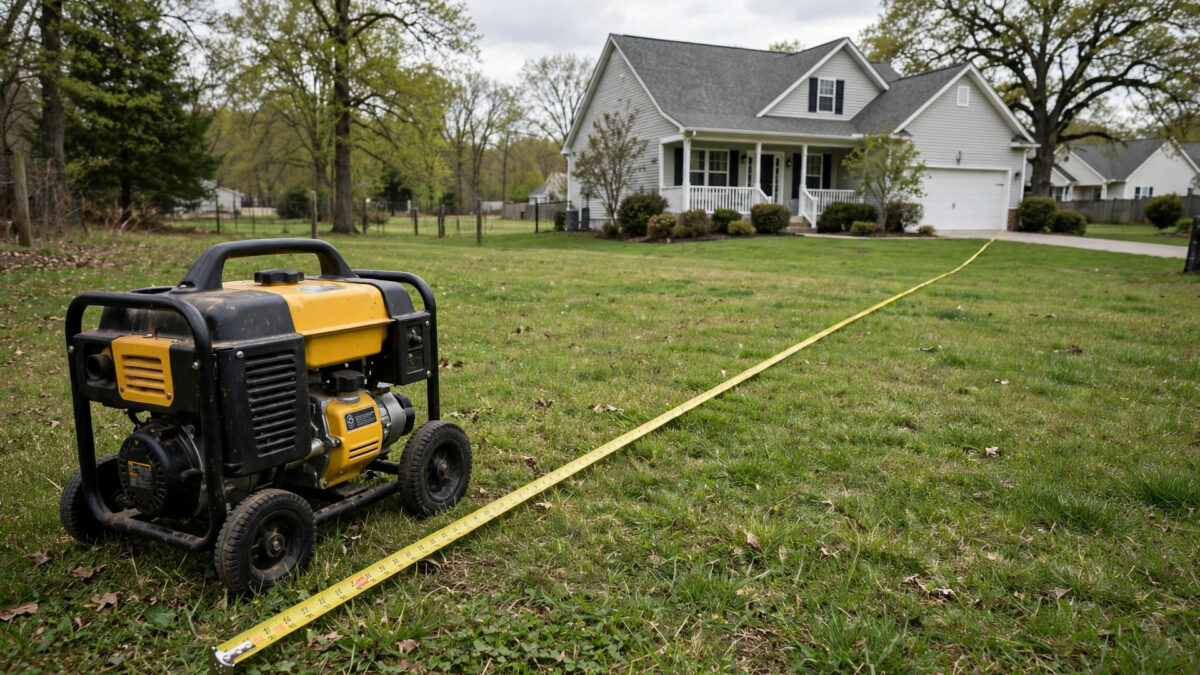
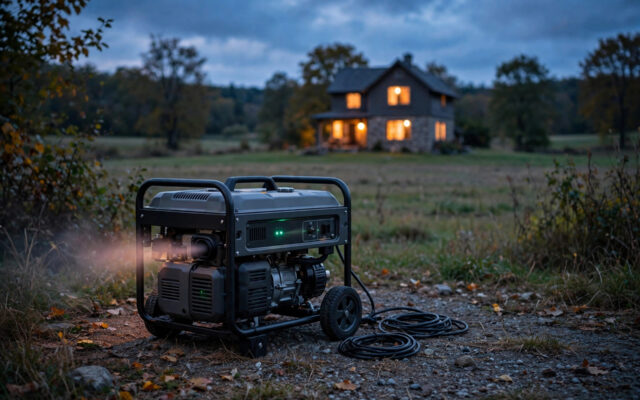
The official answer: at least 20 feet from your house — and from every door, window, and vent — with the exhaust pointed away from the building. That’s the guidance from the CDC and the Consumer Product Safety Commission. And a June 2025 federal report went further, recommending 25 feet after investigators found CO from generators sickening people even at “safe” distances. When in doubt, farther is better.
This isn’t bureaucratic caution. Carbon monoxide from portable generators kills hundreds of Americans every year and sends thousands more to emergency rooms — it’s odorless, colorless, and gives no warning before it overwhelms you. I take placement more seriously than any other part of generator ownership, and after reading the federal data, so should you.
Key takeaways
- CDC/CPSC rule: minimum 20 feet from your home, doors, windows, and vents. Exhaust pointed away from the building.
- A June 2025 CPSC report recommends 25 feet, based on real CO-poisoning cases investigated with Louisiana fire departments.
- NIST modeling found 25 feet kept indoor CO minimal regardless of wind; 15 feet did not.
- Never run a generator in a garage, basement, shed, or carport — even with doors open. “Outside” means fully outside.
- Distance is only half the equation: wind direction, exhaust aim, and working CO detectors indoors complete the safety picture.
What the Agencies Actually Say
There’s no ambiguity in the official guidance — the agencies agree, with the newest research pushing the number outward:
- CDC: use generators outside, more than 20 feet from your home, doors, and windows. Never inside the home or garage, even with doors and windows open.
- CPSC: operate portable generators outside only, at least 20 feet away from the house, with exhaust directed away from the home and other buildings.
- June 2025 CPSC report: a 32-page federal report — prompted by Louisiana fire marshal reports of CO detectors alarming and residents falling ill — recommends generators be placed at least 25 feet from the home, and states plainly that “it should never be assumed that CO from a stationary generator cannot infiltrate the home.”
- NIST modeling: simulations of generator exhaust near houses found that at 25 feet, indoor CO stayed minimal regardless of wind speed and direction — while at 15 feet, CO levels could spike dangerously depending on the wind.
My practical take: treat 20 feet as the legal minimum and 25 feet as the smart target. The extra five feet costs you nothing but a longer extension cord.
Why Distance Alone Isn’t Enough
Here’s what the Louisiana investigations revealed, and it’s the part most people miss: several of the poisoning cases involved generators that were outside — but placed where wind, building shape, or nearby openings funneled the exhaust back toward the house. Distance is necessary but not sufficient. You need all four:
1. Distance: 20 feet minimum, 25 feet better
Measure from the generator to the nearest door, window, vent, or other opening — not to the wall. A generator 20 feet from a blank wall but 8 feet from a basement window well is 8 feet away in the ways that matter.
2. Exhaust direction: point it away, check the wind
The exhaust should face away from the house and away from the prevailing wind direction that would carry the plume back. Wind shifts — I check exhaust aim the same way I check the oil, every time I set up. If the breeze is pushing exhaust toward the house, rotate the generator.
3. Elevation and openings matter
CO is slightly lighter than air but mostly it just goes where the air goes. Basement windows, crawlspace vents, dryer vents, and HVAC intakes near the ground are the sneaky entry points — they’re exactly at the height where a generator’s exhaust plume travels. Walk your house’s perimeter and note every low opening before you pick a spot.
4. CO detectors inside, on every floor
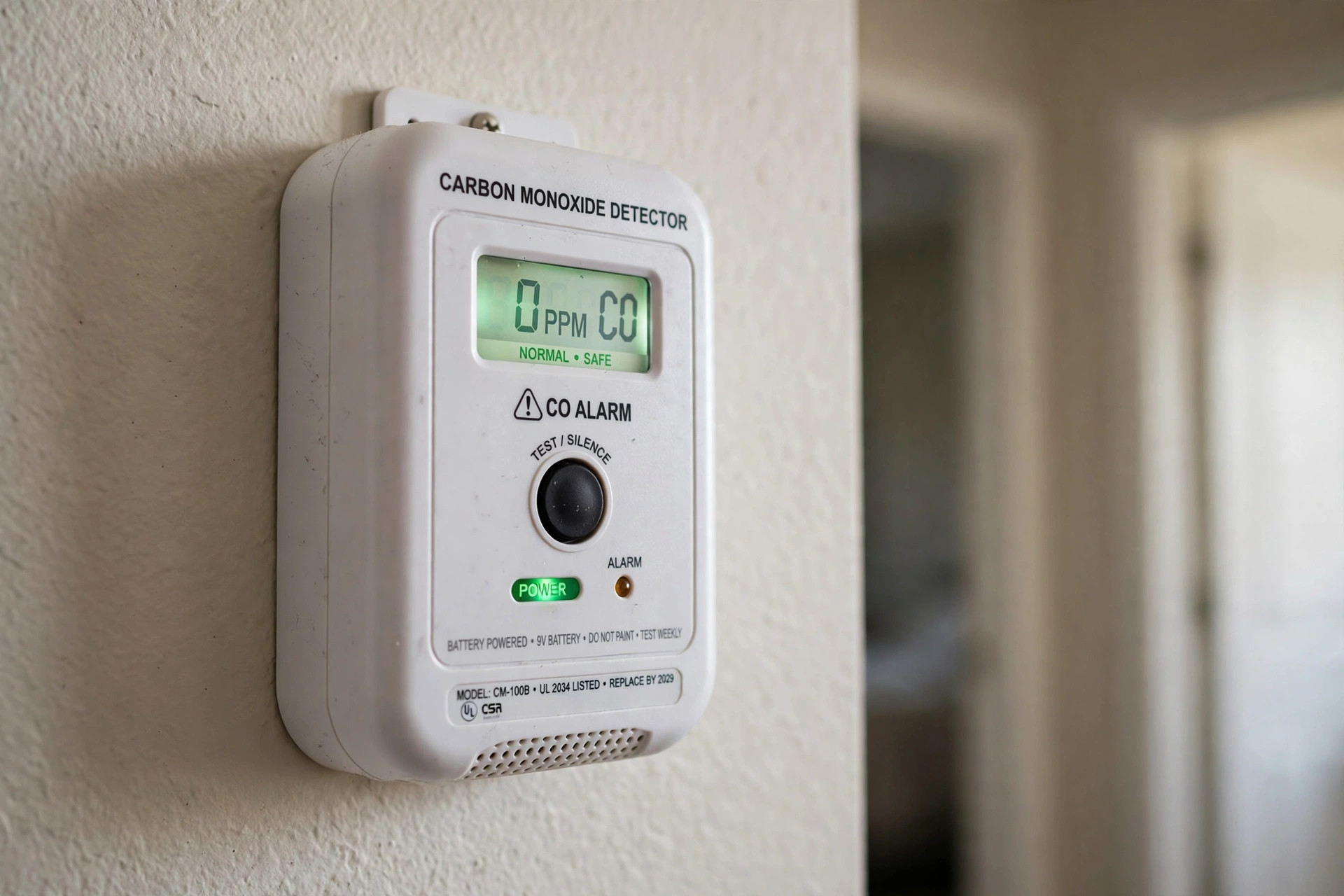
The generator’s placement protects you from the outside; indoor CO detectors are your backup for everything placement can’t control. Battery-powered or battery-backup units outside every sleeping area and on each floor, tested monthly. Our CO detector roundup covers the models worth buying.
Where People Get This Wrong
The fatal placements, ranked by how often they show up in incident reports:
- In the garage with the door open. The single most common killer. An open garage door does not ventilate enough — CO pools and drifts into the house through the connecting door and wall gaps. Never. Not for five minutes.
- Under a deck or in a carport. Overhead cover traps the exhaust plume and holds it against the house. “Outside” with a roof over it isn’t outside.
- Next to an open window “for the cord.” People park the generator right under the window they’re powering through. That window is now breathing exhaust.
- In the basement or crawlspace. Shouldn’t need saying, but every outage season brings cases.
- Too close during storms. Rain and wind make people creep the generator toward the house for shelter. Our guide on where to put your generator during a storm covers how to shelter it from weather without bringing it dangerously close — a simple canopy 25 feet out beats a garage every time.
The Extension Cord Math for 25 Feet
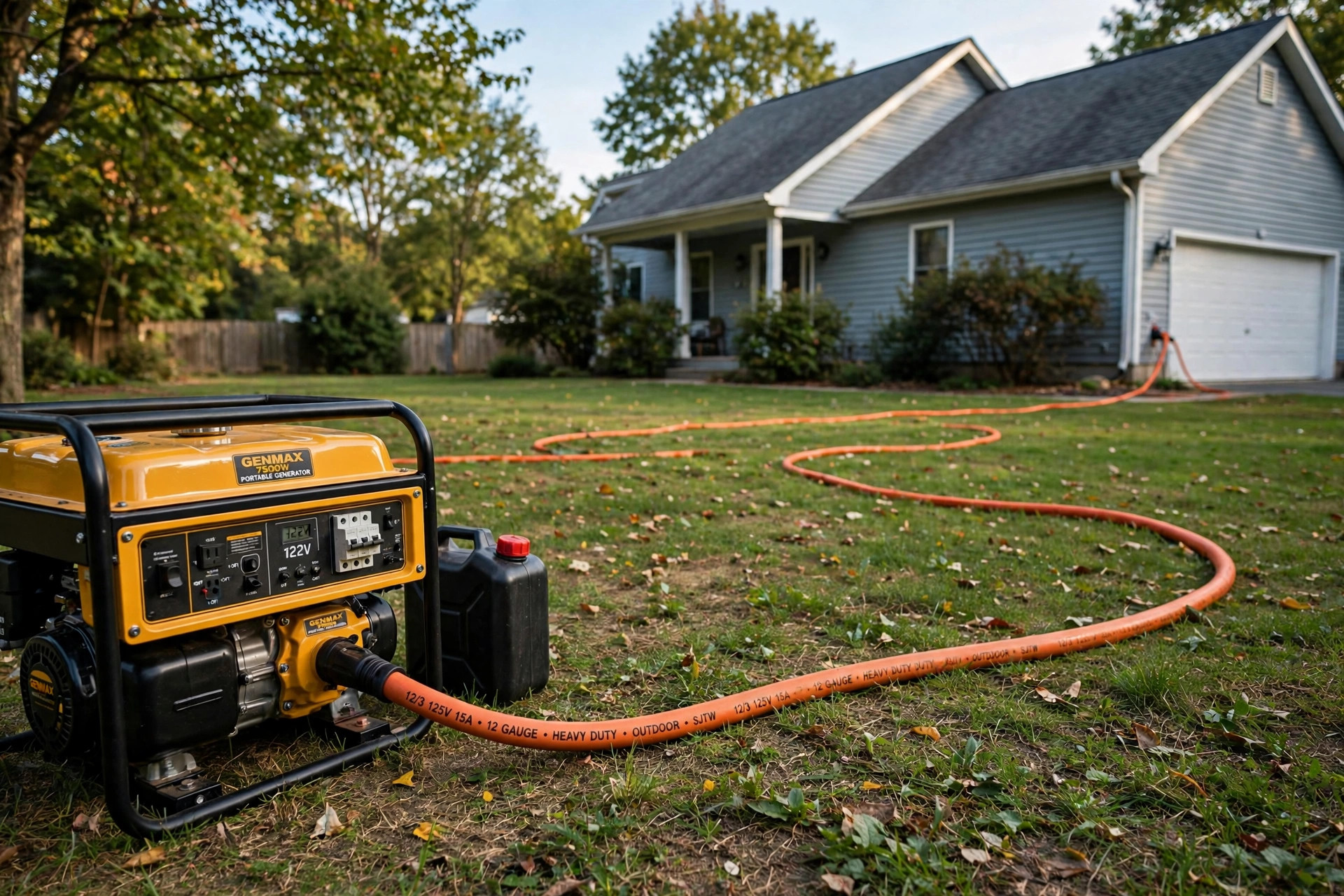
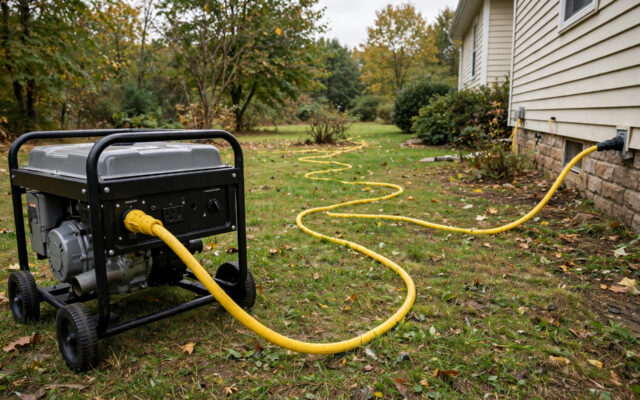
The most common objection to the 25-foot rule is practical: “my cord won’t reach.” That’s a $40 problem, not a safety tradeoff. But cord choice matters — a long, thin cord drops voltage, which makes motors run hot:
- Up to 50 feet: 12-gauge cord minimum for anything with a motor (fridge, AC, sump pump).
- 50–100 feet: 10-gauge. Yes, it’s thick and expensive. It’s also what keeps your fridge compressor alive.
- Never daisy-chain two cords to reach — each connection adds resistance and a failure point. Buy one cord of the right length.
- Fully uncoil the cord. A coiled extension cord under load builds heat. Lay it out straight.
Plan your generator spot and your cord route before the outage, not during it. I keep a dedicated 50-foot 12-gauge cord with my generator kit so there’s never a temptation to use the skinny orange one from the garage. And once you’ve picked your 25-foot spot, mark it — a couple of landscape pavers or a painted stake means that at 2 AM in a storm, you’re not guessing where “far enough” is.
What About Standby Generators?
Permanently installed standby generators follow different rules — they’re placed per manufacturer specs and local code, typically 5+ feet from openings (much closer than portables, because their exhaust systems and enclosures are engineered for it). Don’t apply standby clearances to a portable. The 20/25-foot rule is for portable generators, full stop. If you’re considering a standby, our portable vs. standby comparison breaks down the costs and tradeoffs.
FAQs
How far should a generator be from the house?
Can I run my generator in the garage with the door open?
Is it safe to run a generator under a deck or carport?
Why does the CPSC now recommend 25 feet instead of 20?
Do I need a CO detector if my generator is far from the house?
The Bottom Line
Twenty feet minimum, twenty-five to be safe, exhaust pointed away, detectors on every floor. It takes five extra minutes of setup and one decent extension cord — against a risk that’s odorless, invisible, and unforgiving. Of everything in generator ownership, this is the rule I’d tattoo on my arm if I had to pick one.

Related Guides
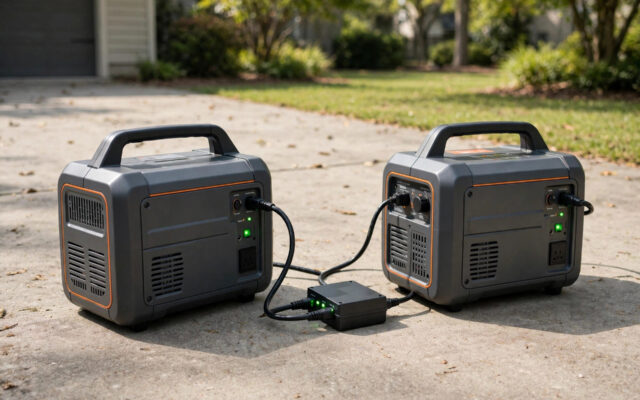
Paralleling Two Generators vs Buying a Bigger One: Which Is Better? (2027)
Paralleling two small inverter generators vs buying one bigger unit: compare cost, noise, fuel, redundancy, and the 240V catch to pick the right setup.

What Gauge Extension Cord Do You Need for a Generator?
Extension cord gauge depends on amps AND length: 12 AWG handles 20A to 50 ft, but you need 10 AWG at 100 ft. Chart, sizing steps, and fire-prevention rules inside.
Generator Carbon Monoxide Safety: The Complete 2027 Guide
Carbon monoxide from generators kills ~77 Americans a year. This complete guide covers symptoms, the CDC 20-foot rule, detector placement, and a pre-outage safety checklist.