


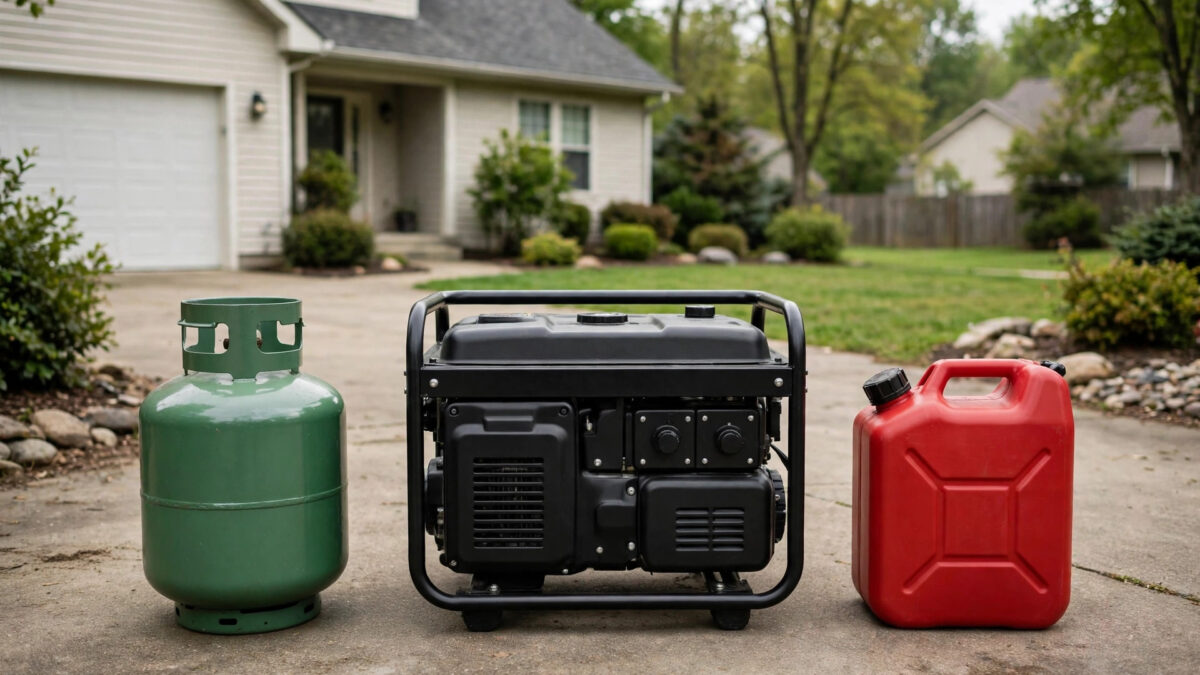
Comparing dual fuel vs tri fuel generator options — which fuel system is better? The direct answer: dual-fuel (gasoline + propane) is the better choice for most buyers because it is cheaper, simpler, and propane already solves the biggest problem with gasoline (storage life). Tri-fuel (gasoline + propane + natural gas) is the better choice if you have a natural gas line and want unlimited runtime without ever refueling. The third fuel is not about more power — in fact, generators make less power on natural gas than on gasoline. It is about fuel logistics during a long outage. We compared published specifications, fuel-consumption figures, and owner feedback across popular dual- and tri-fuel models to write this guide.
Key Takeaways
- Dual fuel = gasoline + propane. Cheaper, simpler, widely available; propane stores indefinitely.
- Tri-fuel = gasoline + propane + natural gas. Unlimited runtime on a gas line; costs more upfront.
- Power output drops on alternative fuels: expect ~10% less on propane and ~15-20% less on natural gas vs. gasoline.
- Tri-fuel only makes sense if you have (or will install) a natural gas connection — otherwise you are paying for a feature you cannot use.
- Never call a dual-fuel-only model “tri-fuel” — e.g., the FIRMAN H03655 is dual fuel (gasoline + propane) only.
What Is a Dual Fuel Generator? What Is a Tri-Fuel Generator?
A dual-fuel generator runs on two fuels: gasoline and propane (LPG). You start it on gasoline from the onboard tank or connect a propane tank (usually a standard 20-lb BBQ tank or larger), and switch between them with a fuel selector. Dual-fuel models like the Westinghouse WGen9500DF or DuroMax XP13000EH are among the most popular home-backup portables sold today.
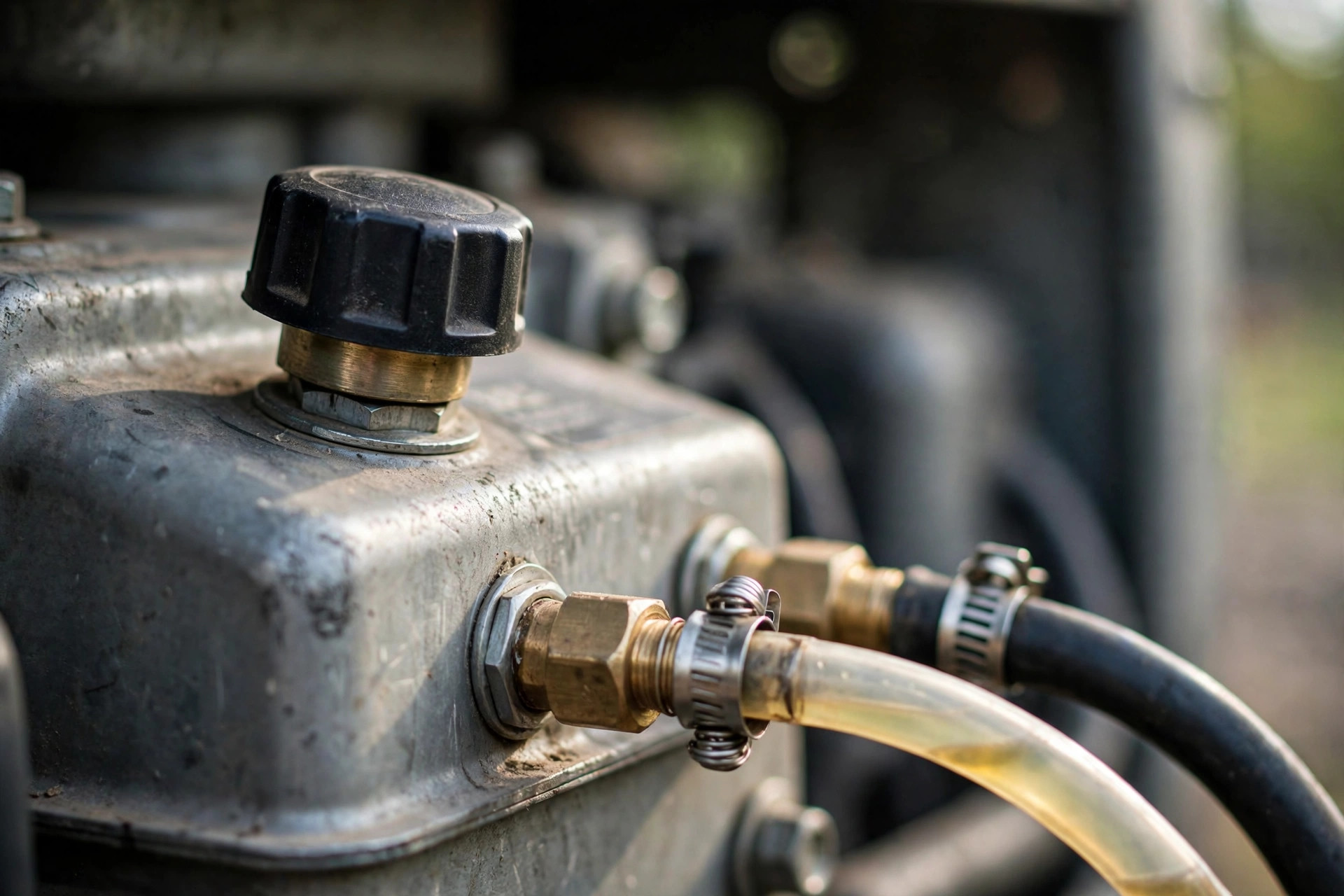
A tri-fuel generator adds a third option: natural gas (NG), via a connection to your home’s gas line. Models like the WEN TF-1450X or Champion 100416 ship with a natural gas hose kit alongside the propane hose. The generator itself is mechanically similar to a dual-fuel unit; the difference is the fuel system plumbing and the regulator setup that meters natural gas at the low pressure homes receive.
One honesty note before we go further: fuel-system claims get sloppy in listings and reviews. The FIRMAN H03655, for example, is sometimes mislabeled online — but FIRMAN’s own documentation and manual classify it as dual fuel (gasoline + propane) only, and we treat it that way. If a listing calls something “tri-fuel,” verify that natural gas is actually supported before you buy.
Dual Fuel vs. Tri-Fuel: Side-by-Side Comparison
| Factor | Dual fuel (gas + propane) | Tri-fuel (gas + propane + natural gas) |
|---|---|---|
| Upfront cost | Lower (most popular price points) | $200-$500+ more for comparable wattage |
| Runtime limit | Limited by fuel on hand (tank size) | Unlimited on natural gas (utility line) |
| Refueling during outage | Must refuel gas / swap propane tanks | No refueling on NG; still refuel on other fuels |
| Power on propane | ~90% of gasoline rating | ~90% of gasoline rating |
| Power on natural gas | N/A | ~80-85% of gasoline rating |
| Fuel storage | Propane stores indefinitely; gas needs stabilizer | Same, plus NG needs no storage at all |
| Installation complexity | None (tanks are portable) | NG hookup needs a plumber/gas fitter + possibly a permit |
| Portability | Fully portable | Portable on gas/propane; tethered on NG |
| Best for | Most homeowners, campers, job sites | Homes with NG service, long-outage regions |
Power Output: Why Natural Gas Makes Less Power
Here is the spec detail most buyers miss: a generator’s wattage rating is almost always the gasoline rating, and output falls on the other fuels. The physics is straightforward — propane and natural gas contain less energy per unit volume than gasoline, and natural gas arrives at low pressure. Typical derating, confirmed across manufacturer spec sheets:
- Propane: ~10% less power than gasoline (a 10,000W gasoline rating becomes ~9,000W on propane).
- Natural gas: ~15-20% less power than gasoline (that 10,000W becomes ~8,000-8,500W on NG).
Check the per-fuel ratings before you buy. Quality tri-fuel listings — like the WEN TF-1450X, which publishes 11,500W on gasoline, 10,300W on propane, and 8,750W on natural gas — spell this out. If a listing only shows one wattage number, assume it is the gasoline figure and derate mentally. Size the generator for the fuel you will actually use most: if you plan to run on natural gas 90% of the time, size for the NG rating, not the gasoline headline.
Fuel Logistics: The Real Reason to Choose
Forget the spec sheet for a moment — fuel system choice is really a logistics decision about outages.
Gasoline’s problem is storage and availability. It goes stale in 3-6 months without stabilizer, and during a widespread outage, gas stations lose power too (no pumps) or run dry. A dual-fuel generator solves half of this: propane in a sealed tank stores effectively forever and burns cleaner, so your “emergency fuel” is always ready. That alone is why dual-fuel is the sweet spot for most buyers.
Propane’s problem is quantity. A 20-lb BBQ tank holds about 4.6 gallons — enough for roughly 5-8 hours on a mid-size generator at half load. Running a big portable for a multi-day outage on 20-lb tanks means a stack of tanks and frequent swaps. Bulk propane (a 100+ gallon tank) fixes this but adds significant cost.
Natural gas’s advantage is that it sidesteps both problems: the utility delivers it continuously, so runtime is effectively unlimited and there is nothing to store, stabilize, or swap. The trade-offs: you need a gas line run to the generator location (a plumber/gas fitter job, possibly permitted), the generator is tethered to that spot when on NG, and in rare catastrophic events (earthquakes, major infrastructure damage) gas service can be interrupted too. For hurricane and ice-storm country — where outages last days and gas stations are chaos — tri-fuel on natural gas is genuinely the most resilient portable setup available.
Cost Comparison: What the Third Fuel Adds
Comparing similarly sized models, tri-fuel typically costs $200-$500 more than dual-fuel at retail — you are paying for the additional regulator, NG hose kit, and fuel-selector engineering. But the bigger cost difference is installation: a dual-fuel generator needs nothing installed (tanks are portable), while using the natural gas capability requires a gas line stubbed out to the generator location. That gas work can run $300-$1,500+ depending on distance and complexity, plus a possible permit.
Against that, weigh the fuel savings over time. Natural gas is usually the cheapest fuel per hour of runtime (see our fuel cost guide), and you never pay for propane tank exchanges or waste stale gasoline. For a homeowner in an outage-prone area who expects to run the generator dozens of hours per year, the tri-fuel premium can pay back in convenience alone — never refueling during a storm is worth real money at 2 AM.
Representative Models: Dual-Fuel and Tri-Fuel Picks
To ground the comparison, here are verified models from our research representing each fuel system. All links use our standard Amazon Associates format.
Dual-fuel standouts: The Westinghouse WGen9500DF (9,500 running watts on gasoline, remote start, transfer-switch ready) is the classic whole-home dual-fuel portable. The DuroMax XP13000EH offers maximum dual-fuel wattage (10,500 running watts) with a 50-amp outlet. The FIRMAN H03655 is a solid mid-size dual-fuel option — and to be explicit, it is dual fuel (gasoline + propane) only, not tri-fuel, per FIRMAN’s own documentation.
Tri-fuel standouts: The WEN TF-1450X publishes full per-fuel wattage ratings (11,500 / 10,300 / 8,750W) and includes the NG hose kit — the transparency we like to see. The Champion 100416 (8,000W gasoline / 7,000W NG) adds CO Shield safety tech and ships with a 25-foot natural gas hose. The Champion 201176 is the interesting outlier: an open-frame inverter tri-fuel, quieter than conventional tri-fuel units.
Dual Fuel vs. Tri-Fuel: Which Should You Buy?
Buy dual-fuel if: you do not have natural gas service (or do not want a gas line installed), you want the lowest upfront cost, you camp or need full portability, or your outages are typically measured in hours, not days. Propane’s indefinite storage already solves gasoline’s biggest weakness, and dual-fuel models offer the best watts-per-dollar in the industry.
Buy tri-fuel if: your home has natural gas service, you live where outages last multiple days (hurricane, ice-storm regions), you want to eliminate refueling entirely, or you are setting up a semi-permanent home-backup station. The premium is real, but so is the payoff: unlimited runtime with zero fuel logistics.
Stick with gasoline-only if: you need maximum watts per dollar and already rotate fuel religiously with stabilizer. But honestly, in 2027 the price gap between gasoline-only and dual-fuel has shrunk enough that dual-fuel is the better buy for almost everyone.
Our verdict
Dual-fuel is the right choice for most buyers — cheaper, simpler, fully portable, and propane’s infinite shelf life fixes gasoline’s fatal flaw. Tri-fuel is the right choice for natural-gas homes in outage-prone areas, where unlimited runtime without refueling justifies the $200-$500+ premium plus gas-line installation. Size for the fuel you’ll actually run on (remember the NG derate), verify any “tri-fuel” claim against the manufacturer’s specs, and get the gas hookup done professionally.
How we researched this
We compared manufacturer-published specifications (including per-fuel wattage ratings), fuel-system documentation, retail pricing, and aggregated owner feedback for dual- and tri-fuel portable generators. We did not test any generators hands-on. The FIRMAN H03655’s dual-fuel-only classification is based on FIRMAN’s official site, manual, and generatorbible — we explicitly do not describe it as tri-fuel. Per-fuel wattage figures are manufacturer ratings; actual output varies with conditions.
What is the difference between dual fuel and tri-fuel generators?
Is tri-fuel worth it over dual fuel?
Do generators produce less power on natural gas?
Is the FIRMAN H03655 a tri-fuel generator?
Can I convert a dual-fuel generator to tri-fuel?
Which fuel is cheapest to run a generator on?
Dual-fuel vs. tri-fuel is not a specs contest — it is a question about your house and your outages. No gas line? Dual-fuel wins on value and simplicity. Gas line and multi-day outages? Tri-fuel’s unlimited runtime is hard to beat. Either way, you are buying resilience: pick the fuel system that matches how you will actually use it, size for the fuel you’ll run most, and see our best tri-fuel generators and best dual-fuel generators roundups for specific models.

Related Guides
Best Time to Buy a Generator: 2027 Price & Sales Calendar
The best time to buy a generator is Black Friday, with 10-30% off typical. 2027 price and sales calendar: clearance windows, pre-season deals, and timing tips.

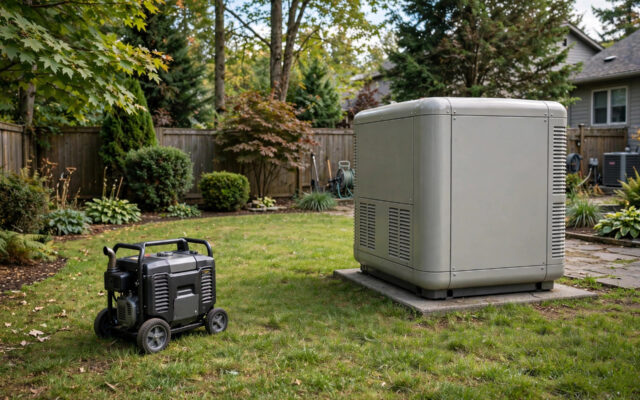
Portable vs Standby Generator: Cost, Runtime, Maintenance & Pros/Cons
Portable vs standby generator: $1,100-$5,000 vs $9,000-$20,000+ installed. Compare costs, runtime, maintenance, pros and cons, and which type wins for you.

Jackery vs EcoFlow vs Bluetti vs Anker: Which Power Station Brand Is Best?
Jackery vs EcoFlow vs Bluetti vs Anker power stations compared on battery chemistry, charging speed, cycle life, and value. Includes the NMC vs LiFePO4 warning.