


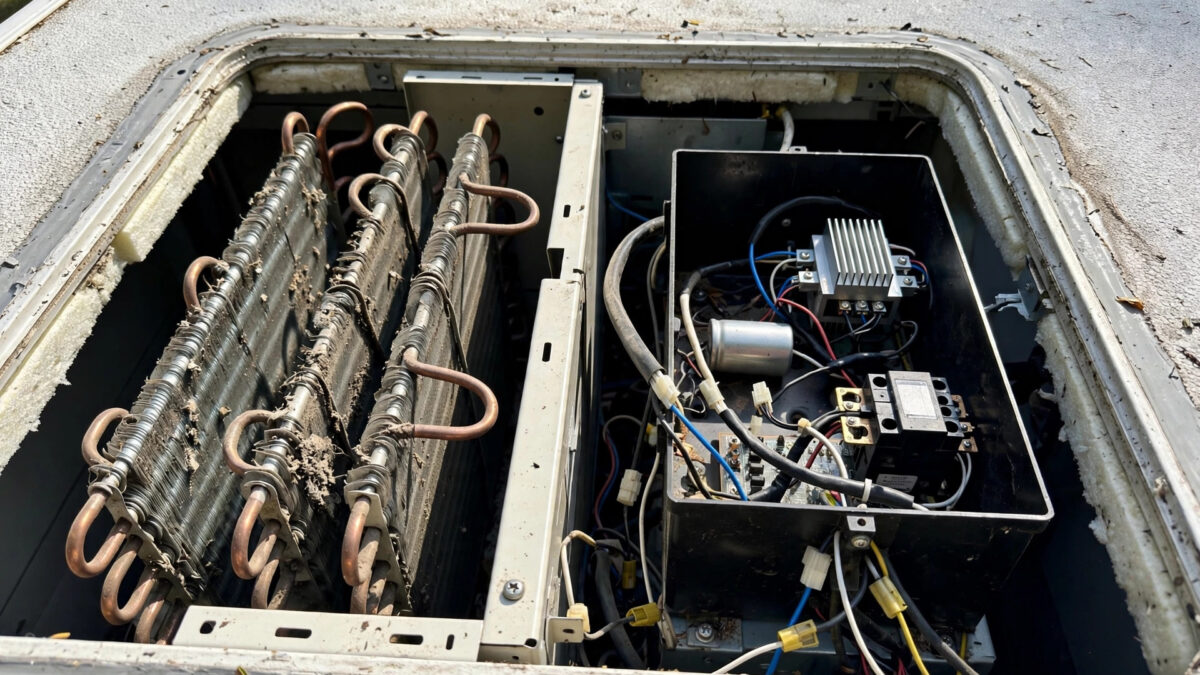
If you want to run your RV’s rooftop air conditioner on a small 2,000–2,500-watt inverter generator, then yes — a soft start kit is the difference between “the compressor won’t start” and “it purrs along all afternoon.” Without one, most 13,500 BTU RV ACs need a 3,000W+ generator just to survive the startup surge. With a soft start, a 2,200W inverter generator can start and run a 13.5k unit.
Key takeaways
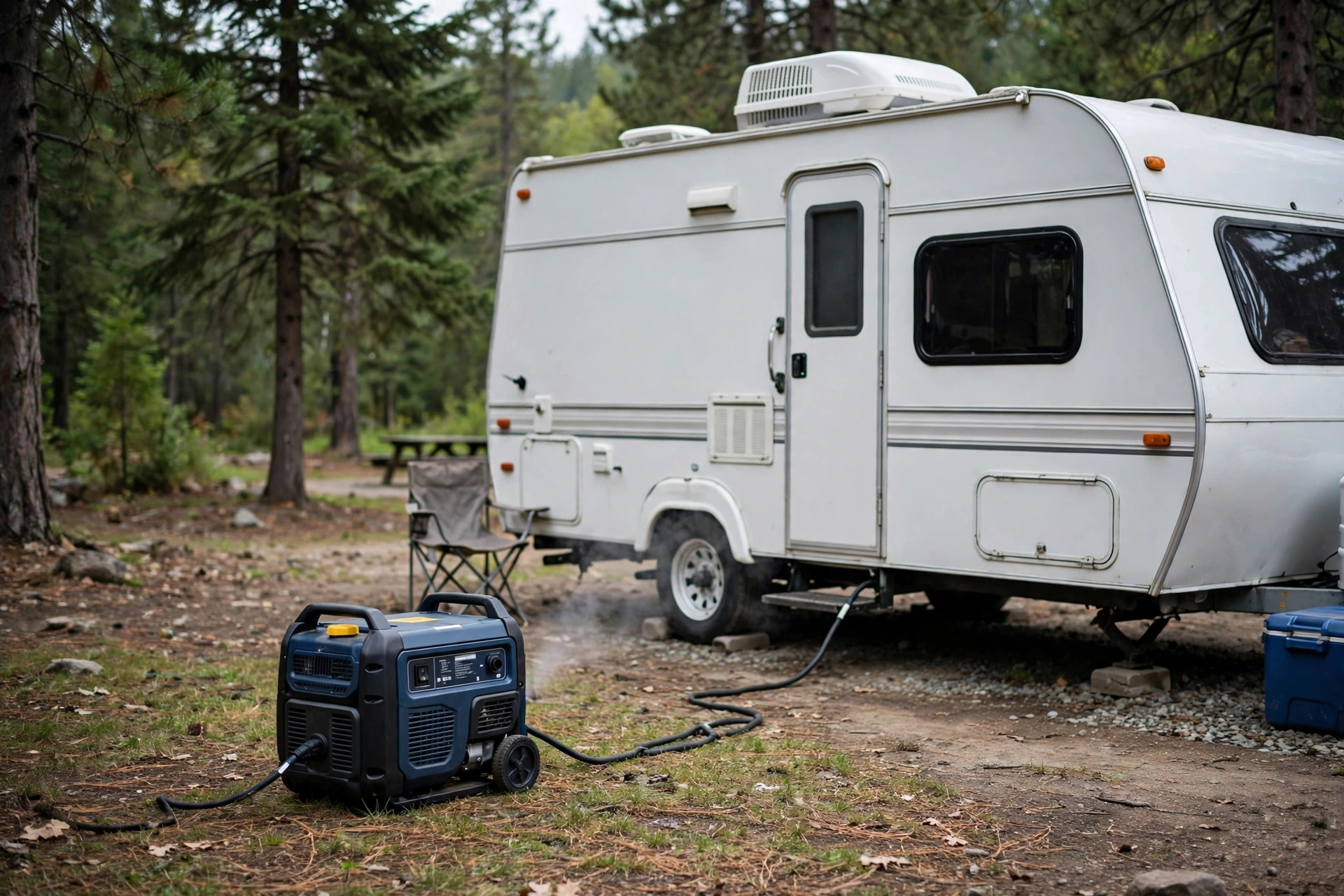
- A 13,500 BTU RV AC draws about 12.5–13.5 amps (1,500–1,800W) running, but its startup surge hits 2,800–3,500W for a split second.
- A 2,000–2,200W inverter generator can’t deliver that surge — the compressor stalls, the generator overloads, and nothing cools.
- A soft start kit ramps the compressor up gradually, cutting startup current by 65–75% — the most-cited figure is from Micro-Air’s EasyStart.
- With a soft start, a 2,200W inverter generator reliably starts a 13.5k BTU unit; some owners even run 15k units on 3,000W generators.
- Installation is a 1–2 hour DIY job inside the rooftop AC’s electrical box, and it does not void the AC warranty.
- Cost is a few hundred dollars — far less than upgrading to a bigger, heavier generator.
The real problem: startup surge, not running watts
This is the single most misunderstood thing in RV power. Your Dometic or Coleman-Mach 13.5k BTU rooftop unit sips about 1,500–1,800 watts once it’s running — a 2,000W generator could handle that easily. But the instant the compressor kicks on, the motor demands its locked-rotor current: a massive inrush that lasts a fraction of a second but can hit 50+ amps — over 3,000 watts at 120V.
A Honda EU2200i (1,800W running, 2,200W peak) sees that surge, hits its hard overload limit, and trips. Inverter generators have a brick-wall limit: 2,200W means 2,201W trips it. The compressor never gets spinning, the generator faults, and you get to try again — same result.
I watched this play out at a rally a few summers back. A guy with a brand-new 2,200W inverter kept trying to start his 13.5k Dometic. Click, overload light, silence. He’d done the “watts math” (1,800 running watts < 2,200 generator watts) and couldn't understand it. The running watts were never the problem. The first half-second was.
What a soft start kit actually does
A soft start kit (also called a soft starter) sits in the compressor’s starting circuit and ramps the voltage up gradually instead of slamming the motor with full power instantly. Think of it like pushing a heavy cart: a soft start gives it a smooth shove instead of trying to teleport it to full speed.
The result, per Micro-Air’s published data on their EasyStart 364: 65–75% reduction in startup current versus the motor’s locked-rotor amperage. That 50-amp inrush becomes something like 15–18 amps — well within what a 2,200W inverter generator can deliver. The compressor still gets the same total energy to start; it’s just spread over a slightly longer ramp instead of one violent spike.
Bonus effects owners consistently report: the compressor starts noticeably quieter (no more thunk that shakes the whole RV), and it’s gentler on the generator — less voltage sag means your other electronics don’t brown out every time the AC cycles.
| RV AC size | Running watts | Startup surge (no soft start) | Min. generator without soft start | Min. generator with soft start |
|---|---|---|---|---|
| 13,500 BTU | 1,500–1,800 | 2,800–3,500 | 3,000W+ | 2,200W inverter |
| 15,000 BTU | 1,800–2,000 | 3,200–4,000 | 3,500W+ | 3,000W inverter |
| 9,000–11,000 BTU | 1,000–1,300 | 2,000–2,500 | 2,500W+ | 2,000W inverter |
The Micro-Air EasyStart 364: the one everyone buys
The Micro-Air EasyStart 364 is the default recommendation across every RV forum, and for good reason — it’s the product with the most documented real-world results. Specs that matter:
- Designed for 9k, 13.5k, and 15k BTU RV rooftop ACs (supports compressors up to 18,000 BTU / 1.5 tons).
- Self-learning 4-stage start ramp — it runs a learning procedure over the first several compressor starts and optimizes the ramp for your specific unit.
- Works with Dometic, Coleman-Mach, and most other RV rooftop brands.
- Weatherproof enclosure, mounts inside the AC’s electrical box on the roof.
- A Bluetooth version exists that shows you live startup amperage on your phone — genuinely useful for confirming it’s working.
- Typically costs a few hundred dollars (the Bluetooth model runs a bit more).
Note: Micro-Air has been transitioning the 364 to the newer EasyStart Breeze, which is smaller and covers all RV AC sizes. Same function, easier install. Either way, buy from a reputable RV parts dealer — there are knockoffs floating around marketplaces that don’t do the learning ramp properly.
Installation: what to expect
This is a solid DIY job if you’re comfortable with basic wiring and working on a roof. The outline:
- Kill all power. Unplug shore power, disconnect batteries, and confirm with a meter. Non-negotiable.
- Open the rooftop AC’s electrical box. It’s under the shroud — usually a handful of screws.
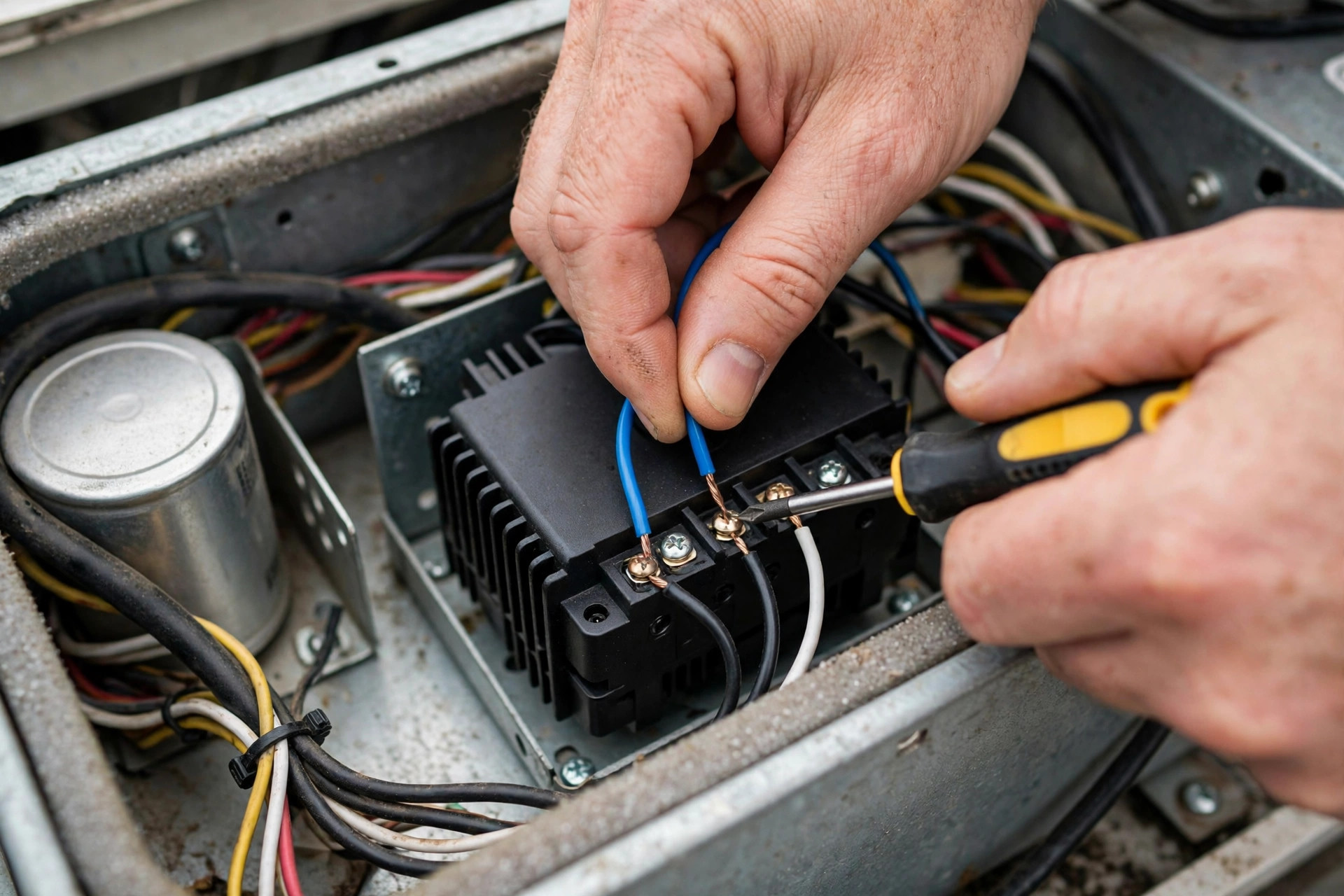
- Wire the soft starter into the compressor circuit per the included diagram (Dometic and Coleman-Mach have brand-specific instructions). It’s a handful of wire connections, clearly labeled.
- Mount the module inside the box with the included hardware.
- Run the learning procedure. This is the clever part: you start the compressor 5 times (with pauses between), and the unit optimizes its ramp each cycle. The Bluetooth model shows you the startup amps dropping with each cycle — owners report watching it fall from 50+ amps to the high teens.
Plan 1–2 hours, mostly spent being careful on the roof. And no — installing one does not void your AC warranty. It’s an add-on starting aid, the same category as the hard-start kits manufacturers themselves sell.
When a soft start isn’t the answer
Be honest about these cases:
- Two ACs on one small generator. A soft start helps each unit start, but the running load of two 13.5k units (~3,200W) still needs a 3,500W+ generator or two paralleled inverters. Soft starts on both units plus paralleled 2,200W generators is a popular combo that works.
- High altitude. Generators lose roughly 3% of output per 1,000 feet of elevation. At 7,000 feet your 2,200W generator is really a ~1,750W generator. Re-do the math for mountain camping.
- Heat-soaked restarts. On the hottest afternoons the compressor works hardest. If you’re marginal, the soft start’s learning ramp handles most of this — but keep the 80% headroom rule in mind.
The alternatives, honestly priced
- Bigger generator: a 3,000–3,500W inverter starts a 13.5k AC without a soft start. Costs more, weighs 100+ lbs vs. ~47 lbs for a 2,200W unit, burns more fuel. If you already own the small generator, the soft start is cheaper.
- Paralleled inverters: two 2,200W units with a parallel kit give ~4,400W. Great flexibility (run one when you don’t need AC), but you’re buying a second generator.
- Hard start kit: a capacitor-based booster, cheaper ($20–$40) but cruder — it doesn’t reduce inrush the way a true soft starter does, and many RVers who tried both say the soft start is in another league.
Will a 2200 watt generator run a 13500 BTU RV air conditioner?
Does a soft start kit reduce running watts?
Does installing a soft start void my RV AC warranty?
How long does it take to install a soft start on an RV AC?
Can a soft start let me run two RV air conditioners on one generator?
What’s the difference between a soft start and a hard start kit?
If you already own a 2,000–2,500W inverter generator and a rooftop AC, a soft start kit is one of the highest-value upgrades in RVing: a few hundred dollars, an afternoon on the roof, and suddenly the small quiet generator you love runs the AC all summer. That’s a trade I’ll take every time. For the rest of the RV power math — converter draw, battery charging, running a second AC — our generator calculators have you covered.

Related Guides
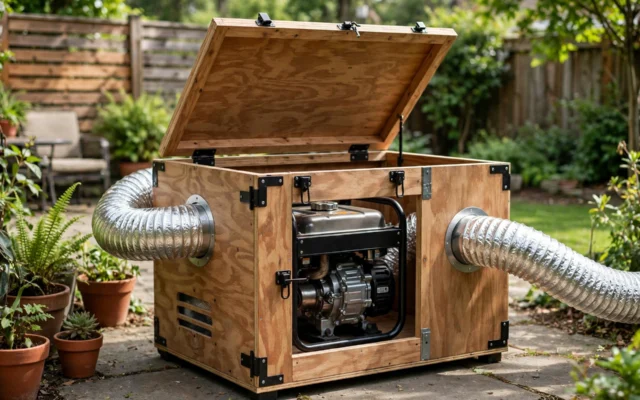
DIY Generator Quiet Box: How to Build a Noise-Reduction Enclosure
A DIY generator quiet box can cut noise 10–20 dB — but ventilation and CO safety are the whole project. Materials, baffle design, fan sizing, and the mistakes to avoid.

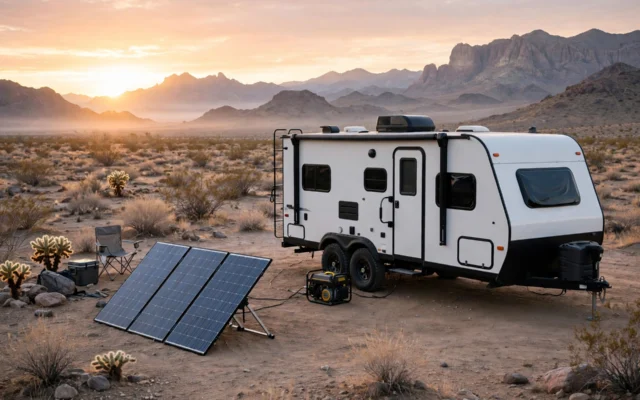
Boondocking Power Setup: Generator + Solar for Off-Grid Camping
The ideal boondocking power setup pairs solar with a generator and battery bank. Real daily load math, sizing tiers, and the generator run strategy that sips fuel.
RV Generator Quiet Hours & Campground Etiquette Guide
RV generator quiet hours are usually 10pm–8am, with limited daytime generator windows in national parks. The rules, the unwritten etiquette, and how to stay neighborly.