


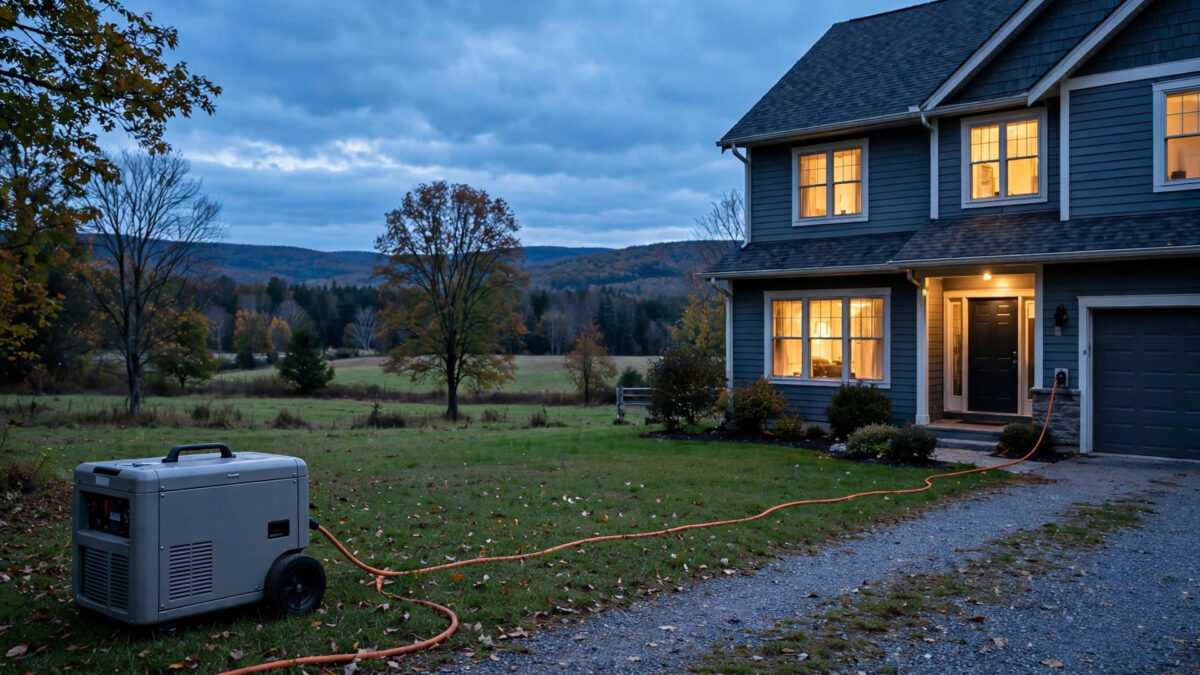
The best generators for home backup in 2027 are the ones that match your house, your fuel situation, and your budget — not just the biggest box on the shelf. We researched and compared eight generators purpose-built for keeping a home running through outages, from 12,000-watt dual fuel workhorses to a quiet 6,500-watt inverter, to find the right pick for different homes and needs.
Home backup is a specific job. Unlike camping generators, a home backup unit needs enough starting power for motors (well pumps, furnace fans, sump pumps, AC compressors), a way to connect to your house circuits safely (transfer switch or interlock kit), and the runtime to last through multi-day outages. Every model below was evaluated against those real requirements.
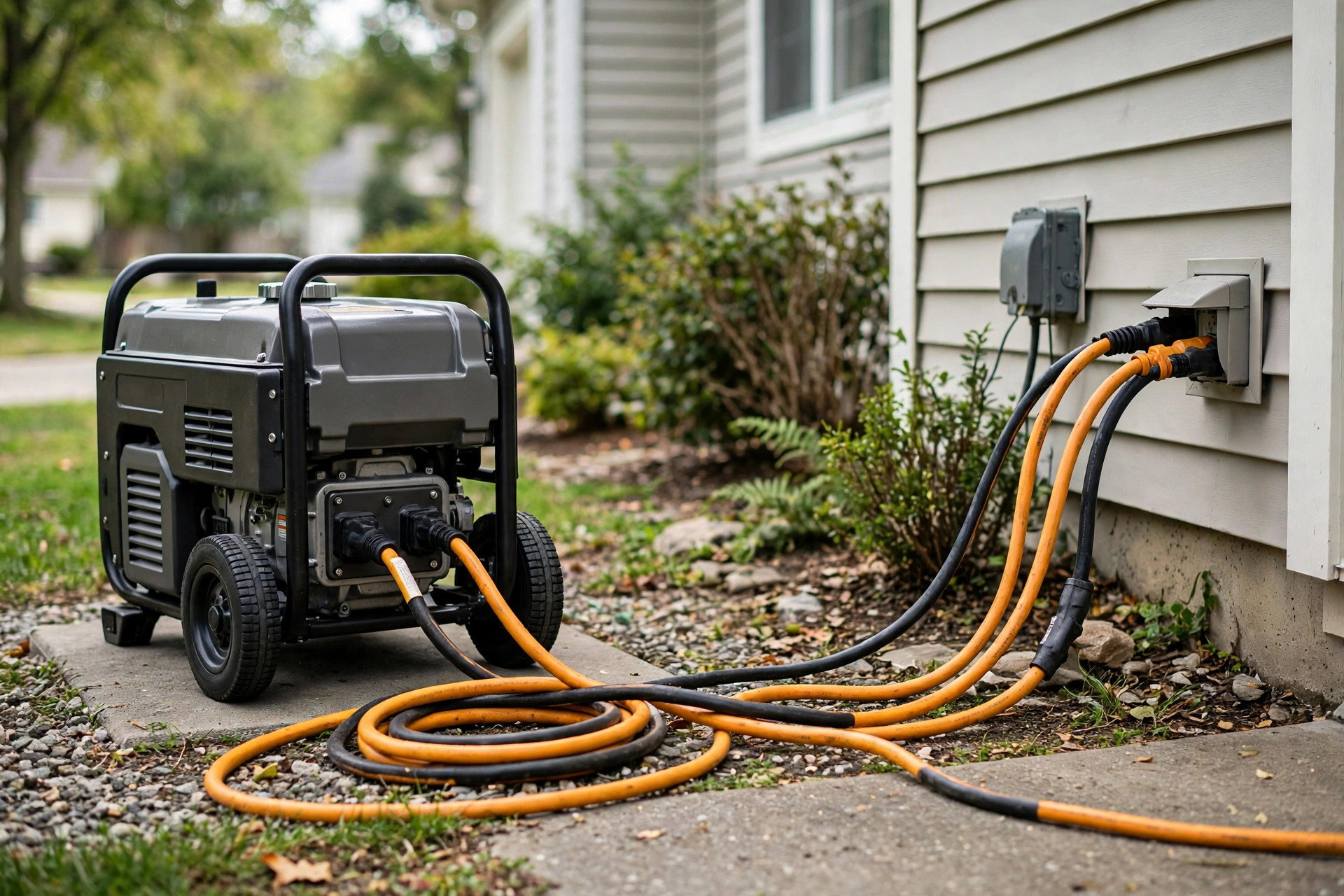
This roundup covers portable generators for home backup. If you want a permanently installed automatic system, see our whole house standby generator guide. And if you are deciding between fuel types, our dual fuel and tri-fuel roundups go deeper.
Key takeaways
- DuroMax XP12000HX is our overall pick — 12,000 starting watts, dual fuel, CO Alert, and a 5-year warranty.
- Westinghouse WGen11500TFc adds natural gas to the mix — the best tri-fuel option for homes with a gas line.
- Briggs & Stratton Q6500 is the quietest pick — an enclosed inverter with clean power for electronics.
- For whole-home portable backup, plan on 10,000–13,000 starting watts; essentials-only backup needs 5,000–7,500.
- Any generator feeding house circuits needs a transfer switch or interlock kit installed by a licensed electrician — never backfeed through a wall outlet.
Our top picks at a glance
- DuroMax XP12000HX — Best overall — 12,000W dual fuel with CO Alert and 5-year warranty
- Westinghouse WGen11500TFc — Best tri-fuel — gasoline, propane, and natural gas flexibility
- DuroMax XP13000EH — Most powerful — 13,000W for the largest portable backup loads
- Briggs & Stratton Q6500 — Quietest — enclosed inverter with CO Guard
- PowerSmart PS5055C — Lightest high-power — 120/240V inverter at ~113 lbs (see spec caveat)
Best overall
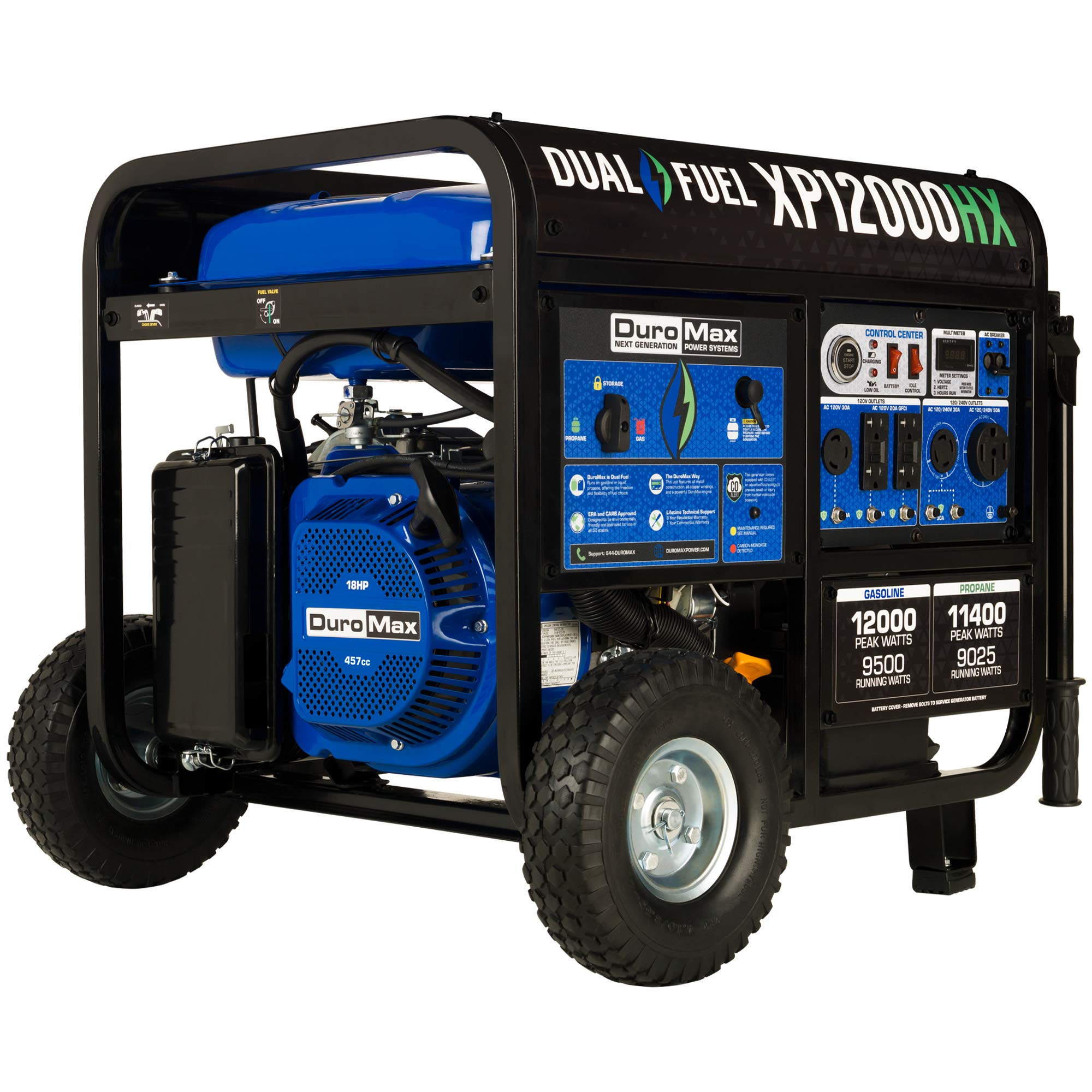
DuroMax XP12000HX Dual Fuel Portable Generator
- 9500W running / 12000W peak output
- gasoline / propane
- Re-confirmed Oct 2026
- 12000W starting watts / 9500W running watts
- gasoline / propane
- 222 lbs
As an Amazon Associate, we earn from qualifying purchases.
The DuroMax XP12000HX is the best portable generator for home backup for most buyers. With 12,000 starting watts and 9,500 running watts, dual fuel capability (gasoline + propane), push-button electric start, and CO Alert shutdown, it covers the whole-home portable use case completely: well pump, refrigerator, furnace, lights, and then some.
The 50A transfer-switch-ready outlet connects directly to a manual transfer switch, and DuroMax’s 5-year residential warranty is the longest in this roundup. Owner feedback we reviewed highlights reliable propane starts after long storage and strong performance during multi-day outages.
At 222 pounds it needs a permanent outdoor spot on its wheel kit. But for the combination of power, fuel flexibility, safety features, and warranty, nothing else in the portable class beats it for home backup.
| Running watts | 9,500 |
|---|---|
| Starting watts | 12,000 |
| Fuel type | Dual fuel: gasoline / propane |
| Noise level | Not published in manufacturer specs we reviewed |
| Runtime | Not published in manufacturer specs we reviewed |
| Weight | Approx. 222 lbs |
Pros
- 12,000W covers whole-home portable loads
- Dual fuel — propane stores indefinitely
- CO Alert and push-button start
- 5-year warranty, 50A transfer-switch outlet
Cons
- Heavy at 222 lbs
- No published noise or runtime figures
- Premium price for the class
Best tri-fuel for home backup
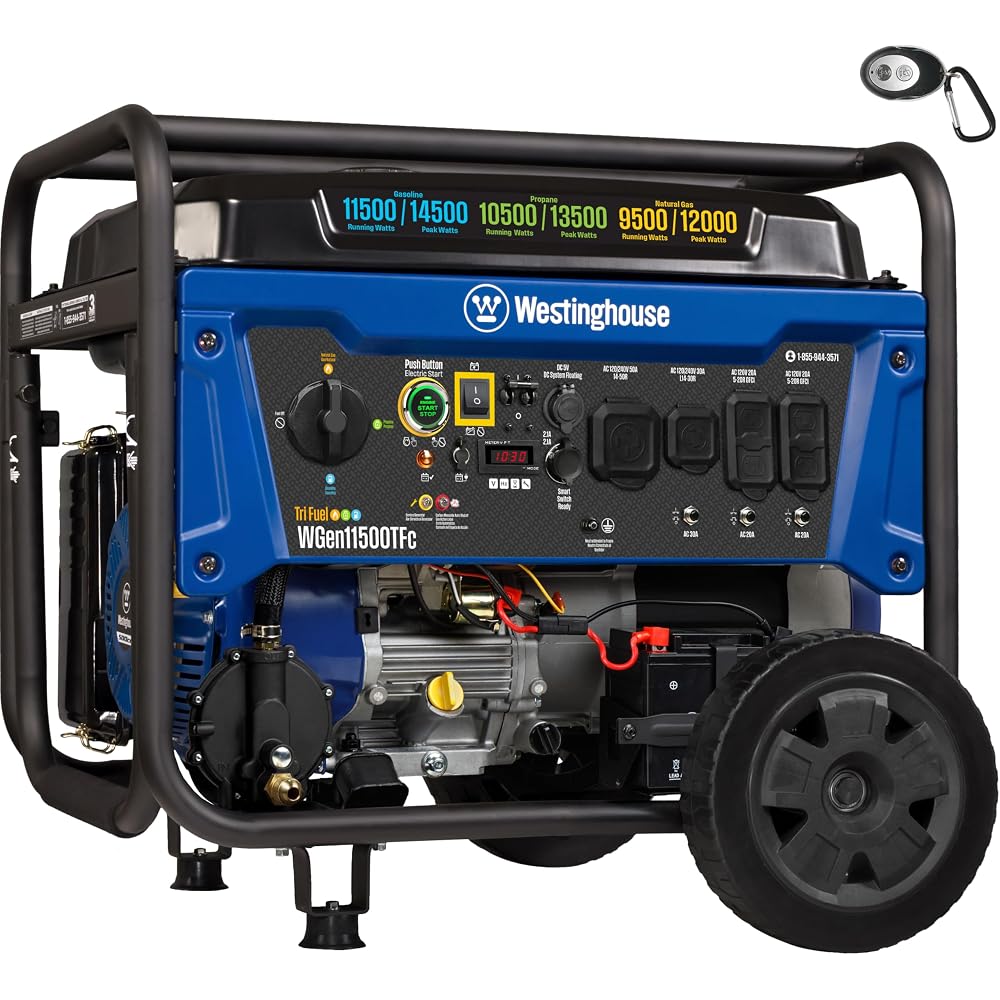
Westinghouse WGen11500TFc Tri-Fuel Portable Generator
- 11500W running / 14500W peak output
- gasoline / propane / natural gas
- Up to up to 19h on 9.5-gal tank runtime
- Tri-fuel (incl
- 14500W starting watts / 11500W running watts
- gasoline / propane / natural gas
- up to 19h on 9.5-gal tank
- 230 lbs
As an Amazon Associate, we earn from qualifying purchases.
The Westinghouse WGen11500TFc earns its place as the best tri-fuel home backup pick: 14,500 peak watts and 11,500 running watts on gasoline, with full ratings for propane and natural gas. If your home has a utility gas line, this generator can run effectively indefinitely during an outage — no refueling, no stale fuel, no tank swaps.
The 14-50R 50A outlet feeds a transfer switch directly, remote electric start is included, and power quality stays under 5% THD for sensitive electronics. The 9.5-gallon tank stretches gasoline runtime to about 19 hours at light load. Owner feedback praises the natural-gas hookup simplicity and steady multi-day performance.
At 230 pounds and 74 dBA it is big and loud — a conventional generator through and through. But for fuel flexibility no other home backup portable matches it.
| Running watts | 11,500 |
|---|---|
| Starting watts | 14,500 |
| Fuel type | Tri-fuel: gasoline / propane / natural gas |
| Noise level | Not published in manufacturer specs we reviewed |
| Runtime | Up to ~19h on 9.5-gal tank |
| Weight | Approx. 230 lbs |
Pros
- Tri-fuel — natural gas for unlimited runtime
- 14,500 peak watts with 50A outlet
- Remote electric start
- <5% THD clean power
Cons
- Loud conventional generator
- Heavy at 230 lbs
- Overkill if you lack a gas line
Most powerful portable
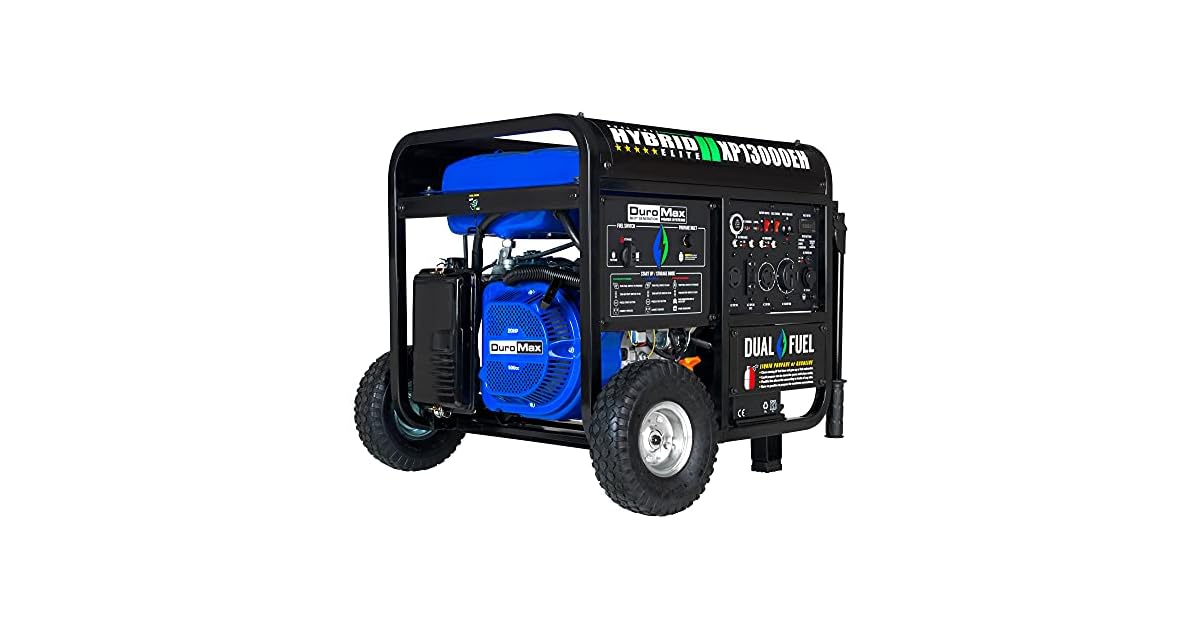
DuroMax XP13000EH Dual Fuel Portable Generator
- 10500W running / 13000W peak output
- gasoline / propane
- Up to 8h @ 50% on gasoline runtime
- 500cc engine, 50A transfer-switch-ready outlet, EPA+CARB 50-state, 3-yr warranty
- 13000W starting watts / 10500W running watts
- gasoline / propane
- 8h @ 50% on gasoline
- 234 lbs
As an Amazon Associate, we earn from qualifying purchases.
The DuroMax XP13000EH is the most powerful portable in this roundup: 13,000 starting watts and 10,500 running watts on gasoline. For large homes with central air, a well pump, and electric water heating ambitions, this is the portable that keeps everything running.
It includes the full DuroMax feature set — push-button start, CO Alert, 50A transfer-switch outlet, and MX2 full-power 120V receptacles — plus EPA and CARB compliance for 50-state use and a 3-year warranty. Owner feedback points to strong multi-day reliability on propane.
The 500cc-class engine is thirsty (about 8 hours at half load) and the unit weighs 234 pounds. This is maximum portable power, with the fuel consumption to match — size honestly before buying.
| Running watts | 10,500 |
|---|---|
| Starting watts | 13,000 |
| Fuel type | Dual fuel: gasoline / propane |
| Noise level | Not published in manufacturer specs we reviewed |
| Runtime | Approx. 8h at 50% on gasoline |
| Weight | Approx. 234 lbs |
Pros
- Highest portable output here
- CO Alert and push-button start
- 50A transfer-switch-ready
- EPA + CARB 50-state compliant
Cons
- Thirsty — ~8 hrs at half load
- 234 lbs, needs permanent placement
- No published noise rating
Best value dual fuel
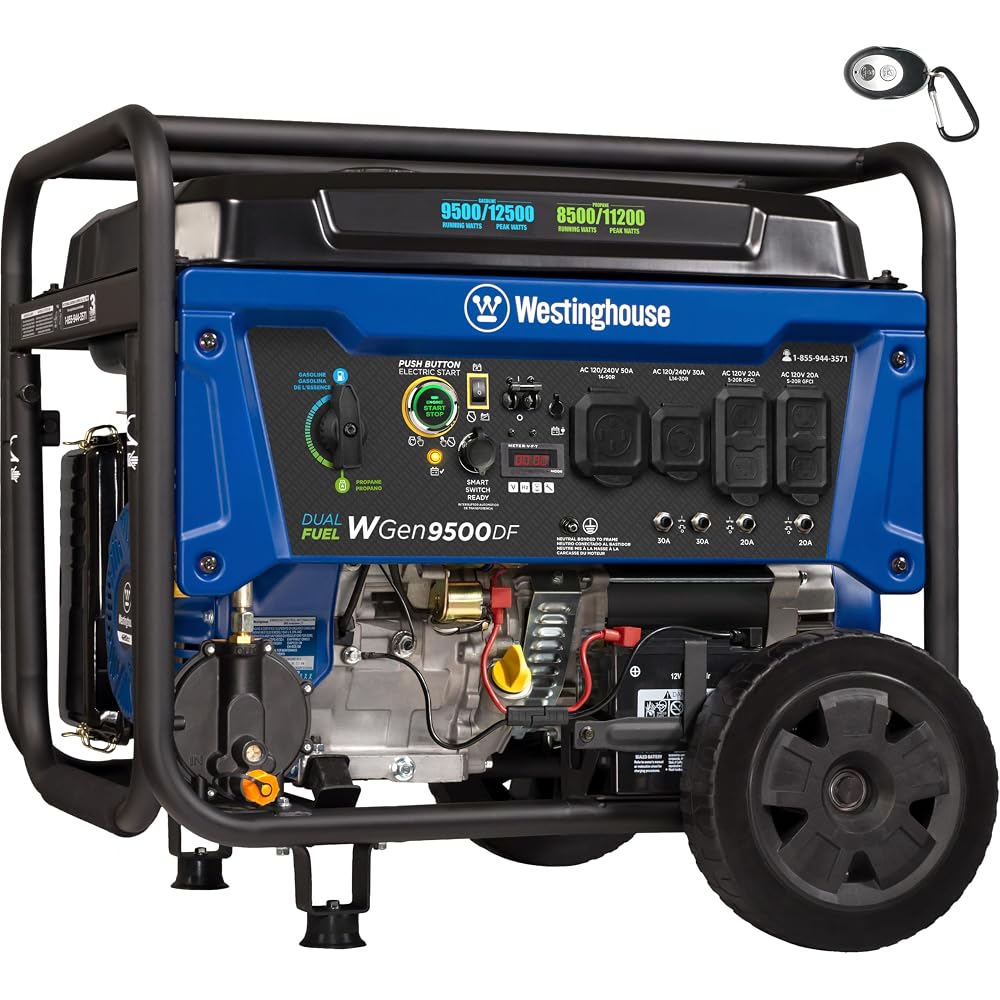
Westinghouse WGen9500DF Dual Fuel Portable Generator
- 9500W running / 12500W peak output
- gasoline / propane
- Up to up to 12h on 6.6-gal tank runtime
- L14-30R 30A + 14-50R 50A transfer-ready outlets, remote electric start, VFT data center
- 12500W starting watts / 9500W running watts
- gasoline / propane
- up to 12h on 6.6-gal tank
- 210 lbs
As an Amazon Associate, we earn from qualifying purchases.
The Westinghouse WGen9500DF delivers 12,500 peak watts and 9,500 running watts — genuine whole-home portable power — at a price well below the 13kW flagships. Dual fuel (gasoline + propane), remote and push-button start, and both 30A and 50A transfer-switch-ready outlets make it a complete home backup package.
The VFT data center tracks voltage, frequency, and lifetime hours for maintenance. Runtime runs about 12 hours on the 6.6-gallon tank. Owner feedback highlights dependable propane starts and solid build quality for the price.
At 210 pounds it is still a two-person move, but for buyers who want near-flagship power without the flagship price, this is the value sweet spot.
| Running watts | 9,500 |
|---|---|
| Starting watts | 12,500 |
| Fuel type | Dual fuel: gasoline / propane |
| Noise level | Not published in manufacturer specs we reviewed |
| Runtime | Up to ~12h on 6.6-gal tank |
| Weight | Approx. 210 lbs |
Pros
- Near-flagship power at a value price
- Remote + push-button start
- 30A and 50A transfer-switch outlets
- VFT maintenance data center
Cons
- 210 lbs — needs a wheel kit and a spot
- No published noise rating
- Conventional fuel consumption
Trusted Generac workhorse
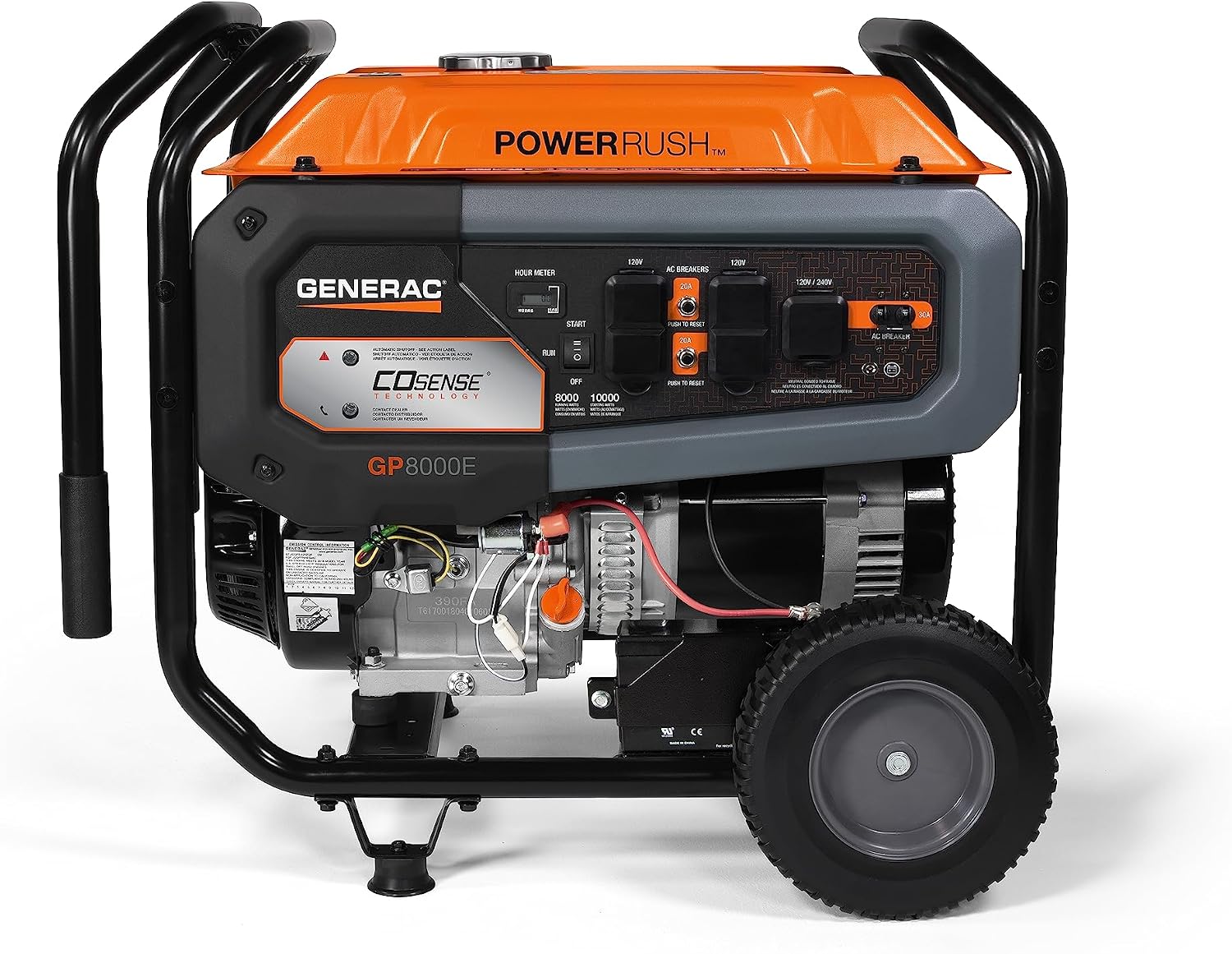
Generac GP8000E Portable Generator (Model 7715, COsense)
- 8000W running / 10000W peak output
- gasoline
- Up to up to 9.5h @ 50% load runtime
- Re-confirmed Oct 2026
- 10000W starting watts / 8000W running watts
- gasoline
- up to 9.5h @ 50% load
- 214 lbs
As an Amazon Associate, we earn from qualifying purchases.
The Generac GP8000E is the trusted mainstream workhorse: 10,000 starting watts and 8,000 running watts of gasoline power with electric start and COsense carbon-monoxide shutdown. Generac is the biggest name in home backup, with the largest dealer and service network in the industry.
To be clear about fuel: the GP8000E is gasoline-only — it is not a dual fuel model (Generac’s dual fuel pick is the GP7500E). What it offers instead is proven simplicity: a 7.9-gallon tank for up to 9.5 hours at half load, straightforward controls, and parts availability just about anywhere.
At 214 pounds it is a substantial machine. For buyers who want the Generac name and a no-nonsense gasoline backup generator with a long track record, the GP8000E remains a solid choice.
| Running watts | 8,000 |
|---|---|
| Starting watts | 10,000 |
| Fuel type | Gasoline only (not dual fuel) |
| Noise level | Not published in manufacturer specs we reviewed |
| Runtime | Up to ~9.5h at 50% load |
| Weight | Approx. 214 lbs |
Pros
- Trusted Generac brand and service network
- COsense protection and electric start
- Long 9.5-hour runtime at half load
- Proven long-term track record
Cons
- Gasoline only — no propane option
- Gasoline goes stale; needs stabilizer/rotation
- Heavy at 214 lbs
Quietest pick
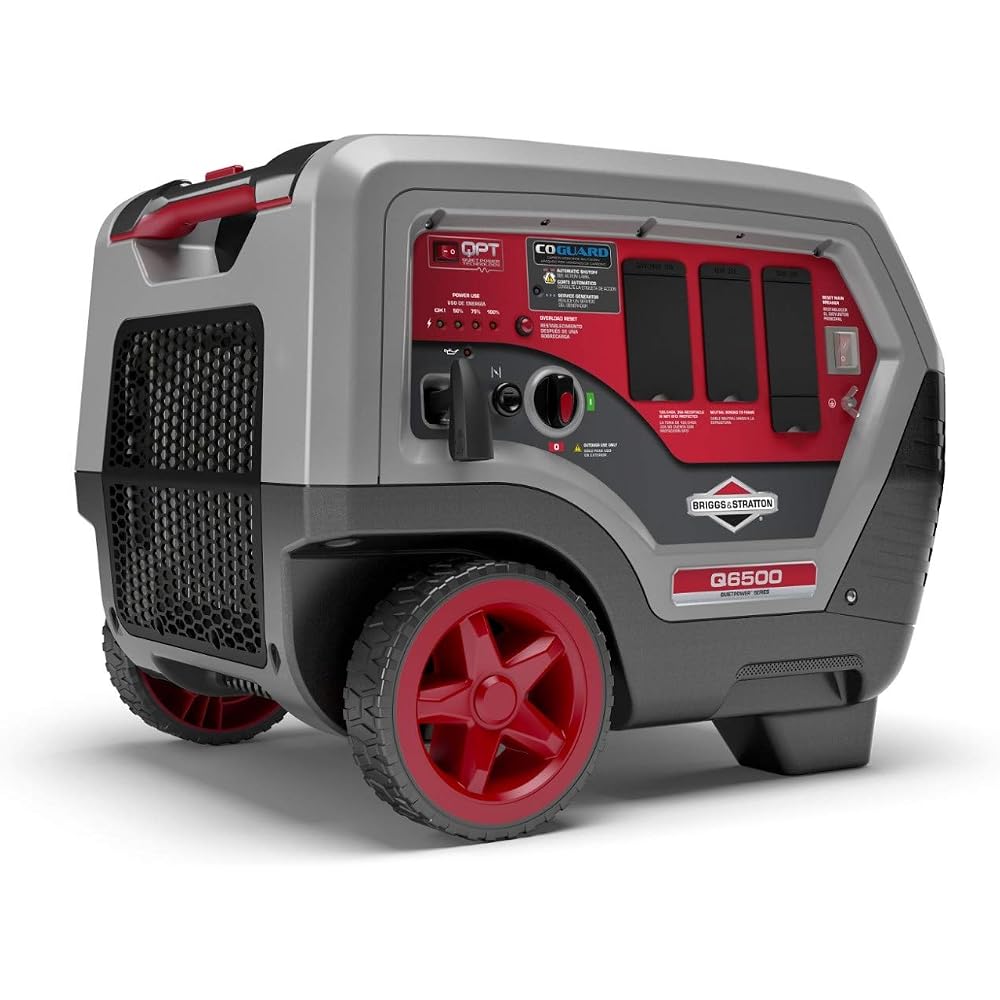
Briggs & Stratton Q6500 QuietPower Inverter Generator
- 5000W running / 6500W peak output
- gasoline
- Up to 14h @ light load runtime
- Re-confirmed Oct 2026
- 6500W starting watts / 5000W running watts
- gasoline
- 14h @ light load
- 139 lbs
As an Amazon Associate, we earn from qualifying purchases.
The Briggs & Stratton Q6500 is the quietest home backup pick in this roundup — an enclosed inverter generator producing 6,500 starting watts and 5,000 running watts. Inverter power means clean, stable electricity safe for computers and modern HVAC controls, plus an engine that throttles down at light loads for quieter operation and better fuel economy.
It includes CO Guard carbon-monoxide shutdown and a 120/240V locking outlet for transfer-switch connection. Runtime stretches to about 14 hours at light load. At 139 pounds it is the lightest full-size home backup unit here.
The tradeoff is power: 5,000 running watts covers essentials (fridge, furnace fan, sump pump, lights, electronics) but not central air or an electric range. For noise-sensitive neighborhoods and electronics-heavy backup, it is the right call.
| Running watts | 5,000 |
|---|---|
| Starting watts | 6,500 |
| Fuel type | Gasoline |
| Noise level | Not published in manufacturer specs we reviewed |
| Runtime | Approx. 14h at light load |
| Weight | Approx. 139 lbs |
Pros
- Quietest home backup pick here
- Inverter-clean power for electronics
- CO Guard protection
- Light at 139 lbs with 14h light-load runtime
Cons
- 5,000W won’t run central air
- Gasoline only
- Premium price per watt
Best fuel-flexible mid-size
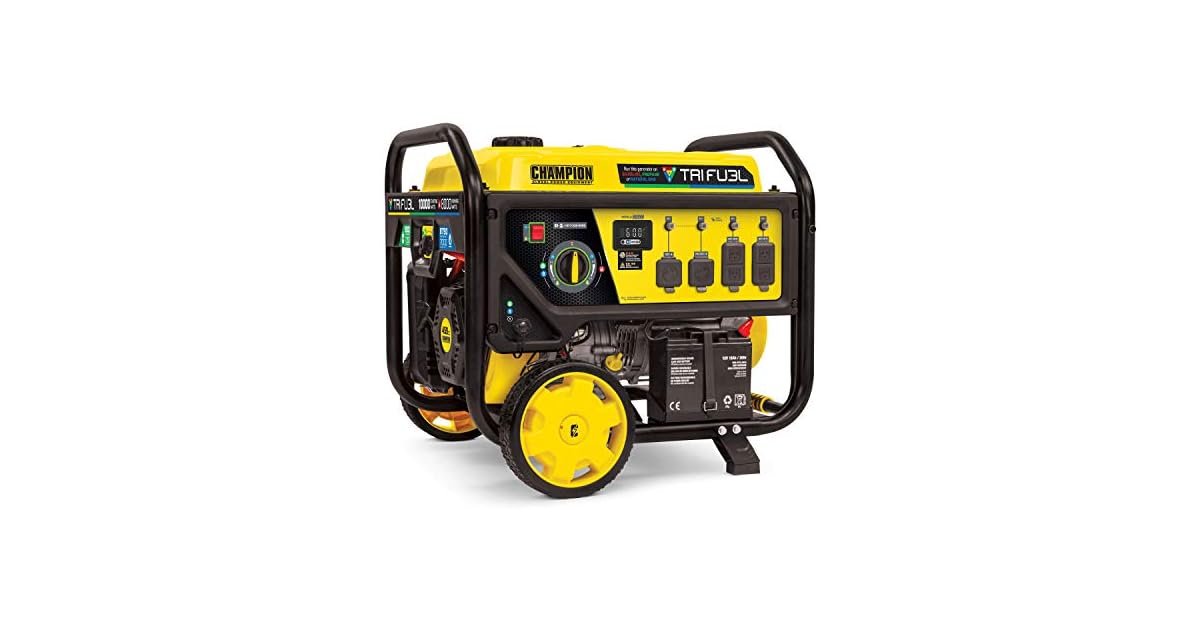
Champion 100416 10,000-Watt Tri-Fuel Generator
- 8000W running / 10000W peak output
- gasoline / propane / natural gas
- Up to up to 12.5h (gas) / 5h (propane) @ 50% runtime
- Re-confirmed Oct 2026
- 10000W starting watts / 8000W running watts
- gasoline / propane / natural gas
- Noise: 74 dBA
- up to 12.5h (gas) / 5h (propane) @ 50%
As an Amazon Associate, we earn from qualifying purchases.
The Champion 100416 brings tri-fuel flexibility to the mid-size class: 10,000 starting watts and 8,000 running watts on gasoline, with propane and natural-gas ratings for extended outages. It is EPA and CARB compliant for 50-state use, and CO Shield protection is standard.
Runtime runs about 12.5 hours on gasoline at half load, or 5 hours on propane — the propane number is a reminder to size your tanks for the outage you are planning for. At 207 pounds with a wheel kit, it is manageable for a permanent outdoor pad.
For buyers who want fuel choice without stepping up to the biggest, heaviest units, the 100416 hits the sweet spot of power, flexibility, and price.
| Running watts | 8,000 |
|---|---|
| Starting watts | 10,000 |
| Fuel type | Tri-fuel: gasoline / propane / natural gas |
| Noise level | 74 dBA |
| Runtime | Up to ~12.5h (gas) / 5h (propane) at 50% |
| Weight | Approx. 207 lbs |
Pros
- Tri-fuel flexibility at a mid-tier price
- CO Shield and 50-state compliance
- Good 12.5h gasoline runtime
- Broad Champion service network
Cons
- Only ~5h on propane at half load — plan tanks
- 74 dBA is loud
- 207 lbs needs a permanent spot
Lightest high-power inverter
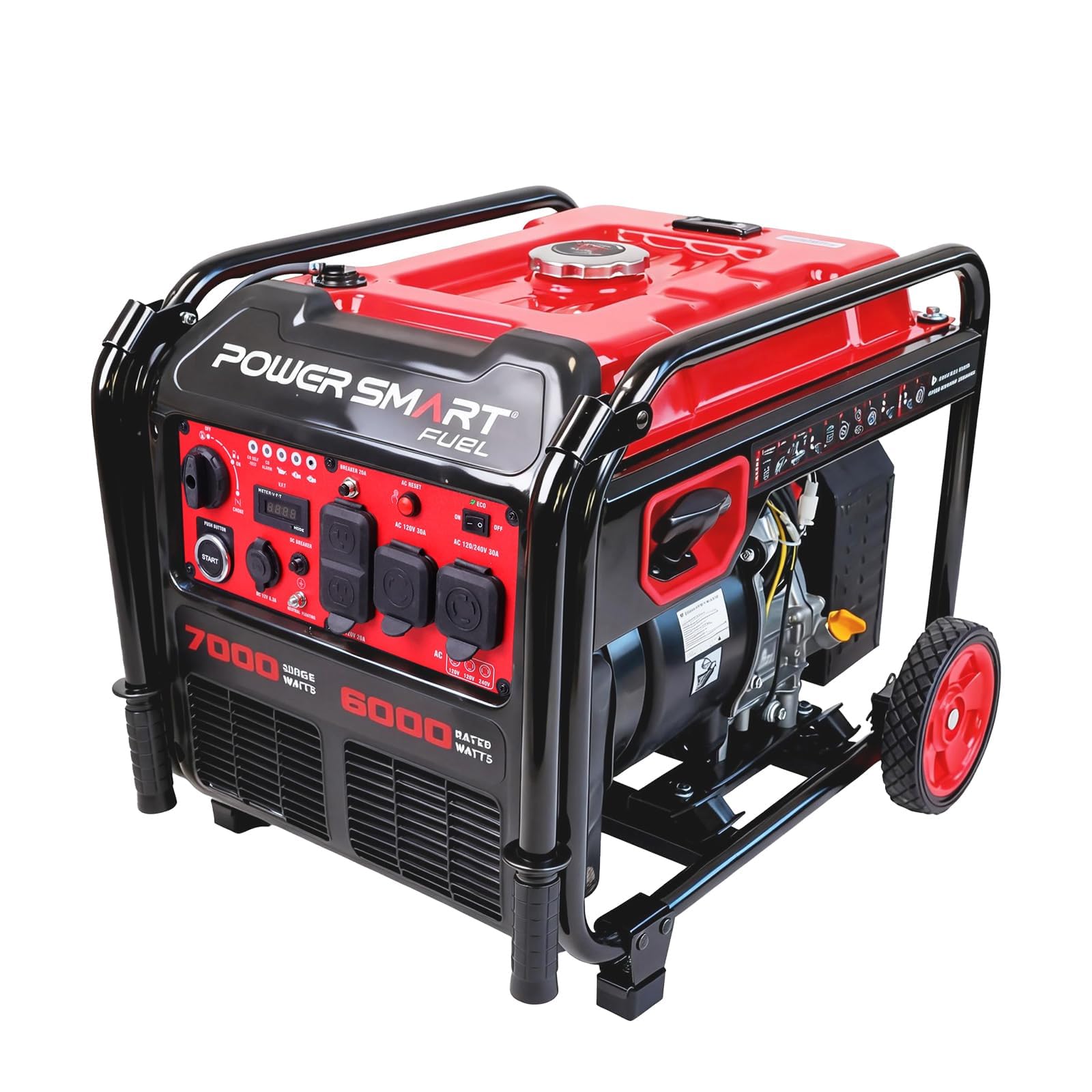
PowerSmart PS5055C Open-Frame Inverter Generator
- 6000W running / 7000W peak output
- gasoline
- Up to 6h @ 50% load runtime
- Re-confirmed Oct 2026
- 7000W starting watts / 6000W running watts
- gasoline
- Noise: 70 dB @ 23 ft
- 6h @ 50% load
As an Amazon Associate, we earn from qualifying purchases.
The PowerSmart PS5055C is a rare thing: an open-frame inverter generator with 120/240V 30A output, delivering big power at only about 113.5 pounds — roughly half the weight of conventional units with similar output. The 322cc engine and inverter design mean cleaner power and better fuel economy than a conventional open-frame.
An important spec honesty note: Amazon’s spec table for this model appears to invert the rated and surge figures, listing 7,000W as “rated” and 6,000W as “surge” — which is backwards from how generators are normally specified. We record it here as 7,000W starting / 6,000W running, which matches the manufacturer’s intent, but confirm the figures on the live listing before sizing your loads. Noise is rated 70 dB at 23 feet, and runtime is about 6 hours at half load.
For buyers who need 240V backup power but cannot manage a 200+ pound generator, the PS5055C is in a class of its own — just verify the specs on the listing first.
| Running watts | 6,000 (Amazon table appears to invert rated/surge — verify on listing) |
|---|---|
| Starting watts | 7,000 (see caveat above) |
| Fuel type | Gasoline |
| Noise level | 70 dB at 23 ft |
| Runtime | Approx. 6h at 50% load |
| Weight | Approx. 113.5 lbs |
Pros
- 120/240V inverter power at only ~113 lbs
- Cleaner power than conventional open-frame
- 70 dB noise rating published
- Much easier to move than rivals
Cons
- Amazon spec table appears to invert rated/surge — verify
- Shorter 6h runtime at half load
- Smaller brand with less service history
Home backup generators compared
*PowerSmart PS5055C: Amazon’s spec table appears to invert rated/surge wattage. We list 7,000W starting / 6,000W running per manufacturer intent — verify on the live listing.
| Product | Running watts | Fuel | Noise | Best for | |
|---|---|---|---|---|---|
| DuroMax XP12000HX Dual Fuel Portable Generator | 9,500 | Gas / propane | Not published | Whole-home portable | Check price |
| Westinghouse WGen11500TFc Tri-Fuel Portable Generator | 11,500 | Gas / LPG / NG | Loud | Fuel flexibility | Check price |
| DuroMax XP13000EH Dual Fuel Portable Generator | 10,500 | Gas / propane | Not published | Maximum portable power | Check price |
| Westinghouse WGen9500DF Dual Fuel Portable Generator | 9,500 | Gas / propane | Not published | Value whole-home | Check price |
| Generac GP8000E Portable Generator (Model 7715, COsense) | 8,000 | Gasoline | Not published | Trusted brand pick | Check price |
| Briggs & Stratton Q6500 QuietPower Inverter Generator | 5,000 | Gasoline | Quiet (inverter) | Quiet backup | Check price |
| Champion 100416 10,000-Watt Tri-Fuel Generator | 8,000 | Gas / LPG / NG | 74 dBA | Mid-size tri-fuel | Check price |
| PowerSmart PS5055C Open-Frame Inverter Generator | 6,000* | Gasoline | 70 dB | Lightweight 240V | Check price |
How do you choose the best generator for home backup in 2027?
Home backup shopping comes down to honest load math, safe connection, and fuel planning. Here is what we compared.
Size it to your loads — honestly
List everything you want running at once in watts, then add the highest motor starting load. Essentials-only backup (fridge, freezer, furnace fan, sump pump, lights, phones) typically needs 5,000–7,500 starting watts. Comfortable backup with a well pump or window ACs needs 9,000–12,000. Whole-home with central air needs 13,000+ or a standby system.
Do not size to the gasoline rating if you plan to run on propane or natural gas — output drops 10–25%. Our home sizing guide walks through real appliance numbers.
Choose your fuel strategy
Gasoline is powerful and available — until it is not. In long outages, stations run dry and stored gasoline goes stale in months. Propane stores indefinitely and burns cleaner; it is the best “buy it and forget it” emergency fuel. Natural gas, where available, is effectively unlimited. That is why dual fuel and tri-fuel models dominate home backup: gasoline for power, propane or gas for endurance.
See our dual fuel roundup and tri-fuel roundup for the full comparison.
Plan the electrical connection before you buy
A portable generator becomes home backup through a manual transfer switch or a breaker interlock kit — both installed by a licensed electrician, usually with a permit and inspection per local code and the NEC. The switch isolates your house from the grid so generator power cannot backfeed onto utility lines.
Match the generator’s outlet to the switch: 50A 14-50R for large loads, 30A L14-30R for essentials. Buy the generator first, then have the electrician size the switch to it — or better, plan both together.
Inverter vs conventional for home use
Conventional generators deliver the most watts per dollar and handle big motor loads well — the right choice for whole-home portable backup on a budget. Inverter generators (Briggs & Stratton Q6500, PowerSmart PS5055C) produce cleaner power for electronics, run quieter, and use less fuel at light loads — the right choice for noise-sensitive neighborhoods or electronics-heavy homes.
One caution: published noise ratings are measured at specific loads and distances. A “70 dB” generator at 23 feet is still clearly audible; plan placement with neighbors in mind.
Runtime and refueling reality
Check runtime at the load you will actually run, not the marketing number at 25% load. A 12-hour rating at quarter load can become 6 hours at half load. For multi-day outages, plan refueling: gasoline needs safe storage in approved containers (and rotation), propane needs enough tank capacity, and natural gas needs nothing at all.
Never refuel a hot generator — shut it down, let it cool, then refuel. Keep fuel stored away from the house and the generator’s operating position.
Warranty, maintenance, and longevity
A home backup generator should last 10–20 years. DuroMax’s 5-year warranty leads this roundup; most others offer 2–3 years. Just as important is maintenance you will actually do: oil changes (first at 20–30 hours, then every 100), air filter checks, and monthly test runs. A neglected generator is the one that fails to start in the storm — run yours for 15 minutes monthly under light load.
Home backup generator FAQs
What size generator do I need for home backup?
Essentials only (fridge, freezer, furnace fan, sump pump, lights): 5,000–7,500 starting watts. Comfortable backup adding a well pump or window ACs: 9,000–12,000 starting watts. Whole-home including central air: 13,000+ watts portable, or a 14–24kW standby system. When in doubt, add up your actual appliance wattages rather than guessing.
Can I plug a generator into my house through a wall outlet?
No — never. Plugging a generator into a wall outlet (backfeeding) energizes your home’s wiring backwards onto the grid, which can kill utility workers and destroy the generator when power returns. It is illegal in most jurisdictions. The safe methods are a transfer switch or an interlock kit, installed by a licensed electrician with proper permits.
How long can a portable generator run continuously?
As long as it has fuel and you maintain it — but plan oil changes. Most manufacturers recommend the first oil change after 20–30 hours of use, then every 100 hours. In a multi-day outage, that means an oil change roughly every 4 days of continuous running. Let the unit cool before servicing, and never refuel while hot.
Is dual fuel or tri-fuel better for home backup?
Both beat gasoline-only for backup. Dual fuel (gasoline + propane) is simpler and propane stores forever. Tri-fuel adds natural gas — unlimited runtime if you have a utility line. If you have natural gas service, tri-fuel is the best home backup fuel setup; if not, dual fuel gives you 90% of the benefit.
Do I need an inverter generator for home backup?
Not necessarily. Conventional generators handle most home loads fine, including modern furnaces and refrigerators. Inverter generators are worth it if you run sensitive electronics (home office, medical devices — consult the device maker), have noise-sensitive neighbors, or want better fuel economy at light loads. They cost more per watt.
How far from the house should a generator be?
At least 20 feet, with the exhaust pointed away from the house — and never in a garage, basement, crawlspace, or near open windows, even briefly. Carbon monoxide is odorless and can be lethal in minutes. Install battery-powered CO detectors on every floor of your home as a backup layer of protection.
Our verdict
The DuroMax XP12000HX is the best portable generator for home backup in 2027 for most buyers: 12,000W of dual fuel power, CO Alert, push-button start, and a 5-year warranty. If you have a natural gas line, the Westinghouse WGen11500TFc tri-fuel is the smarter long-outage pick. For quiet neighborhoods, get the Briggs & Stratton Q6500 inverter. And if weight is the constraint, the PowerSmart PS5055C delivers 240V inverter power at half the weight — just double-check the wattage specs on the live listing first.
How we researched: We did not perform hands-on testing. We compared manufacturer specifications for eight home backup generators verified on Amazon in October 2026, cross-checked fuel types and model numbers against brand listings, and reviewed aggregated owner feedback on outage reliability and real-world runtime. We flagged the PowerSmart PS5055C’s apparently inverted spec-table wattage explicitly rather than silently correcting it. Prices and availability change frequently — verify the live listing before buying.

Related Guides
Best Time to Buy a Generator: 2027 Price & Sales Calendar
The best time to buy a generator is Black Friday, with 10-30% off typical. 2027 price and sales calendar: clearance windows, pre-season deals, and timing tips.

Portable vs Standby Generator: Cost, Runtime, Maintenance & Pros/Cons
Portable vs standby generator: $1,100-$5,000 vs $9,000-$20,000+ installed. Compare costs, runtime, maintenance, pros and cons, and which type wins for you.
Jackery vs EcoFlow vs Bluetti vs Anker: Which Power Station Brand Is Best?
Jackery vs EcoFlow vs Bluetti vs Anker power stations compared on battery chemistry, charging speed, cycle life, and value. Includes the NMC vs LiFePO4 warning.