


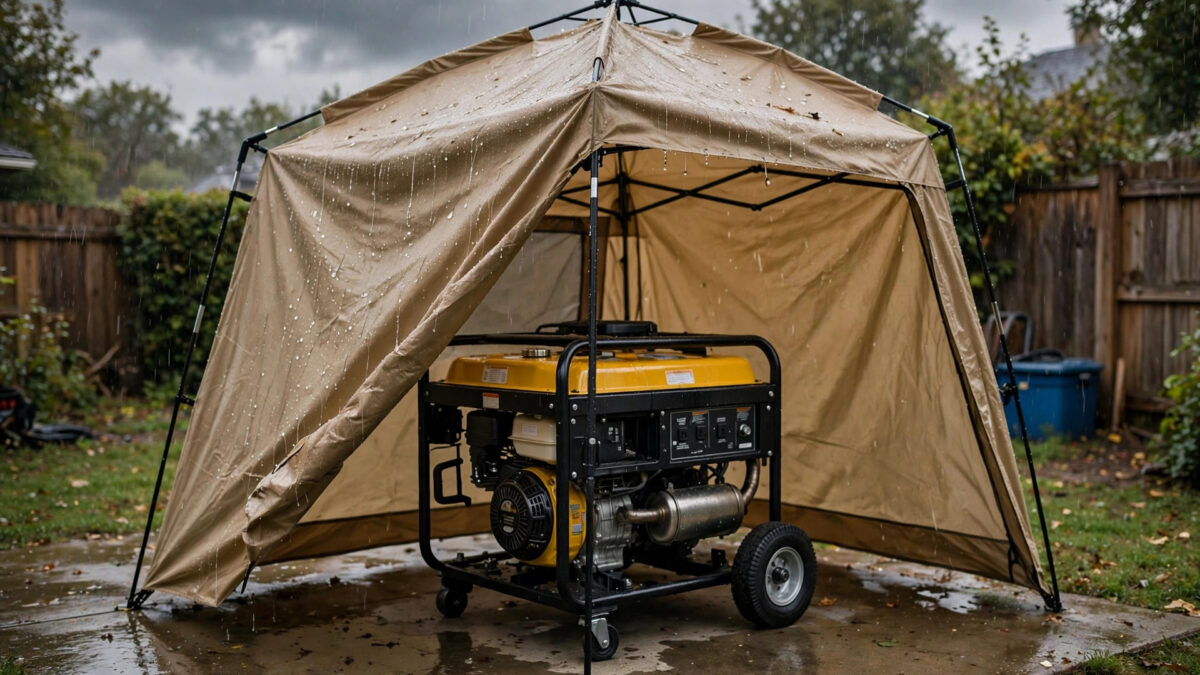
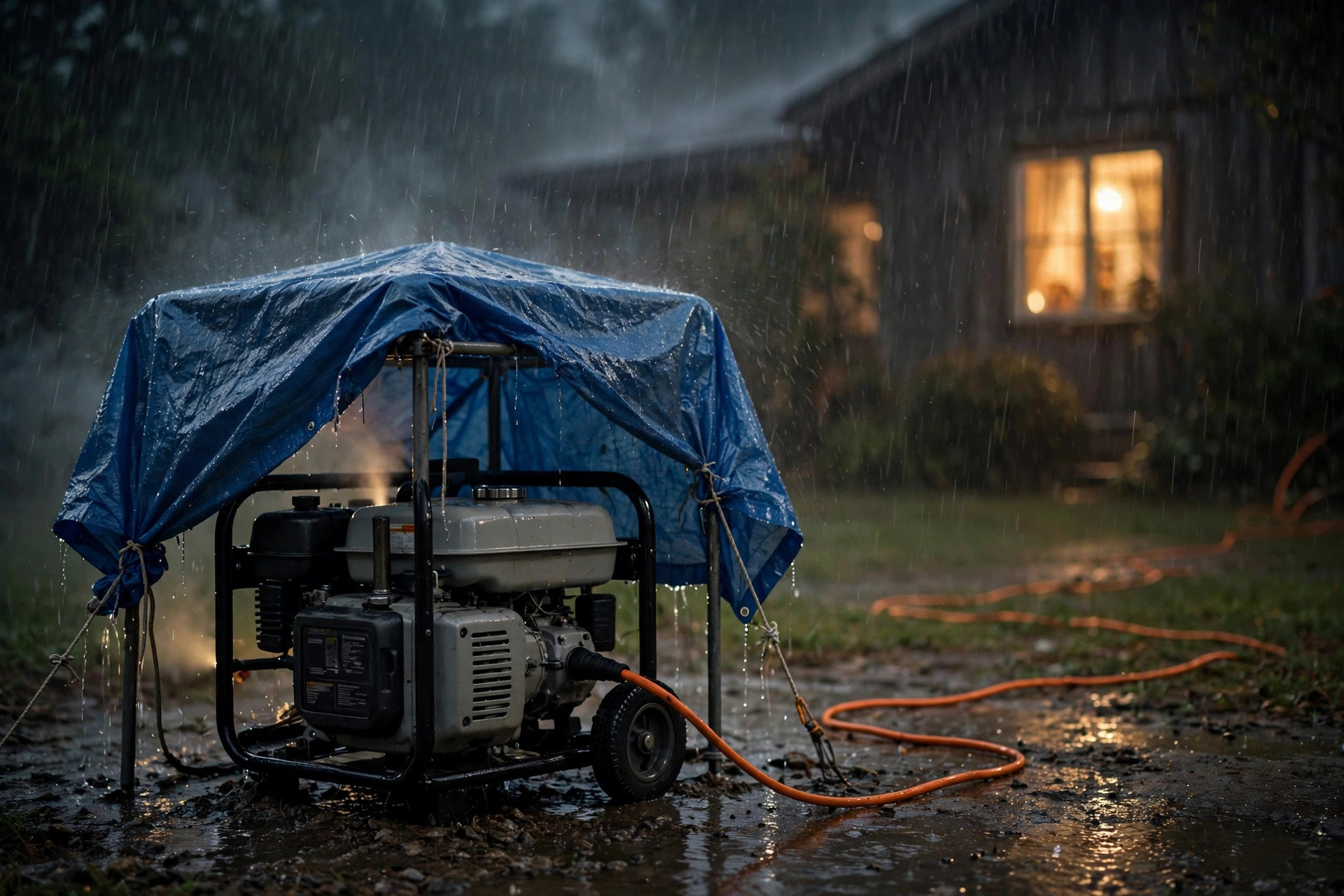
A generator is only useful if it survives the storm you’re running it in. I learned that the hard way years ago during a two-day outage, when rain worked its way into my old open-frame unit’s outlets and the breaker tripped at 2 a.m. That night taught me something simple: a good generator cover isn’t an accessory. It’s insurance.
After comparing specs, reading hundreds of owner reports, and watching how these covers hold up in real hurricanes, here’s the short answer: the GenTent 10k Universal Kit is the best generator running cover you can buy in 2027. It’s independently lab-tested against 70 mph winds and 12 inches of rain per hour, and it mounts to almost any open-frame generator without tools. If you want the best value instead, the IGAN running tent protects the same class of generators for roughly half the money.
Key takeaways
- Running covers and storage covers are different products. Only a running-rated cover is safe to use with the engine on.
- The GenTent 10k is the only cover in this list with independent lab testing (70 mph wind, 12″/hr rain, 18″ snow load).
- IGAN’s tent covers more generator sizes for less money, with a beefier 9-pound tarp and a 3-year warranty.
- Champion’s Storm Shield is the same GenTent engineering, tuned to fit Champion inverters from 2,000 to 8,500 starting watts.
- Measure your generator’s frame perimeter before ordering — a cover that’s too small is useless, and one that’s too big flaps in the wind.
Quick picks
- Best overall: GenTent 10k Universal Kit — lab-tested, NFPA flame-retardant, fits most open-frame generators.
- Best value: IGAN Running Tent (3,500–12,000W) — heavy 9-lb tarp, stainless frame, 3-year warranty.
- Best for Champion inverters: Champion 100603 Storm Shield — GenTent build, tailored fit for 2,000–8,500W Champion inverters.
- Best for small inverters: IGAN Small Inverter Tent — made for 1,000–2,300W enclosed inverters like the Honda EU2200i.
- Best for Westinghouse: Westinghouse WGenTent — fits Westinghouse open-frame units up to the 11,500 series.
- Best budget storage cover: Classic Accessories Veranda — solid weather protection for parked generators, not for running.
Best overall
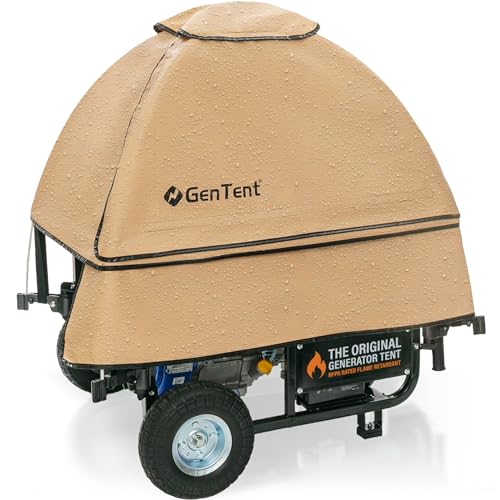
GenTent 10k Universal Kit
- Run While Running: Yes — engineered for it
- Weight: 5.5 lb
- Fits: Open-frame generators, 70″–104″ frame perimeter
- Material: Dual-coated marine vinyl, rip-stop, welded seams
As an Amazon Associate, we earn from qualifying purchases.
The GenTent is the original generator running cover, and it’s still the one everything else gets measured against. What sold me isn’t the marketing — it’s the testing. GenTent paid an independent lab to rate the canopy: 70 mph forecast winds, 12 inches of rain per hour, and an 18-inch snow load. No other cover in this roundup publishes numbers like that. When the stakes are a flooded control panel in the middle of an outage, tested beats claimed.
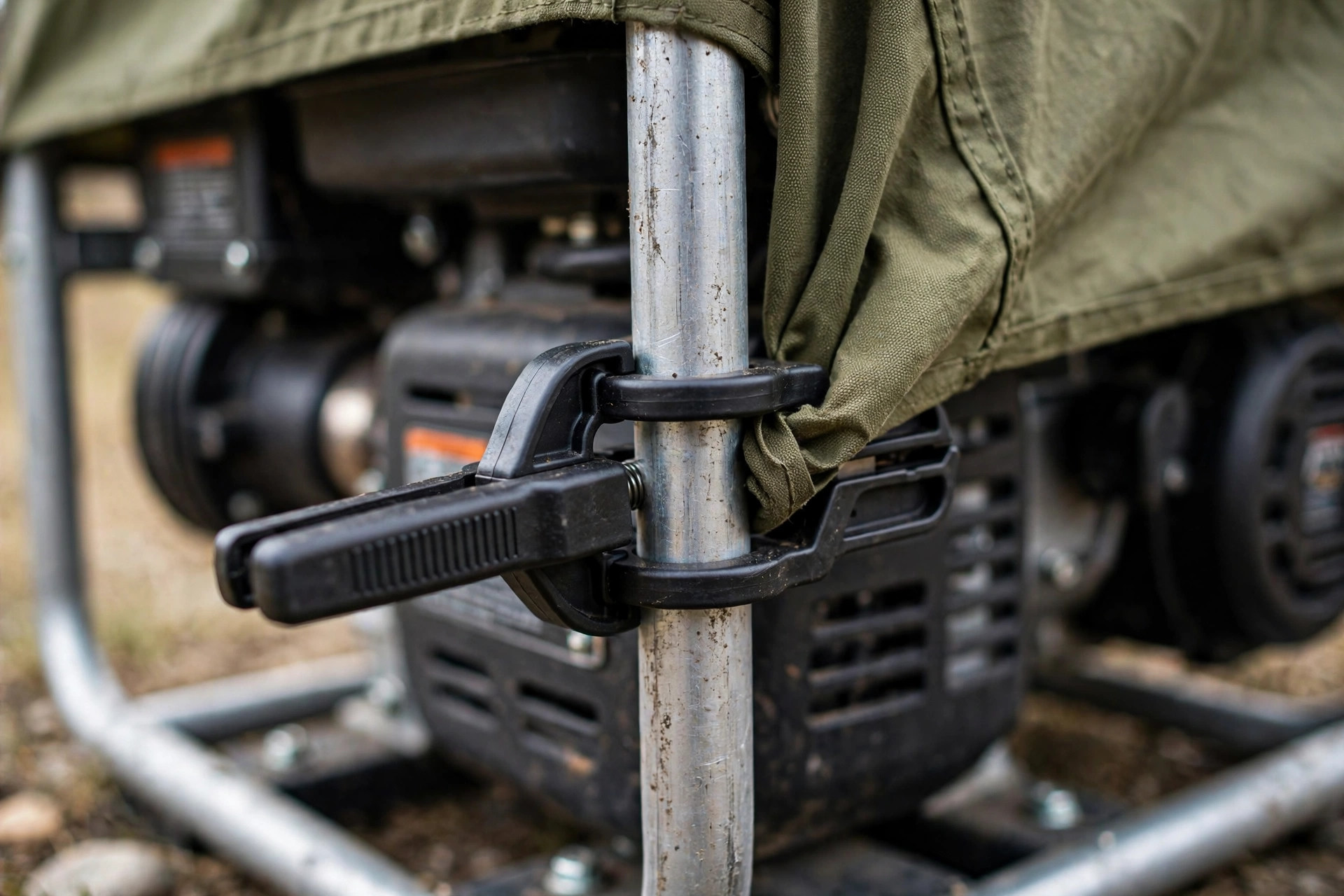
It fits open-frame generators with a frame perimeter of roughly 70 to 104 inches — that covers the vast majority of 3,500W to 10,000W portables from Champion, Westinghouse, DuroMax, and Generac. Installation is genuinely tool-free: self-attaching clamps grip the vertical frame posts, fiberglass rods form the frame, and the dual-coated marine vinyl canopy stretches over with welded seams. There’s a weather-tight refuel door, so you can top off the tank without pulling the whole thing off. The NFPA 701 flame-retardant rating is a detail I appreciate more every year, since the canopy sits inches from a hot muffler.
Pros
- Independently lab-tested wind, rain, and snow ratings — unique in this category
- NFPA 701 flame-retardant canopy for safety near hot exhaust
- Tool-free clamp mounting; refuel without removing the cover
- Fits thousands of open-frame generator models
Cons
- Priciest running cover in this roundup ($160–$200)
- Only 1-year warranty
- Tan color shows dirt over time
Best value
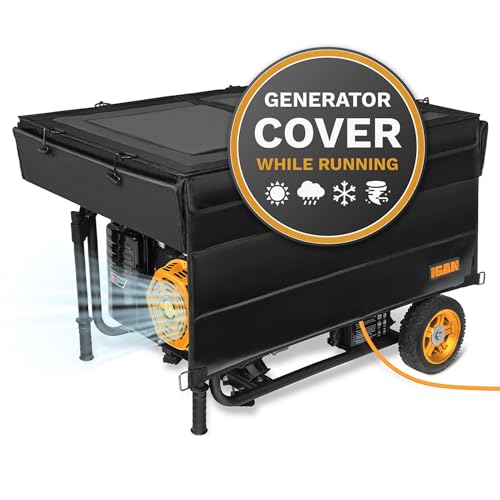
IGAN Generator Running Tent (3,500–12,000W)
- Run While Running: Yes — suspended-flap design
- Weight: 9 lb (cover)
- Fits: Frame generators, 3,500W–12,000W
- Material: Heavy-duty waterproof tarpaulin, 9 lb
As an Amazon Associate, we earn from qualifying purchases.
If the GenTent is the lab-coat option, the IGAN is the work-truck option. The first thing you notice is the weight: this tarp weighs 9 pounds, about 1.5 times what most competing tents weigh. That mass is deliberate — the thick, filler-stiffened fabric resists billowing in gusts instead of flapping like a sail.
The design is clever in a way that took me a minute to appreciate. The patented flaps hang from the top metal ring while the generator runs (everything except the electrical-panel side), so heat and exhaust escape freely while the outlets stay dry. When you’re done, drop all the flaps and it becomes a storage cover. The stainless-steel frame (5/8-inch tubing) clamps directly to your generator’s top frame with no tools, and the big refuel opening means you don’t disassemble anything to add gas. It fits most frame-style generators from 3,500 to 12,000 watts, and IGAN backs it with a 3-year warranty — triple the GenTent’s.
Pros
- Excellent price-to-protection ratio ($90–$130)
- Heavy 9-lb tarp resists wind billowing
- 3-year warranty — best in this roundup
- Doubles as a storage cover
Cons
- No independent lab wind/rain ratings published
- Heavier to handle and store than the GenTent
- Not designed for fully enclosed inverter generators
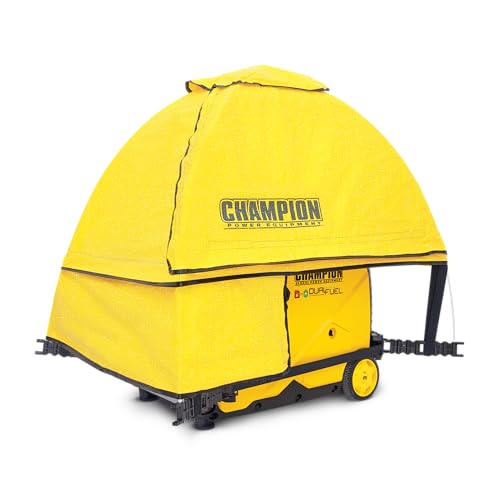
Best for Champion inverters
Champion 100603 Storm Shield
- Run While Running: Yes — designed for it
- Warranty: 1 year + free lifetime tech support
- Fits: Champion closed-frame inverters, 2,000–8,500 starting watts
- Material: NFPA-701 flame-retardant vinyl, RF-welded seams
As an Amazon Associate, we earn from qualifying purchases.
Here’s a detail most shoppers miss: the Champion Storm Shield is built by GenTent. Same NFPA-rated waterproof vinyl, same RF-welded seams, same 70 mph / 12-inches-per-hour storm ratings — but engineered specifically for Champion’s closed-frame inverter line, from 2,000 to 8,500 starting watts. If you own a portable inverter generator like the Champion 201319 or the 2500-watt dual-fuel, this is the running cover that actually fits the way it should.
The self-attaching design goes on in three steps — strap it, frame it, cover it — with high-strength clamps and fiberglass rods that connect straight to the inverter. The adjustable omni-fit electrical panel apron keeps the outlets dry without choking cooling airflow, and the big refuel door lets you add gas in seconds. You also get Champion’s support network behind it: 1-year warranty and free lifetime technical support.
Pros
- GenTent engineering with a tailored Champion fit
- Same severe-weather ratings as the GenTent 10k
- Champion support network and service centers
- Maintains natural cooling airflow and mobility
Cons
- Only fits Champion closed-frame inverters
- Costs more than the universal IGAN ($180–$220)
- Won’t fit open-frame Champion models
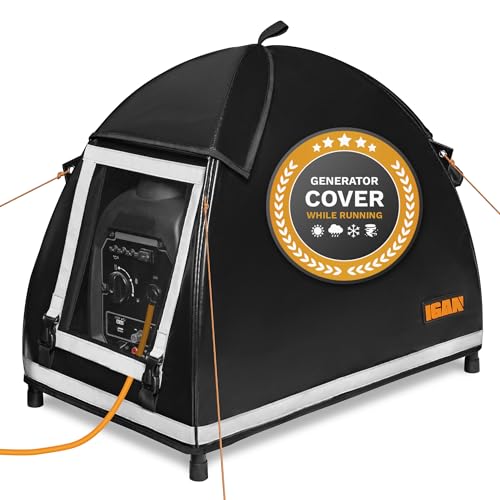
Best for small inverters
IGAN Small Inverter Generator Tent (1,000–2,300W)
- Run While Running: Yes — exhaust port and TPU panel window
- Fits: Fully enclosed inverters, 1,000W–2,300W
- Material: Heavy-duty waterproof tarpaulin
- Anchoring: 4 stakes + ropes, non-slip feet
As an Amazon Associate, we earn from qualifying purchases.
Small enclosed inverters — the Honda EU2200i, Yamaha EF2200iS, and their many clones — have a different problem than big open-frame units. They’re fully encased, so a generic tent either swallows them whole or blocks the exhaust. IGAN built this version specifically for 1,000 to 2,300-watt inverters, and the details show it.
The sloped rear canopy extends outward to keep rain off while giving exhaust a natural exit path. A large transparent TPU window covers the control panel, so you can check status lights without opening anything. You can start, plug in, and refuel without removing the cover — the features that matter when it’s pouring and you’re standing there in a rain jacket. Four tent stakes and ropes, a metal frame base with 7/8-inch tubes, and non-slip rubber feet keep it planted. At around $70–$100, it’s cheap insurance for a $1,000-plus inverter.
Pros
- Tailored fit for small enclosed inverters — no guesswork
- Transparent panel window for checking status while running
- Start, plug in, and refuel without removing the cover
- Affordable at $70–$100
Cons
- Only fits fully encased inverters up to 2,300W
- Smaller canopy catches more wind than full-size tents
- Stakes required in serious weather
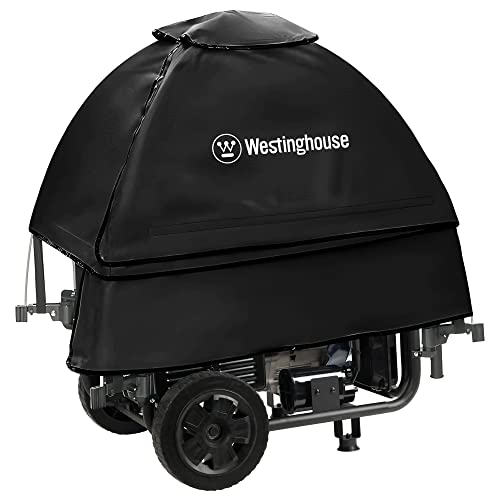
Best for Westinghouse generators
Westinghouse WGenTent
- Run While Running: Yes
- Weight: 4.4 lb
- Fits: Westinghouse open-frame up to 11,500 series; universal 80″–107″ perimeter
- Weather Rating: 12″ rain/day, 18″ snow/day, 70 mph wind
As an Amazon Associate, we earn from qualifying purchases.
Westinghouse sells a lot of open-frame dual-fuel generators — the WGen9500DF is one of the most popular home-backup units in the country — so it makes sense they’d offer their own running cover. The WGenTent is rated for the same severe-weather benchmarks as the GenTent line: up to 12 inches of rain per day, 18 inches of snow per day, and 70 mph winds.
Fit-wise, it handles Westinghouse open-frame generators up to the 11,500 series, plus universal open-frame units with 80- to 107-inch perimeters. Setup is tool-free, the top is vented for cooling airflow, and there’s a dedicated refuel door for quick access in bad weather. At 4.4 pounds it’s light enough to keep in the generator’s accessory box. If your generator wears a Westinghouse badge, buying the cover from the same company removes all fit anxiety.
Pros
- Guaranteed fit for Westinghouse open-frame generators
- Full severe-weather rating set
- Lightweight at 4.4 lb; vented top for airflow
- Refuel door for quick access
Cons
- Optimized for Westinghouse — check perimeter for other brands
- Fewer owner reviews than GenTent or IGAN
- Costs more than the universal IGAN ($140–$180)
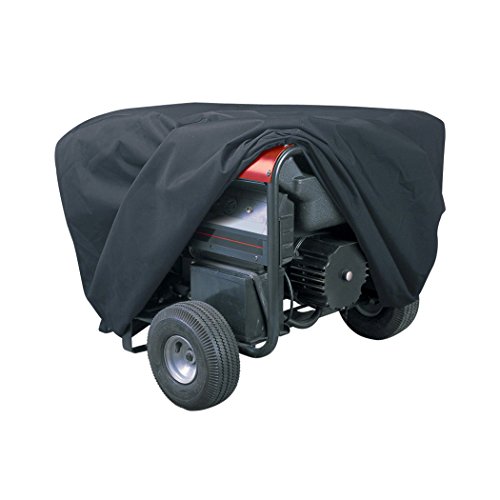
Best budget storage cover
Classic Accessories Veranda Generator Cover
- Run While Running: No — storage only
- Fits: Generators up to ~7,000W (31.25″ x 23″ x 19.25″)
- Material: Gardelle woven polyester, water-resistant backing
- Straps: Buckle straps + vents
As an Amazon Associate, we earn from qualifying purchases.
Not everyone needs a running tent. If your generator lives in a garage, shed, or under a carport between outages, a quality storage cover keeps dust, UV, and bird droppings off it for a fraction of the price. The Classic Accessories Veranda is the storage cover I’d actually buy: the Gardelle woven-polyester fabric has a water-resistant laminated backing, and the whole thing is cut to fit generators up to about 7,000 watts (31.25″ x 23″ x 19.25″).
Details matter on storage covers, and Classic Accessories gets them right: buckle straps that cinch it down, air vents to cut condensation and wind lofting, and a design that doesn’t trap moisture against the frame. The critical warning: this is not a running cover. Never run your generator with a storage cover on — you’ll trap heat and carbon monoxide, and that’s how people get hurt.
Pros
- Excellent weather and UV protection for parked generators
- Vents reduce condensation and wind lofting
- Quality fabric from an established cover brand
- A fraction of a running tent’s price
Cons
- Must be removed before starting the generator
- One size — measure your unit first
- Water-resistant, not fully waterproof
Generator covers compared
| Product | Fits | Run while running | Material | Best for |
|---|---|---|---|---|
| GenTent 10k Universal | Open-frame, 70″–104″ perimeter | Yes | Marine vinyl, NFPA 701 | Best overall, storm-proven |
| IGAN Running Tent | Frame, 3,500–12,000W | Yes | 9-lb tarpaulin | Best value |
| Champion Storm Shield | Champion inverters 2,000–8,500W | Yes | NFPA vinyl, RF-welded | Champion owners |
| IGAN Small Inverter Tent | Enclosed inverters 1,000–2,300W | Yes | Waterproof tarpaulin | Honda/Yamaha-class inverters |
| Westinghouse WGenTent | Westinghouse open-frame to 11,500 | Yes | Severe-weather fabric | Westinghouse owners |
| Classic Accessories Veranda | Up to ~7,000W | No — storage only | Gardelle polyester | Budget storage protection |
How to choose a generator cover
Running cover vs. storage cover: know which you need
This is the single most important decision. A running cover is engineered with ventilation paths, exhaust clearance, and heat-tolerant materials so the generator operates safely underneath it. A storage cover is a fitted tarp that must come off before you pull the starter cord. Running a generator under a storage cover traps carbon monoxide and heat — it’s genuinely dangerous. If your generator runs during storms (and that’s the whole point of owning one), buy a running cover. If it only needs dust and UV protection in the garage, save money with a storage cover.
Measure before you buy
Covers are sold by fit, not by generator wattage alone. For open-frame units, measure the frame perimeter: length plus width, doubled, excluding wheels and handles. Compare that number against the cover’s rated range (for example, 70″–104″ for the GenTent 10k). For enclosed inverters, check the manufacturer’s compatibility list. A cover that’s an inch too small won’t close; one that’s too loose becomes a parachute in wind.
Material matters more than marketing
Look for specifics: denier ratings, welded (not just stitched) seams, and flame-retardant ratings like NFPA 701 when the fabric sits near exhaust. Dual-coated marine vinyl (GenTent) and heavy tarpaulin (IGAN) both work; thin single-layer polyester with a spray-on coating does not survive multiple seasons. If the listing doesn’t name the material, that’s your answer about its quality.
Wind stability
The best-engineered cover is worthless if it blows off at 40 mph. Prioritize covers with published wind ratings, rigid frames (fiberglass rods or steel tubing), and real anchoring — clamps that grip the frame, not just elastic hems. Stakes and guy ropes are a plus for open yards. Heavy fabric helps too; the IGAN’s 9-pound tarp billows far less than featherweight alternatives.
Ventilation and CO safety
A running cover must never trap exhaust. Good designs keep the exhaust side open, suspend flaps away from intake vents, and use flame-retardant materials near hot surfaces. And the cover doesn’t change the fundamental rule: the generator still runs outdoors, at least 20 feet from the house, with the exhaust pointed away. No cover makes indoor or garage operation safe. Pair your setup with battery CO detectors in the house — cheap insurance that has nothing to do with the cover.
Warranty
Covers live outside in UV and storms; they wear out. A 3-year warranty (IGAN) signals the manufacturer expects the fabric and frame to last. One year is the industry norm. Read what’s covered — UV degradation is the most common failure, and some warranties exclude it.
Frequently asked questions
Can I run my generator with a cover on?
Will a running cover void my generator’s warranty?
What size generator cover do I need?
Are generator tents waterproof enough for hurricanes?
Can I leave the cover on for storage?
Our verdict
Buy the GenTent 10k Universal Kit if you want the most proven storm protection available — it’s the only cover here with independent lab testing, and that matters when the weather turns ugly. Buy the IGAN running tent if you want 90% of that protection for about half the money plus a longer warranty. Champion inverter owners should get the Storm Shield for the tailored fit, and small-inverter owners the IGAN small tent. For a generator that never runs in the rain, the Classic Accessories Veranda is all the protection you need. If you haven’t picked your generator yet, start with our best portable generators guide, and if you’re wiring one into your house, read up on transfer switches before the next outage.
How we researched this: We compared published specifications, fitment ranges, materials, and warranty terms across the leading generator covers, cross-checked against hundreds of owner reviews on Amazon and generator forums, and weighted independent lab testing (where available) over marketing claims. We did not receive test units from manufacturers; assessments are based on spec comparison and documented owner experience.

Related Guides
Westinghouse iGen4500DF Review: The Dual-Fuel Inverter to Beat in 2027
Westinghouse iGen4500DF review: 4,500W dual-fuel inverter, 52 dBA, remote start, RV-ready. We test the specs, noise, and value against Honda in 2027.

Champion vs Generac Generators: Which Brand Is Better in 2027?
Champion vs Generac: Champion wins portable value, Generac wins standby. We compare lineups, reliability, safety tech, and support to pick the right brand.
Inverter vs Conventional Generators: Which Should You Buy in 2027?
Inverter vs conventional generators: inverters win on noise, fuel use and clean power; conventional wins on watts per dollar. Here's how to choose in 2027.
1 Comment