


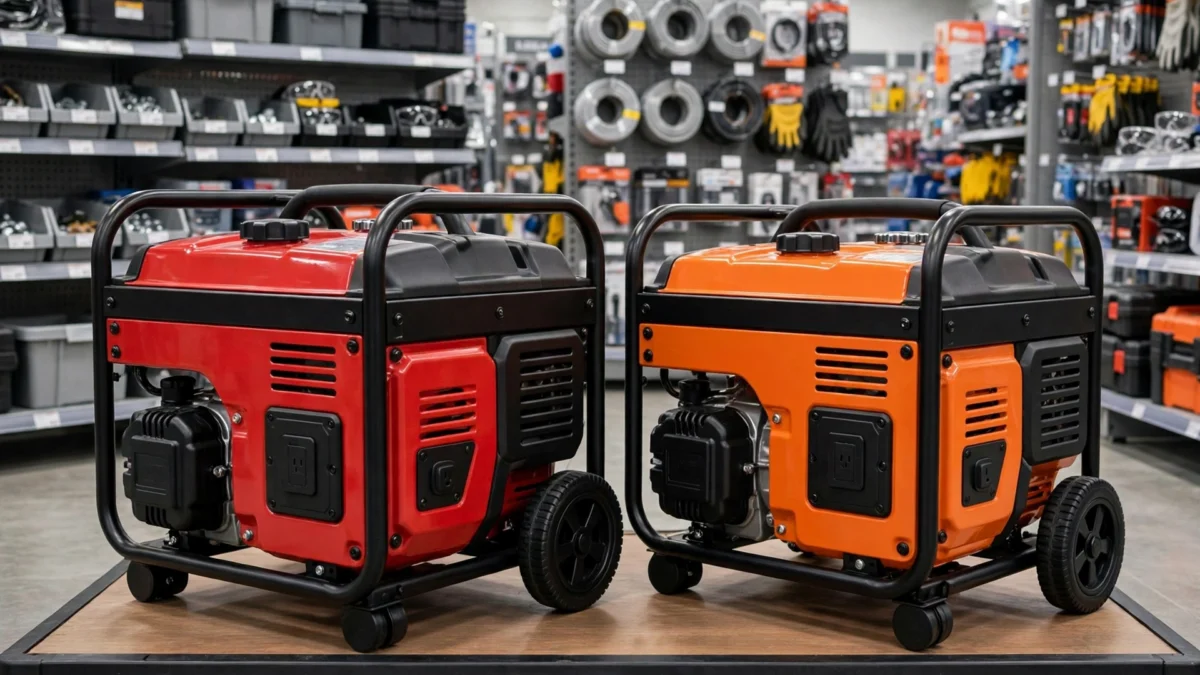
Champion and Generac are the two names you’ll see most when shopping for a generator, and they represent two different philosophies. Champion is the value leader: more features per dollar than anyone else in portable generators, with a support network that punches above its price. Generac is the standby giant: the company that defined the home standby category, with a portable lineup built around job-proven workhorse designs.
Here’s the direct answer: buy Champion if you want the most generator for your money — especially in dual-fuel and inverter models. Buy Generac if you’re shopping for a whole-home standby system, or if you want a traditional open-frame portable from the brand with the deepest service network in the business. For most portable-generator buyers in 2027, Champion wins on value. For standby, Generac wins on ecosystem.
I’ve compared the two brands across the six things that matter — portable lineup, standby lineup, value, reliability, safety tech, and support — with real models on each side so you’re comparing products, not reputations.
Key takeaways
- Champion wins on value: dual-fuel and CO Shield come standard on models costing hundreds less than competitors.
- Generac wins on standby: the Guardian series and its dealer/installer network are the industry standard.
- Both brands now include CO auto-shutoff across their lineups — it’s not a differentiator anymore.
- Reliability is close in portables; Generac’s edge is service depth, Champion’s edge is price.
Champion vs Generac at a glance
| Factor | Champion | Generac | Winner |
|---|---|---|---|
| Portable value | Best watts-per-dollar; dual fuel standard on many models | Solid but priced higher for equivalent watts | Champion |
| Standby systems | Smaller lineup (8.5–12.5kW) | Industry leader (whole range + dealer network) | Generac |
| Inverter selection | Wide: 2,000W–8,500W dual-fuel inverters | Narrower portable inverter range | Champion |
| CO safety tech | CO Shield across the lineup | COsense across the lineup | Tie |
| Support network | 3-yr warranty, lifetime tech support | Deepest dealer/service network in the US | Generac |
| Open-frame workhorses | Strong (tri-fuel 15kW flagship) | Strong (GP series, PowerRush) | Tie |
Portable generators: Champion’s home turf
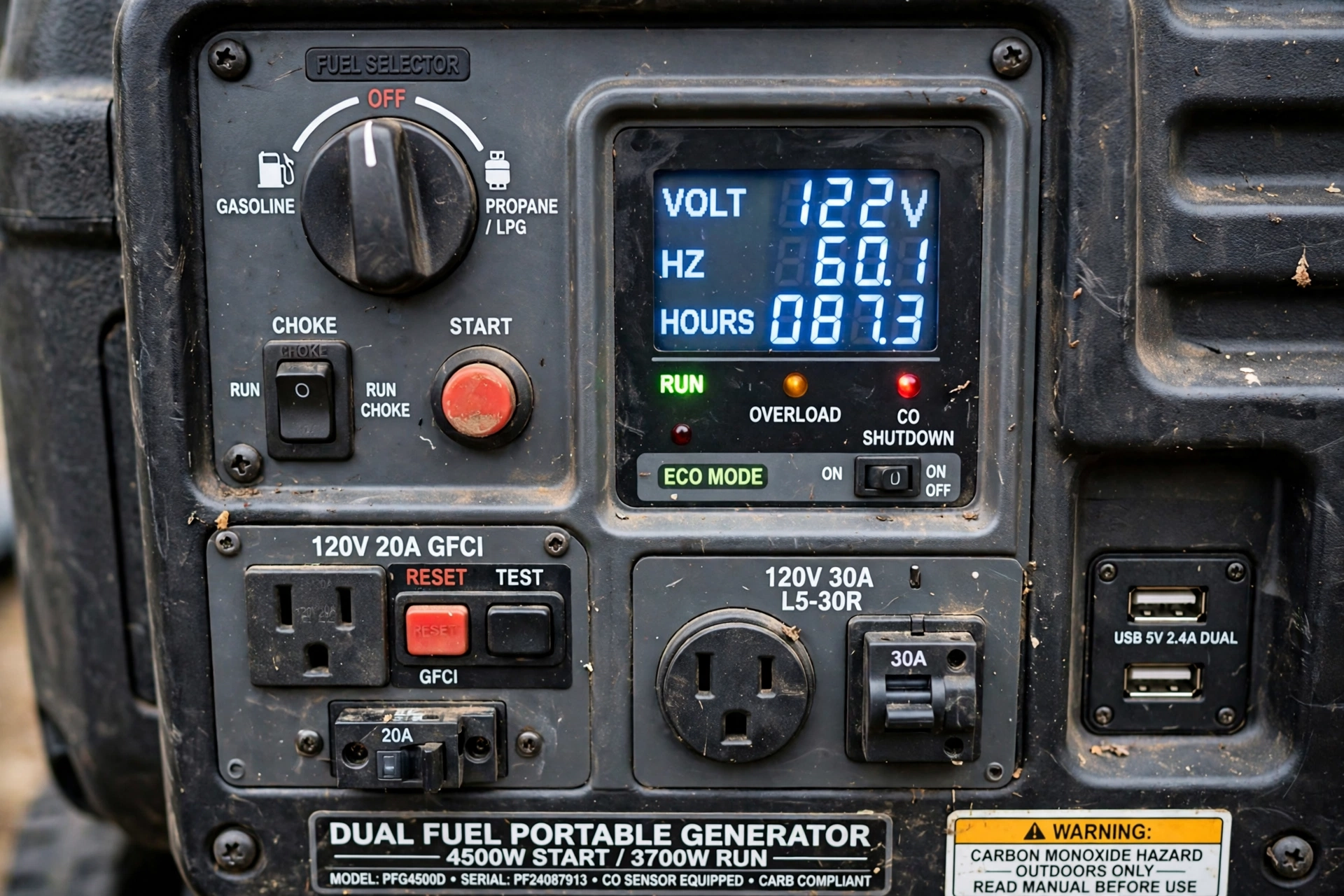
This is where Champion built its reputation, and in 2027 it still owns the value end. The pattern is consistent: take a popular size, add dual fuel, add CO Shield, add electric start — and price it hundreds below the equivalent Honda or Generac. The Champion 4500-watt dual-fuel inverter is the textbook example: 4,500 starting watts, dual fuel, CO Shield, 61 dB, for roughly half what a comparable Honda costs.
Generac’s portable lineup is built differently — around the GP series open-frame workhorses like the GP6500E (8,125 starting watts, COsense, PowerRush for hard-starting motors). These are excellent traditional generators: simple, powerful, and backed by Generac’s service network. But they’re priced like it, and dual fuel is less common across the range than on Champion’s.
For a deeper look at the portable market beyond these two, our best portable generators roundup covers the full field.
Whole-home standby: Generac’s kingdom
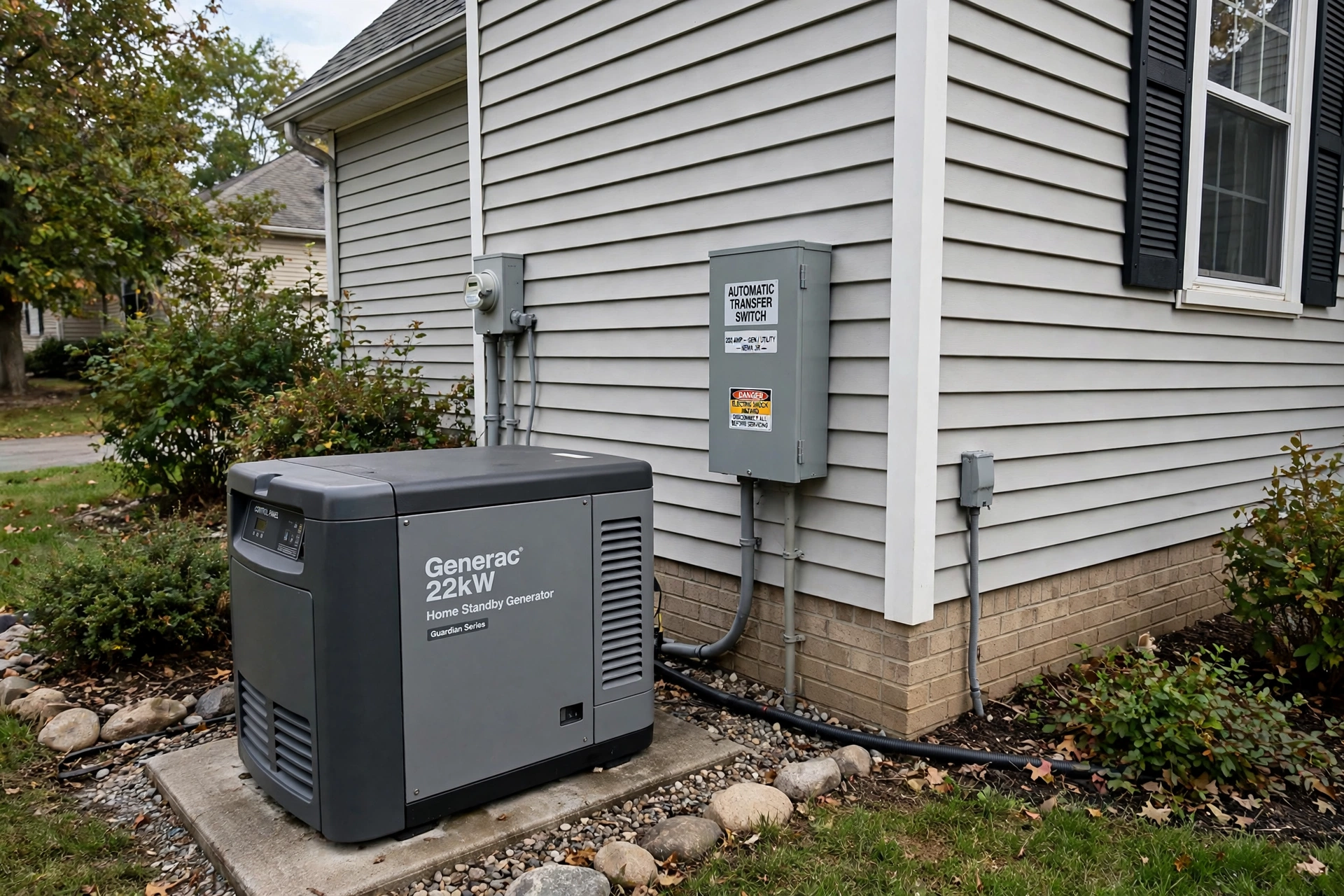
This one isn’t close. Generac invented the modern residential standby market and still leads it — the Guardian series, the dealer network that sells and installs them, the Mobile Link monitoring. When someone says “I want a Generac,” they usually mean a standby unit that starts itself when the power fails.
Champion does sell standby units (8.5kW and 12.5kW models with transfer switches), and they’re priced aggressively. For a smaller home on a budget, they’re worth a look. But the lineup is narrow, the installer network is thinner, and the ecosystem (monitoring, service plans, parts availability over 10+ years) isn’t at Generac’s level. If standby is the plan, our portable vs. standby comparison lays out the full decision — and Generac is the default answer on the standby side.
One thing standby owners learn fast: the maintenance schedule doesn’t pause. Generac’s own scheduled maintenance kit (oil, filter, plugs, air filter) is the genuine article for Guardian units, and staying on schedule is what keeps the warranty valid. Factor a yearly kit and an hour of your time — or a service contract — into any standby budget, regardless of brand.
Dual fuel and tri-fuel: Champion leads
Champion made dual fuel mainstream — at one point they had more dual-fuel models than everyone else combined, and the habit stuck. Their 15,000-watt tri-fuel flagship (gasoline/propane/natural gas, CO Shield, 50-amp outlet) shows how far they’ve taken it: whole-home portable power with fuel flexibility that used to require aftermarket conversion kits.
Generac’s portables are mostly gasoline-only, with dual fuel appearing on select models. For outage duty — where propane’s indefinite shelf life and natural gas’s unlimited runtime matter enormously — that’s a real gap. If fuel flexibility is a priority, Champion’s lineup is deeper.
For the full fuel-system debate, see our dual-fuel vs. tri-fuel guide.
Warranty fine print: read before you buy
Both brands advertise 3-year limited warranties on portables, but the details differ. Champion’s covers residential use for 3 years with free lifetime technical support — call them in year five with a carburetor question and they’ll still walk you through it. Generac’s portable warranty is 3 years residential / 1 year commercial, backed by the dealer network for warranty claims.
Two things void warranties faster than anything: running the generator indoors or in an enclosed space (a CO-shutoff event doesn’t protect your warranty — it protects your life, and the manual is explicit), and neglecting the maintenance schedule. Keep receipts for oil and filters; if you ever file a claim, “I changed the oil on schedule” needs proof. This applies to both brands equally.
Safety tech: a tie
Both brands now ship CO auto-shutoff across their current lineups — Champion’s CO Shield and Generac’s COsense. Functionally they’re equivalent: monitor CO, shut down the engine at dangerous levels. Neither brand charges a premium for it anymore, and neither lets you buy a current model without it. Don’t let anyone sell you on one brand’s CO system over the other’s; pick the generator, not the acronym.
Reliability and support
Here’s my honest read from years of owner reports: in portable generators, reliability is close. Both brands have models with thousands of reviews averaging 4.3–4.6 stars. Champion’s failure modes tend to be minor (a finicky fuel gauge, a cheap wheel), Generac’s tend to be… also minor. Neither brand has a systemic engine problem in their current lineups.
Where Generac pulls ahead is service depth. They have the largest dealer and service network in the residential generator business — if your standby unit needs warranty work, there’s a Generac tech nearby. Champion counters with a 3-year limited warranty and free lifetime technical support, which is genuinely good, but it’s phone support, not a truck rolling up.
For portables you maintain yourself, this difference barely matters. For a standby unit protecting your home, it matters a lot.
Price: Champion, clearly
Model for model, Champion typically costs 15–30% less than the Generac equivalent — and the Champion usually includes dual fuel where the Generac doesn’t. The Champion 4500 dual-fuel inverter versus anything comparable from Generac is the clearest example: similar capability, very different price.
Generac’s pricing reflects the service network and brand position, not necessarily better hardware. Whether that’s worth it depends on what you’re buying: for a portable, usually not; for a standby system with professional installation and service, often yes.
The models I’d actually buy from each brand
Enough brand theory — here are the specific models that earn their price tags.
From Champion: the 4500-watt dual-fuel inverter is the single best value in portable generators right now — quiet, dual fuel, CO Shield, RV-ready. If you need serious power, the 15,000-watt tri-fuel is the most capable portable either brand sells, with natural gas hookup for unlimited runtime.
From Generac: the GP6500E remains the default recommendation for traditional home backup — 8,125 starting watts, COsense, electric start, and a design that’s been refined over years. For standby, the Guardian series (sized by a dealer, not by Amazon) is the product that built the company’s reputation.
Notice the pattern: Champion’s best buys are the feature-packed values, Generac’s are the proven workhorses. That’s the whole brand comparison in one paragraph.
Which should you buy?
Buy Champion if: you want a portable generator (especially dual-fuel or inverter), you want maximum features per dollar, or you’re comfortable with basic maintenance and phone support. This covers most buyers reading this site.
Buy Generac if: you’re installing a whole-home standby system, you want the deepest service network in the business, or you prefer a traditional open-frame portable from the most established name in the category.
The standby exception: if you’re cross-shopping Champion’s 12.5kW standby against a Generac Guardian, get quotes for both installed — the installed price gap is often smaller than the equipment price gap suggests, because Generac dealers are everywhere and installation is competitive.
Frequently asked questions
Is Champion as good as Generac?
Which brand is better for home backup, Champion or Generac?
Do Champion generators last as long as Generac?
Does Champion have CO shutoff like Generac?
Why are Champion generators cheaper than Generac?
Our verdict
Portable generator? Buy Champion — the value is undeniable, especially in dual-fuel models. Standby system? Buy Generac — the ecosystem is worth it. Most readers of this site are portable buyers, which is why Champion wins the headline. But there’s no bad choice here: both brands build reliable generators with CO protection standard, and either one beats the no-name alternative. When in doubt, buy the one that fits your actual use case — not the badge your neighbor has.
How we researched this: We compared current model lineups, spec sheets, warranty terms, and owner-review aggregates for both brands, and verified Amazon availability for example models in October 2026. Brand-level claims are based on lineup analysis and long-term owner reporting, not lab testing.

Related Guides
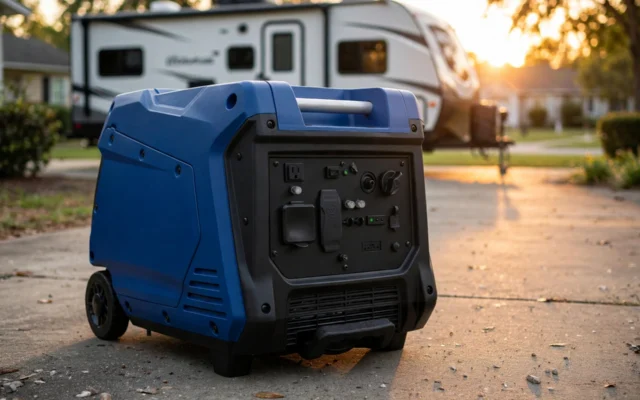
Westinghouse iGen4500DF Review: The Dual-Fuel Inverter to Beat in 2027
Westinghouse iGen4500DF review: 4,500W dual-fuel inverter, 52 dBA, remote start, RV-ready. We test the specs, noise, and value against Honda in 2027.

Inverter vs Conventional Generators: Which Should You Buy in 2027?
Inverter vs conventional generators: inverters win on noise, fuel use and clean power; conventional wins on watts per dollar. Here's how to choose in 2027.
Best Generators With Carbon Monoxide Shutoff in 2027
The best generators with carbon monoxide shutoff stop themselves before CO turns deadly. We compare 7 models with Honda CO-MINDER, Champion CO Shield and more.