


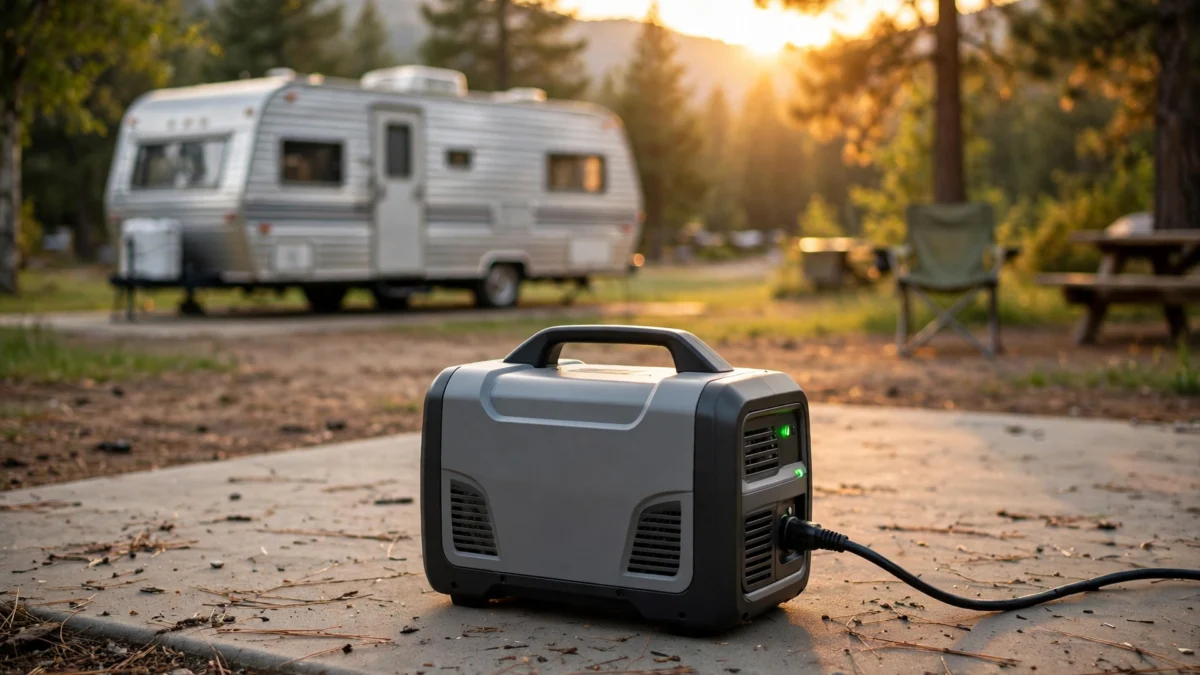
The short version: quiet hours at most campgrounds run 10 PM to 8 AM (some parks 10 PM–6 AM or 11 PM–7 AM), and generators must be off during them — no exceptions. Many national parks go further, restricting generators to specific daytime windows like 8–10 AM and 6–8 PM. And the unwritten rules matter as much as the posted ones.
I’ve camped everywhere from packed KOAs to dispersed desert land, and generator noise is the single fastest way to make enemies at a campground. Here’s the actual rules, the etiquette that keeps you welcome, and the gear choices that make the whole question quieter — literally.
Key takeaways
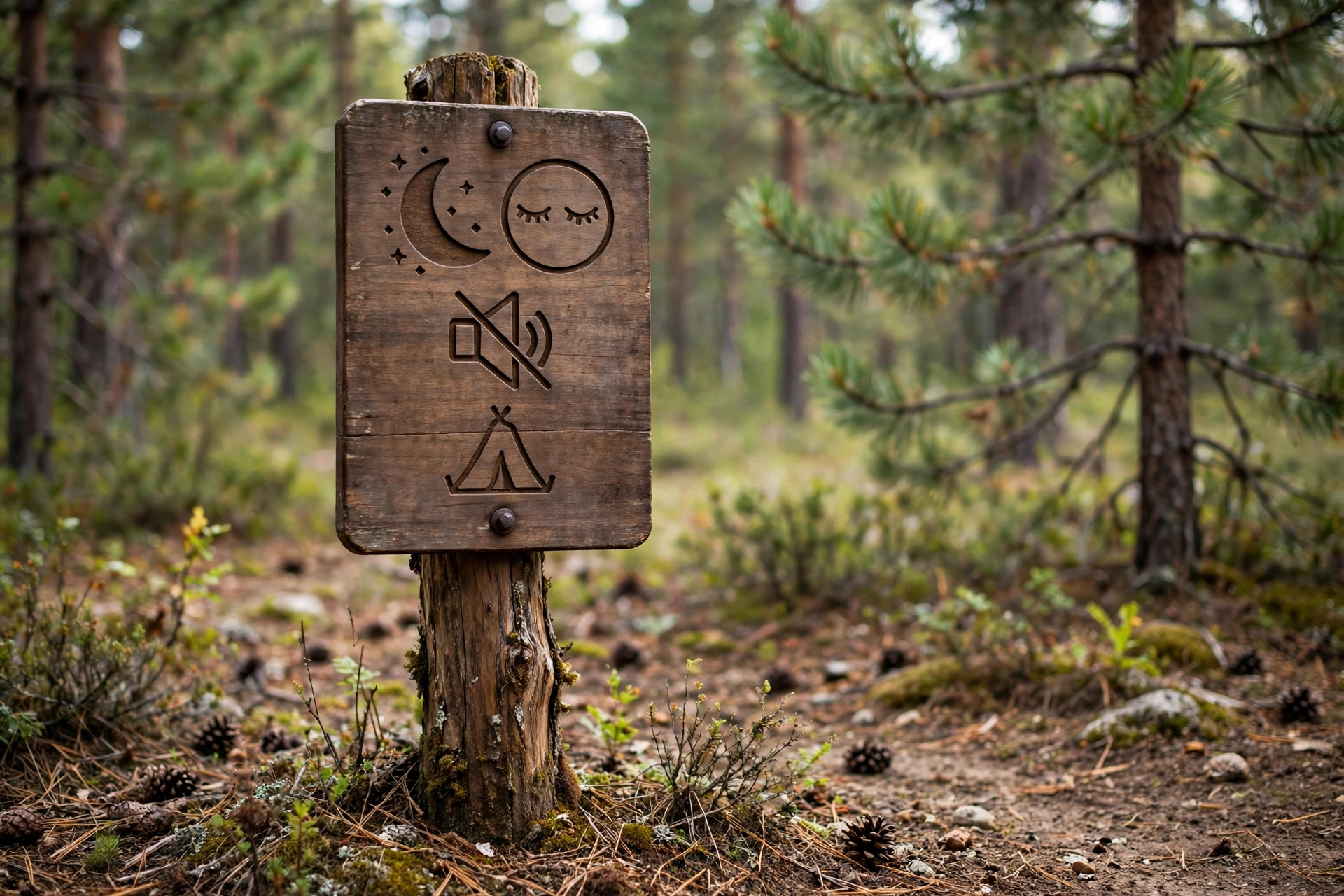
- Quiet hours: typically 10 PM–8 AM. Generators off, voices low, no exceptions.
- National parks often allow generators only in posted windows (e.g., 8–10 AM + 6–8 PM at Zion; 7–9 AM, 12–2 PM, 5–7 PM at Yosemite).
- NPS noise rule: motorized equipment must stay under 60 dB(A) at 50 feet.
- Etiquette: inverter generator, exhaust pointed away, charge batteries then shut down, never idle it “just because.”
- Private campgrounds vary — always check the posted rules at check-in; some ban generators entirely.
The Posted Rules: What Campgrounds Actually Require
Quiet hours (nearly universal)
The 10 PM to 8 AM window is the industry standard across public and private campgrounds. During quiet hours: no generators, no loud music, no shouting across the loop. Some state parks run 10 PM–6 AM or 11 PM–7 AM — the principle is identical, only the edges move. Violating quiet hours is the fastest route to a ranger visit or a 1-star review from your neighbors.
Generator windows (national parks and many public lands)
This is the part that surprises first-timers. In many national park campgrounds, you can’t just run the generator all day — use is limited to posted windows. Real examples:
- Zion (South Campground): generators permitted 8–10 AM and 6–8 PM only.
- Yosemite: 7–9 AM, 12–2 PM, and 5–7 PM in campgrounds that allow generators.
The logic is sound: concentrate the noise into predictable blocks so everyone else can plan around it. The practical consequence is real — with only ~4 hours of generator time per day, you must use that time efficiently: bulk-charge batteries, run the microwave, cool the rig down, then shut it off.
The 60-decibel rule
National Park Service regulations cap motorized equipment at 60 dB(A) measured at 50 feet. Most modern inverter generators (Honda EU2200i, Yamaha, Champion inverter models) rate around 48–59 dB at 23 feet — comfortably under the limit. Old open-frame contractor generators often exceed it, which is why you’ll see them effectively banned by enforcement even where no explicit ban is posted.
The Unwritten Etiquette (What Separates Good Neighbors)
1. Run an inverter generator — full stop
If you’re camping near other humans, an inverter generator isn’t a luxury, it’s the entry ticket. A 2,000W inverter at 50 dB versus an open-frame unit at 72 dB is the difference between background hum and a lawnmower. If all you own is a loud contractor unit, leave it home for campground trips or camp dispersed, far from others.
2. Own your noise
Place the generator on your site as far from neighbors as possible — never at the edge of your pad closest to the next rig. Point the exhaust away from neighboring campsites. A few feet of positioning and direction is free and cuts perceived noise dramatically.
3. Charge, then kill it
The respected pattern: fire it up in the morning window, bulk-charge your batteries (1–3 hours), handle your high-draw tasks (microwave, hair dryer, AC cool-down), then shut it down. Nobody respects the camper who idles a generator for six hours “because it’s allowed.” Allowed isn’t the same as welcome.
4. Don’t be the 7 AM surprise
Even when generators are permitted from 7 or 8 AM, read the room. If the loop is silent and everyone’s clearly asleep, waiting until you see movement is the classy move — especially with anything louder than a Honda/Yamaha purr.
5. Talk to your neighbors
A 30-second “hey, I’ll need to run my generator for about an hour this morning to charge up — wanted to give you a heads up” defuses 90% of conflicts. People tolerate noise they were warned about; they resent noise that ambushes them.
6. At night, go silent for real
Need overnight power? That’s what batteries are for. A decent LiFePO4 bank or power station runs a furnace fan, CPAP, and phones all night with zero noise. If you’re still running a generator after dark “just for the TV,” that’s the behavior that gets generators banned.
7. Check in with the camp host
On arrival, ask the host about generator norms for that specific loop — not just the posted hours. Some loops are all RVers who expect daytime generator hum; others are tent-heavy and effectively silent even when generators are technically allowed. Thirty seconds at check-in tells you which campground you’re actually in, and hosts remember the campers who ask.
And if you’re the one being bothered? Talk to the person first, kindly, before involving the host. Most generator conflicts I’ve witnessed were solved by “hey, would you mind pointing your exhaust the other way” — not by citing rule numbers.
Gear That Makes You a Better Neighbor
Right-size the generator
A 3,500W unit loafing at 30% load is louder than it needs to be and burns extra fuel. Most campers’ real needs — battery charging, small appliances — are covered by a 2,000–2,200W inverter. Our generator size calculator helps you match the machine to your actual loads.
Add a soft starter for the AC
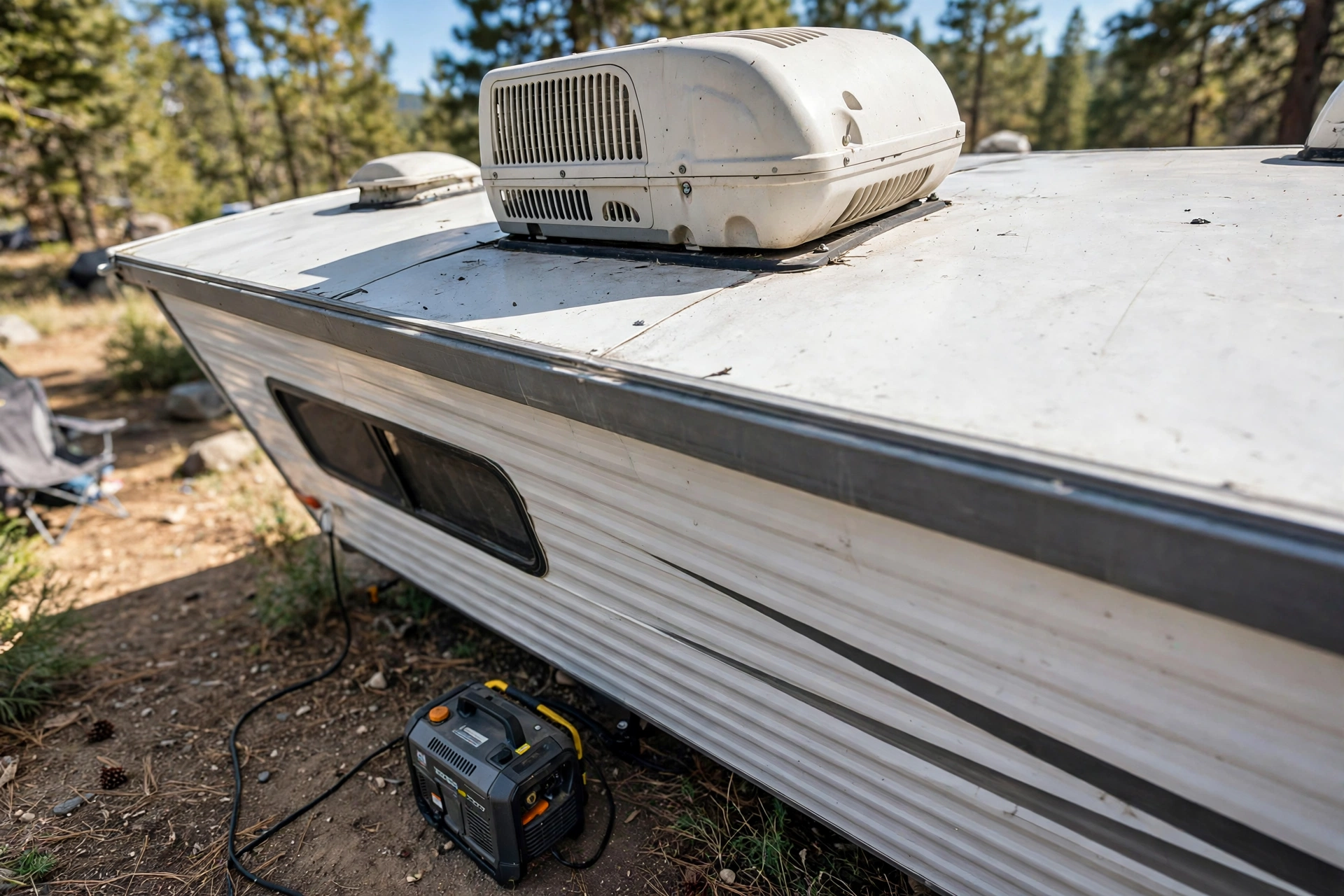
The RV air conditioner is the reason many campers buy bigger, louder generators than they need — the compressor’s startup surge (often 3–5x running watts) is the whole problem. A soft starter like the MicroAir EasyStart 364 cuts startup current by 65–75%, which lets a small 2,000W-class inverter start and run a 13,500 BTU roof AC. Smaller generator, less noise, happier loop.
Battery bank + solar = silent hours
The endgame for campground harmony is needing the generator less. Even 200–400W of portable solar plus a 1–2kWh power station covers lights, devices, and a 12V fridge silently — leaving the generator for the morning bulk-charge only. Fewer generator hours is better etiquette than any muffler.
Distance is a free muffler
Every doubling of distance drops perceived noise ~6 dB. A long, properly gauged extension cord letting you park the generator 50+ feet away (and behind your rig as a sound barrier) is the cheapest noise reduction there is.
Dispersed Camping: Different Rules, Same Respect
On BLM land and in national forests outside developed campgrounds, there are usually no posted generator hours — but “no rules” doesn’t mean “no courtesy.” Dispersed campers chose that spot for quiet. The convention is simple: keep reasonable hours (daylight-ish), keep it as quiet as you can, and if someone camps near you, have the conversation. Most dispersed conflicts I’ve seen came from someone running a contractor generator at midnight 100 feet from a tent. Don’t be that story.
Frequently Asked Questions
What are typical RV generator quiet hours?
Can I run my generator all day at a campground?
How loud can my generator be at a national park?
Can I run a generator at night if it’s a quiet inverter model?
How do I run my RV air conditioner without annoying the campground?
Bottom Line
The rules are simple — off from 10 PM to 8 AM, inside the posted windows by day, under 60 dB — but the etiquette is what keeps campgrounds pleasant: inverter over open-frame, charge-and-shut-down instead of idle-all-day, and a quick heads-up to the neighbors. Do that, and nobody will ever have a reason to complain about your generator. Browse our RV and camping calculators to size your setup before the next trip.

Related Guides
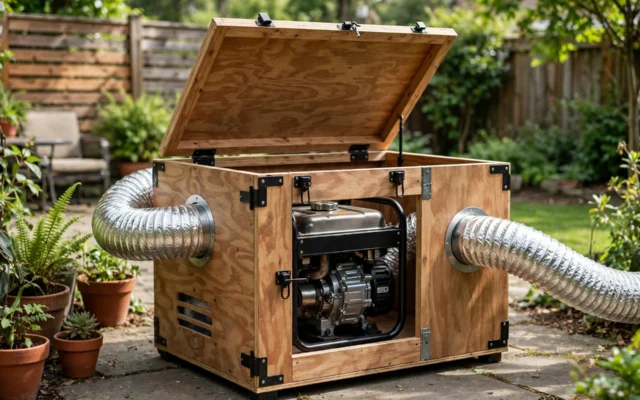
DIY Generator Quiet Box: How to Build a Noise-Reduction Enclosure
A DIY generator quiet box can cut noise 10–20 dB — but ventilation and CO safety are the whole project. Materials, baffle design, fan sizing, and the mistakes to avoid.

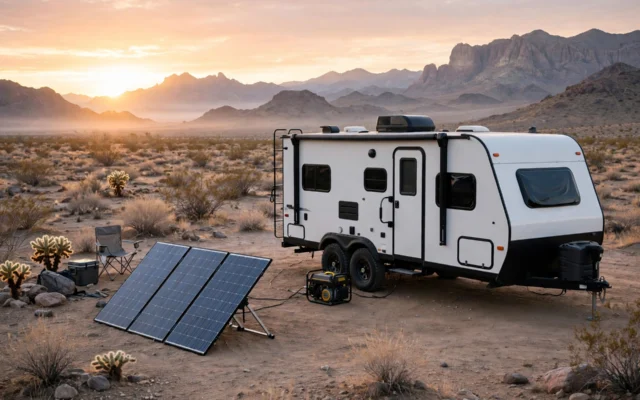
Boondocking Power Setup: Generator + Solar for Off-Grid Camping
The ideal boondocking power setup pairs solar with a generator and battery bank. Real daily load math, sizing tiers, and the generator run strategy that sips fuel.
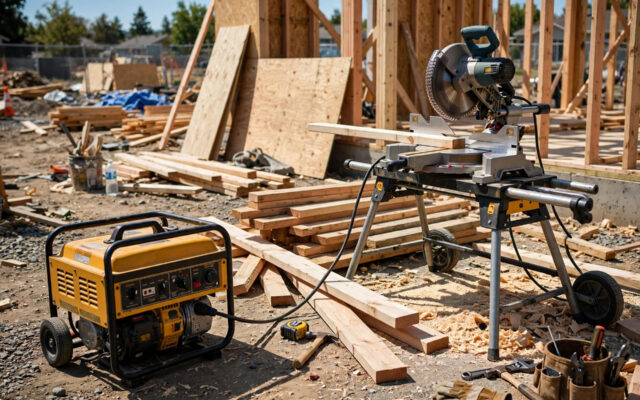
Best Generators for Power Tools & Workshops in 2027
Best generators for power tools in 2027: 5 workhorses compared with real surge specs. Sizing for saws, compressors, welders — surge watts matter most.