


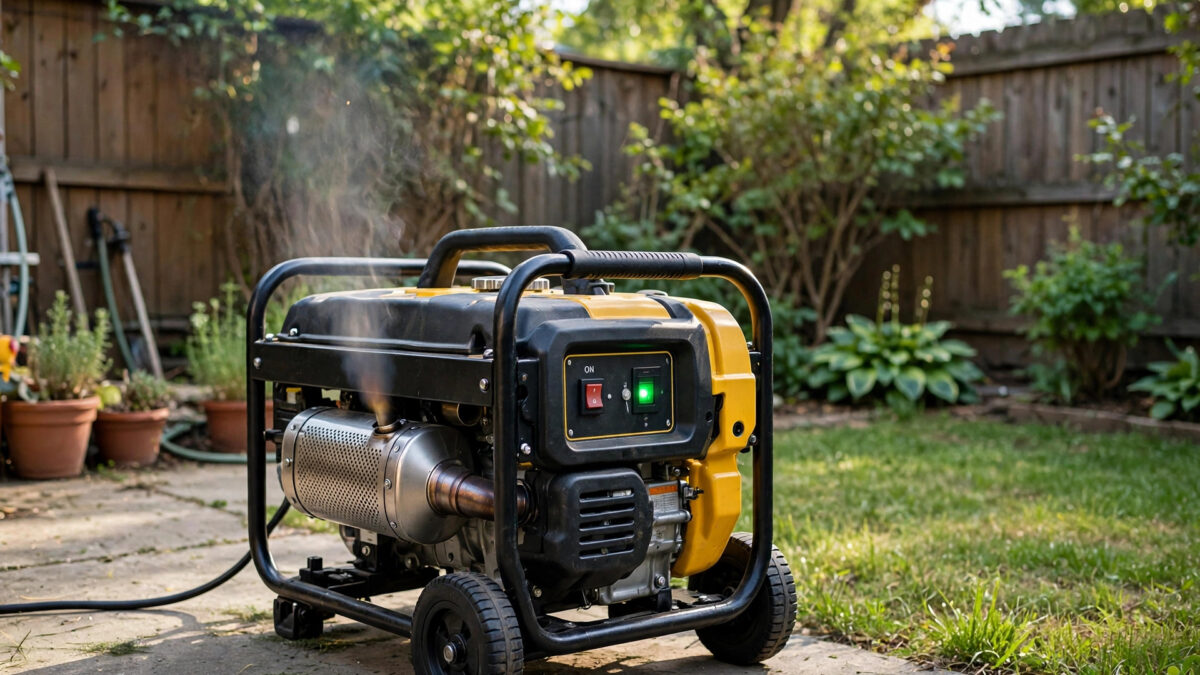
A generator backfire is that startling BANG — sometimes from the exhaust, sometimes a cough or pop back through the air filter. The fix depends entirely on where the pop comes from. A bang out the exhaust (technically called afterfire) usually means unburned fuel is igniting in the hot muffler — rich mixture, a choke left on, or the way you’re shutting the engine down. A pop back through the carburetor or air filter is more serious: it points to a lean mixture, an intake valve that isn’t sealing, or an ignition timing problem.
First things first: figure out which one you have. Stand near the generator (not too near) and have someone start or shut it down while you listen. Exhaust bang = fuel burning where it shouldn’t, after the cylinder. Carb pop = combustion pressure escaping backward through the intake. They have different causes and different fixes, and mixing them up wastes a lot of time.
Key takeaways
- Bang from the exhaust (afterfire): unburned fuel igniting in the muffler — usually a rich mixture, stuck choke, or shutdown procedure. Common and usually easy to fix.
- Pop through the carburetor/air filter: lean mixture, air leak, sticking intake valve, or sheared flywheel key (timing). Investigate promptly — this one can damage the engine.
- Backfire on shutdown alone is often normal-ish and fixed by following the manual’s shutdown procedure (many engines want the throttle up, not idled down).
- The most common root causes across both types: dirty air filter, old fuel, worn spark plug, and valve clearance that’s drifted out of spec.
- Repeated backfiring can damage the muffler, valves, and air filter housing — don’t ignore it for a whole season.
Backfire through the exhaust (afterfire): causes and fixes
This is the loud bang from the muffler, most often when you shut the engine off — though it can happen during operation too. Here’s what’s going on: when you kill the ignition, the engine keeps spinning for a few revolutions, pumping a fresh fuel-air charge through the cylinder without a spark to burn it. That raw mixture lands in a red-hot muffler and detonates. Bang.
Cause 1: Shutdown procedure
This is the number-one cause and the easiest fix. Many small engines — Kohlers are famous for this — will afterfire if you idle them down and then kill the ignition. The correct procedure varies by engine, so check your manual, but the common guidance is:
- Let the engine idle 30-60 seconds to cool slightly under no load
- Turn the fuel valve OFF and let the engine run the carburetor dry, then switch off the ignition — or follow the manual’s exact sequence
- Some manufacturers specify shutting down at half or full throttle rather than idle
I used to idle my old Kohler-powered unit down out of habit and got a cannon shot every single time. Switched to the manual’s procedure — shut the fuel off, let it sputter out — and the backfiring stopped completely.
Cause 2: Running too rich
A rich mixture leaves unburned fuel in the exhaust during normal operation, which ignites in the hot muffler. Suspects:
- Choke partially closed. The classic. If the choke plate isn’t opening fully once warm, the engine runs rich forever. Check that the choke linkage moves freely and the plate opens all the way.
- Dirty air filter. A clogged filter chokes airflow, which richens the mixture — same effect as a closed choke. Clean or replace it (see our air filter guide).
- Carburetor issues. A float set too high or a worn needle valve dumps extra fuel. If the exhaust smells strongly of raw gas and the plug comes out black and sooty, the carb needs attention.
Cause 3: Carbon buildup in the cylinder
Heavy carbon deposits stay hot enough to ignite the mixture at the wrong time (pre-ignition), and glowing carbon in the exhaust port can light off unburned fuel. This shows up on high-hour engines that have lived on cheap oil or chronic rich mixtures. A decarbon treatment or a teardown cleaning fixes it — and it’s a good argument for quality oil and proper maintenance intervals.
Backfire through the carburetor: causes and fixes
A pop, cough, or spit back through the intake is the one to take seriously. It means combustion pressure is escaping the wrong way — through the intake valve instead of out the exhaust. The usual suspects, in the order I’d check them:
Cause 1: Lean fuel mixture
Too little fuel for the air makes combustion slow and incomplete — the flame is still burning when the intake valve opens for the next cycle, and it flashes back through the carb. Lean causes:
- Partially clogged carburetor jets. The single most common cause, especially after storage. Old fuel varnishes the tiny passages. A carb cleaning fixes it.
- Air leak at the intake. A cracked or loose carburetor gasket, a loose carb mounting, or a cracked intake manifold lets extra air in downstream of the carb. Trick: with the engine running, spray a little carb cleaner around the intake joints — if the RPM changes, you’ve found the leak.
- Fuel starvation. Clogged fuel filter, kinked line, or a failing fuel pump (on bigger units) leans the mixture under load.
Cause 2: Intake valve not sealing
If the intake valve doesn’t close fully or on time, burning mixture blows straight back into the carburetor. Causes include:
- Valve clearance too tight. As valve seats wear, lash shrinks until the valve can’t fully close. This is extremely common on high-hour generators and the fix is a routine valve lash adjustment — 0.006″ intake on most GX-pattern engines.
- Sticking valve. Carbon or gum on the valve stem makes the valve hang open. It often shows up as an intermittent pop that comes and goes.
- Burned or damaged valve/seat. The end stage of running too long with tight lash. Requires a valve job.
Cause 3: Ignition timing off (sheared flywheel key)
The flywheel key locks the flywheel — and the ignition timing — to the crankshaft. If the engine ever stopped suddenly (blade strike on a mower, a hard backfire, dropping the unit), the soft aluminum key can shear slightly, retarding or advancing the timing. Symptoms: backfiring, hard starting, and a general feeling that the engine “isn’t right.” The fix is a $2 key and pulling the flywheel — a 30-minute job once you’ve done it once.
Cause 4: Weak or mistimed spark
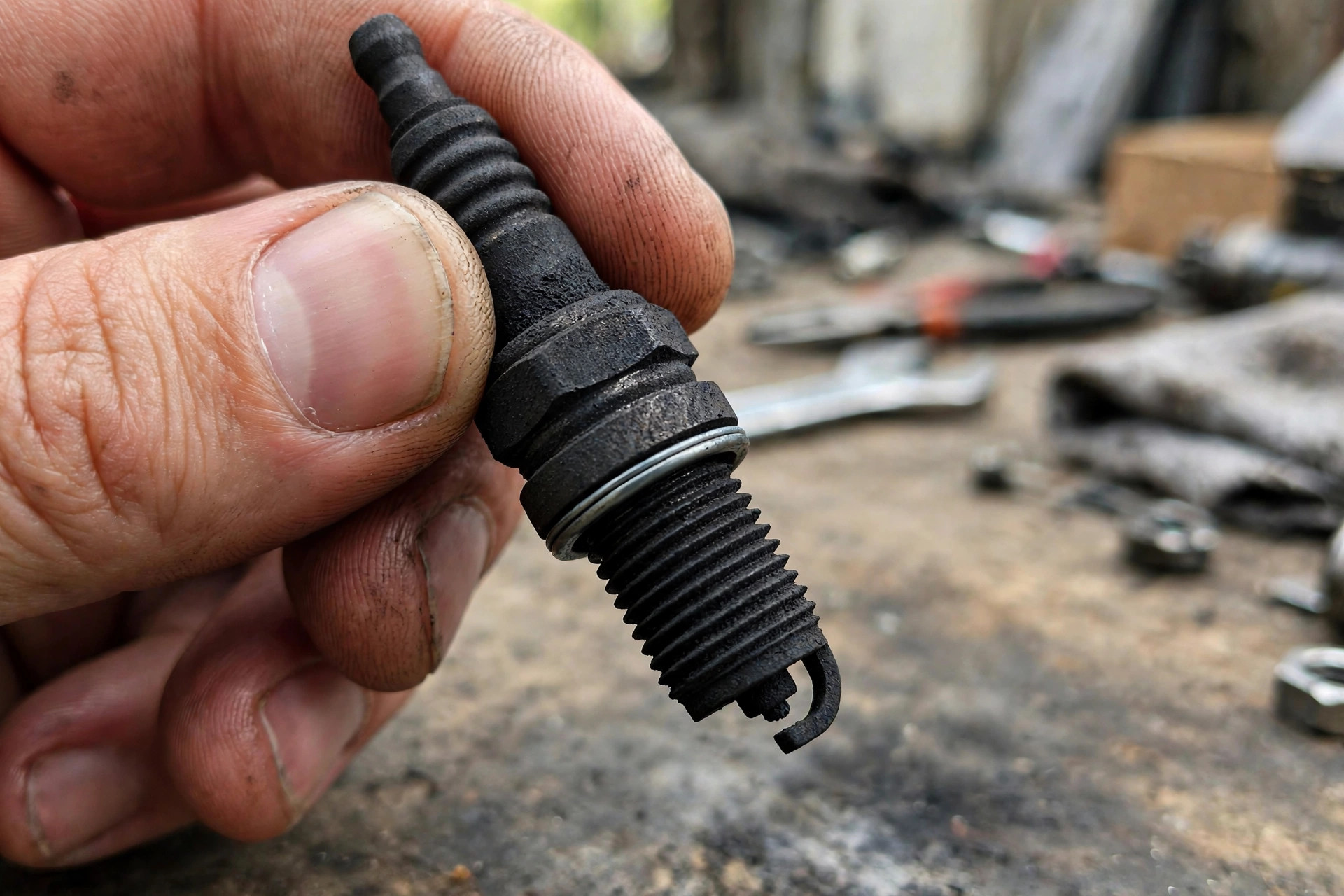
A worn spark plug with an eroded gap, a failing ignition coil, or a plug wire that’s arcing to ground can fire weakly or at the wrong moment. Cheap to rule out: pull the plug, check the gap (usually 0.028-0.031″ on these engines), and replace it if it’s worn. A fresh plug fixes a surprising number of “mystery” backfires.
A quick diagnostic sequence
When a generator starts backfiring, I work through this order — cheapest and most likely first:
- When does it happen? Only on shutdown → shutdown procedure. During operation → keep going.
- Where does the bang come from? Exhaust → rich mixture suspects. Carb/intake → lean mixture and valve suspects.
- Check the air filter. Two minutes, fixes a huge percentage of rich-mixture backfires.
- Check the spark plug. Gap, condition, color. Black and sooty = rich. White or blistered = lean/hot.
- Check the choke. Make sure it opens fully when warm and the linkage isn’t sticking.
- Fresh fuel. If the gas is more than 30 days old (or of unknown age), drain it and refill with fresh fuel plus stabilizer.
- Check valve lash. Especially if the unit has 200+ hours and the valves have never been touched.
- Clean the carburetor. If it’s been sitting, the jets are the prime suspect for lean backfiring.
- Check the flywheel key. If everything else checks out and the timing feels off.
Read the spark plug like a fortune teller — its color tells you which direction the mixture is off, and that tells you which half of this article applies to you.
Can backfiring damage the engine?
Occasional afterfire on shutdown is mostly embarrassing — startling the neighbors, mainly. But chronic backfiring causes real harm over time: the pressure shock wave stresses the muffler and its baffles, backfires through the intake can damage the air filter housing and carburetor, and the underlying causes (lean mixture, bad valves, wrong timing) accelerate wear on valves, pistons, and rings. A generator that backfires every run is telling you something. Listen to it.
Why does my generator backfire when I turn it off?
What causes a generator to backfire through the carburetor?
Can a dirty air filter cause backfiring?
Will a bad spark plug make a generator backfire?
Is it safe to keep running a backfiring generator?
Nine times out of ten, a backfiring generator is telling you about maintenance it needs: a filter, a plug, fresh fuel, a carb cleaning, or a valve adjustment that’s overdue. Work the diagnostic list in order, fix what you find, and that alarming bang becomes a story you tell about the generator you used to have trouble with.


Related Guides
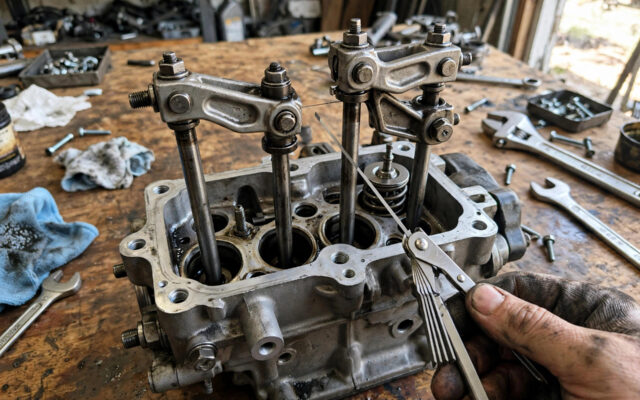
Generator Valve Adjustment: How to Set Valve Lash (2027 Guide)
Generator valve adjustment: 0.006" intake, 0.008" exhaust on Honda GX engines. Tools, TDC procedure, and symptoms of bad valve lash explained.

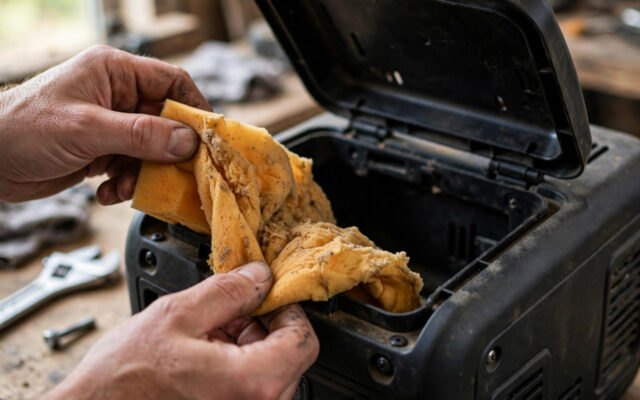
How to Clean and Replace a Generator Air Filter (2027 Guide)
How to clean a generator air filter: wash foam filters in soapy water and re-oil; tap out paper filters, never wash them. Full steps inside.
What Size Generator Do You Need for an Electric Water Heater?
A 4,500W electric water heater needs a 5,500–6,500W generator minimum — and most owners skip it. The 125% rule, why the tank coasts, and smarter alternatives.