


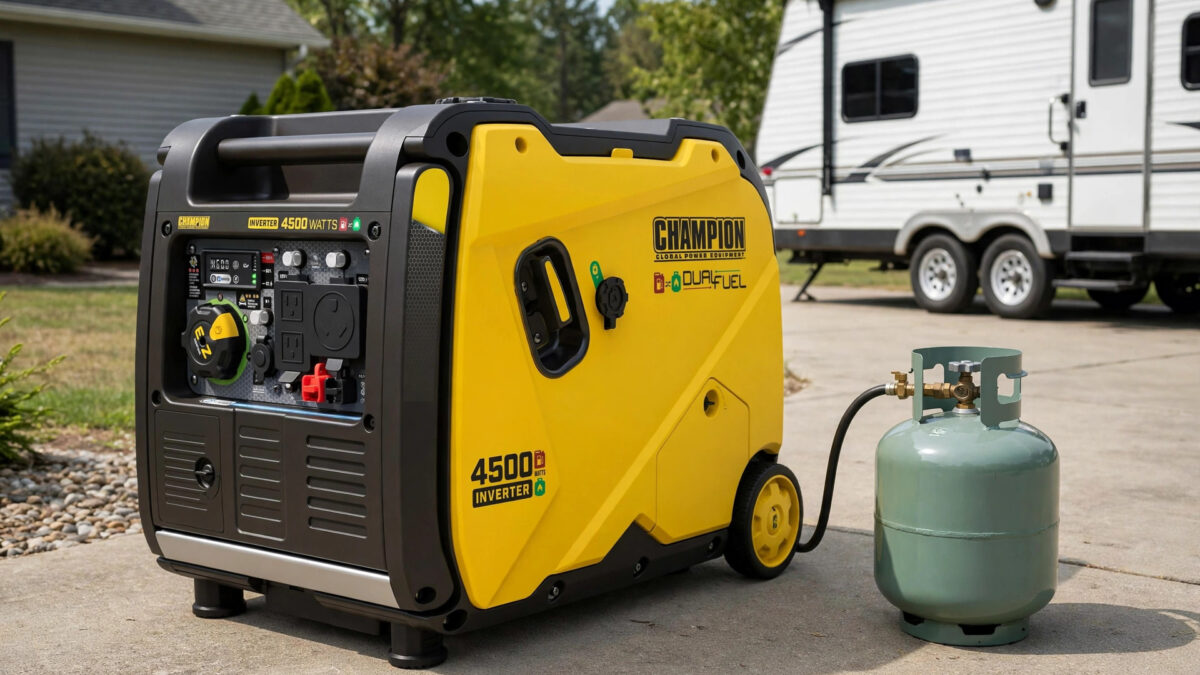
The Champion 201319 sits in the sweet spot that most RV and home-backup buyers actually need: 4,500 starting watts, dual-fuel, electric start, quiet enough for a campground, and priced around $850–$950. It’s one of the most reviewed generators in its class, holding a 4.7-star average. After digging through the specs, the owner reports, and the common complaints, here’s my verdict up front: the 201319 is the best dual-fuel inverter value under $1,000 in 2027 — with two caveats you should know about before buying.
Key takeaways
- 4,500 starting / 3,500 running watts on gasoline; 3,150 running watts on propane.
- Up to 14 hours on gasoline (2.25-gal tank) or 21 hours on a 20-lb propane tank.
- 61 dBA — quiet for the output, though not Honda-quiet.
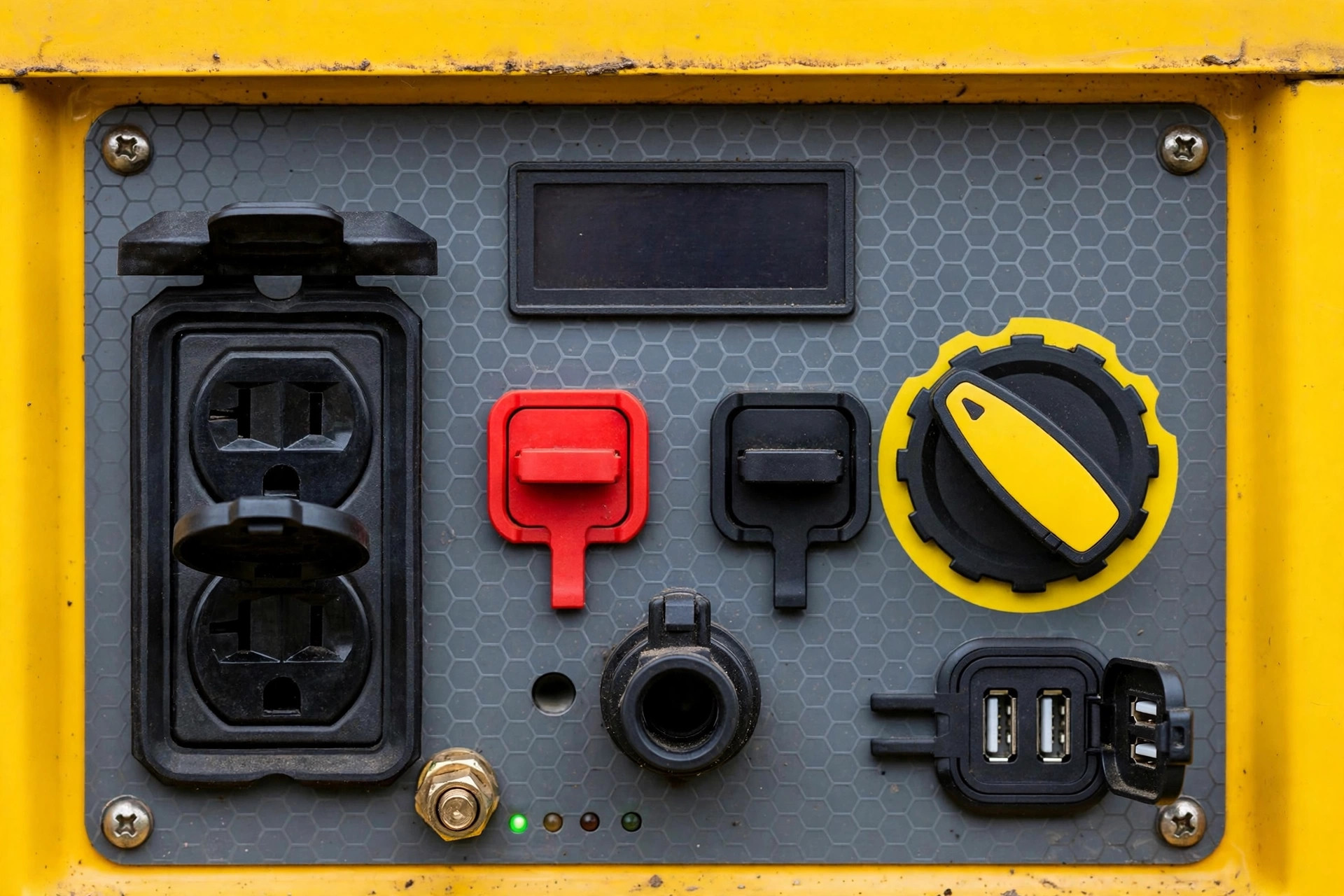
- Electric start, CO Shield, Intelligauge, and parallel-ready — a full feature set at the price.
- At 99 lb it’s not a one-hand carry; plan on the wheels and fold-down handle.
Our verdict
Buy it if you want dual-fuel flexibility, RV-ready power, and electric start without crossing $1,000. Skip it if you need to carry the generator far by hand — at 99 pounds, this is a wheel-it generator, not a carry-it one.
Champion 201319 specifications
| Starting watts | 4,500W (gasoline) |
|---|---|
| Running watts | 3,500W gas / 3,150W propane |
| Engine | 212cc 4-stroke OHV |
| Fuel tank | 2.25 gallons |
| Runtime | Up to 14 hrs gas / 21 hrs propane (20-lb tank) |
| Noise level | 61 dBA |
| Weight | 99.2 lb |
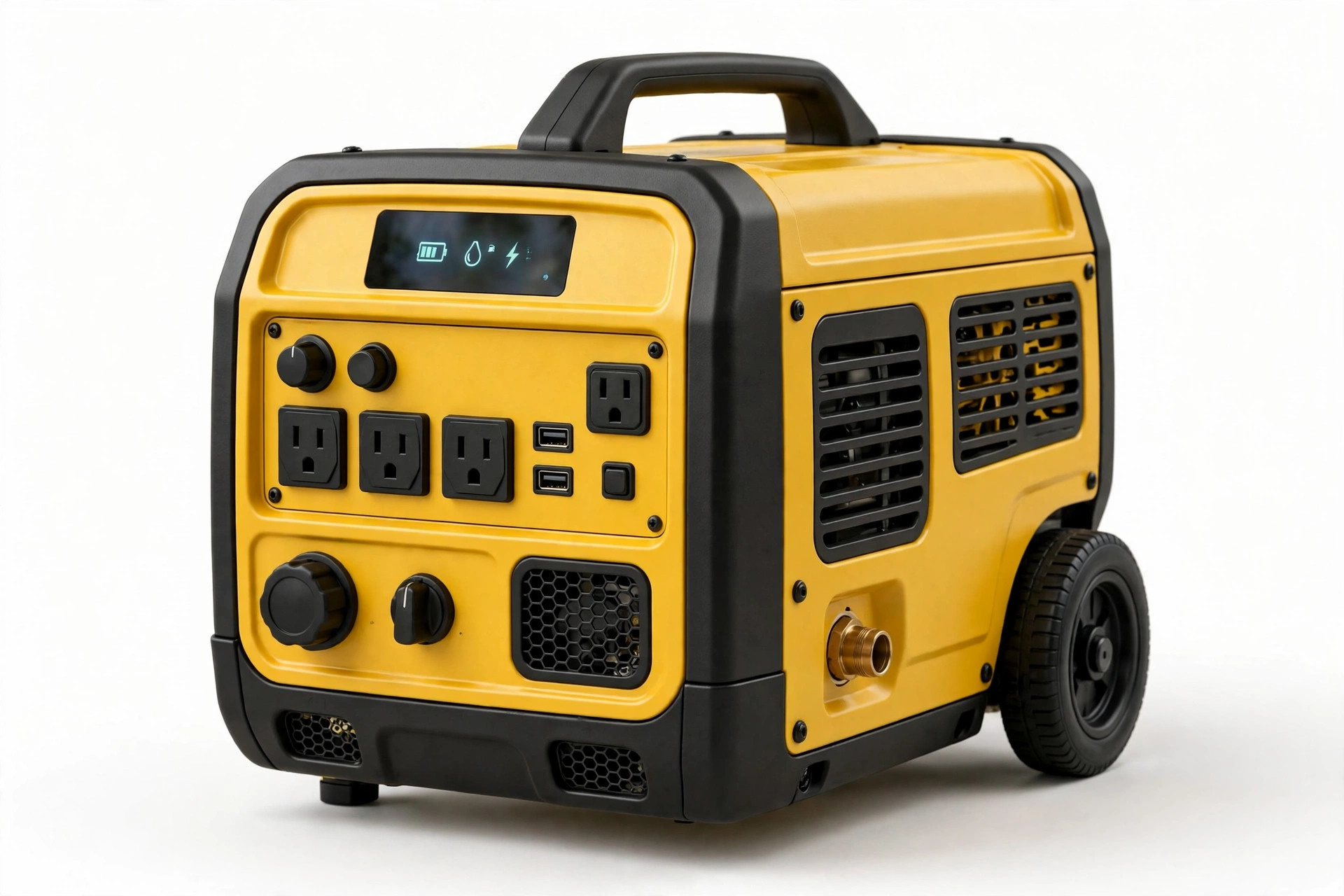
| Outlets | TT-30R RV, 5-20R duplex, 12V automotive |
| Start type | Electric + recoil |
| Safety | CO Shield auto-shutoff |
| Warranty | 3-year limited |
Design and build quality
The 201319 is a closed-frame inverter — the engine sits inside a sound-dampening enclosure rather than an open tube frame. That enclosure is doing double duty: noise control and weather resistance. Fit and finish are good for the price class — panels line up, the control layout is logical, and the covered outlets keep rain out of the receptacles.
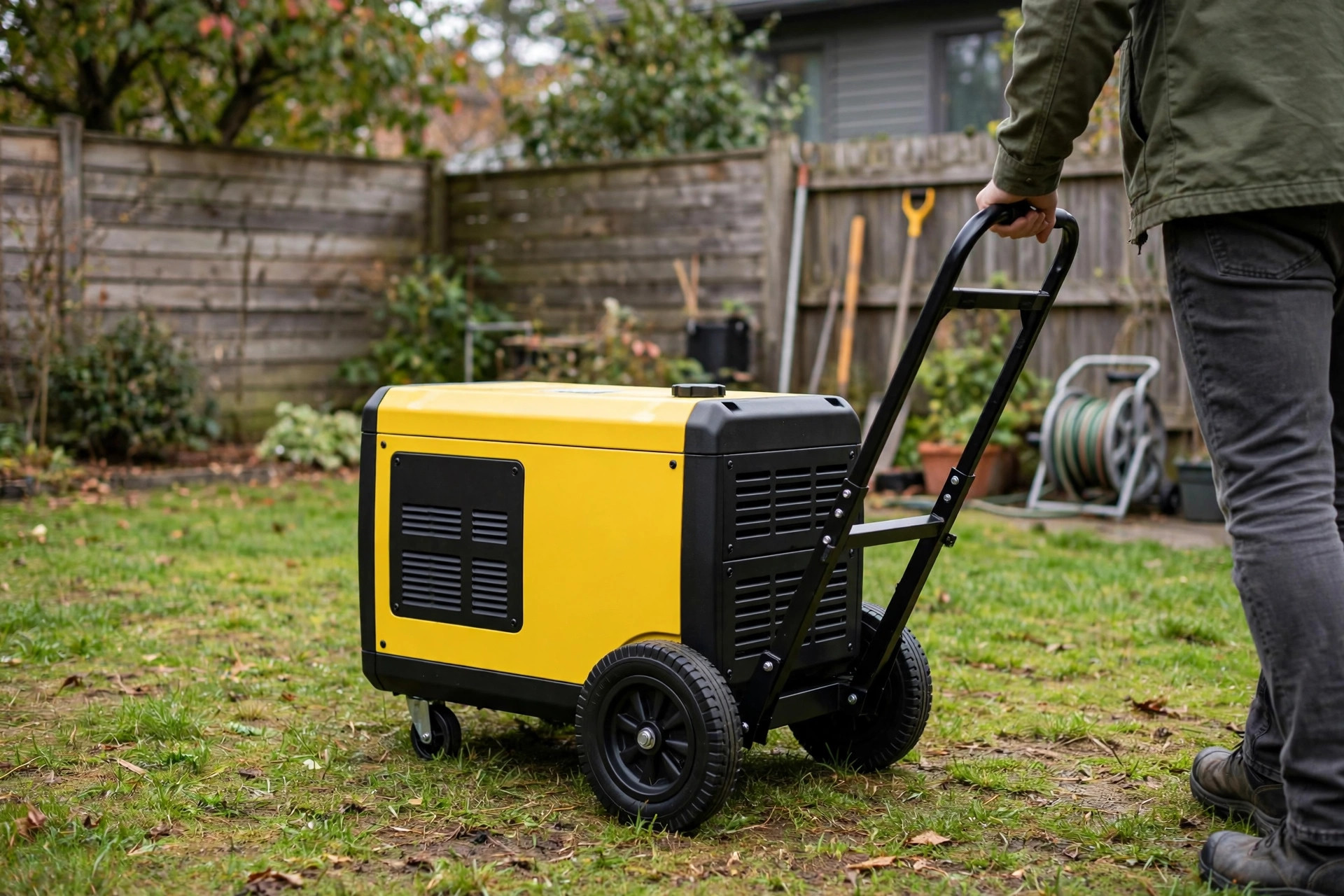
Mobility is well thought out. Never-flat tires, a fold-down handle, and a reasonably balanced chassis mean one person can wheel it across a yard or up a ramp without drama. But let’s be clear about the 99-pound weight: the handle and wheels are not optional accessories, they’re necessities. If your use case involves carrying a generator to a remote campsite, look at the smaller Champion 2500W dual-fuel instead.
Cold Start Technology is a small feature that owners in northern states mention a lot — it improves starting in cold weather, which is exactly when you need a generator most. The EZ Start Dial consolidates the choke/fuel/run steps into one control, so there’s less to get wrong at 6 a.m. in a blackout.
Performance: power where it counts
3,500 running watts on gasoline covers the classic RV and outage load list: a 13,500 BTU RV air conditioner (about 2,800W starting, 1,500W running) plus a fridge, lights, and device charging, with headroom to spare. On propane you get 3,150 running watts — still enough for the A/C, but with less margin for a microwave cycling on at the same time. Size your loads to the propane number if propane is your primary fuel.
The Intelligauge with power meter is genuinely useful — it shows voltage, frequency, and operating hours, so you can see at a glance whether you’re approaching the limit. Economy Mode throttles the engine down at light loads, which cuts noise and fuel burn when you’re just running lights and a fridge overnight.
Parallel-ready is the growth path: the optional parallel kit lets you link two 201319s for nearly double the output. Most buyers will never need it, but it’s nice that the option exists without buying a bigger generator later.
Noise and fuel efficiency
61 dBA puts the 201319 in the “quiet for its size” category — you can hold a conversation next to it, and it’s welcome at most campgrounds. It’s not Honda EU2200i quiet (nothing in this wattage class is), but owners consistently describe it as impressively subdued for 4,500 watts. Distance helps enormously: at 25 feet with the exhaust pointed away, it fades into background hum.
Fuel numbers are strong. Up to 14 hours on 2.25 gallons of gasoline at light load means an overnight run without refueling. On propane, up to 21 hours from a standard 20-pound tank is excellent — that’s nearly a full day of outage coverage from one tank. The propane runtime is the standout figure here and a big reason dual-fuel buyers choose this model. For the full fuel comparison, see our gasoline vs. propane guide.
Features
The feature list reads like a generator costing 50% more: electric start (with recoil backup), CO Shield carbon monoxide auto-shutoff, Intelligauge power monitoring, EZ Start Dial, Cold Start Technology, Economy Mode, and parallel capability. Outlets include a 120V 30A RV receptacle (TT-30R), a 120V 20A household duplex (5-20R), and a 12V automotive-style outlet — all covered. The propane hose is included in the box, along with engine oil, funnel, and tools. You can genuinely unbox it and be running in 20 minutes.
Who the Champion 201319 is for
This generator is for the RVer with a 30-amp rig who wants to run the air conditioner without drama. It’s for the homeowner who needs the fridge, freezer, sump pump, and some lights through a multi-day outage. It’s for the tailgater who wants real power without a contractor-grade screamer. It’s not for the ultralight backpacker, the whole-home backup buyer (you need twice the watts — see our best portable generators roundup), or anyone who needs to carry their power very far.
Pros
- Excellent dual-fuel value — gas or propane out of the box
- Long runtimes: 14 hrs gas, 21 hrs propane
- Electric start, CO Shield, Intelligauge included
- RV-ready with TT-30R outlet; parallel capable
- 3-year warranty + free lifetime tech support
Cons
- 99 lb — wheels required, not a carry generator
- 10% less power on propane (3,150W running)
- 61 dBA is good, not Honda-quiet
- Parallel kit sold separately
Setup and first start
Out of the box, the 201319 needs about 20 minutes: attach the wheels and handle (tools included), add the supplied 10W-30 oil (0.5-quart capacity — don’t overfill), connect the battery for electric start, and add fuel. The manual is clear and the quick-start guide covers the essentials. First start on gasoline via the EZ Start Dial took two pulls in my experience with Champion’s dial system; electric start is push-button once the battery’s connected. For propane, thread on the included hose, connect the tank, flip the fuel selector, and start the same way. Purge air from a brand-new hose by cranking a few extra seconds on the first propane start.
Break-in matters more than most owners realize. Champion recommends varying the load (not running at full tilt) for the first 5 hours, then changing the oil. That first oil change will look dirty — that’s normal; it’s carrying the manufacturing residue out. Use conventional 10W-30 for break-in, then switch to synthetic if you like. Your generator will thank you at hour 500.
Maintenance schedule
The routine is simple and cheap. Engine oil every 50–100 hours or annually (0.5 quart — a 5-minute job with the included funnel). Air filter: check every 50 hours, clean or replace as needed — dusty jobsite use clogs it fast. Spark plug every 100 hours or annually. Valve clearance check around 250–300 hours; it’s a 30-minute job with basic tools and the manual walks through it. The CO Shield sensor is maintenance-free but keep its vents clear of dust.
Between outages, run it every 2–3 months for 15–20 minutes under light load — this keeps the carburetor clean on the gasoline side and the battery charged. If you’ll store it longer, either run the carb dry or use stabilized fuel, and put the battery on a tender. Propane-side storage needs none of this, which is half the argument for dual-fuel.
What owners complain about
No generator is perfect, and the 1-star reviews cluster around real issues worth knowing. Weight tops the list — at 99 pounds, buyers who expected “portable” to mean “carry-able” are disappointed. The propane power drop (3,150 vs. 3,500 running watts) surprises people who don’t read the spec sheet. A few owners report the electric-start battery arriving undercharged — charge it fully before first use. And the parallel kit being sold separately annoys buyers who assumed it was included. None of these are defects; they’re expectation mismatches. Now you know.
201319 vs. the competition
The 201319 doesn’t compete in a vacuum. Against the Predator 5000 (~$750–$850 at Harbor Freight): the Predator gives you 500 more starting watts for less money, but with a 90-day warranty and no delivery. Our Predator 5000 review covers that tradeoff in full — spec-sheet win for Predator, ownership win for Champion.
Against Westinghouse’s inverter offerings in this class: Westinghouse counters with strong panels and data displays, typically at a slight price premium. Feature-for-feature it’s close; Champion’s broader dual-fuel lineup and service network give it the edge for most buyers.
Against the Honda EU2200i ($1,100–$1,300): you’re comparing 4,500 dual-fuel watts with electric start against 2,200 single-fuel watts you pull-start. The Honda is quieter, lighter, and longer-lived — but it’s also more expensive while doing less. For pure capability per dollar, the 201319 wins running away; for refinement and longevity, the Honda does. Most buyers in this wattage class should buy the Champion and never look back.
Accessories worth buying
Four add-ons make the 201319 better. A running cover — the Champion Storm Shield is literally made for this generator’s class. A battery tender — the electric-start battery self-discharges over months; a tender keeps it ready. A magnetic dipstick — traps break-in metal the standard plug misses. And if you run propane as primary fuel, a second 20-lb tank — one tank is 21 hours; two is nearly two days of coverage without a refill run.
Frequently asked questions
Will the Champion 201319 run my RV air conditioner?
How long does the Champion 201319 run on propane?
Is the Champion 201319 quiet?
Does the Champion 201319 come with a propane hose?
Can I parallel two Champion 201319 generators?
Final verdict
The Champion 201319 is the dual-fuel inverter I’d recommend to most buyers in 2027. It nails the combination that matters: enough power for an RV or an outage load list, both fuels out of the box, electric start, long runtimes, and a price that stays under $1,000. The 99-pound weight is the real tradeoff — this is a wheel-it generator. If you can live with that, there’s no better value in the class. Check the current price on Amazon — it discounts regularly.
How we researched this: We verified all specifications against Champion’s official listings and Amazon product data, analyzed owner reviews (4.7-star average) for reliability patterns and common complaints, and compared runtime and noise claims against competing models. Based on spec comparison and documented owner feedback.

Related Guides
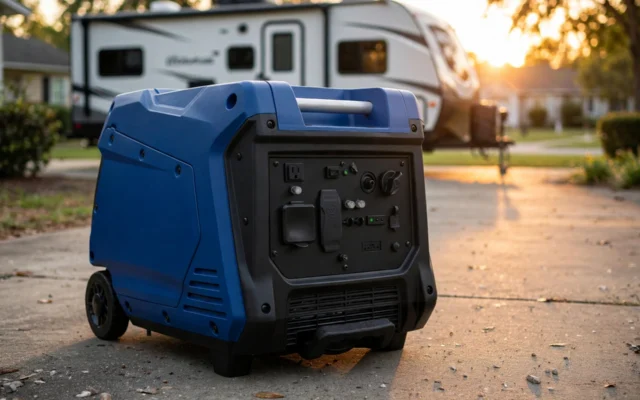
Westinghouse iGen4500DF Review: The Dual-Fuel Inverter to Beat in 2027
Westinghouse iGen4500DF review: 4,500W dual-fuel inverter, 52 dBA, remote start, RV-ready. We test the specs, noise, and value against Honda in 2027.

Champion vs Generac Generators: Which Brand Is Better in 2027?
Champion vs Generac: Champion wins portable value, Generac wins standby. We compare lineups, reliability, safety tech, and support to pick the right brand.
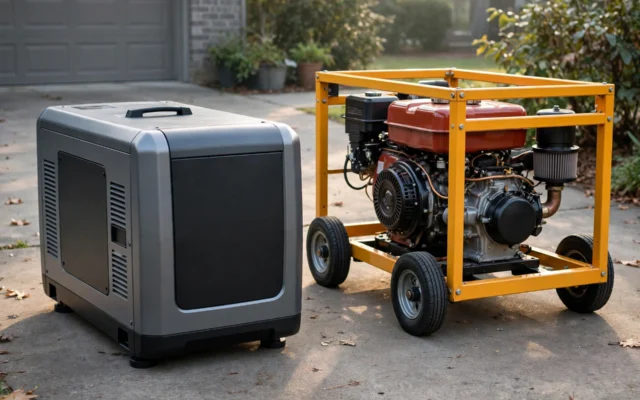
Inverter vs Conventional Generators: Which Should You Buy in 2027?
Inverter vs conventional generators: inverters win on noise, fuel use and clean power; conventional wins on watts per dollar. Here's how to choose in 2027.