


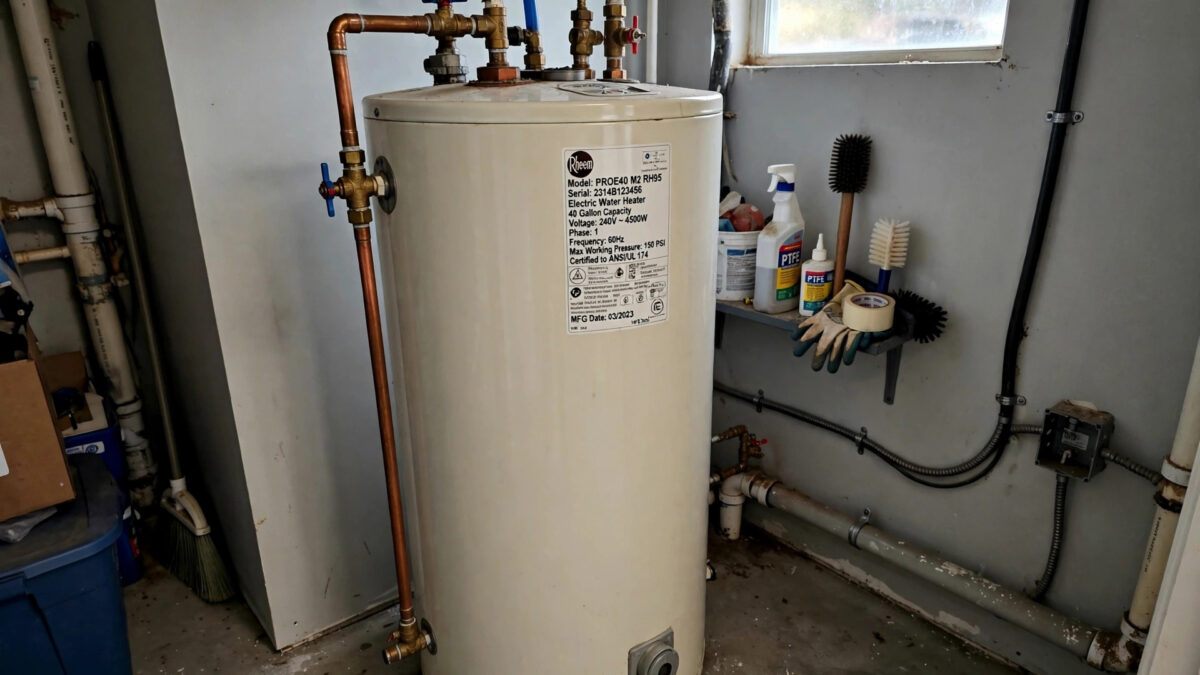
You need a 5,500–6,500-watt generator (minimum) to run a standard 4,500W electric water heater — and honestly, most generator owners choose not to back one up at all. The heater draws a massive, continuous 4,500 watts at 240 volts, which eats most of a mid-size generator’s capacity. Unless you have a large standby unit, the smarter move is usually to heat water before the outage and let the tank coast.
Key takeaways
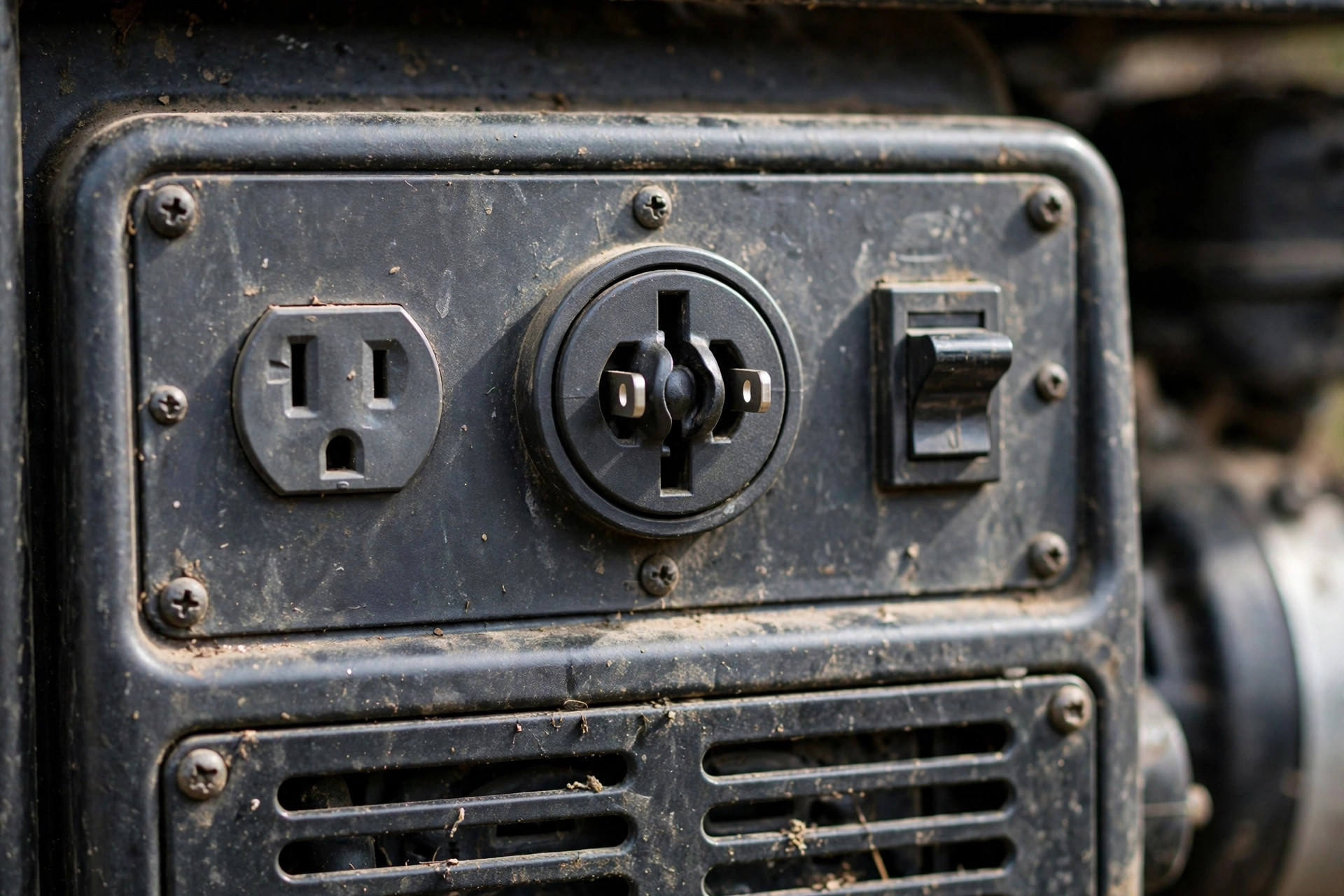
- A standard residential electric water heater draws 4,500W at 240V (~18.75 amps) — with no startup surge, but a huge continuous load.
- NEC’s 125% continuous-load rule means the circuit and generator should handle 5,625W for the heater alone → a 6,000W-class generator minimum.
- Dual-element tanks only run one element at a time — it’s 4,500W total, not 9,000W.
- Your generator must have a 240V outlet (L14-30 or 14-50R); many small inverter generators are 120V-only and cannot run it at all.
- Most portable-generator owners exclude the water heater and keep that capacity for fridge, freezer, furnace, and lights.
- A well-insulated tank stays hot for hours — heat it fully before a storm and you’ll have hot water well into the outage.
What an electric water heater actually draws
The standard American residential electric water heater — 40 or 50 gallons — carries two 4,500-watt heating elements and runs on a dedicated 240V circuit. The critical detail most sizing guides gloss over: the elements are non-simultaneous. The upper thermostat runs its element until the top of the tank is hot, then hands off to the lower element. Only one 4,500W element is ever energized at a time.
So the load is 4,500W — not 9,000W. Still enormous for a portable generator, but half of what some people fear. At 240V, that’s 18.75 amps of continuous draw (4,500 ÷ 240 = 18.75).
There’s no startup surge to worry about — resistive heating elements are about as electrically boring as loads get. They just draw their full rated watts, continuously, for as long as the thermostat calls for heat. A cold 50-gallon tank can call for heat for an hour or more straight after heavy use.
The math: why 5,500W is the floor
The NEC treats water heaters as continuous loads, and continuous loads get sized at 125% of their rating (NEC Article 422/424 logic — the same reason a 4,500W heater sits on a 30-amp breaker with 10-gauge wire, not a 20-amp breaker).
4,500W × 1.25 = 5,625W. That means:
- Absolute minimum: a generator with 5,500W+ running watts dedicated to the heater — and at that size you can run nothing else while it heats.
- Realistic minimum: a 6,500–7,500W generator, so the heater (4,500W) plus a fridge (700W) plus lights and basics (~300W) total ~5,500W — leaving a thin margin.
- Comfortable: 9,000W+ if you want the heater plus normal outage life without load-juggling.
And the generator must output 240V. Most inverter generators under 4,000W are 120V-only — they physically cannot run a 240V water heater no matter what the wattage math says. Check for a 120/240V outlet (L14-30 twist-lock or 14-50R) before you even start calculating.
Why most people skip the water heater
Talk to experienced generator owners and you’ll hear the same advice: leave the water heater off the backup plan. The reasoning is solid:
- Opportunity cost. That 4,500W could run your fridge, freezer, furnace blower, sump pump, lights, and device charging combined — with watts to spare. Trading all of that for hot water is a bad deal during an outage.
- The tank coasts. A modern insulated tank loses only a few degrees per hour. Heat it fully before the storm, don’t drain it with long showers, and you’ll have warm-to-hot water for a day or more.
- Recovery is fast. When power returns, a 4,500W element reheats a 50-gallon tank in about an hour. You’re not committing to days of cold showers — just timing.
- Gas water heaters don’t care. If your water heater is gas (or propane), it needs no electricity at all — or at most a tiny draw for electronic ignition. One more reason gas water heating pairs well with generator backup.
When I went through a four-day outage a few years back, our 7,500W generator ran everything except the water heater and the dryer. We heated the tank to max the night before the storm hit, took Navy showers for three days, and honestly forgot about it. Nobody suffered.
If you do want to back it up
Some setups justify it — all-electric homes with large standby generators, or households with medical needs. If that’s you:
- Size the generator honestly. Run the full load worksheet — heater + everything else you’ll run simultaneously — through our generator size calculator. Expect to land at 10,000W+ for a comfortable all-electric backup.
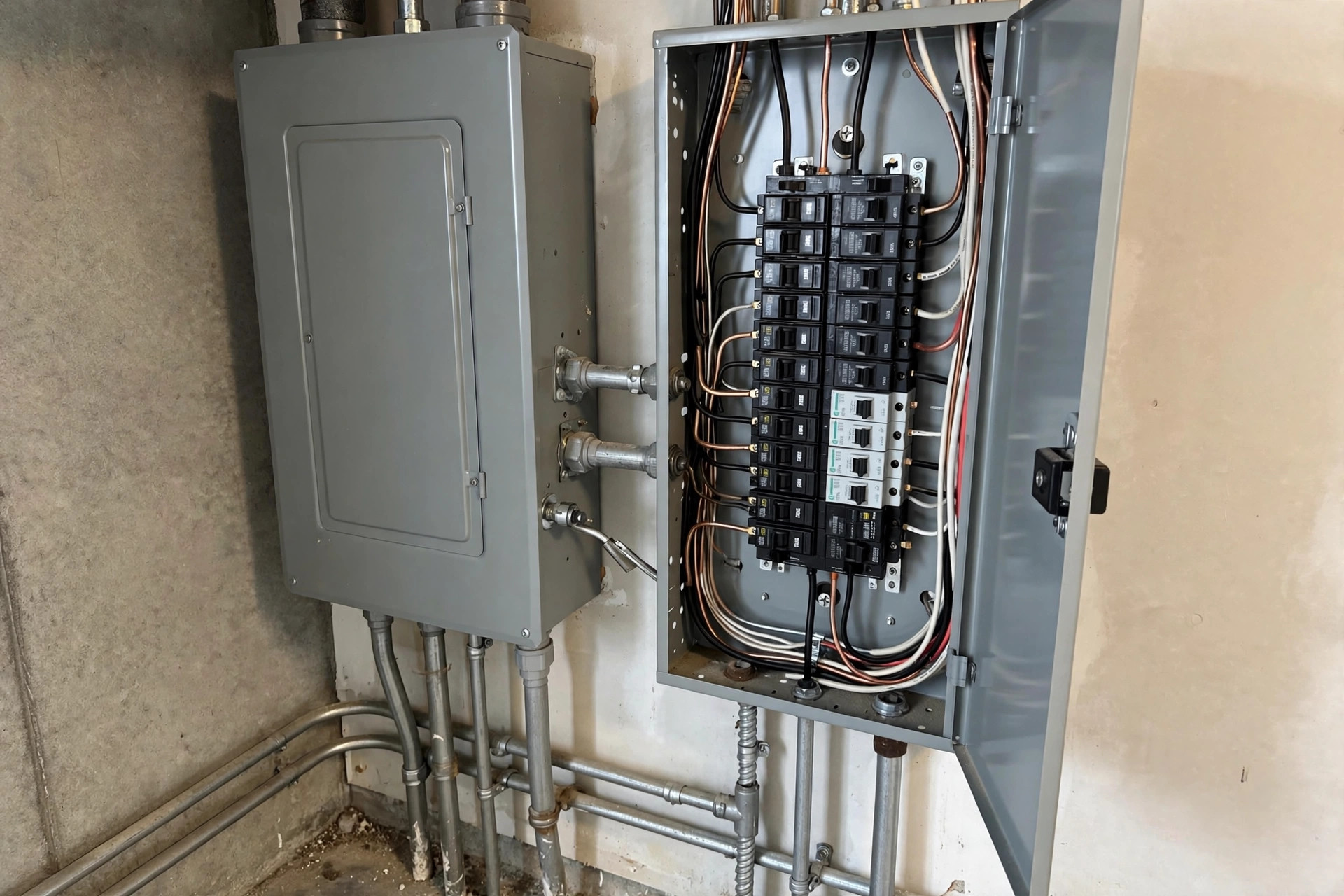
- Wire it properly. The water heater must be on a transfer switch or interlock-fed panel circuit — never a suicide cord, never an extension cord (and you can’t extension-cord 240V anyway).
- Manage it actively. On a portable generator, treat the water heater like a scheduled appliance: turn off other big loads, switch the heater breaker on, let the tank recover for an hour, then switch it back off and resume normal loads. Don’t let it cycle unattended against a maxed-out generator.
- Consider a timer. A simple water-heater timer (the same kind used for off-peak electricity savings) can restrict heating to windows when you’ve shed other loads.
What about tankless electric water heaters?
Whole-house tankless electric water heaters are dramatically worse for generator backup than tank models. A typical unit draws 18,000–36,000 watts — that’s 75–150 amps at 240V. No portable generator on the market runs one; you’d need a large standby generator (or a commercial unit) just for hot water. If you have a tankless electric unit and you’re planning backup power, the honest answer is that hot water isn’t happening on generator power — plan around it.
Small point-of-use tankless units (for a single sink) draw 3,000–3,500W at 120V or 240V — still a big bite, but manageable on a 5,000W+ generator if everything else is shed. They’re a reasonable compromise for keeping one hot tap working during an outage.
Alternatives worth considering
- Point-of-use mini tank (120V). A small 2.5–6 gallon 120V mini-tank (1,400–1,650W) under a sink gives hot water at one tap for a fraction of the load. It won’t replace the main tank, but it covers hand-washing and dishes.
- Heat-pump water heater. If you’re replacing the tank anyway, a heat-pump (hybrid) water heater draws roughly 500–1,000W in heat-pump mode — easily backed up by a mid-size generator. Higher upfront cost, much lower operating cost.
- Solar shower / camp shower. For extended outages, a $30 solar camp shower bag handles the hygiene basics with zero watts.
- Gas tankless. Heats only the water you use, needs minimal electricity (ignition and controls) — the gold standard for outage resilience if you have gas service.
What size generator do I need for an electric water heater?
Can a 5000 watt generator run a water heater?
Do both water heater elements run at the same time?
Can I run my water heater on an extension cord from the generator?
How long does a water heater stay hot without power?
Should I put my water heater on my generator backup plan?
The honest answer to “what size generator for an electric water heater” is usually “bigger than you want to buy” — which is why the best answer is often “don’t.” Heat the tank before the storm, let it coast, and spend those 4,500 watts on everything else that keeps the house running. If your situation truly demands hot water on backup power, size it with the full calculator set, wire it through proper transfer equipment, and manage the load actively.

Related Guides
Why Does My Generator Backfire? Causes and Fixes (2027)
Why does your generator backfire? An exhaust bang means unburned fuel in the muffler; a pop through the carb means lean mixture or valve trouble. Here are the fixes.

Generator Valve Adjustment: How to Set Valve Lash (2027 Guide)
Generator valve adjustment: 0.006" intake, 0.008" exhaust on Honda GX engines. Tools, TDC procedure, and symptoms of bad valve lash explained.

How to Clean and Replace a Generator Air Filter (2027 Guide)
How to clean a generator air filter: wash foam filters in soapy water and re-oil; tap out paper filters, never wash them. Full steps inside.