


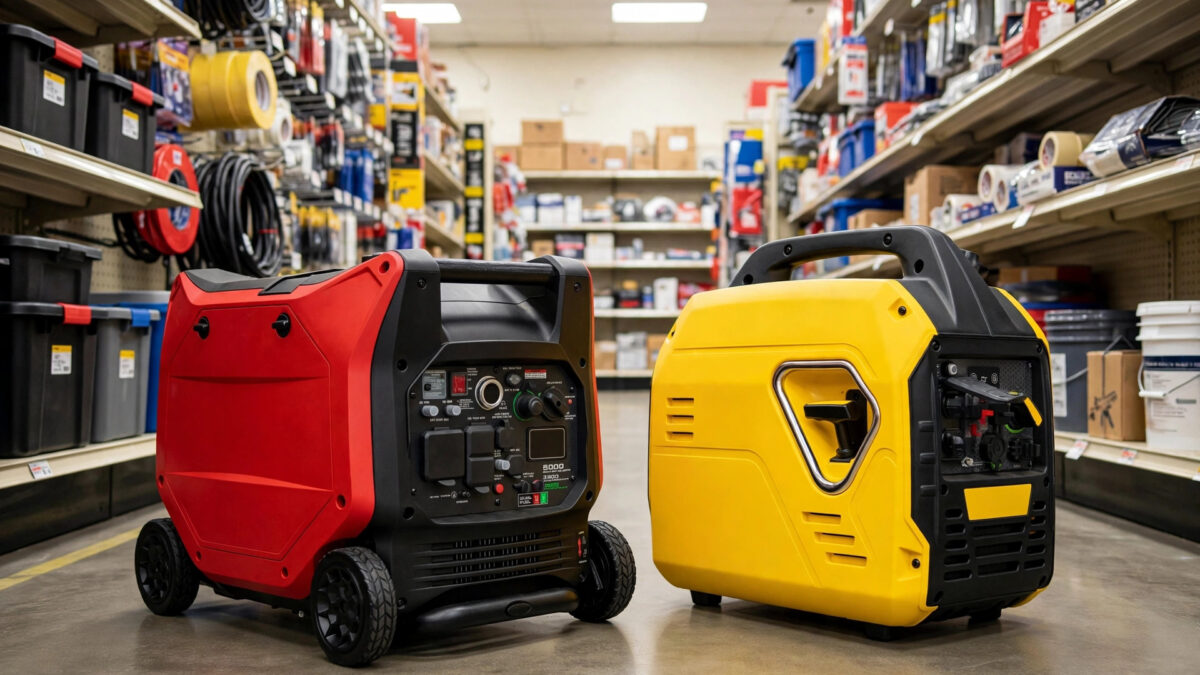
Walk into any Harbor Freight and you’ll see them: Predator generators, stacked up with prices that make you do a double-take. A 5,000-watt dual-fuel inverter with remote start for less than a Honda 2,200? It feels like a pricing error. Meanwhile Champion has spent two decades becoming the default “smart money” generator brand. So which budget brand actually deserves your money in 2027?
Short answer: Champion is the safer buy for most people — better warranty, nationwide service, and you can buy it online with delivery. Predator wins on raw power-per-dollar if you live near a Harbor Freight and don’t mind the tradeoffs. Here’s the full breakdown.
Key takeaways
- Predator is Harbor Freight-exclusive — no Amazon, no delivery; you haul it home yourself.
- Champion offers a 3-year limited warranty; Predator’s standard warranty is 90 days (extended plans sold separately).
- Head-to-head on specs, Predator often gives more watts per dollar — the Predator 5000 undercuts comparable Champions by $100+.
- Champion has dual-fuel across the lineup, a nationwide service network, and free lifetime tech support.
- Both brands now include CO auto-shutoff (Predator CO Secure, Champion CO Shield).
Predator vs Champion at a glance
| Factor | Predator | Champion | Winner |
|---|---|---|---|
| Price per watt | Best in class (Predator 5000 ~$750–$850) | Excellent (201319 ~$850–$950) | Predator |
| Where to buy | Harbor Freight stores only | Amazon, dealers, big-box stores | Champion |
| Warranty | 90 days standard | 3-year limited | Champion |
| Service network | Harbor Freight stores | Nationwide service centers | Champion |
| Dual-fuel options | Yes (5000 and others) | Yes — across most of lineup | Tie |
| CO safety | CO Secure auto-shutoff | CO Shield auto-shutoff | Tie |
| Resale value | Weak | Moderate | Champion |
Price: Predator’s home turf
This is why Predator exists. The Predator 5000 — 5,000 starting watts, 3,900 running watts on gasoline, dual-fuel, remote start, Super Quiet enclosure — typically sells for $750–$850 at Harbor Freight, and it goes on sale regularly. The closest Champion, the 201319 (4,500 starting / 3,500 running, dual-fuel, electric start), runs $850–$950. That’s $100+ less for 500 more starting watts and 400 more running watts.
The gap holds across the lineup. Predator’s strategy is simple: fewer SKUs, massive volume through Harbor Freight’s store network, minimal marketing. Champion has broader distribution costs and a bigger support operation to fund. If your budget is fixed and watts are the priority, Predator’s math is hard to argue with.
Where you buy matters more than you think
Here’s the catch with Predator: it’s Harbor Freight or nothing. No Amazon listing, no delivery to your door — you drive to the store, load a 115-pound generator into your truck, and drive home. If you live 10 minutes from a Harbor Freight, that’s a non-issue. If the nearest one is an hour away, factor in your time and gas.
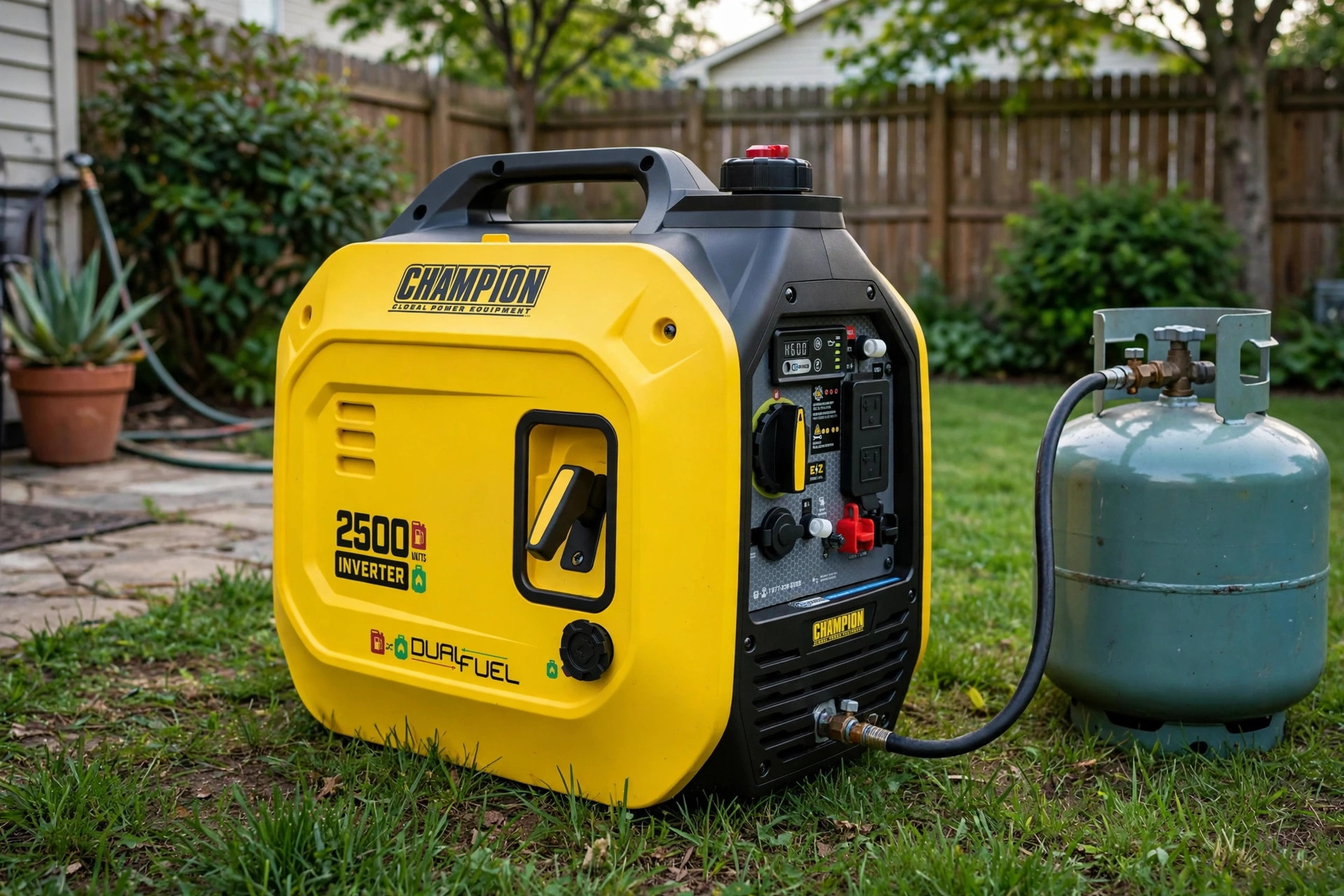
Champion sells everywhere: Amazon with Prime delivery, Tractor Supply, Costco, independent dealers. The Champion 201319 shows up at your door in a box. For anyone who can’t easily haul a generator home — or who just values the convenience — that distribution advantage is real.
Warranty: Champion’s biggest edge
This is the section that changes minds. Champion’s standard warranty is 3 years limited, plus free lifetime technical support from real humans. Predator’s standard warranty is 90 days. Harbor Freight sells extended protection plans, but that’s an extra purchase on top of an already budget-priced machine.
Think about what that signals. A company offering a 3-year warranty has priced in the expected failure rate over three years. A 90-day warranty prices in 90 days. For a machine you might depend on during a week-long outage in year two, that difference isn’t abstract — it’s the whole point of a warranty.
Head-to-head: Predator 5000 vs. Champion 201319
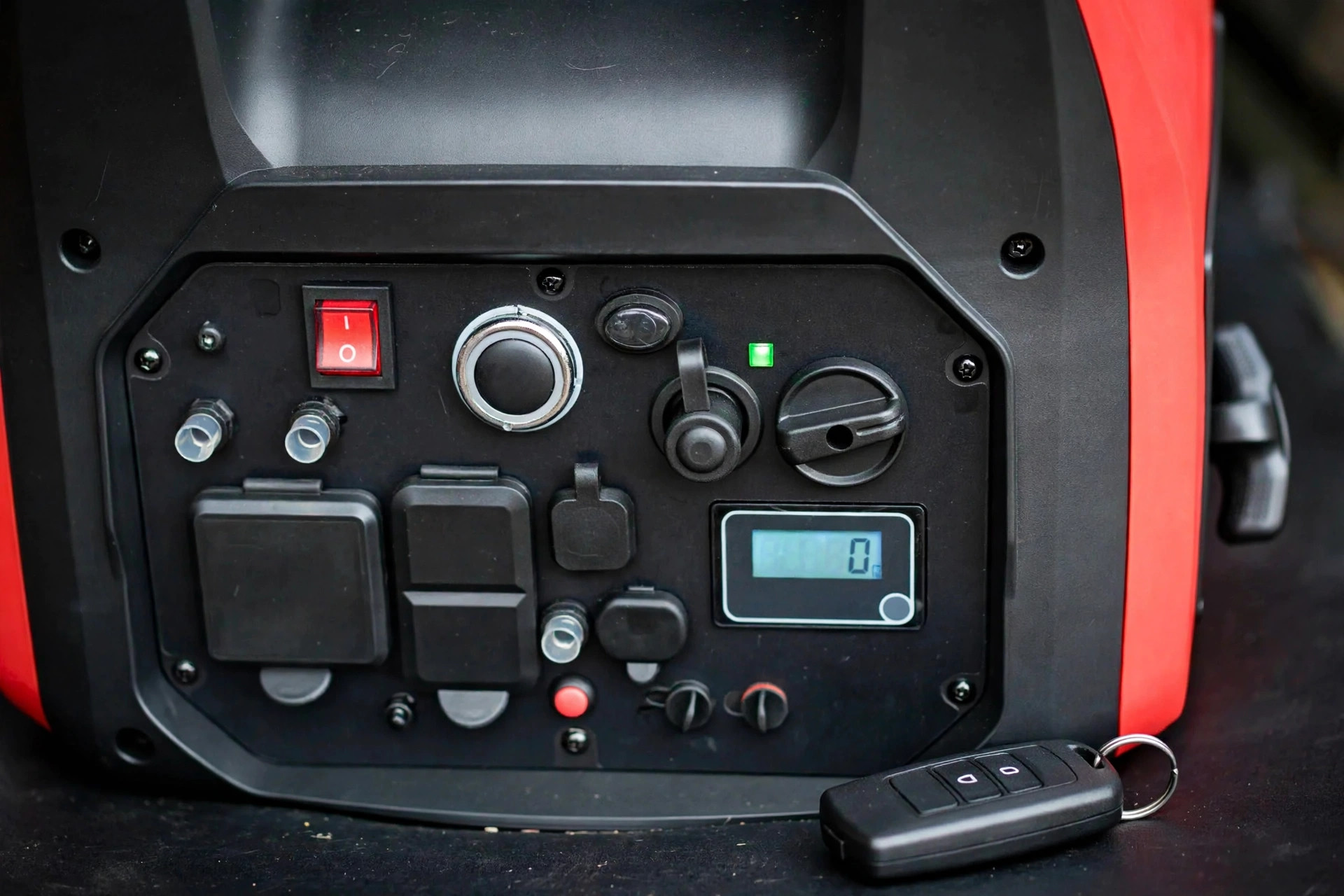
These two are the most cross-shopped models in the budget class, so let’s line them up. The Predator 5000 (224cc) makes 5,000 starting / 3,900 running watts on gas and 3,600 running on propane, runs about 13.5 hours at 25% load, and hits 61 dBA. The Champion 201319 (212cc) makes 4,500 starting / 3,500 running on gas and 3,150 on propane, runs up to 14 hours on gas and 21 hours on propane, at 61 dBA. Both have remote/electric start, both are RV-ready with TT-30R outlets, both have CO auto-shutoff.
The Predator gives you more power and a newer EFI option (SKU 71424) for easier starting. The Champion gives you longer propane runtime, a lighter package (99 lb vs. 115 lb), and that 3-year warranty. On specs alone it’s close; on ownership, Champion pulls ahead.
Service and parts
Champion’s nationwide service center network and parts availability are meaningfully better. Need a carburetor or a control board in year three? Champion stocks parts and their tech support will walk you through the repair. Predator parts go through Harbor Freight — availability is spottier, and the short warranty means you’re often on your own after 90 days anyway. The Predator owner community is enthusiastic and helpful (there are great YouTube teardown channels), but that’s not the same as a manufacturer support line.
Which should you buy?
Buy Predator if: you live near a Harbor Freight, your budget is tight and every watt counts, and you’re comfortable doing your own maintenance. The Predator 5000 is an enormous amount of generator for the money — just go in with eyes open about the warranty.
Buy Champion if: you want the warranty and support to match the purchase, you prefer doorstep delivery, or this generator is your family’s outage lifeline rather than a project. The Champion 201319 is the pick I’d hand to a relative without a second thought.
One more consideration: if you’re still deciding between fuel types, read our gasoline vs. propane breakdown — both of these are dual-fuel, and which fuel you stockpile matters as much as which brand you buy. And if you haven’t sized your load yet, our generator sizing guide will tell you whether 5,000 watts is even the right class.
What hundreds of owner reviews actually say
Aggregate the forums, retail reviews, and YouTube comments and a clear picture emerges. Predator 5000 owners praise three things relentlessly: the remote start (starting the generator from inside the RV on a rainy night never gets old), the value (nothing else gives you 5,000 dual-fuel watts at this price), and the noise (61 dBA surprises people who expected Harbor Freight loud). The EFI version gets special mention for cold-weather starting.
Complaints cluster just as clearly. The electric-start battery drains if the generator sits for months — owners recommend a battery tender as standard equipment, not an accessory. The 115-pound weight draws grumbles from anyone who has to lift it. And the 90-day warranty comes up constantly: not because units fail constantly, but because buyers feel the clock ticking. Champion 201319 reviews show the mirror image: praise for the 3-year warranty and support, complaints about the propane power drop and the parallel kit being sold separately.
The takeaway from the crowd: Predator owners love their generators and would buy again — they just wish the warranty matched their confidence.
Total cost: Predator + extended plan vs. Champion
Let’s do honest math. Predator 5000 at ~$800 plus Harbor Freight’s extended protection plan (~$100–$150 depending on term) puts you around $900–$950 with multi-year coverage. The Champion 201319 at ~$900 includes a 3-year warranty and free lifetime tech support out of the box. The famous price gap mostly evaporates once you buy the protection a sane person wants.
What remains is the convenience gap: Champion ships to your door and services nationally; Predator requires the store trip and self-reliance. And the spec gap: Predator still gives you 500 more starting watts. Priced with protection, I’d frame the choice as $900ish for more watts and DIY support (Predator) versus $900ish for fewer watts and real support (Champion). When the money’s equal, most people should take the support.
Which Predator 5000 SKU should you buy?
Harbor Freight sells three versions and the differences matter. SKU 71424 is the EFI (electronic fuel injection) version, California-compliant — electronic fuel injection means easier starting, especially cold, and slightly better fuel economy. This is the one to get if your store stocks it. SKU 72872 is the standard CO Secure version, also California-compliant — same specs, carbureted instead of EFI. SKU 71367 is the 49-state CO Secure version for buyers outside California.
All three share the core specs: 5,000 starting watts, 3,900 running on gas, 3,600 on propane, remote start, and the Super Quiet enclosure. The EFI version typically costs a bit more and is worth it in cold climates — carbureted small engines are fussier below freezing, and EFI largely solves that. Check your local store’s inventory online before driving over; the EFI version sells out first during storm season.
Whichever SKU you choose, buy the extended protection plan at checkout and a battery tender on the same trip. Future you will be grateful.
Frequently asked questions
Are Predator generators reliable?
Can you buy Predator generators on Amazon?
Which is better: Predator 5000 or Champion 201319?
Do Predator generators have CO shutoff?
Is the Predator 5000 dual fuel?
Our verdict
Champion is the better buy for most people. The 3-year warranty, nationwide service, and online availability are worth the $100 premium over the Predator 5000. But if you live near a Harbor Freight, do your own wrenching, and want maximum watts per dollar, the Predator 5000 is legitimately great value — just buy the extended protection plan and consider it part of the price.
How we researched this: We compared current specs and pricing from Harbor Freight and Amazon listings, warranty terms from both manufacturers, and owner feedback across forums and retail reviews. Predator is Harbor Freight-exclusive, so no Amazon ASIN exists for it; we link to Harbor Freight directly without affiliate markup.

Related Guides
Westinghouse iGen4500DF Review: The Dual-Fuel Inverter to Beat in 2027
Westinghouse iGen4500DF review: 4,500W dual-fuel inverter, 52 dBA, remote start, RV-ready. We test the specs, noise, and value against Honda in 2027.

Champion vs Generac Generators: Which Brand Is Better in 2027?
Champion vs Generac: Champion wins portable value, Generac wins standby. We compare lineups, reliability, safety tech, and support to pick the right brand.
Inverter vs Conventional Generators: Which Should You Buy in 2027?
Inverter vs conventional generators: inverters win on noise, fuel use and clean power; conventional wins on watts per dollar. Here's how to choose in 2027.