



For one major power tool at a time, a 3,000–4,000-watt generator covers nearly every common jobsite tool — circular saw, miter saw, drill, sander. A 10-inch table saw is the hungriest common tool (up to 2,000W running, 4,500W surge), so if that’s in the mix, step up to a 5,000–6,500W unit. For multiple tools running simultaneously, add the running watts together, add the single largest startup surge, and add 25% headroom.
Key takeaways
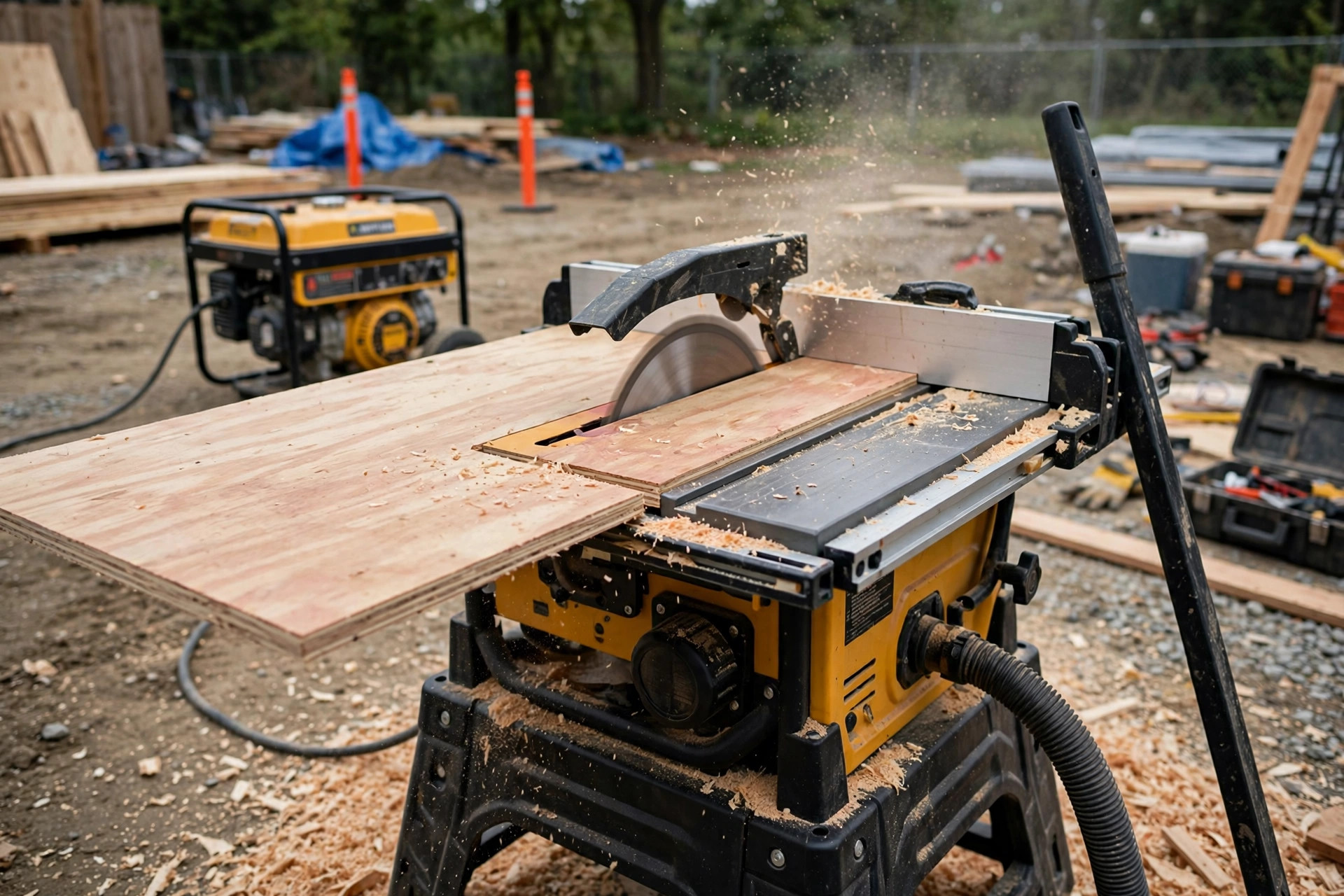
- Common tool loads: circular saw 1,400W/2,300W surge; miter saw 1,800W/3,300W; table saw (10″) 1,800–2,000W running with up to 4,500W surge.
- One tool at a time: 3,000–4,000W generator is the sweet spot; table-saw duty wants 5,000W+.
- Sizing formula: sum of running watts + largest single starting surge + 25% margin.
- Contractor-style generators with GFCI outlets, full-power switch, and low-idle mode are built for this work.
- Cord gauge matters as much as generator size — 12 AWG minimum for tools, 10 AWG for long runs.
- Never run the generator in an enclosed space on site; CO rules apply at work too.
Power tool wattage chart
These are industry-standard estimates (running / starting watts). Always check your specific tool’s nameplate — a 15-amp tool at 120V can draw up to 1,800W running, and cheap tools are often less efficient than the chart suggests.
| Tool | Running watts | Starting watts | Notes |
|---|---|---|---|
| Circular saw (7-1/4″) | 1,400 | 2,300 | The baseline jobsite tool |
| Miter saw (10″) | 1,800 | 3,300 | Big surge on blade spin-up |
| Table saw (10″) | 1,800–2,000 | 2,000–4,500 | Hungriest common tool; check yours |
| Reciprocating saw | 960 | 960 | Minimal surge |
| Belt sander (3″) | 1,200 | 2,400 | 2× surge |
| Hand drill (1/2″) | 600 | 900 | Easy load |
| Angle grinder | 1,400 | 2,500 | High surge |
| Air compressor (1/2 HP) | 1,000 | 2,000 | Cycles all day — size carefully |
| Air compressor (1 HP) | 1,400 | 3,600 | Frequent restarts punish small generators |
| Work light (halogen) | 1,000 | 1,000 | No surge; switch to LED (50–100W) |
The sizing math, worked out
The method generator manufacturers and pros use:
Total running watts of everything running at once + the single highest starting watts + 25% margin.
Example — two carpenters framing: circular saw + miter saw (used alternately, never truly simultaneously) + drill charging + LED work lights:
- Running: 1,400 (circ saw) + 100 (lights) + 100 (charger) = 1,600W
- Highest surge: 3,300W (miter saw spin-up)
- Total: 1,600 + 3,300 = 4,900W → +25% = ~6,100W
So a 6,000–6,500W generator handles that crew comfortably. If only one saw runs at a time (the realistic case), you could argue for less — but the day someone fires the miter saw while the circ saw is mid-cut, you’ll be glad for the headroom.
Table-saw example — solo woodworker ripping sheet goods: table saw 2,000W running / 4,500W surge + dust collector 1,000W running / 2,000W surge + lights 100W. Running: 3,100W. Highest surge: 4,500W. Total: 7,600W + 25% ≈ 9,500W. That’s why serious shop-on-wheels setups run 9,000W+ units — the table saw plus dust collection is genuinely a big load.
Plug your own tool list into our generator size calculator to get your number.
What to look for in a jobsite generator
- GFCI-protected outlets. Jobsites are wet, dusty, and full of grounded metal. GFCI is an OSHA expectation and a genuine lifesaver.
- Full-power / 120-240V switch. Lets you pull the generator’s full wattage from the 120V outlets instead of splitting it across 120/240 — useful when all your tools are 120V.
- Low-idle (eco) mode. Engine drops to idle when the load disappears — saves fuel and hearing during the 70% of the day you’re measuring, not cutting.
- Fuel capacity and runtime. A 6,500W contractor unit burns roughly 0.7–1 gallon per hour under real jobsite load. A 7-gallon tank gets you through a workday; a 4-gallon tank means a midday fuel run.
- Frame and wheels. Jobsite generators live a rough life. A full roll cage, never-flat wheels, and lifting eye aren’t luxuries.
- Clean enough power for chargers. Battery chargers and sensitive electronics prefer stable voltage — most modern contractor units have AVR (automatic voltage regulation); inverter models are cleanest.
What about running a welder?
Welders come up on jobsites constantly, and they’re a different animal from saws. A small 120V stick or MIG welder draws roughly 1,800–2,500W running with minimal surge — a 5,000W generator handles one fine. But step up to a 240V welder and you’re looking at 5,000–8,000W of draw, which means a 9,000W+ generator with a proper 240V outlet.
The gotcha with welding on generator power is voltage stability under rapidly changing load. Every time you strike an arc, the load slams on; every time you break it, the load vanishes. Cheap generators with sloppy voltage regulation produce an unstable arc — spattery, hard to control. If welding is a primary use, prioritize a generator with good AVR (automatic voltage regulation) or an inverter model, and size it generously: welders punish undersized generators more visibly than any saw will.
Also note duty cycle: a welder rated 2,500W at 20% duty cycle isn’t a continuous 2,500W load. Size for the rated draw anyway — the generator doesn’t care about duty cycle when the arc is struck.
Cords and connections on site
The generator can be perfect and the setup can still fail at the cord. Jobsite rules:
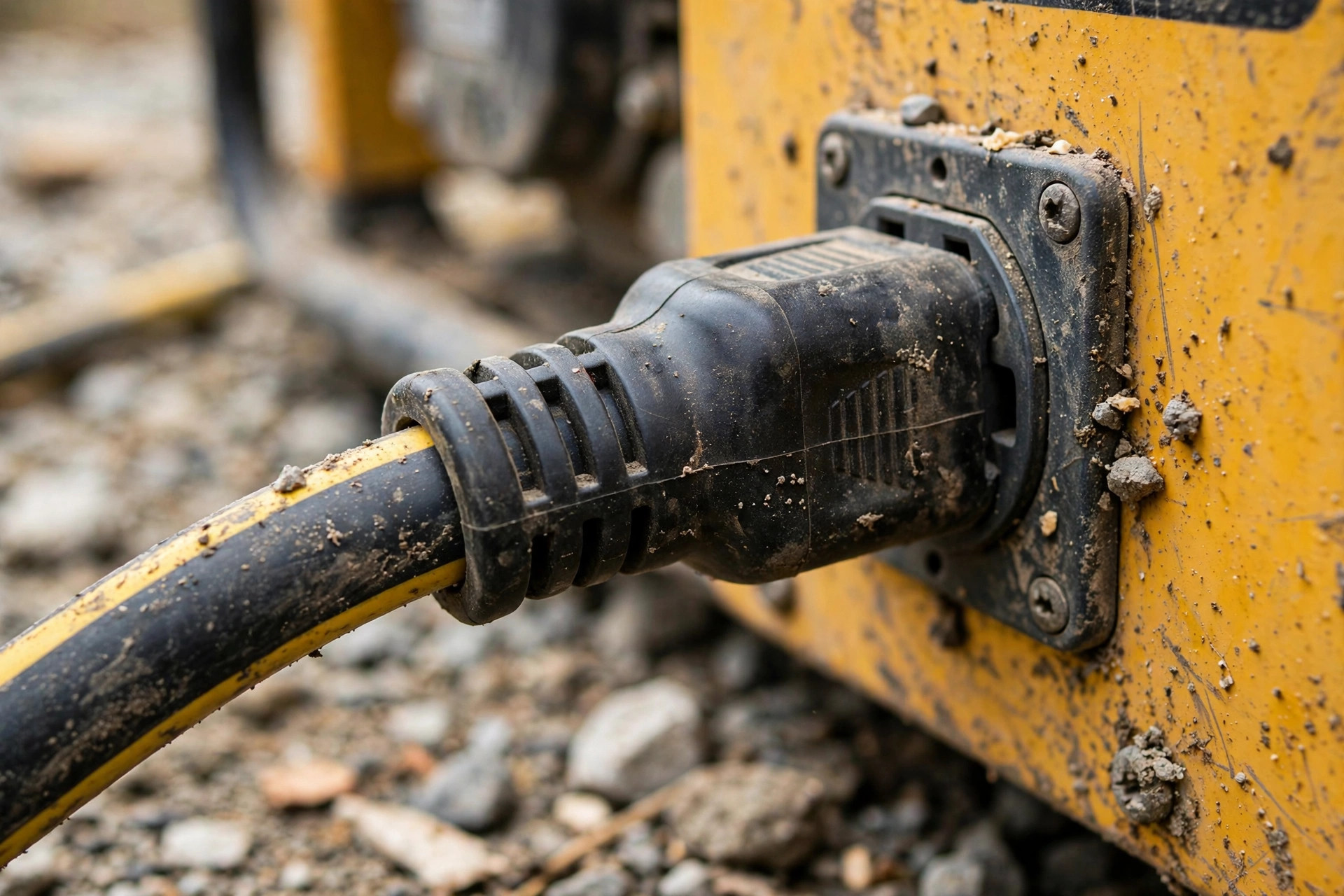
- 12 AWG minimum for any power tool; 10 AWG for runs over 50 feet or for the table saw.
- Keep cords as short as practical — every extra 25 feet costs you voltage.
- Fully uncoil cords; inspect jackets daily for cuts from the site.
- One tool per cord when possible; never daisy-chain.
- Keep connections off wet ground — even a scrap of plywood under a junction beats a puddle.
Breakers vs. generator overload: know which tripped
When everything goes dark mid-cut, figure out what tripped before you just reset and continue. If the generator’s own overload breaker tripped, you exceeded its capacity — shed a load or stagger your tools. If a GFCI tripped, you may have a ground fault: a nicked cord, a wet connection, or a failing tool. Resetting a GFCI repeatedly without finding the cause is asking for a shock. And if the tool’s own thermal overload tripped (common on saws working hard), let the motor cool for 10–15 minutes — it’s protecting itself from the heat that voltage sag or a dull blade caused. Each trip is the system telling you something; listen to it.
Safety on the jobsite
- CO: never run the generator in a garage, basement, or enclosed structure under construction — even “temporarily.” Outside, exhaust away from workers.
- Grounding: most portable generators used with cord-connected tools don’t need a separate ground rod (the frame serves as ground), but check the manual and local code — some jurisdictions differ.
- Refueling: shut the generator down and let it cool before refueling. Hot muffler + gasoline splash is exactly as bad as it sounds.
- Weather: generators in rain need an open-sided canopy — never an enclosed tent or tarp draped over the unit.
- Lock it up: jobsite generator theft is rampant. Chain it to something immovable, and don’t leave it running unattended.
What size generator do I need for power tools?
Will a 3500 watt generator run a table saw?
Can I run a miter saw and a table saw on the same generator?
What gauge extension cord should I use for power tools?
Do I need an inverter generator for power tools?
How much fuel does a jobsite generator use?
The jobsite formula is simple: size for the biggest surge you’ll ever see, buy the cord gauge the distance demands, and keep the generator outside with the exhaust pointed away from the crew. Do that and the generator becomes the least of your worries — which is exactly what you want from a tool. For help with the math, our sizing calculators cover tools, appliances, and whole-site loads.

Related Guides
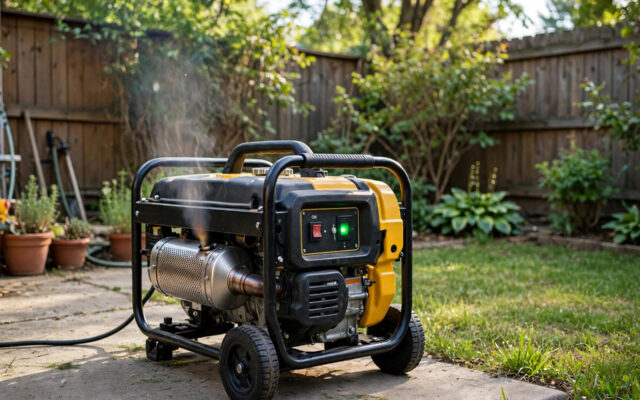
Why Does My Generator Backfire? Causes and Fixes (2027)
Why does your generator backfire? An exhaust bang means unburned fuel in the muffler; a pop through the carb means lean mixture or valve trouble. Here are the fixes.

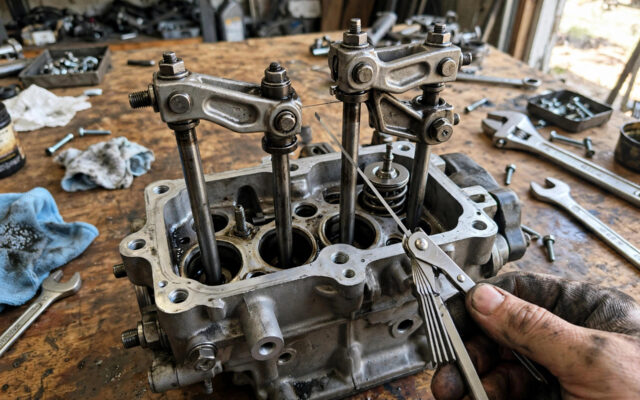
Generator Valve Adjustment: How to Set Valve Lash (2027 Guide)
Generator valve adjustment: 0.006" intake, 0.008" exhaust on Honda GX engines. Tools, TDC procedure, and symptoms of bad valve lash explained.

How to Clean and Replace a Generator Air Filter (2027 Guide)
How to clean a generator air filter: wash foam filters in soapy water and re-oil; tap out paper filters, never wash them. Full steps inside.