


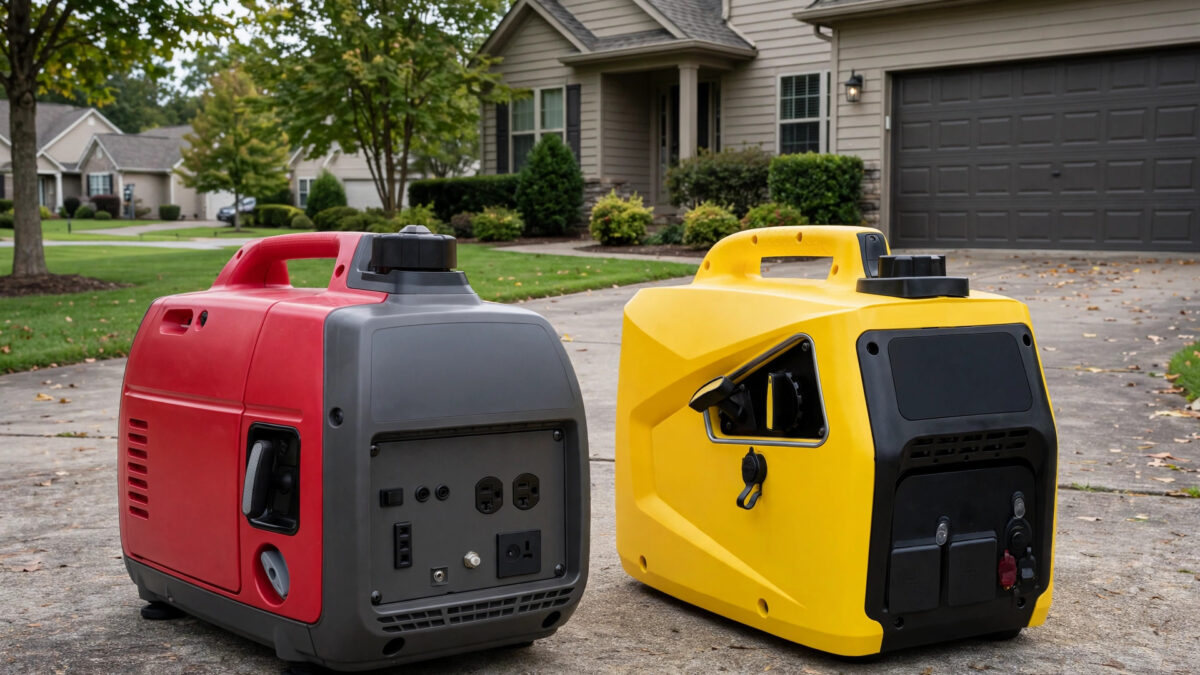
Every generator forum has this thread, and it never dies: Honda or Champion? It’s the classic premium-vs-value debate, and I’ve watched it play out across hundreds of owner reports. Here’s my honest take up front: Honda builds the better generator. Champion builds the better deal. Which one you should buy depends on what you value more — decades of bulletproof reliability, or 80% of the performance at half the price with more features thrown in.
Key takeaways
- Honda costs roughly 1.5–2x more than a comparable Champion — you’re paying for engine longevity and resale value.
- Champion wins on features per dollar: dual-fuel options, electric start, and CO Shield come standard on models where Honda charges extra or doesn’t offer them.
- Both brands carry strong warranties: Honda 3-year (residential and commercial), Champion 3-year limited with free lifetime tech support.
- For occasional outage use (under 50 hours/year), Champion’s value is hard to beat. For daily or professional use, Honda’s durability pays off.
- Resale value strongly favors Honda — used EU2200i units hold value like few other generators.
Honda vs Champion at a glance
| Factor | Honda | Champion | Winner |
|---|---|---|---|
| Price | Premium (EU2200i ~$1,100–$1,300) | Value (comparable models ~$500–$900) | Champion |
| Engine longevity | Legendary; 2,000+ hour reports common | Good; fewer high-hour reports | Honda |
| Noise | 48–57 dBA (EU2200i) | 53–64 dBA depending on model | Honda |
| Fuel options | Gasoline only (most models) | Dual-fuel widely available | Champion |
| Warranty | 3-year residential + commercial | 3-year limited + lifetime tech support | Tie |
| Service network | Huge dealer network | Nationwide service centers | Honda (slight) |
| Resale value | Excellent | Average | Honda |
Price: Champion wins by a mile
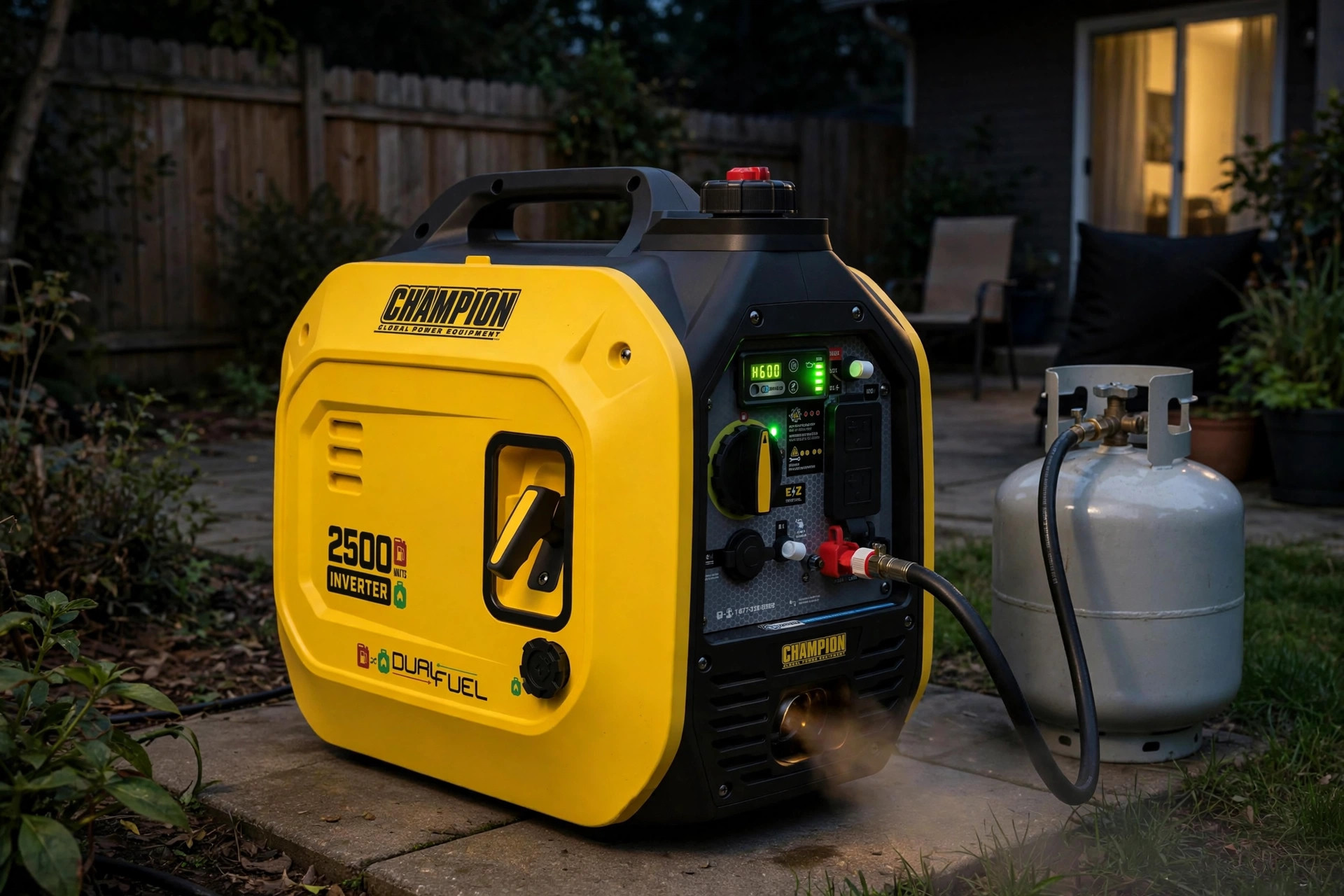
Let’s not dance around it. A Honda EU2200i runs $1,100–$1,300. Champion’s 2500-watt dual-fuel inverter (model 201050) — more starting watts, runs on propane too — sells for around $430–$550. That’s not a small gap; it’s a different product tier. Even stepping up to Champion’s 4,500-watt dual-fuel RV inverter (201319, ~$850–$950), you’re still under the price of Honda’s 2,200-watt single-fuel unit.
The question is what that premium buys. With Honda, you’re paying for the GXR120 engine’s reputation, tighter manufacturing tolerances, and a machine that routinely shows up in “still running after 15 years” stories. With Champion, you’re paying for a generator — a good one — plus features Honda doesn’t offer at any price in this class, like dual-fuel capability and electric start.
Reliability and engine longevity: Honda’s crown jewel
This is where Honda earns its price. The EU-series engines are famously overbuilt — owners regularly report 2,000+ hours with basic maintenance, and Honda’s commercial warranty (same 3 years as residential) tells you how confident they are. Small-engine mechanics will tell you the same thing: Hondas come in for maintenance, not repairs.
Champion’s reliability is genuinely good — not “good for the price,” just good. Their engines are well-regarded in the value tier, and failure rates in owner reviews are low. But the honest difference shows up at high hours and hard use. For a homeowner who runs the generator 30 hours a year during outages, that difference may never materialize. For a contractor or food-truck owner running hundreds of hours a year, it’s the whole ballgame.
Noise: Honda is quieter
The EU2200i runs 48 dBA at quarter load and 57 dBA at rated load — genuinely conversation-quiet. Champion’s inverters are quiet too (the 2500W dual-fuel is rated 53 dBA), but across the lineup Honda holds a consistent 3–5 dB edge at comparable loads. In a campground with quiet hours, that edge is the difference between nobody noticing and somebody noticing.
Features: Champion gives you more toys
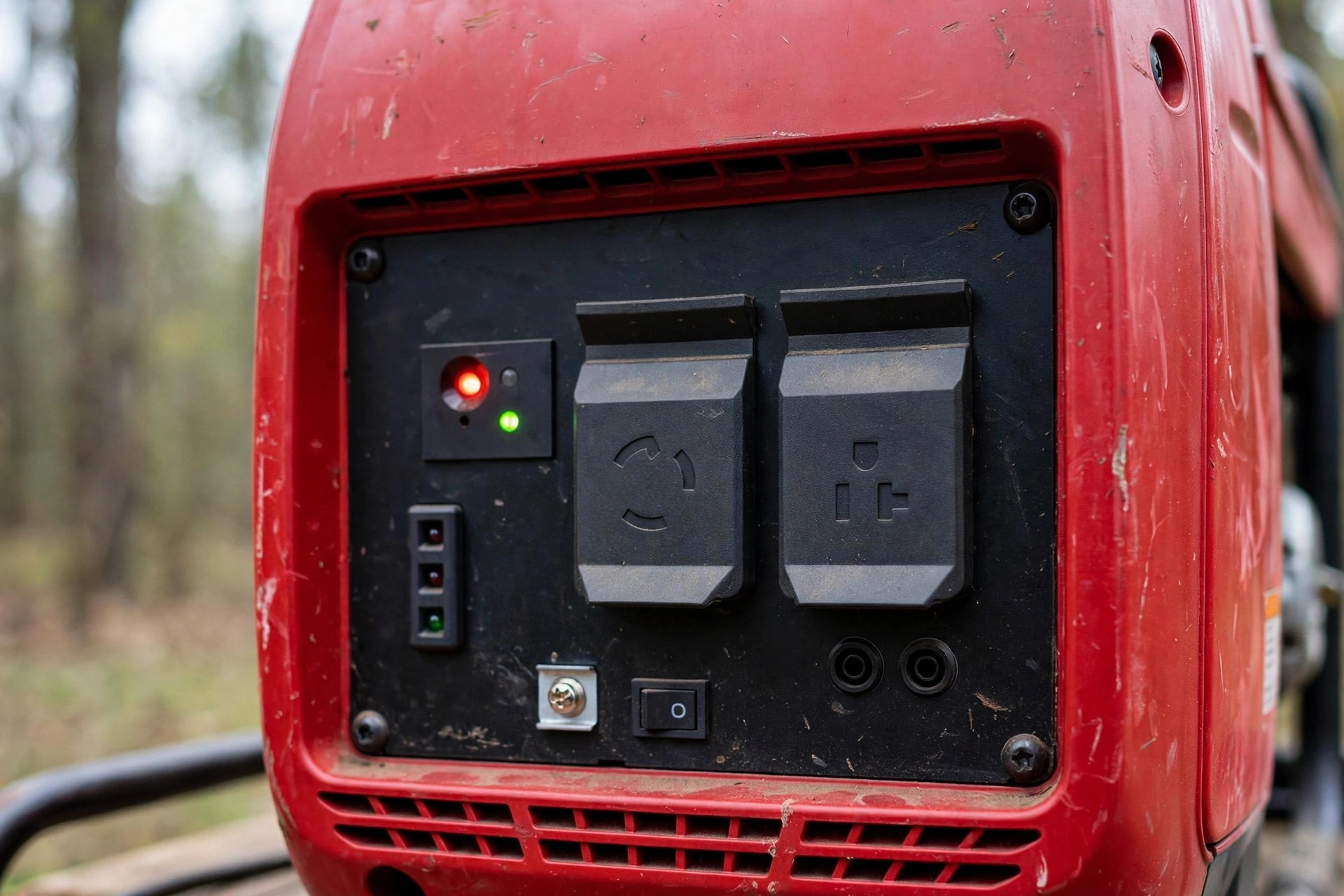
This is where the value proposition flips hard. Champion’s lineup is loaded: dual-fuel (gasoline + propane) across most of the range, electric and remote start on mid-size units, CO Shield auto-shutoff, Intelligauge power meters, and USB ports. Honda’s EU2200i added CO-MINDER and Bluetooth monitoring in recent versions, but there’s no dual-fuel Honda portable at any price, and electric start only appears higher up the range. If your priority list includes propane capability or push-button starting, Champion isn’t the alternative — it’s the only choice.
Warranty and support: closer than you’d think
Honda’s 3-year warranty covers residential and commercial use equally, backed by one of the largest small-engine dealer networks in the world. Parts availability for a 10-year-old Honda is rarely a problem. Champion counters with a 3-year limited warranty, free lifetime technical support, and a nationwide service center network that’s better than most value brands. In practice, both companies stand behind their products — this one’s nearly a tie, with a slight edge to Honda on long-term parts availability.
Which should you buy?
Buy Honda if: you run a generator professionally or daily, you want the quietest machine in the class, you keep equipment for 10+ years, or resale value matters to you. The Honda EU2200i remains the benchmark 2,200-watt inverter for a reason.
Buy Champion if: you want the most generator per dollar, you want dual-fuel capability, you need electric start without paying a premium, or your generator runs a few dozen hours a year during outages. The Champion 2500W dual-fuel inverter and the Champion 201319 4500W dual-fuel are the value picks I’d actually recommend to family.
My personal rule of thumb: under 50 hours a year, buy Champion and spend the savings on a transfer switch or a quality extension cord. Over 200 hours a year, buy Honda and don’t look back. Between those numbers, buy whichever one has the features you actually need — dual-fuel and electric start are real, daily quality-of-life differences, not spec-sheet padding.
Ownership costs over 10 years
Purchase price is only the first check you write. Over a decade, fuel and maintenance add up — and this is where the brands diverge in interesting ways. Honda’s GXR120 sips fuel: the EU2200i runs up to 8.1 hours on 0.95 gallons at quarter load. Comparable Champions are slightly thirstier per watt, though the difference amounts to maybe $15–$25 a year for typical outage-only use. Nobody should pick a brand over that.
Maintenance costs tell a clearer story. Both need oil changes (every 50–100 hours or annually), air filter cleanings, and spark plugs. Honda parts cost more — an OEM air filter or carburetor for the EU2200i runs noticeably above Champion equivalents — but they’re available everywhere, including 15-year-old models. Champion parts are cheaper and their free lifetime tech support will walk you through the repair, which offsets the price gap for DIY owners.
The big swing factor is resale. A 5-year-old EU2200i in good shape routinely sells for 60–70% of its new price. A 5-year-old Champion sells for 35–45%. If you upgrade equipment every few years, Honda’s retained value quietly refunds a few hundred dollars of the premium. If you run a generator until it dies, resale is irrelevant and Champion’s lower buy-in wins outright.
The feature gap that matters day-to-day
Specsheets aside, three features change how a generator feels to own. First, dual-fuel: Champion offers it across the lineup, Honda doesn’t offer it at all on portables. If you want propane’s indefinite shelf life (see our gasoline vs. propane guide), Champion is your only option between these two brands. Second, electric start: standard on mid-size Champions, absent on the EU2200i. Anyone with a bad shoulder or arthritis knows exactly what that’s worth. Third, monitoring: Honda’s Bluetooth app versus Champion’s Intelligauge display. Both work; the app is slicker, the display never needs your phone charged.
My advice: list the features you’ll actually touch every outage. If propane and push-button starting are on that list, the brand decision makes itself.
The bottom line by buyer type
Still torn? Match yourself to the profile. The outage prepper (generator runs 20–50 hours a year): buy Champion, spend the savings on a transfer switch and a quality cord. The reliability difference will never show up in your usage. The RVer (weekend trips, campgrounds): Honda if noise is the priority, Champion if propane flexibility and electric start matter more — both are campground-legal and RV-ready. The contractor (daily jobsite use): Honda, no contest; the commercial warranty and high-hour durability pay for themselves. The bargain hunter: Champion, obviously — but also look at Predator if there’s a Harbor Freight nearby (see our Predator vs. Champion breakdown). The “buy it for life” buyer: Honda, and buy it once.
And if you’re choosing between specific models rather than brands, our Champion 201319 review covers the value pick most buyers actually end up with.
A note on CO safety tech
Both brands now ship CO auto-shutoff as standard — Honda’s CO-MINDER and Champion’s CO Shield. These systems monitor carbon monoxide buildup around the generator and shut it down before levels turn dangerous. It’s meaningful progress, and it’s saved lives. But understand what it doesn’t do: it doesn’t make indoor, garage, or near-window operation safe. Sensors can fail, wind can shift, and exhaust can pool in unexpected ways. The rule hasn’t changed in 30 years: generators run outdoors, 20+ feet from the house, exhaust pointed away, with battery CO detectors on every floor of your home. Buy the tech, but don’t outsource your safety to it.
Frequently asked questions
Are Champion generators as reliable as Honda?
Why are Honda generators so expensive?
Does Champion make a dual-fuel inverter?
Which brand is quieter, Honda or Champion?
Do Honda generators hold their value?
Our verdict
Honda wins on longevity, noise, and resale. Champion wins on price, features, and fuel flexibility. For most homeowners, Champion is the smarter buy — the savings are real and the reliability is plenty for outage duty. For professionals and anyone who measures generator life in thousands of hours, Honda is worth every penny. If you’re still deciding how much power you need, our generator sizing guide will get you to the right wattage first — brand comes second.
How we researched this: We compared current specifications, warranty terms, and pricing for both brands’ core lineups, analyzed hundreds of owner reviews for reliability patterns and high-hour reports, and factored in dealer network size and resale data. No manufacturer provided test units or compensation.

Related Guides
Westinghouse iGen4500DF Review: The Dual-Fuel Inverter to Beat in 2027
Westinghouse iGen4500DF review: 4,500W dual-fuel inverter, 52 dBA, remote start, RV-ready. We test the specs, noise, and value against Honda in 2027.

Champion vs Generac Generators: Which Brand Is Better in 2027?
Champion vs Generac: Champion wins portable value, Generac wins standby. We compare lineups, reliability, safety tech, and support to pick the right brand.
Inverter vs Conventional Generators: Which Should You Buy in 2027?
Inverter vs conventional generators: inverters win on noise, fuel use and clean power; conventional wins on watts per dollar. Here's how to choose in 2027.