


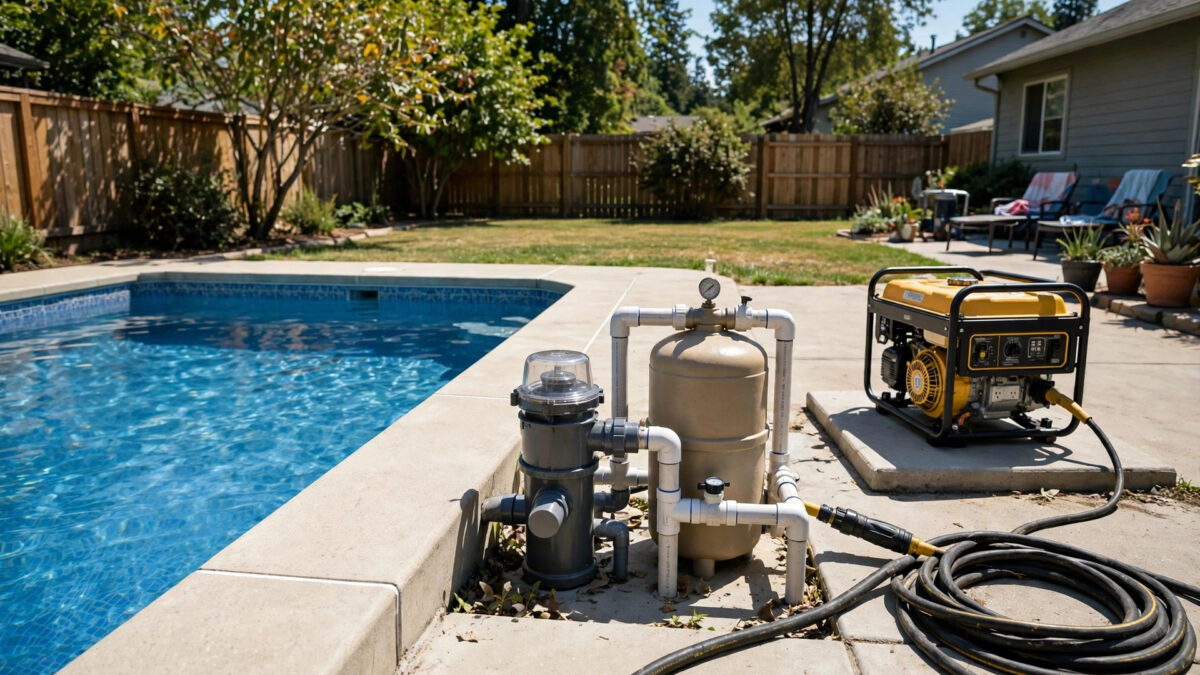
Short answer: for a typical single-speed 1 HP pool pump, buy a generator rated for at least 3,500 to 4,000 peak watts. The pump itself only draws about 1,100 to 1,700 watts while running. The problem is the starting surge — when that motor kicks on, it can gulp 3,000 to 5,000 watts for a few seconds. Size for the surge, not the running watts, or the generator will stall the moment the pump tries to start.
I’ve helped several pool owners size generators after hurricanes, and the mistake I see every time is the same: someone buys a 2,000-watt inverter because “a 1 HP motor is only 746 watts, right?” Then the pump tries to start, the generator overloads, and the pool sits stagnant for a week. Let’s make sure that doesn’t happen to you.
Key takeaways
- A 1 HP pool pump draws roughly 1,100-1,700 watts running but 3,000-5,000 watts during the 1-3 second starting surge — size the generator for the surge.
- Most pool pumps are wired for 230/240 volts, so your generator needs a 240V outlet (usually a 30-amp L14-30R twist-lock); most small inverter generators don’t have one.
- Variable-speed pumps sip power at low RPM (often under 300 watts), so they can run on a much smaller generator than single-speed models.
- Rule of thumb: pick a generator whose peak rating is at least 1.5x your pump’s running watts, and confirm the outlet matches your pump’s voltage and plug type.
- Never backfeed your house wiring — connect through a proper inlet and interlock or transfer switch installed by an electrician.
The numbers that actually matter
Pool pump motors are induction motors, and induction motors are greedy at startup. Locked-rotor current — what the motor pulls before the rotor starts spinning — is typically 4 to 6 times the running current. On a generator, that brief surge is everything. A generator that can run your pump all day can still choke on the first second.
Here are realistic planning numbers for common residential pool pumps, based on published motor data and owner measurements:
| Pump motor size | Typical running watts | Typical starting surge | Minimum generator (peak) |
|---|---|---|---|
| 3/4 HP | 900-1,400 | 2,500-4,000 | 4,000W |
| 1 HP | 1,100-1,700 | 3,000-5,000 | 4,500-5,000W |
| 1.5 HP | 1,600-2,300 | 4,500-7,000 | 7,000-7,500W |
| 2 HP | 2,100-3,000 | 6,000-9,000 | 9,000W+ |
These are planning ranges, not guarantees. Two pumps both labeled “1 HP” can draw noticeably different power — which brings me to the part nobody tells you.
Why the HP rating on the box lies to you
Here’s something that confused me when I first started sizing pumps: 1 HP equals 746 watts. So why does a “1 HP” pool pump draw 1,300 watts? Because that 746-watt figure is mechanical output — the power delivered to the water. The motor has to pull more electrical power from the wall to overcome motor losses, wiring losses, and hydraulic losses.
It gets worse. Older pumps often list “total HP” or “service factor HP” on the nameplate, which inflates the number beyond the rated HP. A motor labeled 1 HP with a 1.25 service factor might behave like a 1.25 HP motor electrically — drawing around 1,600 watts at full load.
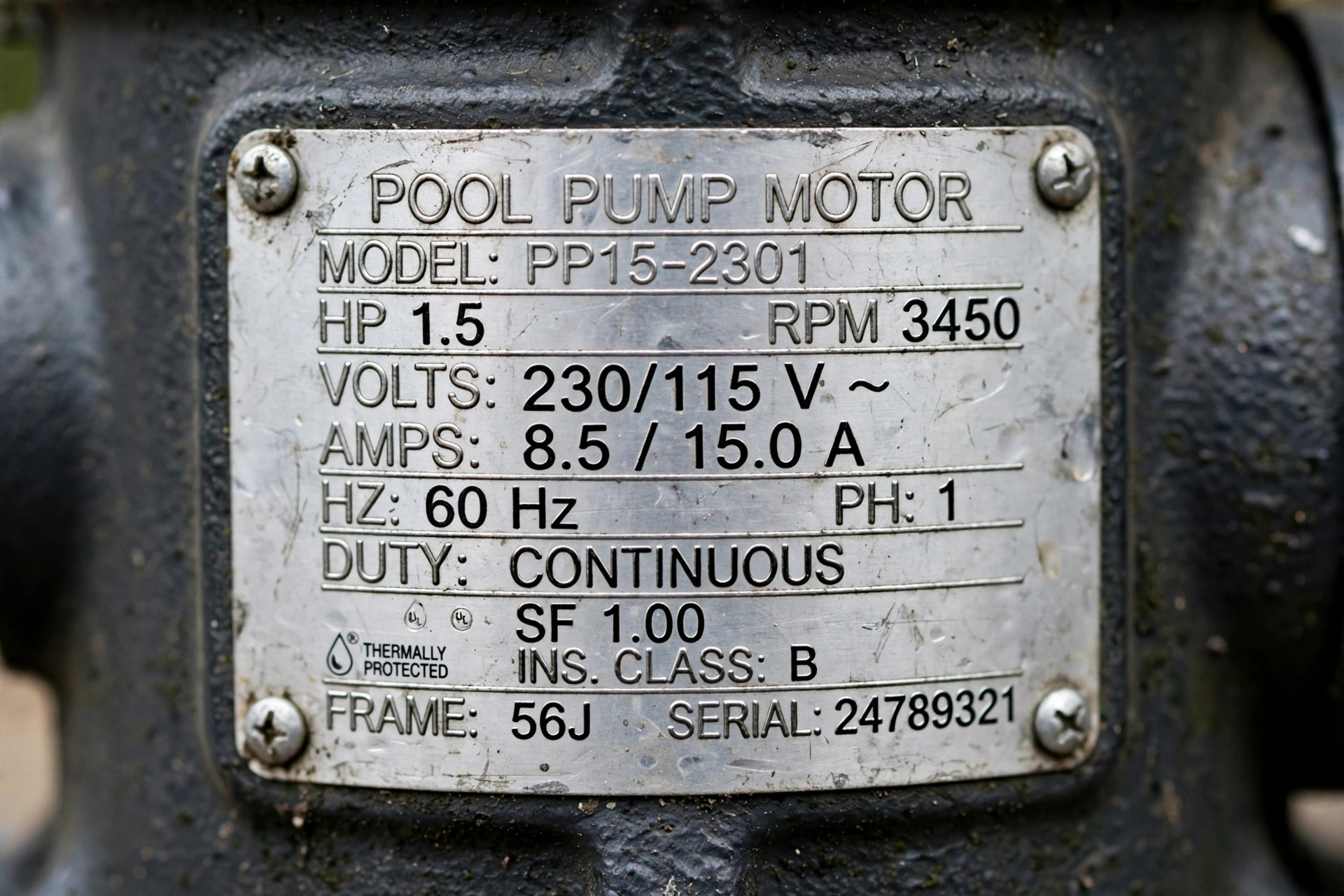
The fix is simple: read the nameplate, not the marketing. Find the amps (FLA — full load amps) and volts on the motor label, then multiply:
Once you have running watts, multiply by 3 as a rough surge estimate, or just use the table above. Then pick a generator whose peak (not running) rating clears that surge number with a little room to spare.
The 240-volt catch
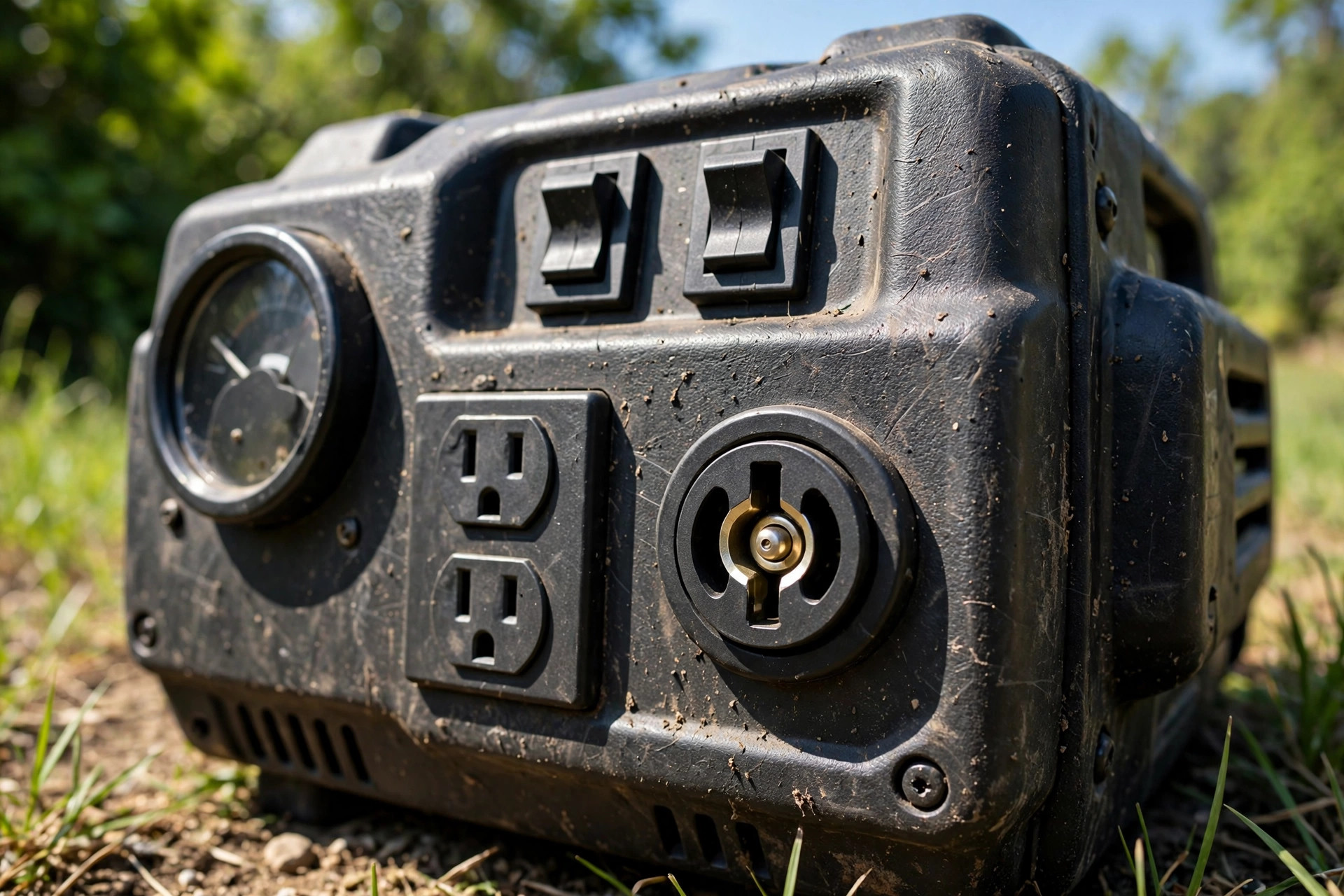
This is the detail that kills more pool-pump generator plans than anything else. Most residential pool pumps are wired for 230/240 volts. Your generator therefore needs a 240V outlet — typically a 30-amp twist-lock (L14-30R).
Here’s the problem: most portable inverter generators under 4,000 watts don’t have a 240V outlet. The popular 2,000-watt suitcase inverters are 120V only. Even some 3,500-watt units skip the 240V receptacle. Before you buy anything, check the outlet panel in the product photos.
If your pump is wired for 230V, you need a generator with:
- A 120/240V selector or dedicated 240V outlet (L14-30R is the standard)
- Enough peak watts to cover the surge from the table above
In practice, that pushes most pool owners into the 4,500-watt-and-up class of dual-fuel or conventional portables, or larger 240V-capable inverters. If you only need to run the pump and nothing else, a 4,500-5,000W unit with a 30A outlet is the sweet spot for a 1 HP pump.
Single-speed vs. dual-speed vs. variable-speed pumps
The type of pump you own changes the math dramatically.
Single-speed pumps
These are the old workhorses. Full power or nothing. Everything in this article’s sizing table applies directly. If you own one, you’re stuck sizing for the full surge.
Dual-speed pumps
On low speed, a dual-speed pump draws roughly one-eighth to one-quarter of full power. A 1.5 HP dual-speed pump might pull only 300-500 watts on low. The catch: it still starts on high speed, so the starting surge is the same. You can size the generator for the surge, then run mostly on low to save fuel.
Variable-speed pumps (Pentair IntelliFlo, Hayward TriStar, etc.)
This is where it gets interesting. Variable-speed pumps ramp up gently — there’s essentially no locked-rotor surge. Running at low RPM for normal filtration, they commonly draw 100 to 300 watts. Even at full speed they’re usually more efficient than single-speed equivalents. A 3,500-watt generator handles a variable-speed pump with room to spare, and honestly even a 2,000-watt inverter can keep one filtering on low speed all day.
A cheaper trick: the soft-start kit
If buying a bigger generator just for the pump’s starting surge feels wasteful, a soft-start controller is worth knowing about. These devices ramp the motor voltage up gradually, cutting the locked-rotor surge by as much as 50-70%. HVAC techs use them on air conditioners for exactly the same reason.
With a soft starter installed, a 1 HP pump that surged to 4,500 watts might only surge to 2,000-2,500 watts — which a good 3,500-watt generator can handle. The kit costs a fraction of a bigger generator. It does require wiring into the motor circuit, so have an electrician or experienced DIYer install it.
How long will it run? The fuel math
Running a pool pump on a generator burns real fuel. A 1 HP pump drawing 1,300 watts puts a typical 5,000W portable at about 25-30% load, where it burns roughly 0.4-0.6 gallons of gasoline per hour. That’s around 10-14 gallons for a full 24 hours.
A few practical ways to stretch fuel:
- Run in shifts. You don’t need the pump running 24/7 during an outage. Four to six hours a day keeps the water circulating and the chlorine mixed. Brush the pool daily and it’ll stay clear for days.
- Use low speed if you have a dual or variable-speed pump — filtration at low speed for 8 hours beats high speed for 3 hours.
- Keep it simple. A small submersible utility pump on a hose, moved around the pool, circulates water on a few hundred watts if all you need is chlorine distribution. Honestly, for a short outage, brushing twice a day works fine.
Want to work out your exact runtime? Plug your pump’s watts into our generator fuel consumption calculator and our generator sizing calculator to check the math before you buy.
Hooking it up without killing anyone
The electrical side matters as much as the sizing. Two rules I won’t bend on:
- Never backfeed. Don’t plug a generator into a wall outlet or dryer receptacle to “feed the panel.” Backfeeding energizes the utility lines and can kill a lineworker. Use a proper generator inlet box wired to a dedicated breaker, with a mechanical interlock or transfer switch, installed by an electrician.
- Keep it outside. Carbon monoxide kills. Run the generator at least 20 feet from your house with the exhaust pointed away, never in a garage, under a deck, or near pool equipment enclosures.
For the cord, use a heavy 10-gauge generator cord rated for 30 amps if you’re running 240V, and keep the run as short as practical. Long, thin extension cords cause voltage drop, and voltage drop makes motors run hot.
Can a 2000-watt generator run a pool pump?
What size generator do I need for a 1.5 HP pool pump?
Do pool pumps need 220V or 110V?
Can I run my pool pump and house on the same generator?
Will a soft start kit let me use a smaller generator?
The bottom line: read your pump’s nameplate, multiply volts by amps, size the generator for triple that number on the peak rating, and confirm the 240V outlet before you buy. Do that and your pool will survive the outage just fine — and you’ll burn a lot less fuel than the neighbor who bought a generator twice as big as he needed.

Related Guides
Why Does My Generator Backfire? Causes and Fixes (2027)
Why does your generator backfire? An exhaust bang means unburned fuel in the muffler; a pop through the carb means lean mixture or valve trouble. Here are the fixes.

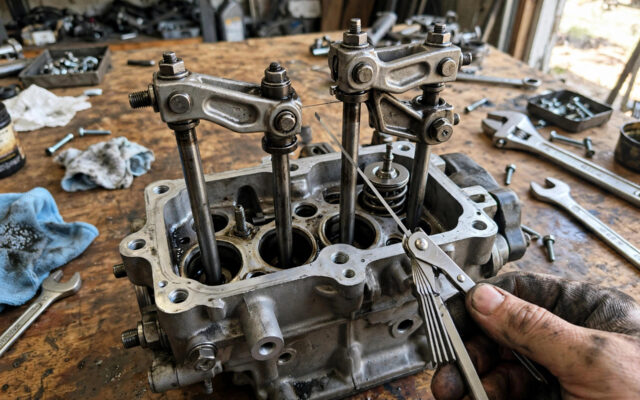
Generator Valve Adjustment: How to Set Valve Lash (2027 Guide)
Generator valve adjustment: 0.006" intake, 0.008" exhaust on Honda GX engines. Tools, TDC procedure, and symptoms of bad valve lash explained.

How to Clean and Replace a Generator Air Filter (2027 Guide)
How to clean a generator air filter: wash foam filters in soapy water and re-oil; tap out paper filters, never wash them. Full steps inside.