


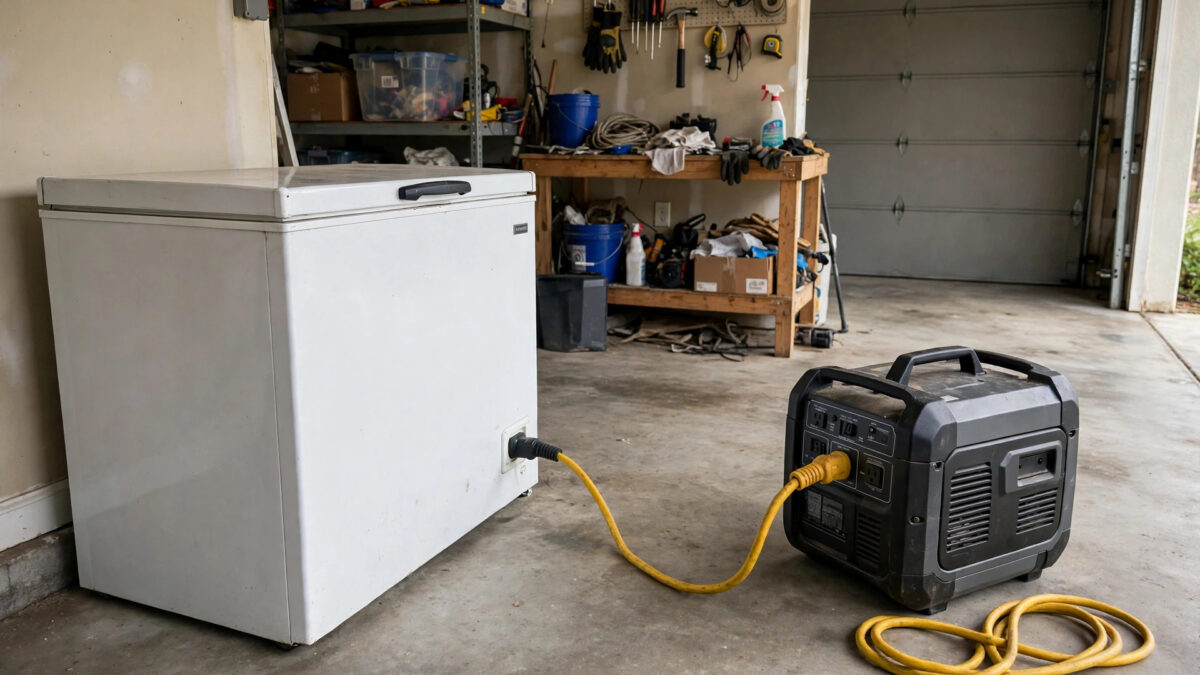
A 2,000–2,500-watt generator handles nearly any residential chest freezer with room to spare. Most chest freezers draw 400–800 watts while running, with a startup surge of 1,600–2,400 watts — well within a small inverter generator’s capacity. The surge is what sizes the generator, so buy for the starting watts, not the running watts.
Key takeaways
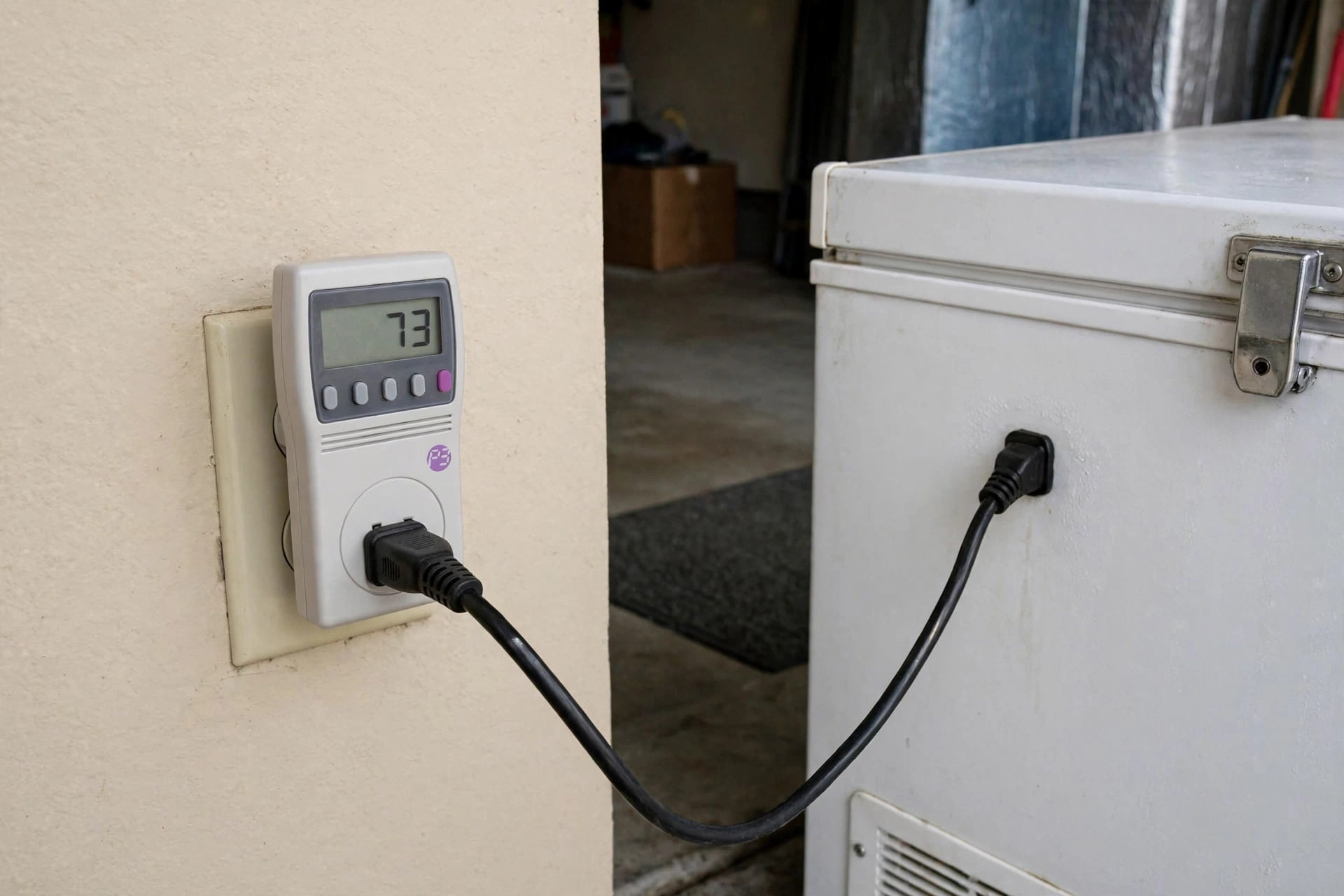
- Typical chest freezer: 400–800W running, 1,600–2,400W starting surge (roughly 2–3× running watts).
- A 2,000W generator covers most freezers; 2,500W+ gives comfortable headroom for a freezer plus fridge and lights.
- Check your freezer’s nameplate amps (or use watts = amps × 120) — larger 15–21 cu ft models run 400–580W.
- You don’t need to run the freezer constantly: USDA guidance says a full freezer holds safe temperature ~48 hours unopened; cycling the generator saves fuel.
- Never overload: start the freezer first, then add other loads one at a time.
- Keep the freezer’s plug on a short, properly gauged extension cord (14 AWG minimum, 12 AWG for longer runs).
How many watts does a chest freezer actually use?
Chest freezers are efficient but spiky. The compressor cycles on and off, and each time it kicks on it draws a surge. Here’s what typical models look like, based on manufacturer nameplate data and DOE figures:
| Freezer size | Running watts | Starting surge | Min. generator |
|---|---|---|---|
| Small (3.5–7 cu ft) | 100–150W | 400–600W | 1,000W |
| Medium (8–12 cu ft) | 150–330W | 600–1,200W | 2,000W |
| Large (14–17 cu ft) | 330–465W | 1,200–1,800W | 2,000W |
| Extra-large (18–25 cu ft) | 465–700W | 1,600–2,400W | 2,500W |
To get your exact number, check the nameplate on the back of the freezer for amps and multiply by 120. A freezer rated 4 amps runs at ~480W. Assume the surge is 2–3× that running figure — so plan for ~1,200–1,500W of starting capacity for that unit.
One thing that surprised me when I first measured mine with a Kill A Watt: the freezer only runs its compressor about a third of the time in a cool garage. The average draw is tiny — but the generator has to survive the worst second, not the average hour.
Sizing the generator: do the math once
The formula: running watts of everything + the single highest starting surge + 20–25% headroom.
Realistic outage scenario — chest freezer + kitchen fridge + a few LED lights + phone chargers:
- Chest freezer (15 cu ft): 400W running / 1,600W surge
- Kitchen fridge: 700W running / 2,200W surge
- LED lights (5): 50W running
- Phone chargers: 30W running
Running total: 400 + 700 + 50 + 30 = 1,180W. Highest single surge: 2,200W (fridge). So: 1,180 + 2,200 = 3,380W, plus 20% headroom → roughly a 3,500–4,000W generator for the whole package. If it’s just the freezer, a 2,000W inverter generator is plenty — and it’ll sip fuel doing it.
Run your own combination through our generator size calculator to get a precise number before you buy.
You don’t need to run it 24/7
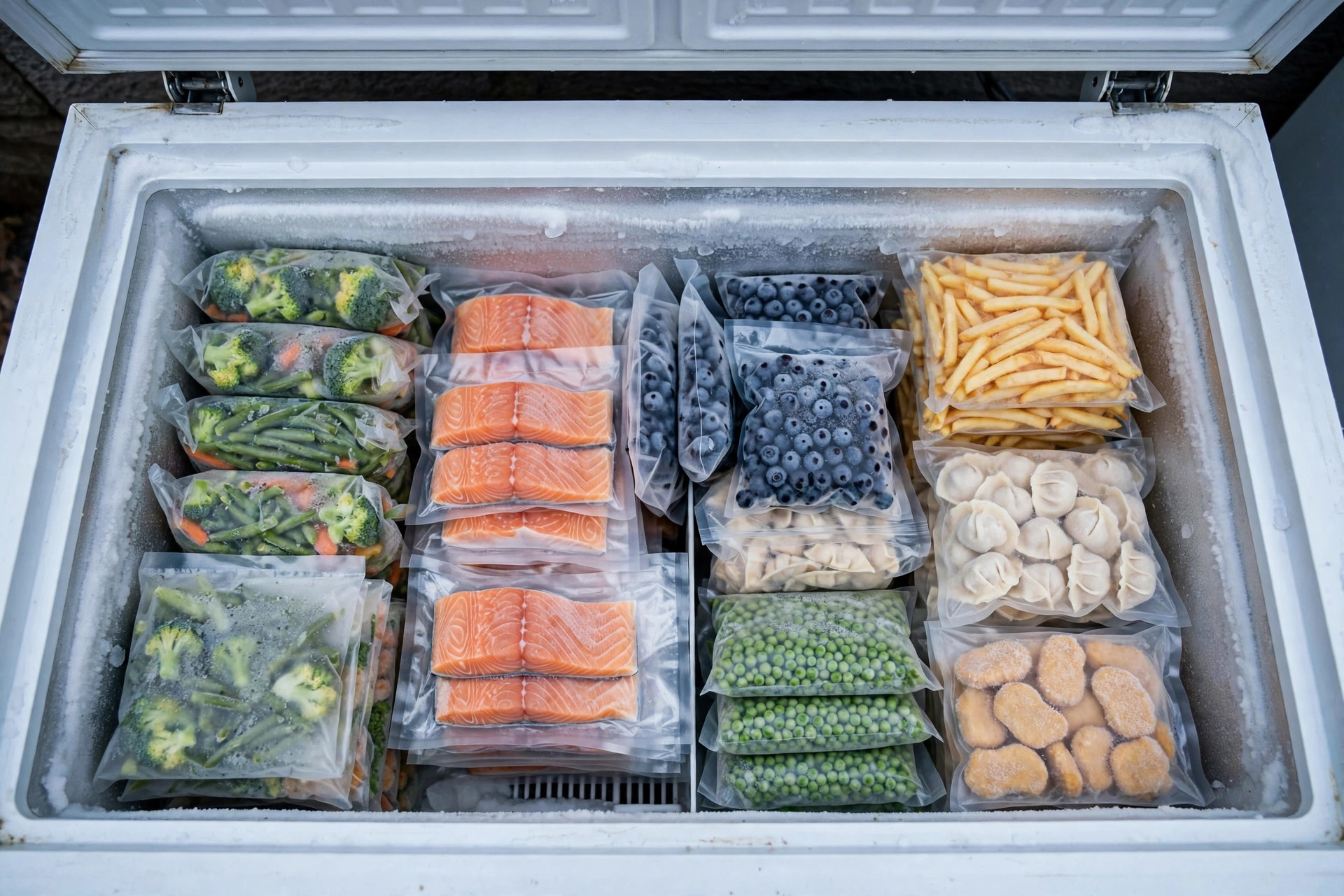
Here’s the part that saves you a fortune in fuel: a freezer is a giant insulated box of thermal mass. USDA food-safety guidance says a full freezer holds safe temperature for about 48 hours unopened (about 24 hours if half-full). Every time you open the lid, you dump cold air and shorten that window — so during an outage, the lid stays shut except for planned grabs.
The practical rhythm most people settle on: run the generator a few hours in the morning and a few in the evening — enough for each compressor cycle plus topping up phones and lights — then shut down overnight. A modern chest freezer in a cool spot barely notices. This is also why a smaller generator with a bigger fuel tank (or an extended-run setup) beats a thirsty big unit for freezer duty.
Food safety rules during the outage
- Keep a thermometer in the freezer. Food is safe as long as it stays at or below 40°F… actually, for freezers the line is: food with ice crystals still in it can be refrozen safely; fully thawed food above 40°F for more than 2 hours should be discarded. When in doubt, throw it out.
- Group food together — a full freezer stays cold far longer than a half-empty one. Fill empty space with water bottles (frozen ahead of storm season) to add thermal mass.
- Don’t taste-test questionable food. Bacteria that cause foodborne illness don’t change taste or smell. The thermometer is the judge.
- Document for insurance if you lose a full freezer — photos of the contents help with claims.
Don’t forget the garage factor
Where the freezer lives changes the math slightly. A freezer in an unheated garage in winter barely cycles — the cold ambient air does half the work, and your generator runtime per day drops. In a hot garage in August, the compressor runs far more often and the surge hits more frequently. If you’re sizing on the edge, size for summer conditions. And if the freezer shares a circuit (via transfer switch or interlock) with the garage door opener or other loads, account for those too — the opener’s 1,400W surge arriving at the same moment as the freezer’s compressor start is exactly the kind of coincidence that trips an undersized generator.
Inverter generator vs. power station for freezer duty
Two modern options deserve a mention, because freezer backup is one of the jobs where they genuinely shine:
Inverter generators (2,000–2,500W) are the sweet spot for most people. They’re quiet (50–60 dB — conversation level), sip fuel (a 2,200W unit can run 8+ hours on a gallon at light freezer loads), and produce clean power that’s gentle on the freezer’s compressor electronics. For “freezer plus a few small things,” this is what I’d buy. The only real downside is you still need gasoline stored safely and you still need to be home to run it.
Portable power stations (1,000–2,000Wh LiFePO4) are the silent, fume-free alternative. A 2,000Wh station can run a 400W freezer through many compressor cycles — realistically 8–15 hours depending on ambient temperature and how often the compressor kicks on — with zero noise, zero exhaust, and zero refueling. Pair it with a couple of solar panels and it recharges itself during the day. The catch is cost per watt-hour: a good 2kWh station costs several times what a 2,000W inverter generator costs, and once it’s empty with no sun, you’re done until it recharges.
My take: if outages in your area last hours, a power station is wonderfully convenient. If they last days, the inverter generator’s ability to run indefinitely on stored gasoline wins. Some households keep both — the power station for overnight silence, the generator for daytime heavy lifting.
Hooking it up right
- Cord: a 14-gauge outdoor cord works for short runs; use 12-gauge if the generator sits 50+ feet away (remember the CDC’s 20-foot minimum from the house). Never daisy-chain.
- Direct plug beats power strips for motor loads — plug the freezer straight into the generator or a single heavy-duty cord.
- Let it stabilize: after starting the generator, wait a minute for voltage to stabilize before plugging in the freezer.
- Don’t use eco-mode for the first start on some inverter generators — the surge can outrun the engine’s ramp-up. Start in normal mode, then switch to eco once the compressor is running.
What size generator do I need for a chest freezer?
Can a 2000 watt generator run a deep freezer?
How long can a freezer go without power?
How many watts does a 15 cubic foot chest freezer use?
Should I run my generator all night for the freezer?
Can I plug my chest freezer into a power strip on the generator?
Bottom line: a chest freezer is one of the easiest loads a generator will ever see. A 2,000–2,500W unit, a decent extension cord, and a disciplined lid-shut policy will keep your food frozen through a multi-day outage on surprisingly little fuel. For the full-house version of this math, see our guide to sizing calculators and whole-home planning.

Related Guides
Why Does My Generator Backfire? Causes and Fixes (2027)
Why does your generator backfire? An exhaust bang means unburned fuel in the muffler; a pop through the carb means lean mixture or valve trouble. Here are the fixes.

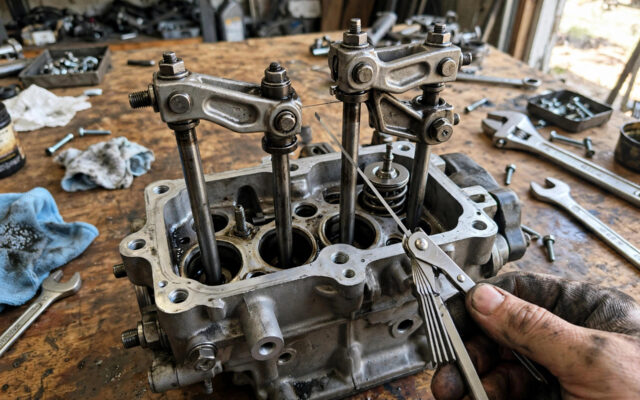
Generator Valve Adjustment: How to Set Valve Lash (2027 Guide)
Generator valve adjustment: 0.006" intake, 0.008" exhaust on Honda GX engines. Tools, TDC procedure, and symptoms of bad valve lash explained.

How to Clean and Replace a Generator Air Filter (2027 Guide)
How to clean a generator air filter: wash foam filters in soapy water and re-oil; tap out paper filters, never wash them. Full steps inside.