


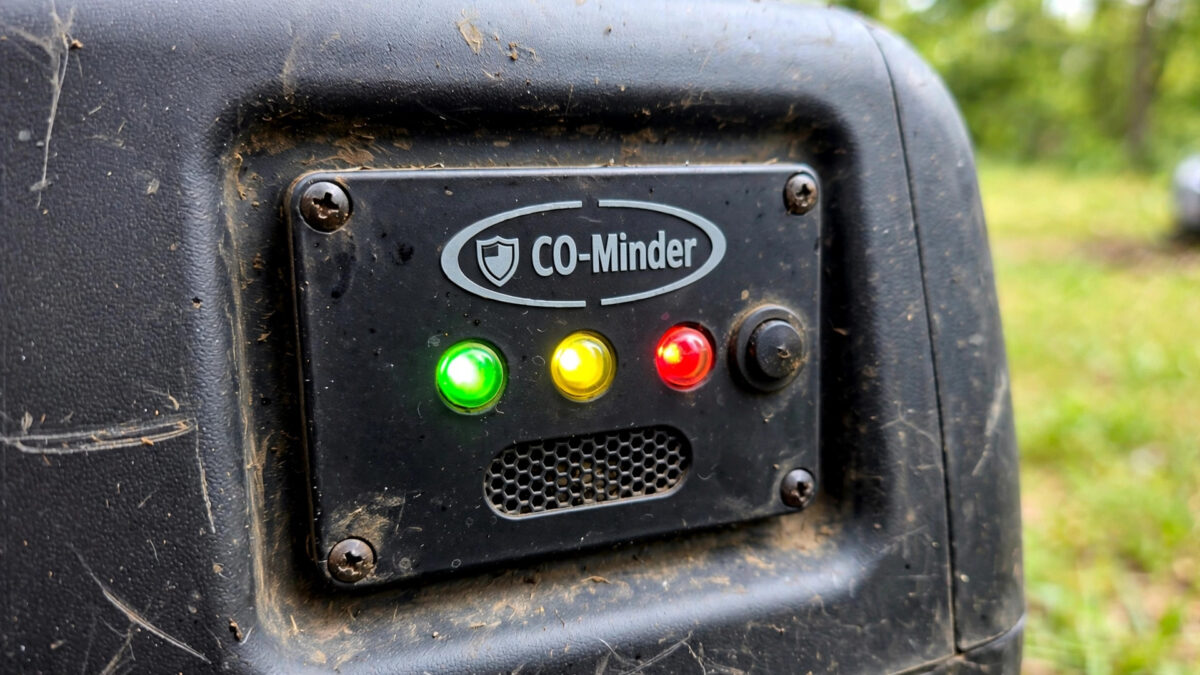
If your generator keeps shutting itself off and the CO light is blinking, I need you to hear this first: do not bypass, disconnect, or disable that sensor. I know it’s infuriating when you’re sure there’s “plenty of fresh air.” But here’s the uncomfortable truth I’ve learned from years of following these complaints: most so-called false trips aren’t false at all — the sensor is detecting real carbon monoxide pooling around your generator. The fix is changing your setup, not defeating the safety device.
That said, genuine nuisance trips do happen — wind gusts blowing exhaust back over the unit are the classic one — and there are legitimate ways to stop them. Let me walk through what’s actually going on and what to do about it, in order of likelihood.
Key takeaways
- Never bypass or disable a CO sensor. It’s a life-safety device; defeating it has killed people. This is non-negotiable.
- Most “false” shutdowns are real detections — wind blowing exhaust back over the generator is the #1 cause of nuisance trips.
- Know your lights: on most brands, a blinking red LED means a CO shutdown (move the generator); a blinking yellow LED means a sensor fault (service needed).
- Fixes that work: move to open air, keep 5+ feet clear on all sides, point the exhaust downwind or rotate the unit 45°.
- A sensor that trips constantly in genuinely open air with no wind may be failing — that’s a dealer-service issue, not a DIY bypass.
What the CO Sensor Is Actually Doing
Since around 2020, most portable generators sold in the US include a CO shutdown system — Honda calls it CO-Minder, Champion calls it CO Shield, and there’s a UL safety standard (UL 2201) behind them. A sensor near the control panel continuously samples the air. If carbon monoxide accumulates to dangerous levels around the generator, it shuts the engine down automatically and blinks a warning light.
The key insight: the sensor doesn’t know why CO is accumulating. It can’t tell the difference between “generator running in a garage” (deadly) and “gust of wind pushed the exhaust plume back over the unit for 30 seconds” (annoying). Both look like rising CO. Both trigger a shutdown. That’s by design — the standard errs on the side of shutting down.
Read the Lights Before You Do Anything
Every brand does this slightly differently, so check your manual — but the pattern is consistent across Honda, Champion, Predator, and Westinghouse:
- Blinking RED light: the sensor detected elevated CO and shut the engine down. This is the system working as designed. Your job: figure out why CO accumulated and fix the setup.
- Blinking YELLOW light: the sensor itself has a fault and is no longer providing protection. The generator may still run, but you’re operating without the safety net. This needs dealer or manufacturer service — the sensor module can only be diagnosed by a trained technician.
- No lights blinking: then the CO sensor probably isn’t your problem. Go back to the standard no-start checklist — fuel, oil, spark.
One more critical detail from the manuals: after a CO shutdown, wait at least a minute before restarting. The sensor needs time to clear and recalibrate. Rapid restart attempts can trigger repeated shutdowns that look like a fault but aren’t.
The Real Causes of Nuisance Trips (In Order)
1. Wind blowing exhaust back over the unit
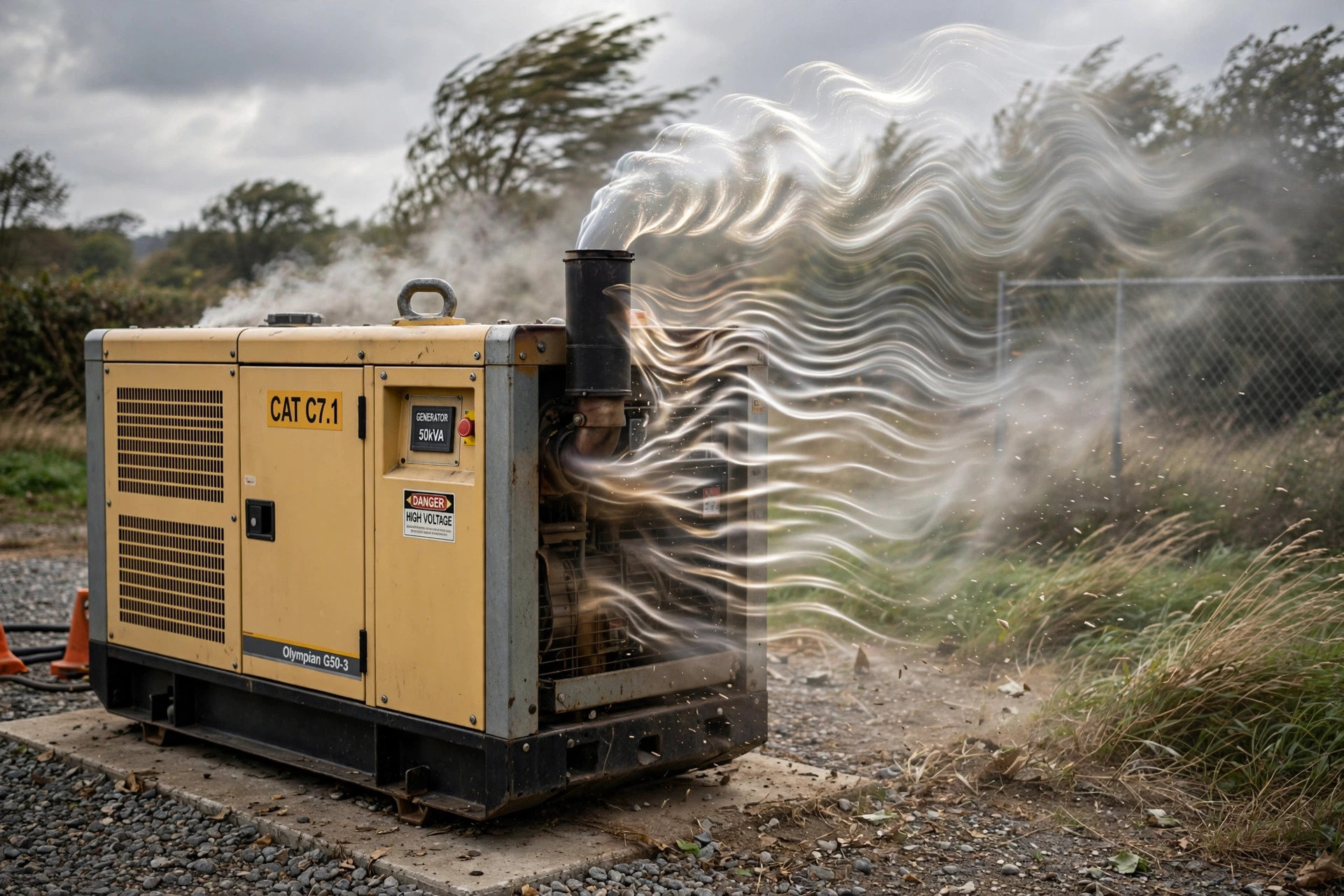
This is the big one. If the wind shifts and starts pushing your exhaust plume back across the generator, CO accumulates around the sensor and it trips. Honda’s own guidance says to position the generator so the exhaust points downwind. Champion’s troubleshooting guide says if the exhaust is facing into the wind, rotate the generator 45° in either direction so the plume blows clear — and keep adjusting until shutdowns stop.
I’ve seen this at campgrounds: dead calm morning, generator runs for hours; afternoon breeze picks up from the wrong direction, and it shuts down twice in an hour. Same generator, same placement — just wind.
2. Obstructions trapping exhaust nearby
Champion’s manual specifically warns: keep no obstructions within 5 feet of the generator. Walls, fences, dense shrubs, the side of an RV, a second generator — anything that blocks airflow lets the exhaust plume pool instead of dispersing. Corners are the worst: two walls form a pocket that holds CO like a bowl.
3. Another engine nearby
The sensor detects CO from any source, not just your generator. A second generator running upwind, a propane heater, even a vehicle idling nearby can push ambient CO high enough to trip it. At group campsites and job sites, this causes genuine confusion — “my generator keeps dying and there’s nothing wrong with my setup” — because the CO is coming from the neighbor’s rig.
4. Running too close to the house or under cover
Under a deck, in a carport, next to an open garage — these are the placements that generate the angriest forum posts, and they’re also the placements most likely to actually poison someone. If your CO sensor trips when the generator is near the house, thank it and move the generator, don’t curse it. Our guide on where to put your generator during a storm covers safe placement in detail.
5. Actual sensor failure
CO sensors don’t last forever — the sensing element degrades over years, and a failing sensor can become oversensitive (or, worse, undersensitive). If the unit trips repeatedly in wide-open air with no wind, no obstructions, and no other engines around, and the yellow fault light is involved, the sensor module itself is suspect. That’s a warranty/dealer conversation, not a YouTube bypass tutorial.
The Fix Checklist
When the red light blinks and the engine dies, do this:
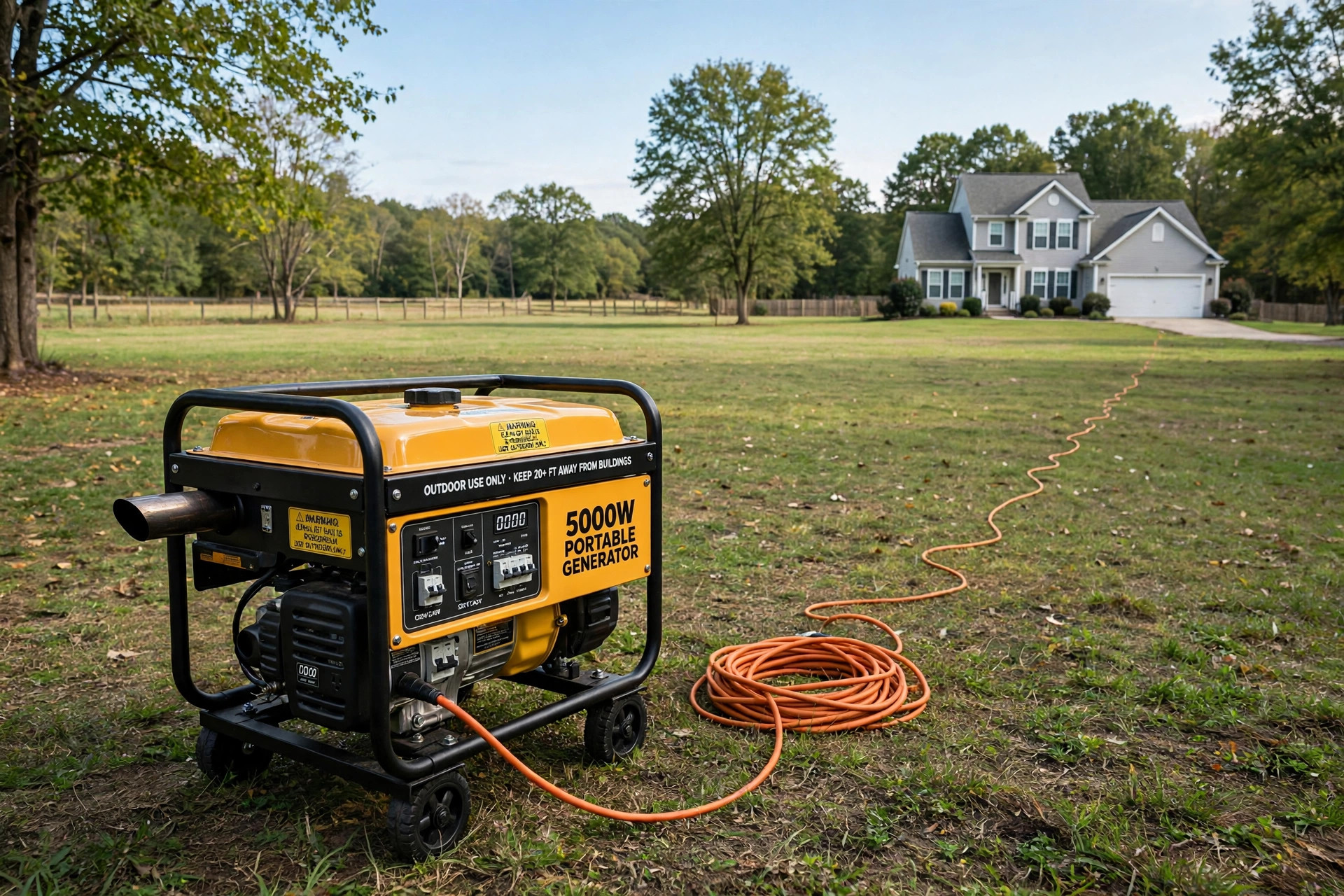
- Move the generator to genuinely open air — 20+ feet from the house, away from walls, fences, and corners.
- Clear 5+ feet on all sides. No shrubs, no equipment, no second generator upwind.
- Point the exhaust downwind (or rotate 45° off the wind per Champion’s guidance) so the plume carries away from the unit.
- Wait a full minute before restarting, to let the sensor reset.
- Check for other CO sources — idling vehicles, heaters, neighboring generators.
- If it still trips in open air with no wind: note the light pattern (red vs. yellow) and call the manufacturer’s support line. Yellow = sensor fault = service.
And inside the house, make sure you have working CO detectors on every floor — the generator’s sensor protects the area around the generator; indoor detectors protect your family from anything that drifts inside.
FAQs
Why does my generator’s CO sensor keep shutting it off?
What does the blinking red light on my generator mean?
Can I disable the CO sensor on my generator?
How long do generator CO sensors last?
Will a CO sensor trip if my neighbor’s generator is running nearby?
The Bottom Line
A CO sensor that shuts your generator down is doing the job it was built for — even when it’s inconvenient. Nine times out of ten the answer is placement: open air, exhaust downwind, five feet clear, twenty feet from the house. Fix the setup and the “false trips” disappear. And if the sensor is genuinely failing, replace it — because the one time it isn’t a false alarm, it’s the thing standing between your family and an odorless, invisible killer.

Related Guides
Why Does My Generator Backfire? Causes and Fixes (2027)
Why does your generator backfire? An exhaust bang means unburned fuel in the muffler; a pop through the carb means lean mixture or valve trouble. Here are the fixes.


Generator Valve Adjustment: How to Set Valve Lash (2027 Guide)
Generator valve adjustment: 0.006" intake, 0.008" exhaust on Honda GX engines. Tools, TDC procedure, and symptoms of bad valve lash explained.

How to Clean and Replace a Generator Air Filter (2027 Guide)
How to clean a generator air filter: wash foam filters in soapy water and re-oil; tap out paper filters, never wash them. Full steps inside.