


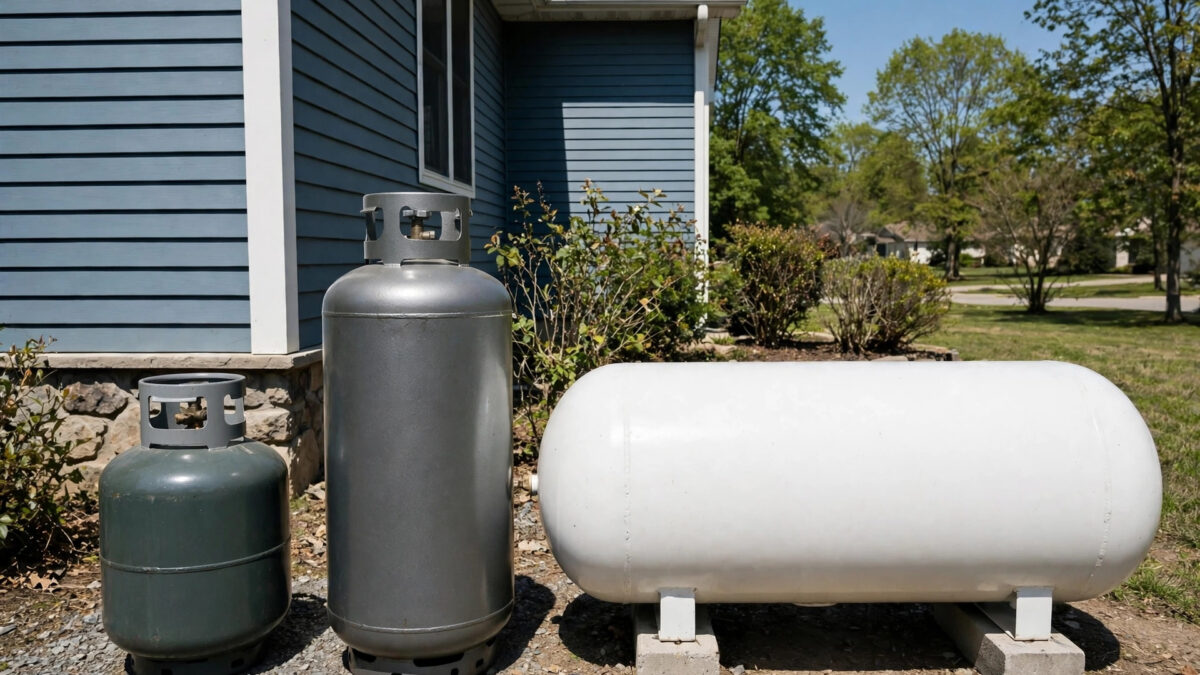
The standard 20-lb grill tank holds about 4.7 gallons of propane and will run a mid-size portable generator for roughly 8–12 hours. A 100-lb cylinder holds about 23 gallons (several days of light use), and a 500-gallon stationary tank holds ~400 usable gallons (a week or more for a standby unit). Picking the right size is really a question of how long your outages last — and the answer changes the economics completely.
When I switched my backup setup to dual-fuel, I started with four 20-lb grill tanks and thought I was set. Then I did the runtime math during a 3-day outage and spent day two hunting for propane refills — which, like gas stations, can be hard to find when the power is out regionally. I now run a 100-lb cylinder as my primary with 20-lb tanks as backup. Here is the full breakdown so you can size it right the first time.
Key takeaways
- 20-lb tank (grill size): ~4.7 gallons, 8–12 hours on a mid-size portable. Fine for short outages; painful for multi-day ones.
- 100-lb cylinder: ~23 gallons, the sweet spot for portable-generator backup — several days of runtime, still refillable by transport.
- 250/500-gallon stationary tanks: ~200/400 usable gallons (filled to 80% per code). Built for standby generators and week-long outages.
- Propane never goes stale — its storage life is effectively indefinite, which is the core argument for it as an emergency fuel.
Portable cylinders: the sizes
| Tank | Propane capacity | Approx. dimensions | Runtime on a 3,500W portable* | Best for |
|---|---|---|---|---|
| 20 lb (grill tank) | ~4.7 gallons | 18″ H × 12.5″ dia | 8–12 hours | Short outages, camping, tailgating |
| 30 lb | ~7 gallons | 24″ H × 12.5″ dia | 12–18 hours | RVs, longer weekends |
| 40 lb | ~9–10 gallons | 29″ H × 12.5″ dia | 18–24 hours | RVs, portable backup |
| 100 lb | ~23 gallons | 48″ H × 14.7″ dia | 2–3 days (managed use) | Home backup with a portable generator |
*Runtime assumes a mid-size portable burning ~0.4–0.5 gal/hr at moderate load. Light loads in eco mode stretch this significantly; heavy loads shrink it.
A few practical notes on cylinders. They are DOT tanks — you transport them to be refilled (or exchange 20-lb tanks at the ubiquitous cage outside hardware stores). Exchange is convenient but you pay for it: a 20-lb exchange works out to roughly $4.50–5.50 per gallon, versus $2–3 per gallon for a metered refill. If you are stockpiling for outages, refilling your own tanks beats exchanging on cost.
The 100-lb cylinder deserves special attention: at about 170 lbs full, it is the largest cylinder you can still transport for refilling without special equipment (a hand truck and a strong back, or a buddy). It holds roughly five 20-lb tanks’ worth of propane in one footprint. For a portable generator as home backup, one 100-lb cylinder plus a 20-lb spare is my recommended starting setup — it covers a typical 2–3 day outage without a refill run.
Stationary tanks: 250 to 1,000 gallons
| Tank | Usable propane (80% fill) | Runtime for a 14kW standby* | Typical fill cost |
|---|---|---|---|
| 250 gallon | ~200 gallons | 4–5 days | $400–600 |
| 500 gallon | ~400 gallons | 7–10+ days | $800–1,200 |
| 1,000 gallon | ~800 gallons | Up to ~2 weeks | $1,600–2,400 |
*Standby units burn more — roughly 1.5–2.5 gal/hr depending on size and load. Costs are planning ranges; propane prices vary by region and season.
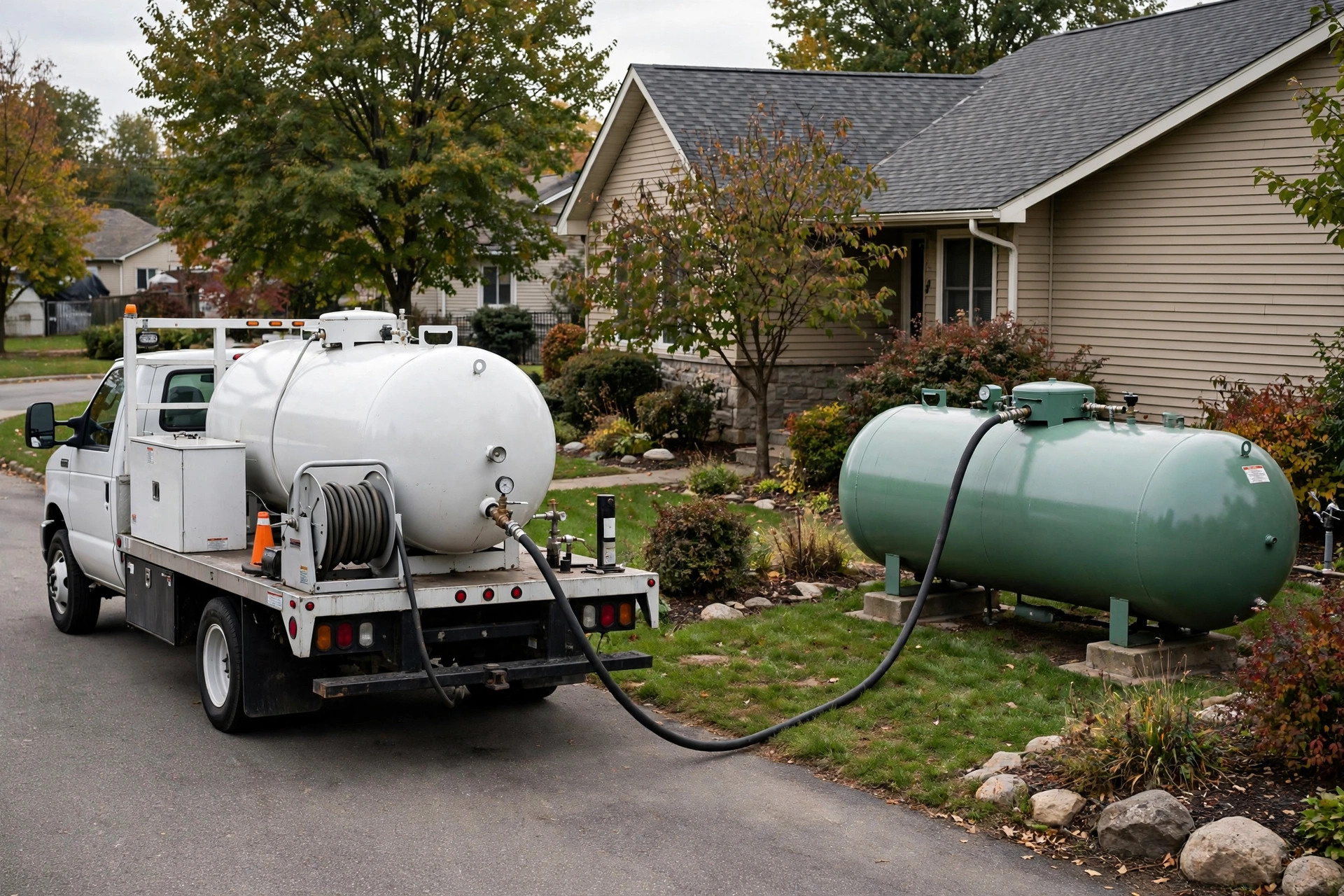
These are ASME tanks: permanently installed, filled on-site by a propane company truck. Many propane companies rent you the tank for a nominal annual fee — but then you are typically locked into buying propane from them. Buying your own tank costs roughly $5–10 per gallon of capacity upfront but frees you to shop suppliers.
Above certain sizes, setback rules apply — the tank must sit a minimum distance from buildings, property lines, and ignition sources (your propane company knows your local code). For most home standby generator installations, the 500-gallon tank is the sweet spot: enough for the vast majority of outages, reasonable fill cost, and the best runtime-per-dollar in the lineup.
The runtime math
The formula is simple: tank gallons ÷ burn rate = hours. A mid-size portable (3,000–3,500 running watts) burns roughly 0.4–0.5 gallons of propane per hour at full load, and roughly half that in eco mode at light loads. So:
- 20-lb tank (4.7 gal) ÷ 0.5 gal/hr ≈ 9–10 hours at moderate load; stretch to ~18 hours in eco mode with light loads.
- 100-lb cylinder (23 gal) ÷ 0.4 gal/hr ≈ 55+ hours — comfortably 2–3 days of managed runtime.
- 500-gal tank (400 usable gal) on a 14kW standby at ~2 gal/hr ≈ 200 hours — over 8 days continuous.
Note that propane contains about 73% of the energy per gallon that gasoline does, so a dual-fuel generator makes roughly 10% less power on propane than on gasoline — manufacturers derate the propane numbers accordingly. Size your loads to the propane rating, not the gasoline rating. Our propane consumption guide has detailed burn-rate tables by generator size.
The cold-weather catch: vaporization
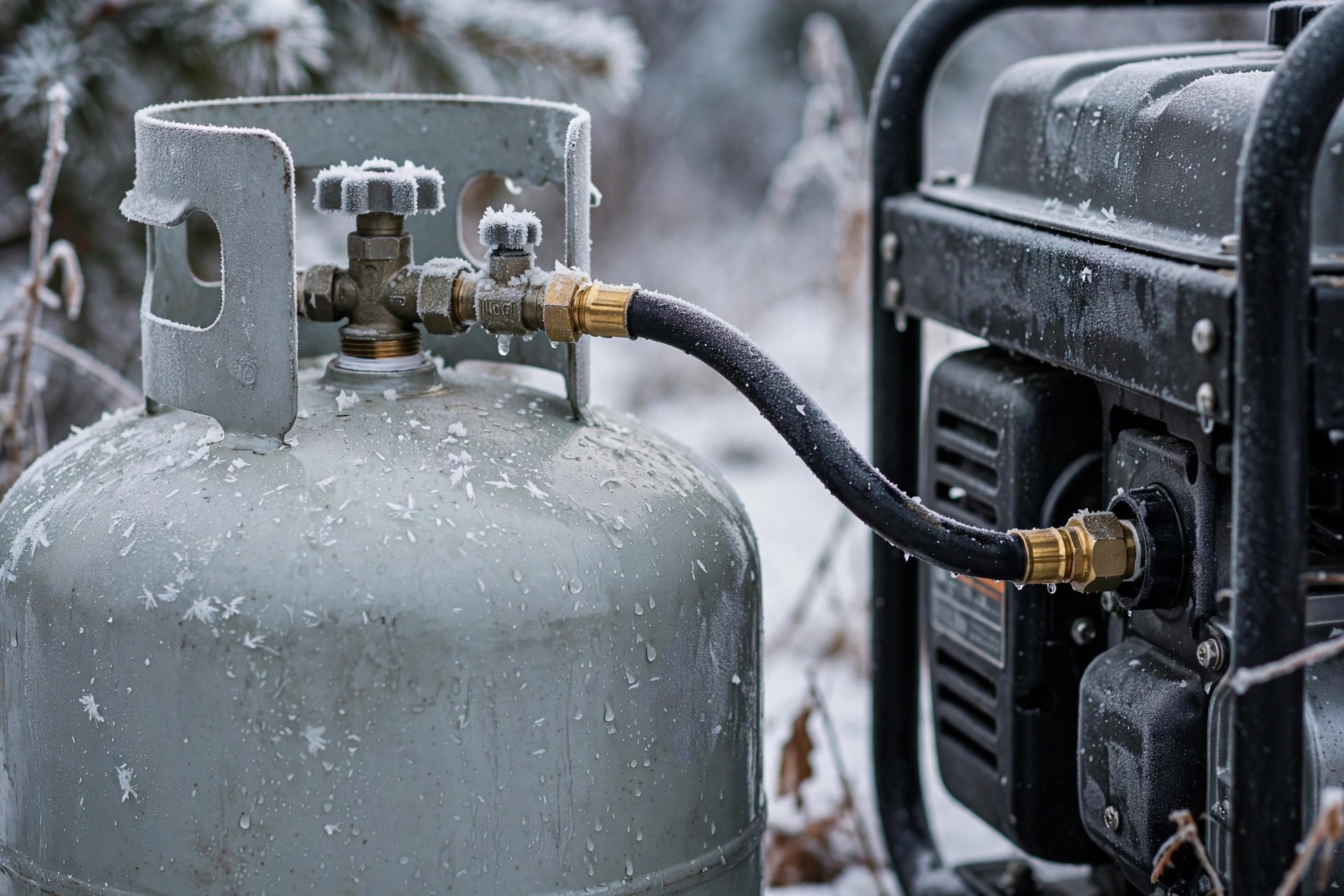
Here is the thing nobody tells you until it bites: propane in the tank is a liquid, and your generator burns vapor. The liquid has to boil off (vaporize) fast enough to feed the engine, and vaporization slows as the tank gets cold — and the tank gets cold from vaporizing, since boiling absorbs heat. A small 20-lb cylinder feeding a big generator under heavy load on a 20°F night can literally frost over and starve the engine, even though it is half full.
Practical implications:
- Bigger tanks vaporize better. More liquid surface area = more vaporization capacity. This is a genuine engineering reason to upsize beyond pure runtime math.
- Do not expect full rated output from a frosty 20-lb tank in deep cold. Keep loads moderate.
- Keep cylinders out of the wind and off frozen ground if you can — a windbreak helps more than you would think.
- For winter-critical backup, a 100-lb cylinder minimum, or a stationary tank, is the reliable answer. This is also where dual-fuel shines: gasoline as the cold-weather backup.
Choosing your setup
- Occasional short outages, portable generator: two to four 20-lb tanks. Cheap, everywhere, easy to refill. Accept that a 3+ day outage means a refill run.
- Serious home backup, portable/dual-fuel generator: one 100-lb cylinder + one 20-lb spare. Covers most multi-day outages with zero maintenance between them.
- Standby generator or frequent long outages: 500-gallon stationary tank (or 250 if space/budget is tight). Set it, fill it once or twice a year, forget it.
- Budget angle: per-gallon propane cost drops sharply with tank size — 20-lb exchange is the most expensive propane you can buy; bulk delivery to a stationary tank is the cheapest. Factor this into the “cheap generator, expensive fuel” equation.
However you size it, propane’s core advantage stands: fill it, store it, and it is good for years with zero rotation, zero stabilizer, zero varnished carburetors. Pair a sensible tank with a dual-fuel generator and our fuel storage planning guide, and the fuel side of outage prep is essentially solved.
How long will a 20 lb propane tank run a generator?
What size propane tank do I need for a whole house generator?
How many gallons are in a 100 lb propane tank?
Does propane go bad in storage?
Why does my generator sputter on propane in cold weather?
Size the tank to your worst outage, remember the 80% fill rule, respect the cold-weather vaporization limit — and enjoy the only emergency fuel you never have to rotate.
How we researched this: Propane supplier tank specification data (Ferrellgas and industry sources), NFPA 58 fill requirements, generator propane consumption specs, and hands-on dual-fuel generator use including cold-weather operation.

Related Guides
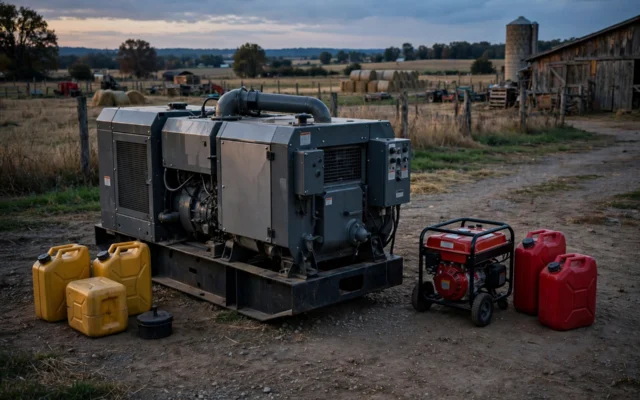
Diesel vs Gasoline Generators: Which Is Better in 2027?
Diesel vs gasoline generators: diesel wins on efficiency, lifespan and fuel storage; gas wins on price, weight and choice. Here's which fuel fits your use case.

Gasoline vs Propane Generators: Which Fuel Is Better in 2027?
Gasoline vs propane generators in 2027: fuel cost, runtime, storage life, and cold-weather performance compared — plus why dual-fuel wins for most buyers.
Propane vs Gasoline: Generator Fuel Cost per kWh Compared
At October 2026 prices, propane costs ~$0.48/kWh vs ~$0.65/kWh for gasoline in a generator. See the full math and when gasoline still wins.