


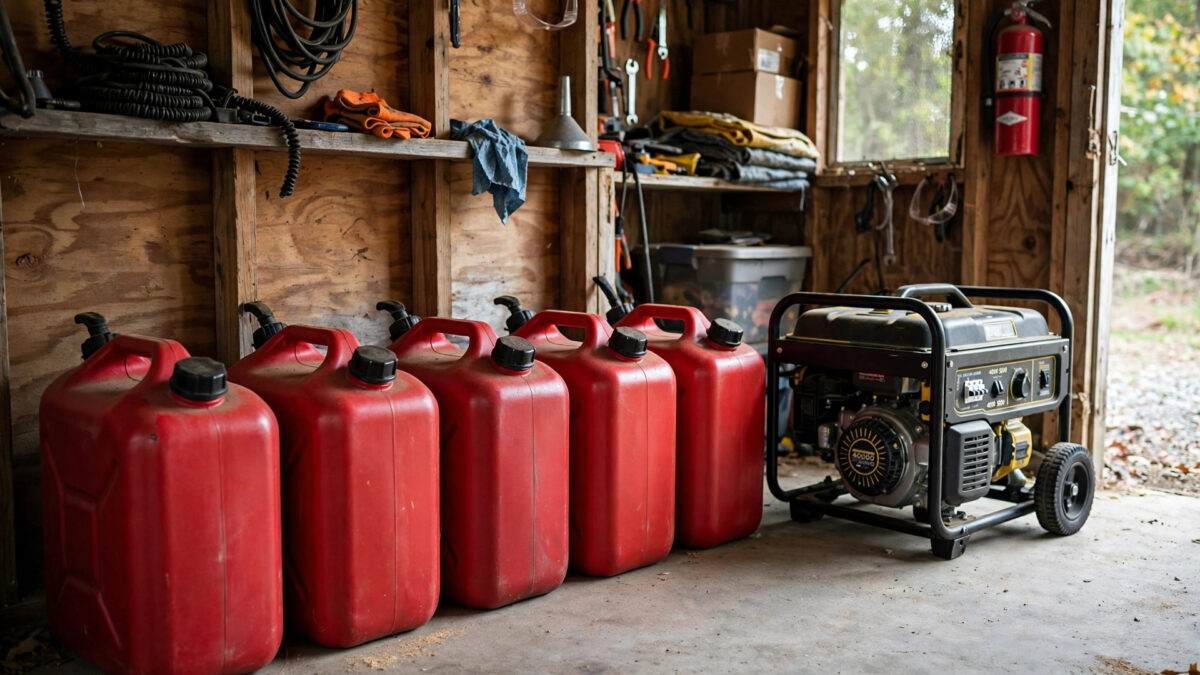
Plan for 72 hours of runtime. For a typical 5,000-watt portable generator running essential loads, that means roughly 36 to 60 gallons of gasoline — or, if you run propane, 12 to 24 twenty-pound tanks. Those numbers surprise most first-time generator owners, and they are the reason fuel planning deserves its own session before storm season, not a panicked gas-station run the night before.
I learned the math during a five-day outage years ago. Day two, I was doing fuel calculations on a napkin and realizing my “plenty” — two 5-gallon cans — was about 20 hours of runtime. I spent day three driving around looking for an open gas station, which during a regional outage is its own adventure. Never again. Here is how to size your fuel supply properly.
Key takeaways
- The 72-hour rule: store enough fuel for 3 days of runtime. Most outages are shorter; 72 hours covers the bad ones, and fuel stations may be dark too.
- Gasoline math: a 5kW portable burns roughly 0.5–1 gallon per hour depending on load — 12–20 gallons per 24 hours (Consumer Reports’ planning range).
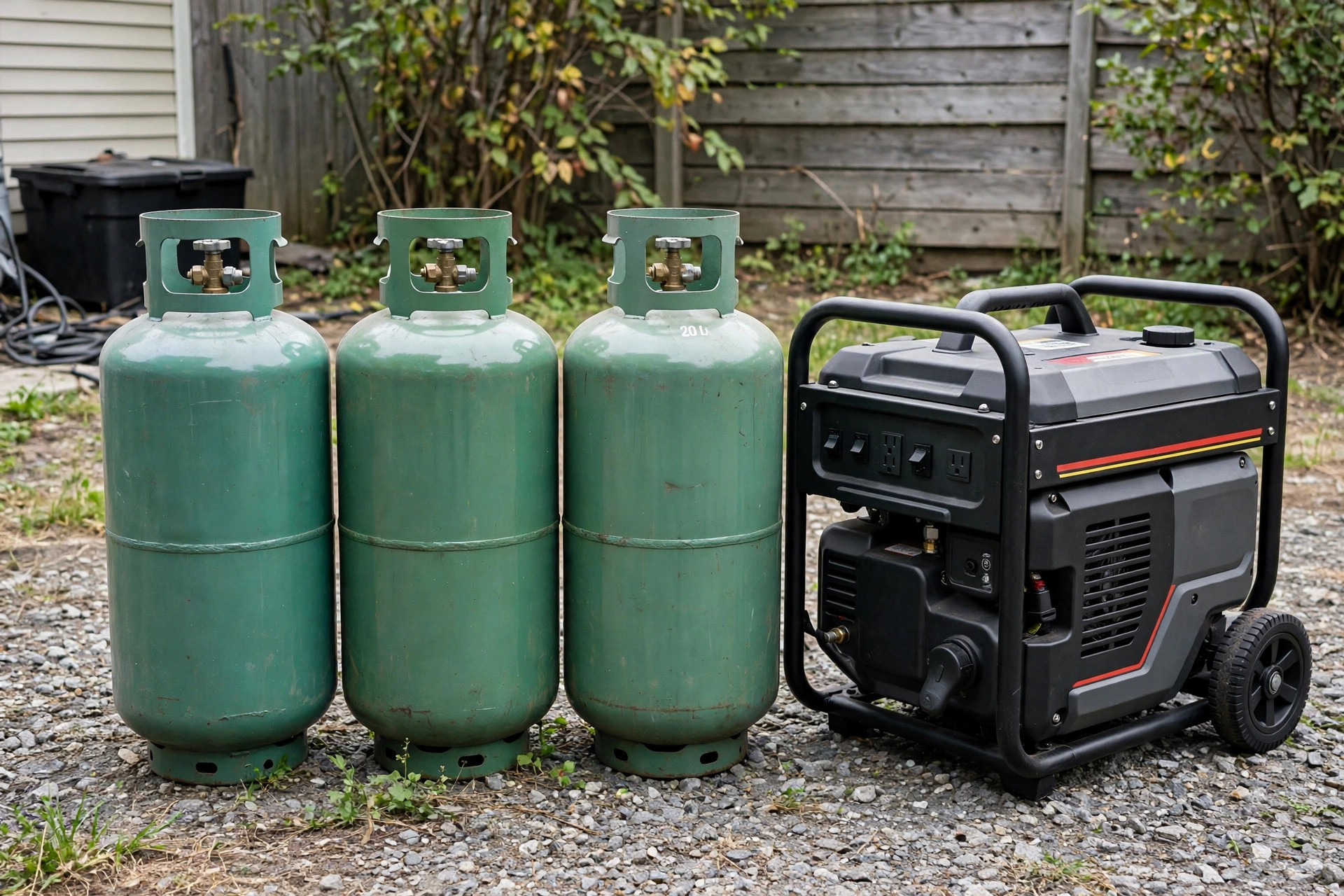
- Propane math: plan 4–8 twenty-pound tanks per 24 hours for a portable; propane stores indefinitely, which is its killer advantage.
- Gasoline goes stale: ~30 days untreated, up to 12 months with stabilizer. Rotate stored gas into your car every 6 months and refill.
Step 1: Know your generator’s burn rate
Fuel consumption scales with generator size and load. These are realistic planning numbers at typical (half-ish) loads:
| Generator size | Typical load | Burn rate (gasoline) | Gallons per 24 hours |
|---|---|---|---|
| 2,000W inverter | Fridge + lights + chargers | ~0.15–0.25 gal/hr | 4–6 gallons |
| 3,500W inverter | Fridge + freezer + some lights | ~0.3–0.5 gal/hr | 7–12 gallons |
| 5,000–6,500W portable | Essentials + well pump / small AC | ~0.5–0.9 gal/hr | 12–20 gallons |
| 7,500–10,000W portable | Near-whole-house | ~0.8–1.3 gal/hr | 20–30 gallons |
Two things to note. First, these assume you are managing loads, not running everything at once — which you should be doing anyway, since it also extends runtime per tank. Second, inverter generators sip fuel at light loads (eco mode), while conventional generators burn nearly as much at quarter load as at half. If you are still sizing a unit, our generator size calculator helps you match the generator to your actual loads instead of oversizing — and an oversized generator wastes fuel every hour it runs.
Step 2: Multiply by 72 hours
Take your 24-hour number and triple it. Worked examples:
- 2,000W inverter, light loads: ~5 gal/day × 3 = 15 gallons for 72 hours. Three 5-gallon cans plus the tank. Very manageable.
- 5,000W portable, essentials: ~15 gal/day × 3 = 45 gallons for 72 hours. That is nine 5-gallon cans — a serious but doable stockpile.
- 9,000W portable, heavy use: ~25 gal/day × 3 = 75 gallons. At this point, gasoline logistics get painful, and propane or a larger tank setup starts making sense.
Reality check: few people run 24 hours straight. Most outage routines run the generator 12–16 hours a day (morning and evening blocks, off overnight). If that is your plan, halve the numbers above. But plan fuel for the worst case — a heat wave or a deep freeze where you run around the clock — and treat reduced runtime as a bonus.
Gasoline: the shelf-life problem
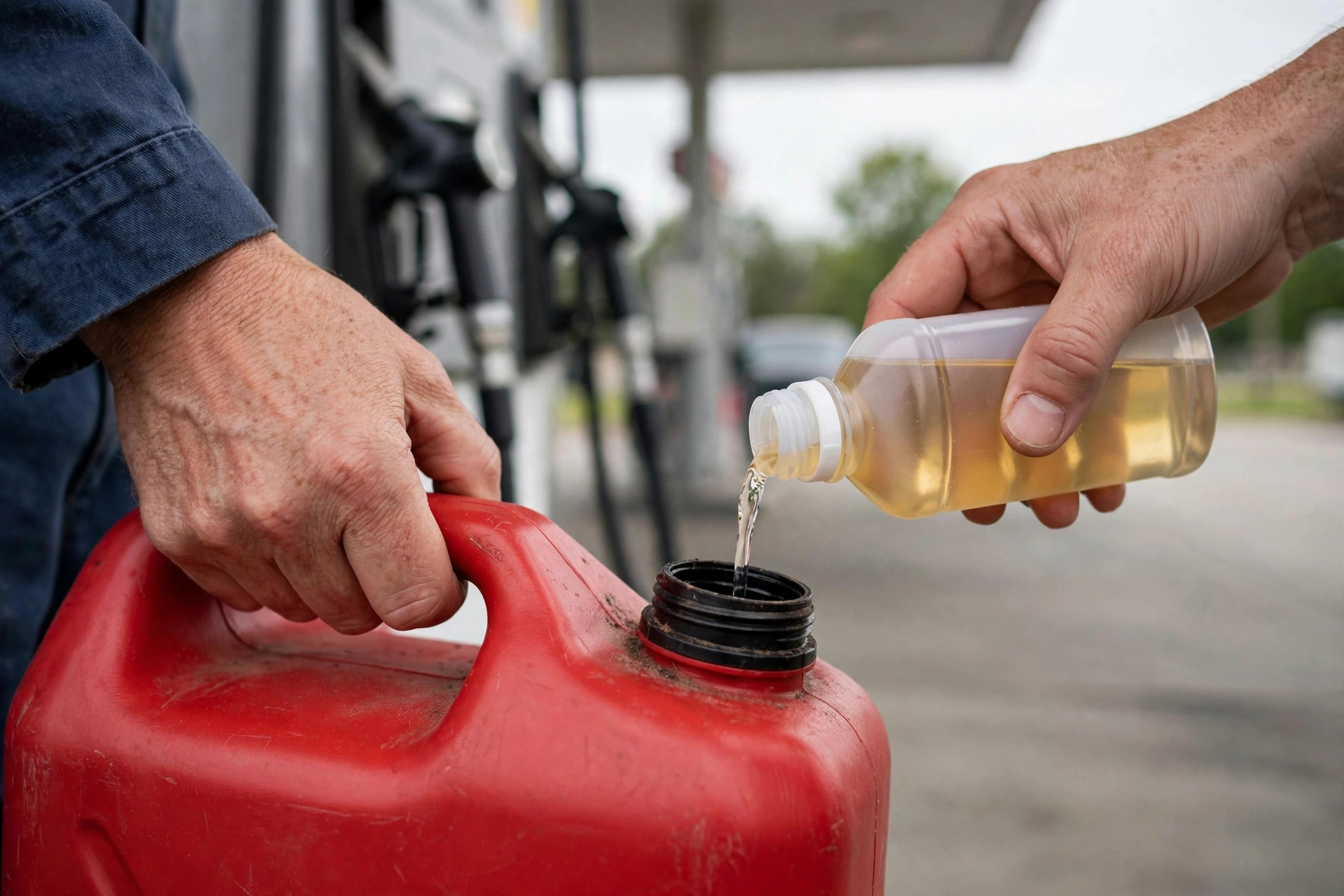
Gasoline is the convenient fuel and the perishable one. Untreated, modern ethanol-blended gasoline starts degrading in about 30 days — it absorbs moisture, oxidizes, and forms the gum and varnish that clog carburetors. With a quality stabilizer added to fresh fuel, you get up to 12 months of reliable storage.
My rotation system, which has worked for years:
- Buy fuel in 5-gallon cans (easier to handle and rotate than big drums).
- Add fuel stabilizer at fill time — 1 oz per 2.5 gallons. Treat it at the pump, not months later; stabilizer cannot un-stale old gas.
- Date each can with a paint marker.
- Every 6 months, pour the oldest cans into your car’s tank (a few gallons of year-old stabilized gas mixed into 15 gallons of fresh is harmless) and refill the cans with fresh treated fuel.
Non-ethanol gasoline (“rec fuel,” sold at marinas and some stations) stores significantly better and is worth the premium for the cans you keep longest. If it is available near you, use it for the deep-storage cans.
Propane: the set-and-forget fuel
Propane’s killer advantage is that it does not degrade. A tank filled today is good in five years. No stabilizer, no rotation, no varnished carburetors. For anyone who hates the gasoline rotation dance, a dual-fuel generator run primarily on propane is the low-maintenance answer.
The tradeoff is energy density and logistics. Consumer Reports’ planning figure: 4 to 8 twenty-pound propane tanks per 24 hours for a portable generator. For 72 hours, that is 12–24 grill tanks — a lot of steel to store. This is why propane users graduate to bigger cylinders: a 100-lb cylinder holds about 23 gallons (roughly five 20-lb tanks’ worth), and a 250-gallon stationary tank holds ~200 usable gallons. Our propane tank size guide has the full runtime math per tank size.
One more propane consideration: in very cold weather, small cylinders can struggle to vaporize fuel fast enough for a large generator under heavy load. If winter outages are your scenario, bigger tanks or a dual-fuel unit with gasoline backup is the resilient setup.
Safe storage rules
Storing 45 gallons of gasoline demands respect. The non-negotiables:
- Approved containers only — UL-listed gas cans, ideally with spill-proof spouts. No milk jugs, no mystery containers.
- Ventilated, detached location. A shed or detached garage — never in the house, never in an attached garage near a water heater or furnace. Gasoline vapors are heavier than air and travel to ignition sources.
- Keep it cool and out of sun. Heat accelerates degradation and builds pressure in cans.
- Know your local limits. Many fire codes limit residential gasoline storage (commonly 25 gallons in approved containers outside of special storage cabinets — check your local code). Propane cylinder storage has its own rules: upright, outdoors or in detached ventilated space, away from the house.
- No smoking, no open flames anywhere near the storage area. Obvious, but it needs saying.
- Keep a fire extinguisher (ABC-rated) accessible near — not inside — the storage area.
The bottom-line fuel plan
For most suburban homeowners with a 5,000-watt-class generator: four to six 5-gallon cans of stabilized, dated, rotated gasoline (20–30 gallons), which covers 36–48 hours of managed runtime, plus a plan to conserve (run in blocks, not 24/7). Add a dual-fuel generator and two 20-lb propane tanks as your no-maintenance reserve, and you are covered for the vast majority of outages without heroic measures.
For rural or storm-belt homes where week-long outages happen: scale up to the full 72-hour number, consider a 100-lb propane cylinder or a larger stationary tank, and think seriously about propane as the primary fuel. The math is in our propane consumption guide.
How many gallons of gas do I need to run a generator for 3 days?
How long does gasoline last in storage for a generator?
Is it better to store gasoline or propane for a generator?
Where should I store generator fuel?
Can I use old gas in my generator?
Fuel planning is unglamorous until the night the power goes out and the gas stations are dark. Size it once — 72 hours, stabilized, dated, rotated — and the generator becomes the reliable backup it is supposed to be instead of a 200-pound paperweight with an empty tank.
How we researched this: Consumer Reports generator fuel planning data, manufacturer fuel consumption specs, fuel stabilizer product data, NFPA fuel storage guidance, and personal experience managing fuel through a multi-day outage.

Related Guides
Diesel vs Gasoline Generators: Which Is Better in 2027?
Diesel vs gasoline generators: diesel wins on efficiency, lifespan and fuel storage; gas wins on price, weight and choice. Here's which fuel fits your use case.

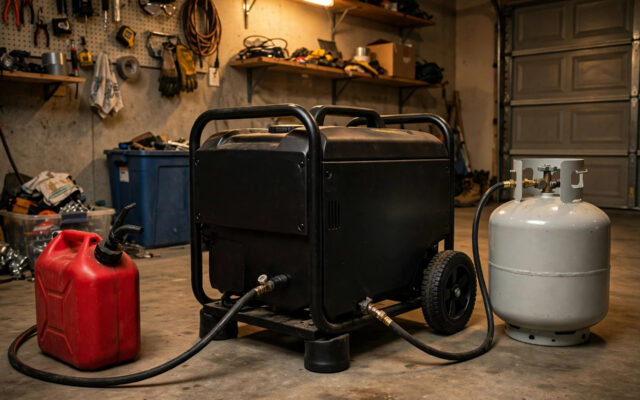
Gasoline vs Propane Generators: Which Fuel Is Better in 2027?
Gasoline vs propane generators in 2027: fuel cost, runtime, storage life, and cold-weather performance compared — plus why dual-fuel wins for most buyers.
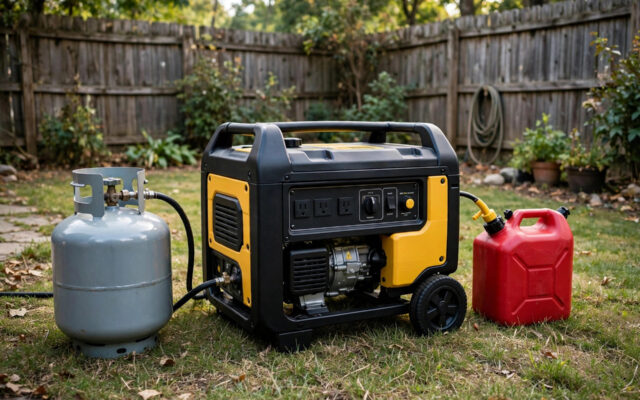
Propane vs Gasoline: Generator Fuel Cost per kWh Compared
At October 2026 prices, propane costs ~$0.48/kWh vs ~$0.65/kWh for gasoline in a generator. See the full math and when gasoline still wins.