


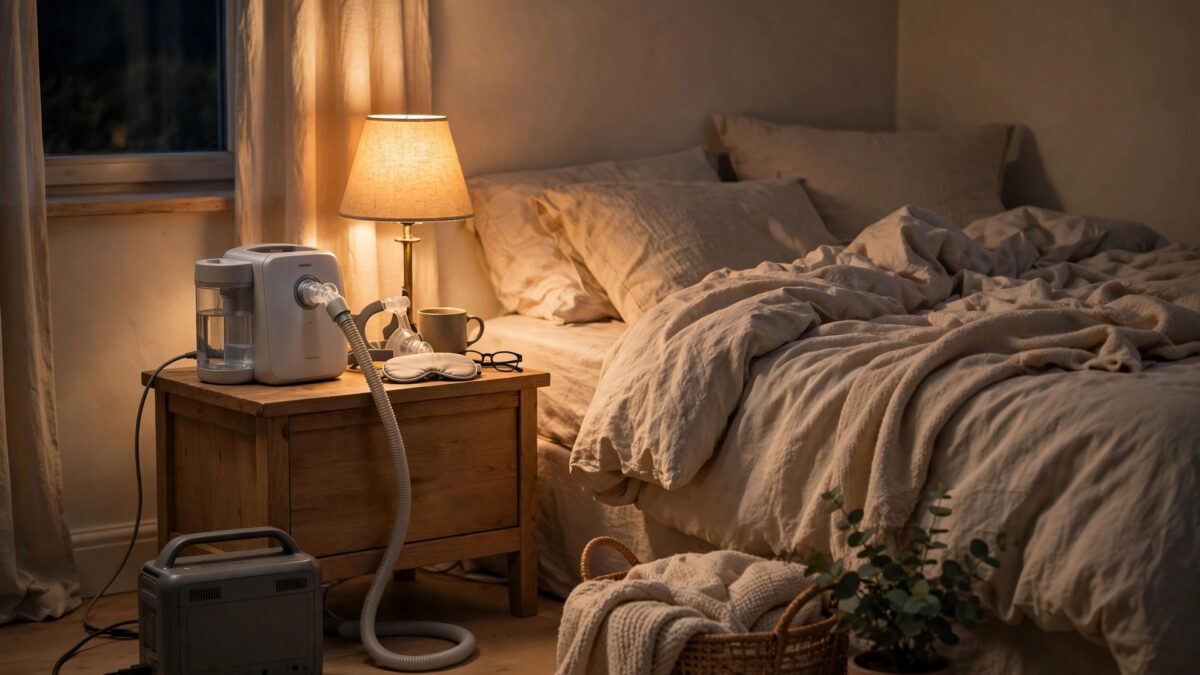
Wondering what size power station for CPAP will get you through the night in an outage? For most CPAP machines, a 500 watt-hour (Wh) portable power station covers a full 8-hour night with the humidifier off — and you will want roughly 1,000Wh if you run a heated humidifier and heated tube. A small 1,000 to 2,000-watt inverter generator also works, but a battery power station is quieter, safe to use indoors, and needs no fuel. In this guide, we researched published CPAP power-draw figures, show the exact sizing math, and explain the settings that double or triple your runtime.
CPAP power draw is small compared to most household loads, which makes backup power very achievable. The catch is the heated humidifier: it is the single biggest power consumer in the system, often drawing two to three times what the CPAP blower itself uses. Understanding that split is the key to sizing correctly.
Key Takeaways
- A CPAP without humidifier draws roughly 30–60W; with heated humidifier and heated tube, roughly 90–150W+ (approximate — check your machine’s label).
- Sizing math: watts × hours × 1.2 safety margin = minimum station capacity in Wh.
- A 500Wh station typically covers 8 hours without humidifier; heated humidifier use needs ~1,000Wh for a full night.
- Use pure sine-wave output (inverter generator or quality power station) — CPAP motors and electronics prefer clean power.
- Turning off the heated humidifier is the single biggest runtime extender; a 12V DC converter is more efficient than running on AC.
- Consult your doctor and device manufacturer about backup power for your therapy — this guide is not medical advice.
What Size Generator or Power Station Do I Need for a CPAP?
Most CPAP users need a portable power station of 500 to 1,000 watt-hours, depending on humidifier use: about 500Wh covers an 8-hour night with the heated humidifier off, while running a heated humidifier and heated tube typically requires around 1,000Wh for the same 8 hours. If you prefer a fuel generator, a small 1,000 to 2,000-watt inverter generator has far more than enough capacity — the CPAP is a tiny load for it — but it must run outdoors because of carbon monoxide, while a battery station sits safely on the nightstand. These figures are approximate; your machine’s power label and your pressure settings determine the exact draw.
How Much Power Does a CPAP Actually Use?
CPAP power consumption has two parts: the blower motor that delivers air pressure, and the heated humidifier (plus heated tube, if you use one) that warms and moistens the air. The blower is modest; the heater is the hungry part.
| CPAP configuration | Typical power draw | 8-hour energy use (approx.) |
|---|---|---|
| Blower only, no humidifier | 30–60W | 240–480Wh |
| Blower + unheated (passive) humidifier | 40–70W | 320–560Wh |
| Blower + heated humidifier | 90–120W | 720–960Wh |
| Blower + heated humidifier + heated tube | 100–150W+ | 800–1,200Wh |
These are approximate ranges compiled from manufacturer-published specifications and owner measurements — for example, a widely used machine lists a maximum draw around 104W with humidifier and heated tube active. Higher pressure settings make the blower work harder and nudge consumption up; lower pressures sip less. The label on your machine’s power brick shows its maximum rating, which is the safe number to size from.
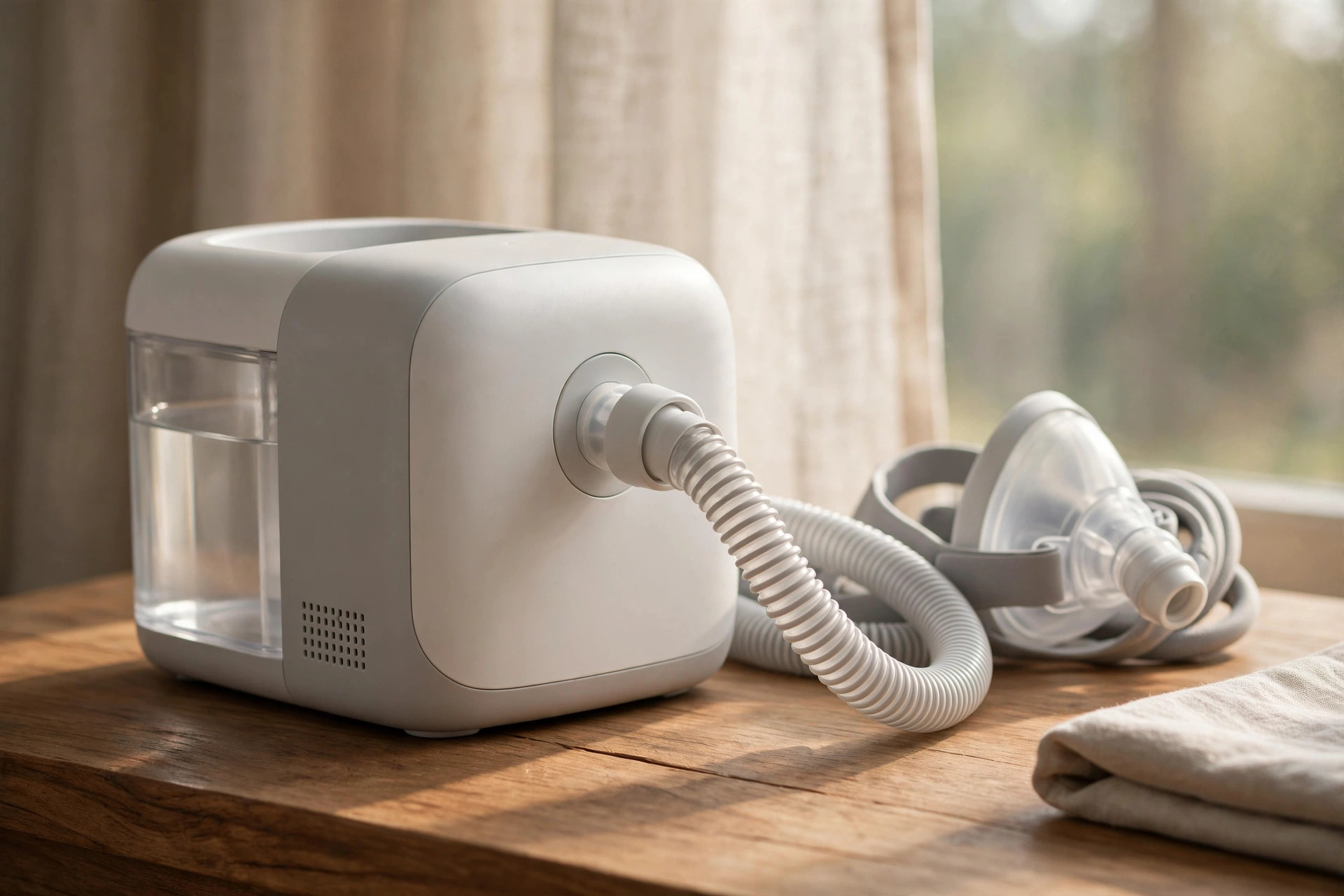
The Sizing Math: Watts × Hours × Safety Margin
Backup sizing for a CPAP is simple arithmetic. Multiply your machine’s watts by the hours you need, then add about 20 percent margin for conversion losses and battery aging:
Required Wh = watts × hours × 1.2
| Your setup | Math | Station size to buy |
|---|---|---|
| 50W, no humidifier, 8 hrs | 50 × 8 × 1.2 = 480Wh | 500Wh |
| 60W, passive humidifier, 8 hrs | 60 × 8 × 1.2 = 576Wh | 600–700Wh |
| 100W, heated humidifier, 8 hrs | 100 × 8 × 1.2 = 960Wh | 1,000Wh |
| 130W, heated humidifier + tube, 10 hrs | 130 × 10 × 1.2 = 1,560Wh | 1,500–2,000Wh |
When in doubt, size up one step. A station that ends the night at 30 percent is far better than one that dies at 5 a.m. — and batteries lose some capacity over the years.
Settings That Double (or Triple) Your Runtime
Before buying a bigger station, check what your current settings cost you in power.
Turn off the heated humidifier
This is the big one. The humidifier heater can account for half to two-thirds of total power draw. Running the blower alone — or with the humidifier chamber filled but unheated — can stretch a 500Wh station from one marginal night to nearly two full nights. Many users tolerate one unheated night during an outage far better than they tolerate no therapy at all — but this is a comfort and health tradeoff to discuss with your doctor, not a decision to make lightly.
Use a 12V DC converter instead of AC
Running your CPAP on AC power from a station wastes 10 to 20 percent of the energy in double conversion (station battery DC → AC → your power brick converts back to DC). Most CPAP manufacturers sell a 12V DC converter cable that plugs into the station’s car-style 12V outlet and feeds the machine DC directly, skipping both conversions. Owner testing consistently shows meaningfully longer runtimes on DC.
Lower the tube temperature
If you need the heated tube for comfort, dropping its temperature setting a notch or two trims the heater’s duty cycle. Small savings, but they add up over 8 hours.
Power Station vs. Generator for CPAP: Which Size and Type Is Better?
| Factor | Portable power station | Inverter generator |
|---|---|---|
| Indoor use | Safe — no emissions | Never — carbon monoxide risk |
| Noise | Silent | 50–60 dB (must be 20+ ft away) |
| Runtime | Limited by battery (1–2 nights typical) | Unlimited with fuel |
| Fuel/maintenance | None | Gasoline, oil changes |
| Upfront cost | Higher per Wh | Lower |
| Best for | Bedroom use, 1–3 night outages | Multi-day outages, whole-home backup |
For most CPAP users, the power station wins for the bedroom: it sits on the nightstand, makes no noise, and needs no trip outside at midnight. The generator wins for week-long outages or when the CPAP is one of many loads. Many prepared households eventually own both.
What About Your Specific Machine?
Power draw varies by manufacturer and model. ResMed, Philips Respironics, and other major brands publish maximum power ratings in their user manuals — use those, not internet anecdotes, for sizing. If you use a travel CPAP, note that smaller machines often draw less power but may lack a 12V DC option, so check accessories before an outage.
One more consideration: some users run their CPAP from their car’s 12V outlet with the manufacturer’s DC converter as an absolute last resort. It works, but it risks draining the car battery — only do this with the engine running periodically, and treat it as a backup to your backup.
FAQs
What size power station do I need for a CPAP?
How many watts does a CPAP use?
Can I run my CPAP on a portable power station indoors?
Will a generator damage my CPAP machine?
How can I make my CPAP battery last longer?
Should I ask my doctor about CPAP battery backup?
Conclusion
Backing up a CPAP is very achievable: a 500Wh power station covers most users for a full night, 1,000Wh covers heated-humidifier users, and a small inverter generator covers multi-day outages. Do the watts × hours × 1.2 math for your specific machine, favor DC power for efficiency, keep the station charged and ready — and talk to your doctor about your backup plan before the next outage, not during it.
