


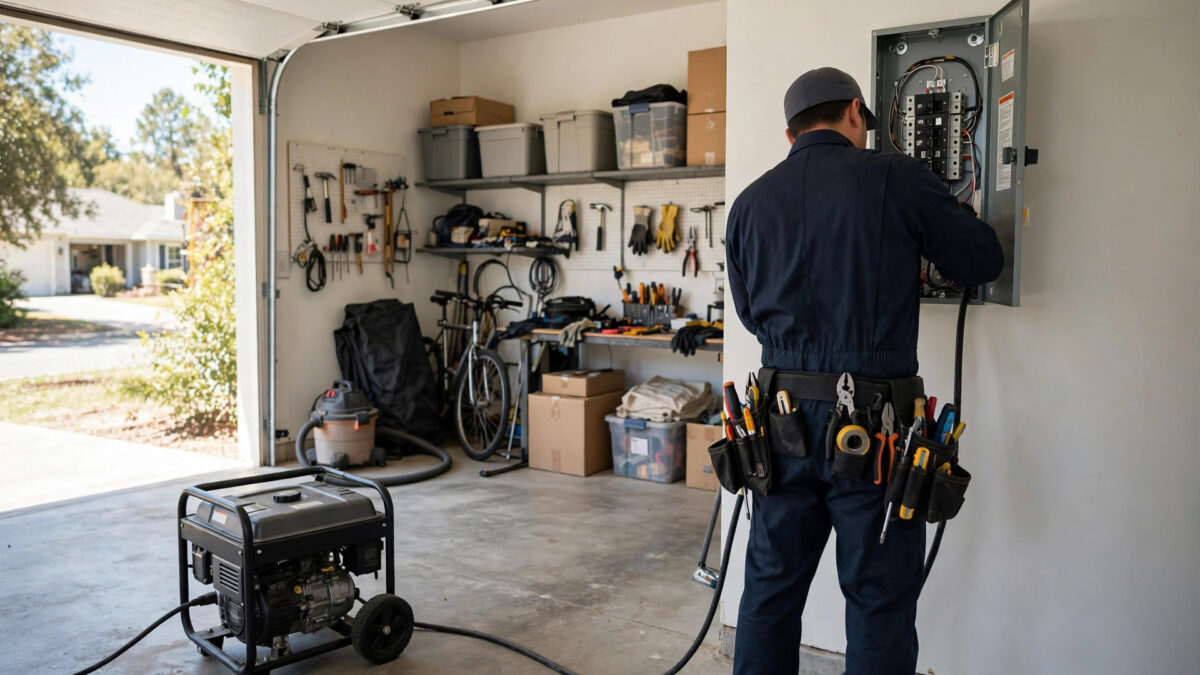
The NEC 2026 generator changes are the latest updates to the National Electrical Code’s rules for how generators are installed, connected, and protected in residential settings. For most homeowners, the 2026 edition refines — rather than rewrites — the familiar requirements: listed transfer equipment to prevent backfeed, proper outdoor installation clearances, GFCI protection on portable generator receptacles, and correct grounding and bonding. Here is the honest caveat up front: the NEC is published on a three-year cycle, but your city or county adopts new editions on its own schedule, so the 2026 rules only apply where your local authority having jurisdiction (AHJ) has adopted them. This guide explains what the code expects in 2027, and how to check what applies to your home.
Key Takeaways
- The NEC 2026 generator changes build on existing rules for transfer equipment, outdoor installation, GFCI protection, and grounding — they are refinements, not a complete rewrite.
- A listed transfer switch or interlock kit is required before any generator can legally power your home’s wiring; direct connection without one risks backfeed and is prohibited.
- Portable generators must run outdoors, well away from doors, windows, and vents — the code and every manufacturer agree on this for carbon monoxide safety.
- The NEC does not apply until your local AHJ adopts the 2026 edition — many jurisdictions are still on the 2020 or 2023 editions, so check with your local inspector.
- Permit and inspection requirements vary locally; most permanent and hard-wired generator installs need both, and a licensed electrician is the safest path.
What Is the NEC and Why Does It Matter for Your Generator?
The National Electrical Code (NEC) is the model electrical standard published by the National Fire Protection Association (NFPA) and updated every three years. It is not a federal law by itself — it becomes law only when a state, county, or city adopts it, often with local amendments. For generator owners, the NEC is what tells your electrician how the generator must connect to your home: how transfer equipment must be wired, where the generator may sit, how it must be grounded, and what protections (like GFCI) are required. Insurance claims, home sales, and inspection sign-offs can all hinge on whether the installation met the code edition your AHJ enforces.
Homeowners encounter the NEC most often through two articles: Article 445, which covers generator construction and installation, and Article 702, which covers optional standby systems — the category nearly every home backup generator falls into. Permanently installed standby units also brush against Article 225 (outside branch circuits) and Article 250 (grounding and bonding). You do not need to memorize these articles, but understanding what they govern helps you have an informed conversation with your electrician and inspector.
What Changed for Generators in the NEC 2026 Code Cycle?
The NEC 2026 generator changes continue several long-running themes in the code rather than introducing one headline overhaul. The 2026 edition, finalized through the NFPA’s public revision process, keeps pushing toward safer generator installations through clearer requirements around transfer equipment listing, outdoor installation rules, generator disconnecting means, and coordination of protection for emergency and standby systems. The practical effect for a homeowner in 2027 is continuity: if your installation met the recent NEC editions, you are very likely aligned with the 2026 direction.
That said, a few themes are worth watching as jurisdictions adopt the 2026 edition:
Transfer equipment requirements keep getting more specific
The code has long required that any generator connected to premises wiring use transfer equipment that physically prevents the generator and the utility from feeding the same circuit at the same time. Successive editions have tightened the listing and labeling expectations for that equipment — manual and automatic transfer switches, and breaker interlock kits where allowed. Expect your inspector to check that the transfer device is listed for the purpose and rated for the load it serves.
Outdoor installation and location rules
Engine-driven generators have always been an outdoor-only proposition under the code’s installation rules and every manufacturer’s instructions. The trend across recent editions is clearer language about locating generators so exhaust cannot enter the building — away from doors, windows, and air intakes, with the working clearances the equipment requires. If you are planning a permanent standby unit, the pad location decision deserves the same care as the electrical work.
Selective coordination for emergency systems
Selective coordination — making sure only the breaker nearest a fault trips, rather than cascading upstream — has been a theme in Articles 700 and 701 for critical systems. While most homes fall under Article 702 (optional standby), the engineering direction matters for larger residential setups with subpanels, elevators, or medical equipment: the 2026 cycle continues the code’s emphasis on designing protection so a single fault does not take down the whole backup system.
GFCI protection keeps expanding
Across recent editions, GFCI requirements have steadily expanded in dwelling units, including outdoor receptacles and specific appliance locations. Portable generators themselves commonly ship with GFCI-protected receptacles, and the interaction between generator bonding and GFCI devices is one of the most common inspection questions — more on that in the grounding section below.
Transfer Switches and Interlock Kits: What the Code Requires
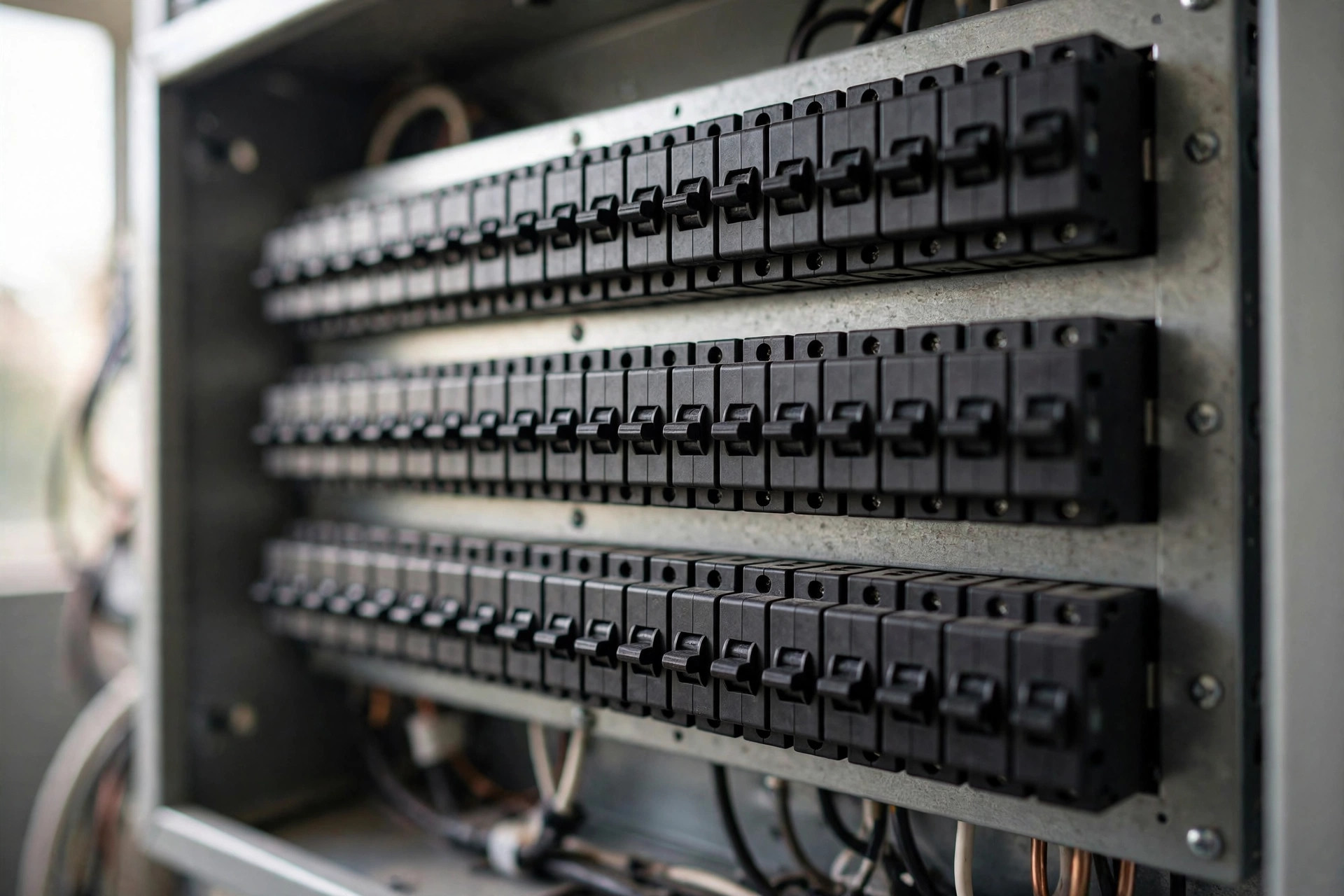
Any generator that powers your home’s wiring — not just an extension cord to a lamp — must connect through listed transfer equipment. This is the single most important generator rule in the NEC, and it exists to prevent backfeed: generator power flowing backward through your panel and out onto utility lines, where it can electrocute line workers and damage equipment. The code requires the transfer method to make simultaneous connection to both sources impossible.
Manual and automatic transfer switches
A transfer switch (manual or automatic) is the purpose-built device for the job. Manual switches are common with portable generators; automatic transfer switches (ATS) are standard with permanent standby units. The NEC expects the switch to be listed, properly rated for the voltage and amperage, and installed per the manufacturer’s instructions. Sizing matters: the switch must handle the load it serves, which is why installers perform a load calculation before selecting equipment.
Breaker interlock kits
An interlock kit is a mechanical device on your panel that prevents the main breaker and a generator backfeed breaker from being on at the same time. Many jurisdictions allow listed interlock kits as transfer equipment for portable generators, but not all — some AHJs require a separate transfer switch. Interlock kits must be listed for use with your specific panel, installed per the manufacturer’s instructions, and the generator inlet must be wired correctly. Because this is the most common DIY-adjacent generator project, it is also the most common inspection failure.
What inspectors typically check
Based on common inspection practice, expect the inspector to verify: the transfer equipment is listed and labeled; the generator inlet or connection point is properly wired; the system cannot backfeed; signage or labeling identifies the standby source where required; and the installation matches the permit. Having the equipment manuals on hand for the inspection smooths the process.
Outdoor Installation Rules: Location, Clearances, and Carbon Monoxide
Portable generators must be operated outdoors, at least 20 feet from the house, with exhaust pointed away from the building — that is the standing guidance from the Consumer Product Safety Commission and every generator manufacturer, and the NEC’s installation rules point the same direction. Running a generator in a garage, basement, shed, or near open windows can fill a home with carbon monoxide in minutes.
Permanent standby unit placement
Permanently installed standby generators have manufacturer-specified clearances — commonly several feet from the building, property lines, windows, doors, and combustible materials — and the code requires following those instructions plus any local setback rules. Fuel connections (natural gas or propane) add their own code layers, including pipe sizing and shutoff requirements, typically handled by a licensed plumber or gas fitter alongside the electrician.
Carbon monoxide alarms are non-negotiable
Whatever the code edition, working CO alarms on every level of the home — especially outside sleeping areas — are essential with any fuel-burning generator. Test them monthly and replace them per the manufacturer’s life rating (commonly 7–10 years). No code provision substitutes for an alarm.
Grounding, Bonding, and GFCI Protection
Grounding and bonding is where generator installations get genuinely confusing, and it is worth a careful read. A portable generator used with extension cords and not connected to premises wiring generally relies on the generator’s frame as its grounding electrode, per the manufacturer’s design — no ground rod needed. Once you connect that generator to your home’s wiring through a transfer switch, the grounding and bonding arrangement must match the transfer equipment design (whether it switches the neutral or not), and this is licensed-electrician territory.
Bonded vs. floating neutral — the short version
Generators ship with the neutral either bonded to the frame or floating (unbonded). Which one you need depends on how the generator connects to the house. The NEC generally requires exactly one neutral-to-ground bond in a system — for most homes, that bond already exists in the main panel, so a generator feeding the house through a transfer switch typically needs a floating neutral, while standalone use may call for bonded. Using the wrong configuration can trip GFCI devices or create a shock hazard. We explain this in depth in our guide to bonded vs. floating neutral generators.
GFCI receptacles on portable generators
Most modern portable generators include GFCI-protected 120V receptacles, and jobsite or outdoor use may require them. If GFCI outlets on your generator trip repeatedly when connected to your home, that is often a bonding-configuration issue rather than a faulty generator — another reason to have the transfer installation done professionally and to test the setup before an outage.
Permits, Inspections, and Your Local AHJ
Most permanent standby generator installations require an electrical permit and an inspection; many jurisdictions also require permits for transfer switch or interlock kit installations with portable generators. The permit process is genuinely useful — it is a second set of qualified eyes confirming the installation is safe and code-compliant.
How to find out what applies to you
Follow these steps before buying equipment or scheduling work:
Step 1: Identify your AHJ and its adopted code edition
Call or check the website of your city or county building department. Ask which NEC edition is currently enforced and whether there are local amendments affecting generators. This single question prevents most code-compliance surprises.
Step 2: Ask about permit requirements for your specific project
Describe what you plan — portable generator with interlock kit, or permanent standby with automatic transfer switch — and ask whether a permit is required, what drawings or load calculations are needed, and what the inspection stages are.
Step 3: Hire a licensed electrician for the hard-wired work
Get the transfer equipment installation done by a licensed electrician who pulls the permit and schedules the inspection. Keep the equipment manuals, the permit card, and the final inspection sign-off with your home records — future buyers and insurers may ask for them.
Do the NEC 2026 Generator Changes Affect My Existing Generator?
For most homeowners, no — code changes are not retroactive. An installation that was legal and inspected under the edition in force at the time it was installed is generally “grandfathered” and does not need to be ripped out when a new edition is adopted. The NEC applies to new installations and modifications.
Where the 2026 edition can reach your existing setup is at the point of change: replacing a transfer switch, upgrading a panel, adding circuits to the generator-fed subpanel, or installing a larger generator may trigger the current code for the modified portions. If you are planning any of those projects, ask your electrician which edition applies and what it changes for your scope of work. When in doubt, a quick call to the local inspector’s office costs nothing and prevents expensive rework.
When does the NEC 2026 take effect for generators?
Do I need a permit to install a generator transfer switch?
Can I connect my portable generator directly to my breaker panel?
Does the NEC require my generator to be a certain distance from the house?
Do I need a ground rod for my portable generator?
Will I have to upgrade my existing generator installation when my area adopts NEC 2026?
Conclusion
The NEC 2026 generator changes continue the code’s steady direction: safer connections through listed transfer equipment, careful outdoor installation, proper grounding and GFCI protection, and professional, permitted, inspected work. None of it is exotic — it is the same discipline that has governed home generators for years, refined for another code cycle. Your two action items are simple: find out which NEC edition your local AHJ enforces, and put a licensed electrician on the hard-wired parts of the job. Do those two things and the code takes care of itself. For help sizing the generator itself, see our guide on choosing the right generator size for your home.

Related Guides
How Much Does It Cost to Run a Generator Per Hour? Fuel Cost Calculator
Running a generator costs $0.35-$7+ per hour by size and fuel type. Use our simple calculator formula and fuel cost tables to estimate your exact cost.

Bonded vs Floating Neutral on Generators: What’s the Difference?
Bonded vs floating neutral generator explained: what each means, the one-bond rule, which setup your transfer switch needs, and how to check your own unit.
Generator THD Explained: What It Means for Electronics & Appliances
Generator THD explained: what total harmonic distortion means, the under-3% vs over-6% tiers, which appliances need clean power, and how to check the spec.