


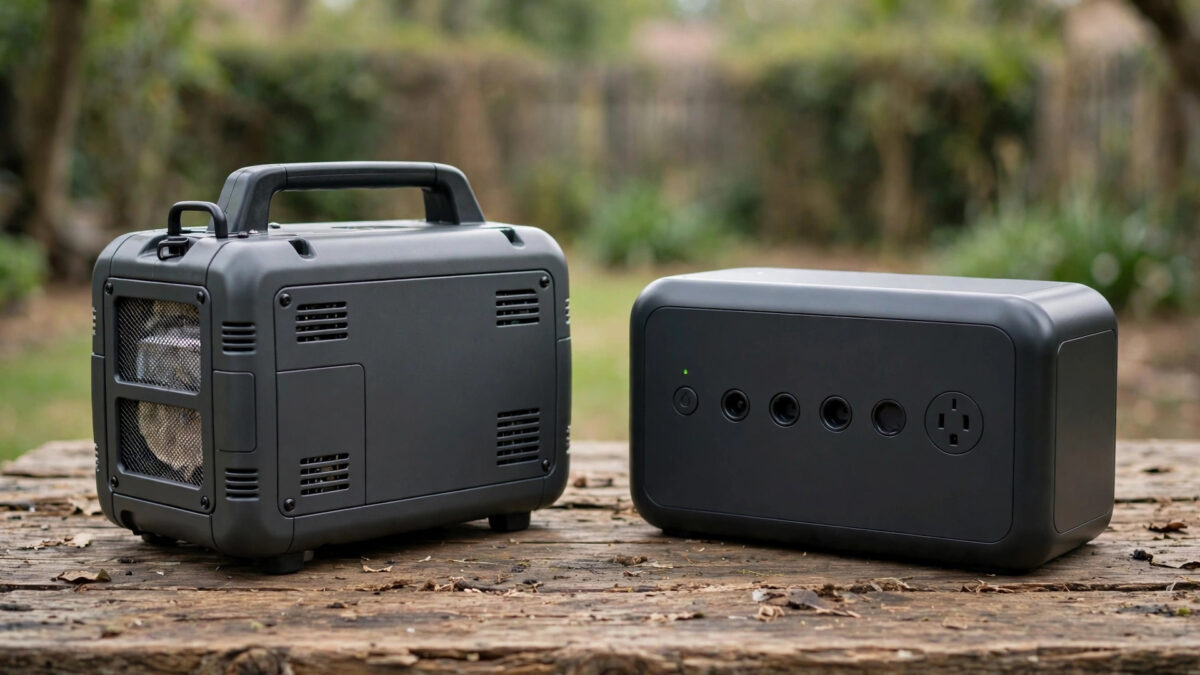
Inverter generator vs portable power station — which is better in 2027? It depends entirely on what you need to power and where. An inverter generator burns fuel to make electricity: it runs indefinitely as long as you feed it gasoline or propane, delivers high wattage for heavy loads, but is noisy, needs maintenance, and can never run indoors. A portable power station stores electricity in a battery: it is silent, emission-free, safe indoors, and maintenance-free, but its energy is finite — when the battery is empty, you wait for a recharge. In this guide, we researched both technologies head to head across power, runtime, noise, cost, lifespan, and real-world use cases so you can pick the right one — or decide you need both.
This is one of the most common buying questions in backup power, and the honest answer is that neither technology wins outright. They are different tools. Understanding the tradeoffs takes about ten minutes and saves you from buying the wrong one.
Key Takeaways
- Inverter generators win on: unlimited runtime with refueling, high wattage (up to 12,000W+), lower cost per watt, and heavy 240V loads.
- Power stations win on: silent indoor-safe operation, zero maintenance, clean power for electronics, and instant on/off.
- A power station’s runtime is finite — size by watt-hours (Wh) for your loads; a generator’s runtime is limited only by fuel supply.
- For multi-day outages with heavy loads, the generator wins; for overnight essentials, apartments, and CPAP backup, the station wins.
- Many prepared households own both: the station for quiet nighttime essentials, the generator for daytime heavy loads and recharging the station.
- Never run a fuel generator indoors or in a garage — carbon monoxide kills in minutes.
What Is an Inverter Generator?
An inverter generator is a fuel-powered generator — usually gasoline, sometimes propane or dual-fuel — with electronic inverter circuitry that converts its raw electrical output into a clean, stable sine wave. Compared to old conventional generators, inverter models produce power with very low total harmonic distortion (typically under 3 percent), making them safe for laptops, TVs, and modern appliances with electronic controls. They also throttle their engine speed to match the load, so they run quieter and burn less fuel at light loads than conventional generators screaming at full RPM.
Typical sizes range from 2,000-watt suitcase models you can carry with one hand to 12,000-watt units that can back up much of a house through a transfer switch. Runtime is a function of fuel: a gallon of gas yields roughly 3,000 to 4,000 watt-hours from an efficient inverter generator, and you can refuel indefinitely.
What Is a Portable Power Station?
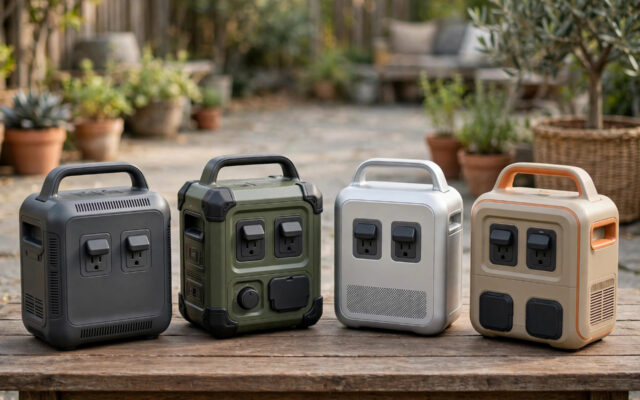
A portable power station — sometimes called a solar generator — is essentially a large rechargeable battery with a built-in inverter, charge controller, and AC outlets. There is no engine and no fuel: you charge it from a wall outlet, a car, or solar panels, then draw power silently until the battery is depleted. Modern stations overwhelmingly use LiFePO4 (lithium iron phosphate) batteries, prized for long cycle life (typically 3,000 to 4,000 cycles to 80 percent capacity) and thermal stability.
Capacity is measured in watt-hours (Wh): a 1,000Wh station can deliver 1,000 watts for one hour, or 100 watts for ten hours. Typical models range from 500Wh lunchbox-size units to 3,000Wh+ expandable systems that can add extra battery modules. Output is typically 120V AC up to the unit’s wattage rating, plus USB and 12V DC ports.
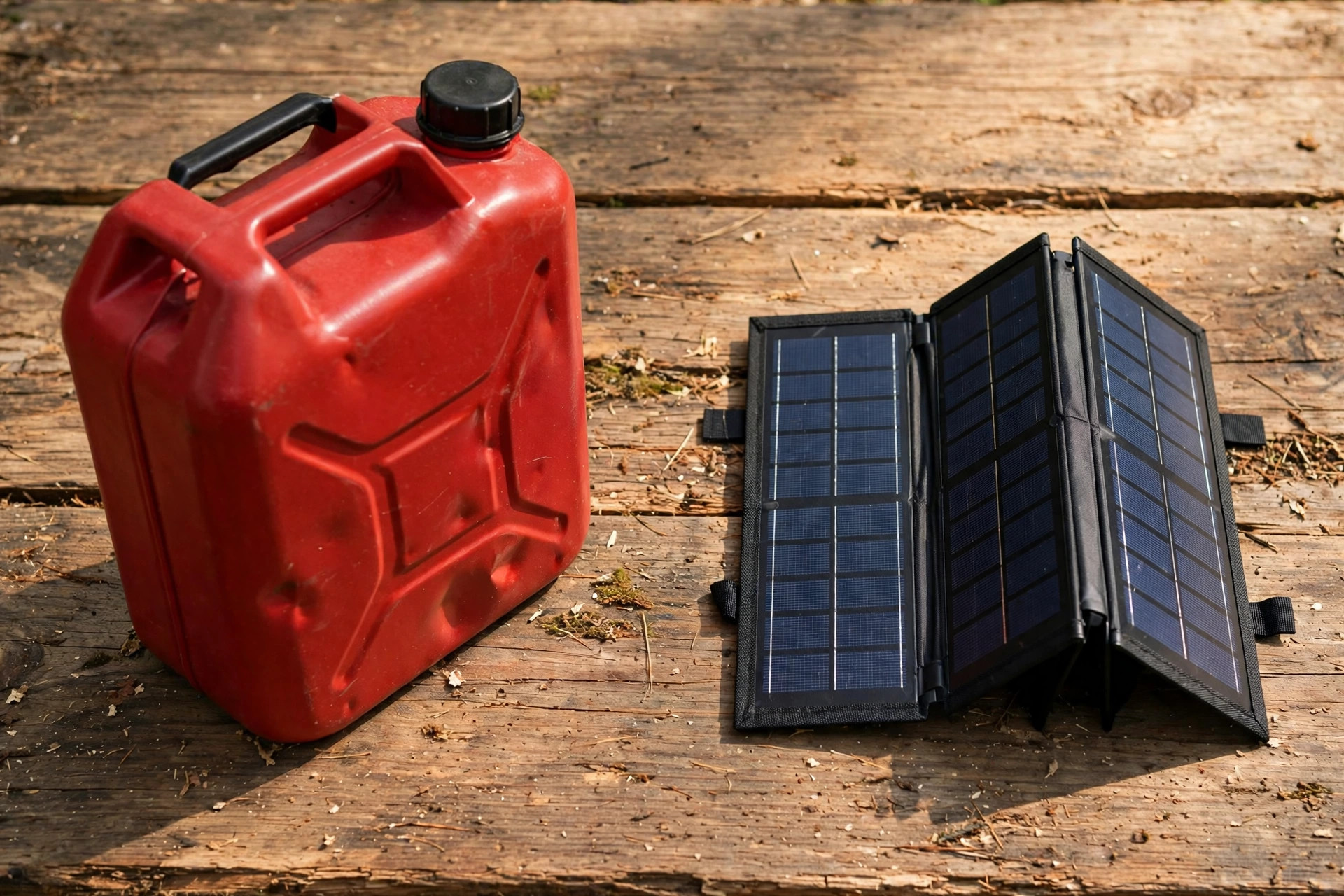
Inverter Generator vs. Portable Power Station: Head-to-Head
| Factor | Inverter generator | Portable power station |
|---|---|---|
| Power output | 2,000–12,000W+; 240V available on larger models | 500–3,600W typical; 120V only (most models) |
| Energy / runtime | Unlimited with refueling | Finite — 500–3,000+Wh, then recharge |
| Noise | 50–65 dB at 23 ft (conversation to vacuum-cleaner level) | Silent (fans may whisper under heavy load) |
| Indoor use | Never — carbon monoxide | Safe indoors |
| Power quality | Clean sine wave, low THD | Clean pure sine wave |
| Maintenance | Oil changes, air filter, spark plug, fuel care | Essentially none |
| Startup | Pull cord or electric start; warm-up needed | Instant — press a button |
| Fuel logistics | Store/rotate gasoline or propane | Recharge from wall, car, or solar |
| Lifespan | ~2,000–3,000 engine hours with care | 3,000–4,000 charge cycles (LiFePO4) |
| Upfront cost | Lower per watt | Higher per watt-hour |
| Weather | Runs in rain with ventilation; needs dry cover | Keep dry; batteries dislike extreme cold |
Runtime: The Deciding Factor
Runtime is where the two technologies diverge most sharply, so think through your outage scenarios concretely.
When the generator wins: long outages, heavy loads
A multi-day outage with a refrigerator, well pump, sump pump, or power tools is generator territory. A 20-pound propane tank or a few 5-gallon gas cans represent tens of kilowatt-hours of stored energy — far beyond any portable battery — and resupply is just a trip to the gas station. If the outage might last a week, fuel logistics beat battery capacity every time.
When the power station wins: short outages, light loads, indoors
An overnight outage running a fridge (1,200Wh/day), a CPAP (400Wh/night), phones, and lights is a perfect power-station scenario: silent, no midnight refueling trip in the rain, no fumes. Apartments and condos where generators are banned or impractical are station territory by default. And for anyone who needs power in a bedroom — CPAP users especially — the station is the only safe choice.
Cost Comparison: Upfront vs. Long-Term
Upfront, generators are cheaper per unit of power: a 3,500-watt inverter generator typically costs far less than a 3,000Wh power station. But total cost of ownership tells a fuller story. The generator burns fuel every hour it runs (roughly $0.50–$1.00+ per kWh at typical gasoline prices and light loads), needs oil and filters, and wears out after a few thousand hours. The power station’s “fuel” — wall or solar electricity — costs a few cents per kWh or nothing, and LiFePO4 batteries last a decade of occasional outage use.
For infrequent, short outages, the station’s higher upfront cost amortizes well because there is almost no operating cost. For frequent or long outages with heavy loads, the generator’s fuel costs add up but remain the only practical option. Run your own numbers against how often you actually lose power.
Noise, Emissions, and Where You Can Use Each
This factor is practical, not philosophical. Inverter generators are much quieter than old conventional models, but “quiet” still means 50 to 65 decibels — a constant hum your neighbors will hear at night, and many HOAs and campgrounds restrict generator hours or ban them outright. They also emit exhaust that must be managed outdoors, at least 20 feet from buildings.
Power stations have none of these constraints: silent, emission-free, welcome indoors, in apartments, in tents, in hospital-adjacent settings — anywhere. If your living situation rules out a generator, the decision is already made.
Inverter Generator vs. Portable Power Station: Which Should You Buy?
Buy the inverter generator if…
- You need to run 240V loads (well pump, electric water heater, Level 2 EV charging).
- Outages in your area last multiple days.
- You need high wattage (5,000W+) for tools, large appliances, or whole-home backup via transfer switch.
- You have safe outdoor space and can store fuel properly.
Buy the portable power station if…
- You live in an apartment, condo, or HOA where generators are banned or impractical.
- Your loads are light: fridge, CPAP, phones, laptops, lights, TV.
- You need power in a bedroom or indoors (CPAP backup is the classic case).
- You want zero maintenance and instant, silent power.
- Your outages are typically hours, not days.
Consider both if…
You want full coverage: the generator for daytime heavy loads and station recharging, the station for silent nighttime essentials. This is the setup serious preparedness households converge on — each covers the other’s weakness.
FAQs
Which is better: an inverter generator or a portable power station?
Can a portable power station replace a generator?
How long does a portable power station last compared to a generator?
Is a solar generator the same as a portable power station?
Can I charge a portable power station with a generator?
Are portable power stations safe indoors?
Conclusion
In 2027, the inverter generator vs. portable power station question has a clear framework: need unlimited energy, high wattage, or 240V? Get the inverter generator. Need silent, indoor-safe, maintenance-free power for essentials? Get the power station. Need to sleep through a multi-day outage with the CPAP running and the fridge cold? Get both, and let each do what it does best.

Related Guides
Best Time to Buy a Generator: 2027 Price & Sales Calendar
The best time to buy a generator is Black Friday, with 10-30% off typical. 2027 price and sales calendar: clearance windows, pre-season deals, and timing tips.

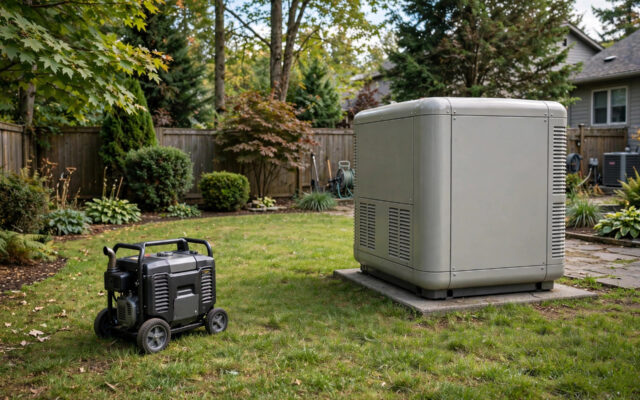
Portable vs Standby Generator: Cost, Runtime, Maintenance & Pros/Cons
Portable vs standby generator: $1,100-$5,000 vs $9,000-$20,000+ installed. Compare costs, runtime, maintenance, pros and cons, and which type wins for you.
Jackery vs EcoFlow vs Bluetti vs Anker: Which Power Station Brand Is Best?
Jackery vs EcoFlow vs Bluetti vs Anker power stations compared on battery chemistry, charging speed, cycle life, and value. Includes the NMC vs LiFePO4 warning.