


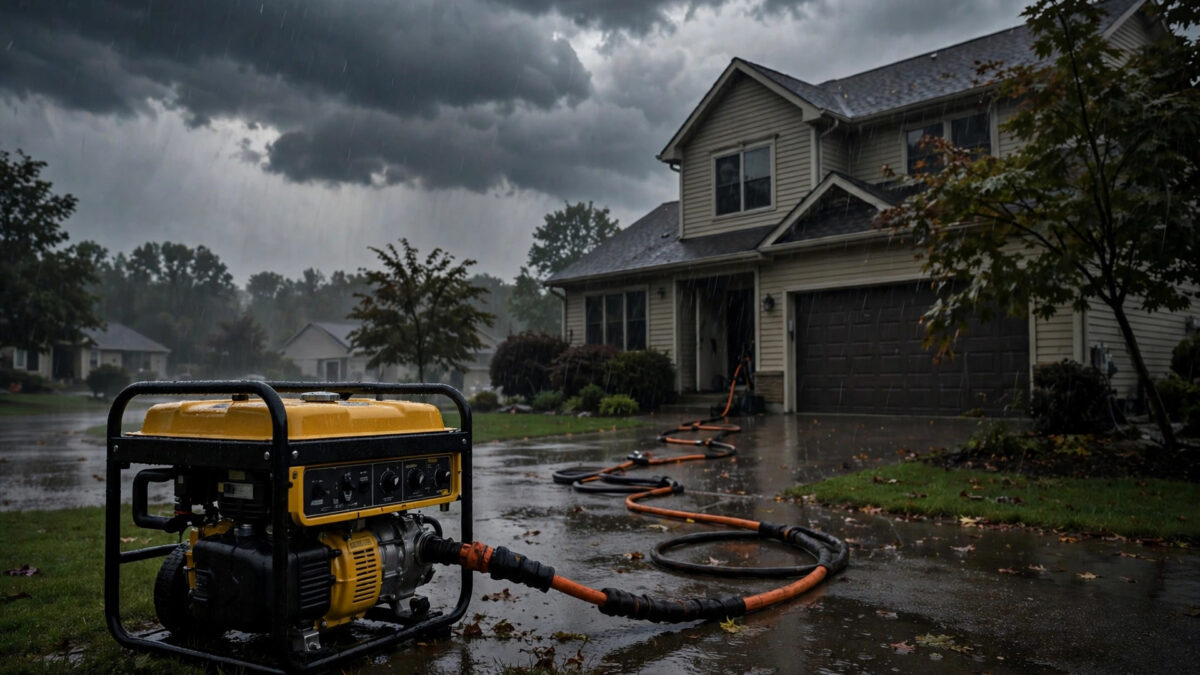
No. Plugging your generator into a wall outlet (or a dryer outlet) to feed your breaker panel — called backfeeding — is illegal in every US state, violates the National Electrical Code (Article 702), and can kill the lineworker trying to restore your power. It can also destroy your generator and void your homeowner’s insurance.
Key takeaways
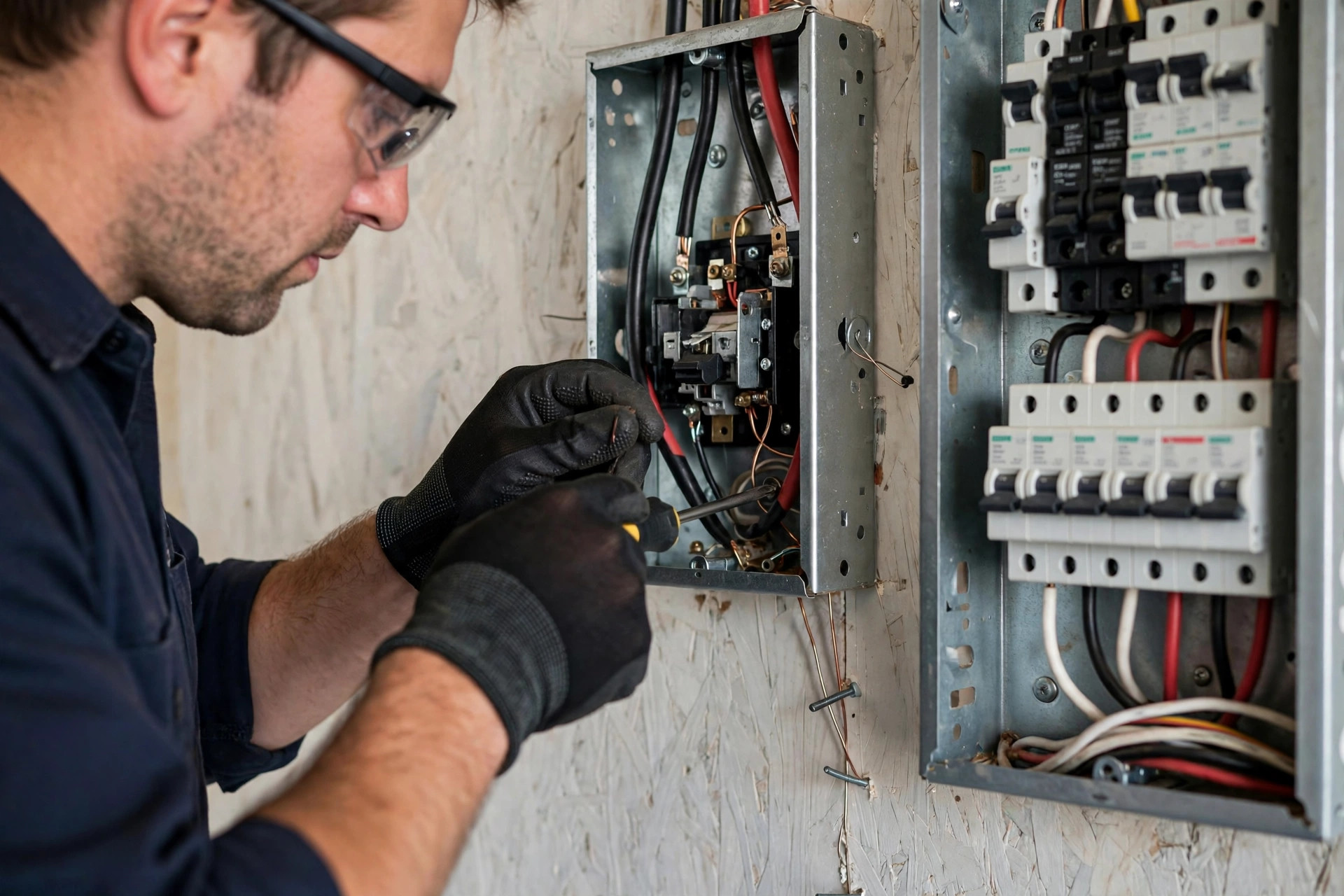
- Backfeeding sends generator power backward through your panel and out onto utility lines, which linemen believe are dead.
- A home transformer works in reverse: your 240V becomes thousands of volts on the street lines.
- NEC Article 702 requires listed transfer equipment — a transfer switch or listed interlock kit. “Just flip the main breaker” is not compliant and not safe.
- When utility power returns, a backfed generator meets grid power head-on — expect fire, fried appliances, or a destroyed generator.
- Insurers commonly treat backfeed-caused fires as negligence and deny the claim.
- The legal options are a transfer switch (roughly $400–$1,300 installed), an interlock kit, or simple extension cords.
What backfeeding actually is
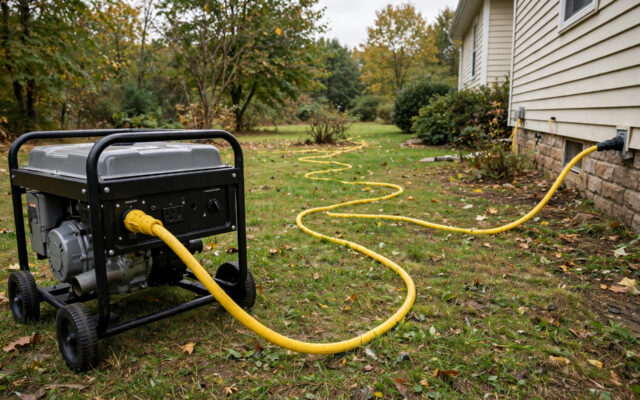
Backfeeding means connecting a portable generator to your house wiring without a transfer switch — usually with a homemade double-male cord (electricians call it a “suicide cord”) plugged into a dryer or range outlet. The generator pushes power backward through that branch circuit, into your breaker panel, and energizes every circuit in the house.
Sounds clever. It feels like a free whole-house hookup. Here’s the problem: electricity doesn’t know which direction is “right.” That power also flows backward out of your house, through your electric meter, through the transformer on the pole — and onto the utility lines.
When I first heard about the dryer-outlet trick at a campground years ago, an older electrician there told me flat-out: “That’s how people die.” He was right, and I’ll explain exactly why.
Why it can kill someone
During an outage, utility lineworkers restore power under the assumption that lines are dead. They ground and test lines, but mistakes and surprises happen — especially with storm damage everywhere and dozens of houses running generators.
Your home’s transformer steps utility voltage (typically 7,200V or more on residential distribution lines) down to 240V for your house. Transformers work in both directions. Feed 240V from your generator back into that transformer, and it sends thousands of volts out onto the distribution line — a line the crew on the pole believes is safe.
This isn’t theoretical. After Hurricane Dennis in 2005, a South Carolina lineman working in Alabama was killed by a line that had been re-energized by an improperly connected customer generator. Authorities investigated the homeowner for charges. Electricians I talk to say nothing scares a lineman during an outage like hearing residential generators humming in a neighborhood that’s supposed to be dark.
It’s illegal — and your insurance can walk away
NEC Article 702 (Optional Standby Systems) requires transfer equipment that isolates the generator from the utility supply. Backfeeding a panel without it violates the code, which every state has adopted into its electrical regulations in some form.
The insurance angle is the one most people miss. If a backfed connection causes a fire — and it can, easily — most homeowner policies will treat it as negligence and deny the claim. You’d be paying out of pocket to rebuild a house that your generator helped burn down.
There have also been criminal investigations after backfeed-related injuries and deaths. “I didn’t know” doesn’t help much when the generator connection was something you built yourself from YouTube instructions.
It can destroy your own equipment, too
Forget the lineman for a second. Think about what happens inside your house when utility power comes back while your generator is backfeeding the panel:
- Generator meets the grid. Your little 7,500W generator is suddenly trying to push power against the entire utility system. It loses that fight instantly — fried windings, thrown breakers, possibly a fire in the generator itself.
- Voltage chaos. A generator straining under backfeed conditions can produce unstable voltage that cooks appliances, electronics, and HVAC controls.
- Overloaded wiring. Dryer outlets are wired for a dryer. Backfeeding the whole house through that circuit can push more current through that wiring and receptacle than they were ever meant to carry.
Then there’s the cord itself. A “suicide cord” has exposed live prongs on one end while you plug it in. If the generator is running and that male end touches anything — your hand, the dryer chassis, the floor — you’re holding a live 240V conductor. The name exists for a reason.
The legal alternatives (all cheaper than a lawsuit)
1. Extension cords
The simplest legal method: run the generator outside and plug appliances directly into it with heavy-duty outdoor extension cords. No panel connection, no backfeed possible, no electrician needed. This is what I recommend for most people running a fridge, a freezer, and a few lights.
2. Interlock kit
A listed interlock kit is a mechanical bracket installed in your breaker panel that makes it physically impossible for the main breaker and the generator breaker to be on at the same time. The hardware costs roughly $50–$150 (it must be listed for your specific panel brand and model), and an electrician typically charges a couple hundred dollars to install it. All-in, expect roughly $400–$850 — far less than a transfer switch, and it’s code-compliant in most jurisdictions.
3. Transfer switch
A manual transfer switch is a separate panel wired to your essential circuits. During an outage you flip one lever and the generator powers those circuits — never the grid. Installed cost typically runs $400–$1,300 depending on panel location, inlet-box placement, and local permit costs. Automatic transfer switches (for standby generators) cost more but need no human action at all.
I’ve compared these options in detail — see my generator size calculator first to know what size generator your plan needs, then read our transfer switch vs. interlock kit comparison to pick the connection method.
The “everyone does it” myth
Backfeeding survives on social proof. After every hurricane, neighborhood forums fill with people describing their dryer-outlet setup like it’s folk wisdom — and because nothing bad happened that time, it feels safe. But “nothing happened” is not evidence of safety; it’s evidence of luck. The lineman who gets hurt is three streets over, on a line your neighbors can’t see, during the outage when someone forgets the breaker sequence.
Electricians have a saying about this kind of luck: every code rule is written in somebody’s blood. Article 702’s transfer-equipment requirement exists because people died before it was written. The $400 interlock kit isn’t the expensive option. The expensive option is the one where you find out why the rule exists.
If you already have a suicide cord, here’s what to do
Destroy it. Seriously — cut the cord in half so nobody in your house can use it “just this once.” Then call a licensed electrician and ask about a listed interlock kit or a manual transfer switch. It takes one visit and you’ll never have to worry about it again.
And if a friend or neighbor shows you their dryer-outlet setup like it’s a clever hack, tell them what you now know. You might be the only person who ever tells them.
Can I backfeed my panel if I turn off the main breaker?
Is backfeeding a generator illegal in every state?
Can backfeeding damage my generator?
Will my insurance cover damage from backfeeding?
What is the cheapest legal way to power my house with a generator?
Why is a double-male cord called a “suicide cord”?
The short version: backfeeding is the one generator shortcut that puts other people’s lives at risk, breaks the law in all 50 states, and can torch your insurance coverage and your generator in the same afternoon. Spend the few hundred dollars on a proper interlock kit or transfer switch. It’s the cheapest real insurance you’ll ever buy. And before the electrician’s visit, run your essential loads through our generator calculators so the switch gets sized to reality, not guesswork.

Related Guides
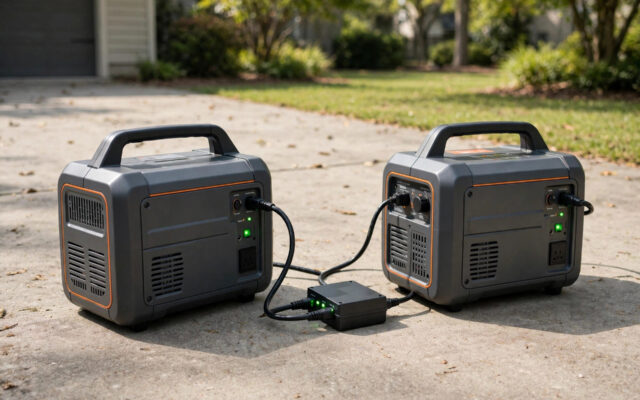
Paralleling Two Generators vs Buying a Bigger One: Which Is Better? (2027)
Paralleling two small inverter generators vs buying one bigger unit: compare cost, noise, fuel, redundancy, and the 240V catch to pick the right setup.

What Gauge Extension Cord Do You Need for a Generator?
Extension cord gauge depends on amps AND length: 12 AWG handles 20A to 50 ft, but you need 10 AWG at 100 ft. Chart, sizing steps, and fire-prevention rules inside.
Generator Carbon Monoxide Safety: The Complete 2027 Guide
Carbon monoxide from generators kills ~77 Americans a year. This complete guide covers symptoms, the CDC 20-foot rule, detector placement, and a pre-outage safety checklist.