

Updated for 2027. If you live in an apartment, here’s the honest truth most “best generators” lists won’t tell you: a gas generator has no business inside your apartment — ever. Running one indoors, on a balcony, or in a hallway can kill you and your neighbors with carbon monoxide, an odorless gas that gives no warning. Most leases and building codes also ban fuel storage outright.
So what do apartment dwellers actually do when the power goes out? The real 2027 answer is a portable power station — a big rechargeable battery that silently powers your fridge, phone, laptop, Wi-Fi router, and even a CPAP machine, with zero fumes and zero noise complaints. Below we’ve rounded up the best apartment-safe power stations, plus one small, ultra-quiet inverter generator — for outdoor use only, where your lease allows it.
Our Top Picks at a Glance
- EcoFlow DELTA 3 Plus — Best overall: the 1kWh sweet spot with the fastest recharge in its class
- EcoFlow DELTA Pro 3 — Best capacity: 4096Wh of whole-home muscle, expandable to 48kWh
- Jackery Explorer 1000 v2 — Best budget: 1500W output and a 49-minute full charge
- Jackery Explorer 1000 v2 — Best portable: 1070Wh at just 23.8 lbs
- BLUETTI AC200PL — Best for outages: 2.3kWh with room to grow to 8.4kWh
- Honda EU2200i — Best gas option, outdoor use only: the quiet-inverter benchmark for patios and balconies where permitted
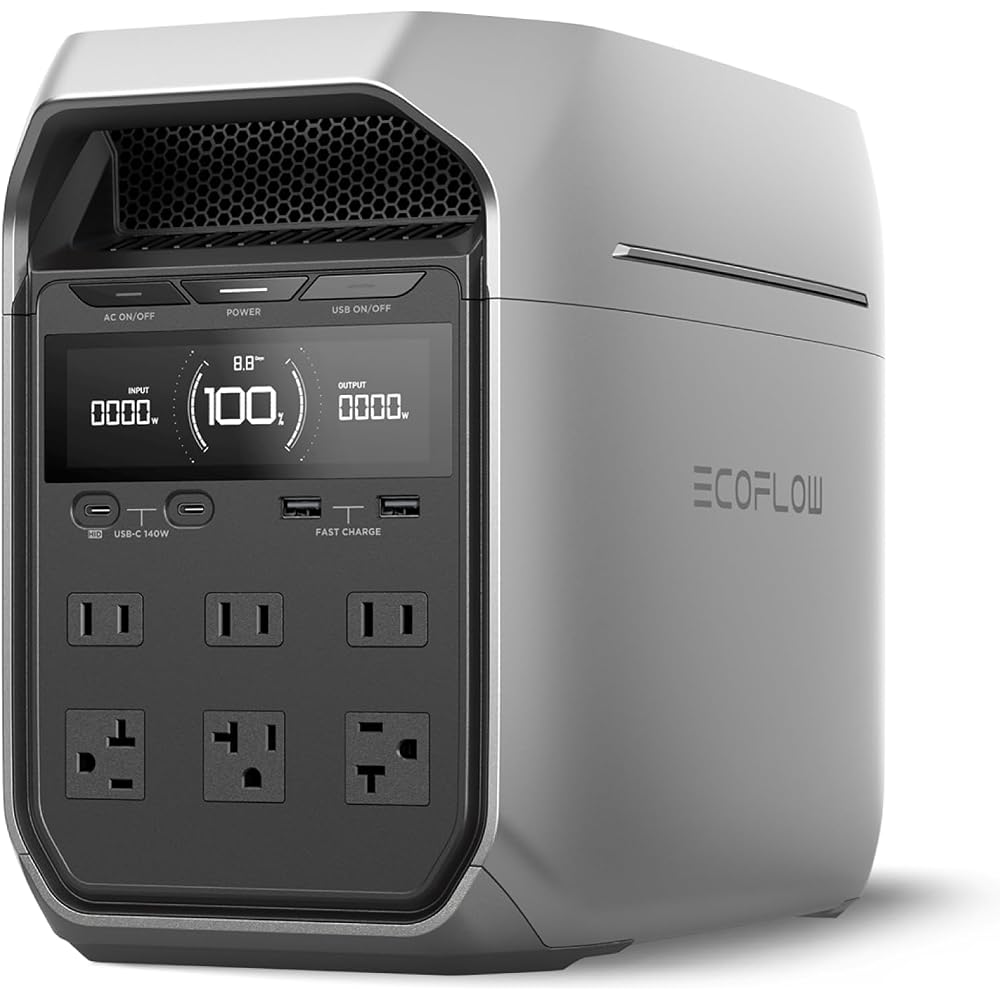
Best overall
EcoFlow DELTA 3 Plus
- 1024Wh capacity, 1800W output (3600W surge)
- LiFePO4 portable power station
- Full charge in just 56 minutes via AC
- Expandable capacity with 13 outlets including 140W USB-C
As an Amazon Associate, we earn from qualifying purchases.
EcoFlow DELTA 3 Plus — Best Overall
For most apartment dwellers, 1kWh is the sweet spot — and the DELTA 3 Plus is the strongest 1kWh-class station we’ve evaluated for 2027. It pairs 1070Wh of LiFePO4 storage with 1800W of continuous output, enough to run a full-size fridge (which typically draws 100–200W while running), a Wi-Fi router, phones, laptops, lights, and a TV simultaneously. The 3600W surge rating means compressor-driven appliances like fridges can start up without tripping the unit.
What earns it “best overall” is recharge speed. A full 0–100% AC charge takes just 56 minutes, the fastest in its class — so even between rolling blackouts you can top up quickly. Thirteen outlets including a 140W USB-C port mean fewer dongles and power bricks, and the capacity is expandable if your needs grow. For a typical one- or two-bedroom apartment, this is the unit we’d buy first: quiet, fume-free, and powerful enough to matter in a real outage.
Pros
- Fastest-in-class 56-minute AC recharge
- Expandable capacity with 13 outlets including 140W USB-C
- LiFePO4 chemistry for long cycle life
- 1800W output handles a fridge plus essentials
Cons
- 1kWh won’t run high-draw heating or cooling for long
- Exact weight not listed — check before carrying up stairs
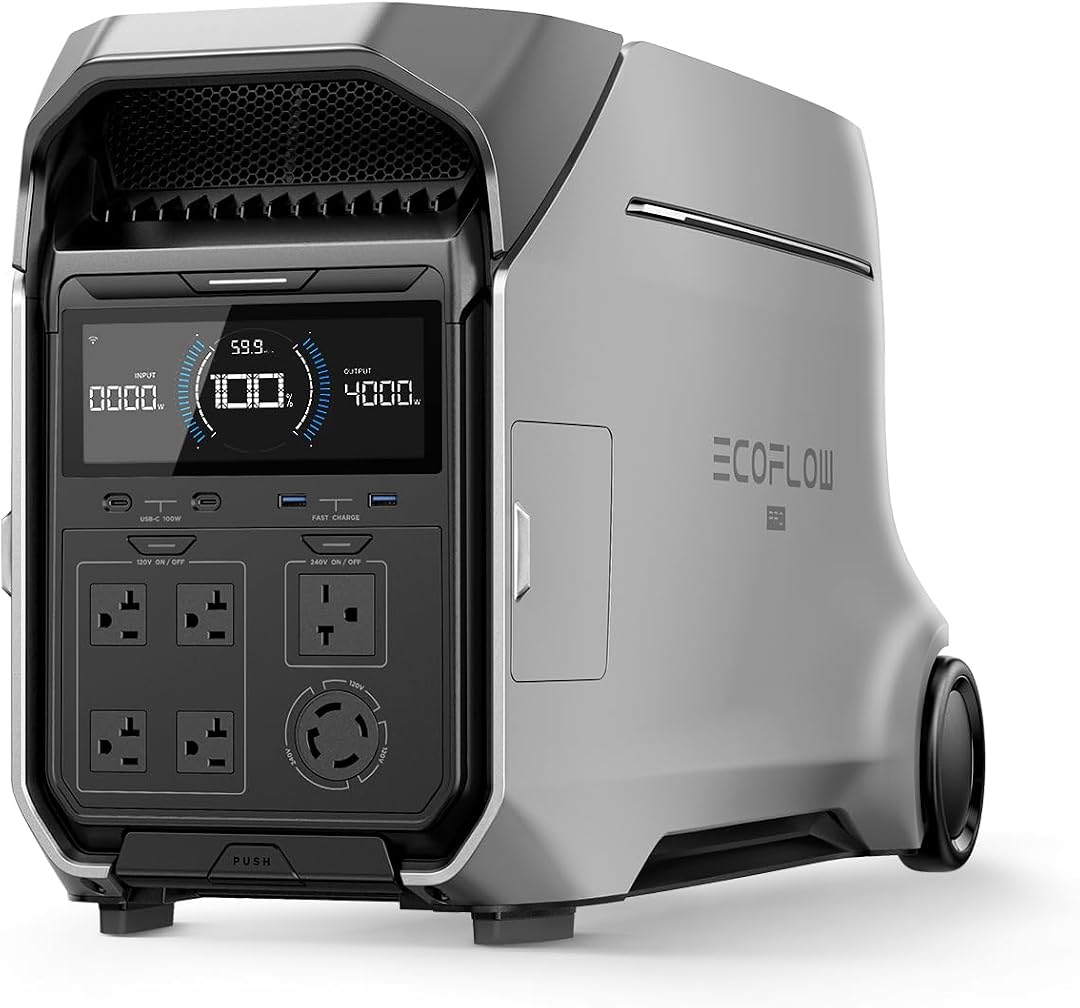
Best capacity
EcoFlow DELTA Pro 3
- 4096Wh capacity, 4000W output (6000W X-Boost)
- LiFePO4 portable power station
- Expandable from 4kWh all the way to 48kWh
- True 120V/240V output; 0–80% charge in ~50 minutes
As an Amazon Associate, we earn from qualifying purchases.
EcoFlow DELTA Pro 3 — Best Capacity
If you want the maximum backup power an apartment can realistically hold, the DELTA Pro 3 is it. With 4096Wh in a single unit and an ecosystem that expands to 48kWh, it’s effectively a home-battery cabinet that rolls on wheels. The 4000W continuous output (with X-Boost handling 6000W) and true 120V/240V output mean it can run power-hungry appliances that smaller stations can’t touch — though in an apartment you’re more likely to appreciate the runtime: a fridge, fans, lights, and devices can run for days, not hours.
Charging is equally serious: 0–80% in about 50 minutes via X-Stream AC charging. The automotive-grade LFP battery pack carries an IP65 rating for dust and water resistance, a nice touch if it lives near a patio door. The honest caveat for apartment life: it weighs 115 lbs. That’s fine on a ground floor or with elevator access, but it’s not something you carry up three flights of stairs. If you’re in a walk-up, one of the lighter picks below is the smarter buy.
Pros
- Huge 4096Wh base capacity, expandable to 48kWh
- 4000W output with true 120V/240V
- Blistering ~50-minute fast charge to 80%
- IP65-rated automotive-grade LFP pack
Cons
- 115 lbs — difficult for walk-up apartments
- Overkill (and over budget) for small outages
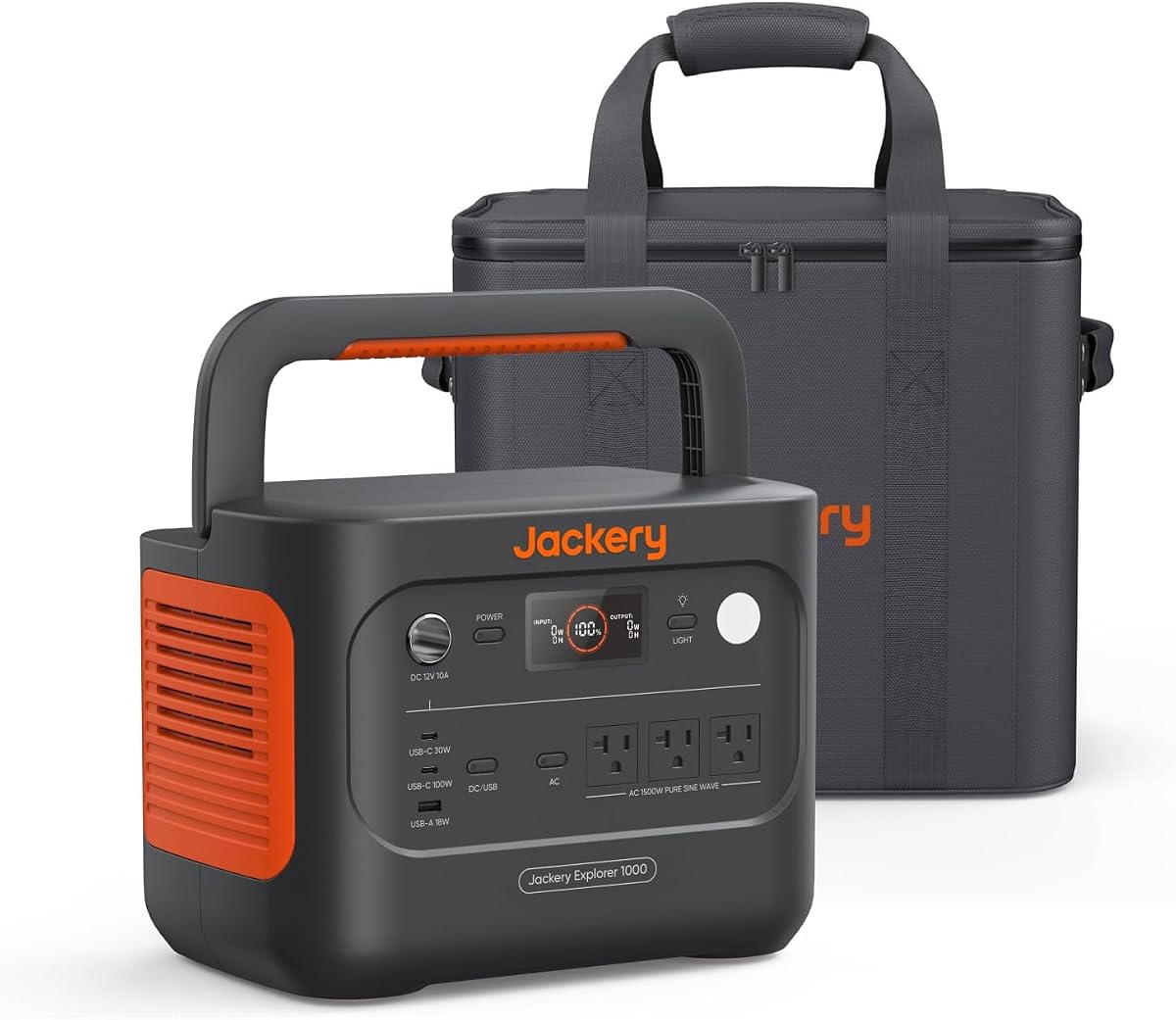
Best budget
Jackery Explorer 1000 v2
- 1070Wh capacity, 1500 (3000W surge) output
- LiFePO4 (4000+ cycles to 70%) battery
- 1h emergency AC via app / 1.7h standard AC recharge
- 23.8 lbs
As an Amazon Associate, we earn from qualifying purchases.
Jackery Explorer 1000 v2 — Best Budget
The SOLIX C1000 Gen 2 delivers the best value we’ve found in the 1kWh class. Make sure you’re looking at the Gen 2 (model A1763) — it’s a verified distinct listing from the Gen 1 (A1761), with 1500W of output versus the older model’s 1800W, plus a sub-50-minute full recharge. That extra 200W of headroom matters: it comfortably covers a fridge’s compressor startup surge plus a microwave’s short bursts, two appliances that trip weaker stations.
At 1070Wh with LiFePO4 chemistry, it will keep a fridge cold through a typical 6–10 hour outage while also charging phones and running a router. Anker’s HyperFlash charging means the full charge in 49 minutes is real-world useful — top it up during the hours power is back and you’re ready for the next outage window. For budget-conscious apartment dwellers who want serious capability without paying flagship prices, this is the pick.
Pros
- Excellent value in the 1kWh class
- 1500W output — more headroom than Gen 1
- 49-minute full AC recharge
- LiFePO4 long-life chemistry
Cons
- Verify you’re buying Gen 2 (A1763), not Gen 1
- Single kWh limits multi-day outage coverage
Best portable
Jackery Explorer 1000 v2
- 1070Wh capacity, 1500 (3000W surge) output
- LiFePO4 (4000+ cycles to 70%) battery
- 1h emergency AC via app / 1.7h standard AC recharge
- 23.8 lbs
As an Amazon Associate, we earn from qualifying purchases.
Jackery Explorer 1000 v2 — Best Portable
Weight matters in an apartment. The Explorer 1000 v2 delivers 1070Wh — more than a day of phone charging, laptop work, LED lighting, and router power — at just 23.8 lbs, light enough to carry one-handed up stairs or toss in a car trunk. It’s a proven mid-size all-rounder from the brand that arguably created the portable power station category.
Important: the v2 is a genuinely distinct product from the older Explorer 1000. The v1 used NMC lithium-ion chemistry; the v2 upgraded to LiFePO4 rated for 4000+ cycles to 70% capacity, with a 10+ year design life — that’s the chemistry you want for a unit you’ll charge and discharge for years. It adds ChargeShield 2.0 protection and a sub-10ms UPS switchover, so a desktop PC or router rides through flickers without rebooting. Emergency AC charging tops it up in about an hour via the app, or 1.7 hours standard, with up to 600W of solar input if you add panels.
Pros
- Only 23.8 lbs — genuinely apartment-portable
- LiFePO4 v2 chemistry: 4000+ cycles, 10+ year design life
- Fast 1-hour emergency charging and ≤10ms UPS
- Proven, widely supported Jackery platform
Cons
- 1500W output is lower than the EcoFlow/Anker 1kWh rivals
- Don’t confuse it with the older NMC v1 listing
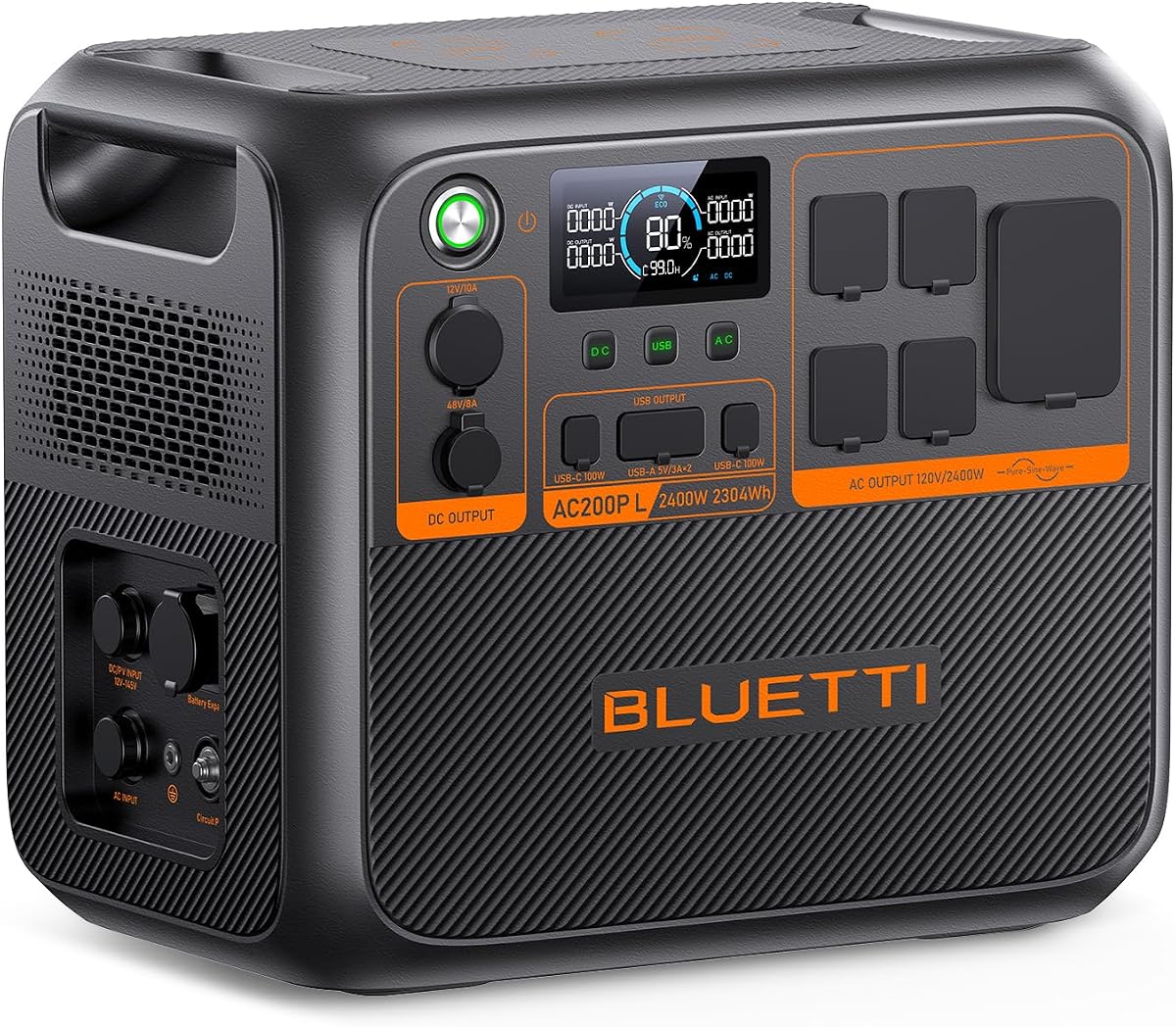
Best for outages
BLUETTI AC200PL
- 2304Wh capacity, 2400W output (3600W Power Lifting)
- LiFePO4 portable power station (3000+ cycles)
- Expandable to 8448Wh for multi-day outages
- 0–80% in ~1h; up to 1200W solar input
As an Amazon Associate, we earn from qualifying purchases.
BLUETTI AC200PL — Best for Outages
When the concern is a real, multi-day outage rather than a flicker, the AC200PL is the sweet spot between the 1kWh portables and the 115-lb giants. Its 2304Wh base capacity runs a fridge, phones, laptop, router, and lights for roughly a day on its own, and the expansion path to 8448Wh means it grows with your needs — rare in this price class.
The 2400W output with BLUETTI’s 3600W Power Lifting mode handles resistive loads (kettles, heaters, microwaves) that stall smaller stations, and the 30A TT-30 RV-style output is a genuinely useful inclusion. Recharging is quick at 2400W max AC input — 0–80% in about an hour — and up to 1200W of solar input means a modest balcony or patio panel setup can genuinely refill it during a sunny day. At 72 lbs it’s hefty but manageable with two people or a hand truck; pair it with an elevator building and it’s a superb whole-apartment backup. BLUETTI’s LiFePO4 cells are rated for 3000+ cycles, so a decade of regular use is a reasonable expectation.
Pros
- 2304Wh base with expansion to 8448Wh
- 2400W output + 3600W Power Lifting for heavy loads
- Fast ~1h charging and 1200W solar input
- Strong output-to-price ratio
Cons
- 72 lbs — plan for a hand truck or elevator
- Overkill if you only face short outages
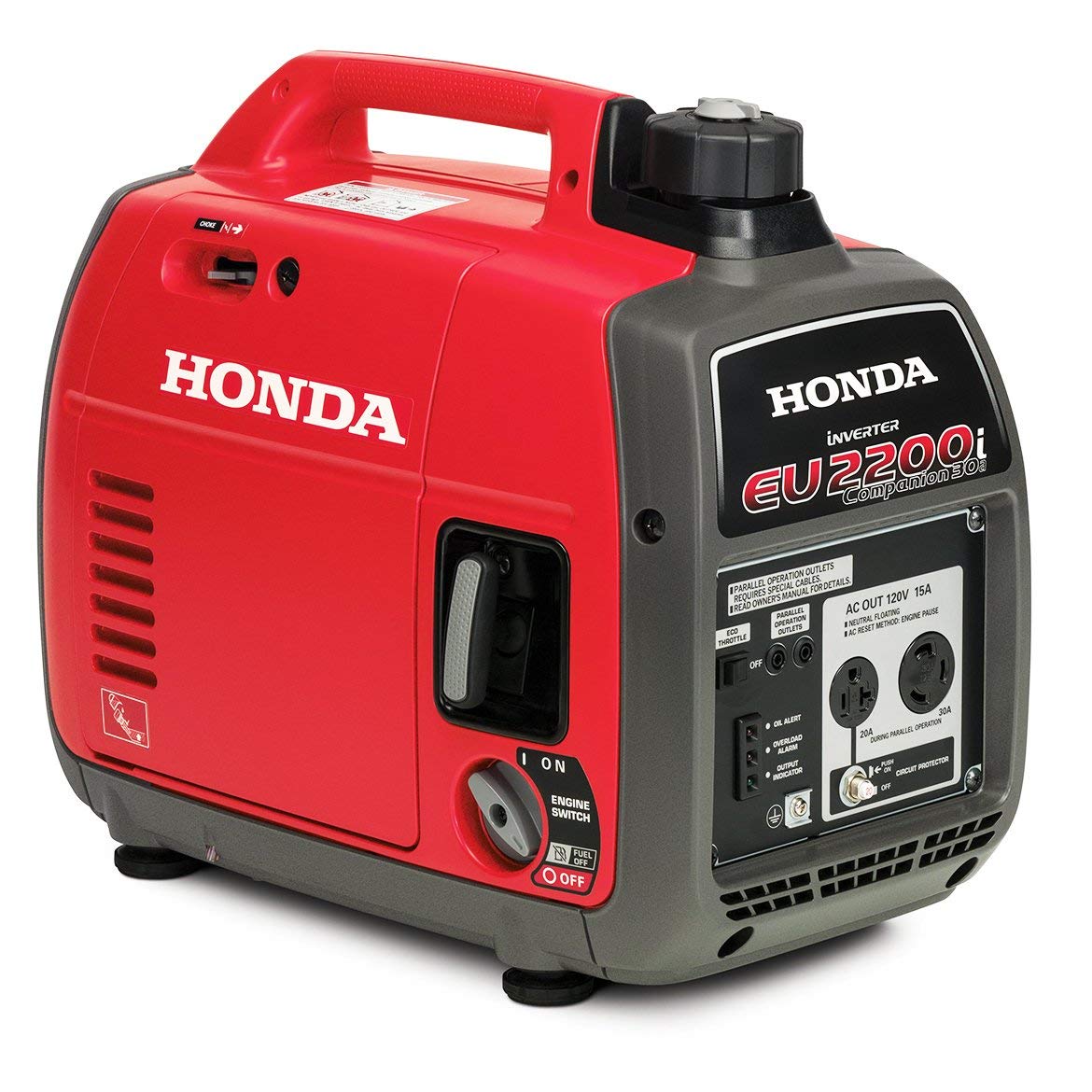
Best gas option (outdoor use only)
Honda EU2200i
- 1800W running / 2200W starting watts
- Quiet inverter generator — just 48–57 dBA
- 8.1 hours runtime at 1/4 load on 0.95 gal
- Only 46.5 lbs with parallel capability to 4400W
As an Amazon Associate, we earn from qualifying purchases.
Honda EU2200i — Best Gas Option (Outdoor Use Only)
Safety first, and we’ll repeat it: a gas generator must NEVER run inside an apartment, on a balcony, near open windows, or in any enclosed space. Carbon monoxide is odorless and can kill in minutes, and it drifts into neighboring units. Most apartment leases and HOAs ban gasoline storage outright. If your building allows it, a small inverter generator used outdoors — on the ground, at least 20 feet from any building opening — is the only gas scenario that belongs in this guide.
For that scenario, the Honda EU2200i remains the benchmark in 2027. At 48–57 dBA it’s quieter than normal conversation, so it won’t start a war with your neighbors. Eco-Throttle varies engine speed with load, stretching the 0.95-gallon tank to 8.1 hours at quarter load — enough for an evening of essentials. The 46.5-lb weight makes it genuinely portable, and clean inverter power (<3% THD) is safe for laptops and phones. It also parallels to 4400W if you ever need more. Check your lease, your HOA rules, and local fire code before buying — if gas is banned in your building, one of the battery stations above is your answer.
Pros
- Whisper-quiet 48–57 dBA inverter
- 8.1-hour runtime at 1/4 load; Eco-Throttle efficiency
- Lightweight at 46.5 lbs; parallel-capable
- Honda reliability and clean <3% THD power
Cons
- GAS: never indoors — many leases ban it entirely
- Needs fuel storage, oil changes, and maintenance
- Premium price vs. comparable inverters
Buying Guide: How to Choose an Apartment Power Solution in 2027
Watt-hours vs. watts: the two numbers that matter
Every power station has two key specs, and they answer different questions. Watts (W) = how much power it can deliver at once (can it run your fridge?). Watt-hours (Wh) = how long it lasts (how many hours will the fridge stay cold?). A 1070Wh station running a fridge that draws 150W delivers roughly 6–7 hours of runtime (1024 ÷ 150 ≈ 6.8, minus ~10–15% inverter losses).
Size it backwards from your essentials: add up the running watts of what you must keep on, pick a unit whose output exceeds that total with margin, then check the capacity against how long outages typically last in your area. For most apartments, 1kWh covers short outages; 2kWh+ is the comfort zone for day-long events.
What a power station can actually run in an apartment
A 1kWh-class station (DELTA 3 Plus, SOLIX C1000 Gen 2, Explorer 1000 v2) comfortably handles: a full-size fridge (100–200W), Wi-Fi router (10–20W), phone charging (10–25W), laptop (45–90W), LED lamps (10W each), a TV (100–200W), and a CPAP machine (30–60W, no heated humidifier). What it won’t run for long: space heaters (1000–1500W will drain 1kWh in under an hour), window AC units (800–1500W running, higher startup surge), and electric kettles/microwaves (1000W+ — fine for a few minutes, not continuous use).
Step up to 2kWh+ (AC200PL, DELTA Pro 3) and you gain serious multi-device runtime plus the headroom for brief microwave and kettle use. If keeping a CPAP running through the night is your priority, even a 1kWh station is plenty — a 40W CPAP uses roughly 320Wh over 8 hours.
Solar charging from an apartment
Power stations recharge from a wall outlet like any appliance, but solar input is their superpower during extended outages. Every station here accepts portable solar panels (up to 600W on the Jackery, 1200W on the BLUETTI). A foldable 200–400W panel propped on a balcony railing or patio can genuinely refill a 1kWh station on a sunny day. Check your building’s rules about balcony equipment first — some HOAs restrict what’s visible from outside. Even without solar, the 49–60 minute fast charging on the DELTA 3 Plus and SOLIX C1000 Gen 2 means you can top up during brief windows when grid power returns.
Apartment safety rules (non-negotiable)
Gas generators: never indoors, never on a balcony, never in a garage, never near windows or doors — minimum 20 feet from any building opening, on the ground, outdoors only. Carbon monoxide passes through walls and ventilation. Buy a battery-powered CO detector regardless; if you ever run anything gas-powered nearby, it should be within earshot of one. Also never store gasoline inside an apartment — it’s a fire-code violation in most jurisdictions and voids many leases.
Battery stations: safe indoors — no fumes, no noise, no fuel. Still follow basics: keep them in a dry spot with airflow around the vents, don’t daisy-chain extension cords, and don’t exceed the rated output. LiFePO4 chemistry (used by every station on this list) is the safest, longest-lived lithium chemistry available in 2027.
Lease and HOA considerations
Before buying anything, check three things: (1) your lease’s rules on fuel storage and “hazardous equipment” — most ban gasoline explicitly; (2) HOA or building rules on balcony/patio equipment, noise, and visible solar panels; (3) your renter’s insurance terms. Battery power stations are treated like large appliances — almost never restricted — which is another reason they’re the apartment answer. If your lease bans gas generators entirely, that’s your decision made for you: buy a power station.
Apartment Generator FAQs
Can I use a gas generator in my apartment?
No — never run a gas generator indoors, on a balcony, in a hallway, or in a garage. Carbon monoxide is odorless and can be lethal within minutes, and it drifts into neighboring units. Gas generators are outdoor-only devices (at least 20 feet from any building opening), and most apartment leases ban them outright. A battery power station is the safe indoor alternative.
What size power station do I need for an apartment?
For short outages, 1kWh (1000Wh) is the sweet spot — it keeps a fridge, router, phones, laptop, and lights going for 6–10 hours. If outages in your area last a full day or more, step up to 2kWh+ (like the 2304Wh BLUETTI AC200PL) for comfort. Add up your essential devices’ watts to make sure the station’s output rating covers them.
Can a power station run a refrigerator?
Yes. A typical full-size fridge draws 100–200W while the compressor runs, well within the 1500–1500W output of a 1kWh-class station. The compressor’s startup surge is the hard part — that’s why we recommend stations with 3000W+ surge ratings like the DELTA 3 Plus or SOLIX C1000 Gen 2. Expect roughly 6–10 hours of fridge runtime per kWh of capacity.
Can I charge a power station with solar panels in an apartment?
Yes — all the stations on this list accept portable solar panels. A foldable 200–400W panel on a balcony or patio can refill a 1kWh station over a sunny day (the Jackery Explorer 1000 v2 accepts up to 600W; the BLUETTI AC200PL up to 1200W). Check your HOA or building rules about visible balcony equipment first.
Are portable power stations safe to use indoors?
Yes. Unlike gas generators, battery power stations produce no carbon monoxide, no fumes, and no noise, so they’re safe to use and store inside an apartment. Every model on this list uses LiFePO4 (lithium iron phosphate) chemistry — the safest and longest-lived lithium battery type available in 2027. Keep vents clear and don’t exceed the rated output.
Will a power station run my CPAP machine?
Easily. A CPAP without the heated humidifier draws about 30–60W, so an 8-hour night uses roughly 240–480Wh — well under half the capacity of any 1kWh station on this list. Stations with sub-10ms UPS switchover (like the Jackery Explorer 1000 v2) also keep medical devices running through brief power flickers.
What does my lease say about generators?
Most apartment leases explicitly ban gasoline storage and fuel-burning equipment — always check before buying a gas generator, and verify HOA rules on noise and balcony use too. Battery power stations are legally treated like large appliances and are almost never restricted, which is one more reason they’re the practical choice for renters.
Our verdict
For most apartment dwellers in 2027, the EcoFlow DELTA 3 Plus is the pick — 1kWh of safe, silent, indoor-usable backup with the fastest recharge in its class. Value hunters should grab the Jackery Explorer 1000 v2, and anyone facing multi-day outages should step up to the BLUETTI AC200PL. The Honda EU2200i earns its spot only for outdoor use where your lease allows — never indoors.

Related Guides
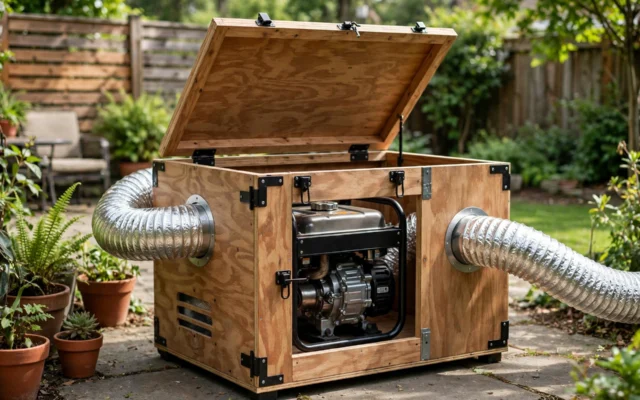
DIY Generator Quiet Box: How to Build a Noise-Reduction Enclosure
A DIY generator quiet box can cut noise 10–20 dB — but ventilation and CO safety are the whole project. Materials, baffle design, fan sizing, and the mistakes to avoid.

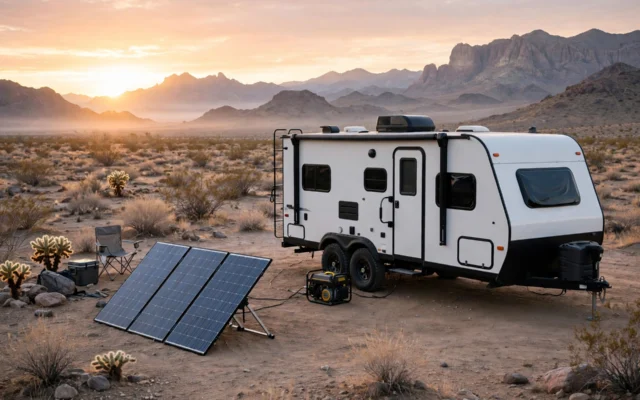
Boondocking Power Setup: Generator + Solar for Off-Grid Camping
The ideal boondocking power setup pairs solar with a generator and battery bank. Real daily load math, sizing tiers, and the generator run strategy that sips fuel.
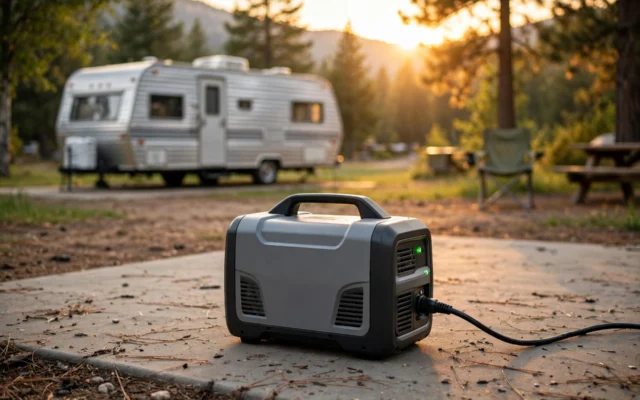
RV Generator Quiet Hours & Campground Etiquette Guide
RV generator quiet hours are usually 10pm–8am, with limited daytime generator windows in national parks. The rules, the unwritten etiquette, and how to stay neighborly.