


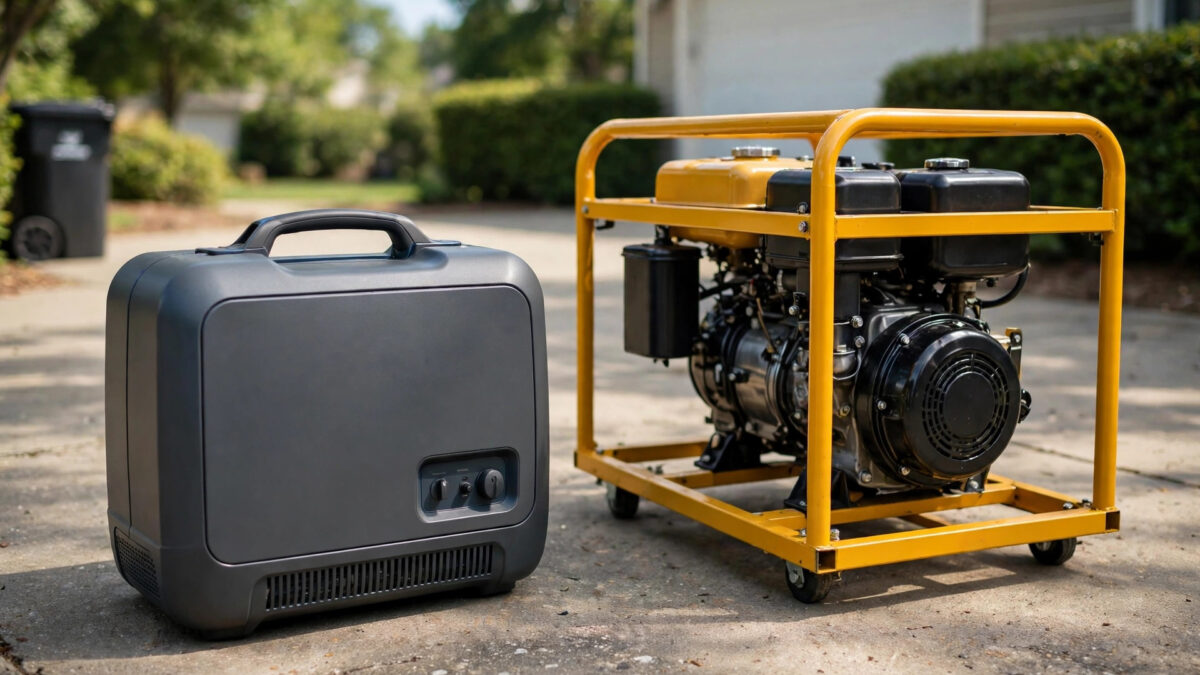
Both are inverter generators — so both make the same clean, stable power. The difference is the box around the engine. Enclosed inverters wrap the engine in a sound-dampening plastic shell: they’re dramatically quieter (50-60 dBA) but cost more per watt and top out at lower power. Open-frame inverters mount the inverter engine on a steel tube frame like a conventional generator: louder (typically 62-72 dBA), but cheaper, lighter at high wattages, and available up to 9,000+ watts. If noise is your priority — camping, neighborhoods, nighttime — go enclosed. If you need big power on a budget, go open frame.
This confuses a lot of buyers because “inverter” has become shorthand for “quiet suitcase generator.” But walk into any generator aisle in 2027 and you’ll see big open-frame units with “inverter” on the side. Same inverter technology, very different machine. Here’s how to choose.
Key takeaways
- Both types produce clean inverter power safe for electronics — the enclosure changes noise, cost, and size, not power quality.
- Enclosed inverters run 50-60 dBA (conversation level); open-frame inverters run roughly 62-72 dBA — noticeably louder, roughly twice as loud to the ear for every 10 dB.
- Open-frame inverters cost significantly less per watt and are the only way to get inverter power above ~7,000 watts in a portable.
- Enclosed units are heavier per watt but tidier and more weather-resistant; open-frame units are easier to service and run cooler.
- Campgrounds and many HOAs effectively require enclosed-level quiet — check the noise rules before buying an open-frame unit for recreational use.
What “open frame” and “enclosed” actually mean
Strip both machines down and you’ll find the same core: a small engine driving an alternator, feeding an inverter module that synthesizes clean AC power. The difference is packaging:
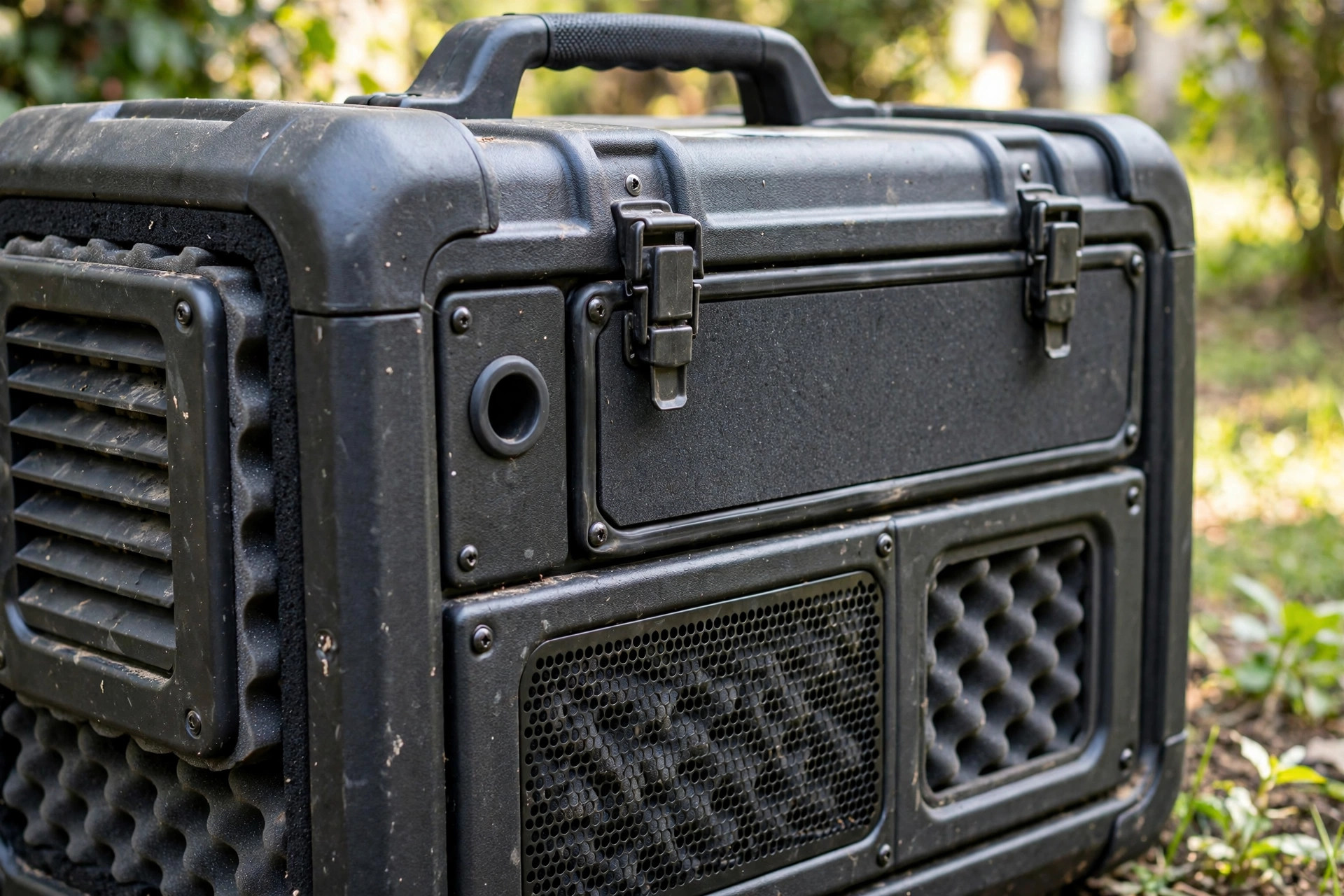
- Enclosed: the engine sits inside a molded plastic housing lined with sound insulation, like a suitcase. Think Honda EU2200i, Westinghouse iGen4500, Predator 3500. Airflow is carefully ducted; you mostly hear a muted hum.
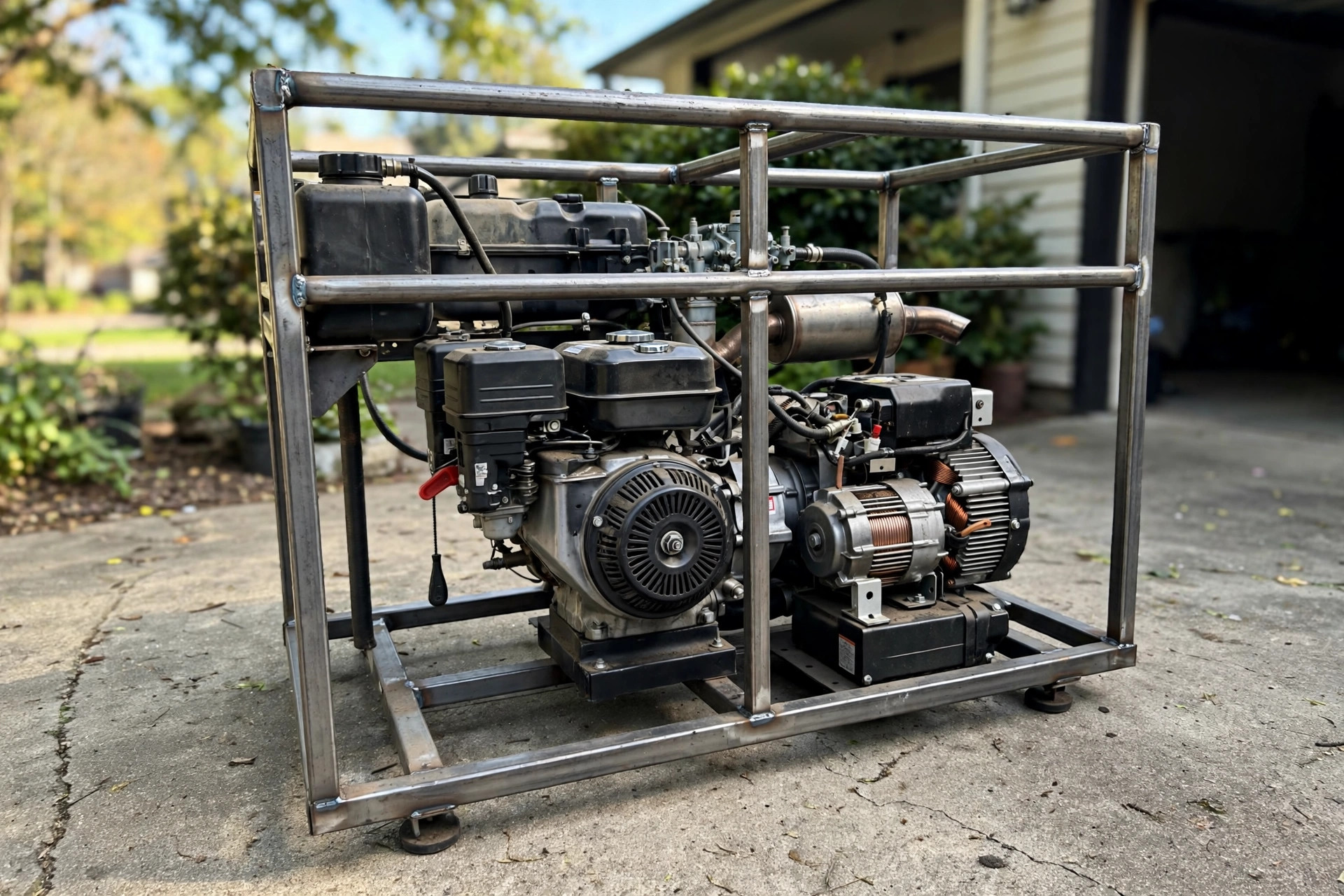
- Open frame: the engine and inverter module bolt to an open steel tube frame — the classic generator silhouette. Think Champion’s open-frame inverter line or Westinghouse’s larger iGen models. The engine is exposed to the air, and so is its noise.
Both throttle the engine up and down with load (that’s the inverter part), so both are quieter and more fuel-efficient than old fixed-RPM conventional generators. The enclosure just determines how much quieter.
Noise: the deciding factor for most people
Decibels are logarithmic, which makes the numbers deceptive. A 10 dB increase sounds roughly twice as loud to human ears. So the gap between a 54 dBA enclosed inverter and a 68 dBA open-frame inverter isn’t “a bit louder” — it’s dramatically louder, the difference between a conversation and a vacuum cleaner.
| Type | Typical noise (at 23 ft) | Feels like |
|---|---|---|
| Enclosed inverter (2,000W class) | 50-58 dBA | Quiet conversation |
| Enclosed inverter (4,500W class) | 52-62 dBA | Normal conversation |
| Open-frame inverter (4,500-9,000W) | 62-72 dBA | Vacuum cleaner at distance |
| Conventional open-frame (for reference) | 70-90 dBA | Lawn mower to shouting |
I’ve run an enclosed 3,500W inverter 20 feet from a campsite picnic table and held a normal conversation over it. An open-frame inverter at the same distance? You’re raising your voice. At a campground with quiet hours — most enforce roughly 60 dBA at 50 feet — the enclosed unit is welcome and the open-frame one gets you a visit from the camp host.
Cost: open frame wins per watt
The plastic enclosure, the insulation, and the compact engineering cost money. Per watt, enclosed inverters run roughly 30-60% more than open-frame inverters of similar quality. A 4,500W enclosed inverter might run $1,000-1,400; a 4,500W open-frame inverter from a decent brand runs $700-1,000.
The gap widens at high wattages because enclosed designs get impractical past ~7,000W — the enclosure would trap too much heat and weigh a ton. If you need 9,000W of inverter power, open frame is your only portable option, and the price per watt is the best in the inverter world.
Weight and portability
This one flips depending on size. In the 2,000W class, enclosed wins easily — a 47-pound suitcase you carry one-handed. But compare big units: a 9,000W open-frame inverter weighs around 200 pounds with wheels and handles, while an equivalent enclosed unit barely exists. Per watt at high power, the open frame’s simple steel tubing is lighter than a giant insulated shell would be.
Honest rule: under 4,000W, enclosed is more portable. Over 5,000W, open frame is the practical portable — and anything that big is a two-person or wheeled move regardless.
Durability, cooling, and maintenance
- Cooling: open-frame units breathe freely — better for hot climates and continuous high-load running. Enclosed units depend on ducted airflow; keep their vents clear and don’t box them in.
- Weather: enclosed housings shrug off light rain and dust better. Open frames expose everything — fine in dry conditions, but they want a canopy in real weather. (Neither should run in heavy rain unprotected.)
- Service access: open frame wins. Oil changes, filter swaps, and valve adjustments are all easier with the engine exposed. Enclosed units often require removing housing panels — not hard, just more steps.
- Jobsite toughness: steel tube frames take abuse. Plastic housings crack if dropped off a truck bed. For construction use, open frame is the workhorse choice.
Which should you buy?
| Your situation | Pick | Why |
|---|---|---|
| Camping, RVing, tailgating | Enclosed | Noise rules and neighbor sanity |
| Home backup in a neighborhood | Enclosed | Quieter nights, happier neighbors |
| Big power needs (7,000W+) on a budget | Open-frame inverter | Only affordable path to big inverter watts |
| Jobsite / contractor use | Open-frame inverter | Tough, cool-running, cheaper to replace |
| 240V loads (well pump, panel inlet) | Open-frame inverter (240V models) | Most 240V-capable inverters are open frame |
| Maximum quiet above all | Enclosed | Nothing portable beats a good enclosed unit |
There’s also a middle path worth knowing: some manufacturers now make enclosed units up to 5,000-7,000W — bigger suitcases that stay reasonably quiet. They cost more, but for home backup where the generator sits 20 feet from the bedroom window, the premium buys real sleep.
Whichever direction you go, size it properly first — our generator sizing calculator will tell you the wattage you actually need. And if you’re still deciding between inverter and conventional technology overall, our portable generator roundup covers the best options in each class for 2027.
What about fuel efficiency?
Here’s a point in the open frame’s favor that surprises people: at high loads, a big open-frame inverter can actually be more fuel-efficient than a small enclosed unit screaming at full throttle. Inverter engines are most efficient in their mid-range. A 9,000W open-frame inverter loafing along at 3,000W sips fuel calmly; a 2,200W enclosed suitcase maxed out at the same 3,000W (via parallel pair) works much harder per watt delivered.
At light loads the advantage flips — the small enclosed unit at quarter throttle sips less than a big engine idling. Match the generator’s size to your typical load and the fuel math takes care of itself. Either way, both designs throttle with load, so both beat old fixed-RPM conventional generators on fuel by a wide margin.
Are open frame inverter generators loud?
Is an open frame inverter as good as an enclosed one for electronics?
Why are enclosed inverter generators more expensive?
Can you get a 240V inverter generator?
Which lasts longer: open frame or enclosed inverter?
So: same clean power, different box. Buy the enclosure for quiet, buy the frame for watts-per-dollar. Get the dBA rating off the spec sheet — not the marketing photos — and you’ll end up with the right machine the first time.

Related Guides
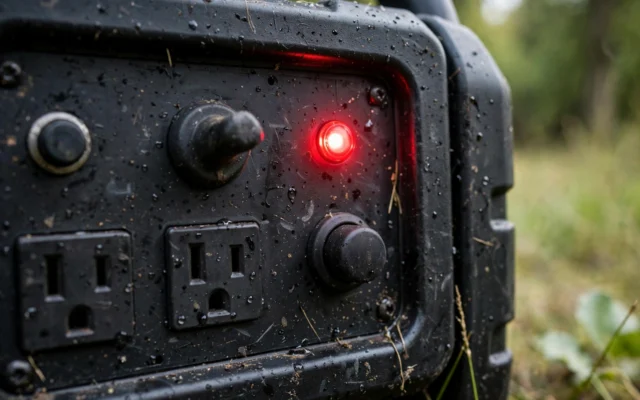
How Do Generator CO Sensors Work?
Generator CO sensors sniff carbon monoxide and shut the engine down before levels turn deadly. How the electrochemical sensor, PGMA G300 thresholds, and auto-shutoff work.

What Is AVR on a Generator? Automatic Voltage Regulation Explained
AVR (Automatic Voltage Regulation) keeps your generator's voltage steady at ±1% instead of swinging wildly. How it works, why it protects electronics, and AVR vs. inverter.
How to Power Your House With an EV: V2L vs V2H Explained
How to power your house with an EV: V2L runs appliances via extension cords; V2H feeds your panel. Compare power, cost, runtime, and safety needs here.