


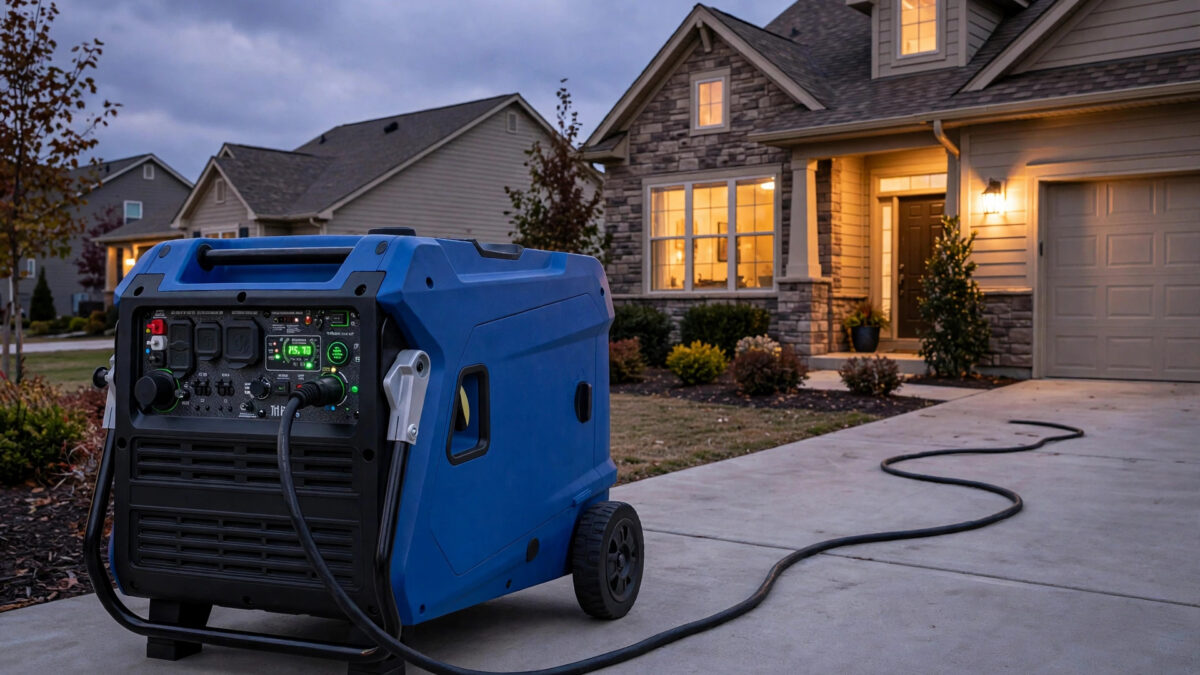
The Westinghouse iGen11000TFc is the generator for people who refuse to compromise: inverter-quiet, whole-home powerful, and able to burn gasoline, propane, or natural gas. At 11,000 peak watts with clean <3% THD power and a 50-amp outlet, it's essentially a portable home-backup system that happens to be quiet enough to stand next to. After working through the specs and owner feedback, here's my verdict: the iGen11000TFc is the best tri-fuel inverter you can buy in 2027 — if your budget stretches to the $1,900–$2,400 range and you actually need all three fuels.
Key takeaways
- 11,000 peak / 9,000 running watts (gas); 10,000/8,100 (propane); 8,800/7,200 (natural gas).
- Tri-fuel: gasoline, propane, and natural gas — the ultimate fuel flexibility.
- Inverter power (<3% THD) safe for sensitive electronics, at whole-home wattages.
- Remote start, LED data center, CO sensor, 50A + 30A transfer-switch-ready outlets.
- Up to 19 hours on the 7.9-gallon tank; 76 dBA — quiet for 11,000 watts, not quiet overall.
Our verdict
Buy it if you want whole-home backup with inverter-clean power and the fuel flexibility of natural gas. It’s expensive, but nothing else combines all three. Skip it if you’re on a budget — the dual-fuel iGen11000DFc saves real money.
Westinghouse iGen11000TFc specifications
| Peak watts | 11,000 gas / 10,000 propane / 8,800 natural gas |
|---|---|
| Running watts | 9,000 gas / 8,100 propane / 7,200 natural gas |
| Engine | 457cc 4-stroke OHV, cast iron sleeve |
| Fuel tank | 7.9 gallons |
| Runtime | Up to 19 hours |
| Noise level | As low as 76 dBA |
| THD | Less than 3% |
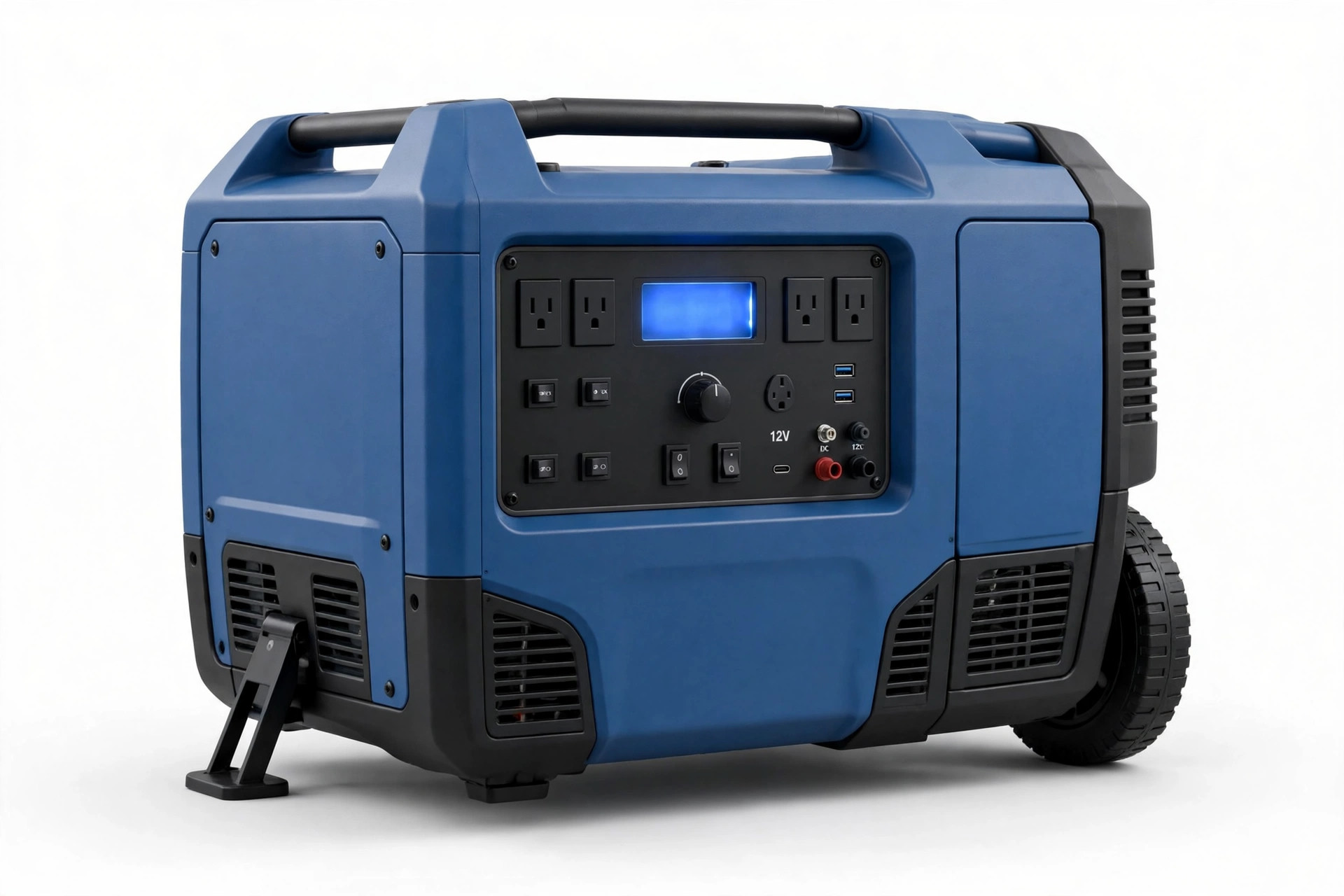
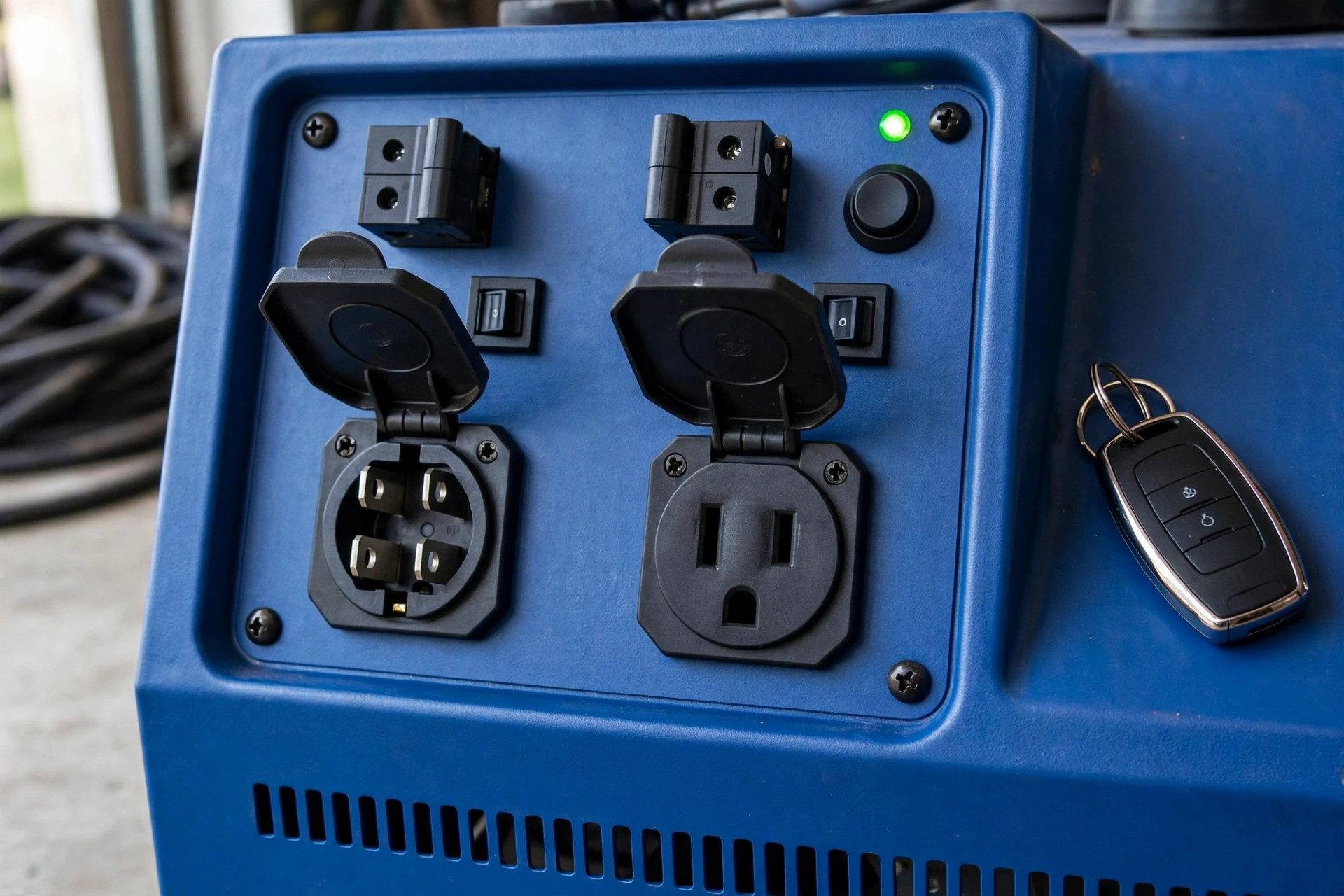
| Outlets | 14-50R 50A, L14-30R 30A, 5-20R GFCI duplex |
| Start type | Remote + push-button electric + recoil |
| Safety | CO sensor, low-oil shutdown |
| Warranty | 3-year limited |
Design and build quality
The iGen11000TFc is a big machine — this is not a suitcase inverter you toss in the trunk. The fully enclosed design houses a 457cc engine with a cast-iron sleeve, and the enclosure is what makes the inverter magic possible: it dampens noise, protects components, and gives the unit a finished, appliance-like look. Heavy-duty never-flat wheels, a folding handle, and a lift bracket make it movable by one strong person, but plan the placement — you won’t be carrying this far.
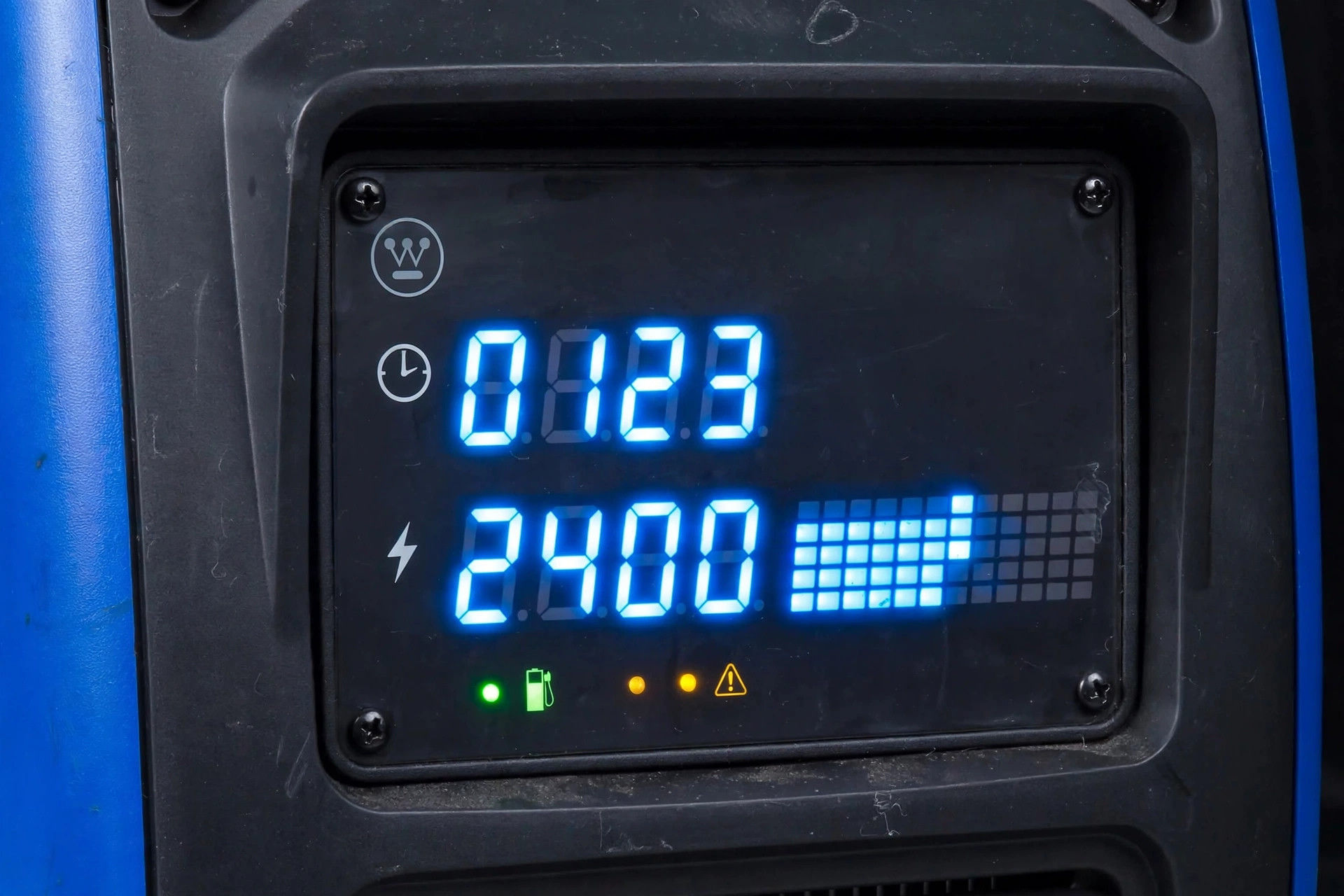
The control panel is the best part of the ownership experience. The LED data center rotates through fuel level, power output, remaining runtime, voltage, and lifetime hours — the kind of information that turns generator operation from guesswork into management. All outlets have rubber covers, and the 50A (14-50R) plus 30A (L14-30R) outlets are both transfer-switch and interlock-kit ready. This generator is designed from the ground up to wire into a house properly.
Performance: whole-home power, inverter-clean
9,000 running watts on gasoline runs a serious outage load list: central A/C (with a soft start), fridge, freezer, sump pump, lights, and electronics simultaneously. The <3% THD inverter output means computers, TVs, and smart-home gear run safely — something conventional open-frame generators in this wattage class can't promise. That's the iGen11000TFc's core proposition: standby-generator capability with inverter-generator manners.
The tri-fuel ratings deserve attention because they change the sizing math. On natural gas you get 7,200 running watts — still enough for most essential-circuits backup, and the fuel never runs out as long as the gas utility is up. On propane, 8,100 running watts from tanks you can stockpile. Size your transfer-switch circuits to the natural gas number if that’s your primary fuel, and you’ll never be disappointed.
Noise and fuel efficiency
Let’s be straight: 76 dBA is not quiet. It’s quiet for 11,000 watts — dramatically better than an open-frame 11kW unit — but it’s still clearly audible across a yard. The inverter design throttles the engine down at light loads, so real-world noise during typical outage duty (running at 30–50% load) is lower than the rated figure. If true quiet matters more than maximum power, a smaller inverter plus load management beats any big unit.
Fuel efficiency is where the inverter design pays for itself. Up to 19 hours on the 7.9-gallon tank means the engine sips fuel at light loads instead of screaming at 3600 RPM regardless — the fundamental advantage of inverter technology. Over a multi-day outage, that efficiency translates directly into fewer refueling trips and lower fuel costs.
Tri-fuel: the real reason to buy this
Dual-fuel is common now; tri-fuel is still rare, and natural gas changes the game for home backup. A natural gas hookup means unlimited runtime without storing a drop of fuel — no gas cans, no propane tanks, no refueling runs during a storm. Propane remains the best stockpile fuel (it never goes stale), and gasoline is the universal fallback. Our gasoline vs. propane guide covers the fuel tradeoffs in detail.
The honest caveat: if you don’t have a natural gas connection (or don’t plan to install one), you’re paying for a feature you’ll never use. The dual-fuel iGen11000DFc is the same generator minus the natural gas capability, usually for meaningfully less money. Buy the TFc for the third fuel, not the badge.
Features
The feature set is comprehensive: remote start key fob (start it from inside the house), push-button electric start with recoil backup, LED data center, CO sensor with automatic shutdown, automatic low-oil shutdown, GFCI-protected household outlets, and parallel capability. The box includes the remote fob, battery, 12V charger, oil and funnel, and a tool kit — genuinely ready to run. Westinghouse’s 3-year limited warranty and lifetime technical support back it up.
Who the iGen11000TFc is for
It’s for the homeowner who wants the closest thing to a standby generator without the $10,000+ installation: whole-home-capable power, clean enough for electronics, quiet enough for the neighborhood, with natural gas as the set-and-forget fuel. It’s for the prepared buyer who’ll wire it to a transfer switch and size their circuits properly. It’s not for the casual camper, the tight budget (look at the WGen9500DF or DuroMax XP13000EH in our best portable generators roundup), or anyone without a plan to use all three fuels.
Pros
- Tri-fuel flexibility — natural gas means unlimited runtime
- Inverter-clean power (<3% THD) at 9,000 running watts
- Remote start, LED data center, 50A outlet — full home-backup feature set
- Up to 19-hour runtime; efficient at partial loads
- 3-year warranty + lifetime tech support
Cons
- Expensive ($1,900–$2,400) — premium over dual-fuel version
- 76 dBA is quiet for the class, not quiet absolutely
- Big and heavy — plan placement, don’t plan to carry it
- Tri-fuel premium wasted without a natural gas hookup
Installation: transfer switch and natural gas hookup
The iGen11000TFc is designed to be wired into a house, and doing it right requires two professionals. First, an electrician installs either a manual transfer switch or an interlock kit on your panel — the generator’s 50A (14-50R) and 30A (L14-30R) outlets are both transfer-switch ready. Budget $500–$1,500 for the electrical work depending on your panel and local codes; the interlock route is usually cheaper. This isn’t optional for whole-home backup — backfeeding through a dryer outlet is illegal and can kill utility workers.
Second, if you want the natural gas capability, a plumber installs a quick-connect gas line where you’ll park the generator. It’s straightforward work — typically a few hundred dollars — but it must be permitted and pressure-tested. Size the gas line for the generator’s full draw; an undersized line starves the engine at high load and causes exactly the kind of mysterious shutdowns that get blamed on the generator.
Maintenance schedule
Bigger engine, same discipline. Oil changes every 100 hours or annually (the 457cc sump holds more than small inverters — check the manual for capacity), air filter inspections every 50 hours, spark plug annually, valve clearance checks per the manual’s interval. The battery for electric/remote start needs a tender during long storage, same as any electric-start unit. Keep the enclosure vents clear and the CO sensor unobstructed.
Exercise it monthly for 20 minutes under load — transfer-switch owners can do this through the switch to verify the whole chain. Log hours via the LED data center; the lifetime hour meter takes the guesswork out of service intervals. A generator this capable deserves the 30 minutes of maintenance a year it asks for.
What owners complain about
The complaints are predictable for the class. It’s heavy — buyers underestimate what a 200+ pound generator means for placement. It’s louder than the word “inverter” led them to expect; 76 dBA is genuinely quiet for 11kW but it’s not silent, and light sleepers notice. The natural gas derate (7,200 running watts) catches buyers who sized to the gasoline number. And the price — at $1,900–$2,400 it’s real money, and a few owners note the dual-fuel DFc would have served them identically. All fair points; none change the verdict for the right buyer.
iGen11000TFc vs. the competition
The closest rival is its own sibling: the iGen11000DFc dual-fuel version. Same generator, same 11,000 peak watts, minus natural gas — usually for several hundred dollars less. If you don’t have a gas hookup, buy the DFc and pocket the difference. The TFc only earns its premium through the third fuel.
Against DuroMax’s tri-fuel offerings: DuroMax sells tri-fuel open-frame generators with big wattage at lower prices, but they’re conventional (non-inverter) units — louder, with less clean power. If you need clean <3% THD power for electronics, the Westinghouse inverter is in a different league; if you just need raw watts cheap, DuroMax wins on price.
Against a home standby generator (Generac/Kohler 14–22kW, $10,000+ installed): the standby wins on automation — it starts itself, runs on natural gas or propane, and needs no intervention. The iGen11000TFc wins on price by an order of magnitude and on portability. For buyers who don’t mind rolling a generator out and flipping a transfer switch, the portable saves roughly $8,000. For buyers who want power without thinking about it, the standby is the real answer and no portable competes.
What I’d buy with it
The generator is half the system. Budget for the other half: a transfer switch or interlock kit plus electrician installation ($500–$1,500), a 50-amp cord — the VEVOR 50A cord is the right class — a natural gas quick-connect hose and plumbing if you’re using the third fuel, and a battery tender for the start battery. All in, the “ready” cost runs $800–$2,000 beyond the generator. It’s still a fraction of a standby installation, but go in with the full number, not just the generator price.
Frequently asked questions
What does tri-fuel mean on the iGen11000TFc?
Can the iGen11000TFc power my whole house?
How loud is the iGen11000TFc?
Is the iGen11000TFc worth it over the dual-fuel iGen11000DFc?
Does the iGen11000TFc have remote start?
Final verdict
The Westinghouse iGen11000TFc is the flagship the tri-fuel category has been waiting for: whole-home watts, inverter-clean power, remote start, and three fuel options in one machine. It’s expensive, heavy, and not as quiet as the marketing implies — but nothing else does all of this at once. If your plan includes a natural gas hookup and a transfer switch, this is the one to buy. Check the current price on Amazon.
Bottom line: no other portable combines this much clean power with three fuel options. It’s a lot of money, but it’s also a lot of generator.
How we researched this: We verified all specifications against Westinghouse’s official listings and Amazon product data (including per-fuel wattage ratings), compared against the dual-fuel iGen11000DFc and competing tri-fuel units, and analyzed owner feedback. Based on spec comparison and documented owner experience.

Related Guides
Westinghouse iGen4500DF Review: The Dual-Fuel Inverter to Beat in 2027
Westinghouse iGen4500DF review: 4,500W dual-fuel inverter, 52 dBA, remote start, RV-ready. We test the specs, noise, and value against Honda in 2027.

Champion vs Generac Generators: Which Brand Is Better in 2027?
Champion vs Generac: Champion wins portable value, Generac wins standby. We compare lineups, reliability, safety tech, and support to pick the right brand.
Inverter vs Conventional Generators: Which Should You Buy in 2027?
Inverter vs conventional generators: inverters win on noise, fuel use and clean power; conventional wins on watts per dollar. Here's how to choose in 2027.