


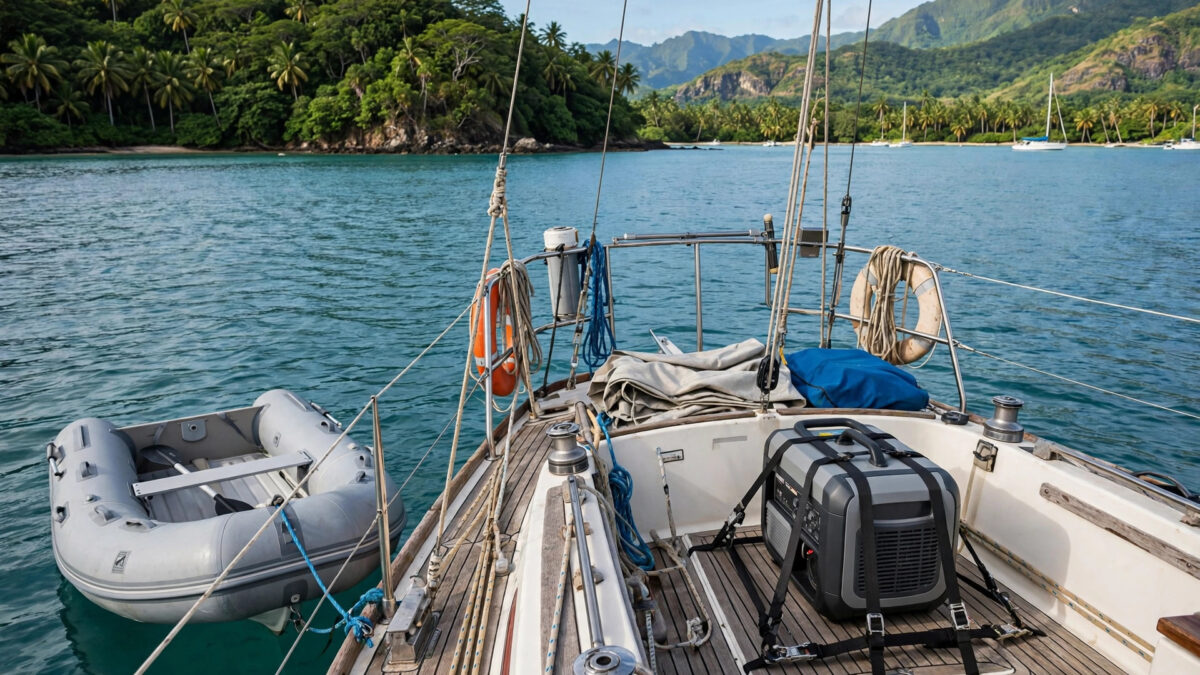
A generator on a boat is a different animal. On land, exhaust drifts away. On a boat, it pools — in cockpits, cabins, and swim platforms — and carbon monoxide has killed boaters who did everything else right. I lead with that because the marine generator conversation starts with safety, not watts.
With that understood, a portable inverter generator is one of the best upgrades a cruising boater can make: battery charging without running the big diesel, air conditioning at anchor, hot water, power tools for repairs. The best portable generator for boats in 2027 is the Honda EU2200i — quiet, light, sips fuel, and proven in salt air by thousands of cruisers. Need more muscle for AC? The WEN DF680iX and A-iPower SUA7600iED bring serious dual-fuel inverter power. Here’s the full short list.
Key takeaways
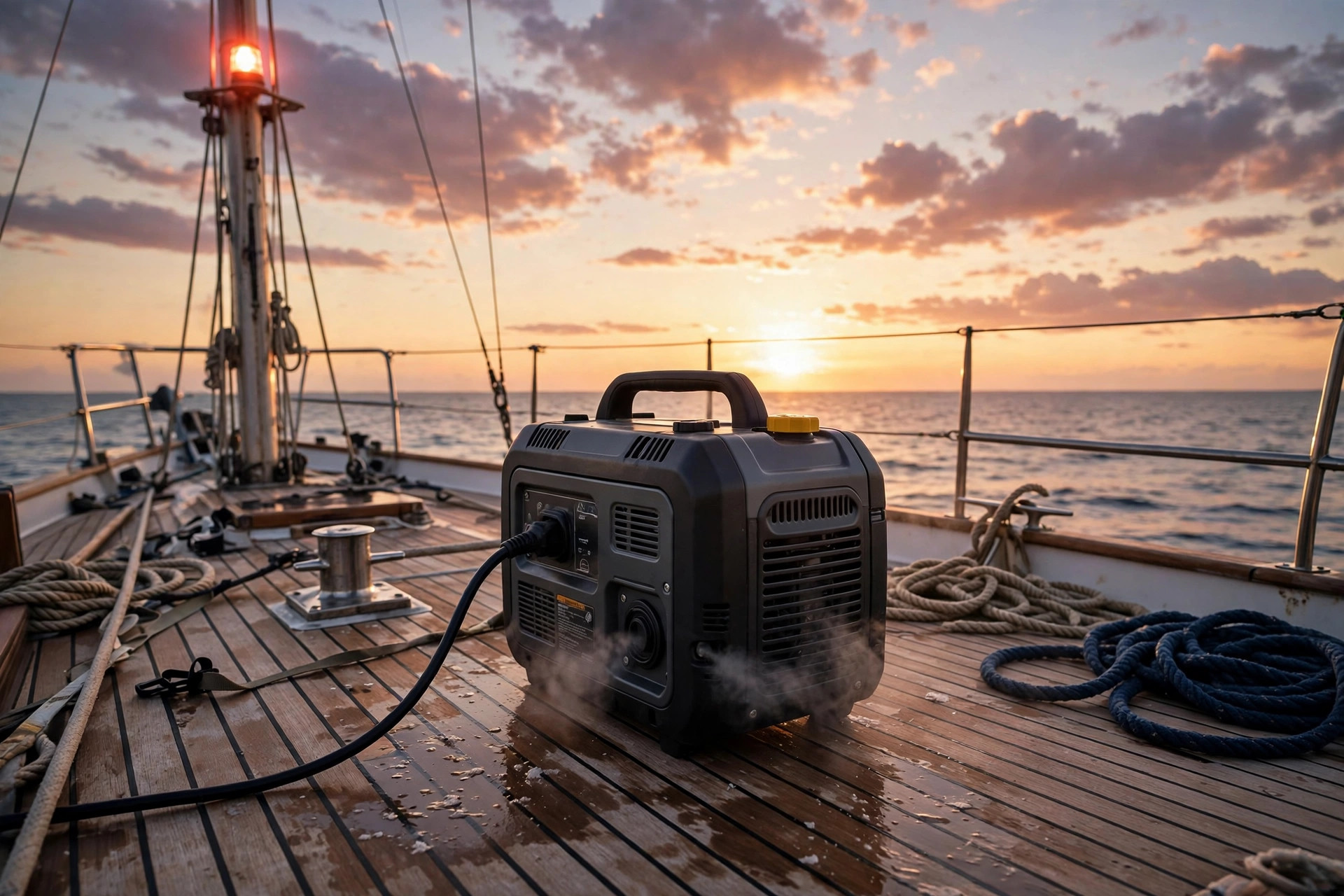
- Only use portable generators on deck, never below — CO pools in hulls and cockpits. This rule has no exceptions.
- Inverter generators are mandatory for boats: clean power for chargers, quiet for anchorages, light for handling.
- The Honda EU2200i is the cruiser’s standard: 48 dB, 47 lbs, runs battery chargers and small ACs.
- For air conditioning at anchor, you need 3,500W+ — the WEN DF680iX and A-iPower SUA7600iED fit the bill.
- Rinse with fresh water after salt exposure and run on ethanol-free fuel; marine air is brutal on small engines.
Quick picks
- Best overall: Honda EU2200i — the cruiser’s standard, quiet and bulletproof.
- Best for AC at anchor: WEN DF680iX — 6,800W dual-fuel inverter, TT-30R outlet.
- Best big-boat power: A-iPower SUA7600iED — 7,600W dual-fuel inverter.
- Best lightweight: ERAYAK 4500PD — 54 lbs, 58 dB, dual fuel.
- Best premium small: Yamaha EF2200iS — Honda-class with a 3-year warranty.
Best overall
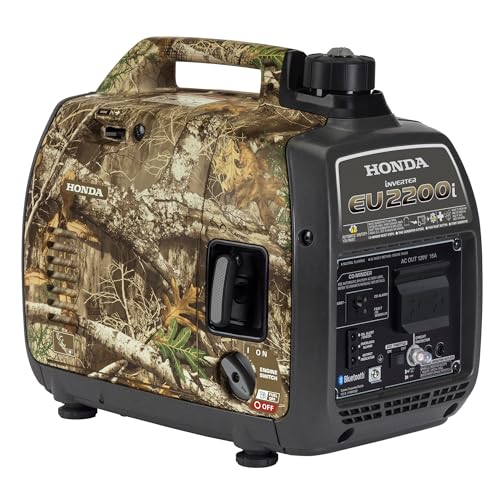
Honda EU2200i Inverter Generator
- Running Watts: 1,800 W
- Runtime: 8.1 hrs @ 1/4 load
- Noise Level: 48–57 dB
- Weight: 47 lbs
As an Amazon Associate, we earn from qualifying purchases.
Walk any anchorage and count the red generators on swim platforms — the EU2200i is the cruiser’s default for good reason. At 47 pounds, one person can hand it up from a dinghy. At 48 dB on eco mode, it won’t make you the pariah of the anchorage. And 1,800 running watts covers the core marine loads: a 40-amp battery charger, a small 5,000-BTU cabin AC, lights, and devices.
The fuel sip matters at sea: 8.1 hours at quarter load from less than a gallon. Carry a spare gallon and you’ve got days of battery charging. Honda’s CO-Minder adds a layer of protection that matters enormously on boats, where CO behavior is less predictable than on land.
Salt air is the enemy — rinse the unit with fresh water after passages, keep it covered, and run ethanol-free gas. Do that and, based on owner feedback from the cruising community, these run for a decade. Typical price: $1,000–$1,200. It’s the most-recommended marine portable generator I’ve encountered, and I’d trust it on my own boat.
Pros
- Light enough to hand up from a dinghy
- 48 dB won’t disturb the anchorage
- CO-Minder safety shutdown
- Proven in salt-air service for years
Cons
- Won’t start larger marine ACs (10k+ BTU)
- Premium price
Best for AC at anchor
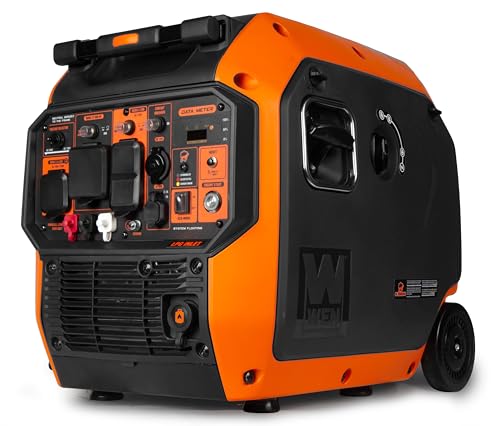
WEN DF680iX Dual-Fuel Inverter Generator
- Running Watts: 5,100 W (gas)
- Runtime: 6.1 hrs @ 1/2 load
- Noise Level: 64 dB @ 1/4 load
- Weight: 99.2 lbs
As an Amazon Associate, we earn from qualifying purchases.
When the boat needs real air conditioning, the DF680iX steps in: 6,800 starting watts, 5,100 running watts on gas, dual-fuel, and — critically — an inverter, so it’s quiet (64 dB at quarter load) and safe for your battery chargers and navigation electronics. The TT-30R outlet plugs straight into a 30-amp shore-power cord with an adapter.
That wattage runs a 13,500-BTU marine AC plus battery charging simultaneously — the classic hot-weather anchorage load. Propane option means you can tap the boat’s LPG system thinking (with proper marine-grade connections) or just carry a 20-lb tank. Runtime is about 6.1 hours at half load on the 2.9-gallon tank.
At 99.2 pounds it’s a two-person lift onto the deck — plan the handling. Typical price runs $900–$1,100. Based on spec comparison and owner feedback, it’s the value way to get quiet, clean, AC-capable power afloat.
Pros
- Runs a 13.5k BTU marine AC + chargers
- Inverter-clean power for electronics
- TT-30R + L14-30R outlets
- Dual fuel flexibility
Cons
- 99 lbs — two-person deck lift
- Shorter runtime per tank
Best big-boat power
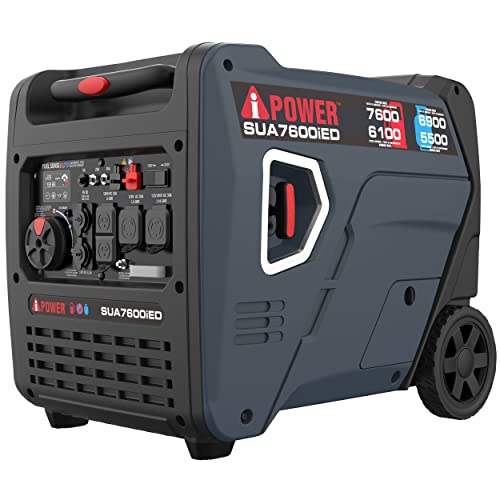
A-iPower SUA7600iED Dual-Fuel Inverter Generator
- Running Watts: 6,100 W (gas)
- Runtime: 10 hrs @ 1/4 load
- Noise Level: 62 dB
- Weight: ~130 lbs
As an Amazon Associate, we earn from qualifying purchases.
For bigger boats — 35+ feet with 16k BTU aircon, electric cooking, watermakers — the SUA7600iED delivers 7,600 starting watts and 6,100 running watts of inverter-clean, dual-fuel power at 62 dB. That’s remarkable quiet for this output; it’s quieter than many 3,000-watt open-frame units.
The 322cc engine and 3.6-gallon tank give about 10 hours at quarter load. Electric start is standard. As an inverter, it handles the sensitive loads boats are full of: inverter/chargers, chartplotters, autopilots.
Based on owner feedback, A-iPower’s support is decent and the units hold up. Typical pricing runs $1,200–$1,500. The weight and size mean it’s best for boats where the generator lives on deck or in a ventilated lazarette — never in an enclosed cabin space.
Pros
- 6,100W at just 62 dB — exceptional
- Runs big marine AC + watermaker loads
- Dual fuel, electric start
Cons
- Heavy — lives on deck, not carried
- Overkill for boats under 32 feet
Best lightweight dual-fuel
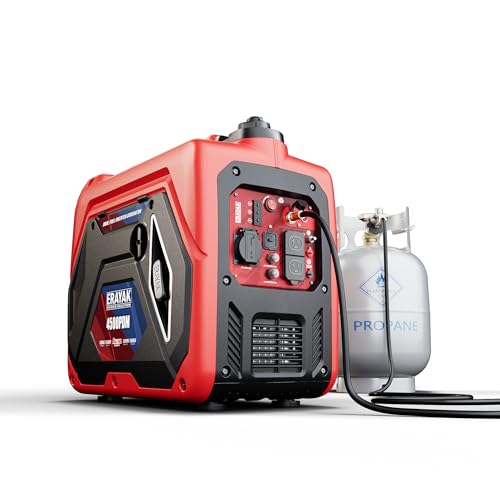
ERAYAK 4500PD Dual-Fuel Inverter Generator (4500PD)
- Running Watts: 3,500 W
- Runtime: 16 hrs @ 1/4 load
- Noise Level: 58 dBA @ 1/4 load
- Weight: 54 lbs
As an Amazon Associate, we earn from qualifying purchases.
The ERAYAK 4500PD is the sleeper pick for smaller boats: 4,500 starting watts, 3,500 running watts, just 54 pounds, and 58 dBA at quarter load. That’s Honda-adjacent weight and noise with nearly double the Honda’s running watts — enough for a 9,000-BTU cabin AC or a serious battery charger bank.
Dual-fuel gives you propane’s indefinite storage — nice when the generator sits between sailing seasons. The 2.25-gallon tank stretches to 16 hours at quarter load. Based on owner feedback, noise and fuel economy are the standouts; brand longevity is the open question, as ERAYAK is newer to the market.
Typical price runs $600–$800, which undercuts the big names significantly. For daysailers and pocket cruisers that need more than the Honda’s 1,800W but can’t handle 100 pounds on deck, this is the most interesting option in 2027.
Pros
- 3,500W at only 54 lbs — remarkable
- 58 dB keeps anchorages peaceful
- 16-hour runtime, dual fuel
- Strong value at $600–$800
Cons
- Newer brand, shorter track record
- Won’t run 13.5k BTU ACs
Best premium small
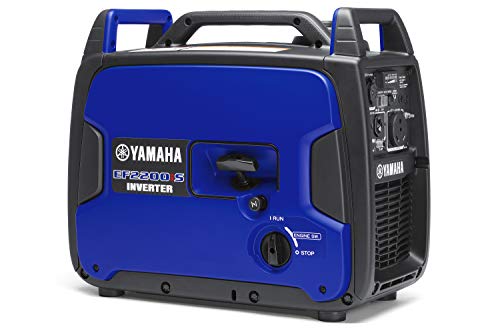
Yamaha EF2200iS Inverter Generator
- Running Watts: 1,800 W
- Runtime: 10.5 hrs @ 1/4 load
- Noise Level: ~57 dB
- Weight: 55.2 lbs
As an Amazon Associate, we earn from qualifying purchases.
The Yamaha EF2200iS is the Honda EU2200i’s twin in all but badge: 2,200/1,800 watts, quiet inverter power, 55-pound carry weight. Where it edges ahead for boaters is the 3-year warranty — a full year more than Honda — and a slightly larger 1.24-gallon tank for longer charging sessions.
It’ll run the same loads as the Honda: battery chargers, small ACs, water heaters (one at a time), and all your 12V charging via the DC output. The control panel is well laid out for use in a moving cockpit.
Typical pricing lands $1,000–$1,200, neck-and-neck with the Honda. Based on spec comparison and owner feedback, pick whichever is cheaper when you buy — or whichever dealer is closer to your marina. You can’t go wrong with either.
Pros
- 3-year warranty, best in class
- Honda-equal quiet and reliability
- Larger tank than EU2200i
Cons
- Heavier than the Honda
- Premium pricing
Side-by-side comparison
| Product | Running W | Fuel | Noise | Best for |
|---|---|---|---|---|
| Honda EU2200i | 1,800 | Gas | 48 dB | Overall cruiser pick |
| WEN DF680iX | 5,100 | Dual | 64 dB | AC at anchor |
| A-iPower SUA7600iED | 6,100 | Dual | 62 dB | Big-boat power |
| ERAYAK 4500PD | 3,500 | Dual | 58 dB | Lightweight mid-power |
| Yamaha EF2200iS | 1,800 | Gas | 57 dB | Premium small |
How to choose a marine generator
Boats punish bad choices faster than houses do. Here’s the marine-specific checklist.
CO safety: the non-negotiable section
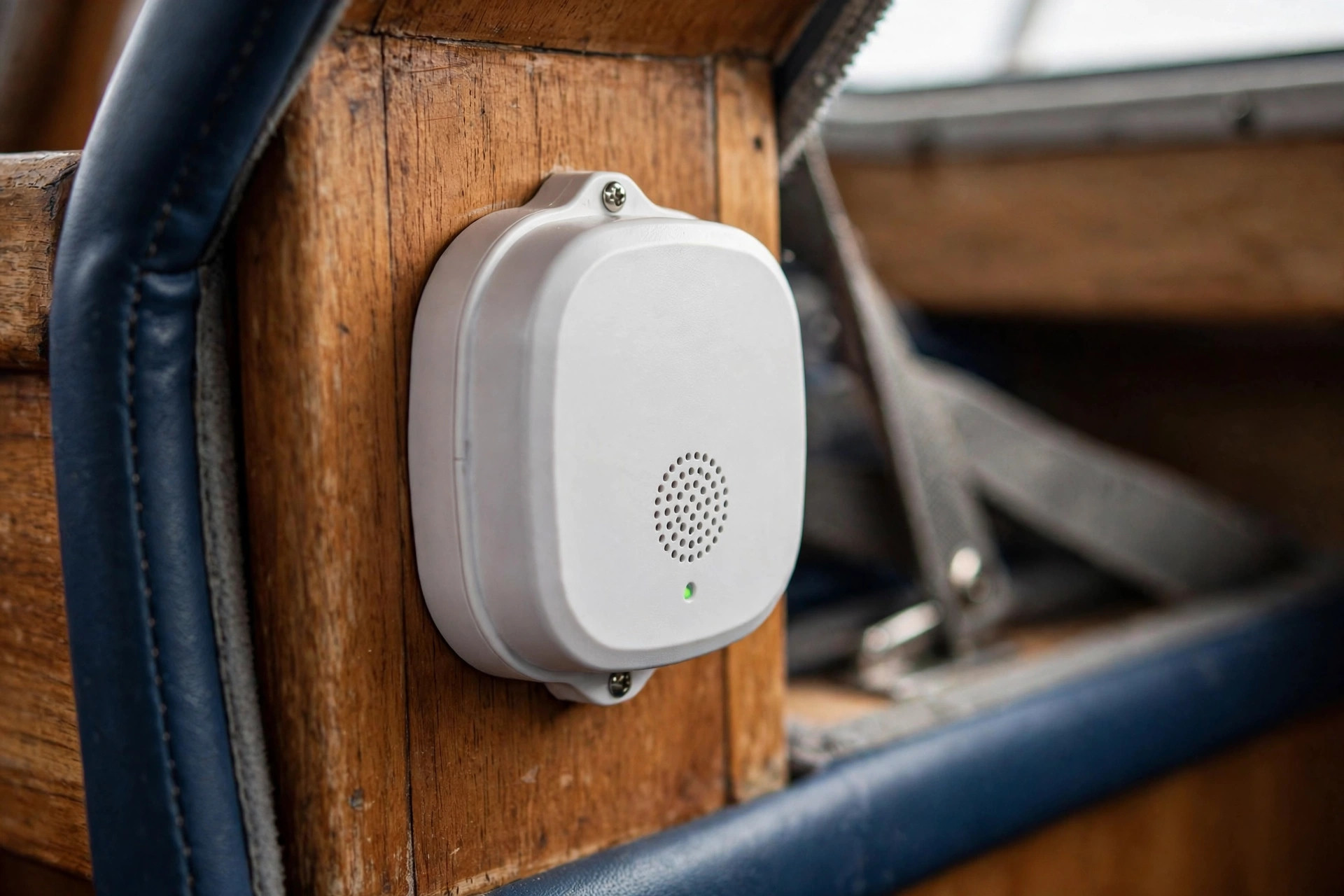
Read this twice. Carbon monoxide from a portable generator has killed boaters — often at anchor, often on calm nights when exhaust doesn’t disperse. Rules: run the generator on an open deck area only, as far aft as practical (exhaust should blow clear of the boat, not forward into the cockpit); never in a cabin, lazarette, or enclosed cockpit; never on a swim platform while people swim nearby (CO hugs the water surface); install marine CO detectors in every sleeping cabin and test them monthly. Models with CO shutdown sensors (Honda’s CO-Minder) add a backup layer. This isn’t paranoia — it’s the documented accident record.
Inverter-only, no exceptions
Boats are full of sensitive electronics — chartplotters, autopilots, inverter/chargers, NMEA networks. A conventional generator’s dirty power can damage them. Every unit on this list is an inverter generator with clean sine-wave output. Don’t bring a contractor open-frame generator aboard to save money; the repair bill for fried electronics will dwarf the savings.
Size for your real loads
Marine loads are specific: battery chargers (500–2,000W depending on bank size), cabin AC (700W for 5k BTU, up to 1,800W running for 16k BTU, with 2–3x starting surge), electric water heaters (~1,500W), and watermakers (800–1,500W). The critical question is air conditioning: no AC, and 1,800–3,500W covers most boats. With AC, you need the starting surge covered — a 13,500-BTU unit can demand 3,500W+ to start, which is why the WEN and A-iPower exist. A soft-start kit (like MicroAir EasyStart) on your AC can cut starting surge dramatically and let a smaller generator do the job.
Weight and handling aboard
Think through the lift: from dock to deck, deck to dinghy, dinghy to beach. The 47-pound Honda is a one-person job. The 99-pound WEN needs two people and a calm day. Anything heavier lives permanently on deck. Measure your deck space and your back honestly. This is why the ERAYAK at 54 pounds with 3,500W is such an interesting middle ground.
Salt air survival
Salt destroys small engines: corrosion on electrical connections, carburetor grief, rusted fasteners. Rinse with fresh water after salt exposure, fog the engine if storing for the season, run ethanol-free fuel with stabilizer, and keep it covered — UV plus salt is the fast track to a dead generator. Stainless hardware and dielectric grease on connections are cheap insurance. For general portable generator care, our best portable generators roundup covers maintenance basics.
Shore-power connection done right
To feed the boat’s AC panel (not just extension cords), use a proper shore-power inlet connection with a marine-grade adapter — never jury-rig plugs. Many boats need a galvanic isolator or isolation transformer to prevent dock-side corrosion issues, and ABYC standards apply. If you’re unsure, a marine electrician’s hour is money well spent. For dockside power concepts, our transfer switch guide explains the underlying principles.
Can I run a portable generator on my boat?
What size generator do I need to run boat air conditioning?
Is it safe to sleep with a generator running on a boat?
Gasoline or propane for a marine generator?
How do I protect my generator from salt water damage?
Generator vs. solar + batteries: the honest comparison
Every boater eventually asks: why not just go solar and skip the generator? Fair question, and the honest answer is that most long-term cruisers end up with both. Here’s how the math actually works.
A typical 400W solar installation on a 35-foot boat generates roughly 120–160 amp-hours per day in good sun — enough for refrigeration, lights, instruments, and devices. What it won’t reliably cover: air conditioning (a non-starter on solar alone for most boats), electric water heating, or consecutive cloudy days. A 200Ah lithium bank plus 400W of solar handles the daily house loads beautifully and silently.
The generator fills the gaps: fast battery charging after cloudy stretches (a 40-amp charger replenishes in hours what solar needs days for), air conditioning at anchor, and power tools. The sweet spot most cruisers land on is solar for the baseline plus a small generator like the EU2200i for the peaks — run it an hour or two a day instead of all day. That cuts fuel use, noise, and engine hours dramatically versus generator-only living.
Cost-wise, 400W of marine solar plus a lithium bank runs $1,500–$3,000 installed — comparable to a good generator. But they solve different problems: solar is silent and free to run; the generator is on-demand power regardless of weather. If I were outfitting a boat tomorrow, I’d do both, with the generator sized small (the Honda or Yamaha here) because solar carries the base load. For pure solar setups, our solar generator guide covers the portable power-station side.
Our verdict
The Honda EU2200i is the best portable generator for most boats in 2027 — quiet, light, and trusted by the cruising community. If you need air conditioning at anchor, step up to the WEN DF680iX for 5,100W of quiet inverter power, or the ERAYAK 4500PD if you want mid-range watts at just 54 pounds. Whatever you choose, CO detectors in every cabin — non-negotiable.
How we researched this: Marine-specific spec comparison (weight, noise, outlet types, CO safety features), ABYC-aligned safety guidance, cruising-community owner feedback on salt-air durability, and sizing math for marine AC loads. Every pick is an inverter generator with a verified Amazon listing; we excluded open-frame contractor units as unsuitable for marine electronics.

Related Guides
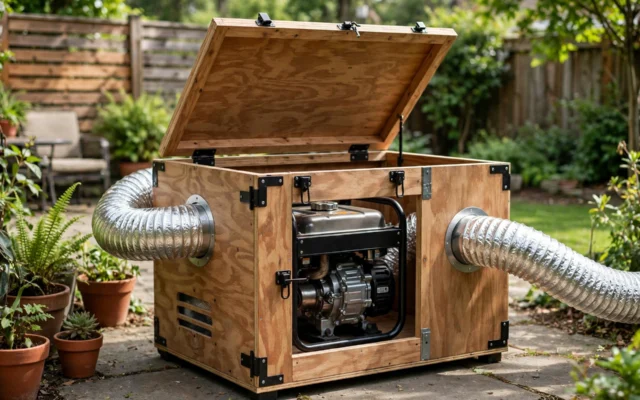
DIY Generator Quiet Box: How to Build a Noise-Reduction Enclosure
A DIY generator quiet box can cut noise 10–20 dB — but ventilation and CO safety are the whole project. Materials, baffle design, fan sizing, and the mistakes to avoid.

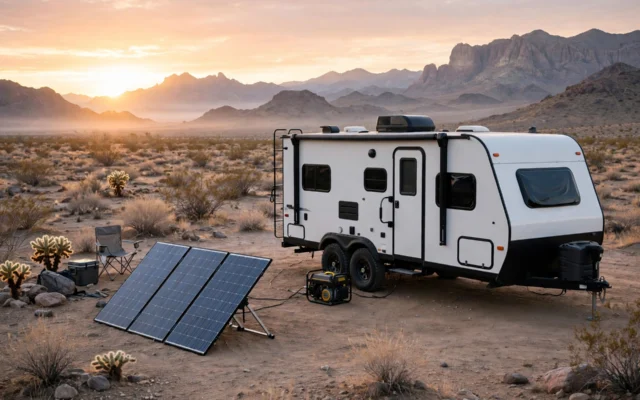
Boondocking Power Setup: Generator + Solar for Off-Grid Camping
The ideal boondocking power setup pairs solar with a generator and battery bank. Real daily load math, sizing tiers, and the generator run strategy that sips fuel.
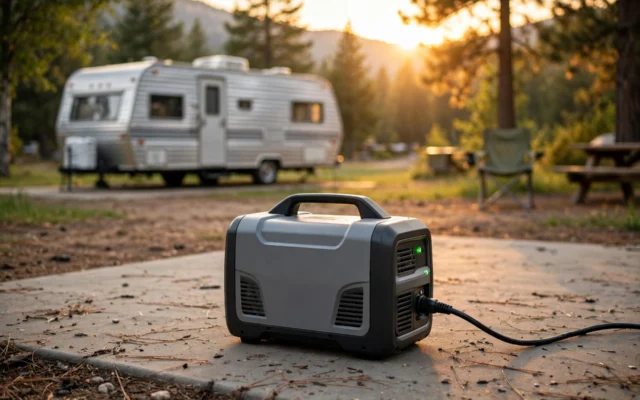
RV Generator Quiet Hours & Campground Etiquette Guide
RV generator quiet hours are usually 10pm–8am, with limited daytime generator windows in national parks. The rules, the unwritten etiquette, and how to stay neighborly.