



The average American home uses about 877 kWh of electricity per month — roughly 10,500 kWh per year, according to the EIA. But that number is almost useless for generator sizing, because it describes average energy over time, not the instantaneous power (watts) your house demands at any moment.
Here’s the distinction that matters: your home might average just 1.2 kW of power across a day, but when the AC compressor kicks on while the dryer is running and someone starts the microwave, you can spike to 12–15 kW for a few seconds. A generator has to survive the spikes, not the average.
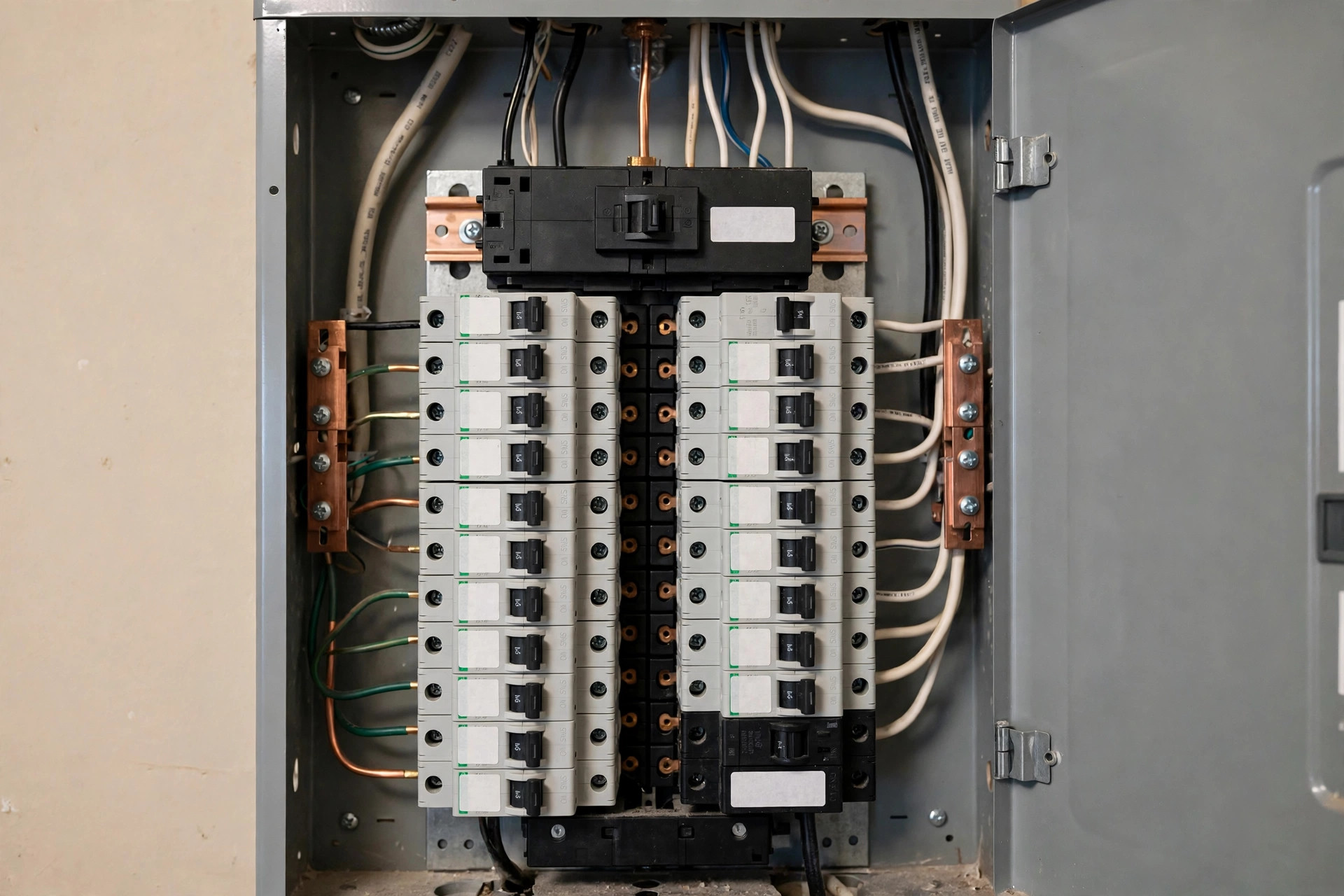
Key takeaways
- Average US home: ~877 kWh/month, but that’s energy — not the watts your generator must supply.
- Typical whole-house peak demand: 10–15 kW; essentials-only backup: 5–8 kW.
- The biggest loads are electric water heaters (4,500W), dryers (5,400W), and central AC (3,500–6,000W running, far more to start).
- Instantaneous demand, not monthly kWh, decides your generator size.
- Add up running watts of everything you’ll power at once, plus the largest starting watts, to get your real number.
kWh vs. Watts: The 60-Second Explanation
Think of electricity like water. Watts are the flow rate — how much water is coming through the pipe right now. Kilowatt-hours are the total volume — how much water flowed through over a month. Your electric bill measures volume (kWh). Your generator must handle flow (watts).
An 877 kWh/month home averages out to:
877 kWh ÷ 730 hours in a month = ~1.2 kW average demand.
But nobody’s house draws a flat 1.2 kW all day. Overnight it’s 300W (fridge, standby loads). At 6 PM in July it’s 9 kW (AC, dryer, stove, lights, TV). Generators are sized for the peaks, which is why a 1.2 kW “average” home needs a 10–14 kW generator for whole-house coverage.
Where a Home’s Electricity Actually Goes
Rough breakdown of that 877 kWh/month for a typical home:
| Load | Share of bill | Notes |
|---|---|---|
| Heating & cooling | ~50% | The big one — AC and electric heat dominate |
| Water heating | ~15–20% | 4,500W electric heater, usually on a timer |
| Appliances | ~15% | Fridge, washer, dryer, dishwasher, cooking |
| Lighting | ~10% | Less with LEDs — often under 200W total |
| Electronics | ~5–10% | TVs, computers, chargers, routers |
For generator purposes, what matters is which of these are ON at the same moment. Heating and cooling alone can be 50% of your energy — and they’re the hardest loads to start. A central AC that runs at 3,800W may need 9,000–11,000W of surge to start the compressor. That’s why AC is the load that decides between a 7,500W portable and a 14 kW standby.
Typical Home Wattage Scenarios
Real numbers from homes I’ve measured or helped size:
| Home | Essentials-only (W) | Comfortable (W) | Whole-house peak (W) |
|---|---|---|---|
| 1,500 sq ft, gas heat, no central AC | 3,000–5,000 | 5,000–7,500 | 8,000–10,000 |
| 2,000 sq ft, electric water heater, central AC | 5,000–7,500 | 7,500–12,000 | 12,000–16,000 |
| 3,000 sq ft, all-electric | 7,500–10,000 | 12,000–18,000 | 20,000–24,000 |
“Essentials” means fridge, freezer, some lights, furnace blower (if gas heat), well or sump pump, phone charging, and internet. “Comfortable” adds the microwave, a window AC or two, and the TV. “Whole-house” is everything including central AC, dryer, and water heater.
Notice how fast the numbers climb once you add central air conditioning and electric appliances. That’s the honest truth most generator articles skip: a 7,500W portable handles a gas-heated home beautifully and an all-electric home barely at all.
How to Measure YOUR Home’s Real Demand
Averages are a starting point. Here’s how to get your actual number:
1. Read your electric bill. Look for your highest monthly kWh — usually summer or winter. That tells you your peak season.
2. List what runs simultaneously. Write down every appliance that could be on during an outage evening: fridge (700W running), furnace blower (800W), lights (200W), well pump (1,000W), microwave (1,000W), plus the big one — AC or heat. Add the running watts.
3. Add the largest starting watts. Motors need 2–3× their running watts for a second or two to start. Take your running-watts total and add the starting watts of the single largest motor (usually the AC compressor or well pump).
4. Add 20–25% headroom. Generators hate running at 100% — voltage sags, breakers trip, and the engine wears faster. Size so your typical load is 70–80% of the generator’s running watts. The NEC also requires continuous loads (running 3+ hours) to be sized at 125% — a 20A continuous load needs a 25A circuit.
Our generator sizing calculator walks through this arithmetic with common appliance wattages built in.
A Day in the Life of Your Home’s Demand
To make this concrete, here’s a rough demand profile for a typical 2,000 sq ft gas-heated home on a summer day:
| Time | What’s running | Approx. watts |
|---|---|---|
| 3 AM | Fridge cycling, standby loads | 200–400 |
| 7 AM | Coffee maker, toaster, lights, fridge | 2,000–2,500 |
| 12 PM | AC cycling, fridge, home office | 2,500–4,000 |
| 6 PM | AC + dryer + stove + lights + TV | 8,000–12,000 |
| 9 PM | AC, TV, lights, dishwasher | 4,000–6,000 |
See the pattern? The 6 PM spike is 30–40× the overnight draw. That spike — not the 877 kWh monthly average — is what your generator must survive. And notice that the spike is almost entirely discretionary loads: dryer, stove, dishwasher. During an outage, you simply don’t run those, and your “whole house” demand drops to the 2,500–5,000W range. That’s the insight that lets a 7,500W portable back up a home that “averages” far less but “peaks” far more.
Winter flips the script for electric-heated homes: the overnight hours become the peak, with heat strips or a heat pump drawing 3,000–10,000W continuously while everyone sleeps. If that’s your home, size for the winter peak — and consider that a heat pump’s emergency heat strips are the single largest residential load most generators ever face.
The Quick Rule of Thumb (When You’re in a Hurry)
If you don’t want to do the worksheet: budget 5–8 watts per square foot for essentials, 10–14 for whole-house. A 2,000 sq ft home: 10,000–16,000W essentials-to-comfortable, 20,000–28,000W whole-house. Then sanity-check against your biggest single loads (AC, water heater, dryer).
This is deliberately conservative. It overestimates slightly, which is exactly what you want when buying a generator.
How many watts does the average house use?
What size generator do I need for a 2,000 sq ft house?
How many watts does a house use at once?
Can a 7,500-watt generator run a house?
How do I find my home’s peak wattage?
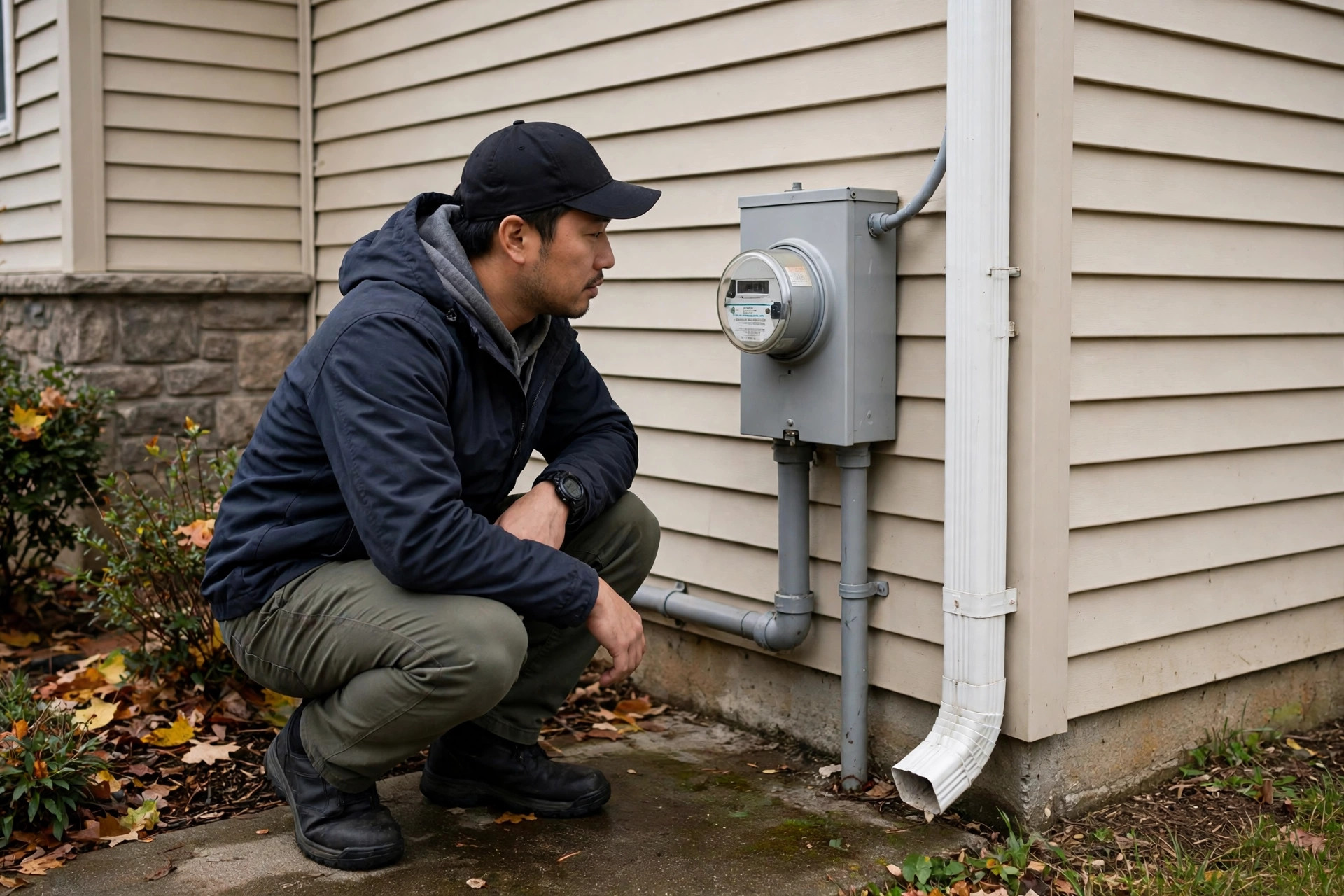
One more practical note: your utility may already track your peak demand. Many smart meters record 15-minute peak kW, and some utilities show it in their online portal under “usage details” or “demand.” If yours does, that’s the single most accurate number you can get — it’s your actual measured peak, not an estimate. Compare it against the worksheet total; if they disagree by more than 20%, trust the meter and recheck your appliance list for something you missed (pool pumps and hot tubs are the usual suspects).
Once you know your real demand number, the next step is matching it to a generator and a connection method. Read our guide to essential circuits to back up to prioritize what actually needs power, then size from there — most homeowners are surprised how little they truly need once the dryer and water heater are managed.

Related Guides
Paralleling Two Generators vs Buying a Bigger One: Which Is Better? (2027)
Paralleling two small inverter generators vs buying one bigger unit: compare cost, noise, fuel, redundancy, and the 240V catch to pick the right setup.

What Gauge Extension Cord Do You Need for a Generator?
Extension cord gauge depends on amps AND length: 12 AWG handles 20A to 50 ft, but you need 10 AWG at 100 ft. Chart, sizing steps, and fire-prevention rules inside.
Generator Carbon Monoxide Safety: The Complete 2027 Guide
Carbon monoxide from generators kills ~77 Americans a year. This complete guide covers symptoms, the CDC 20-foot rule, detector placement, and a pre-outage safety checklist.