



The best carbon monoxide detectors for generator safety in 2027 are plug-in models with battery backup, an 85-decibel alarm, and a digital display — and the Kidde KN-COPP-3 Nighthawk remains our top pick because it combines all three with a live CO level readout and peak-level memory at a reasonable price. Every home that runs a portable generator needs CO alarms on every level; they are the last line of defense against an odorless gas that kills hundreds of Americans every year.
We researched the leading CO detectors available in 2027, comparing sensor type, power source, alarm features, and owner feedback. All five picks below use electrochemical sensors — the standard for residential CO detection — and carry the certifications that matter for a safety device you may never think about until it saves your life.
Key Takeaways
- The Kidde KN-COPP-3 Nighthawk is the best overall CO detector for generator safety: plug-in with battery backup, digital display, and peak-level memory.
- Place CO detectors on every level of your home and outside sleeping areas. A generator should run at least 20 feet from the house with exhaust pointed away.
- A CO detector is your last line of defense, not a license to run a generator in a garage, basement, or near open windows. No detector makes indoor generator operation safe.
- Interconnected models like the Kidde KN-COPP-3 Nighthawk Plug-In Carbon Monoxide Alarm with Battery Backup and Digital Display sound every alarm in the house when any one unit detects CO — valuable for large or multi-story homes.
- Replace CO alarms at the end of their sensor life (typically 7–10 years) and test them monthly.
Warning — carbon monoxide kills silently. CO is colorless and odorless, and generator exhaust contains high levels of it. Never operate a generator indoors, in a garage (even with the door open), in a basement, or near windows, doors, or vents. This article is about detection as a backup safety layer; safe placement is the primary protection.
Quick Picks: Our Top CO Detectors for Generator Safety
- Kidde KN-COPP-3 Nighthawk — Best overall: plug-in with battery backup, digital display, peak-level memory.
- First Alert CO615 — Best display upgrade: backlit screen, AA battery backup, end-of-life chirp.
- First Alert CO605 — Best budget: simple plug-in protection for every level of the home.
- Kidde KN-COPP-3 Nighthawk Plug-In Carbon Monoxide Alarm with Battery Backup and Digital Display (single unit) — Best interconnected: wireless linking, one alarms and all alarm.
- Kidde KN-COB-B-LP Nighthawk — Best battery-only: no outlet needed, ideal for garages, sheds, and RVs.
Best overall
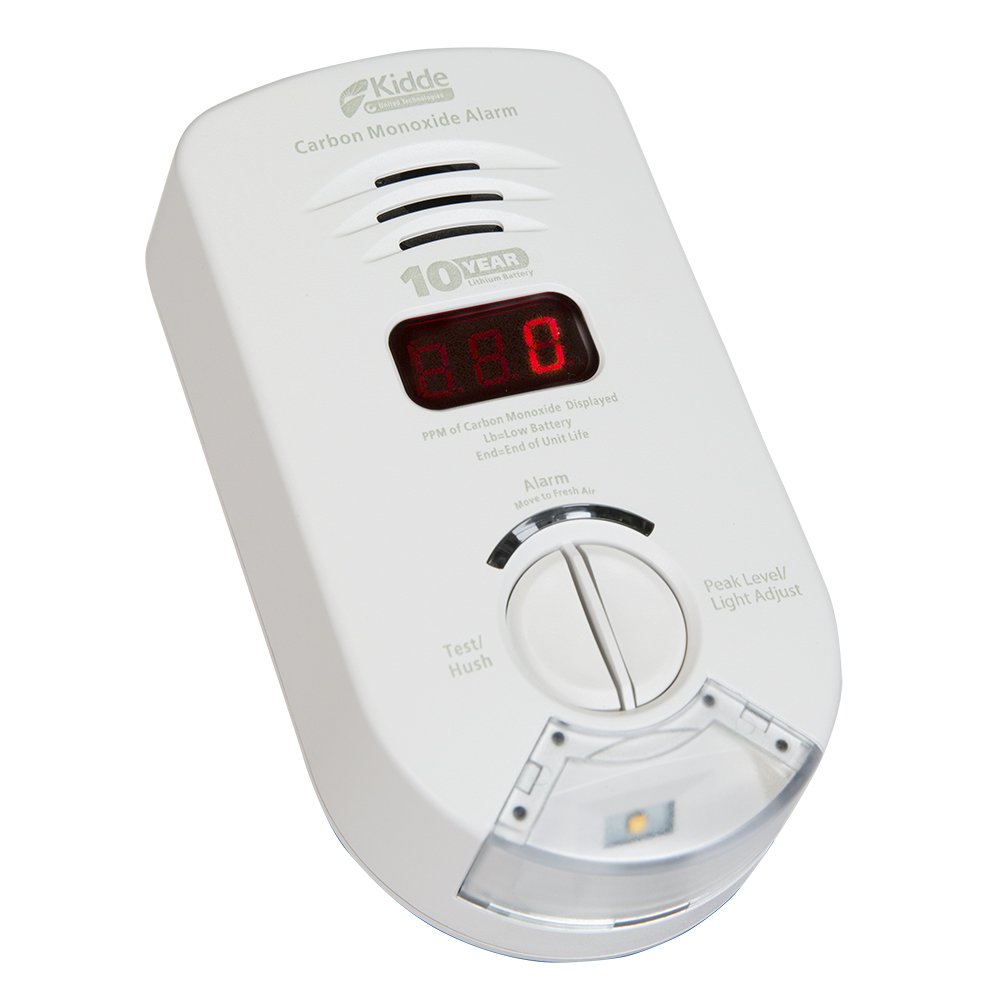
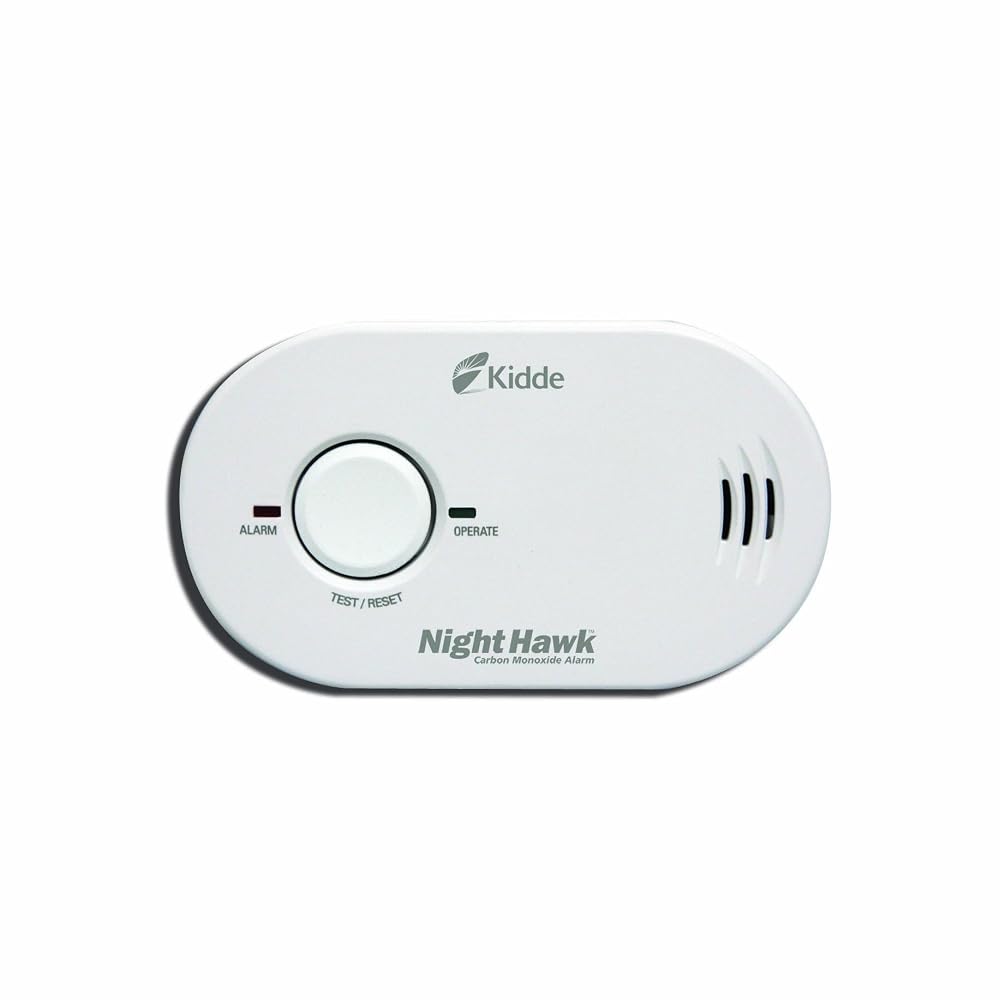
Kidde KN-COPP-3 Nighthawk Plug-In Carbon Monoxide Alarm with Battery Backup and Digital Display
- Electrochemical sensor
- Plug-in (120V AC) with 9V battery backup
- 85dB alarm
- The best-selling plug-in CO alarm with a live digital PPM readout – ideal near a generator-connected home for real-ti…
- Sensor: Electrochemical
- Power: Plug-in (120V AC) with 9V battery backup
- Digital display: Yes
- 85dB alarm; peak-level memory; Smart-Hush silence button
As an Amazon Associate, we earn from qualifying purchases.
The Kidde KN-COPP-3 Nighthawk has been the best-selling plug-in CO alarm for years, and our research confirms it still earns the top spot for generator safety in 2027. It plugs into any 120V outlet with a 9V battery backup, so it keeps protecting during the power outage that has you running the generator in the first place. The digital display shows current CO levels in parts per million, updating every 15 seconds, which means you can see a developing problem before the alarm threshold is reached.
Peak-level memory is the feature that matters most for generator owners: it records the highest CO level detected, so if the alarm sounded while you were outside tending the generator, you can read back what the peak exposure was. The Smart-Hush button silences nuisance alarms, and the 85-decibel alarm is loud enough to wake sleepers.
For a generator-powered home, plug one of these on each level — especially near bedrooms and near the side of the house where the generator runs. The display makes it the most informative option in our lineup.
| Sensor type | Electrochemical |
|---|---|
| Power source | Plug-in (120V AC) with 9V battery backup |
| Digital display | Yes — live CO level in PPM |
| Alarm features | 85dB alarm; peak-level memory; Smart-Hush silence button |
| Best for | Generator-connected homes; every occupied level |
| Key notes | Battery backup keeps it working during outages |
Pros
- Live digital PPM readout with peak-level memory
- Battery backup works through power outages
- Smart-Hush silences false alarms without disabling protection
- Long track record and huge installed base
Cons
- Requires an outlet; 9V battery needs periodic replacement
- No wireless interconnection with other units
Best display upgrade
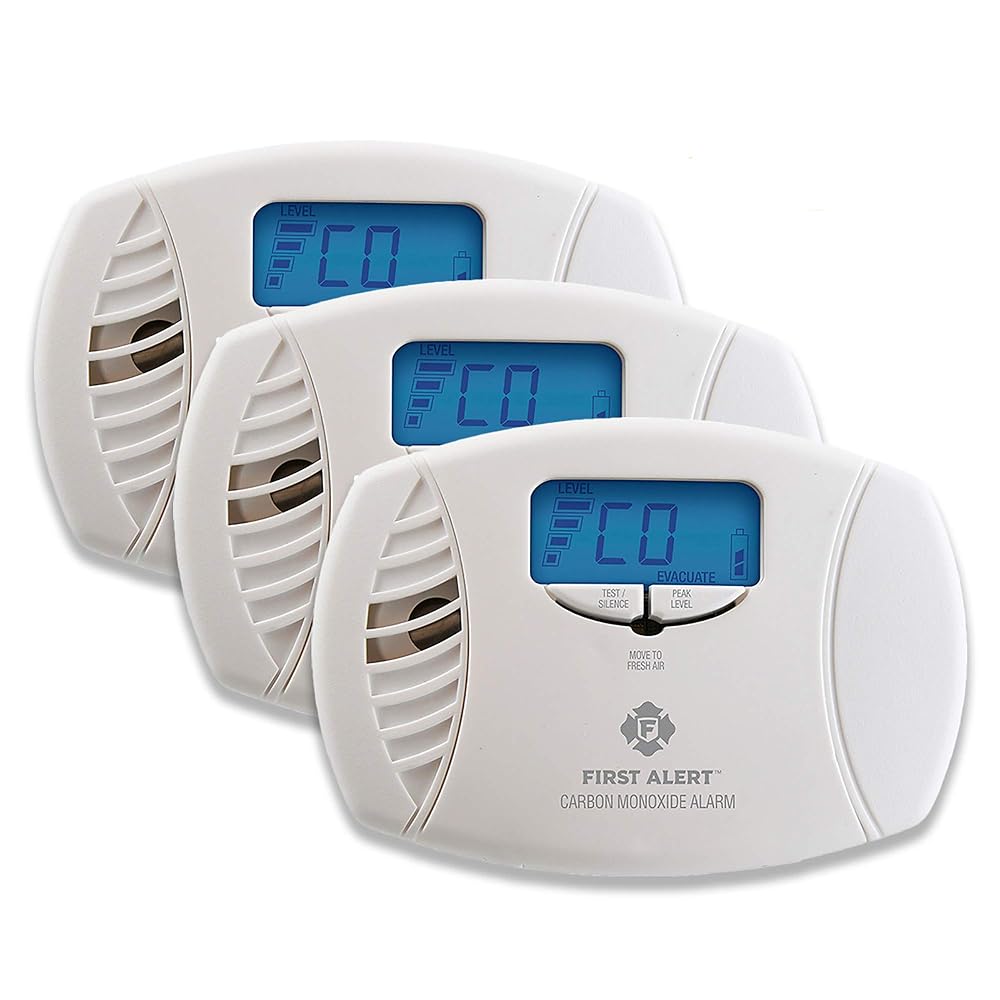
First Alert CO615 Dual-Power Plug-In Carbon Monoxide Detector with Battery Backup and Digital Display
- Sensor Type: Electrochemical
- Power Source: Plug-in (120V AC) with 2xAA battery backup
- Digital Display: Yes, backlit
- Plug-in convenience plus a backlit digital display and battery backup – a step up from the CO605 for generator safety
As an Amazon Associate, we earn from qualifying purchases.
The First Alert CO615 is the step-up alternative to the basic plug-in: dual power (120V plug-in with 2xAA battery backup), a backlit digital display, and an end-of-life chirp that tells you when the sensor has expired. The backlit display is easier to read in a dark hallway during an outage than non-backlit screens, which is a small detail that matters at 2 a.m.
Like the Kidde, it uses an electrochemical sensor with an 85-decibel alarm and includes peak-level memory and a test/silence button. The AA backup batteries are cheaper and easier to find than 9V cells, and the end-of-life warning takes the guesswork out of replacement timing.
Choose the CO615 over the Kidde if you prefer First Alert’s ecosystem or want the backlit display; choose the Kidde if peak-level memory and the lowest price matter more. Both are excellent primary detectors for a generator household.
| Sensor type | Electrochemical |
|---|---|
| Power source | Plug-in (120V AC) with 2xAA battery backup |
| Digital display | Yes, backlit |
| Alarm features | 85dB alarm; peak-level memory; test/silence button; end-of-life chirp |
| Best for | Hallways and bedrooms during outages |
| Key notes | End-of-life chirp signals sensor expiration |
Pros
- Backlit display readable in the dark during outages
- AA battery backup — cheap and easy to replace
- End-of-life chirp removes replacement guesswork
Cons
- Typically costs more than the basic CO605
- No wireless interconnection
Best budget
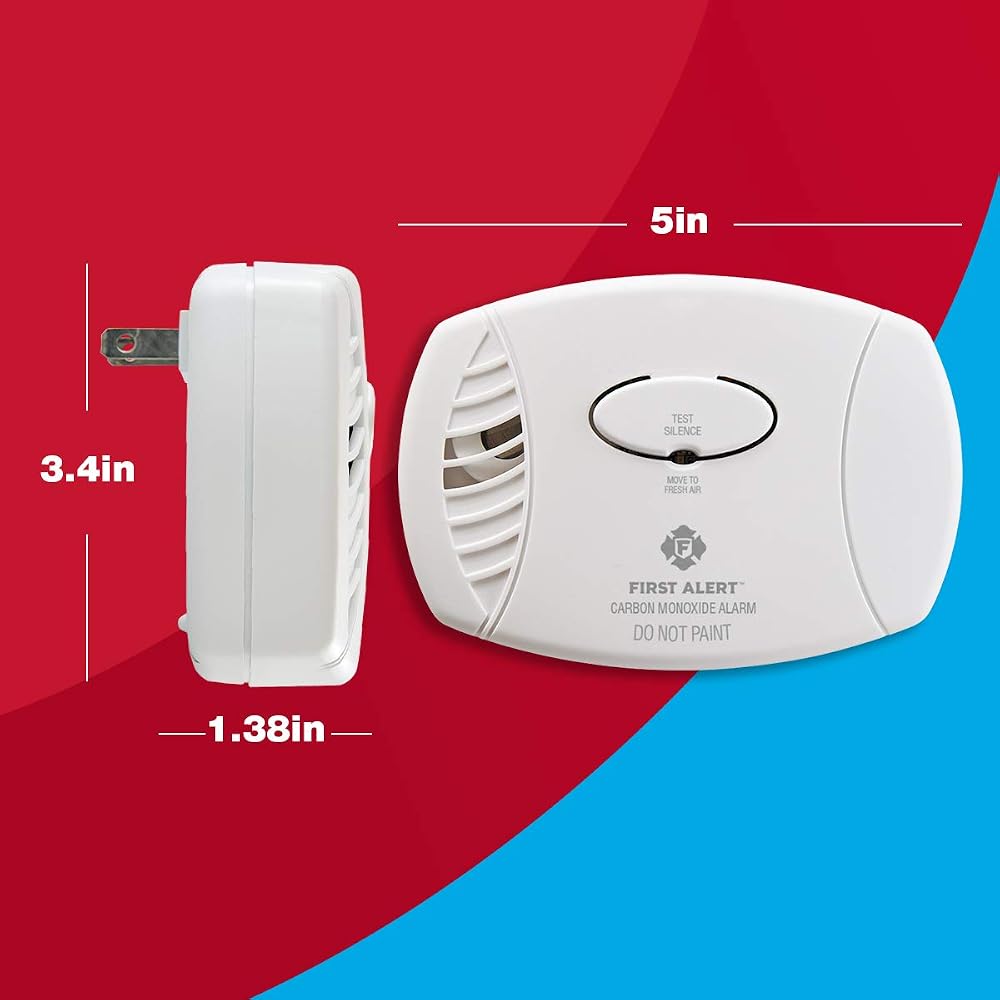
First Alert CO605 Plug-In Carbon Monoxide Detector with Battery Backup
- Sensor Type: Electrochemical
- Power Source: Plug-in (120V AC) with 9V battery backup
- Digital Display: No
- Simple, trusted plug-in CO alarm with battery backup – affordable protection for every level of a generator-powered home
As an Amazon Associate, we earn from qualifying purchases.
The First Alert CO605 is the honest budget pick: a plug-in CO detector with battery backup and an 85-decibel alarm, minus the digital display. It uses the same electrochemical sensor technology as the pricier models, so the actual detection capability is comparable — you give up the live PPM readout and peak-level memory, not the protection.
This is the detector to buy in multiples. Safety guidance calls for CO alarms on every level of the home and outside each sleeping area, and outfitting a three-story house with display models gets expensive. A CO605 on each level plus a display model in the master bedroom is a sensible, affordable strategy.
The single test/silence button keeps operation simple, and the battery backup means it stays on duty during outages. If your budget only stretches to one detector, spend a little more for a display model; if you need whole-house coverage, the CO605 is how you afford it.
| Sensor type | Electrochemical |
|---|---|
| Power source | Plug-in (120V AC) with 9V battery backup |
| Digital display | No |
| Alarm features | 85dB alarm; single test/silence button |
| Best for | Whole-house coverage on a budget |
| Key notes | Same sensor technology as pricier models |
Pros
- Lowest cost per unit — affordable whole-house coverage
- Battery backup keeps it working during outages
- Simple single-button operation
Cons
- No digital display or peak-level memory
- No interconnection
Best interconnected
Kidde KN-COPP-3 Nighthawk Plug-In Carbon Monoxide Alarm with Battery Backup and Digital Display Wireless Interconnected Carbon Monoxide Detector (2-Pack)
- Electrochemical sensor
- Plug-in (120V AC) with 9V battery backup
- 85dB alarm
- The best-selling plug-in CO alarm with a live digital PPM readout – ideal near a generator-connected home for real-ti…
- Sensor: Electrochemical
- Power: Plug-in (120V AC) with 9V battery backup
- Digital display: Yes
- 85dB alarm; peak-level memory; Smart-Hush silence button
As an Amazon Associate, we earn from qualifying purchases.
The Kidde KN-COPP-3 Nighthawk Plug-In Carbon Monoxide Alarm with Battery Backup and Digital Display solves the biggest weakness of standalone detectors: if CO builds up in the basement while you sleep upstairs, a single downstairs alarm may not wake you. These plug-in units interconnect wirelessly — when one detects CO, every unit in the house sounds. For generator owners, that means a detector near the generator side of the house can trigger the bedroom unit instantly.
The LCD shows peak CO levels, the replaceable batteries last approximately five years, and the sensor carries a 10-year life. The two-pack covers two floors out of the box; larger homes can add units to the same wireless network.
Battery power means no outlet hunting and no cords — mount them exactly where they belong, including high on walls or ceilings. The trade-off is remembering to maintain the batteries, though the five-year battery life and low-battery alerts make that easy.
| Sensor type | Electrochemical (Figaro) |
|---|---|
| Power source | Battery (replaceable, ~5-year battery life) |
| Digital display | Yes, LCD with peak CO levels |
| Alarm features | Wireless interconnection (all units sound together); 7-year sensor life |
| Best for | Multi-story homes; bedroom-to-basement alert coverage |
| Key notes | Sold as a single unit; expandable wireless network |
Pros
- Wireless interconnection — every unit alarms together
- No outlet required; mount anywhere
- ~5-year battery life and 7-year sensor life
Cons
- Battery-powered — no AC primary with backup
- Higher upfront cost than basic plug-in models
Best battery-only
Kidde Nighthawk KN-COB-B-LP Battery-Operated Carbon Monoxide Alarm
- Sensor Type: Electrochemical
- Power Source: Battery-operated (AA batteries included)
- Digital Display: No
- No outlet needed – battery power makes it perfect for garages, sheds, and RVs where generators are actually used
As an Amazon Associate, we earn from qualifying purchases.
The Kidde KN-COB-B-LP is the detector for the places generators actually get used: garages, sheds, workshops, and RVs where there may be no convenient outlet. Battery operation (AA batteries included) means it goes exactly where the risk is, with two LED status indicators and a 7-year operating life.
Do not misunderstand the use case — this is not permission to run a generator in a garage. It is protection for the attached spaces where CO can seep in: the mudroom between garage and kitchen, the workshop wall, the RV where a generator runs nearby outside. The 85-decibel alarm matches the plug-in models for loudness.
Pair one of these with a plug-in display model inside the house and you have covered both the living space and the structures where generator exhaust is most likely to drift.
| Sensor type | Electrochemical |
|---|---|
| Power source | Battery-operated (AA batteries included) |
| Digital display | No |
| Alarm features | 85dB alarm; 2 LED status indicators; 7-year operating life |
| Best for | Garages, sheds, workshops, RVs |
| Key notes | Supplement to, not replacement for, in-home alarms |
Pros
- No outlet needed — protects garages, sheds, and RVs
- AA batteries included; 7-year operating life
- Simple and reliable
Cons
- No display or peak-level memory
- Battery-only — no AC primary power
Quick Comparison: CO Detectors at a Glance
| Product | Power | Display | Key feature | Best for | Price |
|---|---|---|---|---|---|
| Kidde KN-COPP-3 | Plug-in + 9V backup | Yes | Peak-level memory, Smart-Hush | Best overall | Check price |
| First Alert CO615 | Plug-in + AA backup | Yes, backlit | End-of-life chirp | Best display upgrade | Check price |
| First Alert CO605 | Plug-in + 9V backup | No | Lowest cost | Best budget | Check price |
| Kidde KN-COPP-3 Nighthawk Plug-In Carbon Monoxide Alarm with Battery Backup and Digital Display (single unit) | Battery | Yes, LCD | Wireless interconnection | Best interconnected | Check price |
| Kidde KN-COB-B-LP | Battery (AA incl.) | No | No outlet needed | Best battery-only | Check price |
How to Choose a CO Detector for Generator Safety
Where should CO detectors go in a generator household?
On every level of the home, including the basement, and outside each sleeping area — that is the baseline guidance from fire safety authorities. For generator households, add one on the side of the house nearest the generator’s running position and one in any attached garage or mudroom where exhaust could seep indoors. More coverage beats fancier units: five basic detectors protect better than one premium display model.
Plug-in, battery, or hardwired?
Plug-in models with battery backup are the sweet spot for most homes — they run on AC power with the battery as a backup during the outage that has your generator running. Battery-only models go where outlets are scarce (garages, sheds, RVs). Hardwired interconnected systems are excellent but require an electrician; the Kidde KN-COPP-3 wireless units above deliver interconnection without the wiring.
Is a digital display worth it?
Yes for at least one detector per home. A live PPM readout lets you spot rising CO levels before the alarm sounds, and peak-level memory tells you the maximum exposure after an event — information your fire department will want if they respond. For secondary units on every level, the display matters less than simply having an alarm present.
How long do CO detectors last?
Typically 7 to 10 years depending on the model, after which the electrochemical sensor degrades and the unit must be replaced — not just given fresh batteries. Check the manufacture date on the back of your current detectors; many homes have expired units still mounted on walls. The First Alert CO615’s end-of-life chirp takes the guesswork out of this.
Pro tip — test every CO detector monthly with the test button, and vacuum the sensor vents twice a year. Dust buildup is a common cause of delayed or failed alarms. Mark your calendar for the same day you check your generator’s oil.
What should you do if the CO alarm sounds?
Get everyone out of the house immediately, call 911 or your local fire department from outside, and do not re-enter until responders clear the home. Shut off the generator only if you can do so safely on your way out — do not delay evacuation to tend to equipment. Never assume a CO alarm is false; treat every alarm as real.
Frequently Asked Questions
How far from the house should a generator run?
At least 20 feet from your home, with the exhaust pointed away from the house. Keep it away from windows, doors, vents, and the fresh-air intakes of HVAC systems. Never run a generator in a garage, basement, crawl space, or enclosed patio — even with the door open, CO can build up to lethal levels in minutes.
Can a CO detector protect me if I run a generator in the garage?
No. A detector may alarm, but CO from a generator in an enclosed space can reach incapacitating levels faster than you can react — and you may not hear the alarm over the generator. Detectors are a backup layer, never a substitute for running the generator outdoors, 20+ feet from the house.
Do I need a CO detector on every floor?
Yes. Fire safety authorities recommend CO alarms on every level of the home and outside each sleeping area. CO mixes with air and can travel throughout a house, so a single basement detector does not reliably protect upstairs bedrooms. Interconnected models like the Kidde KN-COPP-3 Nighthawk Plug-In Carbon Monoxide Alarm with Battery Backup and Digital Display ensure every alarm sounds together.
What’s the difference between a CO detector and a smoke detector?
They detect different dangers: smoke detectors sense particles from fire, while CO detectors sense carbon monoxide gas from combustion. Many generator-related deaths involve CO with no fire at all, which is why you need both. Combination smoke/CO alarms exist, but dedicated CO detectors placed at the right locations give the most reliable coverage.
How often should I replace my CO detectors?
Every 7 to 10 years depending on the model — check the manufacturer’s stated sensor life and the date printed on the unit. Sensors degrade over time and cannot be recalibrated at home. Replace batteries as indicated, test monthly, and replace the entire unit at end of life.
Do standby generators need CO detectors in the house too?
Absolutely. Standby generators are installed outdoors, but exhaust can still enter through windows, vents, or attached garages — and improper installations have caused CO incidents. Every home with any fuel-burning generator, portable or standby, needs working CO detectors on every level.
Why does my CO detector beep every 30 seconds?
A chirp every 30–60 seconds usually means a low battery or an end-of-life warning — check the display or manual to tell which. Replace the battery first; if the chirping continues, the unit has likely reached the end of its sensor life and must be replaced. A full continuous alarm, by contrast, means CO has been detected — evacuate and call 911.
Our verdict
The Kidde KN-COPP-3 Nighthawk is the best carbon monoxide detector for generator safety in 2027: plug-in power with battery backup, a live digital display, and peak-level memory at a price that lets you buy several. Cover every level with detectors, choose the Kidde KN-COPP-3 interconnected single unit for multi-story homes, and remember that no detector replaces the real safety rule — the generator runs outdoors, 20 feet from the house, exhaust pointed away, every single time.
How we researched. We did not hands-on test these detectors. We compared sensor technology, power configurations, alarm features, certification standards, and owner feedback, prioritizing plug-in models with battery backup and digital displays for generator households. Every pick uses electrochemical sensing, the residential standard for CO detection.

Related Guides
Best Time to Buy a Generator: 2027 Price & Sales Calendar
The best time to buy a generator is Black Friday, with 10-30% off typical. 2027 price and sales calendar: clearance windows, pre-season deals, and timing tips.

Portable vs Standby Generator: Cost, Runtime, Maintenance & Pros/Cons
Portable vs standby generator: $1,100-$5,000 vs $9,000-$20,000+ installed. Compare costs, runtime, maintenance, pros and cons, and which type wins for you.
Jackery vs EcoFlow vs Bluetti vs Anker: Which Power Station Brand Is Best?
Jackery vs EcoFlow vs Bluetti vs Anker power stations compared on battery chemistry, charging speed, cycle life, and value. Includes the NMC vs LiFePO4 warning.