


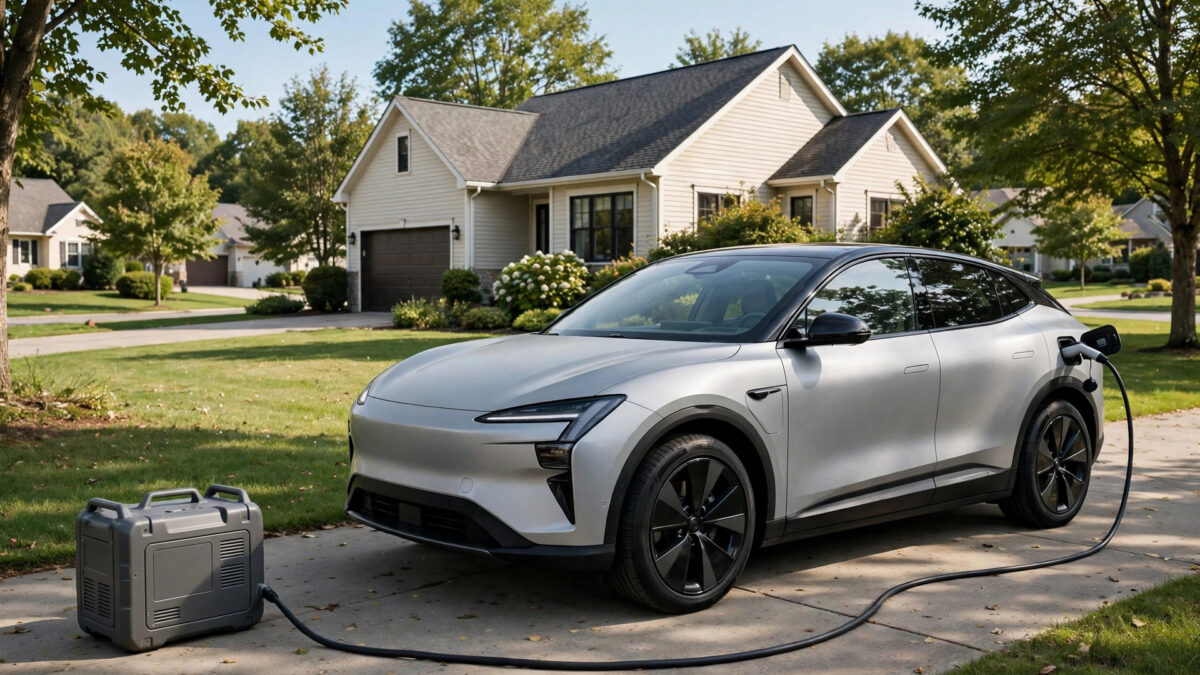
Can you charge an EV with a generator? Yes — but only with the right generator and the right expectations. A portable generator can charge an electric vehicle through its standard Level 1 (120V) or Level 2 (240V) charging equipment, as long as the generator produces clean, stable, properly grounded power. Many EVs and charging stations will simply refuse to charge — or fault out — on the “dirty” power of a cheap conventional generator. In this guide, we researched what actually works: generator sizing for Level 1 and Level 2 charging, why power quality (THD) matters so much, the grounding issue that trips up most first attempts, and the real cost per mile.
Charging an EV from a generator is inherently inefficient — you are burning gasoline to make electricity to charge a battery, losing energy at every step. It makes sense as emergency backup during an outage, for off-grid cabins, or at remote job sites. It does not make sense as a daily charging strategy. Keep that framing in mind and the rest of this guide falls into place.
Key Takeaways
- Yes, a generator can charge an EV via Level 1 (120V) or Level 2 (240V) charging — DC fast charging is not feasible with portable generators.
- Level 1 charging needs a 2,000W+ inverter generator; Level 2 needs roughly 9,000–10,000W+ with a 240V outlet.
- Use an inverter generator with low THD (under ~3%) — many EVs reject high-distortion power and will not charge.
- Most portable generators have a floating neutral; EV charging equipment checks for ground and may fault — a neutral-ground bonding plug usually fixes this.
- Expect roughly 2–5 miles of range per hour on Level 1 and 20–30 miles per hour on Level 2, at a high cost per mile.
- Never run a generator indoors or in a garage; keep it 20+ feet from the house with exhaust pointed away.
Can You Charge an EV With a Generator?
Yes, you can charge an EV with a generator, provided the generator is an inverter type producing clean sine-wave power with low total harmonic distortion, is sized above the charger’s draw, and is properly grounded for the EV’s safety checks. Level 1 charging (120V, ~1.44 kW) works on a 2,000-watt or larger inverter generator and adds roughly 2 to 5 miles of range per hour. Level 2 charging (240V, ~7.7 kW) needs a generator of about 9,000 to 10,000 watts or more and adds roughly 20 to 30 miles per hour. Conventional open-frame generators often fail because their high-THD output causes the EV or charging station to fault and refuse the charge.
Level 1 vs. Level 2 Charging on Generator Power
Your EV charges through its onboard charger, which converts AC power into DC for the battery. The generator just needs to feed that onboard charger clean AC at the right voltage.
| Charging level | Voltage / current | Power draw | Range per hour (approx.) | Generator needed |
|---|---|---|---|---|
| Level 1 (mobile connector) | 120V / 12A | ~1.44 kW | 2–5 miles | 2,000W+ inverter generator |
| Level 2 (home charger) | 240V / 32A | ~7.7 kW | 20–30 miles | 9,000–10,000W+ with 240V outlet |
| Level 2 (reduced, 16A) | 240V / 16A | ~3.8 kW | 10–15 miles | 5,000W+ with 240V outlet |
Level 1 is the practical emergency option for most people: the generator is small, quiet, and sips fuel. An overnight Level 1 session (10 hours) adds roughly 20 to 50 miles — enough for essential driving during an outage. Level 2 on generator power is possible but demands a large, expensive generator and burns a lot of fuel; it mainly makes sense for off-grid properties or fleet situations.
Why Power Quality Matters: THD and EV Chargers
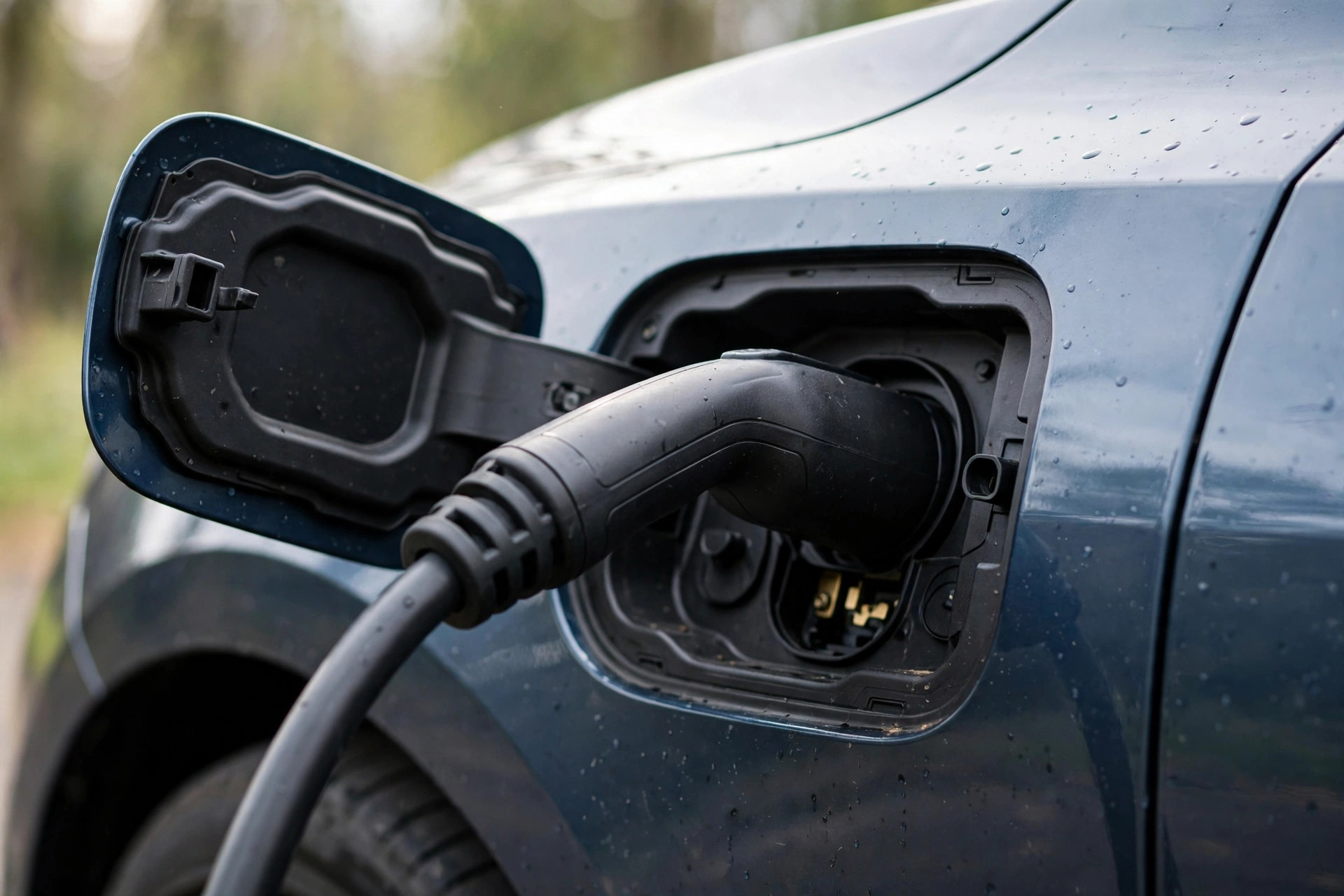
This is the technical detail that decides whether generator EV charging works at all. An EV’s onboard charger expects clean, utility-grade sine-wave power. Conventional portable generators produce power with high total harmonic distortion (THD) — often 15 to 25 percent or more — plus frequency that wanders under load. Many EVs detect this and refuse to charge as a protective measure; Tesla vehicles are particularly well known for rejecting poor-quality generator power.
Inverter generators solve this by electronically synthesizing a clean sine wave, typically holding THD under 3 percent — comparable to grid power. Owner feedback consistently shows that switching from a conventional generator to an inverter generator is what makes EV charging work. If you plan to charge an EV from a generator, an inverter generator is not optional — it is the requirement.
The Grounding Problem (and the Bonding Plug Fix)
The second most common failure point is grounding. EV charging equipment performs a ground check before it allows current to flow. Most portable generators ship with a “floating neutral” — the neutral is not bonded to the generator frame/ground — and many EVSEs interpret this as a missing ground and fault out.
The standard fix is a neutral-ground bonding plug: a simple plug (with neutral bonded to ground inside) inserted into one of the generator’s outlets, which gives the charging equipment the ground reference it expects. This is a widely used solution in the RV and off-grid communities.
What Size Generator Do You Need to Charge an EV?
Size the generator at least 25 to 30 percent above the charger’s continuous draw, because EV charging is a continuous load lasting hours — and continuous loads heat generators more than intermittent ones.
Level 1 (1.44 kW draw)
A 2,000-watt inverter generator is the minimum practical size, giving modest headroom. A 2,500 to 3,500-watt inverter generator is more comfortable, runs cooler, and can also power a fridge and lights while the car charges.
Level 2 at 32A (7.7 kW draw)
You need roughly 9,500 to 10,000+ watts of clean inverter power with a 240V outlet. This is large portable or small standby territory — expensive, heavy, and fuel-hungry. Honestly assess whether Level 1 overnight charging meets your emergency needs before going this route.
Level 2 dialed down to 16A (3.8 kW draw)
A useful middle ground: a 5,000 to 6,500-watt inverter generator with 240V output charges at about half speed. Many EVs let you set this current limit directly.
The Real Cost: Miles per Gallon and Dollars per Mile
Generator EV charging is expensive — honesty requires saying so plainly. A portable inverter generator converts roughly one gallon of gasoline into 3,000 to 4,000 watt-hours of electricity (about 3 to 4 kWh per gallon). An efficient EV travels about 3 to 4 miles per kWh. Do the math: one gallon of gas yields roughly 10 to 15 miles of range.
At $3.50 per gallon, that is roughly $0.25 to $0.35 per mile — several times the cost of grid charging and roughly on par with or worse than a gasoline car. Add generator wear, oil changes, and noise, and the economics are clear: generator charging is for emergencies and off-grid edge cases, not routine use. For regular off-grid EV charging, a properly sized solar array with battery storage is the far more sensible long-term answer.
Safety Checklist for Generator EV Charging
- Charge outdoors or in a well-ventilated area only; keep the charge cable away from the generator’s hot exhaust.
- Use the EV manufacturer’s mobile connector or a listed EVSE — no homemade adapters on the high-voltage side.
- Protect connections from rain; do not charge with damaged cables or wet connectors.
- Let the generator warm up and stabilize for a few minutes before plugging in the EV.
- Do not exceed 80 percent of the generator’s continuous rating for multi-hour charging sessions.
- Never backfeed house wiring to reach the EV — use the generator’s outlets directly or a proper transfer switch installed by a licensed electrician.
FAQs
Can you charge an EV with a generator?
Why won’t my EV charge from my generator?
What size generator do I need to charge a Tesla?
How many miles of range can a generator add per hour?
Is it bad for an EV battery to charge from a generator?
Can a portable power station charge an EV?
Conclusion
Charging an EV with a generator works when you respect three requirements: an inverter generator with clean low-THD power, correct sizing with headroom above the charger’s draw, and proper neutral-ground bonding so the EV’s safety checks pass. Level 1 overnight charging on a 2,000-watt inverter generator is the sweet spot for outage backup — affordable, quiet, and enough for essential miles. Just go in with eyes open about the cost per mile, and keep the generator safely outdoors.

Related Guides
How to Power Your House With an EV: V2L vs V2H Explained
How to power your house with an EV: V2L runs appliances via extension cords; V2H feeds your panel. Compare power, cost, runtime, and safety needs here.
