


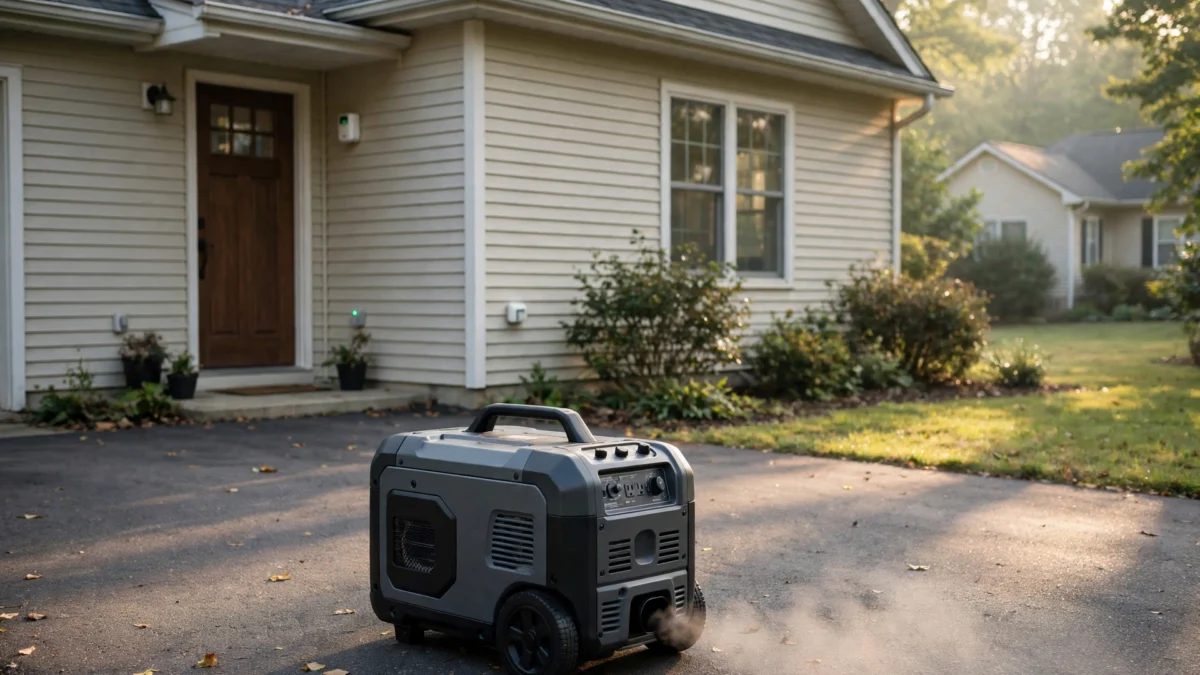
Carbon monoxide kills about 400 Americans every year, and portable generators are one of the leading causes. The exhaust is odorless and invisible, and in an enclosed or semi-enclosed space it can reach lethal levels in minutes. That’s the problem these generators solve: they watch their own exhaust, and when CO builds up to dangerous levels, they shut themselves off.
Every major brand now has its own version — Honda calls it CO-MINDER, Champion calls it CO Shield, Generac calls it COsense, Westinghouse and FIRMAN use CO sensors and CO Alert. Different names, same idea: an automatic shutoff that doesn’t depend on you noticing anything. In 2027, I’d argue it’s the single most important safety feature on a generator, and it’s worth choosing a model that has it.
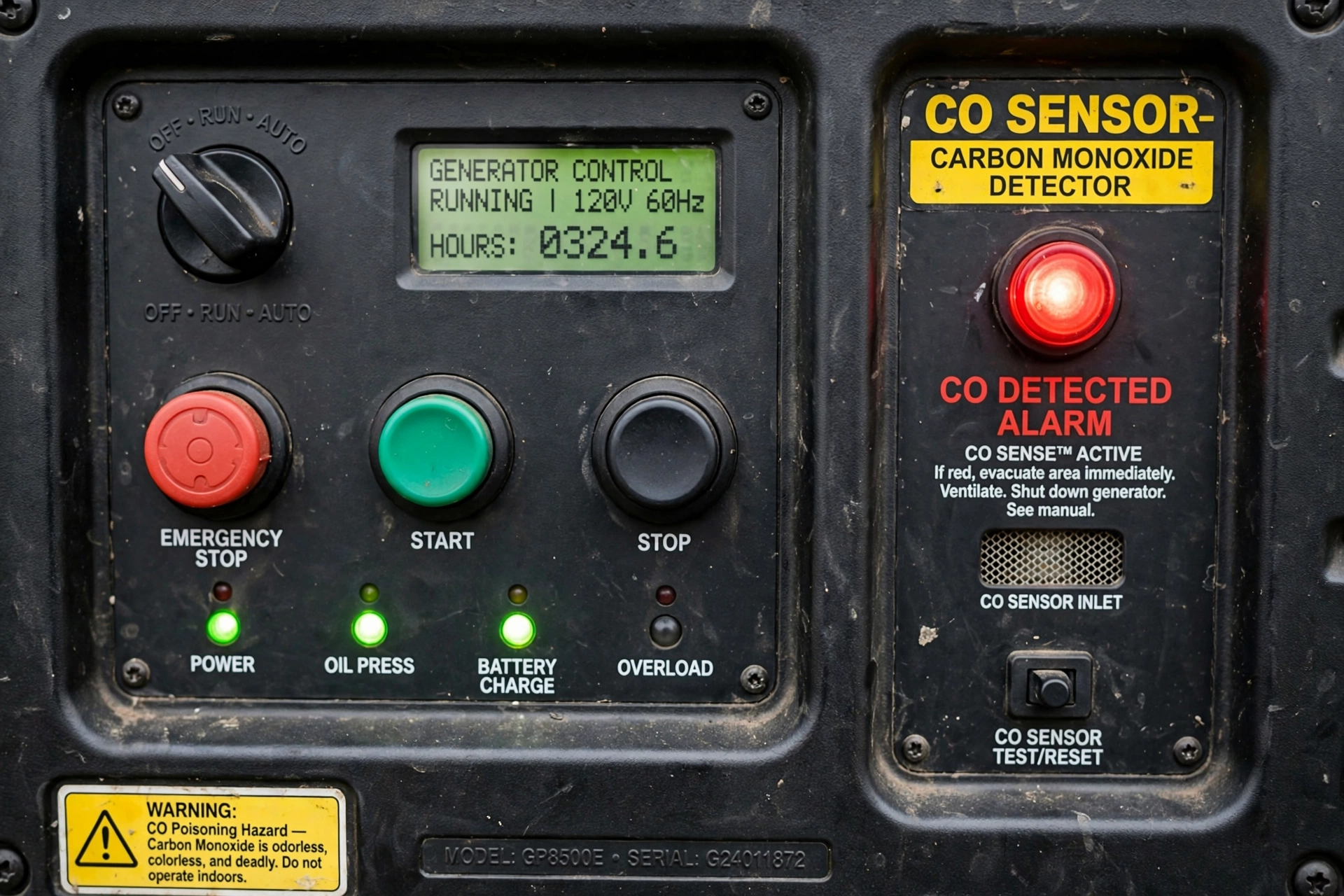
One thing to be clear about: a CO shutoff on the generator is not a substitute for CO alarms in your house. It’s a second layer, not the first. You need both. Our CO detector guide covers the alarms; this guide covers the generators.
Key takeaways
- CO shutoff systems (Honda CO-MINDER, Champion CO Shield, Generac COsense) automatically stop the engine when carbon monoxide reaches dangerous levels.
- A CO shutoff does not replace standalone CO alarms in your home — you need both.
- All the systems here are automatic; none require you to arm, calibrate, or maintain a sensor.
- CO shutoff is now standard on most new models from major brands — don’t pay a premium for it, just don’t buy a model without it.
Quick picks
- Best overall: Honda EU3200i — CO-MINDER, fuel injection, 3,200W of premium inverter power
- Best small inverter: Honda EU2200i — CO-MINDER in the legendary 2,200W package
- Best value dual fuel: Champion 4500W Dual Fuel Inverter — CO Shield, 61 dB, dual fuel
- Best open-frame value: Generac GP6500E — COsense, PowerRush, 8,125 starting watts
- Best remote-start inverter: Westinghouse iGen4500DFc — CO sensor, dual fuel, key fob start
Best overall
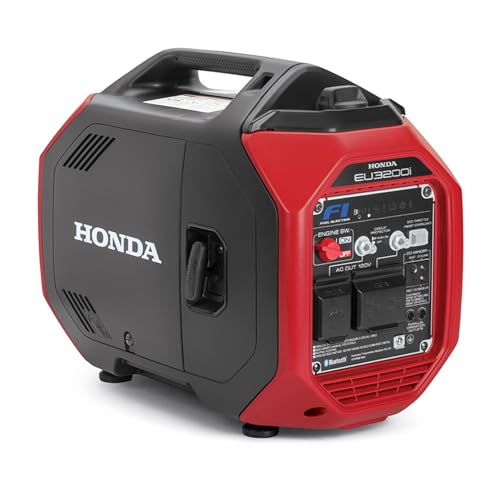
Honda EU3200i Inverter Generator with CO-MINDER
- Running Watts: 2,600
- Peak Watts: 3,200
- Noise Level: 54–58 dB(A)
- Weight: ~59 lbs
As an Amazon Associate, we earn from qualifying purchases.
The EU3200i is Honda’s replacement for the legendary EU3000is, and it’s better in almost every way that matters. 3,200 max watts and 2,600 rated watts from a fuel-injected GX130 engine — no carburetor to gum up, no choke to fiddle with. It weighs under 60 pounds, runs 54–58 dB, and has Bluetooth app monitoring. And the CO-MINDER system shuts it down automatically if CO reaches unsafe levels.
The fuel injection deserves emphasis for a safety article: carbureted generators that sit for months often need coaxing to start, which tempts owners into bad decisions — like moving the generator closer to the house “just to get it going” or running it in the garage with the door “mostly open.” A generator that starts on the first pull, every time, keeps you from improvising. The EU3200i starts on the first pull.
The objection is price — around $2,800–$3,000, roughly triple the budget alternatives. You’re paying for Honda’s engine, Honda’s service network, and the fuel injection. If the budget works, this is the safest and most refined portable generator you can buy.
Pros
- CO-MINDER auto-shutoff as standard
- Fuel injection — no carburetor problems, first-pull starts
- Light enough to carry with two handles
- Honda reliability and dealer network
Cons
- Premium price — 2–3x budget alternatives
- 2,600 running watts won’t run central AC
- 49-state (not CARB) version common
Best small inverter
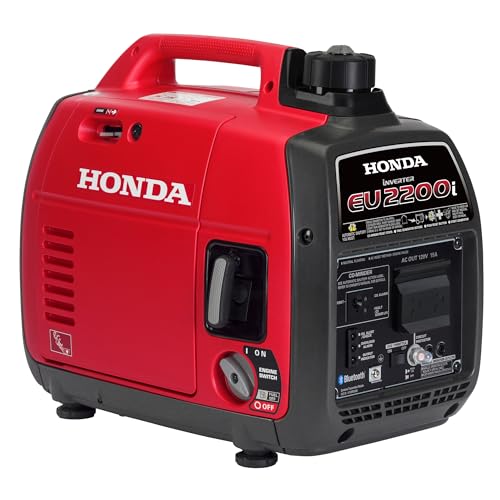
Honda EU2200i Inverter Generator with CO-MINDER
- Running Watts: 1,800
- Peak Watts: 2,200
- Runtime: Up to 8.1 hrs on 0.95 gal
- Noise Level: 48–57 dB(A)
As an Amazon Associate, we earn from qualifying purchases.
The EU2200i is the best-selling inverter generator in America for a reason, and the current version includes CO-MINDER as standard. 2,200 watts, 48–57 dB, under 48 pounds, up to 8.1 hours on less than a gallon of gas. It’s the generator that lives in the RV bay, the truck bed, and the garage corner — which is exactly why the CO shutoff matters here. Small generators get used in the most improvised situations.
Honda’s CO-MINDER on this unit works the same as on the bigger models: it monitors CO levels around the generator and shuts the engine down before they reach dangerous concentrations. There’s also a wireless stop and service reminders via the smartphone app — nice, but the CO system is the headline.
At around $1,200–$1,400 it’s still a premium over the $500–$700 inverter competition. But the EU2200i holds its value like nothing else in the category, parts are available everywhere, and any small-engine shop on earth can service it. For a generator you might own for 15 years, the math works.
Pros
- CO-MINDER included — no premium trim needed
- Legendary reliability and resale value
- Light, quiet, sips fuel
- Serviced everywhere
Cons
- Costs 2x the budget inverter competition
- 1,800 running watts limits what it can power
- No fuel gauge (a long-standing Honda quirk)
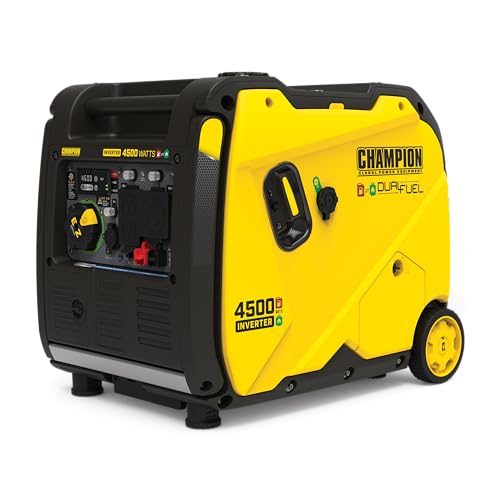
Best value dual fuel
Champion 4500-Watt Dual Fuel Inverter Generator with CO Shield
- Running Watts: 3,500 (gas) / 3,150 (propane)
- Peak Watts: 4,500
- Runtime: 14 hrs gas / 21 hrs propane (25% load)
- Noise Level: 61 dB(A)
As an Amazon Associate, we earn from qualifying purchases.
Champion’s CO Shield is the most widely deployed CO shutoff system in the industry — it’s on nearly their entire lineup now — and this 4500-watt dual-fuel inverter is the sweet spot of the range. 4,500 starting watts and 3,500 running watts on gasoline (4,500/3,150 on propane), 61 dB, up to 14 hours on gas or 21 hours on a 20-pound propane tank.
CO Shield monitors CO accumulation and shuts the engine off automatically when levels get dangerous. It’s a passive system — no buttons, no calibration, nothing to remember. The generator also has Champion’s EZ Start dial, cold start technology, and an economy mode, which all contribute to the same goal: a generator that starts easily and runs predictably, so you’re never tempted to run it somewhere stupid.
The value proposition is strong: dual fuel, CO shutoff, and inverter-clean power (under 3% THD) for roughly half the price of the Honda EU3200i, with more running watts. The trade-off is refinement — it’s louder than the Honda and heavier at 92 pounds — but for RV and home backup duty, it’s the rational buy.
Pros
- CO Shield standard — no upsell
- Dual fuel with excellent propane runtime
- More watts per dollar than Honda
- Clean inverter power for electronics
Cons
- Louder and heavier than the Honda equivalents
- 92 lbs is a two-person lift for many
- Parallel kit sold separately
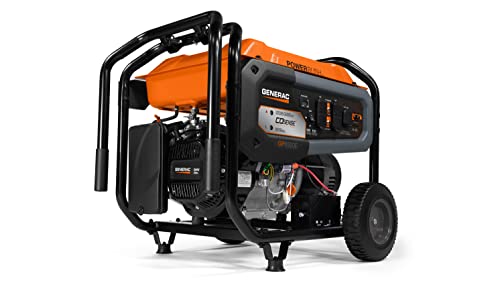
Best open-frame value
Generac GP6500E Portable Generator with COsense
- Running Watts: 6,500
- Peak Watts: 8,125
- Runtime: Up to 10.5 hrs at 50% load
- Weight: 182 lbs
As an Amazon Associate, we earn from qualifying purchases.
Open-frame generators are the workhorses of home backup, and they’re also the ones most likely to end up too close to the house — they need to be near the transfer switch inlet, after all. The GP6500E’s COsense system shuts the engine down if CO builds up, which is exactly the protection you want on a generator parked 20 feet from the back door.
Beyond the safety tech, this is a lot of generator for the money: 8,125 starting watts and 6,500 running watts, Generac’s PowerRush technology for extra starting capacity (useful for well pumps and AC compressors), electric start, a 6.9-gallon tank for up to 10.5 hours at half load, and an hour meter for maintenance tracking. At 182 pounds with never-flat wheels and a fold-down handle, it’s manageable.
The GP6500E is the pick for the buyer who wants a traditional open-frame home backup generator — the kind that runs the well pump, the fridge, and the furnace — with modern CO protection built in. No dual fuel, no inverter, no apologies: just power and safety.
Pros
- COsense auto-shutoff standard
- PowerRush for hard-starting motors
- Long 10.5-hour runtime
- Electric start and hour meter
Cons
- Gasoline only — no dual fuel
- Open-frame noise (no dB rating published)
- 182 lbs needs the wheel kit (included) and care
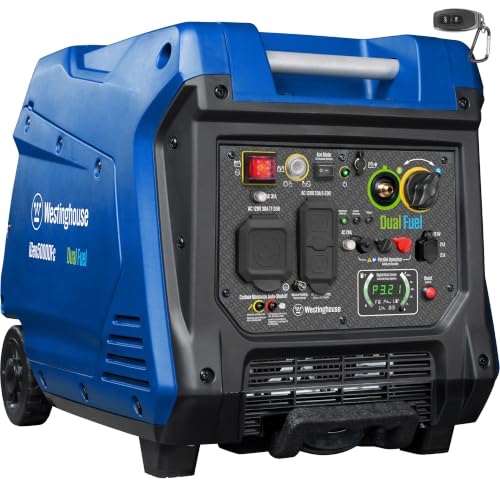
Best remote-start inverter
Westinghouse iGen4500DFc Dual Fuel Inverter with CO Sensor
- Running Watts: 3,700 (gas) / 3,330 (propane)
- Peak Watts: 4,500
- Runtime: Up to 18 hrs (3.4-gal tank)
- Noise Level: 52 dB(A)
As an Amazon Associate, we earn from qualifying purchases.
The iGen4500DFc is the CO-sensor version of Westinghouse’s popular 4500-watt dual-fuel inverter — the “c” in the name is the CO sensor. 4,500 peak / 3,700 running watts on gasoline (4,050/3,330 on propane), 52 dB, up to 18 hours of runtime, remote start from a key fob, and an LED data center showing fuel, output, and remaining runtime.
The remote start is a genuine safety feature in disguise. When it’s pouring rain or freezing outside, the temptation is to start the generator in the garage “just for a minute” and wheel it out after. A key fob means you never have to make that bargain — start it from the porch, where it already sits 20 feet from the house.
At 105 pounds it’s not light, but the telescoping handle and wheels handle the moving. For RV owners and home backup users who want dual fuel, quiet operation, remote start, and CO protection in one package, this is the most complete option under $1,100.
Pros
- CO sensor with automatic shutdown
- Key fob remote start — start it from shelter
- Dual fuel, 52 dB, 18-hour runtime
- Strong feature set for the price
Cons
- 106 lbs — wheels help, but it’s still heavy
- Oil changes are fiddly on this model
- Not CARB compliant (check your state)
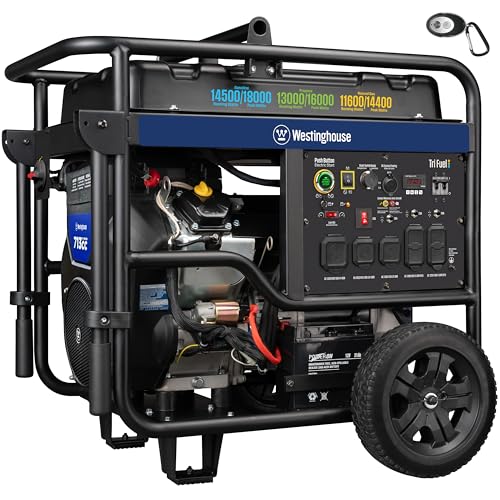
Best whole-home with CO protection
Westinghouse WGen14500TFc Tri-Fuel with CO Sensor
- Running Watts: 14,500 (gas)
- Peak Watts: 18,000
- Weight: 348 lbs
- Fuel Type: Tri-fuel: gas / propane / natural gas
As an Amazon Associate, we earn from qualifying purchases.
Whole-home generators sit closest to the house by necessity — the inlet cable only reaches so far — which makes CO protection most important at exactly the size where the consequences are worst. The WGen14500TFc pairs 18,000 peak / 14,500 running watts with a CO sensor and automatic shutdown.
This is the tri-fuel flagship: gasoline, propane, or natural gas, 713cc V-twin, 50-amp outlet, remote start, up to 16 hours at quarter load on the 10.5-gallon tank. It’s the generator for the buyer whose outage plan is “the whole house, for days, on natural gas.”
At 348 pounds and the top of this roundup’s price range, it’s a serious purchase. But if you’re spending this much on whole-home portable power, the CO sensor shouldn’t be optional — and here it isn’t. See our 50-amp generator roundup for how it compares on power and runtime.
Pros
- CO sensor on a whole-home-size generator
- Tri-fuel including natural gas
- 18,000 peak watts with 50A outlet
- Remote start
Cons
- 348 lbs and premium priced
- Overkill unless you need whole-home power
Best budget inverter
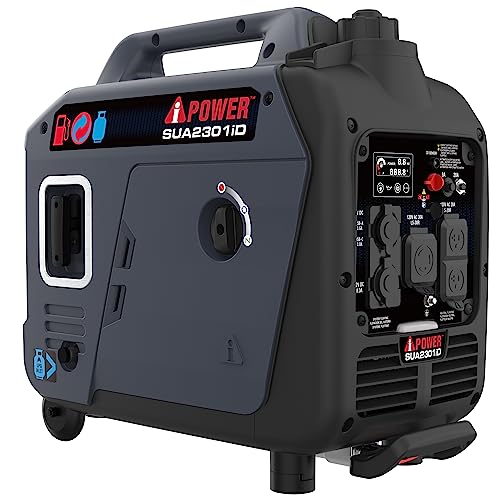
A-iPower SUA2301iD Dual Fuel Inverter with CO Sensor
- Running Watts: 1,800 (gas) / 1,600 (propane)
- Peak Watts: 2,300
- Runtime: 9 hrs at 25% load
- Noise Level: 61 dB
As an Amazon Associate, we earn from qualifying purchases.
Proof that CO protection doesn’t require a premium badge: the A-iPower SUA2301iD is a dual-fuel inverter with a CO sensor and auto-shutdown, typically selling for well under $600. 2,300 starting / 1,800 running watts on gas (2,000/1,600 on propane), 61 dB, clean 3% THD power, telescoping handle, and parallel capability.
The spec sheet reads like generators costing twice as much: CO sensor indicator light, data center display, USB ports, low-idle technology, 9 hours at quarter load on 0.9 gallons. A-iPower backs it with a 3-year warranty, and it’s EPA, CARB, and PGMA certified.
The honest caveat is brand depth — A-iPower doesn’t have Honda’s dealer network or Champion’s support infrastructure. But the CO sensor is real, the certifications are real, and for tailgating, camping, and light backup duty, this is the cheapest safe option in the inverter class.
Pros
- CO sensor at a budget price
- Dual fuel with automatic fuel switching
- CARB and PGMA certified
- 3-year warranty
Cons
- Smaller support network than major brands
- 1,800 running watts is modest
- 61 dB is audible at a campsite
CO shutoff systems compared
| Generator | Running W | CO system | Noise | Best for |
|---|---|---|---|---|
| Honda EU3200i | 2,600 | CO-MINDER | 54–58 dB | Premium all-around |
| Honda EU2200i | 1,800 | CO-MINDER | 48–57 dB | Portability |
| Champion 4500 DF | 3,500 | CO Shield | 61 dB | Value dual fuel |
| Generac GP6500E | 6,500 | COsense | — | Open-frame backup |
| Westinghouse iGen4500DFc | 3,700 | CO sensor | 52 dB | Remote start |
| Westinghouse WGen14500TFc | 14,500 | CO sensor | — | Whole home |
| A-iPower SUA2301iD | 1,800 | CO sensor | 61 dB | Budget |
How CO shutoff works (and what it doesn’t do)
The technology, plainly explained
Each system uses a sensor near the engine that measures carbon monoxide concentration in the air around the generator. When CO rises to a dangerous threshold — well before it would incapacitate a person — the system cuts the ignition and stops the engine. Honda’s CO-MINDER, Champion’s CO Shield, and Generac’s COsense all work this way; the differences are in sensor placement, thresholds, and how they indicate a shutdown (usually a flashing LED that tells you why it stopped).
What it doesn’t do
It doesn’t make it safe to run a generator indoors, in a garage, or under a deck. The shutoff is a last resort, not a permission slip. CO can still reach dangerous levels inside your home from a generator running too close to a window — the sensor is on the generator, not in your bedroom. That’s why standalone CO alarms remain mandatory.
Placement still matters most
The rule hasn’t changed: 20+ feet from the house, exhaust pointed away from doors, windows, and vents. A CO shutoff doesn’t relax the distance rule — it covers the cases where the wind shifts, the exhaust bounces off a wall, or someone moves the generator “just a little closer” during a storm. Think of it as the airbag, not the seatbelt. You still need the seatbelt.
Tested response times
Independent testing (including the widely cited 2026 round of CO shutoff response tests) has shown meaningful differences in how quickly different systems react — some shut down in under a minute at high CO concentrations, others take several. The practical takeaway: buy a current model from a major brand, keep the sensor area clean and unobstructed, and never disable or bypass the system. A generator that “keeps shutting off for no reason” is telling you something about its placement — listen to it.
Frequently asked questions

Do I still need a CO detector if my generator has CO shutoff?
Can I run a generator with CO shutoff in my garage?
What’s the difference between CO-MINDER, CO Shield, and COsense?
Why does my generator keep shutting off?
Do CO sensors on generators need maintenance?
Our verdict
In 2027 there’s no reason to buy a generator without CO shutoff — it’s standard on every major brand’s current lineup, often at no price premium. Pick by your power needs: Honda EU3200i for the best all-around, Champion 4500 dual-fuel for value, Generac GP6500E for open-frame home backup, Westinghouse iGen4500DFc for remote start. Then put CO alarms in your house, keep the generator 20 feet out, and you’ll have the two layers that actually save lives.
How we researched this: We compared manufacturer CO-system documentation, independent shutoff response testing, and owner reports, and verified current Amazon availability and ASINs in October 2026. Safety claims are manufacturer-stated; placement guidance follows CPSC recommendations. We did not receive free products from any manufacturer.

Related Guides
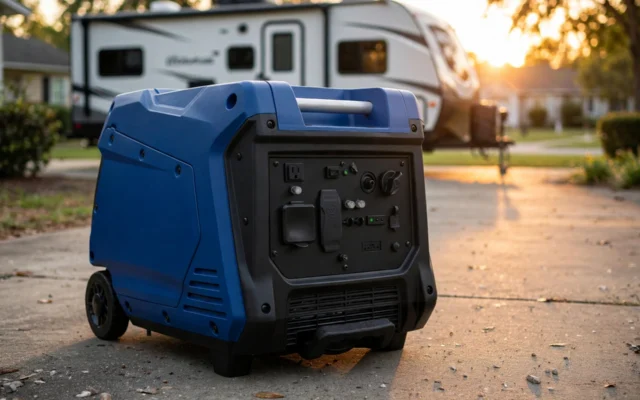
Westinghouse iGen4500DF Review: The Dual-Fuel Inverter to Beat in 2027
Westinghouse iGen4500DF review: 4,500W dual-fuel inverter, 52 dBA, remote start, RV-ready. We test the specs, noise, and value against Honda in 2027.

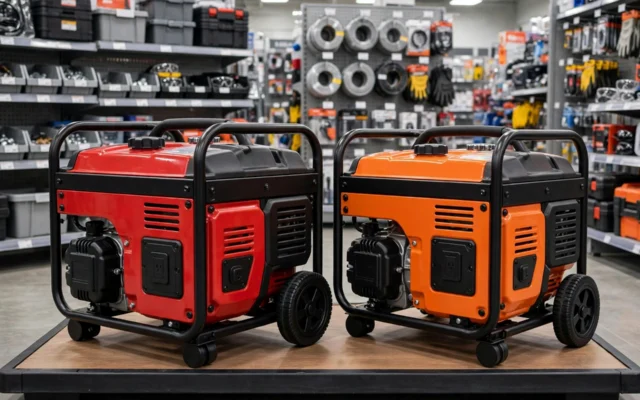
Champion vs Generac Generators: Which Brand Is Better in 2027?
Champion vs Generac: Champion wins portable value, Generac wins standby. We compare lineups, reliability, safety tech, and support to pick the right brand.
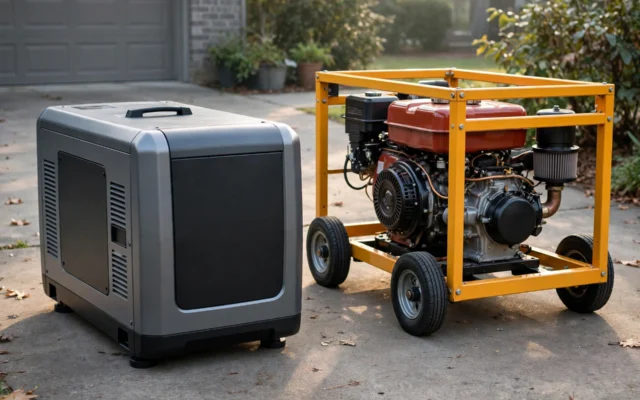
Inverter vs Conventional Generators: Which Should You Buy in 2027?
Inverter vs conventional generators: inverters win on noise, fuel use and clean power; conventional wins on watts per dollar. Here's how to choose in 2027.