


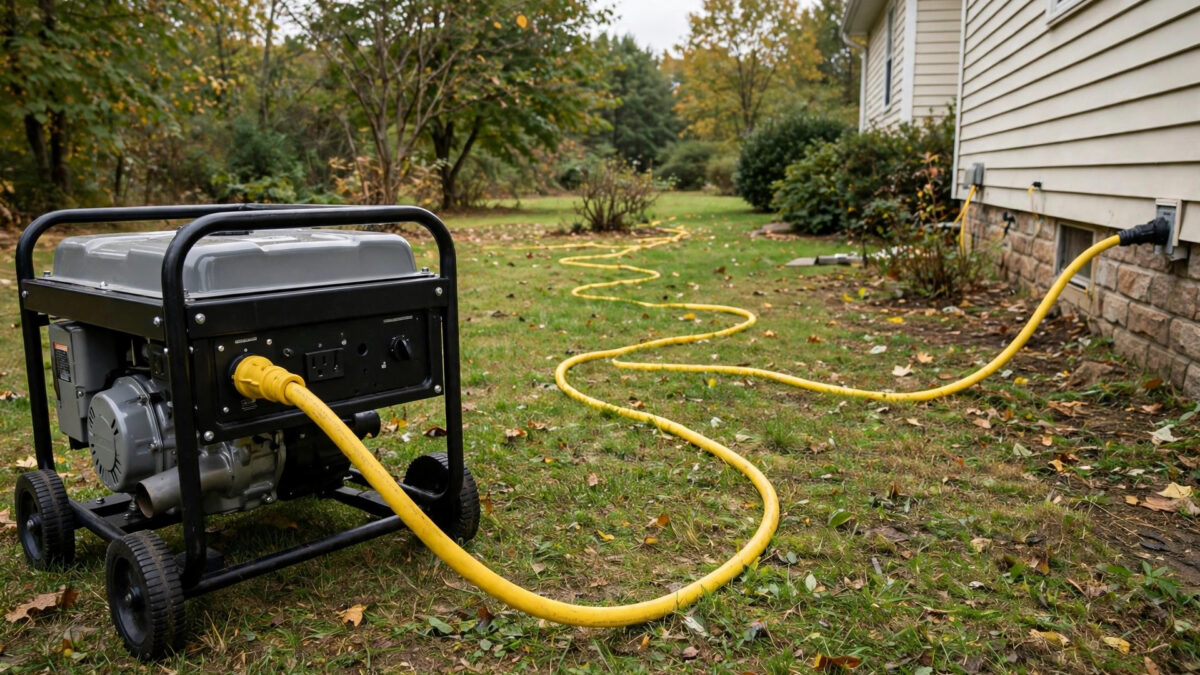
It depends on the amps your load draws and how far the cord runs: for most generator jobs, a 12-gauge cord works up to 50 feet at 20 amps, but stretch that same load to 100 feet and you need 10-gauge. Use 16-gauge only for light loads under 13 amps at short distances, and step up to 10-gauge for anything heavy, long, or continuous.
Key takeaways
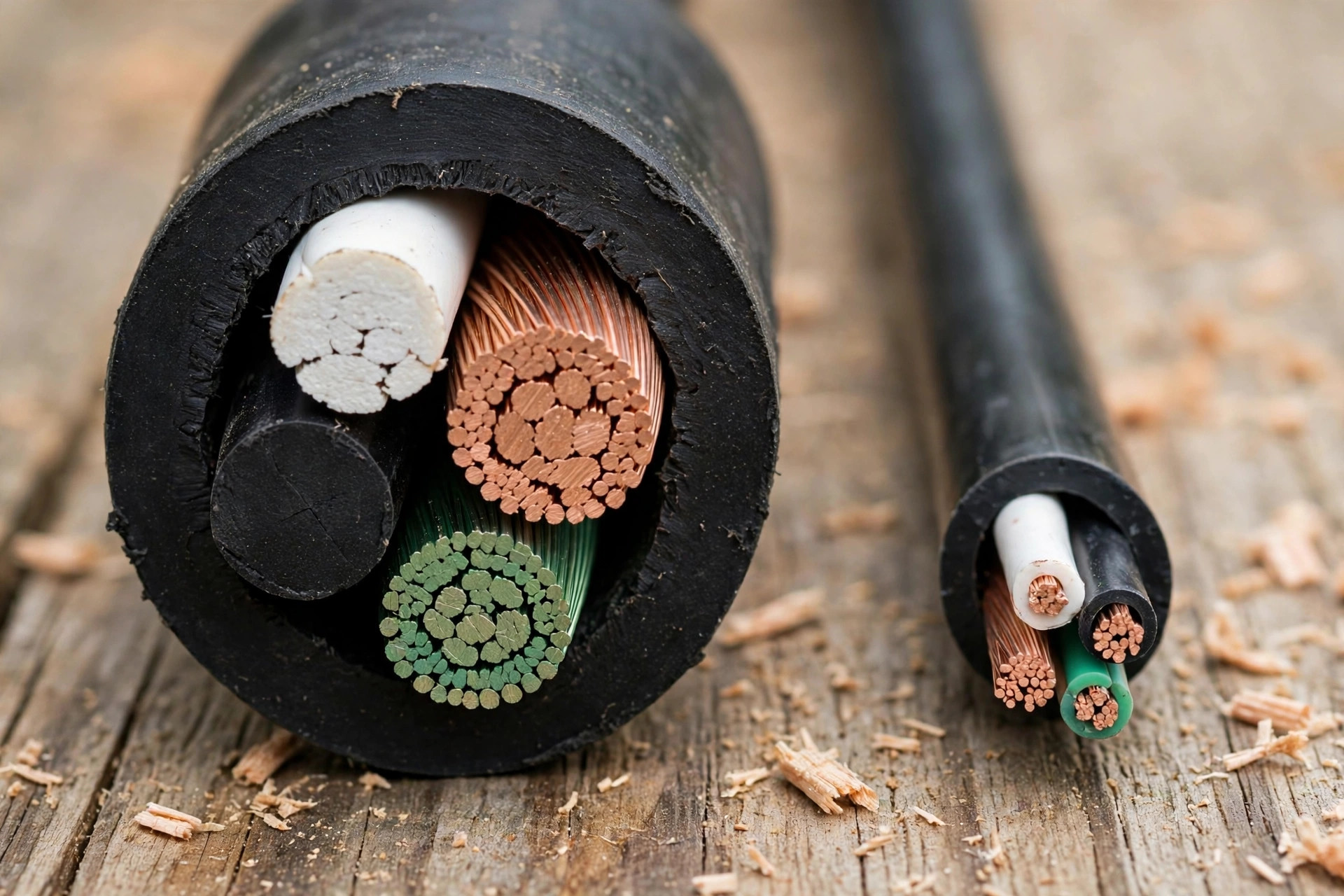
- Extension cord gauge (AWG) must match both the load’s amps and the cord’s length — length is the part most people forget.
- Quick rule: 12 AWG handles up to 20A at 50 ft; 10 AWG handles 20A at 100 ft. Beyond 100 ft at high amps, reconsider the layout.
- Lower AWG number = thicker wire = more current capacity. 10-gauge is thicker than 12-gauge, which is thicker than 14-gauge.
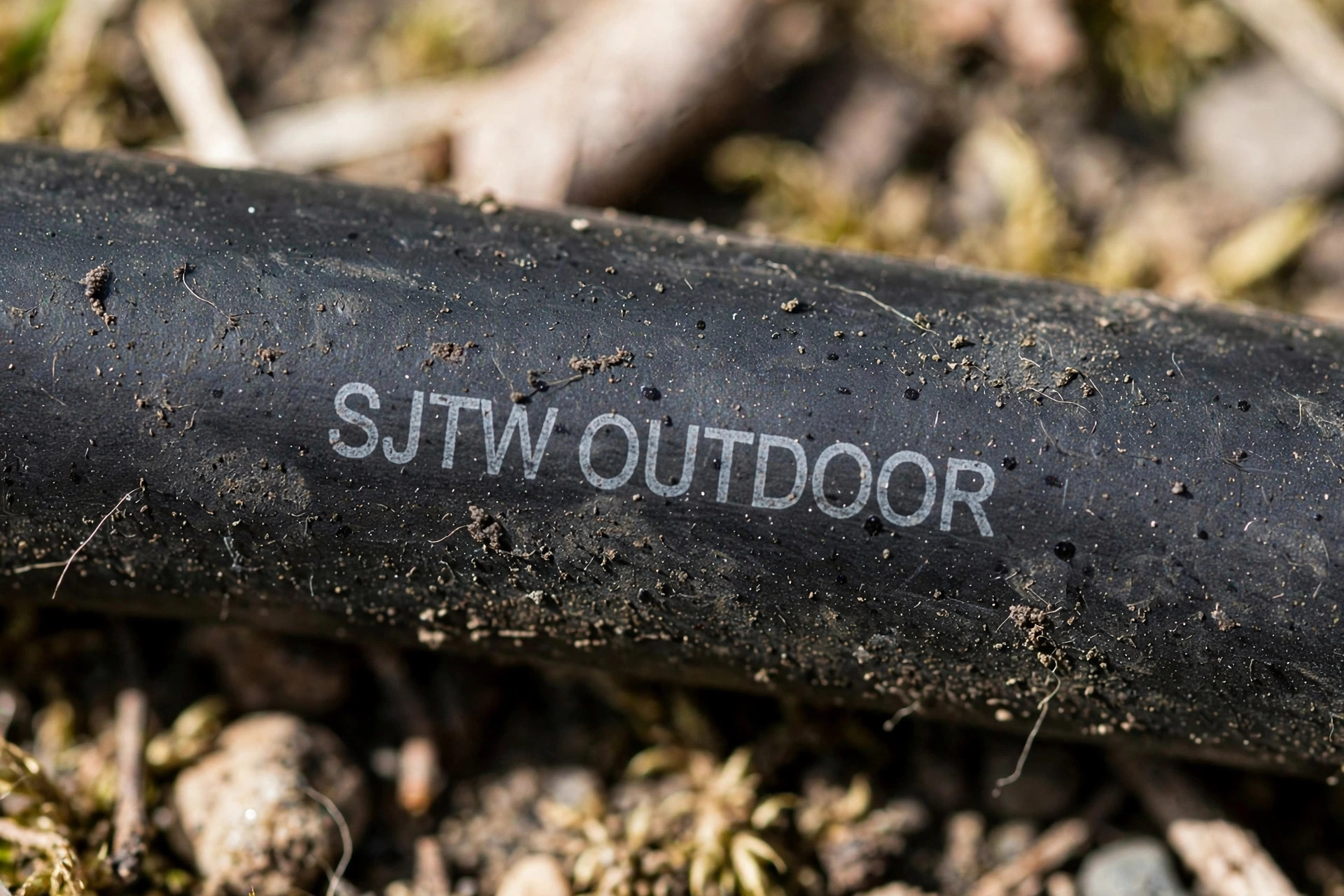
- Always use outdoor-rated cords (look for SJTW on the jacket) for generator work, and never daisy-chain cords together.
- For motor loads, use the equipment’s nameplate amps — not watts ÷ volts — because motors draw more than the simple math suggests.
- Uncoil cords fully before use; a coiled cord under load traps heat.
How extension cord gauge works
AWG stands for American Wire Gauge, and it runs backward from what you’d expect: the lower the number, the thicker the wire and the more current it can carry. A 10-gauge cord is substantially thicker than a 14-gauge cord, and it costs more — but it also stays cooler and delivers more voltage to the far end.
Why does thickness matter? Wire has resistance. Push current through resistance and you get two things: heat in the wire, and voltage drop — meaning the tool at the far end gets less than 120 volts. A little voltage drop makes motors run hot and weak; a lot of it damages them and can melt a cord. Thicker wire has less resistance, so it stays cool and delivers full voltage.
The gauge-by-length chart
This is the table I keep taped to my generator. It’s based on selection guidance from the Electrical Safety Foundation International (ESFI) and standard voltage-drop practice:
| Gauge (AWG) | 25–50 ft max load | 100 ft max load | Typical use |
|---|---|---|---|
| 16 AWG | Up to 13A (~1,400W) | Up to 10A (~1,100W) | Phone chargers, lamps, small fans |
| 14 AWG | Up to 15A (~1,650W) | Up to 13A (~1,430W) | Drills, small power tools, fridge |
| 12 AWG | Up to 20A (~2,200W) | Up to 15A (~1,650W) | Generators to house, circular saws |
| 10 AWG | Up to 20A+ (~2,400W) | Up to 20A (~2,200W) | Long generator runs, RVs, big tools |
Read the chart right to left in real life: first decide your load, then your distance, then read the gauge. A fridge drawing 7 amps at 50 feet? 14-gauge is fine. That same fridge 100 feet away? Step to 12-gauge. Running a 15-amp table saw 75 feet out? 10-gauge, no debate.
Match the cord to the actual load
Step 1: Find the amps
For resistive loads (space heaters, incandescent work lights), amps = watts ÷ volts. A 1,500W heater at 120V draws 12.5 amps.
For motor loads (fridges, freezers, power tools, pumps), use the nameplate amps printed on the motor or in the manual. Don’t use watts ÷ volts for motors — motors have power factors and startup surges that the simple division misses, and you’ll undersize the cord. If the nameplate only lists watts, add a safety margin and round up a gauge.
Step 2: Apply the 80% rule for continuous loads
If the load runs for 3+ hours continuously (a fridge during an outage, a jobsite heater), treat the cord’s rating at 80%. A 15-amp circuit means a 12-amp continuous load max. This is the same logic behind NEC continuous-load rules, and it keeps cords cool over long runs.
Step 3: Pick the gauge for your distance
Find your amps in the left column of the table logic above, find your length, and buy the gauge where they intersect. When in doubt, go one gauge thicker. The price difference between 12 and 10 gauge is small; the safety difference isn’t.
Generator-specific situations
Feeding a transfer switch or inlet box
If your generator has a 30-amp twist-lock outlet (L14-30) feeding an inlet box, you need a proper generator power cord rated for 30 amps — typically 10-gauge with L14-30 ends — not a standard extension cord. These are sold as generator cords and they’re built for the job: correct connectors, correct gauge, outdoor jacket.
RVs
A 30-amp RV feed needs a 10-gauge RV cord set. Don’t adapt a 15-amp household cord to a 30-amp RV inlet — the cord becomes the fuse, and fuses made of copper-jacketed wire start fires.
Jobsites
OSHA-minded crews use 12-gauge minimum for tools, 10-gauge for long runs. On a rough jobsite, the cord also needs to survive being stepped on, dragged, and rained on — which brings us to jacket ratings.
Outdoor rating and jacket types
Gauge is only half the story. A generator cord lives outside, so the jacket matters:
- SJTW on the jacket means it’s rated for outdoor use — resistant to moisture, sunlight, and abrasion. This is the minimum you want for generator work.
- Bright colors (yellow, orange) aren’t just fashion — they’re visibility. You don’t want anyone tripping over or driving over a dark green cord at night.
- Lighted ends (a small LED in the plug) tell you at a glance the cord is live. Genuinely useful during outages.
- Check the temperature rating if you run in extreme cold — cheap cords stiffen and crack below freezing.
Rules that prevent fires
- Never daisy-chain cords. Two 50-foot 14-gauge cords do not equal one 100-foot cord — every connection adds resistance and heat, and the effective gauge drops. Buy the right length once.
- Uncoil fully. A cord left coiled on a reel under load acts like a heating coil. Lay it out straight.
- Don’t run cords through doors or windows that pinch them. Pinched insulation + current = heat damage you can’t see. If you must pass a cord into the house, do it through a window with a foam seal, or better, install an inlet box.
- Keep cords dry and off hot surfaces. Puddles, exhaust manifolds, and sharp edges all kill cords.
- Match the plug to the outlet. Don’t file down or adapt a 20-amp plug to fit a 15-amp outlet to “make it work.” Adapters that defeat the amperage rating are fire starters.
- Inspect before each use. Cracked jackets, exposed copper, loose prongs, or melted spots mean the cord is done. Cut it up so nobody fishes it out of the trash.
What to buy
For generator duty, my recommendation is simple: a 50-foot, 10-gauge, outdoor-rated (SJTW) cord as your primary, plus a 25-foot 12-gauge for short hops. That pair covers everything from fridges to power tools at any sane distance. Expect to pay more than the bargain-bin 16-gauge cords — the copper alone justifies it, and these cords last a decade.
If you’re feeding an inlet box or transfer switch, add a dedicated 30-amp generator cord (10-gauge, L14-30 ends) in the length you need — 25 feet is standard. And if you’re still figuring out what size generator the whole setup needs, run your numbers through our generator size calculator first; the cord decision gets much easier once you know your actual amps.
What gauge extension cord do I need for a generator?
Can I use a 16-gauge extension cord with a generator?
Does extension cord length affect gauge choice?
Can I connect two extension cords together for my generator?
What does SJTW mean on an extension cord?
Why is my extension cord getting warm?
Cord gauge is one of those boring details that prevents exciting problems. Buy thicker than you think you need, keep it to a single run, uncoil it, and check it stays cool. Do that and the cord becomes the most reliable part of your whole outage setup. Pair the right cord with the right generator — our generator calculators cover sizing, fuel, and runtime planning.

Related Guides
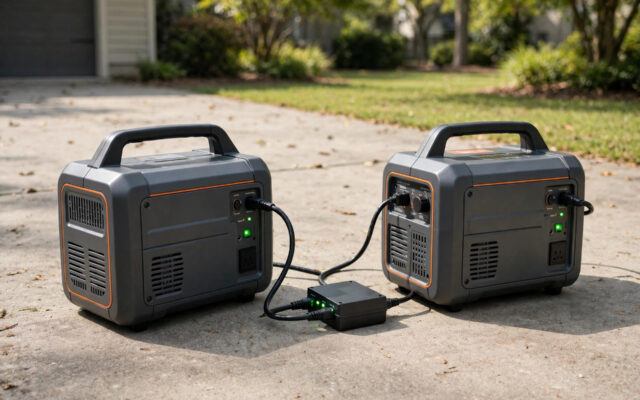
Paralleling Two Generators vs Buying a Bigger One: Which Is Better? (2027)
Paralleling two small inverter generators vs buying one bigger unit: compare cost, noise, fuel, redundancy, and the 240V catch to pick the right setup.

Generator Carbon Monoxide Safety: The Complete 2027 Guide
Carbon monoxide from generators kills ~77 Americans a year. This complete guide covers symptoms, the CDC 20-foot rule, detector placement, and a pre-outage safety checklist.
Can You Run a Generator in a Garage? (Even With the Door Open?)
No — not even with the garage door wide open. Carbon monoxide builds fast in garages and drifts into the house. Here's the CDC's rule and what to do instead.