


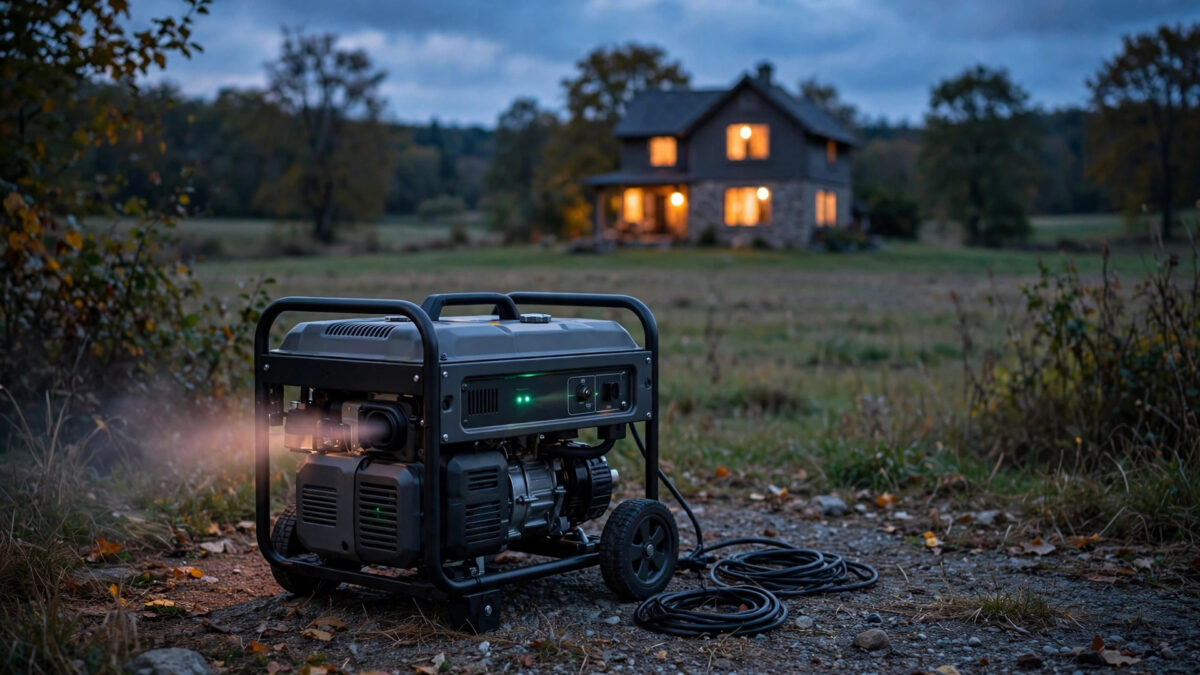
Carbon monoxide (CO) is the number-one killer associated with portable generators. It’s odorless, colorless, and it sends around 15,000 Americans to emergency rooms every year — with generator-related CO incidents alone killing 770 people between 2011 and 2021, according to the CPSC. The good news: nearly every one of those deaths was preventable with correct placement, working detectors, and a basic understanding of the symptoms.
Key takeaways
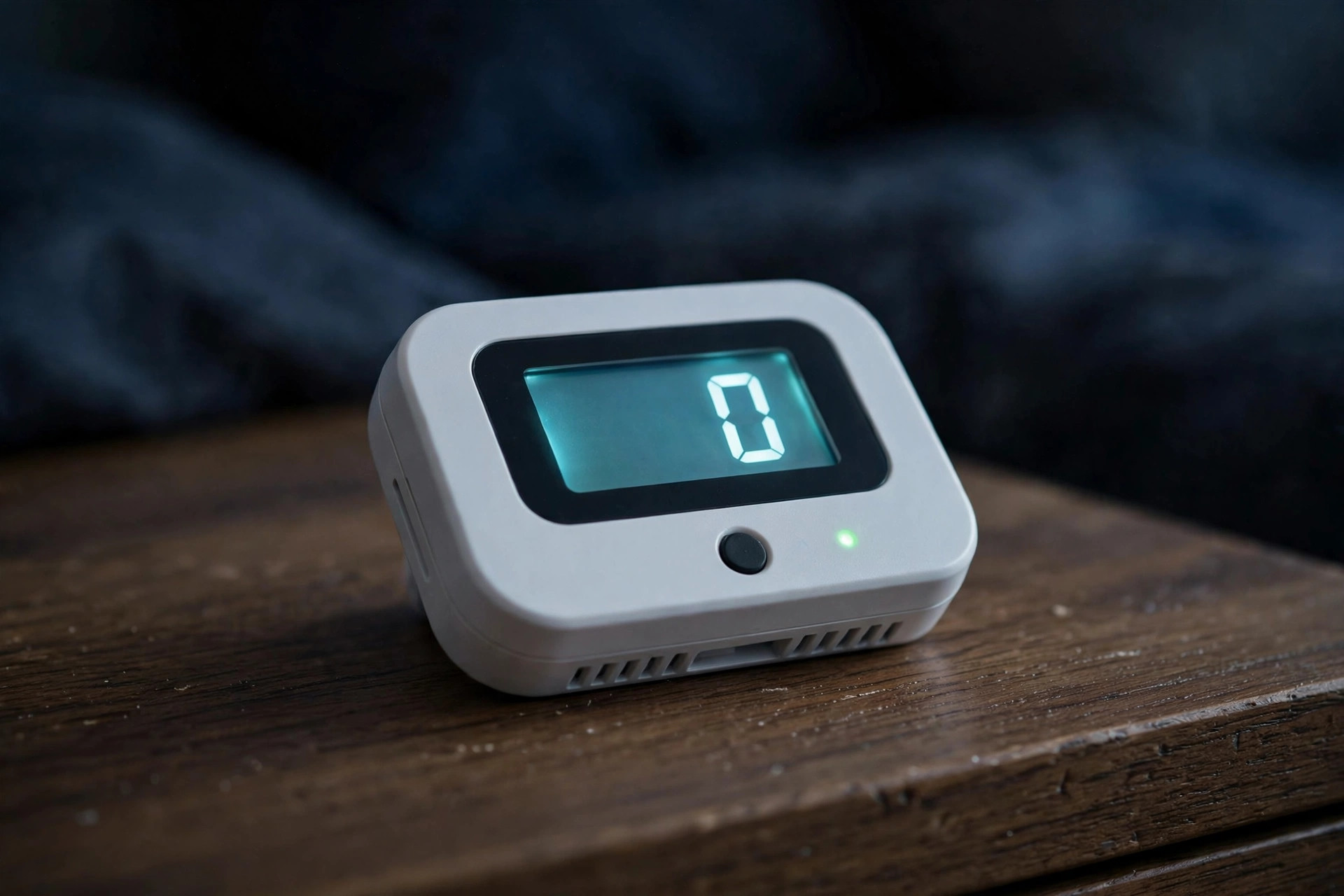
- CO is invisible and odorless — you cannot detect it without an alarm.
- Never run a generator indoors, in a garage, in a carport, or near doors, windows, or vents.
- The CDC’s rule: generator at least 20 feet from the house, exhaust pointed away.
- Early CO symptoms mimic the flu — headache, dizziness, nausea, confusion. Severe exposure kills in minutes.
- Every home needs CO detectors on each level and outside sleeping areas, with battery backup.
- Newer generators include CO-sensing auto-shutoff (ANSI/PGMA G300 or UL 2201) — a backup, not a substitute for proper placement.
Why generators are such CO machines
A portable generator is a small gasoline (or propane, or diesel) engine, and all combustion engines produce carbon monoxide in their exhaust. A generator engine is also relatively crude — no catalytic converter, no sophisticated emissions controls like your car has. That means the exhaust coming out of a portable generator carries far more CO per minute than modern automotive exhaust.
Under load, one portable generator can push CO concentrations in an enclosed space to lethal levels frighteningly fast. That’s why nearly every fatality report has the same shape: generator running in a garage, a basement, near a cracked window, or under a carport — and a family asleep upstairs.
I’ve been through multi-day outages where neighbors ran generators around the clock. The ones who stayed safe all did the same boring things: generator far from the house, exhaust aimed away, CO detector beeping reassurance inside. Nothing fancy. It works.
Symptoms: what CO poisoning feels like
The CDC lists the progression like this:
- Early: headache, dizziness, weakness, upset stomach, vomiting, chest pain.
- Severe: confusion, blurred vision, loss of consciousness.
Two things make this treacherous. First, early symptoms feel like the flu or like exhaustion from dealing with a storm — people lie down “to rest” instead of getting out. Second, CO impairs judgment and coordination before it kills, so victims often can’t recognize the danger or act on it. Multiple people in one house can be affected simultaneously, each too impaired to help the others.
Chronic low-level exposure matters too. Even non-lethal doses can cause lasting neurological effects. This is not a gas you want to “mostly avoid.”
Placement: the 20-foot rule and everything around it
The CDC’s guidance is short and absolute:
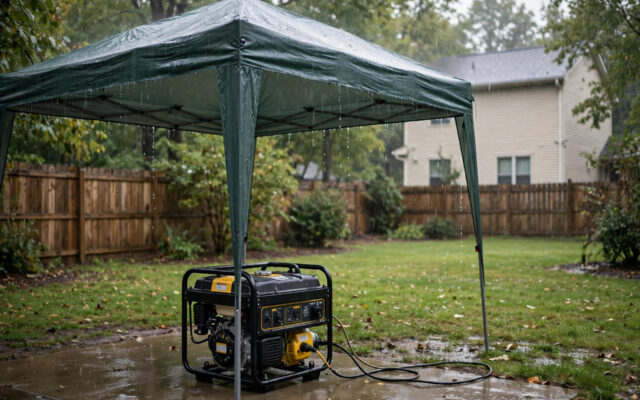
- Run the generator outdoors only, in a dry area.
- Keep it at least 20 feet from the house — measured from doors, windows, and vents, not the wall.
- Point the exhaust away from the house and any occupied space.
- Give it 3–4 feet of clearance on all sides for airflow and cooling.
A few placement traps people fall into:
- “It’s 20 feet from the wall.” Measure from the nearest window, door, or vent — that’s what counts. A generator 20 feet from a blank wall but 6 feet from a basement window fails the test.
- Wind direction. Prevailing wind can carry exhaust toward the house even from a compliant spot. On still nights exhaust lingers; on windy nights it travels. Check both.
- Neighbor’s generator. After a storm, you’re downwind of someone else’s setup. If their exhaust is pointed at your bedroom window, your detectors are your defense.
- Under decks and porches. A roof or deck overhead traps exhaust. Open air only.
The interior door problem
Attached garages deserve special attention because the danger path is so ordinary: the interior door between garage and house. That door gets opened dozens of times a day — kids grabbing bikes, someone doing laundry, you checking on the generator. Every opening is a gulp of CO-rich air into the living space. Weatherstripping helps with drafts; it doesn’t stop a gas.
Then there are the paths you can’t see: the attic hatch in the garage ceiling, recessed lights, plumbing and wiring penetrations through the shared wall, and HVAC ductwork that runs through garage space. In many homes the furnace or air handler itself sits in the garage, happily distributing garage air — including CO — through every supply vent in the house. If your HVAC equipment lives in the garage, that’s one more reason the generator lives 20 feet away, outside.
CO detectors: placement, types, maintenance
Detectors are the only way to know CO is present. Placement rules from fire-safety authorities:
- Every level of the home, including the basement.
- Outside each sleeping area — in the hallway, within earshot of sleepers.
- Battery-powered or battery-backup — plug-in detectors without backup are dead weight in a blackout.
- Follow the manufacturer’s height guidance; CO mixes with air, so most modern detectors work at any wall height, but check the manual.
- Test monthly. Replace batteries yearly (or buy sealed 10-year lithium units). Replace the whole detector every 7–10 years per the manufacturer — the sensor degrades.
Look for detectors listed to UL 2034, the safety standard for residential CO alarms. Combination smoke/CO units are fine and cut down on ceiling clutter, as long as the CO sensor carries the UL 2034 listing.
Newer generators: CO shutoff technology
Recent generator standards — ANSI/PGMA G300 and UL 2201 — cover portable generators with built-in CO sensing and automatic shutoff. These units monitor ambient CO and shut the engine down before concentrations become dangerous.
It’s a real improvement, and I’d choose a CO-shutoff model when buying new. But understand its limits:
- It protects against a runaway CO buildup near the generator. It doesn’t make a garage safe or let you park the unit closer to the house.
- Sensors can be damaged, disabled, or tampered with. Never bypass the shutoff.
- It’s a last resort, not a placement strategy. The 20-foot rule still applies, always.
Generators and enclosed vehicles: a special case
Never run a generator inside a camper, RV, van, or truck bed with a cap. The enclosed volume fills fast, and sleepers are inches away. If you use a generator for RVing or camping, run it outside, away from the rig, and keep a battery-powered CO detector inside the sleeping area. Tent campers: same rule — generator stays outside, far from tent openings.
Your pre-outage CO checklist
Tape this inside your breaker panel or generator shed door:
- Generator spot picked: 20+ feet from all doors, windows, vents. Exhaust aimed away.
- Cord route planned — no doors or windows propped open for cords near the generator.
- CO detectors tested, batteries fresh, one on every level and outside sleeping areas.
- Portable CO detector in the generator kit.
- Everyone in the house knows the symptoms and the “get out, call 911” drill.
- Fuel stored safely away from the generator and living spaces.
- Generator has fresh oil, and you know how long it runs per tank (use our generator size calculator and fuel-planning tools to avoid midnight refueling improvisations).

How does carbon monoxide from a generator kill you?
How far should a generator be from the house?
Where should I put CO detectors in my house?
Do generators with CO shutoff still need to be 20 feet away?
What should I do if the CO alarm goes off?
Can I run a generator in a detached shed with the doors open?
CO safety isn’t complicated, but it is unforgiving. Every death in the CPSC’s count had a moment where someone chose convenience over distance — the garage, the porch, “just for an hour.” Put the generator 20 feet out, point the exhaust away, and keep working detectors between you and the exhaust. That formula has never killed anyone. For fuel and runtime planning around longer outages, see our generator calculators.

Related Guides
Paralleling Two Generators vs Buying a Bigger One: Which Is Better? (2027)
Paralleling two small inverter generators vs buying one bigger unit: compare cost, noise, fuel, redundancy, and the 240V catch to pick the right setup.

What Gauge Extension Cord Do You Need for a Generator?
Extension cord gauge depends on amps AND length: 12 AWG handles 20A to 50 ft, but you need 10 AWG at 100 ft. Chart, sizing steps, and fire-prevention rules inside.
Can You Run a Generator in a Garage? (Even With the Door Open?)
No — not even with the garage door wide open. Carbon monoxide builds fast in garages and drifts into the house. Here's the CDC's rule and what to do instead.