


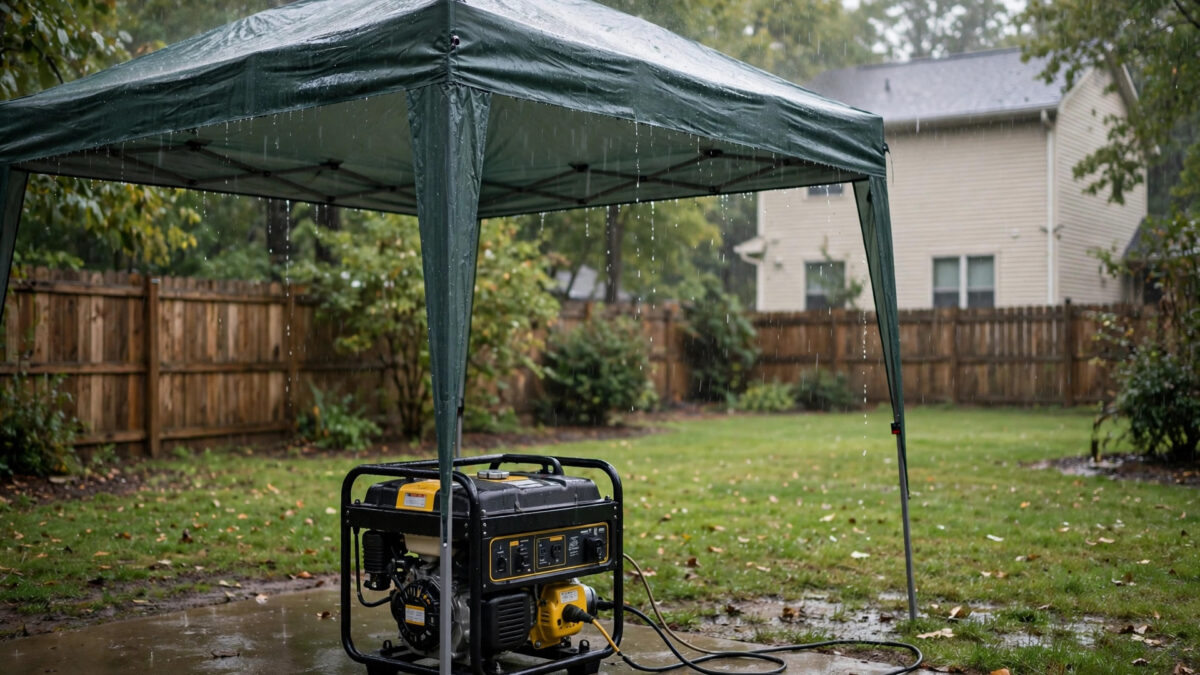
No — not even with the garage door wide open. A running generator in an attached or detached garage can fill the space with carbon monoxide (CO) in minutes, and CO drifts into living spaces through doors, windows, ductwork, and wall gaps. The CDC is explicit: never use a generator in a home, garage, or carport, and keep it at least 20 feet from doors, windows, and vents.
Key takeaways
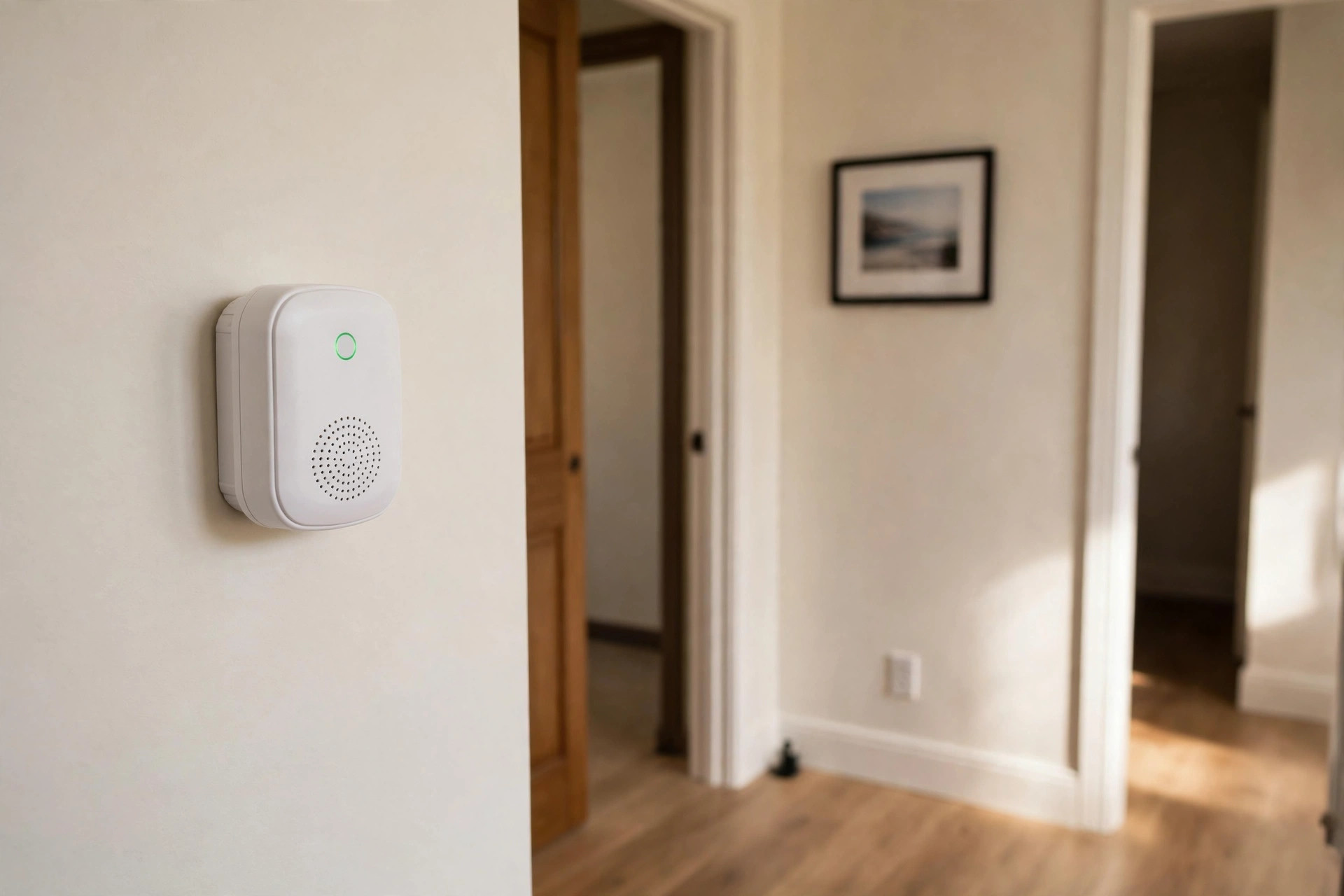
- Never run a generator in a garage, basement, or carport — even with the door fully open and a fan blowing.
- Carbon monoxide is odorless and colorless; you cannot smell it, and poisoning symptoms feel like the flu until they don’t.
- CO kills more than 500 Americans each year; generator-related CO incidents killed 770 people from 2011–2021 (CPSC).
- The CDC rule: at least 20 feet from the house, exhaust pointed away, never near doors, windows, or vents.
- Every home needs working CO detectors — battery-powered or battery-backup — on each level and outside sleeping areas.
- If rain is your concern, use an open-sided canopy or generator tent with open ventilation, never an enclosed space.
Why the open-door idea doesn’t work
I get why people ask. The garage feels like a compromise — the generator stays dry, stays out of sight, and the big open door should let exhaust escape, right? Here’s what actually happens:
- Exhaust pools before it escapes. A portable generator produces an enormous amount of CO — the CPSC’s own testing found levels that can reach lethal concentrations in an enclosed space in minutes. An open garage door helps, but wind eddies, temperature layers, and the sheer volume of exhaust mean CO accumulates faster than it disperses, especially near the generator and at breathing height in still air.
- Garages are not airtight from the house. The interior door, the wall shared with the house, dryer vents, attic access, and ductwork all give CO paths indoors. CO is slightly lighter than air but mixes readily — it will find its way in.
- The detached-garage case. Even a detached garage with the door open is a bad idea. The enclosure still traps exhaust, and if anyone walks in to grab something or do laundry, they walk into the highest-concentration zone.
Fire departments and emergency rooms see this pattern after every major storm: someone parks the generator in the garage “just until the rain stops,” falls asleep, and never wakes up. The CDC’s emergency messaging literally reads: “During a power outage, never use generators, grills, or other gasoline-, propane-, or charcoal-burning devices inside your home, garage, or carport.”
Carbon monoxide: what you’re actually dealing with
CO is a gas produced by any fuel-burning engine. It’s odorless and colorless — you can’t see it, smell it, or taste it. It binds to your blood’s hemoglobin far more easily than oxygen does, starving your brain and organs of oxygen.
Early symptoms look like the flu or exhaustion: headache, dizziness, weakness, nausea, confusion. That’s exactly what makes it so deadly during a power outage — you’re tired, it’s dark, the house is cold, and you assume you feel lousy because of the storm. By the time symptoms get severe (chest pain, loss of consciousness), you may not be able to get up and open a door.
The CDC reports CO poisoning kills more than 500 Americans every year and sends about 15,000 to emergency rooms. The Consumer Product Safety Commission counted 770 generator-related CO deaths from 2011 to 2021 — roughly 77 a year — and the majority happened because the generator was run indoors, in a garage, or too close to the house.
The “just for an hour” trap
The most common rationalization I hear: “I’ll only run it in the garage for an hour while the worst of the rain passes.” Here’s why that hour is exactly the problem. CO builds to dangerous levels in an enclosed space in minutes, not hours — and the symptoms creep up while you’re busy doing other storm tasks. You don’t notice the headache because you’re already stressed and tired. You sit down “for a minute.” That’s the shape of most of these tragedies: not a reckless all-night run, but a short “temporary” run that nobody monitored.
There’s also the overnight version: someone starts the generator in the garage at 10 p.m. so it’s “out of the rain,” goes to sleep, and the CO seeps through the interior door and wall penetrations all night. Sleeping people don’t notice headaches. This is why the rule has no exceptions for duration, door position, or fan placement. Outside means outside — every time, for any length of run.
Where to run the generator instead
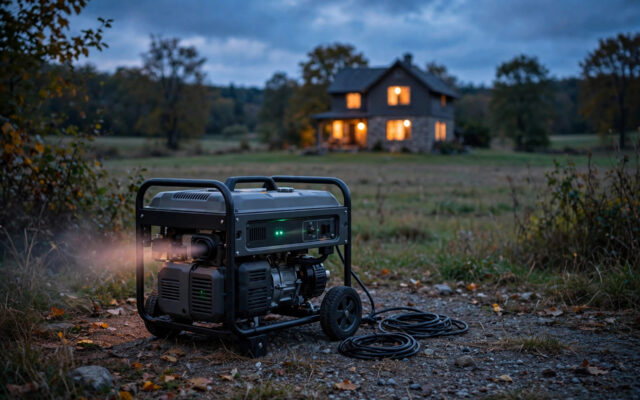
Follow the CDC’s placement rule:
- At least 20 feet from the house — measured from doors, windows, and vents, not from the wall.
- Exhaust pointed away from the house and any occupied area.
- 3–4 feet of clear space on all sides for cooling airflow.
- Dry and level ground. Generators and water don’t mix.
- Not under a bedroom window even if it’s “far enough” — prevailing wind can push exhaust straight in.
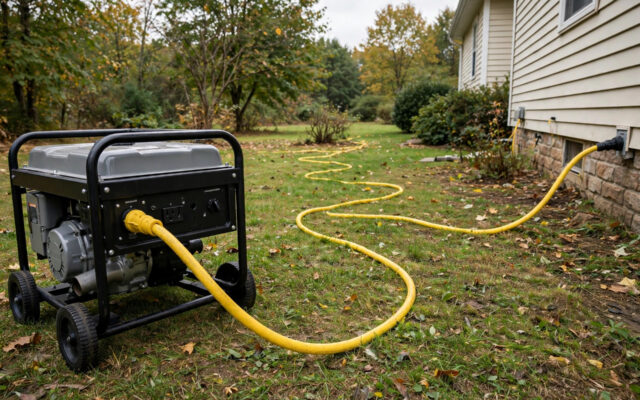
Pick your spot before the storm. I keep a 25-foot 10-gauge extension cord and a marked spot in my yard so there’s no improvising at midnight in the rain. Plan the cord route — through a window you’ve cracked for the purpose, or better, a proper generator inlet box wired to your panel (no more cords through doors).
But it’s raining — how do I keep it dry?
This is the real reason people drag generators into garages, so let’s solve it properly:
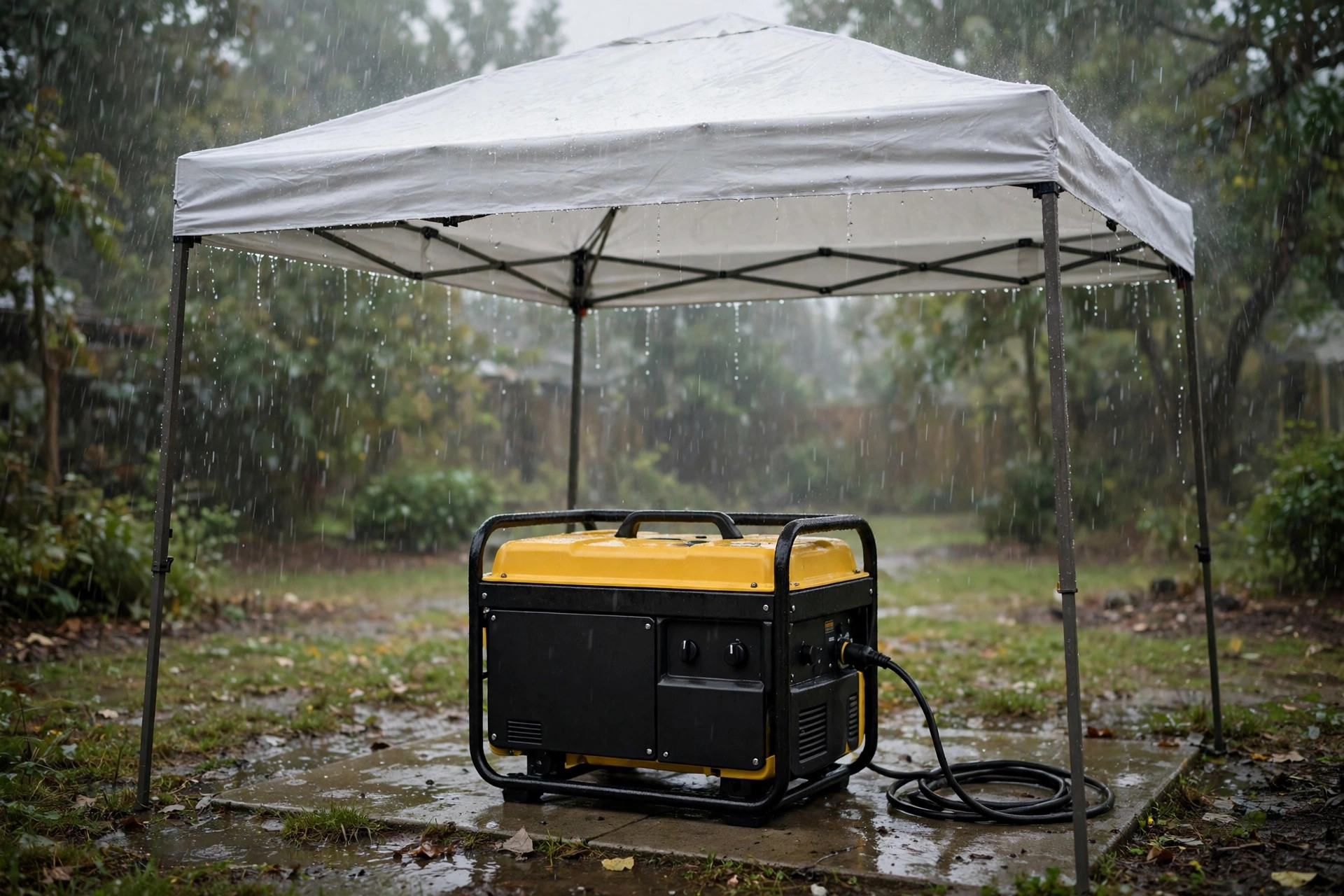
- Open-sided canopy. A cheap pop-up canopy with the sides rolled up keeps rain off while leaving all four sides open for ventilation. This is what I use.
- Generator tents/sheds. Purpose-made ventilated generator covers exist — look for ones designed specifically for running generators, with open sides and a rain shield over the top. Never improvise a cover from a tarp draped over a running unit; it traps heat and exhaust.
- The “porch overhang” trap. Running it under a carport or covered porch counts as semi-enclosed — exhaust gets trapped by the ceiling and drifts toward the house. Same answer: no.
CO detectors: your mandatory backup
Even with perfect placement, stuff goes wrong — wind shifts, a neighbor’s generator sits near your window, a cord layout changes. Working CO detectors are non-negotiable:
- One on every level of the home, and one outside each sleeping area.
- Battery-powered or with battery backup — they’re useless in a blackout without one.
- Test monthly; replace the unit per the manufacturer’s schedule (usually every 7–10 years).
- When the alarm sounds: get everyone outside immediately, then call 911. Don’t go back in to “check.”
Many 2027-model portable generators now include built-in CO-sensing auto-shutoff (certified to ANSI/PGMA G300 or UL 2201). It’s a genuine safety improvement — but treat it as a backup to good placement, not a license to run the generator closer to the house.
What to do if someone shows symptoms
If anyone near a running generator gets a headache, dizziness, nausea, or confusion: turn off the generator if you can do it safely, get everyone into fresh air immediately, and call 911. Don’t try to “tough it out” or drive yourself to the hospital — CO impairs judgment and coordination, which is why people die in cars trying to get help.
Size your setup properly with our generator size calculator so you’re never tempted to run an undersized unit in a bad spot just to squeeze out more watts — and browse the full calculator library for fuel and runtime planning before storm season.
Can I run my generator in the garage with the door open?
How far from the house should a generator be?
What about running a generator under a carport or covered porch?
How can I keep my generator dry in the rain?
Do I still need CO detectors if my generator is 20 feet away?
The garage shortcut kills people every single storm season. Pick your outdoor spot now, while the power is on and you can think straight. Twenty feet, exhaust away, dry ground — and a working CO detector inside. That’s the whole formula.

Related Guides
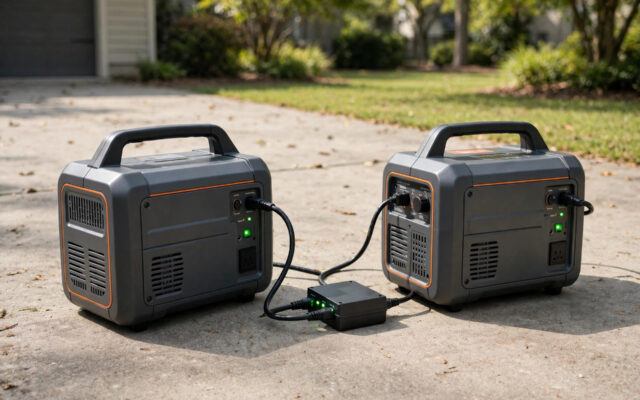
Paralleling Two Generators vs Buying a Bigger One: Which Is Better? (2027)
Paralleling two small inverter generators vs buying one bigger unit: compare cost, noise, fuel, redundancy, and the 240V catch to pick the right setup.

What Gauge Extension Cord Do You Need for a Generator?
Extension cord gauge depends on amps AND length: 12 AWG handles 20A to 50 ft, but you need 10 AWG at 100 ft. Chart, sizing steps, and fire-prevention rules inside.
Generator Carbon Monoxide Safety: The Complete 2027 Guide
Carbon monoxide from generators kills ~77 Americans a year. This complete guide covers symptoms, the CDC 20-foot rule, detector placement, and a pre-outage safety checklist.