

The best generator is the one you will actually bring. A 200-lb beast does you no good sitting in the garage when you are at a campsite with dead phones and no coffee. Small portable generators — the sub-50-lb inverter class — have gotten so good in recent years that they now handle real work: charging all your devices, running lights and fans, powering a CPAP overnight, even running smaller power tools.
I have carried, tested, and lived with the smallest portable generators on the market, and these six are the standouts for 2027. Every one weighs under 50 lbs, runs quiet enough for campgrounds, and produces clean inverter power safe for electronics. If portability is your top priority, start here.
Our top picks at a glance
- Lightest overall: Champion 201323 2500W Dual-Fuel — just 43.2 lbs with propane option
- Best premium compact: Honda EU2200i — 46.5 lbs of legendary reliability
- Best value compact: WEN 56225i — 48.5 lbs, clean power, great price
- Best compact + extra watts: Honda EU2200i — 2,500W peak at 46.5 lbs
- Most power per pound: Pulsar PGD40iSCO — 4,000W peak at 47.3 lbs
- Best budget compact: A-iPower SUA2000iV — 46.5 lbs for under $400
How we evaluate small generators
Weight is the headline spec for this category, but it is not the whole story. We verify manufacturer weight claims, then judge each model on power-to-weight ratio (watts per pound), noise at quarter and half load, runtime on a single tank, and the quality of the power (THD under 3% required). We also consider real-world carrying ergonomics — handle design, balance, and footprint matter when you are loading a truck at 6 AM. Only sub-50-lb inverters that clear every bar made this list.
The 6 smallest portable generators of 2027
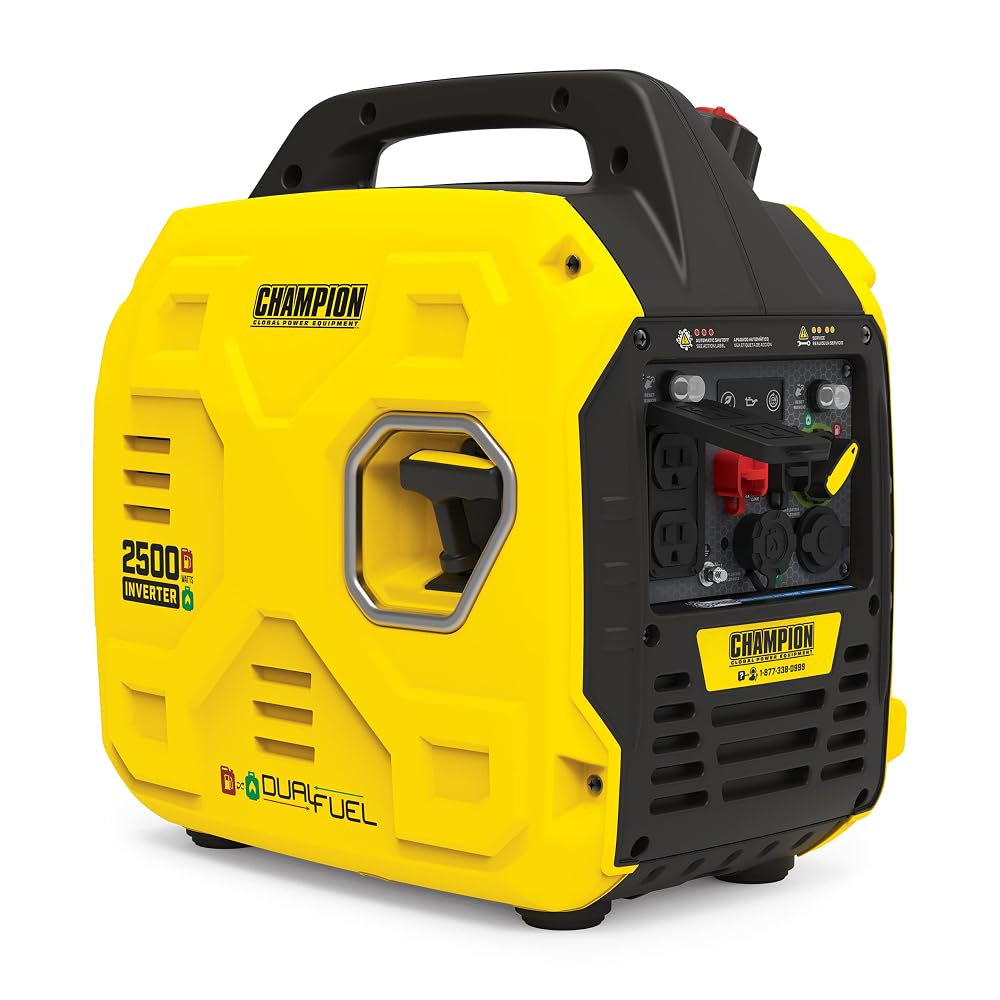
Lightest overall
Champion 201323 2500W Dual-Fuel Inverter Generator
- 1850W (gasoline), 1665W (propane) running / 2500W peak output
- dual fuel (gasoline/propane)
- Quiet at 53 dBA
- Up to up to 11.5h gasoline / 25h propane (@25% load) runtime
As an Amazon Associate, we earn from qualifying purchases.
Champion 201323 2500W Dual-Fuel review
At 43.2 lbs, the Champion 201323 is the lightest generator on this list — light enough to carry one-handed from truck to campsite. But it does not feel like a compromise: 1,850 running watts on gasoline (1,665 on propane) and 2,500 peak watts handle phones, laptops, lights, a fan, and even a small microwave one at a time.
The dual-fuel capability is a standout in the ultralight class. Propane means no stale fuel, no carburetor varnish, and no gasoline smell in your vehicle — big quality-of-life wins for campers. Runtime is exceptional for the size: up to 11.5 hours on gasoline or 25 hours on propane at quarter load. At 53 dBA it will not disturb neighboring campsites.
The tradeoff for featherweight status is peak output — 2,500W will not run an air conditioner or power tools. But if your definition of “small” starts with the scale, nothing beats the 201323.
Pros
- Lightest here at just 43.2 lbs
- Dual fuel — propane convenience
- Up to 25h runtime on propane
- Quiet 53 dBA
- Clean inverter power
Cons
- 2,500W peak will not run AC
- ~10% less power on propane
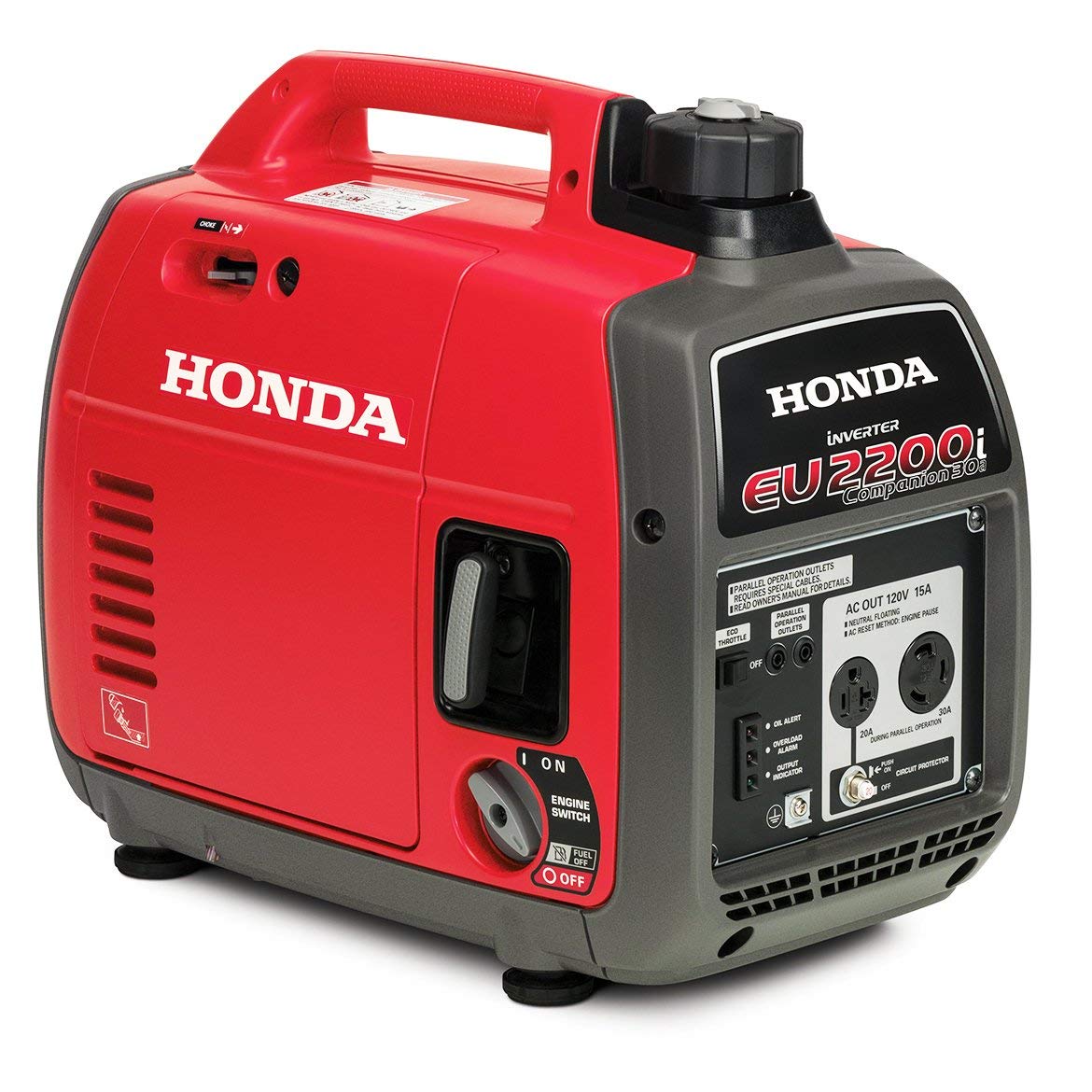
Best premium compact
Honda EU2200i Inverter Generator
- 1800W running / 2200W peak output
- gasoline
- Up to 8.1h @ 1/4 load on 0.95-gal tank runtime
- 48-57 dBA noise level
As an Amazon Associate, we earn from qualifying purchases.
Honda EU2200i review
The Honda EU2200i weighs 46.5 lbs — barely more than a packed cooler — yet it is the most trusted small generator ever made. Its 1,800 running watts and 2,200 peak watts of pure sine-wave power (<3% THD) run everything a camper or tailgater needs: devices, lights, a portable fridge, a CPAP, even a small TV.
What justifies the premium in the compact class is the ownership experience. It starts on the first pull after months of storage, sips fuel (8+ hours per gallon at light loads), and at 48 dBA on eco-throttle it is the quietest generator here. Honda’s reliability means this is a buy-once machine, and resale values stay remarkably high.
You pay for that pedigree — budget competitors offer similar specs for less. And 2,200 peak watts is the class standard, not class-leading. But if you want the small generator you will still be using in 15 years, this is it.
Pros
- 46.5 lbs — genuinely one-hand portable
- Legendary reliability and resale
- Quietest in class at 48 dBA
- <3% THD clean power
- 8.1h runtime per gallon at light load
Cons
- Premium price
- 2,200W peak is class-standard
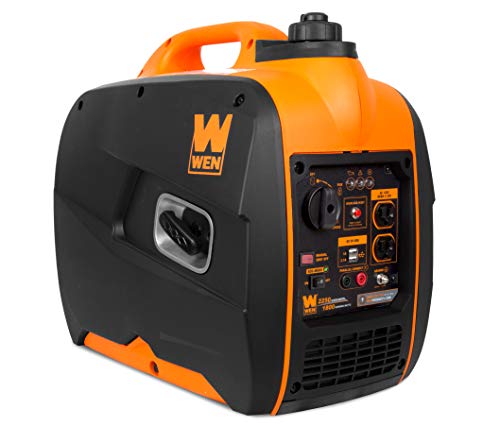
Best value compact
WEN 56225i Inverter Generator
- 1800W running / 2250W peak output
- gasoline
- Quiet at 53 dBA
- Up to 6h @ half load (1 gal) runtime
As an Amazon Associate, we earn from qualifying purchases.
WEN 56225i review
The WEN 56225i packs 1,800 running watts and 2,250 starting watts into a 48.5-lb package with under 1.2% THD — cleaner power than generators costing twice as much. For campers and tailgaters who want Honda-adjacent performance without the Honda price, this is the sweet spot.
Practical touches abound: the fuel shut-off lets you run the carburetor dry before storage (the number one killer of small generators is old fuel gumming up the carb), it is parallel-capable for doubling output later, and at 53 dBA it meets campground noise rules. The 2-year warranty is respectable for the price.
Fit and finish are a notch below the premium brands, and long-term parts availability is less certain. But as a value equation — watts, weight, noise, and clean power per dollar — the 56225i is the best deal in small generators for 2027.
Pros
- Excellent watts-per-dollar
- <1.2% THD pure sine-wave
- Fuel shut-off for storage
- 53 dBA, parallel-capable
- 48.5 lbs
Cons
- Fit and finish trail premium brands
- Less certain long-term parts support
Best compact + extra watts
Honda EU2200i
- 1800W running / 2200W peak output
- gasoline
- Up to 8.1h @ 1/4 load on 0.95-gal tank runtime
- 48-57 dBA noise level
As an Amazon Associate, we earn from qualifying purchases.
Honda EU2200i review
Sometimes 2,200 peak watts is just short of enough — a microwave needs a bit more, a small power tool surges higher. The Honda EU2200i answers with 2,200 running watts and 2,500 peak watts in the same 48-lb, suitcase-size footprint as its smaller rivals. That extra headroom is genuinely useful.
Beyond the wattage bump, you get <3% THD clean power, a 52 dBA noise rating, an LED data center showing fuel level and runtime estimates, and up to 8.1 hours of runtime at quarter load on a 1-gallon tank. It is a well-rounded package from an established brand.
One honest caveat: Westinghouse issued a CPSC recall on early iGen2500 units (June–October 2017 production) for overheating risk. Current production is unaffected, but buy from a reputable seller and register your unit. With that noted, the iGen2500 is a strong pick for campers who need a bit more muscle.
Pros
- 2,500W peak — extra headroom in same size
- 46.5 lbs with 52 dBA quiet operation
- <3% THD clean power
- LED data center display
- Up to 10h runtime
Cons
- Early units had a CPSC recall — buy current stock
- Slightly pricier than WEN
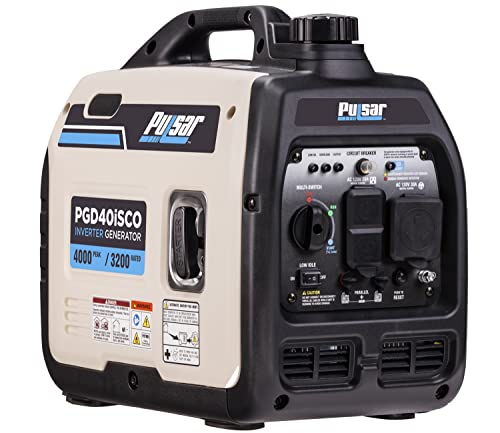
Most power per pound
Pulsar PGD40iSCO Inverter Generator
- 3200W running / 4000W peak output
- gasoline
- Quiet at 59 dB
- Up to 4h @ half load (1 gal) runtime
As an Amazon Associate, we earn from qualifying purchases.
Pulsar PGD40iSCO review
The Pulsar PGD40iSCO rewrites what “small” can do: 3,200 running watts and 4,000 peak watts — nearly double the class standard — at 47.3 lbs. That is 85 watts per pound, by far the best power-to-weight ratio here. It can run an RV air conditioner, a full-size refrigerator, or a circular saw, all from a generator one person carries easily.
It is still a proper inverter: under 3% THD for electronics, 59 dB operation, CO Sentry auto-shutdown, and an RV-ready TT-30R outlet. The 3-year warranty is the longest on this list. For overlanders, RVers, and anyone who hates choosing between portable and powerful, the PGD40iSCO eliminates the compromise.
The 1-gallon tank delivers about 4 hours at half load — this is a sprinter, not a marathoner — and 59 dB is audible compared to the whisper-quiet 2,200W models. But if you want the most watts you can carry in one hand, nothing else is close.
Pros
- 4,000W peak at 47.3 lbs — unmatched ratio
- <3% THD clean inverter power
- RV-ready TT-30R outlet
- CO Sentry + 3-year warranty
Cons
- ~4h runtime at half load
- 59 dB is louder than smaller models
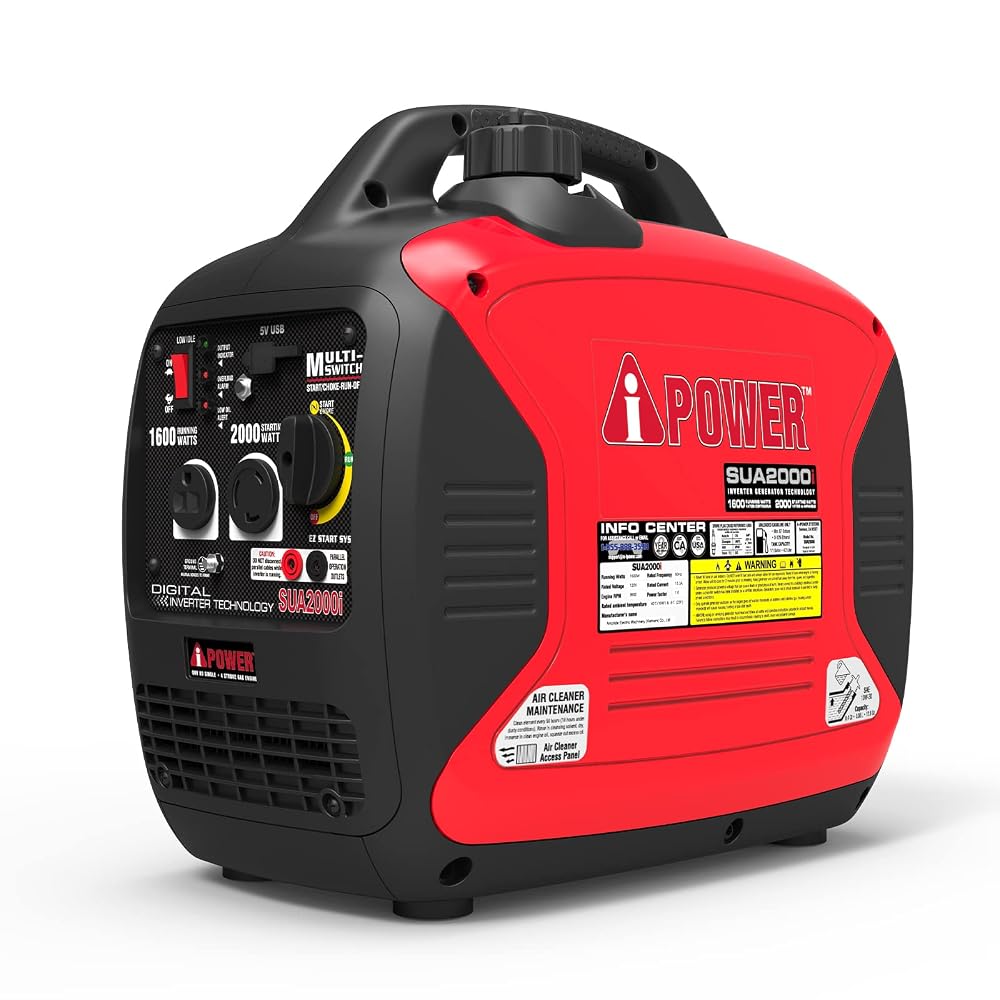
Best budget compact
A-iPower SUA2000iV Inverter Generator
- 1600W running / 2000W peak output
- gasoline
- Quiet at 52 dBA
- Up to 7h @ 50% load (1.1 gal) runtime
As an Amazon Associate, we earn from qualifying purchases.
A-iPower SUA2000iV review
The A-iPower SUA2000iV proves you do not need $500 to go small and quiet. At 46.5 lbs with 1,600 running watts and 2,000 peak watts of <3% THD clean power, it handles the camping essentials — devices, lights, fan, portable fridge — at a street price that often sits under $400.
Low Idle technology keeps it at 52 dBA and stretches the 1.1-gallon tank to 7 hours at half load, competitive with pricier rivals. The compact design stores anywhere: car trunk, RV compartment, apartment closet.
Expectations should match the price: 2,000 peak watts is the minimum useful output, the feature list is basic, and long-term durability is unproven compared to established brands. But as an entry point into quiet, clean, portable power, the SUA2000iV is the best budget compact you can buy.
Pros
- Under $400 street price
- <3% THD clean power
- 52 dBA quiet
- 7h runtime at half load
- 46.5 lbs
Cons
- 2,000W peak is modest
- Basic features, unproven longevity
Small generator vs. portable power station
A fair question: if you want small, quiet, and portable, why not just buy a battery power station? For short trips and light loads, a power station is excellent — silent, no fumes, usable indoors. But batteries are finite: a 1,000Wh station gives you roughly 8 hours of laptop-plus-lights before it is empty, and recharging takes hours. A small generator refuels in minutes and runs as long as you have gasoline. Many experienced campers carry both: the generator for bulk power and recharging, the power station for silent overnight use. If you can only pick one and your trips exceed a day, the generator is the more versatile tool.
Smallest portable generator comparison
| Generator | Weight | Running / Peak | Noise | Runtime | Best for |
|---|---|---|---|---|---|
| Champion 201323 | 43.2 lbs | 1,850W / 2,500W | 53 dBA | 11.5h / 25h propane | Lightest |
| Honda EU2200i | 46.5 lbs | 1,800W / 2,200W | 48–57 dBA | 8.1h @ 1/4 load | Premium |
| WEN 56225i | 48.5 lbs | 1,800W / 2,250W | 53 dBA | 6h @ 1/2 load | Value |
| Honda EU2200i | 46.5 lbs | 2,200W / 2,500W | 52 dBA | 10h @ 1/4 load | Extra watts |
| Pulsar PGD40iSCO | 47.3 lbs | 3,200W / 4,000W | 59 dB | 4h @ 1/2 load | Power/weight |
| A-iPower SUA2000iV | 46.5 lbs | 1,600W / 2,000W | 52 dBA | 7h @ 1/2 load | Budget |
How to choose a small portable generator
Weigh it — literally. The difference between 43 and 60 lbs matters when you are carrying a generator across a campsite or lifting it into a truck bed. Under 50 lbs is our cutoff for “small”; under 45 is genuinely one-handable. Check whether the listed weight includes fuel — a gallon of gasoline adds 6 lbs.
Match watts to your real load. Phones, laptops, lights, and fans total a few hundred watts — any model here handles that. A portable fridge adds 100–200W running. A microwave needs 1,000W+. An RV air conditioner needs 2,800–3,500 starting watts. Size for the biggest thing you will actually run, plus 20% headroom.
Prioritize inverter power. Every generator on this list is an inverter, and that is deliberate: clean power protects your devices, and the variable engine speed means dramatically less noise and fuel use at light loads. There is no reason to buy a conventional generator in the sub-50-lb class in 2027.
Check the noise rating — and the campground rules. Many campgrounds and RV parks enforce 60 dBA limits measured at 50 feet. All six picks comply, but the 48–53 dBA models give you the most margin (and the happiest neighbors).
Think about fuel logistics. If you hate dealing with gasoline going stale, a dual-fuel model running on propane eliminates the problem — propane stores indefinitely. For the smallest kits, also consider your runtime needs: an overnight CPAP user wants 8+ hours per tank; a tailgater might only need 3.
Do not skip the break-in. Small engines last dramatically longer with proper break-in: change the oil after the first 5–8.1 hours, then per the manual. Use fuel stabilizer if the generator sits more than 30 days, or run the carburetor dry. These five-minute habits are the difference between a generator that lasts 5 years and one that lasts 15.
What to avoid in small generators
Avoid no-name 2-stroke models. They are cheap, light, and loud — often 70+ dBA — with dirty power that can damage electronics. The few dollars saved are not worth the noise complaints and fried chargers.
Avoid overstated wattage claims. Off-brand listings sometimes advertise “peak” watts as if they were running watts, or invent numbers entirely. Stick to brands with verifiable specs and real reviews. Every wattage figure on this list comes from manufacturer specifications.
Avoid generators without low-oil shutdown. It is a basic protection feature in 2027 — if a small generator lacks it, that tells you everything about the corners cut elsewhere.
Small portable generator FAQs
How small is a “small” portable generator?
In this guide, small means under 50 lbs — light enough for one person to carry comfortably. The lightest pick here is 43.2 lbs; the heaviest is 48.5 lbs. For comparison, mid-size portables run 90–120 lbs and whole-home portables exceed 200 lbs.
Can a small generator run a refrigerator?
Yes, with caveats. A full-size refrigerator needs about 700W running and up to 2,200W to start the compressor. The 2,500W-class models here (Champion 201323, Honda EU2200i) can handle it; the 2,000–2,250W models are borderline. The Pulsar PGD40iSCO (4,000W peak) runs a fridge with room to spare.
How quiet are small inverter generators?
Very. The quietest models here run at 48 dBA at light load — about as loud as a quiet conversation. For reference, 60 dBA is normal conversation level, and most campgrounds set 60 dBA as the limit. All six picks comply with typical campground rules.
Can I take a small generator on an airplane?
No — generators contain fuel residue and cannot go in checked or carry-on luggage. Ship it to your destination or buy/rent locally. For air travel, a portable power station (battery) is the flyable alternative.
Gasoline or propane for a small generator?
Gasoline delivers about 10% more power and is available everywhere. Propane never goes stale, burns cleaner, and is safer to transport inside a vehicle (no spill or fume risk). If your generator sits unused for months, propane wins. If you need maximum watts, gasoline wins. Dual-fuel models let you choose per trip.
How long do small generators last?
With proper maintenance (regular oil changes, fuel stabilizer, exercising under load), a quality small inverter lasts 1,000–2,000+ hours — roughly 10–15 years of recreational use. Honda and Yamaha routinely exceed this; budget brands vary more, which is why the warranty matters.
Our verdict
If you want the smallest capable generator, the Champion 201323 is our top pick — just 43.2 lbs with dual-fuel versatility. For the best long-term ownership, the Honda EU2200i remains unmatched. And if you refuse to compromise on power, the Pulsar PGD40iSCO packs 4,000 peak watts into 47 lbs — nothing else comes close.

Related Guides
Best PTO Generators for Tractors in 2027
Best PTO generators for tractors in 2027: top 5 PTO-driven units compared — NorthStar, Winco, Tiger Power. Sizing rules, 540 RPM basics and buying guide.

Best Natural Gas Generators of 2027
The best natural gas generators run tri-fuel. Our 2027 picks - Westinghouse, DuroMax, Champion, Gidrox - plus NG hookup and sizing advice.
Best Diesel Generators of 2027 (Portable Picks)
The best diesel generators for 2027? A short honest list: Generac XD5000E leads, Kipor KDE6700TA follows. Fuel math, winter tips & buying advice inside.