


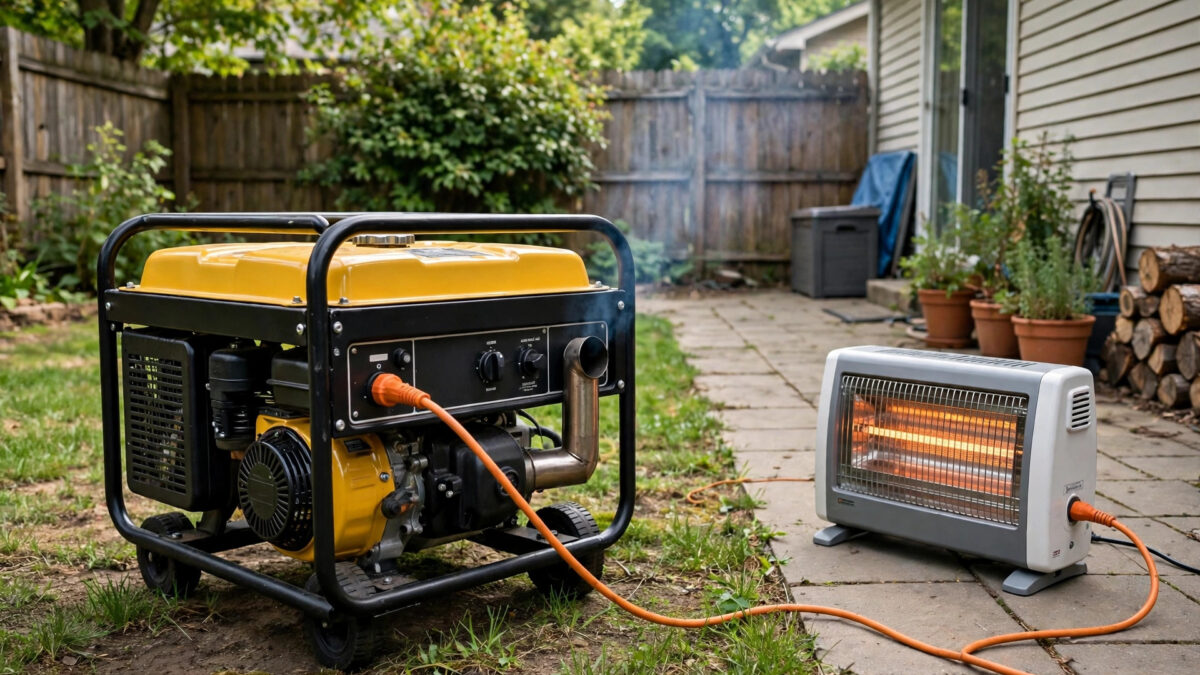
The short answer: run your portable generator once a month for 20–30 minutes, under at least 50% load. That’s the schedule generator techs, RV owners, and small-engine mechanics have converged on for decades — and it’s the difference between a generator that fires up on the first pull during an outage and one that sits there mocking you with a gummed-up carburetor.
I learned this one the expensive way. My first generator sat in the garage for 14 months untouched. When a storm knocked out power, it wouldn’t start — the carburetor was varnished shut from stale fuel, and the battery was stone dead. A $200 carburetor rebuild later, I started taking the exercise schedule seriously. That was eight years ago, and that same generator has started every single time since.
Key takeaways
- Monthly, 20–30 minutes, under real load (at least 50% of rated watts) — this is the standard for portable generators.
- Running unloaded doesn’t count: the engine needs load to reach full operating temperature and burn off moisture.
- An easy memory aid is the 20-20-20 rule: 20 minutes, at 20%+ load, every 20 days.
- Standby generators are different — most auto-exercise weekly for about 12 minutes (check your manual).
- Pair the exercise run with fuel stabilizer and a battery maintainer, and your generator will outlast your interest in maintaining it.
Why Generators Need Exercise At All
A generator is the worst kind of machine to own: it sits idle for months, then has to perform perfectly on the worst day of the year. Three things go wrong during long idle periods:
- Fuel goes stale. Gasoline starts degrading in as little as 30 days. The light fractions evaporate, leaving varnish that clogs the carburetor’s tiny jets. This is the #1 cause of no-start generators — ask any small-engine shop what they fix every spring.
- Moisture accumulates. Every heating/cooling cycle draws humid air into the crankcase and fuel tank. Running the engine under load gets the oil hot enough (above ~200°F) to boil that moisture out. An idling, unloaded engine never gets hot enough.
- Batteries self-discharge. An electric-start generator’s battery loses charge sitting there — faster in heat. After a few months, there’s not enough juice to crank.
A monthly exercise run fights all three: it cycles fresh fuel through the carb, burns off moisture, and recharges the battery.
The Schedule: Monthly, 20–30 Minutes, Under Load
Here’s the routine I follow, and it’s the same one you’ll find in most generator manuals and on every RV forum:
Step 1: Check oil and fuel (2 minutes)
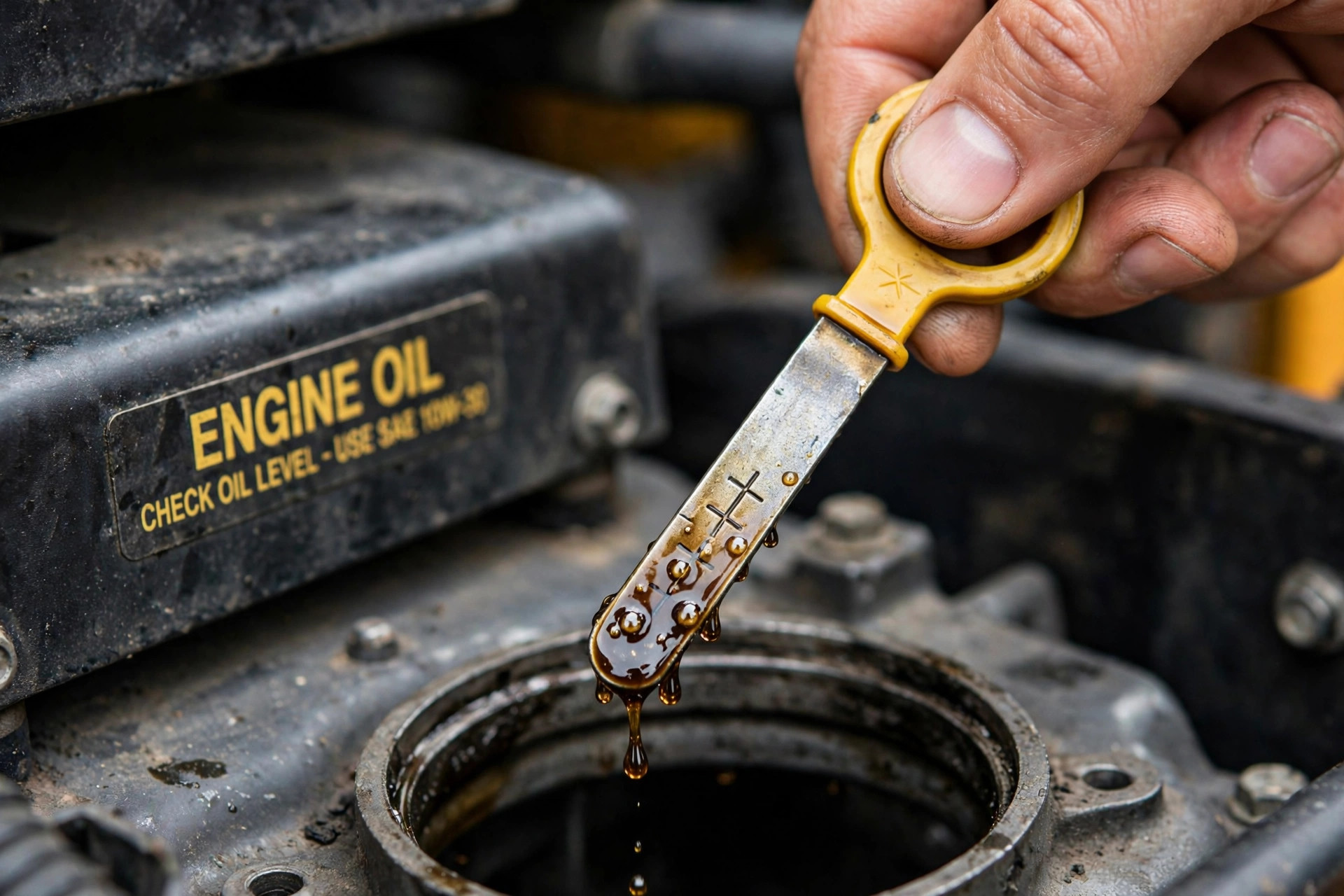
Quick dipstick check, glance at the fuel level, look for leaks or mouse nests. I once found a mouse had built a condo in my air filter housing over winter. Check first, start second.
Step 2: Start it and warm up 3–5 minutes unloaded
Let it idle up to operating temperature. Don’t slam a load onto a cold engine.
Step 3: Apply at least 50% load for 20–30 minutes
This is the part people skip, and it’s the part that matters. The generator needs to work hard enough to get fully hot. What’s 50% load on your machine?
| Generator size | 50% load target | Easy load combo |
|---|---|---|
| 2,000W | ~1,000W | Space heater on low (750W) + lights |
| 3,500W | ~1,750W | Space heater on high (1,500W) + fan |
| 5,000W | ~2,500W | Two space heaters, or heater + shop vac |
| 7,500W | ~3,750W | Portable AC or electric grill + heater |
| 10,000W+ | ~5,000W+ | Well pump cycle, electric water heater element |
My go-to load is a cheap 1,500-watt space heater from the hardware store — resistive loads are perfect for exercise runs because they’re simple, steady, and cheap. Some people use halogen work lights (two 500W lamps). Whatever you use, make sure it’s actually drawing the watts you think: a “1,500W” heater on its low setting might only pull 750W.
Step 4: Cool down 2–3 minutes unloaded, then shut off fuel
Let it idle briefly to cool the exhaust, then close the fuel valve and let it run the carb dry. Running the carb dry is the single best thing you can do between exercise runs — no fuel sitting in the bowl means no varnish forming in the jets.
The 20-20-20 Rule (Easy Memory Aid)
If “monthly, 20–30 minutes, 50% load” feels fussy, use the 20-20-20 rule that’s been making the rounds: run the generator for 20 minutes, at 20% load minimum, every 20 days. It’s a slightly lighter version of the same idea and easier to remember. I’d still push toward 50% load when you can — 20% is the floor, not the goal.
Standby Generators: Different Rules
If you have a whole-house standby generator (Generac, Kohler), it almost certainly has a built-in exercise timer — most run automatically once a week for about 12 minutes. Two things to know:
- Most factory exercise cycles run unloaded (they don’t transfer your house load). That’s fine for the engine, but once or twice a year, do a manual loaded test — flip the transfer switch and let it carry the house for 30 minutes.
- Emergency-generator code (NFPA 110) requires 30 minutes of monthly operation for legally-required standby systems — your weekly 12-minute auto-exercise plus an occasional loaded run covers this in practice.
Pair It With Fuel Stabilizer and a Battery Maintainer
The exercise schedule works best as part of a trio:
- Fuel stabilizer in every can. I dose all my stored gasoline with STA-BIL the day I buy it — 1 oz per 2.5 gallons. Stabilized fuel stays fresh up to 24 months instead of going stale in weeks. This alone would have saved my first carburetor.
- Battery maintainer on electric-start models. A NOCO Genius1 smart maintainer lives plugged into my generator’s battery year-round. It keeps the battery topped up without overcharging. Dead batteries are the #2 no-start cause, and this eliminates it.
- Monthly exercise run. The run itself.
Our generator storage guide covers the full winterization checklist, and our oil change guide walks through the other half of the maintenance picture — exercise keeps it running, oil changes keep it alive.
What If You Haven’t Run It in Months?
Don’t panic — just don’t expect the first start to go smoothly. If your generator has sat for six months or more, do this before the exercise run: drain any old fuel and refill fresh, check the oil (top up or change it), pull and inspect the spark plug, and make sure the air filter isn’t housing wildlife. Then start it and let it warm up a full five minutes before applying load.
If it won’t start, you’re looking at the standard revival procedure — which is almost always a gummed carburetor from the stale fuel. Clean the carb, and you’re back on the schedule. The good news: one proper revival plus the monthly routine going forward, and you’ll never do the revival again.
FAQs
How often should I run my portable generator if I’m not using it?
Do I need to put a load on the generator during exercise?
Is it bad to start a generator and turn it off after a few minutes?
How often do standby generators exercise themselves?
Can I exercise my generator in winter?
The Bottom Line
Pick a date — the first Saturday of the month works — and make the exercise run a habit: check oil, warm up, 20–30 minutes under real load, cool down, run the carb dry. Thirty minutes a month is the cheapest generator insurance that exists. The generator that starts on the first pull during an outage isn’t lucky. It’s exercised.

Related Guides
Why Does My Generator Backfire? Causes and Fixes (2027)
Why does your generator backfire? An exhaust bang means unburned fuel in the muffler; a pop through the carb means lean mixture or valve trouble. Here are the fixes.

Generator Valve Adjustment: How to Set Valve Lash (2027 Guide)
Generator valve adjustment: 0.006" intake, 0.008" exhaust on Honda GX engines. Tools, TDC procedure, and symptoms of bad valve lash explained.

How to Clean and Replace a Generator Air Filter (2027 Guide)
How to clean a generator air filter: wash foam filters in soapy water and re-oil; tap out paper filters, never wash them. Full steps inside.